
 English
 русский
 Português
 Français



 Read More

Product Category
NEW Category
Contact us
Contact Us
We specialise in the research, development and manufacture of electrical wires and cables.
 +86-21-57560276
Sanitary Tube-in-Tube Heat Exchangers for Food and Biopharmaceutical Process Systems
Content
- 1 1. The Role of Hygienic Heat Transfer in Modern Processing
- 2 2. How the Tube-in-Tube Configuration Works
- 3 3. Key Advantages Compared with Conventional Alternatives
- 3.1 3.1 Better Handling of Particulate and Fibrous Products
- 3.2 3.2 Gentle and Controlled Product Treatment
- 3.3 3.3 Efficient Countercurrent Heat Transfer
- 3.4 3.4 Hygienic and Fully Drainable Construction
- 3.5 3.5 Easier Inspection and Maintenance
- 3.6 3.6 Improved Leak Detection and Product Protection
- 3.7 3.7 Broad Integration Options
- 4 4. Sanitary Materials and Surface Finishing
- 5 5. Advanced Manufacturing and Quality Control
- 6 6. Customized Engineering for Process Requirements
- 7 7. Cleaning, Sterilization, and Hygienic Operation
- 8 8. Applications Across Food, Beverage, and Biopharmaceutical Industries
- 9 9. Process Control and System Integration
- 10 10. Documentation and Compliance Support
- 11 11. Why Choose a Specialized Supplier?
- 12 12. Installation and Maintenance Considerations
- 13 13. Selecting the Correct Heat Exchanger
- 14 14. Economic and Sustainability Benefits
- 15 15. Frequently Asked Questions
- 15.1 Q1: What is a sanitary tube-in-tube heat exchanger?
- 15.2 Q2: What products can be processed with this type of exchanger?
- 15.3 Q3: Is a tube-in-tube exchanger suitable for particulate products?
- 15.4 Q4: What materials are commonly used?
- 15.5 Q5: What surface finish can be provided?
- 15.6 Q6: Can the exchanger support CIP and SIP?
- 15.7 Q7: Can the unit be customized?
- 15.8 Q8: What information is needed for a quotation?
- 15.9 Q9: How does leak detection protect the process?
- 15.10 Q10: Does the equipment require special maintenance?
- 15.11 Q11: What documentation can be supplied?
- 15.12 Q12: Why work with Shiloc?
- 16 16. Conclusion
- 17 References
- 18 Product: Sanitary Tube-in-Tube Heat Exchanger
Hygienic process industries require heat transfer equipment that combines thermal performance, product safety, cleanability, mechanical reliability, and operational flexibility. Food, beverage, dairy, biopharmaceutical, fine chemical, and daily chemical manufacturers often process fluids that are sensitive to temperature, contain fibers or suspended particles, or must be handled under strictly controlled sanitary conditions. For these applications, a sanitary tube-in-tube heat exchanger provides a practical and reliable solution.
A sanitary tube-in-tube heat exchanger uses two concentric tubes. The product flows through the inner tube, while heating or cooling media circulate through the annular passage between the inner and outer tubes. Depending on the process design, the two fluids can move in countercurrent, cocurrent, or carefully controlled flow arrangements. Countercurrent operation is particularly valuable because it maintains a more favorable temperature difference along the heat-transfer path, improving thermal efficiency and supporting precise product temperature control.
Unlike many conventional plate heat exchangers, a tube-in-tube design can provide a relatively open product channel. This makes it suitable for viscous, fibrous, particulate, or shear-sensitive products that may create difficulties in narrow plate passages. Products such as fruit preparations, yogurts containing pieces, sauces, creams, minced meat mixtures, syrups, slurries, and pharmaceutical formulations can be processed with a lower risk of plugging when the equipment is correctly sized and configured.
The sanitary design is equally important. Product-contact surfaces can be manufactured from 316L stainless steel, finished to a low surface roughness, and configured without unnecessary dead legs or difficult-to-clean crevices. Fully drainable geometry, hygienic connections, clean welds, leak detection provisions, and compatibility with clean-in-place and sterilize-in-place procedures help protect product quality and reduce the risk of microbial contamination.
Shiloc (Shanghai) Industrial Trading Co., Ltd. supplies sanitary process equipment and international engineering support for food, beverage, biopharmaceutical, daily chemical, and fine chemical manufacturers. Its tube-in-tube heat exchanger solutions combine European process know-how, Danish design principles, sanitary fabrication, customized engineering, and international trade coordination. The result is equipment intended not only to perform a thermal duty, but also to integrate reliably into a complete hygienic production line.
1. The Role of Hygienic Heat Transfer in Modern Processing
Heat transfer is one of the most important operations in a process plant. Heating may be required to pasteurize a beverage, dissolve ingredients, reduce viscosity, activate a formulation, or prepare a product for filling. Cooling may be needed to protect flavor, preserve biological activity, stabilize a formulation, or bring a product to a safe storage or packaging temperature. In some processes, a controlled temperature profile is more important than simply reaching a final temperature.
Food and beverage products can be highly variable. A juice may contain pulp, a sauce may contain suspended solids, and a dairy product may become more viscous as its temperature changes. Biopharmaceutical fluids may be sensitive to contamination, excessive residence time, pressure changes, or thermal stress. The heat exchanger must therefore be selected according to the product’s viscosity, particle size, flow rate, allowable pressure drop, thermal sensitivity, cleaning method, and regulatory requirements.
Traditional heat exchanger designs may perform well with clean, low-viscosity liquids but become less suitable when the product contains particles or tends to foul surfaces. Narrow channels can increase the possibility of blockage. Complex internal geometry can make cleaning more difficult. Gaskets, pockets, and non-drainable areas may create additional hygiene concerns. A properly engineered tube-in-tube heat exchanger addresses many of these challenges with a direct, robust flow path and a structure that can be adapted to the product.
In a hygienic production environment, heat transfer efficiency must be considered together with cleanability and maintainability. A unit that offers high thermal performance but requires frequent manual cleaning may increase labor costs and production downtime. Similarly, a design that is easy to clean but has poor temperature control may produce inconsistent batches. The objective is to create a balanced solution that supports safe, stable, and economical operation over the full equipment life cycle.
2. How the Tube-in-Tube Configuration Works
The core construction consists of an inner tube positioned concentrically inside an outer tube. One process stream travels through the inner tube, and the second stream flows through the annular passage. Heat passes through the wall of the inner tube from the hotter fluid to the colder fluid, or in the opposite direction when cooling is required.
The product path can be designed with a suitable diameter to accommodate the required flow rate and product characteristics. A larger product passage can reduce the risk of blockage when the material contains fibers or particles. At the same time, the annular service passage can be engineered to achieve a suitable velocity and heat-transfer coefficient without creating excessive pressure loss.
Pure countercurrent flow is often selected for demanding applications. In countercurrent operation, the hot and cold streams travel in opposite directions. This arrangement can maintain a useful temperature difference over much of the exchanger length and may permit closer approach temperatures than cocurrent operation. The precise benefit depends on fluid properties, flow rates, tube dimensions, fouling behavior, and the selected utility conditions.
Tube-in-tube exchangers can also be arranged in straight sections, U-tube configurations, or modular coil assemblies. A U-tube design can provide a compact layout and reduce the number of external return connections. Coil configurations can be custom-designed for specific flow requirements, available installation space, and process duty. The choice between straight, U-shaped, and coiled construction should be made through a complete mechanical and thermal review.
The design may include multiple passes when additional heat-transfer area is required. Pass arrangement, tube length, diameter, and number of modules can be adjusted according to the required heating or cooling duty. This modular approach provides flexibility for both new installations and upgrades to existing process lines.
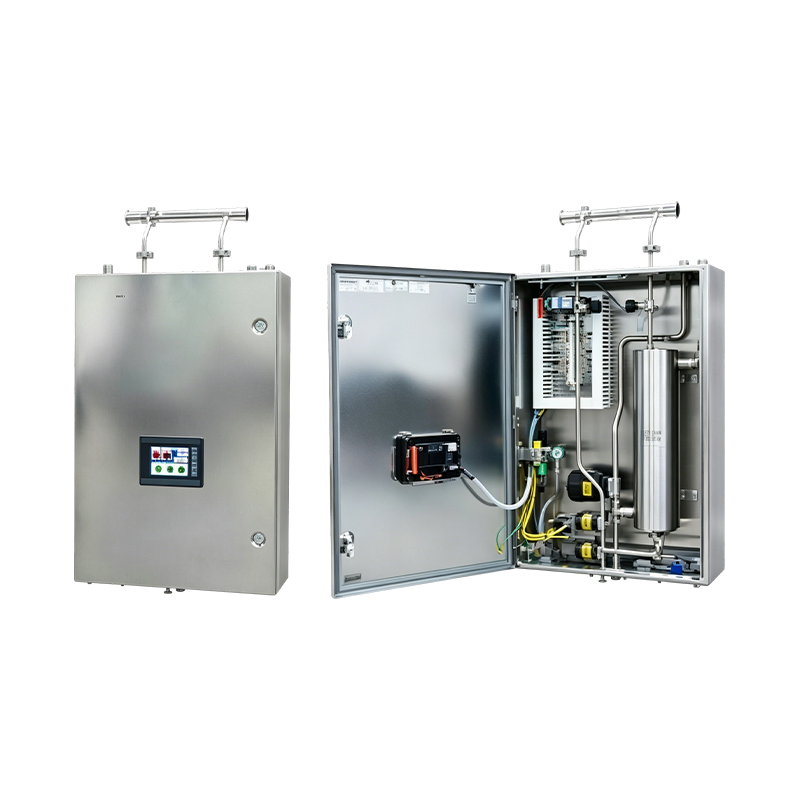
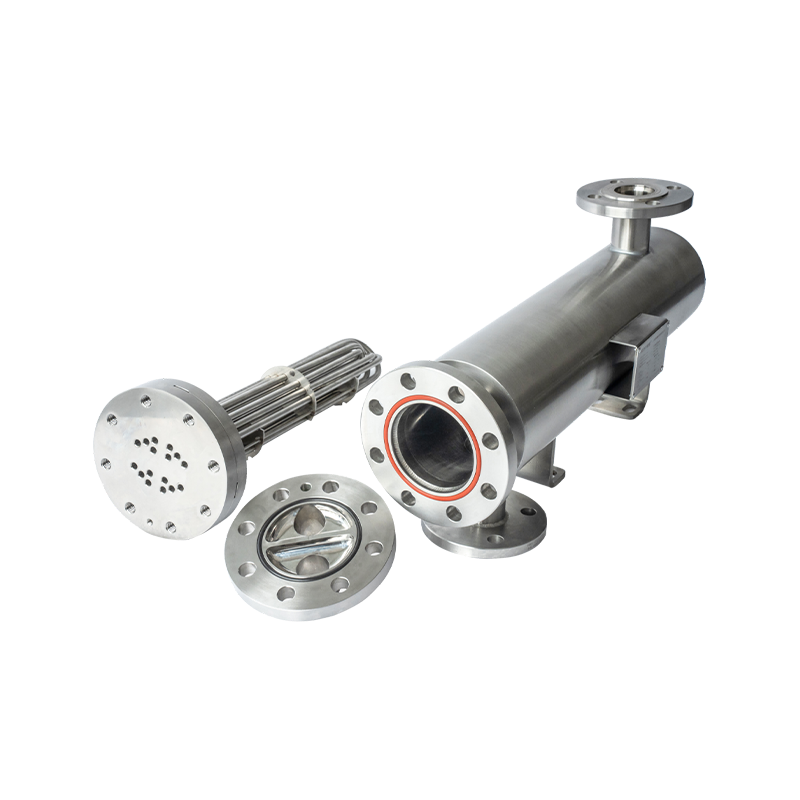
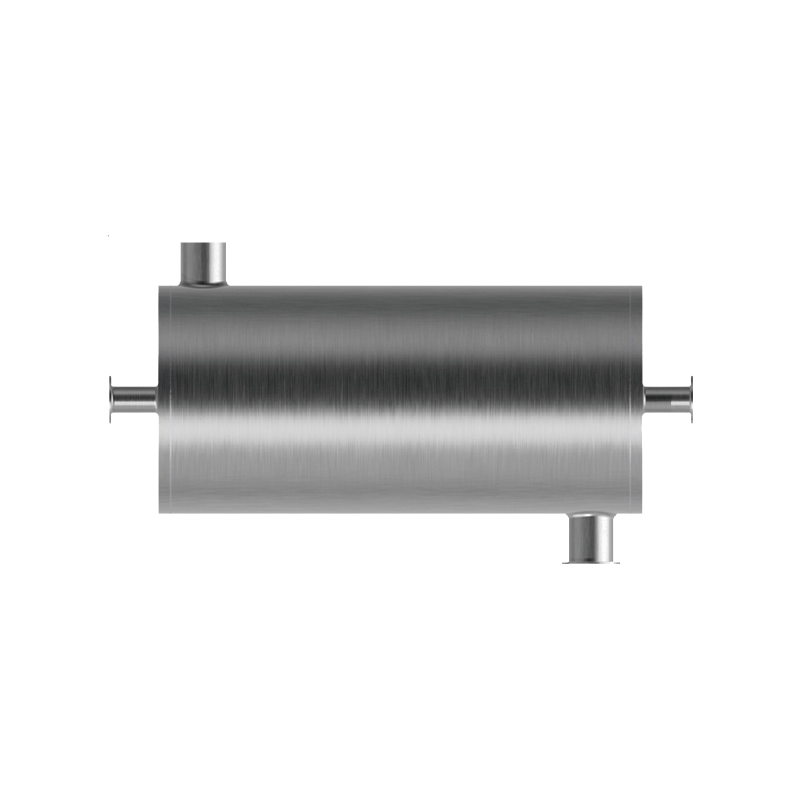
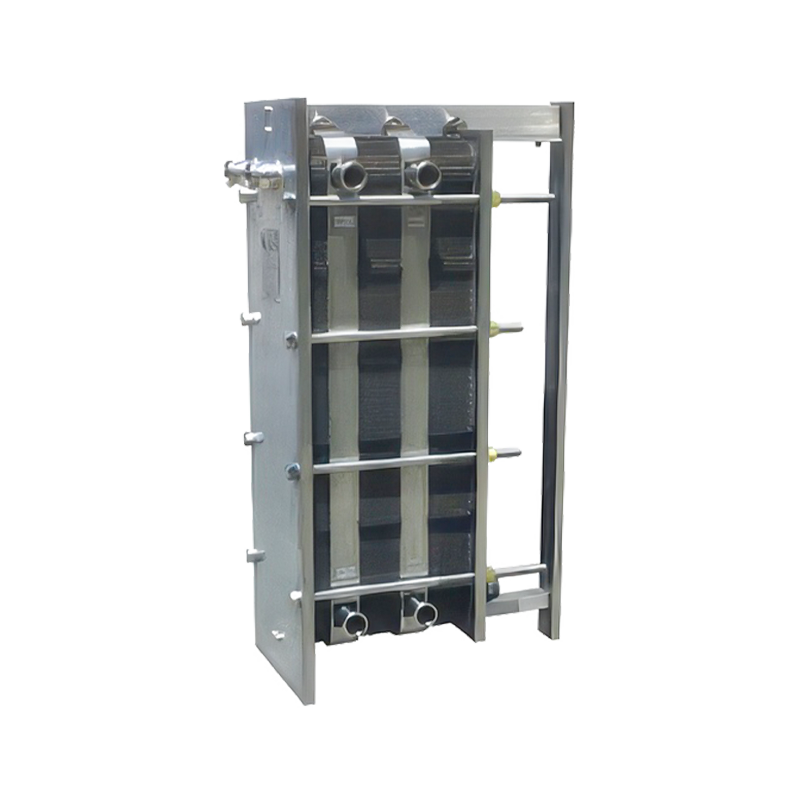
Sanitary Tube-in-Tube Heat Exchanger
3. Key Advantages Compared with Conventional Alternatives
3.1 Better Handling of Particulate and Fibrous Products
One of the most significant advantages of a sanitary tube-in-tube heat exchanger is its ability to process products that may be difficult to handle in narrow or highly compact channels. Fibers, fruit pieces, vegetable particles, meat particles, and other suspended solids can increase the risk of blockage in equipment with small flow passages. A tube-in-tube unit can be specified with a larger product-side diameter and smoother internal geometry.
This advantage does not mean that every particulate product can be processed without engineering review. Particle size, concentration, product viscosity, flow velocity, and allowable pressure drop must still be evaluated. However, the open tubular path provides a useful starting point for applications where a plate heat exchanger or small-bore coil may be more vulnerable to plugging.
3.2 Gentle and Controlled Product Treatment
Many food and biological products are sensitive to shear, excessive temperature, and prolonged residence time. A tube-in-tube heat exchanger can be designed to provide a controlled velocity profile and predictable residence time. This helps reduce unnecessary mechanical stress and supports consistent treatment of the product.
For viscous materials, the equipment can be configured with suitable tube dimensions and flow conditions. When the product is sensitive to local overheating, the heat-transfer area and utility-side conditions can be selected to moderate the temperature gradient. These measures can help preserve flavor, texture, color, biological activity, and formulation stability.
3.3 Efficient Countercurrent Heat Transfer
Countercurrent operation makes efficient use of the available temperature difference. A properly designed unit can transfer heat effectively while minimizing the required exchanger length or utility consumption. Improved thermal efficiency can reduce steam, hot-water, chilled-water, or glycol demand, contributing to lower operating costs.
Energy performance depends on the complete system. Insulation, utility temperature, flow control, product properties, fouling, and control-loop performance all influence actual results. Nevertheless, the tube-in-tube configuration provides a strong basis for efficient heat recovery and controlled thermal processing.
3.4 Hygienic and Fully Drainable Construction
Sanitary processing equipment must avoid locations where product can remain after production or cleaning. A fully drainable design supports the removal of residual product, cleaning solution, and rinse water. Single-point low-point drainage can be configured to support both CIP and SIP procedures when the process design requires it.
Crevice-free joints, hygienic welds, smooth product-contact surfaces, and correctly oriented connections reduce the possibility of product retention. These features are important not only for microbiological control but also for product changeover. When a facility processes multiple products, residual material from one batch must not affect the next batch.
3.5 Easier Inspection and Maintenance
Removable inner tubes can simplify inspection, maintenance, and verification of product-contact surfaces. The ability to access or replace specific components can reduce the disruption associated with service work. This is especially valuable in facilities where production schedules are tightly controlled.
A modular tube-in-tube system can also be expanded or reconfigured more easily than some fully integrated compact designs. If future production capacity changes, additional heat-transfer area or modified flow arrangements may be considered through a new engineering review.
3.6 Improved Leak Detection and Product Protection
Double-tube-sheet arrangements can be equipped with leak detection ports at the inlet and outlet ends. These provisions help operators identify a breach before fluids migrate unnoticed between the product and service sides. Leak detection is particularly important when the service fluid is not suitable for contact with the product.
The exact leak monitoring method depends on the equipment configuration and plant instrumentation. Pressure monitoring, visual indication, conductivity detection, or other approved methods may be used. The important principle is that the exchanger should support early identification of cross-contamination risks.
3.7 Broad Integration Options
Sanitary tube-in-tube heat exchangers can be supplied with clamp or flange connections according to process requirements. Connection selection depends on operating pressure, cleaning procedures, installation standards, maintenance preferences, and compatibility with existing piping.
The unit can be integrated with temperature sensors, pressure transmitters, control valves, flow meters, programmable logic controllers, and supervisory control systems. A well-designed control system maintains product outlet temperature and utility flow while protecting the exchanger from excessive pressure, temperature, or differential conditions.
4. Sanitary Materials and Surface Finishing
316L stainless steel is widely used for product-contact components in hygienic food and pharmaceutical equipment because of its corrosion resistance, strength, weldability, and established acceptance in sanitary applications. The low-carbon grade helps reduce the risk of sensitization during welding and supports the fabrication of clean, durable assemblies.
Material selection should consider the product chemistry, cleaning agents, sterilization temperature, chloride concentration, pressure, and operating cycle. Although 316L is a strong general-purpose material, every application should be reviewed for compatibility. Special environments may require additional material evaluation or alternative alloys.
Surface finishing is a critical part of sanitary construction. Smooth surfaces reduce the opportunity for product residue and microbial attachment. The supplied equipment can feature a product-contact surface roughness of Ra 0.5 micrometers or lower, with electropolishing available for applications requiring an even more refined finish. Some specifications identify polishing levels around Ra 0.38 micrometers, subject to the final design and inspection requirements.
Electropolishing removes a controlled amount of material from the surface and can improve smoothness, cleanability, and corrosion resistance. It also helps produce a more uniform surface around weld zones when properly applied. The final finish should be verified using suitable inspection procedures and documented as part of the quality records.
Surface finish alone does not guarantee hygienic performance. The equipment must also have appropriate geometry, welding quality, drainage, sealing, connection design, and cleaning validation. Sanitary performance is the combined result of material, fabrication, design, operation, and maintenance.
5. Advanced Manufacturing and Quality Control
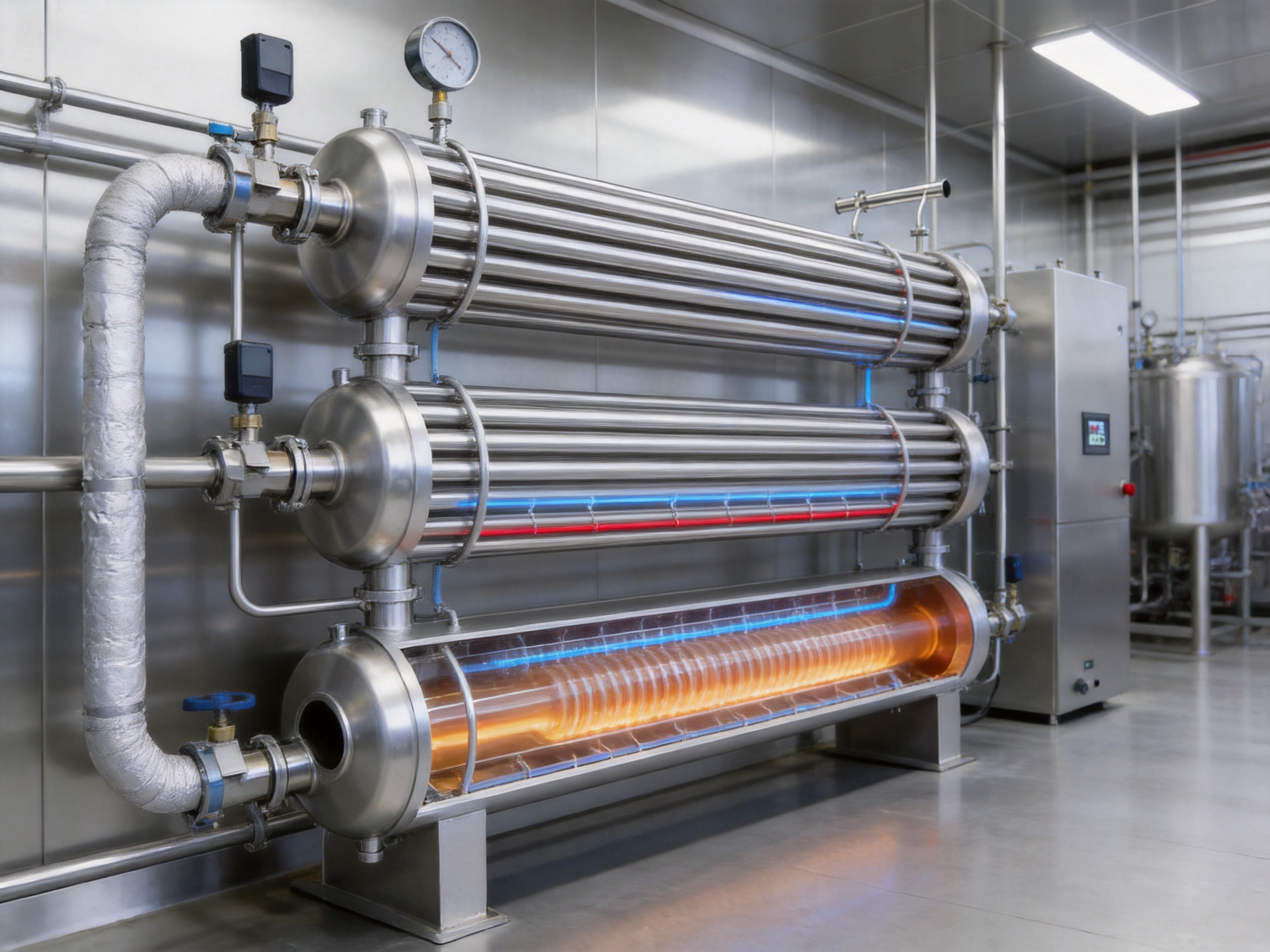
The performance of a sanitary heat exchanger depends heavily on the quality of its manufacturing process. A theoretically efficient design can fail to meet hygienic expectations if welding creates excessive discoloration, if internal surfaces are damaged during fabrication, or if dimensional control is inadequate. Shiloc’s manufacturing approach is built around controlled fabrication, sanitary welding, polishing, inspection, and traceable documentation.
5.1 Material Traceability
Material traceability begins with the identification of the stainless steel used for tubes, fittings, sheets, supports, and other pressure-bearing or product-contact components. Material Test Reports can be maintained to document grade, heat number, chemical composition, mechanical properties, and relevant inspection information.
Traceability supports quality assurance throughout the project. It allows the manufacturer and customer to confirm that the specified material was used in the finished equipment. For biopharmaceutical and regulated food applications, such documentation can be an important part of equipment qualification and supplier approval.
5.2 Precision Tube Forming and Assembly
Tube-in-tube equipment requires accurate concentric positioning and controlled dimensions. The inner tube must be located correctly inside the outer tube to maintain the intended annular passage. Deviations can affect pressure drop, heat-transfer performance, drainability, and cleaning behavior.
Depending on the configuration, tubes may be formed into U-shapes or coils using controlled bending procedures. Bending must minimize flattening, wrinkling, excessive wall thinning, and internal surface damage. After forming, components are inspected to confirm dimensional accuracy and suitability for assembly.
5.3 Hygienic Welding
Welding is one of the most important steps in sanitary equipment fabrication. Product-contact welds should be smooth, continuous, and free from cracks, undercutting, porosity, excessive oxidation, and other defects that could retain product or interfere with cleaning.
Orbital welding or other controlled welding methods can be used where appropriate. Welding procedures should define parameters such as current, travel speed, shielding gas, material thickness, joint preparation, and acceptance criteria. Internal weld quality is especially important because inaccessible defects may not be visible during routine inspection.
Welding records can be retained as part of the equipment documentation package. These records may include weld maps, operator qualifications, procedure references, inspection results, and repair history. Such documentation supports quality verification and future maintenance.
5.4 Polishing and Passivation
After welding and forming, the product-contact surfaces can undergo mechanical polishing, chemical treatment, electropolishing, or a combination of processes. The objective is to remove unwanted surface irregularities, reduce weld discoloration, and produce a clean, corrosion-resistant finish.
Passivation may be used to promote the formation of a stable passive layer on stainless steel. The selected treatment must be compatible with the material and validated according to the applicable process requirements. Following treatment, the equipment should be rinsed and inspected to prevent chemical residues from entering the production system.
5.5 Dimensional and Surface Inspection
Quality control can include dimensional inspection, visual examination, surface roughness measurement, weld inspection, pressure testing, leak testing, and cleanliness verification. Inspection requirements should be agreed during the design stage, particularly for biopharmaceutical installations with extensive documentation needs.
Surface roughness measurements should be performed at representative locations, including critical weld areas when required. The inspection records can be included in the final documentation package. This provides customers with evidence that the supplied finish meets the project specification.
5.6 Pressure and Leak Testing
Pressure testing confirms the mechanical integrity of the product and utility circuits. The test method, pressure, duration, medium, and acceptance criteria should be established according to the applicable design code and project requirements. Leak detection ports and double-tube-sheet arrangements can provide additional protection during operation.
Testing is especially important when the exchanger will operate with elevated temperatures, steam, pressurized water, or aggressive cleaning chemicals. The completed test records help establish confidence in the equipment before it is shipped and installed.
5.7 Manufacturing Facility and Technical Team
Shiloc operates a Shanghai facility of approximately 3,000 square meters and has more than 20 technical specialists involved in engineering, fabrication, welding, polishing, quality control, and technical coordination. This structure allows the company to manage multiple stages of the equipment process and maintain closer communication between design and production personnel.
The company’s manufacturing capabilities are supported by European know-how and Danish design principles. This combination is intended to connect practical fabrication experience with process engineering discipline. The objective is to produce equipment that is not only technically functional, but also easier to install, clean, inspect, document, and maintain.
6. Customized Engineering for Process Requirements
There is no universal heat exchanger specification that suits every food or biopharmaceutical process. Product viscosity may change with temperature. Particle size may vary between batches. The required duty may be influenced by upstream and downstream equipment. Installation space may limit tube length or require a specific arrangement. For these reasons, customization is an important part of sanitary heat exchanger supply.
Engineering begins with a process data review. Typical information includes product name, composition, density, viscosity, flow rate, inlet and outlet temperatures, maximum allowable pressure drop, particle size, fouling tendency, cleaning chemicals, sterilization conditions, utility temperatures, and operating schedule.
Based on this information, the exchanger can be evaluated for heat-transfer area, tube diameter, flow velocity, pressure drop, material selection, connection type, number of passes, and physical dimensions. Thermal calculations should be reviewed together with mechanical and hygienic requirements rather than treated as separate tasks.
Custom-designed coil heat exchangers can be developed for specific flow requirements and available plant space. A compact coil may be advantageous when a long straight exchanger is difficult to install. Conversely, removable straight sections may be preferred when access and inspection are the main priorities.
Pitot tubes or other engineered flow-control components can be incorporated where required by the process. Flow-control systems help maintain the intended operating condition and can support accurate distribution between process paths. Instrument selection should be coordinated with the customer’s automation platform and control philosophy.
Programming software options can be selected according to the project. The control system may manage product temperature, utility flow, startup, shutdown, alarm handling, cleaning sequences, and data recording. A properly configured system reduces operator workload and improves repeatability from batch to batch.
7. Cleaning, Sterilization, and Hygienic Operation
Clean-in-place capability is a central requirement in modern sanitary plants. During CIP, cleaning solutions circulate through the product path and, when applicable, the service circuit. The system must provide suitable velocity, temperature, chemical concentration, contact time, and drainage to achieve the required cleaning result.
The exchanger should be installed with piping that supports complete drainage. Low points, high points, valve orientation, instrument connections, and return lines must be considered during the overall system design. A hygienic exchanger cannot compensate for poor plant piping that creates uncleanable pockets.
Single-point design can allow the same location to function as a low-point drain during CIP and SIP. This can simplify the arrangement and reduce unnecessary connection points. The actual suitability of the design depends on the orientation, slope, operating conditions, and validated cleaning procedure.
Sterilize-in-place procedures may use clean steam or another approved sterilization medium. The exchanger must be designed for the required temperature, pressure, thermal expansion, and sterilization cycle. Components such as seals, instruments, valves, and gaskets must also be compatible with the selected SIP conditions.
Cleaning validation should be based on the actual product and process. Visual inspection, rinse testing, conductivity, total organic carbon, microbiological sampling, or other methods may be used according to the customer’s quality system. The heat exchanger forms one part of the complete hygienic process and should be included in the plant’s cleaning validation strategy.
8. Applications Across Food, Beverage, and Biopharmaceutical Industries
8.1 Dairy Processing
Dairy products frequently require accurate heating and cooling while maintaining a sanitary environment. Milk, cream, yogurt bases, cultured products, and dairy desserts can benefit from controlled temperature treatment. Products containing fruit or cereal inclusions may require a larger and more open product passage.
The exchanger can support preheating, cooling, pasteurization-related duties, ingredient preparation, and temperature adjustment before filling or fermentation. Product shear, residence time, and fouling tendency should be reviewed carefully because dairy products may change viscosity and form deposits under unsuitable thermal conditions.
8.2 Juice and Beverage Production
Juices, syrups, functional beverages, concentrates, and flavored drinks may contain pulp, fibers, suspended solids, or dissolved ingredients that affect flow behavior. Tube-in-tube equipment can be configured for heating, cooling, pasteurization, or recovery of thermal energy between product streams.
Precise outlet temperature control helps protect flavor and color while supporting consistent filling conditions. The hygienic surface finish and CIP-compatible design help beverage manufacturers manage frequent product changes and reduce cleaning-related downtime.
8.3 Sauces, Creams, and Prepared Foods
Sauces, dressings, creams, purees, jams, and prepared-food mixtures may be highly viscous or contain particles. Their thermal properties can vary significantly with solids content and temperature. A tube-in-tube exchanger with a suitably sized product channel can reduce the risk of blockage compared with equipment designed only for low-viscosity liquids.
Applications may include heating before mixing, cooling after cooking, temperature control before packaging, and recovery of heat between incoming and outgoing streams. The required pump type and flow velocity should be selected together with the exchanger to maintain a stable process.
8.4 Meat and Protein Products
Minced meat mixtures, protein slurries, and other prepared products can contain suspended particles and may require careful temperature management. Heating or cooling can be integrated into cooking, blending, filling, or preservation processes. Hygienic construction and effective cleaning are essential because protein residues can support microbial growth if they remain in the equipment.
The product path should be designed to minimize retention and provide suitable cleaning velocity. The exchanger’s mechanical configuration must also account for the product’s solids content and pressure sensitivity.
8.5 Biopharmaceutical Processing
Biopharmaceutical processes impose strict requirements for cleanliness, traceability, material compatibility, and process control. Sanitary tube-in-tube heat exchangers may be used for heating or cooling process fluids, buffer solutions, media, purified water-related streams, and other liquid preparations where the design is appropriate.
For these applications, the equipment package may require detailed material certificates, weld records, surface-finish documentation, pressure-test reports, calibration information, and other quality records. The heat exchanger must be integrated with the customer’s validation, qualification, and change-control procedures.
Biopharmaceutical products can be sensitive to thermal exposure, shear, and contamination. Consequently, the thermal duty should be carefully calculated, and the control system should provide reliable monitoring of inlet and outlet temperatures, pressure, flow, and cleaning or sterilization status.
8.6 Fine and Daily Chemicals
Fine chemical and daily chemical products may require heating or cooling of lotions, emulsions, surfactant solutions, gels, and other formulations. Material compatibility is particularly important because some chemicals can attack stainless steel or elastomers under specific conditions.
The sanitary tube-in-tube concept can be adapted for clean chemical production lines where product purity, drainability, and changeover performance are important. The final design should consider the formulation, cleaning agents, operating temperature, and any regulatory requirements that apply to the product.
9. Process Control and System Integration
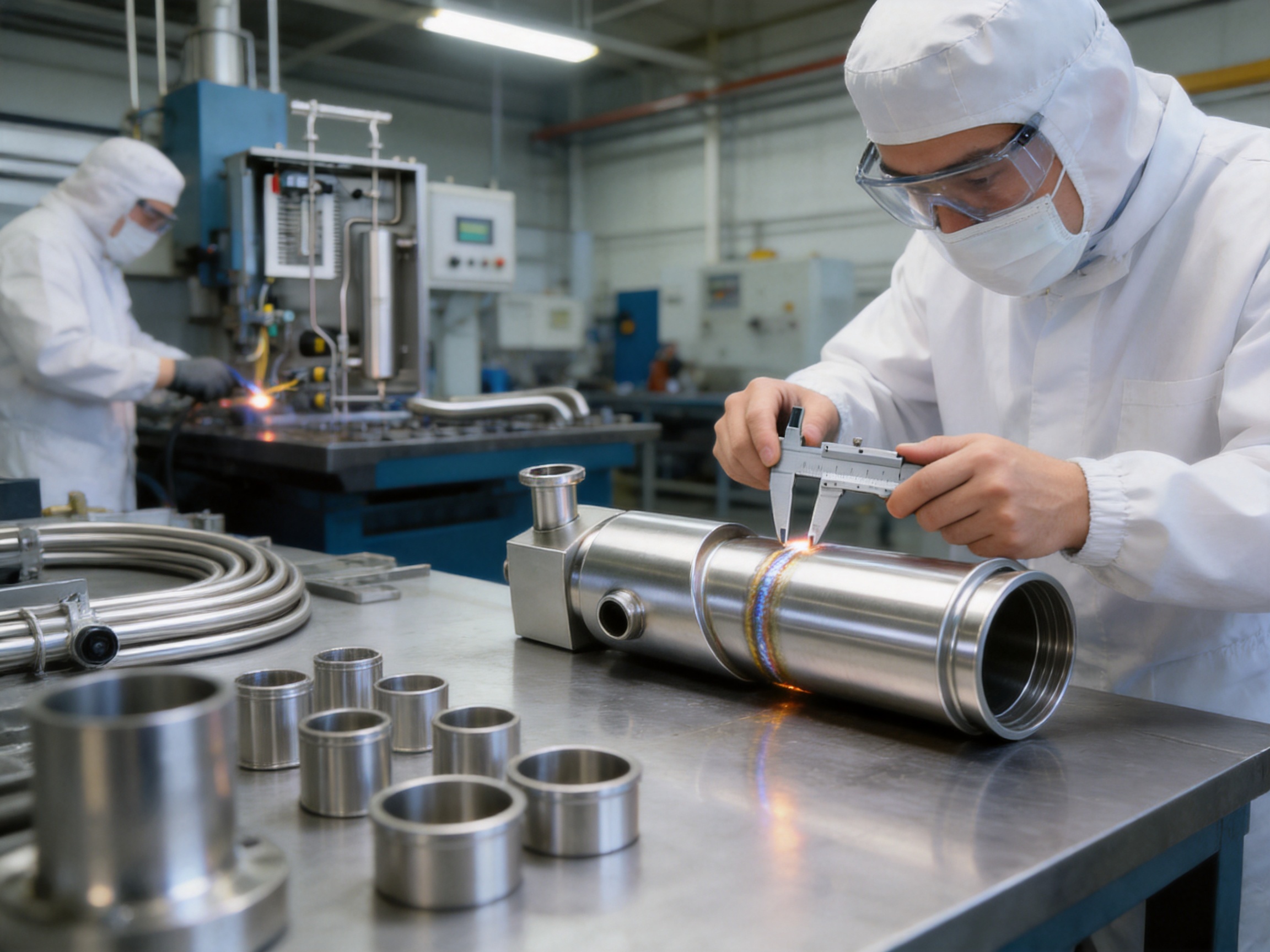
A heat exchanger is most effective when it operates as part of a coordinated process system. Temperature sensors should be positioned to provide representative readings without creating difficult-to-clean pockets. Flow meters and control valves should be selected according to the product’s viscosity, required accuracy, and sanitary requirements.
Control logic may regulate the utility flow to maintain a target product outlet temperature. More advanced systems can coordinate product flow, utility flow, bypass operation, startup sequencing, and cleaning steps. Alarms may be configured for high outlet temperature, low flow, excessive pressure drop, utility failure, or abnormal differential pressure.
During startup, the system should avoid exposing the product to an uncontrolled thermal shock. During shutdown, the sequence should prevent product from remaining in the exchanger for an excessive period. Automated drain and rinse sequences may improve repeatability and reduce operator dependence.
For high-value or sensitive products, data recording can support batch documentation and process verification. Recorded parameters may include flow rate, inlet temperature, outlet temperature, utility temperature, pressure, cleaning cycle status, and alarm history. The level of automation should match the customer’s quality system and production requirements.
10. Documentation and Compliance Support
Documentation is a major part of equipment value in regulated industries. A complete documentation package may include general arrangement drawings, process and instrumentation information, material certificates, weld maps, welding records, surface-finish reports, pressure-test records, leak-test results, equipment manuals, spare-parts lists, and recommended maintenance procedures.
Component traceability helps the customer identify the materials and parts used in the unit. This can simplify future replacement, supplier audits, maintenance planning, and qualification activities. When TEMA data or comparable thermal design information is applied, the customer receives a clearer technical basis for evaluating performance.
Documentation requirements should be agreed before fabrication begins. Different industries and facilities may require different levels of inspection, certification, and validation support. Early agreement prevents delays and allows the manufacturer to plan the required records and inspection points.
Shiloc’s international trade and technical service capabilities are intended to support customers beyond the physical supply of equipment. The company can assist with technical communication, export coordination, logistics, document preparation, and communication between customers, engineers, fabricators, and installation teams.
11. Why Choose a Specialized Supplier?
Purchasing a heat exchanger from a general equipment supplier may provide a basic thermal component, but hygienic process applications often require more comprehensive support. A specialized supplier understands that the unit must fit the product, piping, cleaning system, automation platform, documentation structure, and production schedule.
A specialized supplier can help identify potential issues before fabrication. These may include insufficient cleaning velocity, unsuitable connection orientation, inadequate drainage, excessive pressure drop, incompatible seals, insufficient allowance for thermal expansion, or a mismatch between the exchanger and the available utilities.
Engineering experience is also valuable when the process contains unusual materials or changing operating conditions. A supplier that can evaluate viscosity, particles, fouling, and temperature sensitivity is better positioned to propose an exchanger that performs reliably in actual production rather than only under ideal laboratory conditions.
Shiloc combines equipment manufacturing with import and export agency services and engineering technical support. This integrated approach can reduce communication gaps for international customers. Instead of managing separate contacts for design, fabrication, documentation, logistics, and trade procedures, customers can coordinate through a single technical and commercial channel.
The company’s stated focus includes innovative design, process optimization, safe and efficient equipment, reliable supply, traceability, and personalized customer service. These capabilities are particularly relevant to customers that require customized tube-in-tube heat exchangers rather than standard catalog equipment.
12. Installation and Maintenance Considerations
Correct installation is essential for achieving the intended performance. The exchanger should be supported to prevent excessive stress on tubes and connections. Piping should be aligned without forcing the equipment into position. Thermal expansion, vibration, access for inspection, and space for removing the inner tube should be considered in the layout.
Connections should be installed according to the selected sanitary standard. Gaskets must be compatible with the product, cleaning chemicals, operating temperature, and sterilization procedure. Clamps should be tightened correctly, while flange bolts should be tightened in a controlled sequence to avoid uneven loading.
Before commissioning, the system should be flushed and inspected. Instrument calibration, valve operation, drain function, leak detection, and control-loop response should be checked. If the unit is part of a validated process, installation qualification and operational qualification should follow the customer’s procedures.
Routine maintenance may include inspection of seals, verification of temperature and pressure instruments, review of pressure drop, examination of drain points, and confirmation that cleaning cycles remain effective. Any change in product formulation or cleaning chemistry should trigger a review of compatibility and process performance.
Fouling should be monitored through changes in heat-transfer performance, pressure drop, outlet temperature stability, or cleaning duration. Early detection allows operators to investigate before deposits become difficult to remove. If the design permits inner-tube removal, inspection and maintenance can be performed more efficiently.
13. Selecting the Correct Heat Exchanger
The selection process should begin with a clear process specification. The following parameters are particularly important:
Product flow rate and utility flow rate determine the required capacity and influence tube diameter and pressure drop.
Product inlet and outlet temperatures define the thermal duty and help establish the required heat-transfer area.
Utility type, temperature, pressure, and quality affect the heat-transfer coefficient and material requirements.
Product viscosity, particle content, fiber length, and fouling tendency influence the product-channel design.
Maximum allowable pressure drop affects pump selection and operating cost.
Cleaning and sterilization conditions determine the suitability of materials, seals, welds, and drainage arrangements.
Connection standards and installation space influence the mechanical configuration.
Documentation and validation requirements determine the inspection and certification scope.
Where the available data is incomplete, conservative assumptions may lead to an oversized or inefficient unit. It is therefore preferable to collect representative process data and discuss uncertain parameters with the equipment supplier before finalizing the design.
14. Economic and Sustainability Benefits
The purchase price is only one part of the total cost of a heat exchanger. Energy consumption, cleaning chemicals, water use, labor, downtime, maintenance, product loss, and equipment life can have a greater financial impact over time.
Efficient countercurrent heat transfer can reduce utility demand. Heat recovery between hot and cold process streams may further improve energy performance. A design that is easy to drain and clean can reduce water, chemical, and labor requirements. Reliable temperature control can decrease off-specification product and reduce waste.
Long service life also supports sustainability. 316L stainless steel is durable and can be maintained over many production cycles. Replaceable or accessible components may extend the useful life of the equipment and reduce the need for complete replacement.
Sustainability should be evaluated together with hygiene and safety. Reducing cleaning time is beneficial only if cleaning effectiveness is maintained. Lowering utility flow is beneficial only if the exchanger continues to achieve the required thermal duty. The best results come from optimized engineering rather than from reducing one operating parameter in isolation.
15. Frequently Asked Questions
Q1: What is a sanitary tube-in-tube heat exchanger?
A sanitary tube-in-tube heat exchanger is a hygienically designed heat-transfer unit with two concentric tubes. The product flows through the inner tube, while a heating or cooling medium flows through the annular space. The design is used for controlled heating or cooling in food, beverage, dairy, biopharmaceutical, and related clean-process applications.
Q2: What products can be processed with this type of exchanger?
Typical products include milk, cream, yogurt bases, juices, syrups, sauces, jams, creams, slurries, functional beverages, pharmaceutical liquids, buffers, and other hygienic process fluids. The unit can also be considered for products containing fibers or particles when the tube diameter and flow conditions are properly selected.
Q3: Is a tube-in-tube exchanger suitable for particulate products?
It can be suitable for many particulate or fibrous products because the product channel can be designed with a relatively open passage. However, particle size, concentration, viscosity, flow rate, and cleaning requirements must be reviewed before selection. The product should not be assumed to be suitable without a complete process evaluation.
Q4: What materials are commonly used?
316L stainless steel is commonly used for product-contact tubes and sanitary components. Material selection should also consider the product chemistry, cleaning chemicals, sterilization conditions, pressure, and temperature. Material certificates and traceability records can be provided according to the project requirements.
Q5: What surface finish can be provided?
Product-contact surfaces can be finished to a roughness of Ra 0.5 micrometers or lower. More refined finishes, including approximately Ra 0.38 micrometers or electropolished surfaces, may be available depending on the application and specification.
Q6: Can the exchanger support CIP and SIP?
Sanitary tube-in-tube heat exchangers can be designed for CIP and, when required, SIP. The final suitability depends on drainage, connection orientation, cleaning velocity, cleaning chemistry, steam conditions, seals, instruments, and the overall process design. Cleaning and sterilization procedures should be validated by the customer.
Q7: Can the unit be customized?
Yes. Tube diameter, length, number of passes, U-tube or coil arrangement, materials, connections, surface finish, instrumentation, drain points, and documentation can be adjusted according to the product and installation requirements.
Q8: What information is needed for a quotation?
Useful information includes product name, flow rate, inlet and outlet temperatures, product viscosity, particle size, density, fouling tendency, utility type and temperature, operating pressure, cleaning and sterilization conditions, connection preference, available installation space, and documentation requirements.
Q9: How does leak detection protect the process?
Leak detection ports at the ends of a double-tube-sheet arrangement can help identify a breach between the product and service circuits. Early detection reduces the risk of unnoticed cross-contamination and supports planned maintenance before a small leak becomes a larger operational problem.
Q10: Does the equipment require special maintenance?
Routine maintenance typically includes inspection of seals and connections, verification of instruments, confirmation of drain function, monitoring of pressure drop and thermal performance, and review of cleaning effectiveness. Where removable inner tubes are provided, inspection and service can be simplified.
Q11: What documentation can be supplied?
Depending on the project, documentation may include drawings, material test reports, weld records, weld maps, surface-finish reports, pressure-test records, leak-test results, component traceability, operating instructions, maintenance guidance, and spare-parts information.
Q12: Why work with Shiloc?
Shiloc combines sanitary equipment manufacturing, engineering support, international trade coordination, and customized process solutions. Its Shanghai facility, technical team, controlled fabrication capabilities, traceability procedures, and experience with food and biopharmaceutical equipment allow it to support customers from initial technical communication through delivery and integration.
16. Conclusion
The sanitary tube-in-tube heat exchanger is a versatile solution for hygienic heating and cooling duties. Its concentric-tube structure provides a controlled flow path, efficient countercurrent heat transfer, and flexibility for products that may contain fibers, particles, or viscous components. When manufactured with 316L stainless steel, smooth electropolished surfaces, sanitary welds, drainable geometry, and suitable leak detection, the unit can support demanding food, beverage, dairy, biopharmaceutical, and fine chemical operations.
Its advantages extend beyond thermal performance. The ability to integrate CIP and SIP, simplify inspection, support traceability, accommodate customized connections, and operate as part of an automated process system makes the equipment valuable throughout the production life cycle. Careful engineering is essential because tube diameter, flow velocity, thermal duty, cleaning conditions, and installation geometry must all work together.
Shiloc provides a combination of equipment manufacturing, European and Danish design influence, sanitary fabrication, technical documentation, international logistics support, and customized engineering. Its focus on material control, welding, polishing, quality inspection, and customer-specific design helps address the practical requirements of modern hygienic process facilities.
For manufacturers seeking reliable heat transfer with strong hygiene performance, the sanitary tube-in-tube heat exchanger offers a balanced combination of efficiency, flexibility, cleanability, and maintainability. With appropriate process data and professional engineering support, it can become an important component of a safer, more efficient, and more reliable production system.
References
1. TEMA Standards, Standards of the Tubular Exchanger Manufacturers Association.
2. ASME BPE, Bioprocessing Equipment Standards.
3. EHEDG Guidelines, Hygienic Design Principles for Food and Bioprocess Equipment.
4. ISO 14159, Safety of Machinery—Hygiene Requirements for the Design of Machinery.
5. ISO 9001, Quality Management Systems—Requirements.
6. 3-A Sanitary Standards, Hygienic Equipment Design and Fabrication Principles.
7. Stainless Steel in Food and Beverage Processing, Technical Guidance on Material Selection and Surface Finishing.
8. Principles of Heat Exchanger Design, Technical References for Tubular Heat Transfer Equipment.
9. Clean-in-Place Technology for Hygienic Process Systems, Engineering and Validation Guidance.
10. Sterilization-in-Place Design Practices for Biopharmaceutical Equipment, Technical Manufacturing Guidance.
Product: Sanitary Tube-in-Tube Heat Exchanger
PREV:Intelligent Industrial Heat Exchanger Units for Food, Beverage, Biopharmaceutical, and UHT Sterilization Processes
NEXT:Precision Temperature Control Units for Food and Biopharmaceutical Process Manufacturing
NEXT:Precision Temperature Control Units for Food and Biopharmaceutical Process Manufacturing
Interested in cooperation or have questions?
Recommended LINS
✦
Food Processing Skid System
Food and Beverage Process System
Aseptic Processing Equipment for Liquid Foods
Sanitary Process Skid
UHT Processing System for Dairy Products
UHT Processing Equipment for Plant Based Milk
Milk Processing Heat Exchanger
Process Skid System
Aseptic Beverage Processing Line
Indirect Heating UHT Sterilizer
Let'S Work Together Welcome Aboard!
-

haikexin@haikexin.com
+8613391278930
-
 +86-21-57560276
-
 No. 2819, Sihu Road,Fengxian District, Shanghai, China
Join Our Mailing List
Copyright © Shiloc (Shanghai) Industrial Trading Co., Ltd. All Rights Reserved.
Process Systems & Equipment For Food & Biopharma Manufacturers
