
 English
 русский
 Português
 Français



 Read More

Product Category
NEW Category
Contact us
Contact Us
We specialise in the research, development and manufacture of electrical wires and cables.
 +86-21-57560276
Intelligent Industrial Heat Exchanger Units for Food, Beverage, Biopharmaceutical, and UHT Sterilization Processes
Content
- 1 1. The Role of Intelligent Heat Transfer in Modern Processing
- 2 2. Product Architecture and Main Equipment
- 3 3. How the Unit Works
- 4 4. Advantages Compared with Conventional and Fragmented Systems
- 5 5. Application in UHT Sterilization Systems
- 6 6. Food and Beverage Applications
- 7 7. Biopharmaceutical and Biotechnology Applications
- 8 8. Manufacturing Strengths and Engineering Capability
- 9 9. Design and Selection Considerations
- 10 10. Installation, Commissioning, and Operation
- 11 11. Maintenance and Troubleshooting
- 12 12. Digital Monitoring and Smart Manufacturing
- 13 13. Why Choose an Integrated Custom-Made Solution
- 14 14. Conclusion
- 15 Questions and Answers
- 15.1 1. What is an intelligent industrial heat exchanger unit?
- 15.2 2. Can the unit be used with a UHT sterilizer?
- 15.3 3. Does the unit directly sterilize the product?
- 15.4 4. What are the main advantages of skid-mounted construction?
- 15.5 5. How does automatic temperature regulation work?
- 15.6 6. What materials are available for heat exchanger construction?
- 15.7 7. How often should the plate heat exchanger be cleaned?
- 15.8 8. Can the unit include standby pumps?
- 15.9 9. Can the system communicate with a factory automation platform?
- 15.10 10. What information is required for equipment selection?
- 15.11 11. What support is available during installation?
- 15.12 12. Why is factory testing important?
- 16 References
- 17 Product: Intelligent Industrial Heat Exchanger Unit
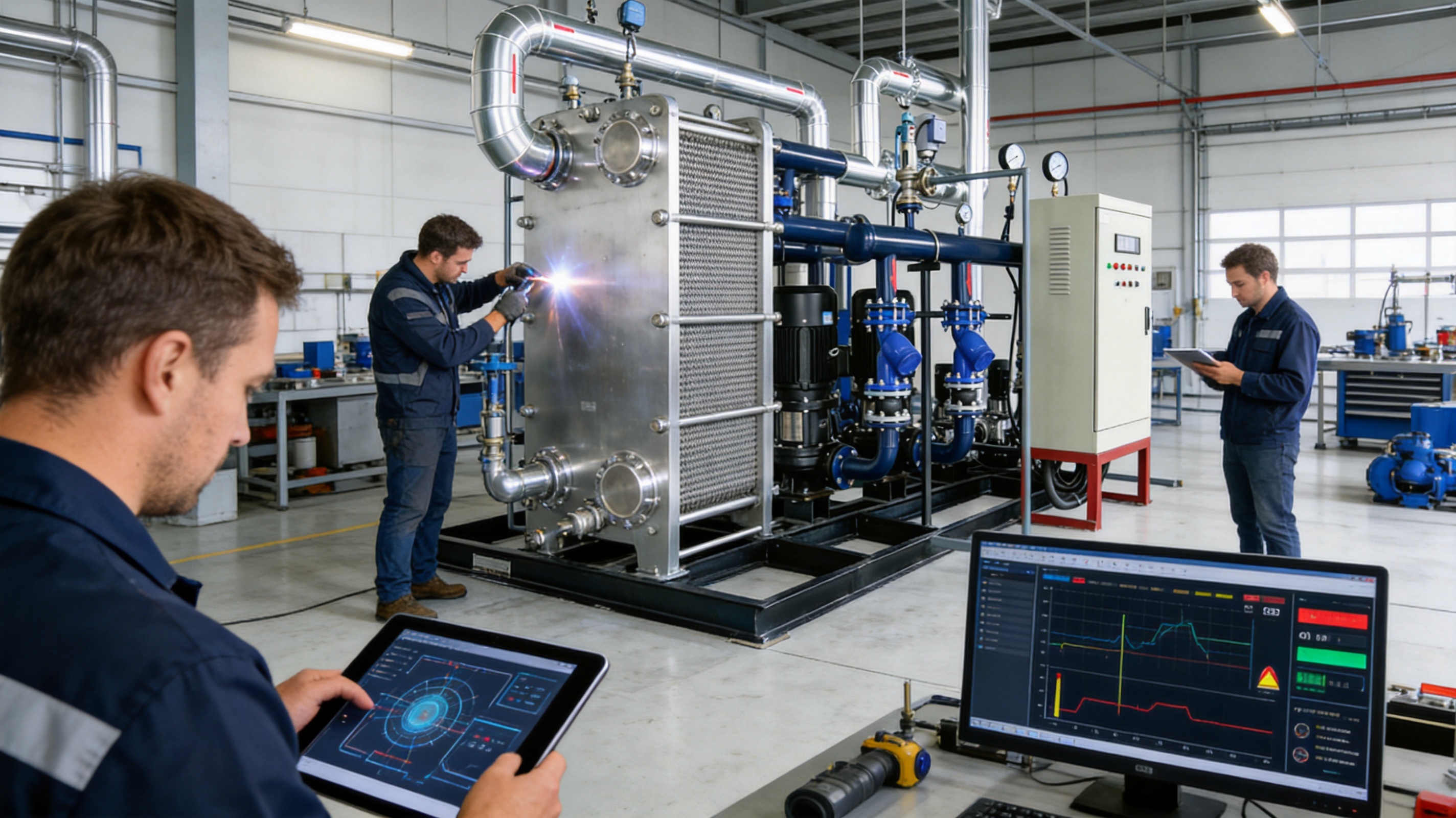
Modern food, beverage, and biopharmaceutical manufacturers require thermal processing systems that are accurate, hygienic, energy-efficient, and dependable. Heating and cooling are not isolated operations in these industries. They are closely connected with product safety, shelf life, formulation stability, microbial control, production yield, cleaning performance, and regulatory compliance. A temperature deviation of only a few degrees can affect the quality of a finished product, while unstable pressure or flow can interrupt production and create unnecessary maintenance risks.
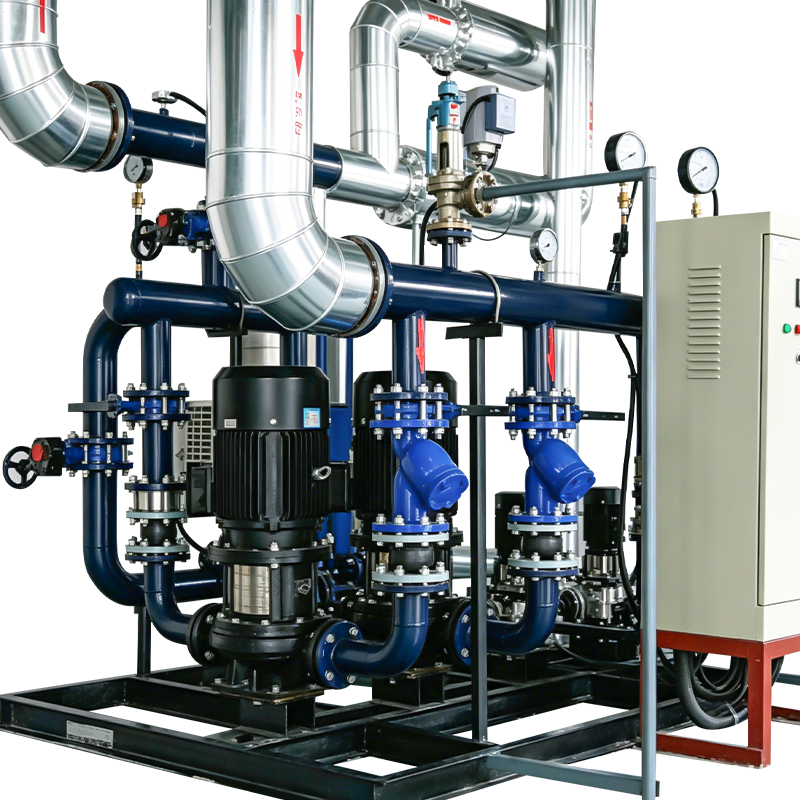
The intelligent industrial heat exchanger unit is designed to address these requirements through integrated thermal transfer, automated process control, real-time monitoring, and modular skid-mounted construction. It combines a plate heat exchanger, circulation pumps, valves, sensors, instruments, safety devices, and a PLC-based control system in one coordinated package. Instead of requiring operators to adjust each component independently, the unit continuously evaluates process conditions and regulates the system according to configured operating parameters.
In food and beverage production, the unit can support heating, cooling, pasteurization-related operations, process water temperature regulation, product preparation, and utility-side heat transfer. In biopharmaceutical manufacturing, it can be applied to controlled heating and cooling duties, buffer and media preparation, clean utility systems, and other processes that demand repeatable thermal conditions. When integrated with an upstream or downstream UHT sterilizer, it can also help maintain the stable heating and cooling conditions required for ultra-high-temperature processing.
The system is supplied as a preassembled skid. Major components are installed, piped, wired, tested, and debugged before delivery, reducing the amount of field installation work. After positioning at the customer’s facility, the unit can be connected to hot and cold media networks, process lines, electrical power, and plant control systems. This approach shortens commissioning time, improves installation consistency, and gives operators a clearly defined thermal management package.
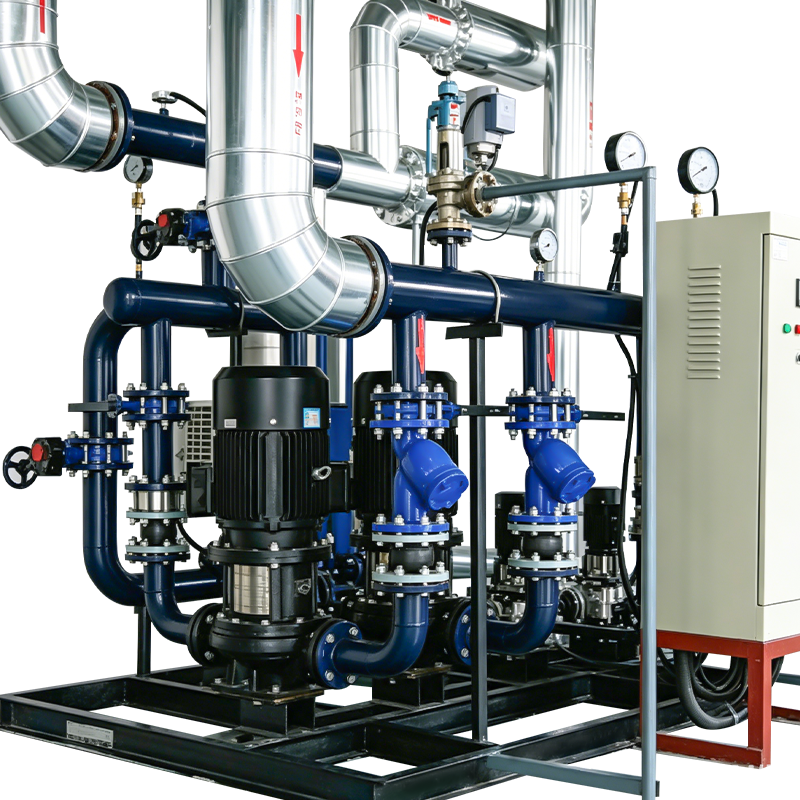
Intelligent Industrial Heat Exchanger Unit
1. The Role of Intelligent Heat Transfer in Modern Processing
Heat transfer is fundamental to the operation of almost every process plant. Food products may need to be heated to improve flowability, dissolve ingredients, deactivate microorganisms, or achieve a specific formulation temperature. They may then need to be cooled rapidly to preserve flavor, color, texture, nutrients, or microbiological stability. Pharmaceutical and biopharmaceutical materials may require carefully controlled heating and cooling cycles to protect sensitive ingredients and maintain batch consistency.
Traditional heat exchanger installations often consist of separately selected components connected on site. A heat exchanger may be purchased from one supplier, pumps from another, control valves from a third supplier, and instruments from several different manufacturers. Although this approach can work, it places a significant burden on the engineering team responsible for system integration. Incorrect sizing, inconsistent instrumentation, poor pipe routing, insufficient access for maintenance, and unclear control logic can reduce the performance of the complete installation.
An integrated intelligent unit takes a different approach. The heat exchanger and supporting equipment are engineered as a coordinated system. Pump capacity, heat transfer area, valve arrangement, sensor positions, control sequences, and safety functions are considered together. This improves the relationship between the thermal equipment and the process network, while also simplifying factory acceptance testing and site commissioning.
The intelligent aspect of the system is not limited to the presence of a programmable logic controller. Intelligence is created by combining reliable mechanical equipment with accurate measurement, automatic regulation, operating data collection, alarm management, and repeatable control logic. The result is a thermal skid that can react to changing loads instead of operating only at a fixed manual setting.
2. Product Architecture and Main Equipment
The intelligent industrial heat exchanger unit uses a skid-mounted integrated design. The structural frame supports the heat exchanger, pump sets, valves, instrumentation, control cabinet, cable routing, and related accessories. The layout is developed to provide a balance between compactness, accessibility, serviceability, and safe operation.
2.1 Plate Heat Exchanger
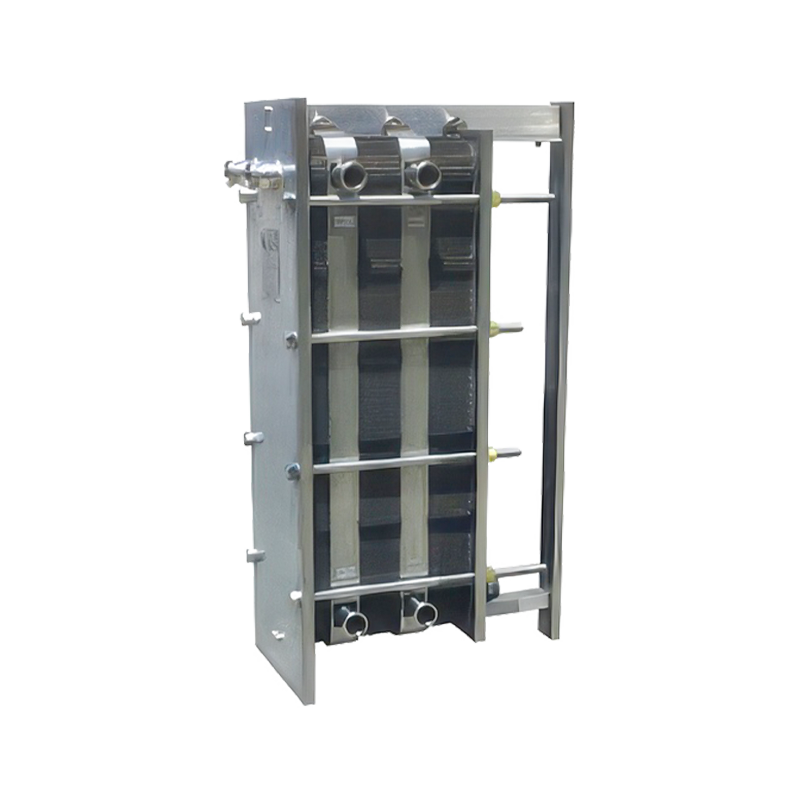
The plate heat exchanger is the primary heat transfer component. It contains a series of corrugated metal plates assembled with gaskets or other sealing arrangements appropriate to the application. Separate fluid channels allow the hot and cold media to flow without mixing while heat passes through the plate surfaces.
Plate heat exchangers offer a high heat transfer coefficient within a relatively small footprint. Their modular plate arrangement makes it possible to adjust the heat transfer area by adding or removing plates when process requirements change. The plate pack can also be opened for inspection, cleaning, gasket replacement, and maintenance.
For food and beverage applications, stainless steel construction and hygienic design are important considerations. The selected plate material, gasket material, surface finish, flow arrangement, and connection type must correspond to the product, cleaning chemicals, temperature, pressure, and sanitation procedures. For biopharmaceutical duties, the design may require additional attention to drainability, cleanability, material traceability, dead-leg reduction, and compatibility with cleaning or sanitization cycles.
2.2 Circulation Pump Sets
Circulation pumps provide the flow necessary to move heating, cooling, or process media through the system. The skid can be configured with multiple pumps to support different operating duties, flow requirements, or redundancy strategies. Main and standby pump arrangements help maintain operation if one pump requires service.
Automatic main and standby pump switching can be incorporated into the control logic. The system may monitor pump status, running current, discharge pressure, flow, and alarm signals. If a configured fault occurs, the controller can stop the affected pump and initiate the standby pump, subject to the process conditions and safety interlocks.
Correct pump selection is essential. A pump that is too small may not provide the required circulation rate, while an oversized pump can consume unnecessary energy and create excessive shear or pressure. The pump must be selected according to flow rate, total dynamic head, medium properties, temperature, viscosity, solids content, hygienic requirements, and the pressure drop through the heat exchanger and associated piping.
2.3 Valves and Flow Regulation
Valves control the movement of heating and cooling media and determine the effective heat transfer capacity of the unit. Depending on the process, the package may include isolation valves, regulating valves, check valves, drain valves, vent valves, safety valves, and automatic control valves.
Automatic valves respond to commands from the PLC. For example, when the secondary outlet temperature falls below its setpoint, the controller may increase the opening of the heating-medium valve. When the measured temperature approaches the target, the valve position can be reduced to prevent overshoot. Similar control logic can regulate cooling water, chilled water, or process flow.
Valve selection must consider the medium, temperature, pressure, control range, response time, materials, sealing arrangement, and cleaning requirements. Properly selected valves improve temperature stability and reduce the need for manual intervention.
2.4 Sensors and Measurement Instruments
The intelligent unit uses pressure gauges, pressure transmitters, temperature sensors, flow meters, and other instruments to collect information from the process. Typical measurement points include the inlet and outlet of the primary side, the inlet and outlet of the secondary side, pump suction and discharge, and the heat exchanger differential pressure circuit.
Temperature measurement is important for controlling heat transfer and verifying that the process outlet reaches its required condition. Pressure measurement protects the equipment and helps identify restrictions, pump problems, leaks, or abnormal network behavior. Flow measurement provides information about actual circulation and allows the controller to detect insufficient flow or excessive demand.
Instrumentation accuracy, calibration, installation position, response time, and hygienic connection design all influence control performance. Instruments should be accessible for inspection and calibrated according to the customer’s quality management procedures.
2.5 PLC and Human-Machine Interface
The PLC serves as the central control unit. It receives signals from sensors, compares measured values with configured parameters, and sends commands to pumps, valves, alarms, and other controlled devices. The system can be configured for local operation, remote status monitoring, or integration with a wider plant automation system.
An HMI allows operators to view temperatures, pressures, flow rates, pump status, valve positions, active alarms, and historical trends. Operators may also use the interface to select automatic or manual modes, enter setpoints, acknowledge alarms, and review operating conditions.
Control functions can include automatic temperature regulation, pump sequencing, standby pump switching, high-temperature alarm, low-flow alarm, high-pressure protection, emergency shutdown, and communication with a supervisory control system. The exact control strategy is developed according to the process risk, product requirements, and customer operating philosophy.
3. How the Unit Works
The operating principle is based on indirect heat transfer between two separate media. A heating medium, such as hot water or another suitable utility, enters one side of the plate heat exchanger. A process medium, cooling medium, or secondary water circuit enters the other side. The two streams pass through separate channels, and heat moves across the metal plates.
In a heating application, the primary hot medium transfers energy to the secondary fluid. In a cooling application, heat moves from the process medium into the cooling medium. The controller monitors the outlet temperature and adjusts the relevant flow path to maintain the configured target.
During startup, the PLC may confirm that valves are in the correct position, sufficient medium is available, and the pump is ready. The system can then start the circulation pump and gradually open the control valve. A controlled startup reduces thermal shock, prevents sudden pressure changes, and limits the possibility of temperature overshoot.
During normal operation, temperature sensors provide continuous feedback. If production demand increases, the outlet temperature may begin to change. The controller responds by adjusting the heating or cooling flow, changing pump operation, or coordinating with the connected process system. The control response can be tuned to prevent rapid oscillation and maintain stable operation.
During shutdown, the system can close control valves, stop pumps according to a defined sequence, isolate the equipment, and generate an alarm if abnormal conditions remain. Emergency stop functions provide a separate means of quickly stopping hazardous or unstable operation.
3.1 Closed-Loop Temperature Control
Closed-loop control is one of the most important differences between an intelligent unit and a basic manually operated heat exchanger. In a manual system, an operator may adjust a valve based on an occasional temperature reading. In a closed-loop system, the sensor measures the process continuously and the controller makes frequent corrections.
This improves repeatability when the incoming temperature, process flow, ambient conditions, or product demand changes. It also reduces the risk of operator error. The control system does not eliminate the need for qualified personnel, but it gives operators better information and a more consistent means of managing the process.
3.2 Data Collection and Traceability
Process data can be collected for operating review, troubleshooting, energy analysis, and quality documentation. Depending on the control configuration, recorded information may include inlet and outlet temperatures, flow rates, pressure values, pump running status, valve positions, alarm history, and operating time.
Historical data helps engineering teams identify gradual performance deterioration. For example, a rising differential pressure across the heat exchanger may indicate fouling or filter blockage. Increasing pump vibration or unstable discharge pressure may indicate a pump or piping problem. A trend of slower temperature response may indicate insufficient utility flow, scaling, or sensor drift.
Data collection also supports process optimization. By comparing production demand with heat transfer performance, operators may identify opportunities to lower utility consumption, improve setpoints, or adjust operating schedules.
4. Advantages Compared with Conventional and Fragmented Systems
The intelligent skid-mounted heat exchanger unit provides several practical advantages over conventional installations assembled from disconnected components. These advantages are especially important for manufacturers that need dependable operation, short project schedules, and consistent quality across multiple production lines.
4.1 Integrated Engineering
All major components are selected and arranged as one system. The pump, heat exchanger, control valve, sensors, safety devices, and controller are designed to work together. This reduces the coordination burden placed on the customer and lowers the risk that separate suppliers will provide incompatible equipment or incomplete documentation.
4.2 Reduced Site Installation Work
The skid is assembled and tested before delivery. The customer does not need to build the complete package from individual components at the installation site. Site work is generally concentrated on positioning, connection to utilities and process lines, electrical connection, communication integration, and final commissioning.
Reducing field assembly can shorten the installation schedule and limit the influence of site conditions. It also improves consistency because piping routes, instrument positions, and control cabinet connections are established under controlled manufacturing conditions.
4.3 Faster Commissioning
Factory preassembly allows the manufacturer to perform functional checks before shipment. These checks may include instrument verification, valve operation, pump rotation confirmation, control logic testing, alarm testing, and inspection of the piping and frame.
Although final commissioning must always be completed at the customer’s site, pretesting reduces the likelihood of discovering basic assembly problems after installation. It also gives the customer a clearer starting point for site acceptance testing.
4.4 Better Temperature Stability
Automatic regulation helps maintain a stable outlet temperature when process demand changes. This is valuable in applications where temperature affects product texture, viscosity, microbial control, dissolution, reaction behavior, or biological activity.
Stable temperature control can also reduce product losses caused by overheating, underheating, repeated processing, or out-of-specification batches. The actual performance depends on proper sizing, suitable sensors, correct control tuning, and a stable utility supply.
4.5 Modular Capacity
The number of pumps and the heat transfer area can be configured according to the required load. A smaller system may serve a single process line, while a larger package can support multiple circuits or higher production capacity. Modular construction allows the system to be adapted to different flow rates, temperature differences, and operating schedules.
4.6 Improved Maintenance Access
The skid layout can be designed to provide access to pumps, valves, instruments, and the plate heat exchanger. The plate heat exchanger can be opened for inspection and cleaning. The pump arrangement can allow maintenance of one pump while another remains available, where the process design permits standby operation.
Clear component identification, organized pipe routing, and accessible instruments make troubleshooting more efficient. These characteristics are often more valuable over the equipment life cycle than a low initial purchase price alone.
4.7 Enhanced Safety
The unit can include overpressure protection, over-temperature alarms, emergency stop devices, pump protection, low-flow alarms, and interlocks. These functions help prevent operation outside the design range and give operators early warning of abnormal conditions.
Safety functions should be developed through a proper risk assessment. The heat exchanger unit must also be integrated with the customer’s plant safety system, emergency procedures, and operating instructions.
4.8 Energy Optimization
Automatic control can reduce unnecessary heating and cooling. Rather than operating at a constant maximum utility flow, the system adjusts its response according to actual demand. Variable operating conditions can therefore be managed more efficiently.
Energy performance depends on many factors, including insulation, heat exchanger cleanliness, utility temperature, process flow, pump efficiency, valve selection, and control strategy. The intelligent unit provides the measurement and control foundation needed to improve these factors over time.
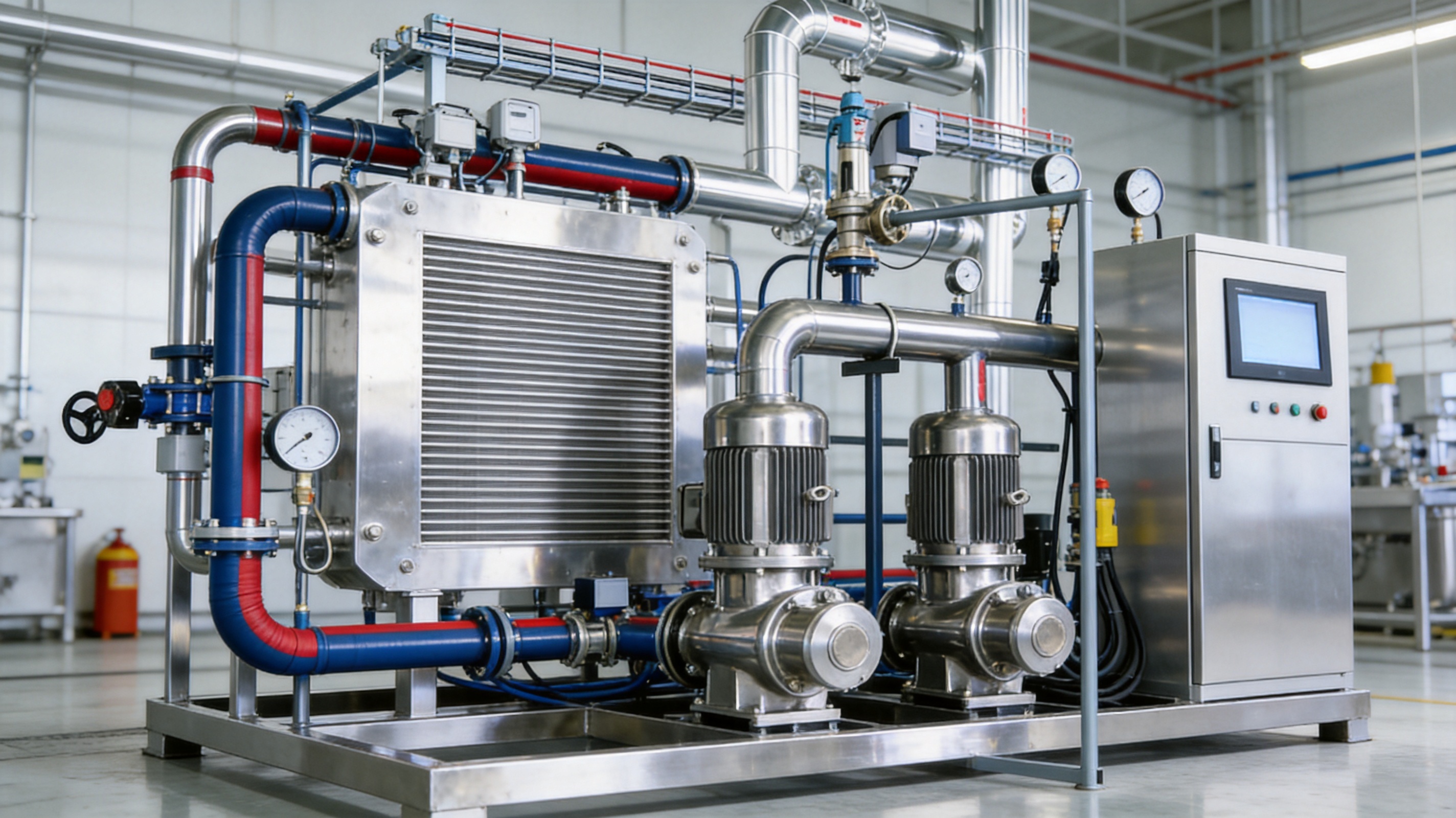
5. Application in UHT Sterilization Systems
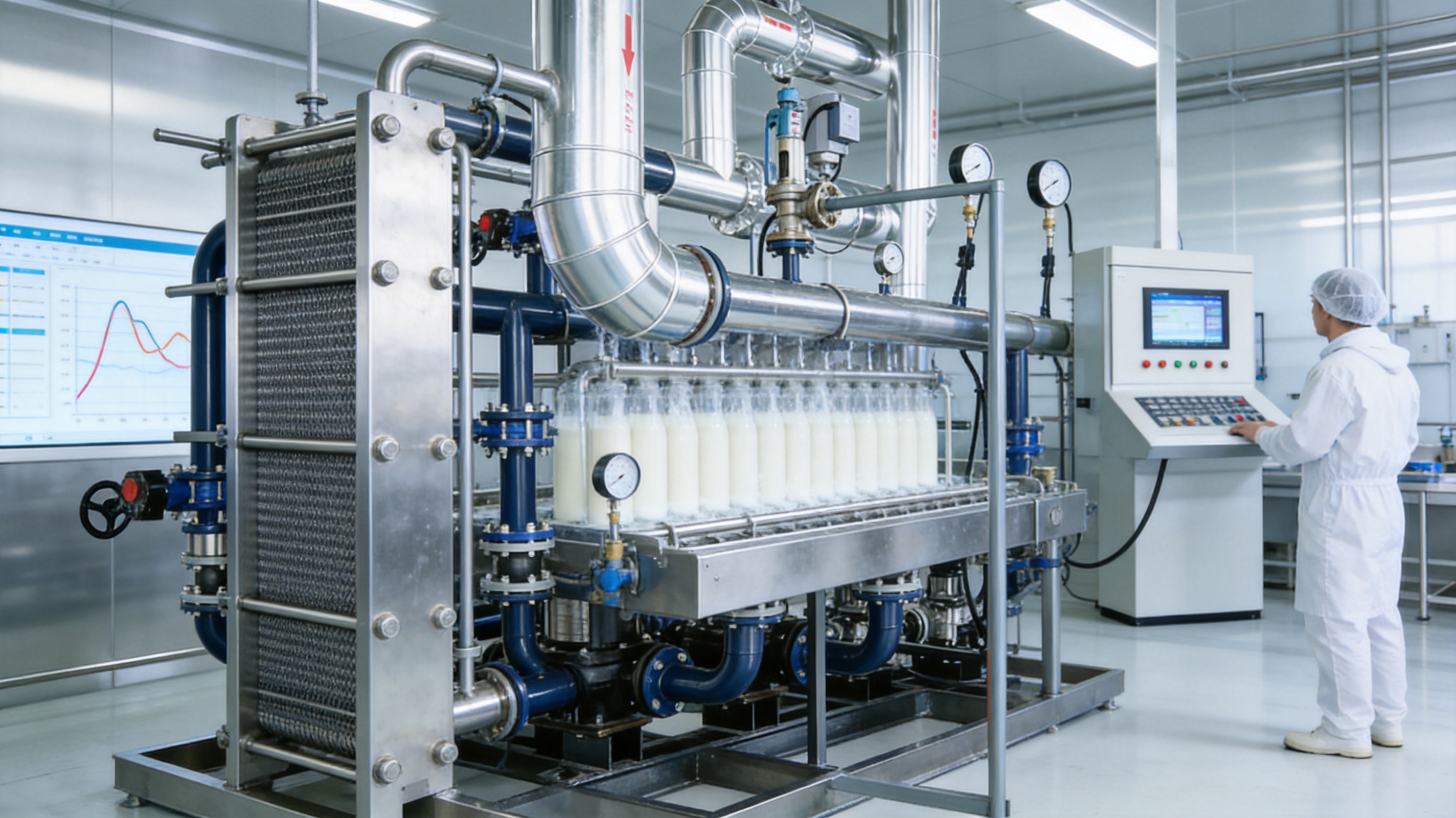
Ultra-high-temperature, or UHT, sterilization is a thermal processing method used to reduce microorganisms in liquid products by exposing them to a high temperature for a short period, followed by rapid cooling and hygienic filling or downstream processing. UHT systems are widely associated with milk and dairy beverages, but the technology can also be used for plant-based drinks, liquid nutritional products, liquid food preparations, and selected pharmaceutical or biotechnology media.
A UHT sterilizer normally includes several thermal stages. Product may be preheated, heated to the sterilization temperature, held for the required time, and then cooled. Some systems use direct steam injection or infusion, while others use indirect heat transfer through tubular or plate heat exchangers. In both arrangements, temperature control, flow control, pressure management, timing, and hygienic design are essential.
The intelligent industrial heat exchanger unit can support the utility and process-side thermal duties associated with a UHT line. It may supply hot water to a product heating loop, provide cooling water for rapid product cooling, regulate a secondary circuit connected to a UHT sterilizer, or manage heat transfer between primary and secondary networks.
5.1 Preheating and Regenerative Heat Recovery
Many UHT systems use regenerative heat exchange to recover energy from hot sterilized product and transfer it to incoming cold product. The recovered heat reduces the external heating requirement and improves overall energy efficiency. An integrated heat exchanger package can help regulate the supporting hot water or cooling circuits used in this arrangement.
Stable flow and temperature are important for regenerative performance. If utility-side conditions fluctuate, product temperature may become unstable, and the sterilizer may require increased steam or hot-water consumption. By monitoring the relevant parameters and automatically regulating the circulation system, the intelligent unit helps maintain a more consistent thermal balance.
5.2 Final Heating
The final heating stage of a UHT process must reach the defined sterilization temperature and maintain the required thermal profile. The exact temperature and holding time depend on the product, process validation, regulatory requirements, and equipment design. The heat exchanger unit does not replace the validated UHT control system, but it can provide a stable and responsive utility circuit for the heating duty.
Automatic temperature control reduces the risk of excessive heating caused by uncontrolled utility flow. It can also help compensate for changes in incoming product temperature or production rate. Accurate instrumentation and suitable alarm limits are necessary to protect product quality and support process verification.
5.3 Rapid Cooling
After the sterilization stage, the product generally needs to be cooled quickly. Rapid cooling can reduce thermal damage, preserve sensory characteristics, and prepare the product for aseptic filling or subsequent processing. The cooling duty may use chilled water, cooling water, or another controlled medium.
The intelligent unit can regulate cooling-medium flow and monitor the secondary outlet temperature. If the cooling load rises, the controller can adjust the valve or activate additional circulation capacity, depending on the system configuration. The objective is to maintain the required product-side condition without creating excessive pressure or unstable flow.
5.4 Hygienic and Cleanability Considerations
UHT applications require special attention to hygiene. The product side must be designed to reduce contamination risk, support cleaning-in-place procedures where applicable, and avoid areas where product can stagnate. The selection of gaskets, seals, stainless steel materials, surface finishes, drain points, and connection types should be based on the product and sanitation process.
The heat exchanger unit may serve a product circuit, a clean utility circuit, or a non-product utility circuit. The design requirements differ depending on whether the medium comes into direct contact with the product. A clear separation between product and utility systems, appropriate pressure relationships, and suitable leak detection practices are important for hygienic process design.
5.5 Integration with UHT Controls
The heat exchanger unit should communicate with the UHT sterilizer through defined signals and control logic. Possible signals include enable status, ready status, pump running, utility temperature, utility pressure, flow confirmation, high-temperature alarm, low-flow alarm, emergency stop, and common fault.
Integration allows the UHT system to prevent production from starting unless the required utility conditions are available. It can also initiate a controlled shutdown if the heat exchanger unit detects a serious fault. The exact interface should be agreed during engineering design and documented before commissioning.
6. Food and Beverage Applications
Food and beverage production includes a wide range of thermal duties. Milk, cream, juice, sauces, syrups, beverages, liquid eggs, fermentation media, and prepared foods may all require controlled heating or cooling. The required process temperature may change during production, and the product may have different viscosity or fouling behavior at different temperatures.
The intelligent heat exchanger unit can support hot-water generation, cooling loops, process water regulation, tank temperature control, product preheating, cleaning utility systems, and heat recovery arrangements. It can also serve multiple circuits when the project is designed with suitable hydraulic separation and control logic.
6.1 Dairy Processing
Dairy plants commonly require pasteurization, UHT processing, cooling, fermentation temperature control, and cleaning systems. Stable thermal conditions are important because milk and dairy products are sensitive to both microbiological risks and excessive heat exposure.
A skid-mounted heat exchanger package can supply a controlled hot-water loop for pasteurization or preheating and provide a cooling circuit for rapid temperature reduction. The plate heat exchanger can be selected with materials and gasket compounds compatible with dairy products and cleaning chemicals.
6.2 Beverage Production
In beverage production, heating and cooling may be used for syrup preparation, ingredient dissolution, product pasteurization, deaeration support, filling temperature control, and process water management. The required temperature profile can vary according to viscosity, sugar concentration, acidity, carbonation, and packaging format.
Automatic adjustment helps the system respond when production speed changes or when the plant switches between products. Recipe-based setpoints can be incorporated into the control philosophy when appropriate, subject to the customer’s automation standards.
6.3 Sauce and Liquid Food Processing
Sauces and liquid foods can have higher viscosity than water and may foul heat transfer surfaces more quickly. Flow velocity, heat exchanger passage size, temperature difference, and cleaning frequency must be carefully considered. Monitoring differential pressure and outlet temperature provides useful information about the condition of the heat exchanger.
7. Biopharmaceutical and Biotechnology Applications
Biopharmaceutical processing places strong emphasis on repeatability, contamination control, documentation, and material compatibility. Heating and cooling may be required for buffer preparation, media preparation, vessel temperature control, clean utilities, process development, and other controlled operations.
The heat exchanger unit can be adapted to the required level of hygienic design. For direct product-contact applications, the customer may specify particular stainless steel grades, surface finishes, orbital welding practices, drainability requirements, gasket materials, and documentation. For indirect utility applications, the design may focus more heavily on reliability, pressure separation, control accuracy, and cleanability.
7.1 Buffer and Media Preparation
Buffers and media often need controlled heating to improve dissolution and then controlled cooling before use. Excessive temperature can damage sensitive ingredients, while insufficient temperature may leave solids undissolved. An intelligent unit can regulate the temperature of the supporting circuit and provide repeatable operating conditions.
7.2 Vessel Temperature Control
Bioprocess vessels may require heating during preparation and cooling during storage or processing. A controlled secondary loop can circulate through a vessel jacket or external heat exchanger. The intelligent unit adjusts the heating or cooling medium according to the vessel temperature signal and the selected operating recipe.
7.3 Documentation and Quality Support
Biopharmaceutical customers commonly require detailed documentation, including material certificates, instrument calibration records, welding records where applicable, inspection reports, pressure test records, and control system documentation. The manufacturing and quality process should be agreed during the project specification stage.
8. Manufacturing Strengths and Engineering Capability
The performance of a process skid depends not only on the selected components but also on the quality of engineering, fabrication, assembly, testing, and documentation. Shiloc (Shanghai) Industrial Trading Co., Ltd. combines equipment supply with engineering and technical services for food and beverage, biopharmaceutical, daily chemical, and fine chemical customers.
The company was established in March 2026 in Fengxian District, Shanghai, and operates a 3,000-square-meter facility. Its capabilities cover processing, welding, polishing, assembly, and quality control, supported by more than 20 technical specialists. This combination allows the company to coordinate equipment manufacturing and project support within one organization instead of treating the skid as a collection of unrelated purchased items.
8.1 European Know-How and Danish Design Influence
The company’s approach is based on European process equipment know-how and Danish design influence. In practical terms, this supports attention to clean geometry, functional layout, operator access, maintainability, safety, and process efficiency. Design concepts are adapted to the customer’s actual production conditions rather than applied as a fixed standard package.
Design work may include process calculations, heat transfer assessment, pump selection, valve arrangement, instrument selection, skid layout, piping design, control philosophy, alarm strategy, and integration with existing plant networks. The objective is to create a complete working system that can be operated and maintained efficiently.
8.2 Fabrication, Welding, and Polishing
Welding quality is especially important in hygienic process equipment. Poorly executed welds can create crevices, surface defects, contamination risks, or premature corrosion. Controlled welding procedures, qualified personnel, suitable filler materials, inspection, and proper finishing help improve the reliability of stainless steel process piping and equipment.
Polishing contributes to cleanability and surface quality. The required surface finish depends on the application and customer specification. Product-contact surfaces may require a more demanding finish than general utility piping. The manufacturing process should distinguish between these areas and apply inspection criteria appropriate to each service.
8.3 Factory Assembly and Quality Control
Factory assembly provides better control over component positioning, piping accuracy, cable routing, instrument installation, and labeling. It also allows the manufacturer to conduct inspections in a structured environment before the skid leaves the facility.
Quality control may include dimensional inspection, weld inspection, pressure testing, leak checks, instrument verification, electrical inspection, pump checks, valve testing, control sequence simulation, and review of documentation. The inspection and test plan should be established according to the project scope and customer requirements.
8.4 Customized Project Coordination
Every process line has different requirements. One customer may need a compact utility skid for a single UHT line, while another may require multiple circuits, redundant pumps, remote monitoring, and connection to a central automation system. The company’s project coordination capability supports customized solutions rather than forcing every application into one fixed configuration.
Engineering communication is important from the initial inquiry through final delivery. Process data, utility conditions, available space, connection standards, cleaning procedures, control requirements, and documentation expectations should be reviewed early. This reduces changes during fabrication and improves the predictability of the project schedule.
9. Design and Selection Considerations
A properly selected intelligent heat exchanger unit begins with accurate process information. The following parameters should be defined before equipment sizing and control design are finalized.
| Design Parameter | Why It Matters | Typical Engineering Question |
|---|---|---|
| Required heat load | Determines heat exchanger area and utility capacity | How much heating or cooling duty is required at peak load? |
| Inlet and outlet temperatures | Defines the temperature difference and control range | What temperatures must be maintained on each side? |
| Flow rate | Influences heat transfer, pressure drop, and pump sizing | What are the minimum, normal, and maximum flows? |
| Operating pressure | Determines mechanical design and protection requirements | What are the normal, design, and maximum allowable pressures? |
| Medium properties | Affects material selection, fouling, and pump performance | What are the viscosity, density, solids, acidity, and chemical compatibility? |
| Cleaning procedure | Influences materials, gaskets, drainability, and control sequences | Will the system use cleaning-in-place or manual cleaning? |
| Hygienic classification | Defines surface finish, connections, weld quality, and documentation | Does the medium contact the product directly? |
| Automation interface | Determines signals and communication requirements | Will the unit communicate with a plant PLC or SCADA system? |
| Redundancy requirement | Influences pump configuration and availability | Is standby operation required for critical production? |
9.1 Heat Load and Heat Transfer Area
The heat exchanger must have sufficient capacity for the required duty. Under-sizing can lead to inadequate heating or cooling during peak production, while excessive oversizing may increase cost, footprint, and control difficulty. The calculation should consider normal and peak flow rates, utility temperatures, product properties, fouling allowances, and the required approach temperature.
9.2 Materials and Corrosion Resistance
Stainless steel is commonly selected for food and pharmaceutical systems because it offers corrosion resistance and supports hygienic construction. Carbon steel may be suitable for certain general industrial utility circuits. Titanium, nickel alloys, copper alloys, or other materials may be selected for specialized fluids and severe chemical conditions.
Material selection should account for the process medium, cleaning agents, chloride concentration, operating temperature, pressure, and expected service life. Material certificates and traceability may be required for critical product-contact components.
9.3 Pressure and Temperature Protection
The design must protect the heat exchanger, pumps, piping, and connected process equipment from excessive pressure and temperature. High-temperature alarms, pressure relief devices, emergency stop circuits, and interlocks should be selected according to the risk assessment and applicable standards.
9.4 Pipe Routing and Drainability
Good pipe routing improves flow distribution, reduces unnecessary pressure loss, and supports cleaning and maintenance. Hygienic systems should be designed to drain effectively and minimize stagnant areas. Vent points should be provided where air could collect, and drain points should be positioned at low points where appropriate.
10. Installation, Commissioning, and Operation
Before installation, the customer should verify the foundation, access route, lifting equipment, utility connections, electrical supply, communication network, and available maintenance space. The skid should be positioned on a stable and level foundation. Lifting must follow the approved lifting plan and use the designated lifting points.
After mechanical positioning, the process, utility, drain, vent, electrical, and communication connections can be completed. All external pipework should be flushed or cleaned according to the process requirements before connection or startup. Filters should be installed and checked where necessary to protect the heat exchanger and pumps from foreign material.
Before initial operation, the system should be inspected for loose fittings, incorrect valve positions, missing instruments, damaged cables, and blocked drains. Instruments should be calibrated or verified. Pumps should be checked for correct rotation, adequate suction conditions, and proper lubrication where applicable.
The piping should be fully vented before startup. Air trapped in the system can reduce circulation, cause pump cavitation, create unstable pressure, and reduce heat transfer performance. Operators should confirm that all required isolation and control valves are in the correct positions.
Commissioning should begin at a controlled flow and temperature. The operator should observe pressure, temperature, flow, pump noise, vibration, valve response, and alarm status. Control setpoints can then be adjusted within the approved operating range. The final settings should be documented in the operating instructions.
11. Maintenance and Troubleshooting
Preventive maintenance helps preserve heat transfer efficiency and reduce unexpected downtime. Maintenance frequency should be based on operating hours, medium quality, fouling tendency, pump duty, cleaning chemicals, and the customer’s quality system.
11.1 Reduced Heat Exchange Efficiency
If the secondary outlet temperature does not reach its setpoint, operators should check the plate heat exchanger for scaling, fouling, or blockage. Pipeline filters should be inspected and cleaned. The primary medium temperature and flow rate should be verified. Control valve operation and temperature sensor accuracy should also be checked.
A gradual increase in differential pressure may indicate fouling or blockage. A sudden change may indicate a valve problem, filter obstruction, pump issue, or unexpected process condition.
11.2 Pump Noise or Vibration
Abnormal noise or vibration may result from loose pump foundations, unsupported pipework, incorrect valve positions, inadequate inlet pressure, cavitation, air in the system, or foreign objects inside the pump. The pump suction condition should be checked before continued operation.
Bearings, mechanical seals, couplings, and alignment should be inspected according to the pump manufacturer’s instructions. Operating a pump under abnormal vibration can damage the equipment and connected piping.
11.3 Pressure Fluctuations
Frequent pressure fluctuations may be caused by unstable plant network pressure, pump switching logic, leaks, air pockets, control valve hunting, or sudden changes in process demand. The pressure stabilization device should be checked, and the pump control sequence should be reviewed.
11.4 Cleaning the Plate Heat Exchanger
Plate heat exchangers should be cleaned according to the process medium and fouling characteristics. Cleaning may be performed by disassembly or through an approved cleaning-in-place procedure. Cleaning chemicals, concentration, temperature, circulation time, and rinsing requirements should be compatible with the plate and gasket materials.
Mechanical cleaning tools that can scratch the plate surface should be avoided. After cleaning, the plate pack should be inspected, gaskets should be checked, and the unit should be reassembled with correct tightening dimensions or procedures.
11.5 Long-Term Shutdown
During a long shutdown, the media inside the equipment should be drained where appropriate. This is especially important in low-temperature environments where trapped water could freeze and damage piping or heat exchanger plates. The system should be isolated, protected from contamination, and inspected before restarting.
12. Digital Monitoring and Smart Manufacturing
Industrial plants are increasingly connecting equipment to centralized automation and production management systems. The intelligent heat exchanger unit supports this development by providing operating data and controllable functions that can be integrated with factory systems.
Remote monitoring can allow authorized personnel to review temperatures, pressures, flow rates, pump status, and alarms without standing beside the skid. Historical trends can help identify performance changes and support predictive maintenance planning. The data can also contribute to energy management by showing how utility consumption changes with production demand.
Integration should be implemented with appropriate cybersecurity, access control, network segmentation, and backup procedures. Remote access must not compromise plant safety or allow unauthorized changes to critical process parameters.
13. Why Choose an Integrated Custom-Made Solution
A standard catalog heat exchanger may be suitable for a simple utility application, but food, beverage, and biopharmaceutical plants often require a more coordinated solution. Process conditions may change across product families, utility networks may have limited capacity, and space restrictions may affect skid dimensions and pipe routing.
A custom-made unit can be configured around the actual production requirements. Pump capacity can be selected for the process load, heat transfer area can be calculated for the required temperature profile, and control functions can be adapted to the plant automation system. The skid can also be designed to support future expansion through modular pump or heat exchanger arrangements.
Shiloc combines equipment sourcing, manufacturing coordination, engineering support, and international trade services. This creates a single communication channel for customers that need a complete process equipment package rather than individual components. Its Shanghai facility and technical team support fabrication, assembly, quality control, and project coordination for domestic and international customers.
The company’s strengths include attention to process optimization, safe and efficient equipment design, supply reliability, traceability, and personalized customer service. Its experience with heat exchangers, aseptic mixing equipment, and fluid process systems supports applications in food and beverage, biopharmaceutical, daily chemical, and fine chemical production.
14. Conclusion
The intelligent industrial heat exchanger unit provides a practical and scalable approach to thermal management in modern process plants. By integrating a plate heat exchanger, pumps, valves, instruments, safety devices, and PLC control on one skid, it reduces installation complexity and improves the consistency of operation.
Automatic regulation helps maintain stable temperature and flow conditions. Real-time monitoring supports safer operation, earlier fault detection, and more efficient maintenance. Modular construction allows the system to be configured for different heat loads, flow rates, pump arrangements, and production requirements.
For UHT sterilization, the unit can support preheating, final heating utilities, cooling loops, regenerative heat recovery circuits, and communication with the main sterilizer control system. In food and beverage processing, it can support pasteurization, beverage preparation, dairy production, sauce processing, and process water regulation. In biopharmaceutical manufacturing, it can contribute to buffer preparation, media preparation, vessel temperature control, and clean utility systems.
The value of the equipment depends on more than the heat exchanger itself. Engineering accuracy, hygienic design, welding and polishing quality, instrumentation, control logic, factory testing, installation support, and after-sales service all influence long-term performance. Through European process equipment know-how, Danish design influence, Shanghai-based manufacturing capabilities, and customized project coordination, Shiloc provides integrated thermal equipment solutions for manufacturers seeking reliable, efficient, and intelligent process control.
Questions and Answers
1. What is an intelligent industrial heat exchanger unit?
It is an integrated skid-mounted system that combines a heat exchanger, circulation pumps, valves, sensors, safety devices, and a PLC-based control system. The unit transfers heat between separate media and automatically regulates temperature, flow, and operating conditions.
2. Can the unit be used with a UHT sterilizer?
Yes. It can support hot-water circuits, cooling circuits, regenerative heat recovery systems, and other utility-side thermal duties connected to a UHT sterilizer. The final configuration depends on the product, sterilization temperature, flow rate, utility conditions, and control interface.
3. Does the unit directly sterilize the product?
The unit can support a UHT system, but it does not automatically replace the complete validated sterilizer. Product sterilization requires a properly designed and validated thermal process that includes temperature, holding time, flow control, hygienic design, and appropriate monitoring.
4. What are the main advantages of skid-mounted construction?
Skid-mounted construction reduces on-site assembly, simplifies transportation and positioning, improves factory quality control, shortens commissioning, and provides an organized equipment layout. It also makes the complete thermal package easier to inspect and maintain.
5. How does automatic temperature regulation work?
Temperature sensors continuously measure process conditions. The PLC compares the measured value with the setpoint and adjusts control valves, pump operation, or flow conditions to maintain the desired temperature. Alarm and interlock functions respond when the process moves outside the approved range.
6. What materials are available for heat exchanger construction?
Stainless steel is widely used for food, beverage, and pharmaceutical applications. Carbon steel may be used for suitable general industrial utilities. Titanium, copper alloys, nickel alloys, and other materials may be selected when the process requires higher corrosion resistance, thermal conductivity, or high-temperature capability.
7. How often should the plate heat exchanger be cleaned?
Cleaning frequency depends on the medium, temperature, solids content, fouling tendency, operating hours, and cleaning method. The heat exchanger should be cleaned when differential pressure rises, heat transfer efficiency decreases, or the validated maintenance schedule requires cleaning.
8. Can the unit include standby pumps?
Yes. Multiple circulation pumps can be configured with main and standby functions. Automatic pump switching may be included when the process requires improved availability and the control system is designed for this operating strategy.
9. Can the system communicate with a factory automation platform?
Yes. The PLC and HMI can be configured for local operation, remote monitoring, and communication with a plant control system. The required signals, communication protocol, access levels, and cybersecurity requirements should be defined during engineering.
10. What information is required for equipment selection?
Important information includes heat load, medium type, flow rate, inlet and outlet temperatures, operating and design pressure, utility conditions, material requirements, cleaning method, hygienic classification, available installation space, electrical supply, automation interface, and redundancy requirements.
11. What support is available during installation?
Support may include equipment documentation, connection drawings, installation guidance, commissioning assistance, control logic review, instrument verification, operating instructions, and maintenance recommendations. The specific scope should be agreed during the project contract.
12. Why is factory testing important?
Factory testing allows the manufacturer to inspect the assembly, verify instruments, operate valves and pumps, review electrical connections, test alarms, and check control sequences before shipment. This reduces the risk of basic installation or integration problems at the customer’s site.
References
1. General principles of heat exchanger design, thermal performance, pressure drop, and fouling control.
2. Hygienic design principles for food and beverage processing equipment.
3. Good engineering practices for biopharmaceutical process systems and clean utilities.
4. Industrial automation practices for PLC, HMI, alarm management, and process data collection.
5. UHT processing principles for liquid food and beverage products.
6. Preventive maintenance practices for plate heat exchangers and centrifugal circulation pumps.
7. Stainless steel fabrication, welding, polishing, inspection, and material traceability practices for process equipment.
8. General risk assessment principles for pressure, temperature, flow, emergency shutdown, and process equipment protection.
Product: Intelligent Industrial Heat Exchanger Unit
PREV:Food-Grade CIP Systems for Efficient, Hygienic Process Manufacturing
NEXT:Sanitary Tube-in-Tube Heat Exchangers for Food and Biopharmaceutical Process Systems
NEXT:Sanitary Tube-in-Tube Heat Exchangers for Food and Biopharmaceutical Process Systems
Interested in cooperation or have questions?
Recommended LINS
✦
Food and Beverage Process System
Industrial Liquid Food Sterilization Equipment
UHT Processing Equipment for Plant Based Milk
UHT Processing System for Dairy Products
UHT Sterilizer for Fruit Juice
Food Processing Skid System
CIP Skid System for Food Industry
Plate Heat Exchanger Pasteurization System
Beverage Flash Pasteurization System
Milk Processing Heat Exchanger
Let'S Work Together Welcome Aboard!
-

haikexin@haikexin.com
+8613391278930
-
 +86-21-57560276
-
 No. 2819, Sihu Road,Fengxian District, Shanghai, China
Join Our Mailing List
Copyright © Shiloc (Shanghai) Industrial Trading Co., Ltd. All Rights Reserved.
Process Systems & Equipment For Food & Biopharma Manufacturers
