
 English
 русский
 Português
 Français



 Read More

Product Category
NEW Category
Contact us
Contact Us
We specialise in the research, development and manufacture of electrical wires and cables.
 +86-21-57560276
Food-Grade CIP Systems for Efficient, Hygienic Process Manufacturing
Content
- 1 Why Food Manufacturers Need Automated CIP Cleaning
- 2 Operating Principle of a Food-Grade CIP System
- 3 Core Components of the Integrated CIP Skid
- 4 Advantages Over Manual Cleaning and Basic CIP Equipment
- 5 Hygienic Design and Material Selection
- 6 Manufacturing Strengths and Engineering Capabilities
- 7 Customization for Different Process Applications
- 8 Automation, Data Recording, and Traceability
- 9 Safety and Environmental Considerations
- 10 Maintenance and Troubleshooting
- 11 Installation, Commissioning, and Validation Support
- 12 How the System Supports Total Cost of Ownership
- 13 Why Choose an Integrated Solution from Shiloc?
- 14 Selection Checklist for Food-Grade CIP Systems
- 15 Conclusion
- 16 Questions and Answers
- 16.1 Q1: What is a food-grade CIP system?
- 16.2 Q2: How does a CIP system reduce manual cleaning requirements?
- 16.3 Q3: What materials are commonly used in the system?
- 16.4 Q4: What cleaning temperature can the system provide?
- 16.5 Q5: Can cleaning solutions be reused?
- 16.6 Q6: Which industries use food-grade CIP systems?
- 16.7 Q7: How can a CIP system reduce cross-contamination?
- 16.8 Q8: What information is recorded during cleaning?
- 16.9 Q9: What should be checked if residues remain after cleaning?
- 16.10 Q10: Why is manufacturing quality important for a CIP skid?
- 16.11 Q11: Can the system be connected to an existing production line?
- 16.12 Q12: How should a CIP system be maintained?
- 17 References
- 18 Product: Food-Grade CIP (Clean-in-Place) System
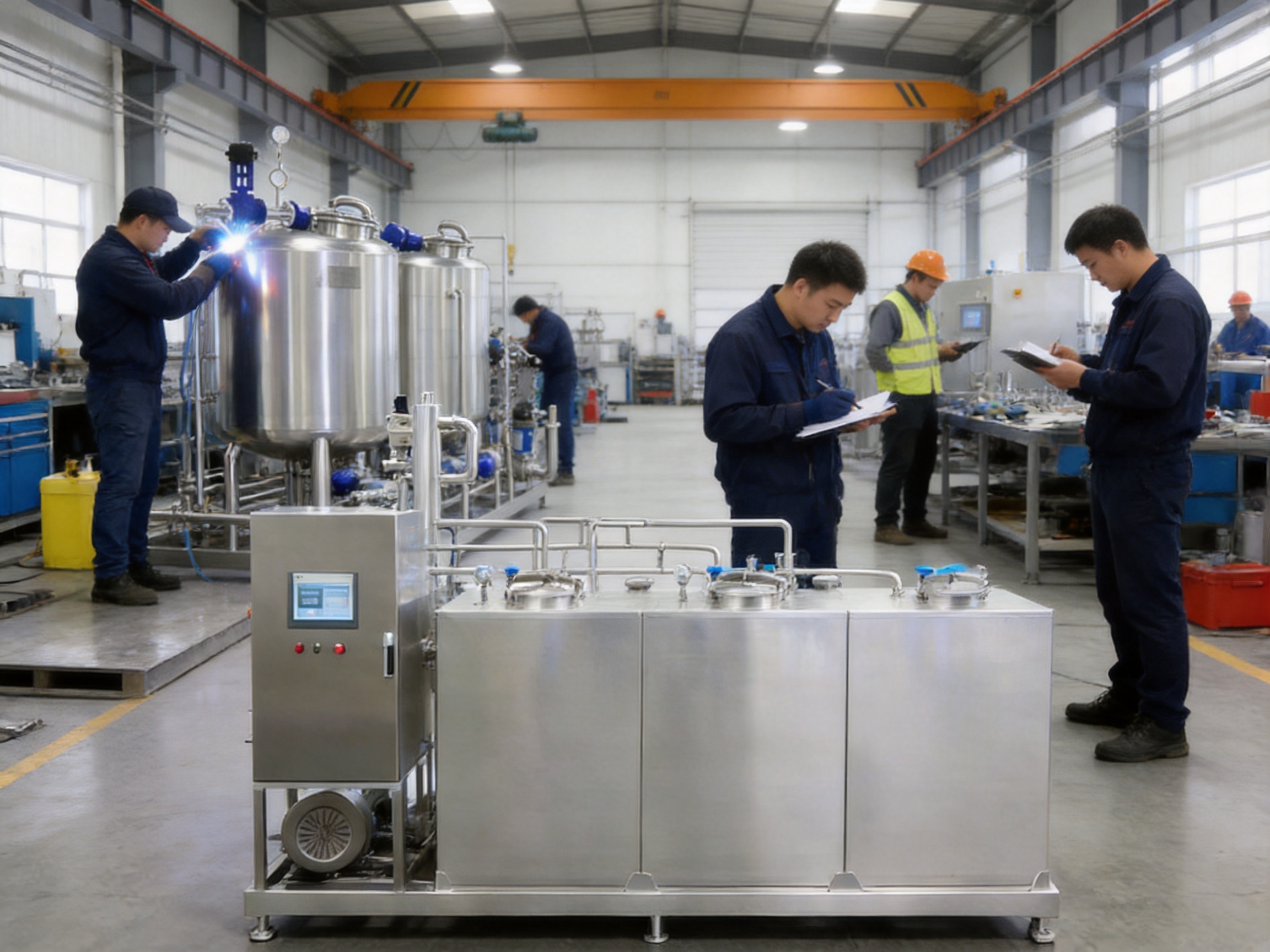
Food and beverage manufacturers must maintain strict hygiene standards while controlling production costs, reducing downtime, and meeting increasingly demanding traceability requirements. Every tank, pipeline, heat exchanger, valve, mixer, and transfer line that contacts a product must be cleaned effectively before it is returned to service. At the same time, modern production facilities need cleaning procedures that are repeatable, resource-efficient, and compatible with automated production management.
A food-grade CIP, or Clean-in-Place, system provides an integrated solution to these requirements. Instead of dismantling process equipment and relying on extensive manual washing, the system circulates water and chemical cleaning media through connected equipment under controlled flow, temperature, concentration, and time conditions. A properly configured CIP system can support pre-rinsing, alkaline cleaning, intermediate rinsing, acid cleaning, disinfection, final rinsing, and process verification within a programmed sequence.
Shiloc (Shanghai) Industrial Trading Co., Ltd. supplies integrated process skids and hygienic equipment solutions for food and beverage, biopharmaceutical, daily chemical, and fine chemical manufacturers. Its food-grade CIP systems combine stainless steel tanks, circulation pumps, sanitary pipelines, automated valves, sensors, control units, and modular process configurations. The systems are designed to reduce manual cleaning work, improve sanitation consistency, protect product quality, and support production traceability.
Compared with basic cleaning equipment or manually operated utility systems, an integrated food-grade CIP solution offers stronger process coordination. It can manage several cleaning stages through a single control platform, store cleaning recipes, monitor operating conditions, and record critical process data. This combination of hygienic design, automation, manufacturing control, and application flexibility makes the system suitable for liquid food plants, beverage lines, dairy facilities, sauce and condiment production, and selected high-hygiene pharmaceutical and cosmetic applications.
Why Food Manufacturers Need Automated CIP Cleaning
Manual cleaning remains common in small or traditionally operated facilities, but it becomes increasingly difficult to manage as production capacity and equipment complexity grow. Manual procedures often require operators to drain equipment, open access points, remove components, connect temporary hoses, apply detergents, scrub accessible surfaces, rinse the equipment, and inspect the result. Internal pipelines and enclosed process areas may be difficult or impossible to inspect directly.
These procedures create several operational challenges. Cleaning quality may vary between shifts because operators use different techniques or cleaning times. Chemical concentration may not be measured consistently. Water temperature may fall below the level required for effective soil removal. Certain valves, pipe branches, spray devices, or heat-transfer surfaces may receive insufficient flow. In addition, equipment disassembly increases the time required to return a production line to service and may introduce additional contamination risks during reassembly.
A food-grade CIP system addresses these challenges by establishing controlled cleaning conditions. The system delivers cleaning fluids through the same process routes used during production or through dedicated cleaning circuits. Circulation pumps provide the required flow and pressure, while sensors and control logic monitor tank levels, temperature, valve feedback, and other operating conditions. Programmed recipes can define the order and duration of each cleaning stage.
Automation does not eliminate the need for trained personnel. Operators still need to select the correct program, verify chemical supply, confirm equipment readiness, review alarms, and evaluate cleaning performance. However, automation reduces repetitive physical work and limits dependence on individual operating habits. It also allows cleaning procedures to be standardized across multiple production lines or facilities.
Operating Principle of a Food-Grade CIP System
A typical food-grade CIP system consists of one or more solution tanks, sanitary circulation pumps, valves, pipelines, heat or temperature-control equipment, instrumentation, and a programmable logic controller. Depending on the production requirements, the system may include separate tanks for clean water, alkaline detergent, acidic detergent, recovery solution, and sterilization media.
During operation, the system selects the required cleaning medium and transfers it into the circulation loop. The pump then sends the fluid through the target equipment. Return liquid flows back to the CIP skid or a designated recovery tank. The system can recirculate the solution for a preset period while monitoring temperature, level, and other parameters. Once the stage is complete, the solution may be recovered, discharged, or transferred to another step according to the programmed recipe.
The actual cleaning mechanism depends on four basic factors: chemical action, thermal action, mechanical action, and contact time. Chemical action dissolves or loosens fats, proteins, mineral deposits, and other residues. Thermal action improves the performance of selected detergents and supports microbial control. Mechanical action is generated by adequate flow velocity, turbulence, spray impact, and circulation through internal surfaces. Contact time allows the cleaning media to act on the contamination.
These factors must be balanced according to the product type, equipment geometry, soil characteristics, material compatibility, and hygiene target. Increasing temperature alone cannot compensate for inadequate flow or unsuitable detergent concentration. Similarly, extending cleaning time cannot fully correct a blocked spray device or an incorrectly positioned valve. The control system therefore serves as an important tool for maintaining the relationship between each process parameter.
Typical Cleaning Sequence
A standard cleaning sequence may include the following stages:
| Cleaning Stage | Primary Purpose | Typical Control Considerations |
|---|---|---|
| Pre-rinsing | Removes loose product residues and prepares the equipment for chemical cleaning | Water temperature, flow rate, drain condition, and rinse duration |
| Alkaline washing | Breaks down fats, proteins, oils, and other organic contamination | Detergent concentration, temperature, circulation time, and recovery strategy |
| Intermediate rinsing | Removes residual alkaline solution before the next stage | Water quality, conductivity or pH where applicable, and return clarity |
| Acid washing | Removes mineral scale, inorganic deposits, and certain inorganic residues | Acid concentration, temperature, material compatibility, and exposure time |
| Final rinsing | Removes remaining cleaning agents and prepares the line for production | Rinse quality, chemical carryover, drainage, and final verification |
| Disinfection or sterilization | Reduces microbial contamination before the next production cycle | Disinfectant concentration, temperature, contact time, and safe discharge |
Not every facility uses every stage in every cycle. A beverage line may require a different recipe from a dairy fermentation system, while a sauce line may require stronger alkaline cleaning because of high levels of oils, proteins, or suspended solids. The modular configuration of the system allows the cleaning sequence to be adapted to the product and equipment being cleaned.
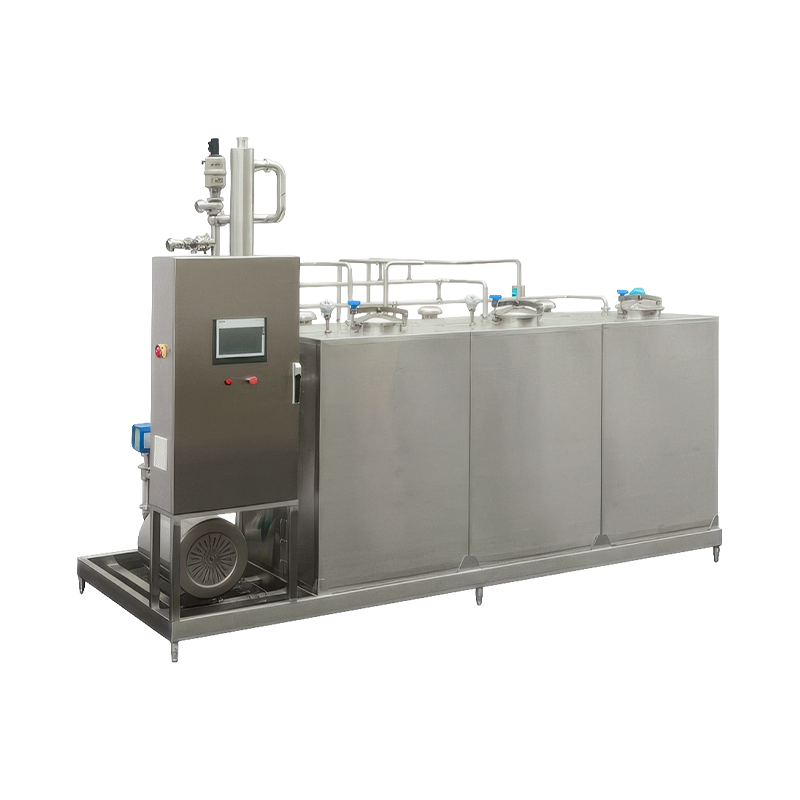
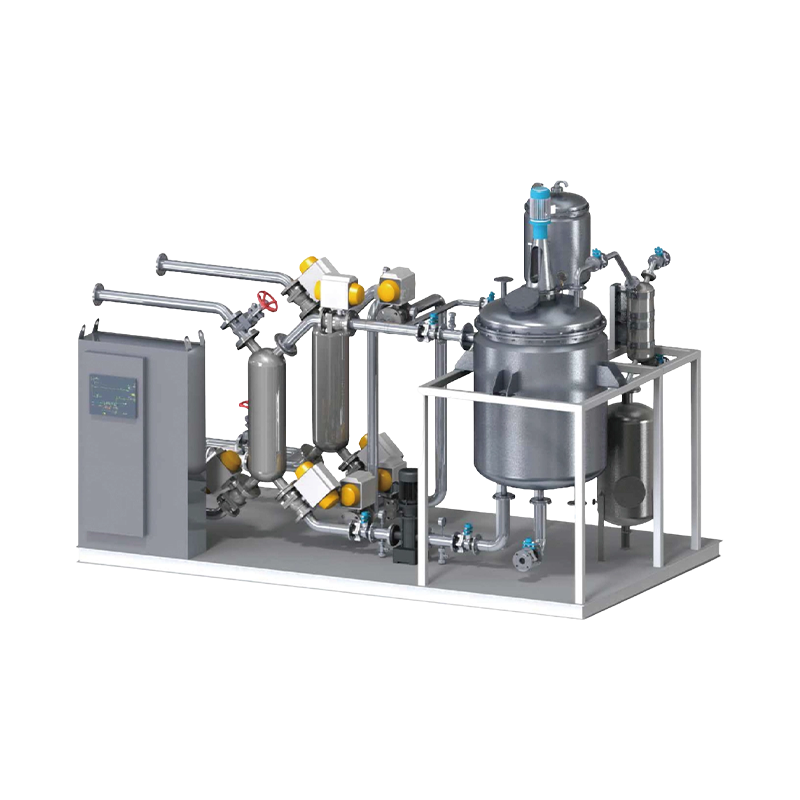
Food-Grade CIP (Clean-in-Place) System
Core Components of the Integrated CIP Skid
Stainless Steel Solution Tanks
The tanks store and condition water, alkaline solution, acidic solution, or other cleaning media. Food-grade contact surfaces are typically manufactured from stainless steel 304 or 316L, depending on the chemical environment, chloride exposure, temperature, and hygiene requirements. Tank volume, insulation, heating arrangement, internal finish, outlet design, and drainability can be customized according to the production line.
A multi-tank arrangement allows different solutions to be stored separately. This reduces the possibility of acid and alkaline solutions mixing unintentionally and enables the recovery and reuse of selected cleaning media. Separate tanks also allow operators to prepare or maintain solutions without interrupting every other function of the system.
Tank design is particularly important for hygienic performance. Internal surfaces should be smooth and accessible to the cleaning flow. Dead legs, stagnant areas, uncleanable fittings, and poorly positioned outlets can compromise the performance of an otherwise capable CIP system. Shiloc’s engineering approach considers the relationship between tank geometry, piping arrangement, drainage, welding quality, and cleaning accessibility.
Circulation Pumps
The circulation pump provides the mechanical energy required to move the cleaning solution through pipelines and process equipment. Pump selection depends on flow rate, pressure, pipe length, elevation, heat exchanger resistance, valve arrangement, nozzle requirements, and the viscosity of the cleaning medium.
A properly selected sanitary pump helps maintain sufficient turbulence and surface contact throughout the cleaning circuit. Insufficient flow may leave residues on internal surfaces, while excessive flow may increase energy use, pressure stress, foaming, or mechanical wear. The pump must also be compatible with the cleaning chemicals and operating temperature.
Routine inspection of the impeller, mechanical seal, motor, and associated valves is important. Abnormal noise, reduced circulation pressure, leakage, or inconsistent return flow may indicate blockage, wear, air entrainment, or a problem with the pump configuration.
Sanitary Pipeline and Valve Modules
The pipeline module directs cleaning fluids to the correct tank, production line, and return route. Hygienic piping requires appropriate internal surface quality, sanitary connections, drainability, and correct slope where applicable. Valve selection and arrangement influence whether the system can isolate equipment, recover solutions, prevent cross-contamination, and provide reliable feedback to the control system.
Automated valves can be operated according to the cleaning recipe. Their position feedback helps the controller verify that the selected flow path is available before the pump starts. If a valve fails to open or close correctly, the system can generate an alarm and prevent the next stage from proceeding. This interlock function helps protect equipment and reduce the risk of sending a chemical solution to the wrong process route.
Heating and Temperature Control
Cleaning temperature affects chemical performance, soil removal, viscosity, and microbial control. The system can be configured with an electric heater, steam heat exchanger, hot-water circuit, or another suitable thermal arrangement. Temperature sensors provide feedback to the PLC, which can control heating or hold the cleaning sequence until the specified temperature is reached.
The stated adjustable cleaning temperature range can extend from room temperature to approximately 85°C, subject to the selected configuration and process requirements. Actual operating temperature must be determined according to the detergent supplier’s instructions, equipment material limits, product residues, seal materials, and site safety procedures.
Instrumentation and Control Cabinet
The control system generally includes a PLC, touch screen interface, temperature sensors, level sensors, valve feedback, pump controls, alarm functions, and recipe management. The touch screen allows authorized users to select programs, view the current process stage, monitor key parameters, and respond to alarms.
Control logic can be designed to prevent operation when critical conditions are not met. For example, the system may require a minimum tank level before starting a circulation pump. It may also verify that a valve is in the correct position, that temperature is within the defined range, or that an emergency-stop circuit has been reset.
Cleaning records can include program name, date, start and end time, temperature, concentration-related readings, tank level, alarm history, and operator information where applicable. These records support internal production management, maintenance planning, quality reviews, and customer or regulatory audits.
Advantages Over Manual Cleaning and Basic CIP Equipment
The value of a CIP system should be measured not only by its ability to circulate detergent but also by the consistency, safety, flexibility, and maintainability of the complete solution. An integrated skid has several advantages over manual cleaning and loosely assembled equipment.
Reduced Manual Labor
Operators do not need to dismantle every tank, pipeline, or pump before each cleaning cycle. Once the equipment is correctly connected and the recipe is validated, the programmed sequence can complete most routine cleaning operations automatically. This reduces lifting, opening, scrubbing, hose handling, and repeated chemical exposure.
Reduced labor does not mean reduced accountability. Personnel remain responsible for preparation, verification, sanitation release, chemical handling, and corrective action. However, the physical burden and repetitive nature of cleaning work are substantially reduced, allowing employees to focus more attention on production quality and equipment condition.
More Consistent Cleaning Performance
Manual procedures may vary according to operator experience, fatigue, workload, or shift conditions. A programmed CIP cycle applies defined values for temperature, circulation time, valve sequence, and other parameters. This provides a repeatable foundation for cleaning validation and routine sanitation management.
Consistency is especially important when multiple products are manufactured on the same equipment. A standardized cleaning recipe can help reduce the risk that residues from one product will affect the next batch. Recipe control can also help prevent operators from accidentally selecting an unsuitable sequence.
Better Access to Enclosed Equipment
Internal pipelines, heat exchanger channels, closed tanks, transfer lines, and valve bodies are difficult to clean thoroughly by hand. CIP circulation sends cleaning fluid through these areas without requiring full visual access. When the equipment is designed with hygienic flow paths, the system can reach surfaces that would otherwise be difficult to inspect or scrub.
Lower Cross-Contamination Risk
Cross-contamination can occur when product residues, allergens, microorganisms, or cleaning chemicals remain in the process line. Automated sequencing supports controlled separation between production and cleaning stages. Dedicated tanks, correctly arranged valves, and validated rinsing procedures further reduce the possibility of transferring one material into another product stream.
Improved Production Scheduling
Shorter preparation and cleaning procedures can support faster changeovers between production batches. The actual time savings depend on the equipment, recipe, soil load, and required sanitation level, but eliminating unnecessary disassembly can improve line availability. The cleaning cycle may also operate with limited supervision, helping production teams plan labor and equipment utilization more effectively.
| Evaluation Area | Manual Cleaning | Basic Non-Integrated Cleaning Setup | Integrated Food-Grade CIP System |
|---|---|---|---|
| Equipment disassembly | Often extensive | Partly reduced | Minimized for routine cleaning |
| Parameter control | Highly operator-dependent | Partly controlled | Programmed and monitored |
| Internal pipeline cleaning | Difficult and inconsistent | Possible but less coordinated | Designed for controlled circulation |
| Cleaning data | Often recorded manually | Limited or incomplete | Can be recorded and traced electronically |
| Recipe flexibility | Low | Moderate | High through configurable programs |
| Expansion potential | Limited | Depends on site modifications | Supports modular tanks and process circuits |
Hygienic Design and Material Selection
Automation cannot compensate for poor hygienic design. The surfaces, joints, tanks, valves, and pipe routes must support effective cleaning and prevent the formation of areas where product or detergent can accumulate. Food-grade stainless steel is widely used because it offers corrosion resistance, strength, cleanability, and compatibility with many common food processing environments.
Stainless steel 304 is suitable for many general food and beverage applications. Stainless steel 316L may be selected where greater resistance to chlorides, aggressive cleaning chemicals, or demanding pharmaceutical conditions is required. The final material selection should consider the detergent composition, concentration, temperature, exposure time, weld condition, and local water quality.
Surface finish is another important factor. Smooth, properly polished surfaces reduce the opportunity for residue attachment and make chemical circulation more effective. Rough areas, surface defects, weld discoloration, or crevices can make cleaning more difficult and may encourage microbial retention. Welded assemblies should be processed and finished with attention to penetration, alignment, polishing, and cleanliness.
Drainability is equally important. Residual water or detergent trapped in low points can dilute the next cleaning solution, create chemical carryover, or become a source of microbial growth. Pipeline slopes, outlet locations, valve orientation, and tank bottom design should be evaluated during engineering rather than after installation.
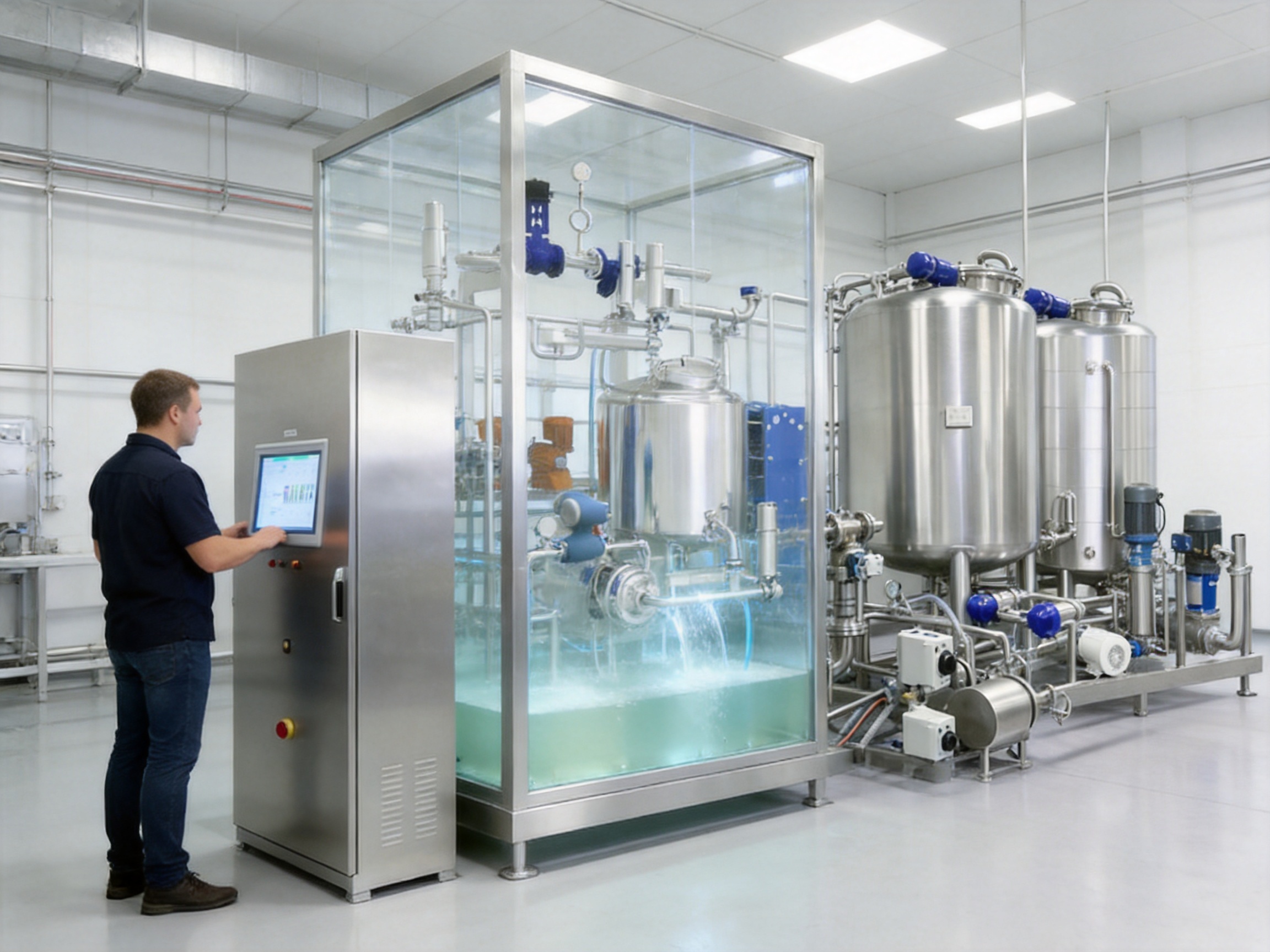
Manufacturing Strengths and Engineering Capabilities
Shiloc (Shanghai) Industrial Trading Co., Ltd. was established in March 2026 in Fengxian District, Shanghai. The company provides international trade, equipment manufacturing, import and export agency services, and engineering and technical support for process industries. Its product and service scope includes fluid equipment, heat exchangers, aseptic mixing equipment, and integrated process systems for food and beverage, biopharmaceutical, daily chemical, and fine chemical manufacturers.
The company operates a 3,000-square-meter Shanghai facility and has more than 20 technical specialists involved in equipment processing, welding, polishing, engineering coordination, and quality control. This combination of manufacturing and technical capabilities supports closer control over the equipment production process than a purely trading-based supply model.
European Know-How and Danish Design Concepts
The company applies European know-how and Danish design concepts to hygienic process equipment. These design principles emphasize functional simplicity, cleanability, safety, material compatibility, maintainability, and efficient use of utilities. The objective is not to add unnecessary complexity but to create equipment that performs reliably in demanding production environments.
For a CIP system, design quality is reflected in many details: the arrangement of tanks, accessibility of pumps and valves, separation of chemical media, location of sensors, routing of return lines, drainage behavior, operator visibility, and ease of maintenance. A well-designed skid reduces installation work and helps operators understand the cleaning process at a glance.
In-House Processing, Welding, and Polishing
In-house processing provides greater control over the production sequence. Cutting, forming, fitting, welding, grinding, and polishing can be coordinated under one quality management structure. This helps reduce communication gaps and allows technical personnel to identify potential design or fabrication issues before delivery.
Welding quality is especially important for hygienic stainless steel equipment. Poorly executed welds may create crevices, discoloration, distortion, or weak points that affect both cleanability and service life. Controlled welding procedures, appropriate filler materials, suitable shielding, and post-weld finishing contribute to a more hygienic and durable assembly.
Polishing operations improve surface condition and support the removal of residues. The desired finish depends on the application and customer specification. Food and pharmaceutical applications may require specific internal surface requirements, and these should be agreed during the engineering stage and verified through appropriate inspection procedures.
Quality Control and Traceability
A reliable CIP skid requires more than a visual check at the end of manufacturing. Quality control should extend from material receipt through fabrication, assembly, testing, and shipment. Material documentation, component identification, welding records, pressure or leak checks, electrical inspection, instrument verification, and functional testing can all contribute to final equipment reliability.
Traceability also applies to the operating life of the system. The CIP controller can record cleaning data, while the manufacturer’s quality documentation can support maintenance, spare-parts selection, and future modifications. Clear identification of pumps, valves, sensors, and pipelines makes troubleshooting faster and reduces the risk of incorrect replacement parts.
Shiloc emphasizes complete supply and quality management systems, along with ISO9001, environmental, and safety certifications. Certification does not replace application-specific validation, but it provides a structured framework for managing processes, documentation, corrective actions, and continual improvement.
Customization for Different Process Applications
There is no single CIP configuration suitable for every factory. The correct design depends on the number of production circuits, equipment volume, product residue, cleaning chemistry, available utilities, required cleaning frequency, recovery objectives, and automation level.
Dairy Processing
Dairy applications commonly involve pasteurizers, milk storage tanks, fermentation tanks, filling lines, product transfer pipelines, and balance tanks. Milk residues can contain proteins, fats, minerals, and microorganisms, requiring a carefully balanced sequence of rinsing, alkaline cleaning, acid cleaning, and disinfection.
Heat-transfer surfaces may develop mineral deposits if cleaning is incomplete or water hardness is high. Acid cleaning can help remove these deposits, while alkaline cleaning targets organic residues. The selected program must protect gaskets, seals, stainless steel surfaces, and heat exchanger components from excessive chemical or thermal stress.
Beverage Production
Juice, tea, flavored water, sports drinks, and other beverage processes use mixing tanks, syrup systems, filtration units, filling lines, and transfer pipelines. Different beverage formulations may create different residue profiles. Sugars and flavor compounds may require effective pre-rinsing and alkaline cleaning, while mineral deposits may require periodic acid treatment.
Because beverage plants often operate multiple product recipes, automated program selection and data recording are valuable. The system can support controlled changeovers and provide records that show whether the required cleaning parameters were achieved before a new batch began.
Sauces, Egg Liquids, and Condiments
Sauces, egg liquids, dressings, and condiments can contain high levels of proteins, oils, suspended solids, salts, or natural pigments. These materials may adhere strongly to tank walls, agitators, valves, and pipe surfaces. A CIP system for these applications may require larger circulation capacity, longer alkaline stages, higher temperatures, or specialized spray and return arrangements.
The engineering design should account for viscosity and the possibility of settling. Pump selection, pipe diameter, valve type, tank outlet geometry, and the location of return lines all influence the ability to move product residues and cleaning media effectively.
Pharmaceutical and Cosmetic Liquids
Liquid pharmaceutical and cosmetic production often requires a higher level of documentation, material control, and contamination prevention. CIP systems may be used for process tanks, transfer lines, mixing systems, and other equipment handling liquid products. Depending on the application, the system may require additional instrumentation, recipe management, validation support, purified water compatibility, or integration with site-level automation.
These applications must be engineered according to the customer’s regulatory and validation requirements. Material certificates, surface finish documentation, cleaning studies, equipment qualification, and data integrity expectations should be established before fabrication.
Automation, Data Recording, and Traceability
One of the most important differences between a simple cleaning station and a modern integrated CIP skid is the ability to manage and document the entire process. The PLC and touch screen interface can provide a visual representation of the active circuit, solution tank status, pump operation, valve positions, temperature, and alarms.
Cleaning programs can be configured for different equipment groups. For example, a milk storage tank may require one recipe, a pasteurizer another, and a beverage mixing line a third. Authorized personnel can adjust cleaning time, temperature, sequence, and other parameters according to validated procedures and production requirements.
Data recording supports several business functions. Quality departments can review completed cycles. Maintenance teams can identify repeated alarms or abnormal circulation conditions. Production managers can compare cleaning duration between lines. Engineering teams can use historical records to evaluate detergent consumption, water use, and opportunities for process improvement.
Recorded data should be protected through suitable access control, backup, and change-management procedures. The level of electronic record management depends on the customer’s facility standards and regulatory environment. The CIP system can provide the operating data, while the user’s quality system determines how the records are reviewed, retained, and approved.
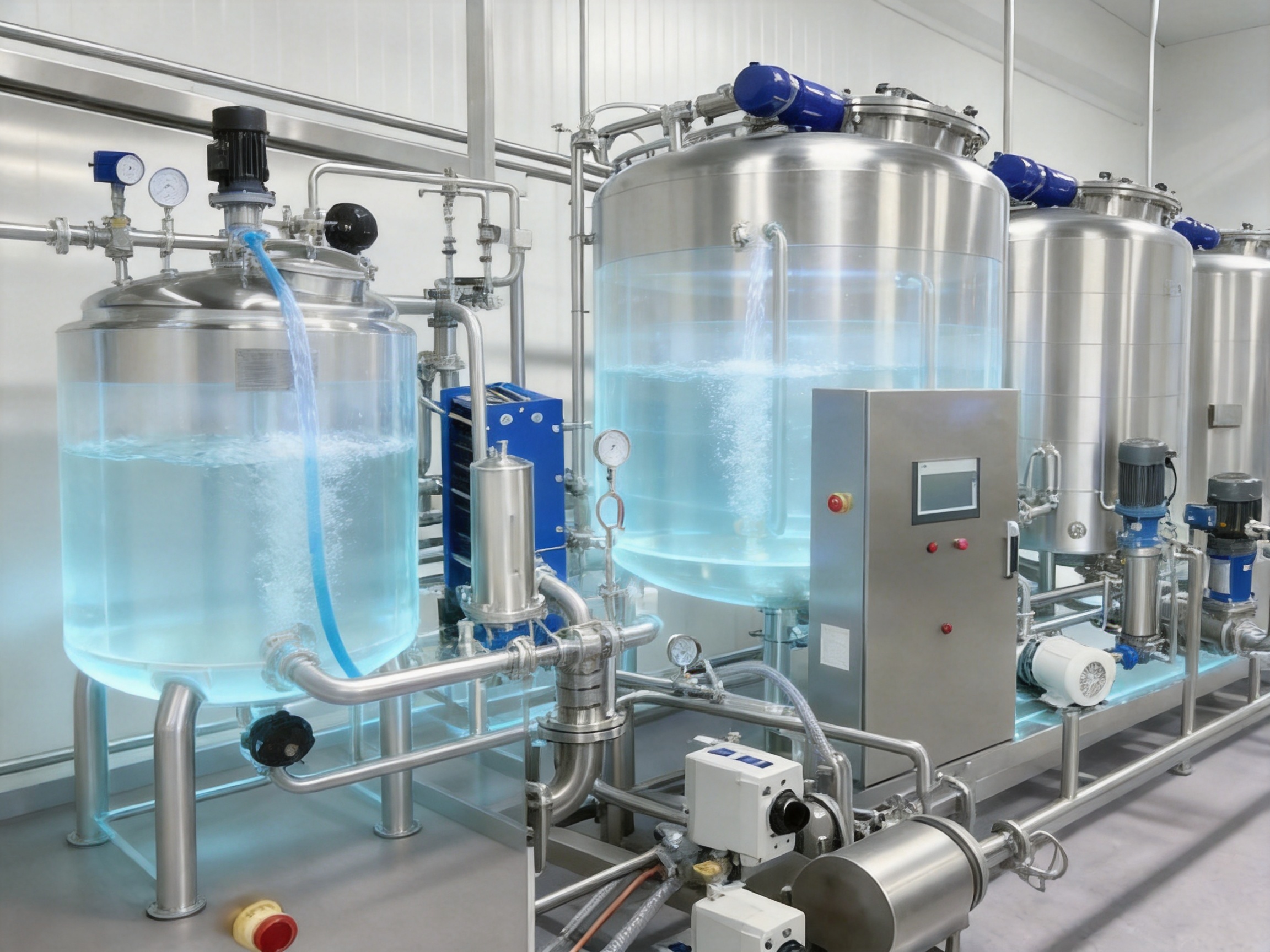
Safety and Environmental Considerations
Cleaning chemicals and hot liquids create potential risks for personnel, equipment, and the environment. An integrated CIP system should include appropriate safeguards such as emergency-stop devices, tank level protection, temperature monitoring, pump interlocks, valve-position confirmation, overflow prevention, and controlled chemical transfer.
Level protection helps prevent a circulation pump from running dry. Temperature monitoring reduces the risk of overheating or sending excessively hot liquid to equipment that is not designed for it. Emergency-stop devices allow operators to stop the system quickly if a leak, unexpected movement, or other hazardous condition occurs.
Acidic and alkaline detergents must be stored separately and handled according to their safety data sheets. The system design should prevent unintended mixing and provide clear identification of tanks, connections, and transfer routes. Operators should use appropriate personal protective equipment and follow site procedures for chemical preparation, sampling, drainage, and disposal.
Environmental performance can be improved through solution recovery, optimized rinse duration, accurate chemical dosing, and efficient temperature control. Reusing suitable cleaning solutions can reduce water and detergent consumption, provided that the recovery strategy is validated and does not compromise hygiene. The best approach depends on the residue type, product changeover frequency, and customer sanitation standard.
Maintenance and Troubleshooting
Preventive maintenance helps preserve cleaning performance and avoid unexpected production interruptions. Operators should inspect tank levels, chemical concentrations, valve status, pump operation, and visible connections before starting a cycle. After cleaning, residual liquid should be drained and tanks should be rinsed when required to reduce detergent precipitation or chemical buildup.
Circulation pumps, mechanical seals, gaskets, valves, sensors, filters, and spray devices should be inspected at defined intervals. Wear or blockage can reduce flow and cause incomplete cleaning. Temperature sensors should be checked for accuracy, while level sensors should be verified to ensure that low-level and high-level alarms function correctly.
| Observed Problem | Possible Cause | Recommended Investigation |
|---|---|---|
| Residue remains on internal surfaces | Low detergent concentration, insufficient temperature, short circulation time, or blocked spray device | Check the recipe, detergent condition, temperature record, circulation time, nozzles, and equipment design |
| Low circulation pressure | Pump impeller wear, pipeline blockage, closed valve, clogged filter, or low tank level | Inspect the pump, valves, filter, tank level, and return line |
| Program will not start | Incorrect parameter, low liquid level, emergency stop active, or missing valve feedback | Review alarms, sensor status, valve position, and interlock conditions |
| Temperature does not reach the set point | Insufficient heating capacity, blocked heat exchanger, incorrect utility supply, or faulty sensor | Check the heat source, utility pressure, heat-transfer surfaces, and temperature instrument |
| Unexpected chemical carryover | Insufficient rinsing, poor drainage, incorrect valve sequence, or trapped liquid in low points | Review rinse parameters, pipeline slope, valve operation, and final rinse quality |
Troubleshooting should begin with process data rather than assumptions. Reviewing the recorded temperature, time, alarms, tank level, and valve status can quickly identify whether the issue is chemical, mechanical, electrical, or procedural. If the same alarm occurs repeatedly, the underlying design or maintenance condition should be corrected instead of repeatedly resetting the system.
Installation, Commissioning, and Validation Support
A CIP skid performs best when it is integrated correctly with the customer’s process line. Before installation, engineers should confirm available floor space, equipment elevations, utility connections, drain capacity, chemical storage arrangements, electrical requirements, and communication interfaces. The number and location of cleaning circuits should also be established.
Commissioning normally includes mechanical inspection, pipeline flushing, instrument verification, valve testing, pump rotation checks, control logic testing, alarm verification, and trial cleaning cycles. Operators should be trained on program selection, chemical handling, emergency procedures, routine inspections, and record review.
Cleaning validation is application-specific. It may involve visual inspection, rinse-water testing, conductivity or pH checks, microbial monitoring, residue analysis, swab testing, or other methods selected by the customer’s quality team. The CIP system provides controlled process conditions, but the customer must define acceptance criteria and approve the final cleaning procedure.
Shiloc’s engineering and manufacturing capabilities support customized equipment documentation and coordination. The company can work with customers to define tank capacity, cleaning circuit arrangement, material grade, surface requirements, automation functions, and production-line interfaces before equipment fabrication begins.
How the System Supports Total Cost of Ownership
The purchase price of a CIP system is only one part of its economic value. Manufacturers should also consider labor, cleaning chemicals, water, energy, production downtime, maintenance, rejected batches, and the cost of contamination incidents. A system that is slightly more sophisticated at the initial stage may provide better long-term value if it improves repeatability and reduces avoidable losses.
Reduced disassembly can lower labor requirements and shorten changeover preparation. Accurate temperature control can reduce unnecessary heating. Recipe control can prevent excessive chemical use caused by inconsistent dosing or extended cleaning cycles. Data records can help identify trends before they become major failures.
Modular design also supports future expansion. Additional tanks, circuits, sensors, recovery functions, or communication interfaces may be added depending on the initial configuration and available space. This flexibility can help a growing manufacturer avoid replacing the entire cleaning system when production requirements change.
Why Choose an Integrated Solution from Shiloc?
Shiloc combines international trade services, engineering support, equipment manufacturing, and process-system integration. This structure allows the company to support customers from early technical discussion through fabrication, quality control, delivery, and after-sales coordination.
The company’s focus on food, beverage, biopharmaceutical, daily chemical, and fine chemical industries gives its technical team experience with hygienic materials, liquid processing, heat transfer, mixing, fluid circulation, and equipment integration. Its manufacturing facility supports processing, welding, polishing, and inspection activities under a coordinated quality system.
Customers can benefit from a solution that is adapted to their specific production conditions rather than a standard package selected without considering the process. Tank volumes, pump capacity, temperature range, control functions, cleaning recipes, pipeline modules, and safety devices can be evaluated according to the line requirements.
The company also emphasizes reliable supply, equipment traceability, process optimization, safe operation, and personalized customer service. These strengths are important when a CIP system must be connected to an existing production line and operated as part of a broader manufacturing process.
Selection Checklist for Food-Grade CIP Systems
Before selecting a system, manufacturers should provide detailed information about the equipment to be cleaned and the desired operating method. Important questions include:
- Which tanks, pipelines, valves, heat exchangers, and mixers will be connected to the CIP system?
- What are the maximum and minimum equipment volumes?
- What products and residues will be removed?
- Which detergents and disinfectants are approved for the facility?
- What temperature range and circulation time are required?
- Will cleaning solutions be recovered and reused?
- How many cleaning circuits must operate independently?
- What level of automatic valve control is required?
- Which process data must be recorded and retained?
- What utilities are available for heating, water supply, compressed air, electricity, and drainage?
- What material, surface finish, welding, and documentation requirements apply?
- How will the CIP system communicate with the production line or factory management system?
Answering these questions at the design stage helps prevent oversizing, undersizing, unnecessary utility consumption, and difficult modifications after installation. It also allows the manufacturer to propose a cleaning system that matches actual production needs rather than relying on generalized assumptions.
Conclusion
A food-grade CIP system is an important process utility for manufacturers that need reliable hygiene, consistent cleaning, reduced manual work, and improved production control. By circulating water and cleaning solutions through tanks, pipelines, heat exchangers, mixers, and other enclosed equipment, the system minimizes disassembly while providing controlled cleaning conditions.
The main advantages include automated cleaning sequences, repeatable temperature and time control, reduced operator exposure to chemicals, lower cross-contamination risk, improved access to enclosed surfaces, cleaning data traceability, and greater production scheduling flexibility. Modular tanks, sanitary pumps, stainless steel construction, programmable controls, and safety interlocks allow the system to be adapted to different food, beverage, pharmaceutical, and cosmetic applications.
Equipment performance depends on both system engineering and manufacturing quality. Hygienic design, suitable materials, smooth surfaces, reliable welds, proper drainage, correct pump selection, and carefully arranged valves are essential to achieving effective cleaning. Shiloc supports these requirements through European know-how, Danish design concepts, in-house processing, welding and polishing capabilities, technical specialists, and coordinated quality management at its Shanghai facility.
For manufacturers seeking to improve sanitation while maintaining efficient production, an integrated food-grade CIP system offers a practical and scalable solution. With appropriate design, commissioning, validation, operation, and maintenance, it can become a central part of a modern hygienic processing facility.
Questions and Answers
Q1: What is a food-grade CIP system?
A food-grade CIP system is an automated cleaning installation that circulates water, alkaline detergents, acidic detergents, disinfectants, or other approved cleaning media through the internal surfaces of tanks, pipelines, heat exchangers, mixers, and related production equipment without requiring extensive disassembly.
Q2: How does a CIP system reduce manual cleaning requirements?
It replaces many repetitive activities, including equipment opening, dismantling, scrubbing, temporary hose connection, and manual chemical circulation. Operators still supervise the process and perform inspections, but programmed sequences carry out most routine cleaning stages under controlled conditions.
Q3: What materials are commonly used in the system?
Food-grade stainless steel 304 and 316L are commonly used for tanks, pipelines, and other product-contact or cleaning-media-contact components. The correct grade depends on the detergent chemistry, temperature, chloride exposure, hygiene requirements, and customer specifications.
Q4: What cleaning temperature can the system provide?
The system can be configured for cleaning temperatures from approximately room temperature to 85°C, depending on the heating method and process design. The actual temperature should be selected according to the detergent supplier’s recommendations, equipment material limits, and validated cleaning procedure.
Q5: Can cleaning solutions be reused?
Selected alkaline or acidic solutions may be recovered and reused when the process and hygiene requirements allow it. Recovery requires suitable tank separation, concentration monitoring, contamination control, and a validated decision regarding when the solution must be replaced.
Q6: Which industries use food-grade CIP systems?
Typical users include dairy processors, beverage manufacturers, juice and tea production facilities, sauce and condiment plants, egg-liquid processors, liquid food manufacturers, pharmaceutical companies, cosmetic producers, and selected daily chemical and fine chemical facilities.
Q7: How can a CIP system reduce cross-contamination?
It uses controlled sequences, dedicated solution tanks, automated valves, programmed rinsing, and documented operating parameters. These functions help prevent residues from one product or cleaning stage from entering another production circuit. Final performance must still be verified according to the customer’s sanitation procedures.
Q8: What information is recorded during cleaning?
Depending on the configuration, the system can record the selected recipe, cleaning stage, temperature, time, tank level, valve status, alarms, and other operating information. The exact record structure and retention period should be defined by the customer’s quality and production management systems.
Q9: What should be checked if residues remain after cleaning?
Operators should check detergent concentration, temperature, circulation time, pump performance, valve status, tank level, filter condition, and spray-device condition. They should also confirm that the equipment design does not contain blocked branches, dead legs, or areas that cannot receive adequate flow.
Q10: Why is manufacturing quality important for a CIP skid?
Welding, polishing, material selection, pipeline routing, drainage, and component assembly directly affect cleanability and service life. Poor surface condition or fabrication defects can create residue-retention areas and make it difficult for the cleaning solution to reach all required surfaces.
Q11: Can the system be connected to an existing production line?
Yes. The system can be designed with pipeline modules, sanitary connections, valve arrangements, and control interfaces suitable for existing tanks, pipelines, pasteurizers, heat exchangers, and mixing systems. Site dimensions, process routes, utilities, and control requirements must be evaluated in advance.
Q12: How should a CIP system be maintained?
Routine maintenance should include checking tank levels, pumps, seals, valves, sensors, filters, spray devices, electrical components, and safety functions. Cleaning records and alarm history should be reviewed to identify gradual changes in circulation pressure, temperature control, or cycle duration.
References
1. General principles of hygienic design for food processing equipment and sanitary fluid systems.
2. Cleaning validation practices for food, beverage, pharmaceutical, and cosmetic production equipment.
3. Stainless steel material selection and corrosion-resistance considerations for hygienic process applications.
4. Industrial guidance on Clean-in-Place process parameters, detergent selection, temperature control, and circulation performance.
5. Quality management principles for equipment manufacturing, traceability, inspection, and process documentation.
6. Good manufacturing and sanitation practices for liquid food and beverage production facilities.
Product: Food-Grade CIP (Clean-in-Place) System
PREV:Bottom-Entry High-Shear Magnetic Emulsifier for Food, Beverage, and Biopharmaceutical Processing
NEXT:Intelligent Industrial Heat Exchanger Units for Food, Beverage, Biopharmaceutical, and UHT Sterilization Processes
NEXT:Intelligent Industrial Heat Exchanger Units for Food, Beverage, Biopharmaceutical, and UHT Sterilization Processes
Interested in cooperation or have questions?
Recommended LINS
✦
CIP Skid System for Food Industry
Food Processing Skid System
Aseptic Processing Equipment for Liquid Foods
Food and Beverage Process System
CIP process skid system for food industry
Process Skid System
UHT Processing Equipment for Plant Based Milk
UHT Processing System for Dairy Products
CIP cleaning skid system
Milk Processing Heat Exchanger
Let'S Work Together Welcome Aboard!
-

haikexin@haikexin.com
+8613391278930
-
 +86-21-57560276
-
 No. 2819, Sihu Road,Fengxian District, Shanghai, China
Join Our Mailing List
Copyright © Shiloc (Shanghai) Industrial Trading Co., Ltd. All Rights Reserved.
Process Systems & Equipment For Food & Biopharma Manufacturers
