
 English
 русский
 Português
 Français



 Read More

Product Category
NEW Category
Contact us
Contact Us
We specialise in the research, development and manufacture of electrical wires and cables.
 +86-21-57560276
Precision Temperature Control Units for Food and Biopharmaceutical Process Manufacturing
Content
- 1 What Is a Precision Temperature Control Unit?
- 2 Why Temperature Control Is Critical in Food and Beverage Manufacturing
- 3 Closed-Loop Control for Stable Process Temperatures
- 4 Integrated Design Compared with Conventional Solutions
- 5 Advantages in Food-Grade and Hygienic Production
- 6 Heating, Cooling, and Alternating Thermal Processes
- 7 Applications in Food and Beverage Manufacturing
- 8 Biopharmaceutical and Biochemical Suitability
- 9 PLC Automation and Production Line Integration
- 10 Data Recording and Traceability
- 11 Safety and Protective Functions
- 12 Engineering and Manufacturing Strengths
- 13 Quality Control and Production Traceability
- 14 Customization for Different Production Requirements
- 15 Operational Benefits for Manufacturers
- 16 Maintenance and Troubleshooting
- 17 Installation and Commissioning Considerations
- 18 How the TCU Provides Competitive Advantages
- 19 Why Choose an Experienced Engineering Manufacturer?
- 20 Conclusion
- 21 Questions and Answers
- 21.1 What is the main function of a precision temperature control unit?
- 21.2 Can one TCU provide both heating and cooling?
- 21.3 Which food processes can use this equipment?
- 21.4 Can the TCU be connected to a reactor or fermentation tank?
- 21.5 What materials are used for food-grade construction?
- 21.6 How does closed-loop control improve production?
- 21.7 Does the system support process recipes?
- 21.8 What data can be recorded?
- 21.9 What should be checked if the temperature fluctuates?
- 21.10 How can the TCU improve energy utilization?
- 21.11 Is the equipment suitable for biopharmaceutical applications?
- 21.12 What information is needed to design a customized TCU?
- 22 References
- 23 Product: Precision Temperature Control Unit (TCU) for F&B
Temperature is one of the most important variables in food, beverage, and biopharmaceutical production. It influences reaction speed, viscosity, solubility, microbial stability, enzyme activity, fermentation performance, product texture, flavor, color, shelf life, and overall batch consistency. A process that appears simple from the outside may depend on highly controlled heating and cooling conditions at every stage.
For this reason, manufacturers increasingly require more than a conventional heater, chiller, or manually adjusted utility loop. They need an integrated thermal management system that can respond continuously to process changes, maintain a stable temperature, protect sensitive products, communicate with production equipment, and provide reliable records for quality management.
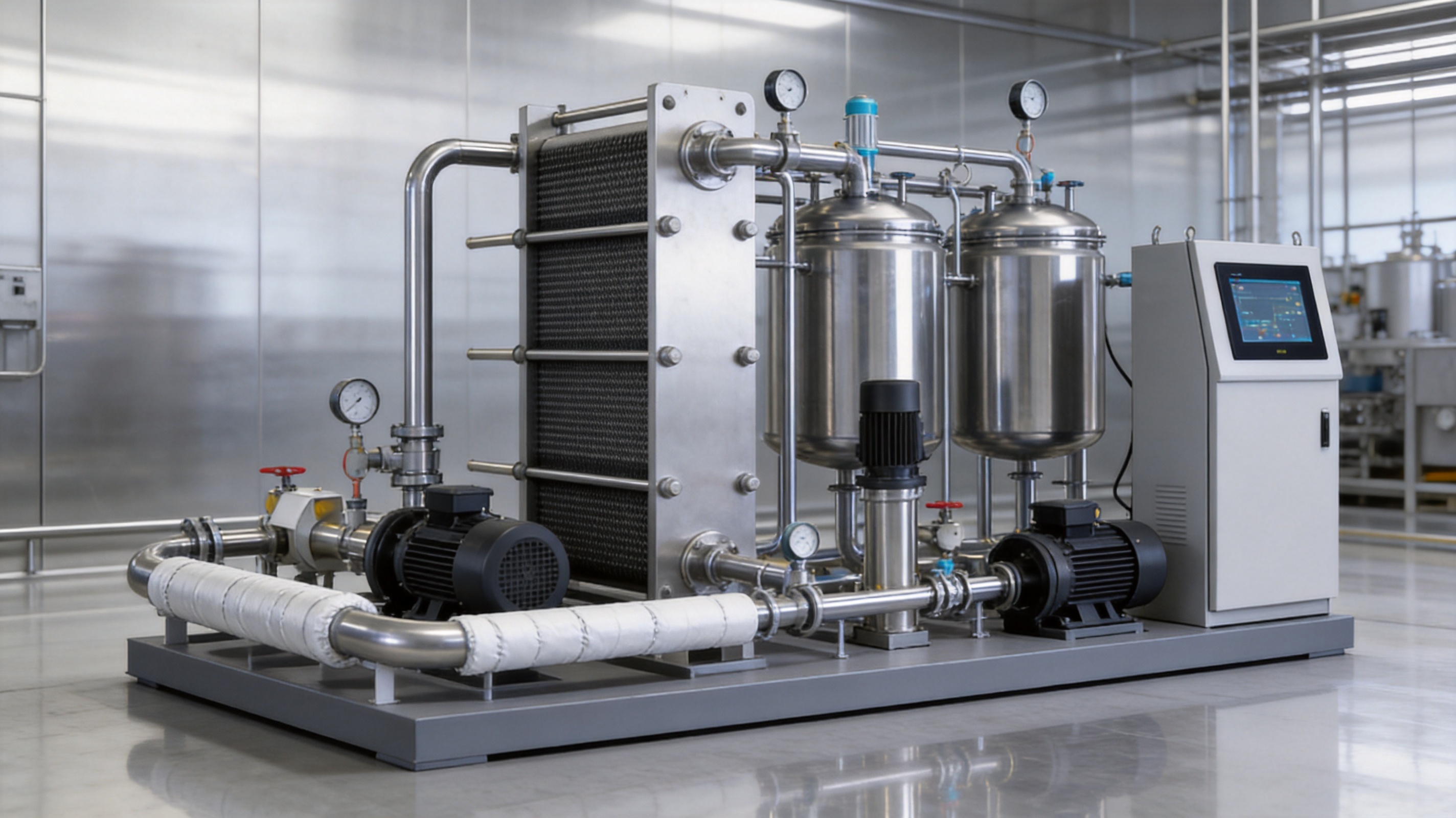
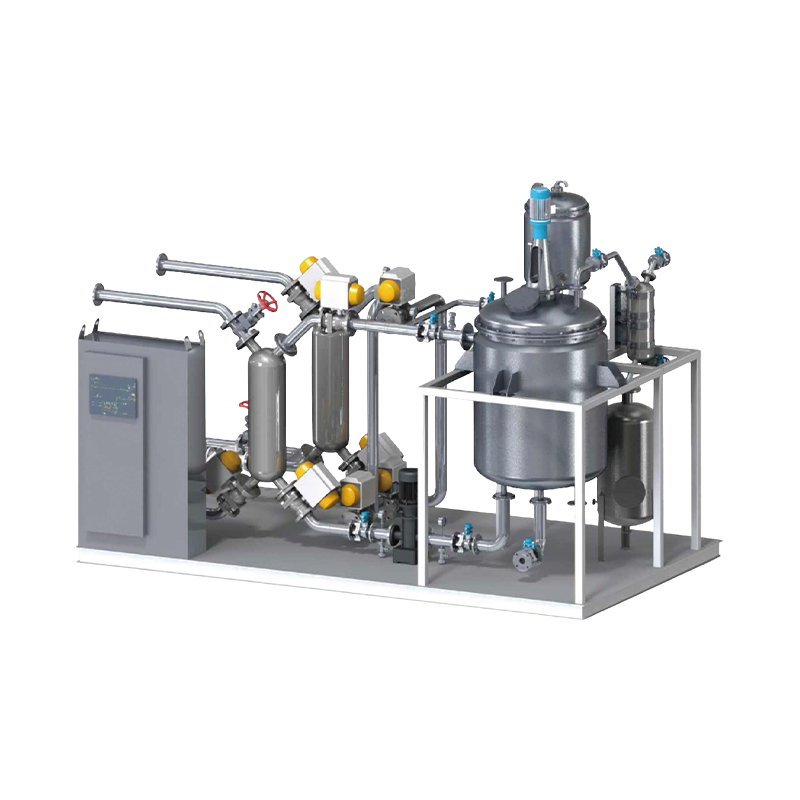
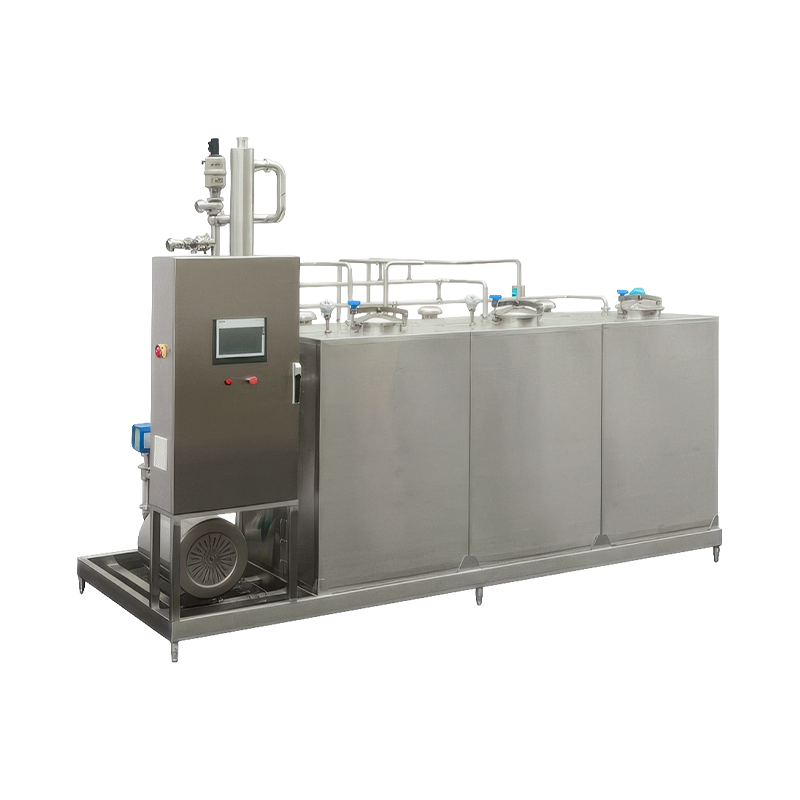
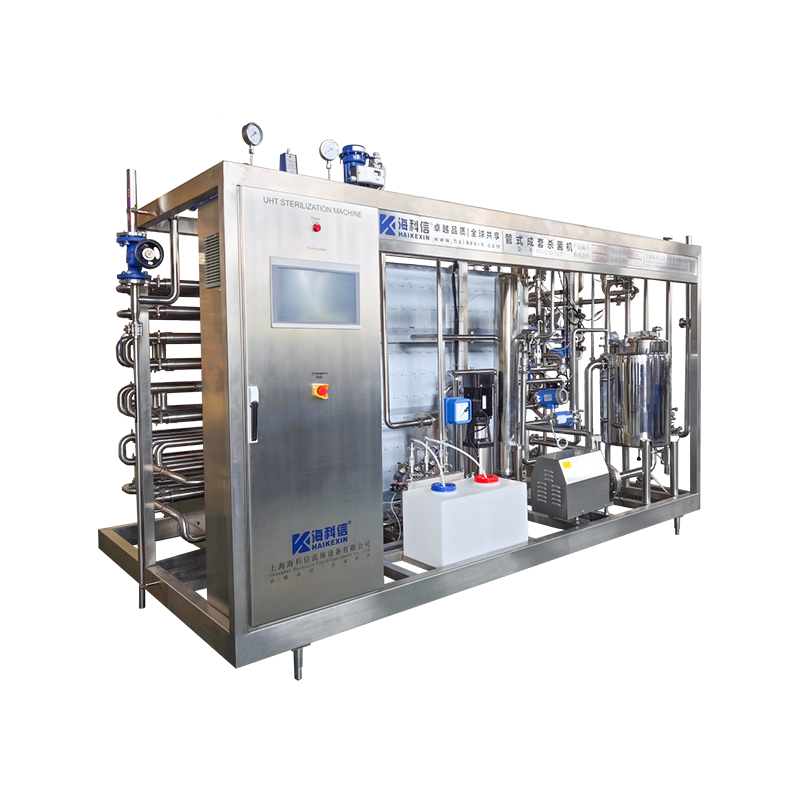
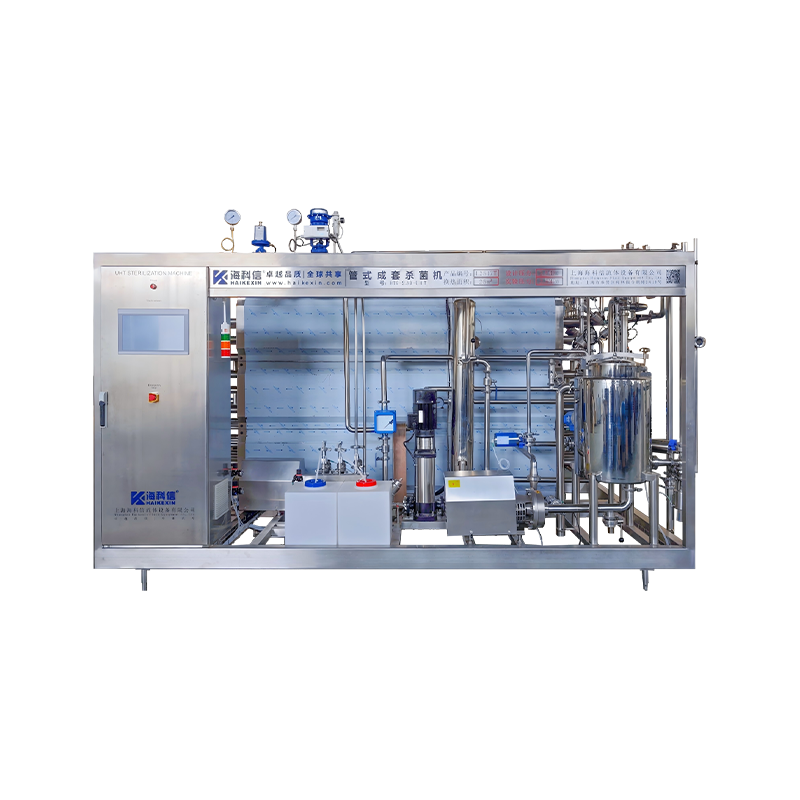
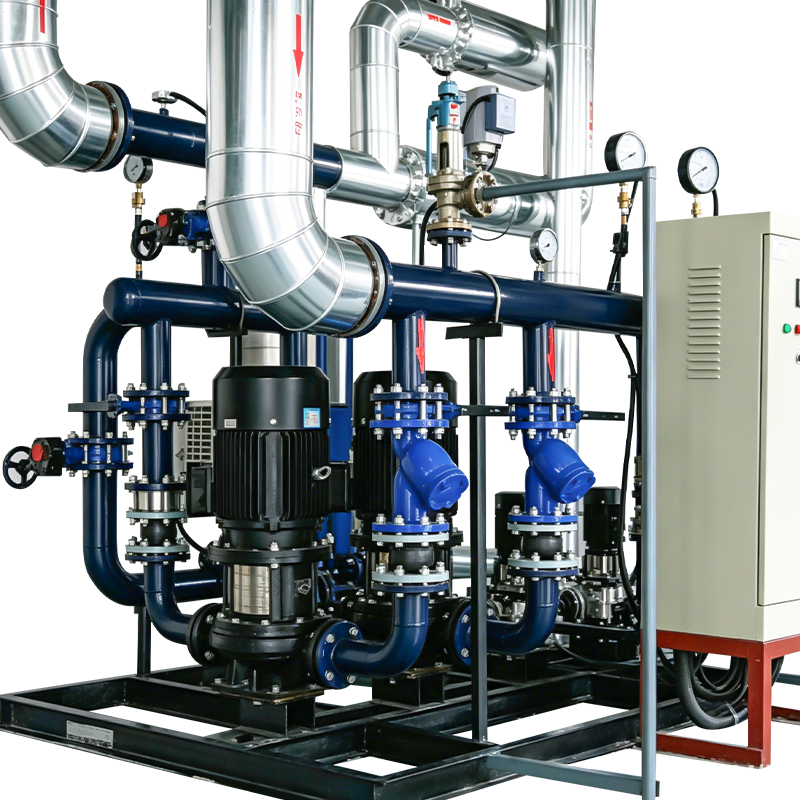
The Precision Temperature Control Unit (TCU) for Food and Beverage is designed to meet these requirements. It combines heat exchange tanks, circulation pumps, control valve groups, plate heat exchangers, temperature sensors, protective devices, and a PLC-based control system into one coordinated process skid. The unit can provide heating, cooling, or alternating heating and cooling while automatically adjusting flow and thermal output according to real-time process feedback.
This article explains the operating principles, design advantages, applications, hygienic features, automation functions, manufacturing strengths, and selection considerations associated with an integrated precision TCU. It also examines how the system can provide practical advantages over less integrated temperature control solutions used in food, beverage, and biopharmaceutical facilities.
What Is a Precision Temperature Control Unit?
A precision temperature control unit is a closed-loop thermal management system used to regulate the temperature of process equipment. Rather than applying heat or cold independently, the TCU circulates a controlled medium through a heat exchanger or process jacket connected to a reactor, mixing tank, fermentation vessel, storage tank, or other production equipment.
The system continuously receives temperature information from sensors installed at suitable process locations. The PLC compares the actual temperature with the programmed setpoint or process curve. If the measured value differs from the target, the control system adjusts a proportional valve, pump condition, heating output, cooling output, or medium flow rate to correct the deviation.
This operating principle allows the TCU to respond dynamically instead of relying on manual intervention. During a heating stage, the system can deliver thermal energy at a controlled rate. During a cooling stage, it can switch to a chilled medium or cooling circuit. When the process requires alternating thermal conditions, the TCU can change operating modes according to a programmed sequence.
The main purpose is not simply to make a vessel hotter or colder. The objective is to maintain the correct thermal profile throughout the process and to do so in a repeatable, hygienic, safe, and traceable manner.
Main Components of the System
The integrated TCU typically includes the following major components:
- Heat exchange tanks or thermal medium tanks
- Circulation pumps
- Plate heat exchangers
- Heating and cooling medium connections
- Temperature, pressure, and flow sensors
- Automated control valve groups
- Food-grade stainless-steel process piping
- PLC control cabinet
- Touch-screen human-machine interface
- Expansion and pressure protection devices
- Over-temperature and low-level protection
- Emergency stop and dry-run prevention systems
These components are selected and arranged as a coordinated skid rather than as isolated pieces of equipment. The integrated approach reduces the amount of on-site assembly required and makes it easier to test, operate, maintain, and connect the system to an existing production line.
Why Temperature Control Is Critical in Food and Beverage Manufacturing
Food and beverage products are often sensitive to relatively small changes in temperature. A difference of only a few degrees may affect the behavior of proteins, sugars, fats, emulsions, enzymes, cultures, or natural pigments. The impact may not always be visible during processing, but it can become evident during filling, storage, quality inspection, or customer use.
For example, insufficient temperature control during sauce production may lead to inconsistent viscosity or incomplete ingredient dispersion. In dairy processing, poor control may influence pasteurization performance, fermentation behavior, or cooling time. In beverage production, an unstable blending temperature can affect solubility, flavor release, color, and filling consistency.
Temperature also affects production economics. Slow heating and cooling can extend batch cycles, increase utility consumption, and reduce equipment availability. Unstable conditions may produce rejected batches, rework, excess cleaning, and wasted raw materials.
A precision TCU addresses these challenges by providing a controlled thermal environment that can be repeated from batch to batch. The result is a more predictable process, reduced dependence on manual adjustment, and improved coordination between the thermal system and the production equipment.
Typical Process Problems Caused by Inadequate Control
- Temperature fluctuations during heating or cooling
- Uneven product texture or viscosity
- Product separation or poor emulsification
- Overheating of sensitive ingredients
- Underprocessing and incomplete reactions
- Unstable fermentation conditions
- Long and unpredictable production cycles
- Excessive energy consumption
- Frequent operator intervention
- Difficulty proving process consistency
- Higher risk of rejected or reworked batches
Traditional arrangements may rely on manually operated valves, separate heating equipment, independent cooling equipment, and limited process feedback. Such systems can work for basic applications, but they often become difficult to manage as production requirements become more demanding. A coordinated TCU provides a more systematic solution.
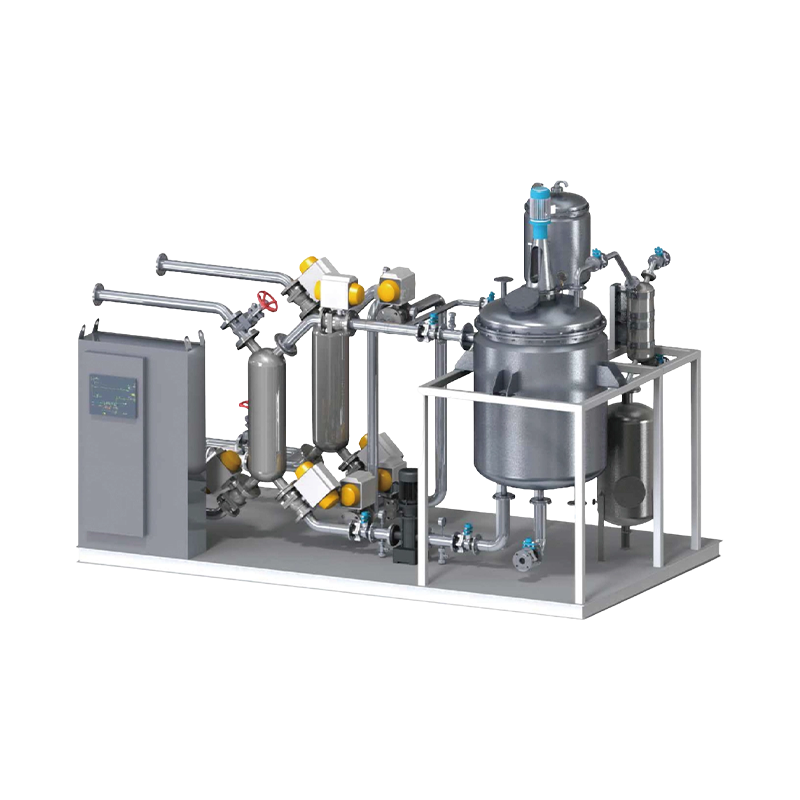
Precision Temperature Control Unit (TCU) for F&B
Closed-Loop Control for Stable Process Temperatures
The most important technical advantage of a precision TCU is its closed-loop control method. In an open-loop arrangement, an operator may set a heating source or open a valve and assume that the process will reach the desired temperature. However, the actual result can vary because of changing product viscosity, ambient conditions, batch volume, heat transfer efficiency, utility pressure, or equipment loading.
In a closed-loop system, actual process conditions are measured continuously. The control system compares the measured temperature with the desired value and automatically corrects the difference. This creates a feedback cycle that helps maintain stable conditions even when the process load changes.
For food and beverage applications, closed-loop control can be used for:
- Gradual heating to protect sensitive ingredients
- Controlled cooling after cooking or pasteurization
- Maintaining a constant temperature during mixing
- Holding a product within a fermentation range
- Following a multi-stage process curve
- Switching between heating and cooling conditions
- Maintaining temperature during transfer or storage
The control strategy can be adapted to the process. Some products require a slow ramp to avoid thermal shock or localized overheating. Other processes require rapid cooling to protect quality or reduce microbial risk. A programmable TCU can accommodate these different requirements through adjustable setpoints, ramp rates, hold times, and operating sequences.
Process Curve Programming
Many modern food and biopharmaceutical processes are not defined by one temperature alone. They require a series of controlled stages. A typical process curve may include preheating, rapid heating, temperature holding, gradual cooling, final cooling, and a standby phase.
The touch-screen interface allows operators or authorized engineers to enter process parameters. Depending on the project requirements, these parameters may include:
- Target temperature
- Heating rate
- Cooling rate
- Holding time
- Maximum allowable deviation
- Pump or flow settings
- Valve operating sequence
- Alarm limits
- Transition conditions between process stages
Once a process recipe is selected, the PLC can execute the sequence automatically. This improves repeatability and reduces the variation that may occur when operators manually adjust controls during every batch.
Integrated Design Compared with Conventional Solutions
One of the principal advantages of this TCU is modular integration. Instead of requiring the customer to combine a heat exchanger, pump skid, valve station, control cabinet, sensors, and safety devices from different suppliers, the major functions are engineered into one process package.
This approach provides several practical benefits. First, it reduces on-site installation work. The skid can be assembled, wired, inspected, and tested before shipment. Second, it simplifies the interface between components because the pump capacity, heat exchange area, control valves, sensors, and PLC logic are selected as part of one system. Third, it improves troubleshooting because operators can review the process from a central control interface.
Compared with basic standalone heating or cooling equipment, an integrated TCU can offer:
| Design Aspect | Conventional Separate Equipment | Integrated Precision TCU |
|---|---|---|
| Installation | Multiple components require separate site assembly | Preassembled skid reduces field installation work |
| Control | Manual or partially independent adjustment | Centralized PLC and closed-loop regulation |
| Process flexibility | Often limited to one heating or cooling function | Supports heating, cooling, holding, and switching sequences |
| Equipment communication | Interfaces may need to be engineered separately | Designed for linkage with reactors, tanks, and line signals |
| Data management | Limited or manual records | Automatic recording of temperature, pressure, and flow data |
| Maintenance | Multiple supplier responsibilities | Coordinated equipment layout and service support |
| Expansion | Additional modules may be difficult to integrate | Modular design supports future process upgrades |
The integrated concept does not eliminate the need for proper process engineering. Instead, it makes the engineering relationship between the thermal system and the production equipment clearer and more manageable.
Advantages in Food-Grade and Hygienic Production
Food and beverage equipment must be designed with hygiene in mind. Thermal performance alone is not sufficient if the equipment creates contamination risks, difficult-to-clean areas, corrosion problems, or unnecessary product retention.
The TCU uses food-grade stainless steel for process-contact pipelines and tanks. Depending on the process and customer requirements, stainless steel 304 or 316L may be selected. Stainless steel provides corrosion resistance, mechanical durability, a smooth surface, and compatibility with common cleaning practices.
For applications involving aggressive cleaning chemicals, saline ingredients, acidic products, or biopharmaceutical media, 316L stainless steel may provide additional corrosion resistance. Material selection should always be confirmed against the product composition, cleaning method, temperature, pressure, and applicable validation requirements.
Hygienic Construction Features
- Stainless-steel process-contact surfaces
- Appropriate sanitary welding and finishing
- Reduced dead zones in process piping
- Drainable pipe arrangements where applicable
- Accessible valves and instruments
- Easy-to-clean external surfaces
- Food-grade sealing materials
- Protection against unnecessary product or medium retention
Hygienic design also helps maintenance. Smooth surfaces and accessible components make inspection and cleaning more straightforward. Properly designed pipe routing reduces the chance of stagnant areas and supports more reliable draining during shutdown.
The TCU itself may circulate a thermal medium rather than the product. Even so, the system must be engineered carefully because leakage, cross-contamination, or poor cleaning around process interfaces can affect the production environment. The use of suitable seals, reliable valves, correct pressure protection, and quality welding is therefore essential.
Heating, Cooling, and Alternating Thermal Processes
A major strength of the precision TCU is its ability to support multiple thermal conditions within one process. Food and beverage production frequently requires more than one temperature phase. A product may need to be heated for cooking or dissolution, held for a defined period, and then cooled before filling, fermentation, or transfer.
The TCU can coordinate these stages through controlled medium circulation and automated valve operation. Heat may be transferred through a plate heat exchanger or a vessel jacket, while the PLC determines when to activate or isolate heating and cooling circuits.
Heating Applications
Heating may be required for cooking sauces, dissolving powders, preparing syrups, melting fats or chocolate, supporting enzymatic reactions, pasteurization, or reaching a target temperature before fermentation.
Controlled heating is particularly important when products contain proteins, sugars, starches, or natural ingredients that may scorch, denature, caramelize, or lose functionality if exposed to excessive local temperatures. A controlled circulation system helps distribute thermal energy more evenly and reduces the risk of uncontrolled temperature spikes.
Cooling Applications
Cooling can be required after pasteurization, cooking, sterilization, enzymatic treatment, or fermentation. Rapid but controlled cooling may protect product quality, shorten the batch cycle, and prepare the material for the next manufacturing stage.
The cooling response depends on the available cold source, heat exchanger capacity, process flow, product properties, and vessel design. The TCU coordinates these variables to achieve a predictable cooling profile rather than relying on an uncontrolled utility connection.
Heating and Cooling Switching
Some processes require alternating thermal conditions. For example, an ingredient may first be heated for dissolution and then cooled to protect a culture, flavor component, or active ingredient. Other processes may require several heating and cooling steps within one recipe.
Automated switching reduces operator workload and limits the possibility of connecting the wrong utility or opening an incorrect valve. Interlocks can be applied to prevent unsafe or unsuitable combinations of operating conditions.
Applications in Food and Beverage Manufacturing
Dairy Processing
Dairy production depends heavily on accurate temperature control. Applications may include milk treatment, pasteurization support, fermentation tanks, yogurt processing, blending, cream handling, and product cooling.
During fermentation, the temperature must remain within a defined range to support the desired culture activity. Excessive fluctuation may affect fermentation time, acidity, texture, or flavor. During pasteurization and subsequent cooling, stable thermal control contributes to process consistency and supports hygienic production requirements.
Beverage Production
Beverage manufacturers may use precision TCUs for juice, tea beverages, flavored drinks, nutritional beverages, syrups, concentrates, and liquid ingredients. Temperature control can support powder dissolution, flavor blending, concentration, pasteurization, and storage.
A programmable TCU is useful when one production facility manufactures multiple products with different thermal profiles. Recipes can be adjusted for different formulations while the same basic skid serves multiple tanks or production lines, subject to capacity and compatibility requirements.
Sauce and Liquid Food Production
Sauces, dressings, gravies, emulsions, and liquid food products often require accurate temperature control to achieve the desired viscosity and ingredient dispersion. If the process temperature is too low, mixing and dissolution may be incomplete. If it is too high, the product may burn, separate, discolor, or lose sensitive flavor components.
The TCU helps maintain a stable operating range while the product is mixed, heated, held, or transferred. Consistent thermal conditions can improve batch-to-batch repeatability and reduce the amount of product that requires rework.
Chocolate, Syrup, and Confectionery Production
Chocolate, sugar syrups, coatings, and confectionery materials can be highly sensitive to heating rate and temperature uniformity. A precision TCU can support controlled melting, viscosity management, holding, and cooling. The exact temperature profile depends on formulation, equipment, and production method, but the need for repeatable control is common across these processes.
Fermentation and Biochemical Processes
Fermentation and biochemical processes require thermal stability because microorganisms, enzymes, and biological materials may respond strongly to temperature changes. The TCU can connect with fermentation vessels, culture tanks, and reactors to maintain a suitable temperature while the process develops.
In these applications, control stability, sensor placement, response time, data recording, and alarm management are especially important. The system can be configured to communicate with the vessel control system so that temperature control is coordinated with agitation, aeration, feeding, or other process functions.
Biopharmaceutical and Biochemical Suitability
Although the product is configured for food and beverage production, the same thermal control principles are relevant to biopharmaceutical and biochemical manufacturing. Applications may include enzymatic hydrolysis, strain cultivation, preparation of process solutions, buffer conditioning, and controlled reaction stages.
Biopharmaceutical processes often place higher demands on documentation, material traceability, cleaning, and validation. The TCU can be adapted to project-specific requirements through suitable material selection, instrumentation, surface treatment, control logic, data handling, and documentation.
For these applications, the system should be evaluated according to the required process classification, cleaning strategy, sterilization conditions, pressure rating, temperature range, and regulatory expectations. The basic skid concept provides a foundation, but the final design must be based on the actual process and validation requirements.
PLC Automation and Production Line Integration
The PLC control system is the central coordination point for the TCU. It receives signals from sensors and connected production equipment, executes control logic, manages valves and pumps, displays operating conditions, and activates alarms when abnormal conditions occur.
The touch-screen interface enables operators to view current process data and adjust authorized parameters. A well-designed interface can show temperature trends, active operating mode, pump status, valve status, alarm conditions, and process stage.
Integration with upstream and downstream equipment can improve the overall production sequence. For example, the TCU may receive a start command from a reactor, provide a ready signal to a filling line, or stop heating when a tank reaches a specified condition. Interlocks can prevent operation when a required pump, valve, level, or sensor is unavailable.
Common Integration Functions
- Start and stop signals from process vessels
- Ready and fault signals to a central production control system
- Temperature setpoint transfer
- Recipe or process curve selection
- Pump and valve status monitoring
- High-temperature and low-temperature alarms
- Pressure and flow monitoring
- Emergency stop coordination
- Batch data communication
- Remote monitoring where permitted by the plant control architecture
Automation does not remove the need for skilled operators. Instead, it gives operators clearer information and reduces repetitive manual adjustment. The system can also help standardize operating practices between shifts and across multiple production lines.
Data Recording and Traceability
Traceability is increasingly important in food, beverage, and biopharmaceutical manufacturing. Manufacturers need to demonstrate that products were processed according to approved conditions and that abnormal events were identified and managed.
The TCU can record key operating parameters such as temperature, pressure, flow, process stage, alarm events, and operating time. These records can support batch review, troubleshooting, preventive maintenance, quality investigations, and production optimization.
Recorded data may help answer important questions:
- Did the batch reach the required temperature?
- How long was the product held at the target condition?
- Was the cooling rate within the expected range?
- Did a pressure or flow deviation occur?
- Was an alarm acknowledged during the batch?
- Did the process follow the approved curve?
- Was the thermal system operating normally before a quality deviation?
Data recording also supports continuous improvement. Engineers can compare actual performance with design assumptions, identify recurring deviations, review utility consumption, and optimize heating or cooling sequences.
Safety and Protective Functions
Thermal systems must be designed with appropriate safeguards because they may involve hot fluids, pressurized circuits, pumps, electrical equipment, and rapid changes in operating condition. The TCU includes a range of protective functions to support safe operation.
Typical Safety Features
- Over-temperature alarm
- Pressure protection
- Emergency stop
- Dry-run prevention for circulation pumps
- Low-level monitoring
- Flow confirmation
- Valve position monitoring where required
- Protection against abnormal operating sequences
- Fault indication on the control interface
- Controlled shutdown during critical alarms
Dry-run prevention is particularly important for pumps. If the medium level is too low or the circulation path is blocked, continued operation may damage the pump and reduce heat transfer performance. Pressure protection helps manage expansion, blockage, or abnormal valve conditions.
Safety functions should be reviewed during design qualification and commissioning. The final protection strategy must be matched to the selected heat transfer medium, operating temperature, pressure rating, local electrical requirements, and plant safety procedures.
Engineering and Manufacturing Strengths
The performance of a process skid depends not only on component selection but also on engineering execution. Incorrect pipe sizing, poor sensor placement, insufficient heat exchange area, unsuitable materials, weak welding, or incomplete control logic can limit the performance of even high-quality individual components.
Shiloc (Shanghai) Industrial Trading Co., Ltd. provides integrated equipment manufacturing, international trade, engineering technology, and import and export services. The company focuses on equipment and process solutions for food and beverage, biopharmaceutical, daily chemical, and fine chemical industries.
Its engineering approach is supported by European know-how and Danish design concepts. The company operates a 3,000-square-meter manufacturing facility in Shanghai and has more than 20 technical specialists. Its capabilities include process design, equipment fabrication, stainless-steel processing, welding, polishing, assembly, inspection, and quality control.
By combining manufacturing and engineering services, the company can coordinate several important stages of a project through one organization. This can simplify communication, improve responsibility allocation, and reduce the risk of mismatched equipment interfaces.
In-House Processing Capabilities
Core manufacturing activities are completed in-house where practical. These activities include material preparation, fabrication, welding, surface treatment, assembly, and inspection. In-house processing provides greater control over workmanship and allows the engineering team to respond more directly to project-specific requirements.
For sanitary equipment, welding and polishing quality are especially important. Poorly executed welds or rough internal surfaces may create cleaning challenges, corrosion risks, or contamination concerns. Controlled fabrication procedures and inspection help maintain the required quality of the finished skid.
In-house production also supports shorter communication paths. When a project requires a modified connection, additional sensor, revised frame arrangement, different control sequence, or special documentation package, engineering and production teams can coordinate changes more efficiently.
European Materials and Component Selection
The company sources core materials from Europe for selected projects. Material sourcing is coordinated with the process requirements, product characteristics, operating conditions, and customer specifications.
Material selection may involve reviewing:
- Corrosion resistance
- Temperature and pressure conditions
- Compatibility with process fluids
- Cleaning and sanitation procedures
- Surface finish requirements
- Seal and gasket compatibility
- Availability of inspection documents
- Long-term maintenance requirements
The correct material is not always the most expensive material. It is the material that provides suitable hygiene, durability, compatibility, and lifecycle value for the intended process.
Quality Control and Production Traceability
A reliable process skid requires quality control at multiple stages rather than only a final visual inspection. Incoming materials, fabrication dimensions, weld quality, assembly accuracy, instrument installation, electrical wiring, control logic, and functional performance should all be checked systematically.
Production traceability helps connect the delivered unit with its materials, drawings, inspection records, and test results. This is valuable for customers who require documented quality assurance or who operate under formal manufacturing and validation procedures.
Typical quality activities may include:
- Material verification
- Dimensional inspection
- Weld inspection
- Surface finish inspection
- Pressure testing where applicable
- Leak testing
- Instrument calibration verification
- Electrical testing
- PLC function testing
- Alarm and interlock testing
- Factory acceptance testing
- Final inspection before shipment
The company maintains a quality management system supported by ISO9001, environmental, and safety certifications. Certification alone does not replace engineering judgment or process testing, but it provides a structured framework for documentation, corrective action, and continuous improvement.
Customization for Different Production Requirements
There is no single TCU configuration that is ideal for every food, beverage, or biopharmaceutical process. The required design depends on the product, batch volume, thermal load, target temperature range, heat transfer medium, utility conditions, control philosophy, cleaning method, and installation environment.
The TCU can be customized in several areas:
- Heating capacity
- Cooling capacity
- Process flow rate
- Temperature range
- Heat exchanger size
- Pump type and capacity
- Pipe diameter and connection standard
- Stainless-steel grade
- Instrumentation level
- PLC and communication protocol
- Frame dimensions and skid layout
- Insulation and external cladding
- Data recording requirements
- Cleaning and drainage arrangement
Customization should begin with the actual process rather than with a standard equipment catalogue. Engineers should review the product properties, required thermal curve, vessel geometry, agitation conditions, available utilities, installation space, operating procedures, and future expansion plans.
Questions for Project Definition
- What product or medium will be processed?
- What are the minimum and maximum operating temperatures?
- What heating and cooling rates are required?
- What is the vessel volume and working level?
- Is the product sensitive to shear or thermal shock?
- What heat transfer medium will be used?
- What are the available utility pressures and temperatures?
- Is the system connected to a jacket, coil, or external heat exchanger?
- What accuracy and stability are required?
- What cleaning or sanitation procedures apply?
- What information must be recorded for each batch?
- How should the TCU communicate with the plant control system?
Clear answers to these questions help prevent under-sizing, excessive energy consumption, poor control response, and difficult commissioning.
Operational Benefits for Manufacturers
The value of a precision TCU can be measured through both process performance and operational efficiency. Stable temperature control supports product consistency, while automation reduces the need for constant manual adjustment.
Manufacturers may benefit from:
- More consistent product quality
- Reduced thermal variation between batches
- Lower risk of overheating and underprocessing
- Shorter or more predictable production cycles
- Reduced material waste
- Improved operator productivity
- Better process documentation
- More effective troubleshooting
- Improved equipment integration
- Greater flexibility for product changeovers
- Improved energy utilization
- More convenient maintenance planning
Energy savings are influenced by many factors, including insulation, utility efficiency, heat exchanger condition, process scheduling, and product formulation. A TCU does not automatically guarantee a specific energy reduction, but precise regulation can reduce unnecessary heating and cooling and help the plant use thermal energy more effectively.
Maintenance and Troubleshooting
Routine maintenance is necessary to preserve the performance and reliability of the TCU. Heat exchangers, filters, pumps, valves, seals, sensors, and safety devices should be inspected according to operating hours, process conditions, and the manufacturer’s maintenance recommendations.
Common Temperature Fluctuation Problems
If temperature fluctuations exceed the process range, operators should first check the installation position and calibration status of the temperature sensors. Incorrect sensor placement or a damaged sensor can cause the control system to respond to an inaccurate measurement.
The circulation pump should also be checked for stable flow. A partially blocked filter, low medium level, air in the line, worn pump, or closed valve may reduce circulation and cause poor heat transfer. Heat exchanger fouling should be considered if the system gradually loses thermal performance.
Slow Heating or Cooling
If the heating or cooling rate is below the expected level, check the supply pressure and temperature of the heat or cold source. The control valve may not be opening correctly, or the available medium flow may be insufficient.
Pipeline filters should be inspected for blockage. Heat exchanger fouling, incorrect valve configuration, inadequate insulation, or changes in product viscosity may also affect the response time.
Abnormal Pipeline Pressure
Abnormal pressure may result from blockage, leakage, closed valves, incorrect expansion tank pressure, low medium level, or a safety valve issue. The system should be placed in a safe condition before inspection, especially when hot or pressurized media are involved.
Recommended Preventive Maintenance
- Check medium level before startup
- Confirm valve positions and sensor signals
- Inspect pumps for noise, vibration, and leakage
- Clean heat exchangers and filters regularly
- Inspect seals and replace worn components
- Verify temperature and pressure instruments
- Test alarms and emergency stop functions
- Review recorded operating data for trends
- Drain vulnerable lines during low-temperature shutdowns
- Protect the system from freezing when required
Installation and Commissioning Considerations
Although the TCU is supplied as an integrated skid, successful installation still requires careful planning. The customer should confirm the available floor space, access route, lifting method, utility connections, drain points, electrical supply, ventilation, and maintenance clearance.
Process connections should be reviewed against the approved piping and instrumentation diagrams. The direction of flow, connection size, valve orientation, sensor location, and drain arrangement should be confirmed before final installation.
Commissioning generally includes mechanical inspection, electrical checks, instrument verification, utility testing, pump rotation confirmation, leak testing, control logic verification, alarm testing, and process simulation. Factory acceptance testing before shipment can reduce the amount of troubleshooting required after installation.
During site commissioning, operators should receive training on startup, normal operation, alarm response, shutdown, cleaning, and routine maintenance. Clear operating procedures help ensure that the equipment performs consistently across different shifts.
How the TCU Provides Competitive Advantages
The strongest competitive advantage of this product is the combination of thermal performance, hygienic construction, automation, modular integration, and manufacturing support. Many basic systems can provide heating or cooling, but fewer systems combine these functions into a coordinated package designed for food, beverage, and related hygienic industries.
The key advantages include:
| Advantage | Practical Value |
|---|---|
| Closed-loop temperature regulation | Reduces process variation and improves batch repeatability |
| Heating and cooling in one system | Supports complete thermal cycles without separate manual arrangements |
| Integrated skid configuration | Reduces field installation and simplifies system responsibility |
| PLC and touch-screen control | Improves automation, visibility, and operator control |
| Programmable process curves | Supports recipes, ramps, holding stages, and repeatable sequences |
| Stainless-steel hygienic construction | Supports food-grade production and easier sanitation |
| Data recording | Improves traceability, quality review, and troubleshooting |
| Safety and interlock functions | Helps protect personnel, equipment, and product |
| Custom engineering | Allows adaptation to vessels, utilities, products, and plant controls |
| In-house manufacturing | Improves coordination of fabrication, welding, polishing, and inspection |
These advantages are particularly relevant for manufacturers seeking to modernize a manual process, replace multiple disconnected thermal units, expand production capacity, or improve batch documentation.
Why Choose an Experienced Engineering Manufacturer?
Thermal control performance depends on the relationship between the product, the process vessel, the heat exchanger, the circulating medium, the control system, and the plant utilities. A supplier that only delivers individual components may not be able to address the complete process.
An experienced engineering manufacturer can evaluate the entire application and coordinate equipment design, control logic, fabrication, inspection, installation support, and after-sales service. This integrated responsibility is useful when the system must connect to existing reactors, fermentation tanks, filling lines, or central automation systems.
Shiloc (Shanghai) Industrial Trading Co., Ltd. combines equipment manufacturing with international trade and engineering technology services. Its experience in heat exchangers, aseptic mixing equipment, and fluid process systems supports applications in food, beverage, biopharmaceutical, daily chemical, and fine chemical manufacturing.
The company’s manufacturing facility, technical personnel, European material sourcing, Danish design influence, in-house processing, and documented quality procedures provide a foundation for customized process equipment. Its service approach focuses on understanding the customer’s application and providing a thermal solution that supports stable production over the equipment lifecycle.
Conclusion
A Precision Temperature Control Unit for Food and Beverage is more than a heating or cooling device. It is an integrated process system designed to maintain stable thermal conditions, support automated production, improve hygiene, record important operating data, and protect the quality of food, beverage, biochemical, and biopharmaceutical products.
Through closed-loop feedback, the TCU continuously responds to changes in process conditions. Through programmable control, it can follow heating, cooling, holding, and alternating thermal profiles. Through stainless-steel construction and hygienic design, it supports demanding production environments. Through modular integration, it reduces on-site installation work and simplifies connection to reactors, tanks, and production lines.
The system can help solve common manufacturing problems such as temperature fluctuation, inconsistent viscosity, ingredient damage, slow heat transfer, product waste, excessive manual intervention, and incomplete process traceability. Its safety functions and data recording capabilities further support reliable daily operation.
The manufacturing strength behind the equipment is equally important. Engineering capability, European material sourcing, in-house fabrication, controlled welding and polishing, PLC testing, inspection, and production traceability all contribute to the reliability of the completed skid.
For manufacturers evaluating a new thermal management system, the most suitable solution should be selected according to the actual product, process curve, heat load, utility conditions, hygienic requirements, automation architecture, and future expansion plans. When properly engineered and maintained, a precision TCU can become a core part of a more consistent, efficient, traceable, and automated production process.
Questions and Answers
What is the main function of a precision temperature control unit?
The main function is to maintain a specified process temperature through controlled circulation of heating or cooling media. The unit uses temperature feedback, pumps, heat exchangers, valves, sensors, and PLC logic to automatically correct deviations from the target value.
Can one TCU provide both heating and cooling?
Yes. The system can be configured to support heating, cooling, and switching between the two modes. The exact configuration depends on the available heat source, cold source, process temperature range, required response rate, and heat transfer medium.
Which food processes can use this equipment?
Typical applications include sauce cooking, dairy processing, fermentation, beverage blending, syrup preparation, chocolate melting, pasteurization support, concentration processes, ingredient dissolution, and temperature maintenance during liquid transfer or storage.
Can the TCU be connected to a reactor or fermentation tank?
Yes. The unit can be designed to connect with reactors, fermentation vessels, mixing tanks, storage tanks, and other process equipment. Signal exchange can be configured for start commands, ready status, alarms, temperature setpoints, and coordinated process sequences.
What materials are used for food-grade construction?
Food-grade stainless steel 304 or 316L is commonly used for process-contact tanks and piping. The appropriate grade depends on the product, cleaning chemicals, operating conditions, corrosion risk, and customer requirements.
How does closed-loop control improve production?
Closed-loop control continuously compares the actual process temperature with the target temperature and adjusts system output automatically. This helps reduce fluctuations, improve batch repeatability, protect sensitive ingredients, and lower the need for manual adjustments.
Does the system support process recipes?
Yes. The PLC and touch-screen interface can support customized process curves, temperature setpoints, ramp rates, holding times, alarm limits, and operating sequences. Recipe functions should be configured according to the customer’s process and automation requirements.
What data can be recorded?
Depending on the configuration, the system can record temperature, pressure, flow, process stage, alarms, operating time, and other selected parameters. These records can support batch review, traceability, troubleshooting, and production management.
What should be checked if the temperature fluctuates?
Check sensor installation and calibration, circulation pump flow, medium level, valve operation, heat exchanger cleanliness, filter condition, and control settings. Changes in product properties or utility supply may also affect temperature stability.
How can the TCU improve energy utilization?
Accurate control helps avoid unnecessary heating and cooling, while efficient circulation and heat exchange can shorten thermal processing time. Actual energy performance depends on the heat exchanger, insulation, utility system, product characteristics, operating schedule, and process settings.
Is the equipment suitable for biopharmaceutical applications?
The thermal control concept is suitable for applications such as enzymatic hydrolysis, strain cultivation, process solution preparation, and controlled biochemical reactions. The final design must be adapted to the required materials, cleanability, documentation, validation, sterilization, and regulatory conditions.
What information is needed to design a customized TCU?
Important information includes the product characteristics, vessel volume, target temperature range, heating and cooling rates, heat transfer medium, available utilities, process flow, control accuracy, cleaning method, connection standards, installation space, data requirements, and future expansion plans.
References
1. General principles of hygienic design for food and beverage processing equipment.
2. Industrial guidance on heat exchanger operation, maintenance, and fouling control.
3. Process control engineering principles for feedback temperature regulation.
4. Good manufacturing practice concepts for food and biopharmaceutical production.
5. Stainless-steel material selection principles for sanitary process systems.
6. Industrial automation practices for PLC-based process equipment.
7. Preventive maintenance principles for pumps, valves, sensors, and thermal process skids.
8. Quality management principles for fabricated stainless-steel process equipment.
Product: Precision Temperature Control Unit (TCU) for F&B
PREV:Sanitary Tube-in-Tube Heat Exchangers for Food and Biopharmaceutical Process Systems
NEXT:Bottom-Entry High-Shear Magnetic Emulsifier for Hygienic Process Manufacturing
NEXT:Bottom-Entry High-Shear Magnetic Emulsifier for Hygienic Process Manufacturing
Interested in cooperation or have questions?
Recommended LINS
✦
Food and Beverage Process System
Food Processing Skid System
Aseptic Processing Equipment for Liquid Foods
Process Skid System
CIP Skid System for Food Industry
UHT Processing Equipment for Plant Based Milk
UHT Processing System for Dairy Products
Milk Processing Heat Exchanger
Industrial Liquid Food Sterilization Equipment
High Temperature Short Time Sterilizer
Let'S Work Together Welcome Aboard!
-

haikexin@haikexin.com
+8613391278930
-
 +86-21-57560276
-
 No. 2819, Sihu Road,Fengxian District, Shanghai, China
Join Our Mailing List
Copyright © Shiloc (Shanghai) Industrial Trading Co., Ltd. All Rights Reserved.
Process Systems & Equipment For Food & Biopharma Manufacturers
