
 English
 русский
 Português
 Français



 Read More

Product Category
NEW Category
Contact us
Contact Us
We specialise in the research, development and manufacture of electrical wires and cables.
 +86-21-57560276
Intelligent Bioprocess Heat Transfer Skid/Units for Food and Biopharmaceutical Manufacturing
Content
- 1 What Is an Intelligent Bioprocess Heat Transfer Skid/Unit?
- 2 Why Thermal Management Matters in Food and Biopharmaceutical Processing
- 3 Core Configuration of the Integrated Skid
- 4 How the Unit Operates
- 5 Advantages Compared with Conventional Distributed Installations
- 6 Competitive Advantages of the Intelligent Skid Approach
- 7 Applications in the Food and Beverage Industry
- 8 Applications in Biopharmaceutical and Life-Science Manufacturing
- 9 Advanced Manufacturing and Engineering Strengths
- 10 Project Customization and Configuration Options
- 11 Installation and Commissioning Considerations
- 12 Operation, Maintenance, and Troubleshooting
- 13 Energy Efficiency and Sustainability
- 14 Digital Monitoring and Future Development
- 15 Why Choose an Experienced International Supplier?
- 16 Selection Guide for Customers
- 17 Q&A
- 17.1 Q1: What is the main function of an Intelligent Bioprocess Heat Transfer Skid/Unit?
- 17.2 Q2: Which industries can use this type of skid?
- 17.3 Q3: How is the skid different from a standalone plate heat exchanger?
- 17.4 Q4: Can the heat transfer skid be customized?
- 17.5 Q5: Does the system support automatic temperature regulation?
- 17.6 Q6: Can operators monitor the system remotely?
- 17.7 Q7: Why are main and standby pumps useful?
- 17.8 Q8: How is the plate heat exchanger maintained?
- 17.9 Q9: What information is needed to design a suitable unit?
- 17.10 Q10: What manufacturing capabilities support these skids?
- 17.11 Q11: Can the skid be used in a regulated biopharmaceutical facility?
- 17.12 Q12: What safety functions can be included?
- 17.13 Q13: Can the equipment support future production expansion?
- 17.14 Q14: What are the main benefits of buying from an integrated supplier?
- 18 Conclusion
- 19 References
- 20 Product: Intelligent Bioprocess Heat Transfer Skid/Units
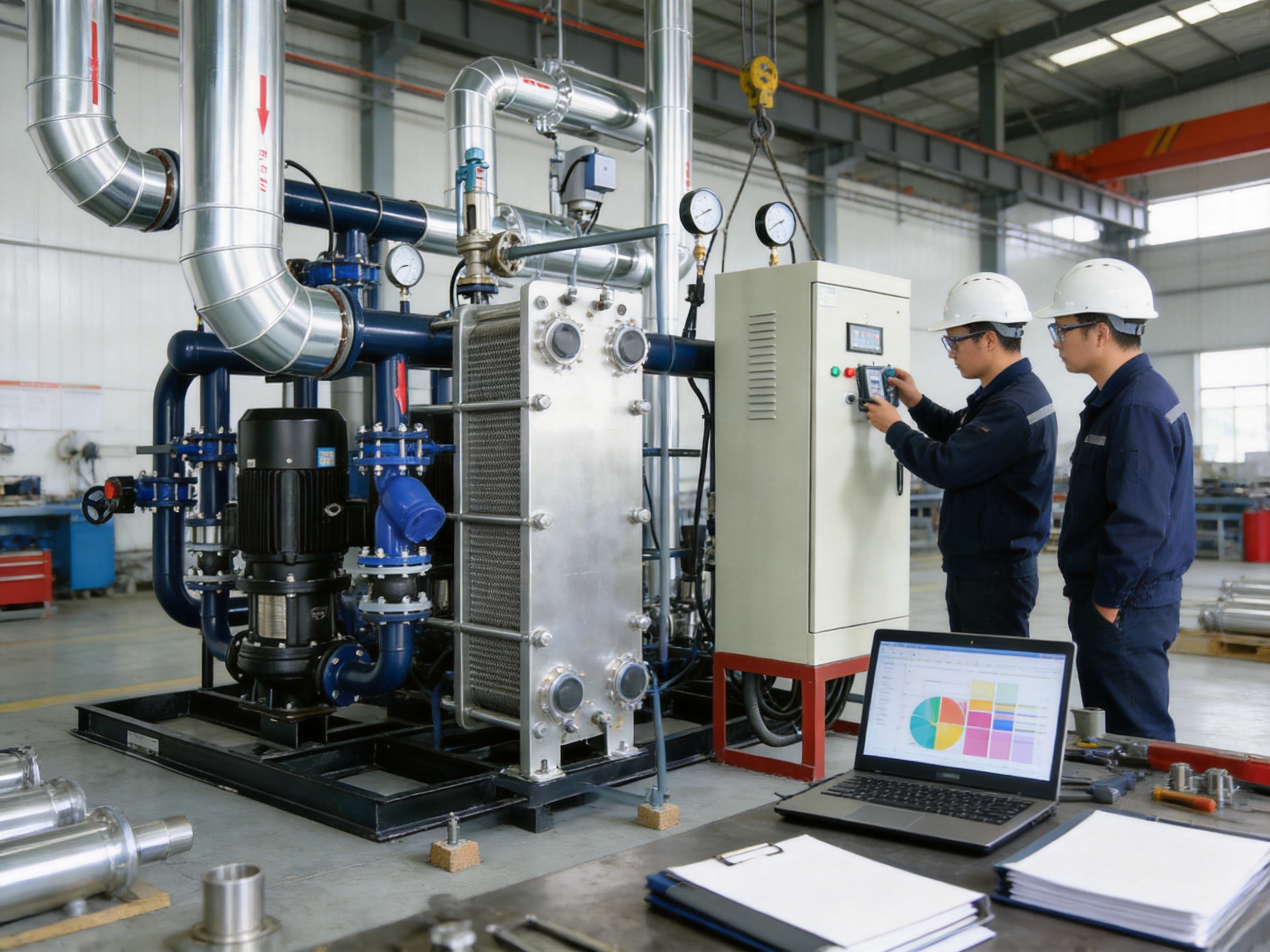
Food and beverage manufacturers, biopharmaceutical producers, fermentation companies, and life-science facilities increasingly require thermal systems that are accurate, reliable, hygienic, energy-conscious, and easy to integrate. Heating and cooling are no longer isolated utility functions. They directly influence fermentation performance, cell growth, product quality, cleaning effectiveness, production continuity, and regulatory traceability.
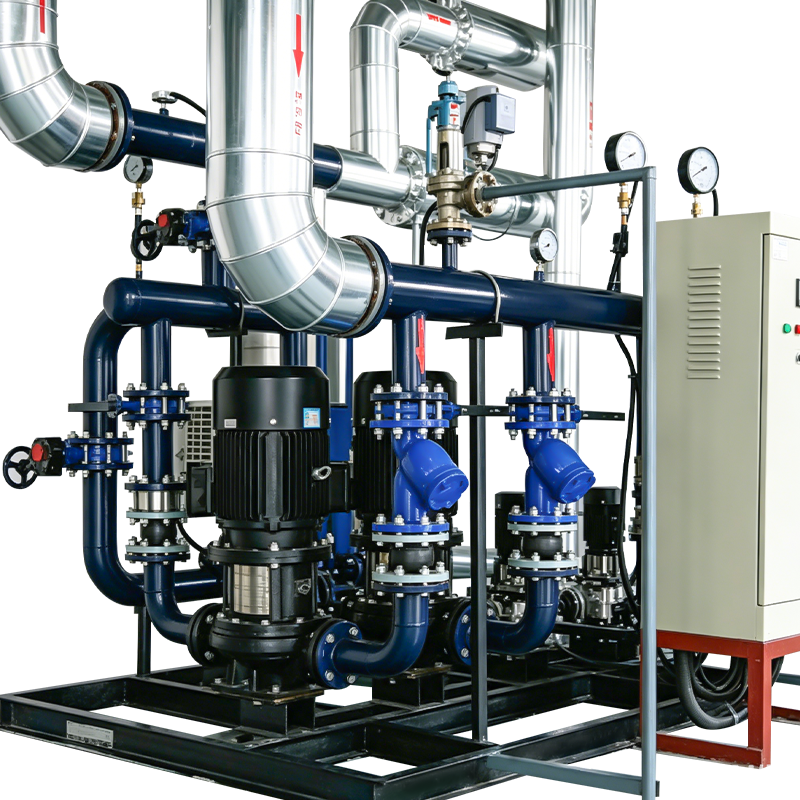
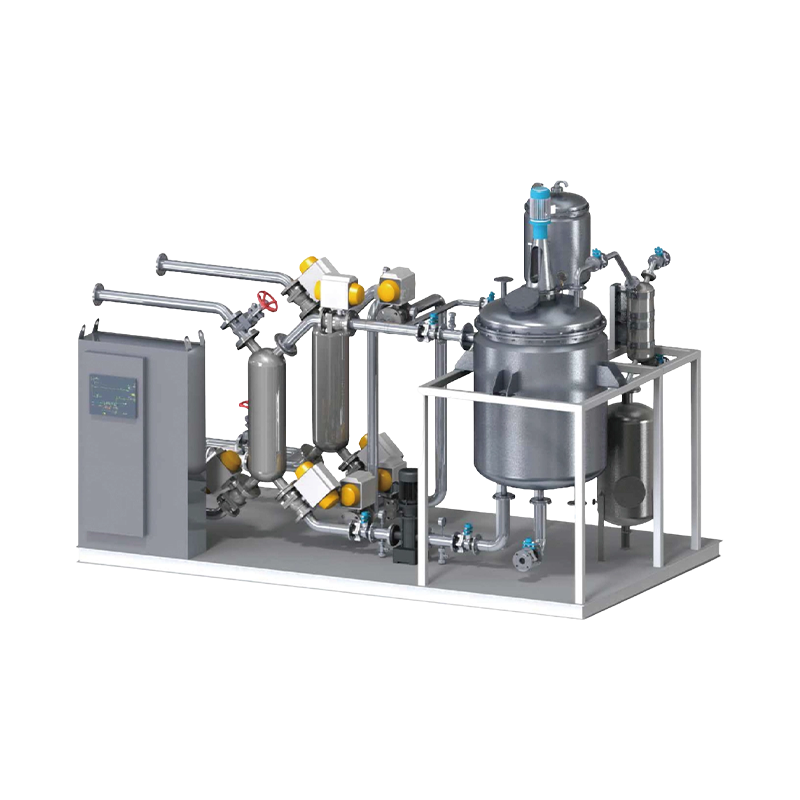
Intelligent Bioprocess Heat Transfer Skid/Units are designed to address these requirements through the integration of heat exchangers, circulation pumps, valves, sensors, instruments, piping, and programmable control systems on a single skid-mounted platform. Instead of delivering separate components that must be assembled and commissioned at the customer’s facility, an integrated skid can be engineered, fabricated, tested, and prepared for connection before shipment.
This approach reduces installation complexity and provides a more coordinated thermal management solution for industrial and bioprocess applications. The unit can be used for heating, cooling, temperature maintenance, process heat exchange, primary-to-secondary heat transfer, and other applications where stable thermal conditions are essential.
For food and beverage manufacturers, the system can support process water heating, cooling loops, fermentation temperature control, and thermal management of production vessels. For biopharmaceutical companies, it can be applied to fermentation tanks, cell culture systems, reactors, buffer preparation, purification processes, and other operations that require controlled and repeatable temperature profiles.
The key value of an intelligent heat transfer skid is not limited to its heat exchanger. Its advantages come from the coordinated design of the entire system. Mechanical components, process piping, instrumentation, automation, safety functions, and service considerations are combined into one engineered package. This makes the unit easier to install, operate, monitor, maintain, and expand.
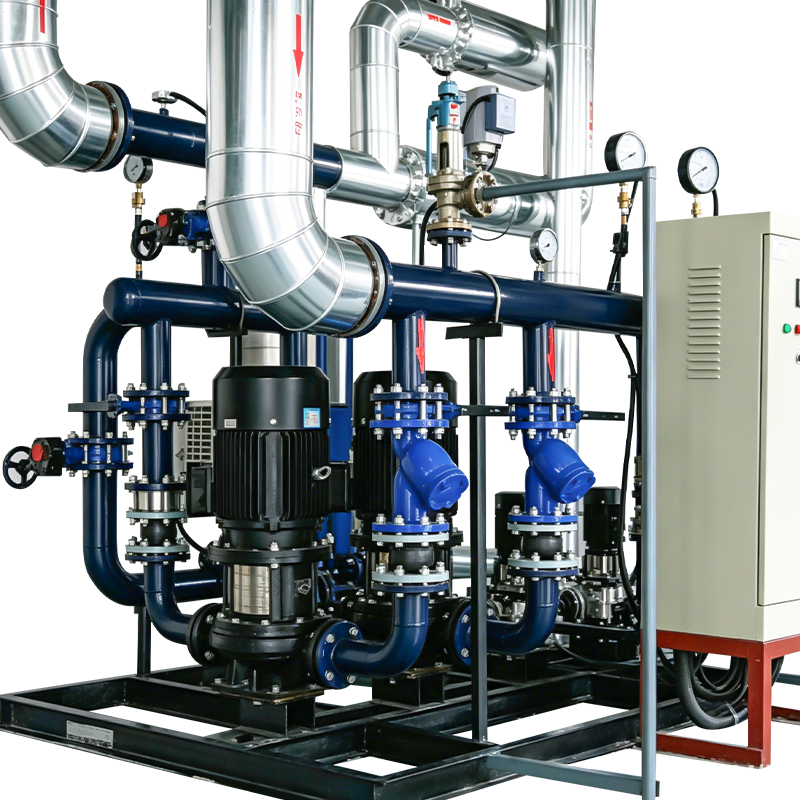
Intelligent Bioprocess Heat Transfer Skid/Units
What Is an Intelligent Bioprocess Heat Transfer Skid/Unit?
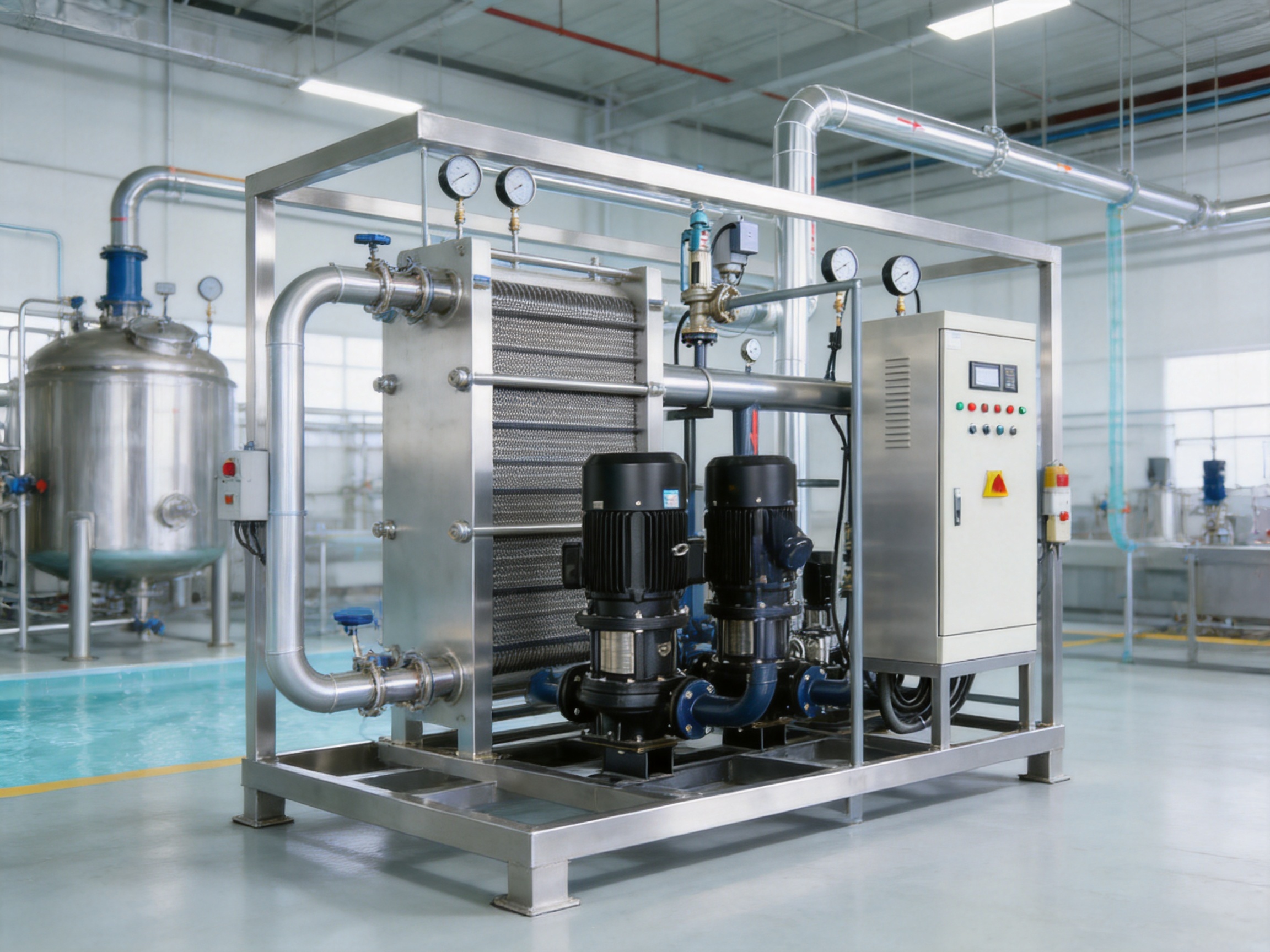
An Intelligent Bioprocess Heat Transfer Skid/Unit is a compact, factory-integrated thermal management system mounted on a structural skid. It generally includes one or more plate heat exchangers, circulation pumps, valves, pressure and temperature instruments, flow sensors, a control cabinet, process piping, safety devices, and an industrial programmable logic controller.
The system transfers heat between two or more media without allowing them to mix. Depending on the process design, the primary side may use steam, hot water, chilled water, glycol solution, or another thermal fluid, while the secondary side may circulate process water or another controlled medium. The heat exchanger transfers energy from the hot side to the cold side during heating and reverses the energy-flow purpose during cooling.
A typical unit receives a process temperature setpoint from an operator or production control system. The PLC compares the actual temperature with the target value and adjusts the operating conditions. Depending on the process configuration, the control system may regulate a control valve, vary pump operation, switch between main and standby pumps, or coordinate several actions at the same time.
Pressure, temperature, and flow data are collected continuously. This information allows operators to evaluate process performance, identify abnormal conditions, and maintain records for later review. Alarm functions can warn personnel about over-temperature, over-pressure, low flow, pump faults, sensor deviations, or other conditions that may affect production.
The skid-mounted structure also supports integral lifting, positioning, and connection. Because the main components are arranged and interconnected before delivery, the customer’s site work can be reduced to positioning, utility connection, process piping connection, electrical connection, verification, and final commissioning.
Why Thermal Management Matters in Food and Biopharmaceutical Processing
Temperature is one of the most influential process variables in food and biopharmaceutical production. In fermentation, temperature affects microbial activity, growth rate, metabolic pathways, oxygen demand, and product formation. In cell culture, temperature influences cell viability, productivity, and product characteristics. In food processing, temperature affects viscosity, texture, microbial control, shelf life, and sensory quality.
Temperature instability can create production variations that are difficult to correct later. A process that becomes too warm may accelerate unwanted reactions, damage sensitive biological materials, or encourage contamination risks. A process that becomes too cold may reduce biological activity, extend batch time, or prevent a product from reaching its required specifications.
In addition to product quality, thermal performance affects plant efficiency. Poorly selected or poorly controlled equipment can consume excessive energy, create unnecessary pressure losses, increase pump wear, and require frequent manual intervention. A well-designed integrated skid helps coordinate energy transfer and fluid circulation so that the system responds more efficiently to changing process requirements.
For regulated industries, the ability to monitor and document process conditions is equally important. Operators need confidence that the specified temperature, pressure, and flow conditions were maintained. A control system with data collection and alarm functions can support operational review, troubleshooting, maintenance planning, and process traceability.
These requirements explain why modern manufacturers are moving from basic standalone heat exchangers toward integrated, intelligent, and configurable thermal systems.
Core Configuration of the Integrated Skid
Plate Heat Exchanger
The plate heat exchanger is the central thermal component. It contains a series of formed plates that create alternating flow channels for the hot and cold media. The large effective surface area provides efficient heat transfer in a compact footprint.
Plate heat exchangers are particularly suitable for skid-mounted systems because they provide a high heat-transfer capacity relative to their size. Their modular plate arrangement also permits adjustment of the heat-transfer area when the process design changes. Depending on the configuration, the exchanger can be disassembled for inspection and cleaning.
In food and bioprocess applications, the heat exchanger must be selected according to the required temperature range, flow rate, pressure, fluid properties, fouling tendency, cleaning method, and hygienic expectations. The design should also consider the possibility of future capacity increases and the need for maintenance access.
Circulation Pump Sets
Circulation pumps move the process medium through the heat exchanger and connected piping. The system may include multiple pumps with main and standby functions. Automatic pump switching can help maintain operation if the duty pump requires service or experiences a fault.
Pump selection must account for flow rate, head, fluid viscosity, temperature, pressure, pipe resistance, and the requirements of connected equipment. Correct pump sizing is important because an oversized pump may consume unnecessary power and create excessive shear or pressure, while an undersized pump may fail to achieve the required heat-transfer capacity.
The integrated design allows pump performance to be considered together with the heat exchanger, valves, instruments, and control logic. This is more effective than selecting each component independently and attempting to coordinate them after installation.
Valves and Process Piping
Valves control flow direction, isolation, regulation, drainage, venting, and equipment protection. The skid may include shutoff valves, control valves, check valves, balancing valves, bypass arrangements, drain valves, and air-release devices according to the process requirements.
Process piping is arranged to minimize unnecessary pressure loss and to provide suitable access for operation and maintenance. Proper pipe routing also helps prevent air pockets, stagnant areas, difficult-to-drain sections, and unnecessary vibration. For hygienic applications, the internal geometry, joining method, surface finish, and cleanability of the piping must be considered during design.
Instrumentation
Typical instrumentation includes pressure gauges, temperature indicators, temperature transmitters, flow sensors, pressure transmitters, and equipment-status signals. These instruments provide the information required for automatic control and operator supervision.
Reliable instrumentation is essential because the control system can only perform as well as the data it receives. Sensors must be selected for the process medium, operating range, accuracy requirements, installation position, cleaning method, and maintenance strategy. Instrument calibration and verification should be included in the commissioning and service plan.
PLC Control System
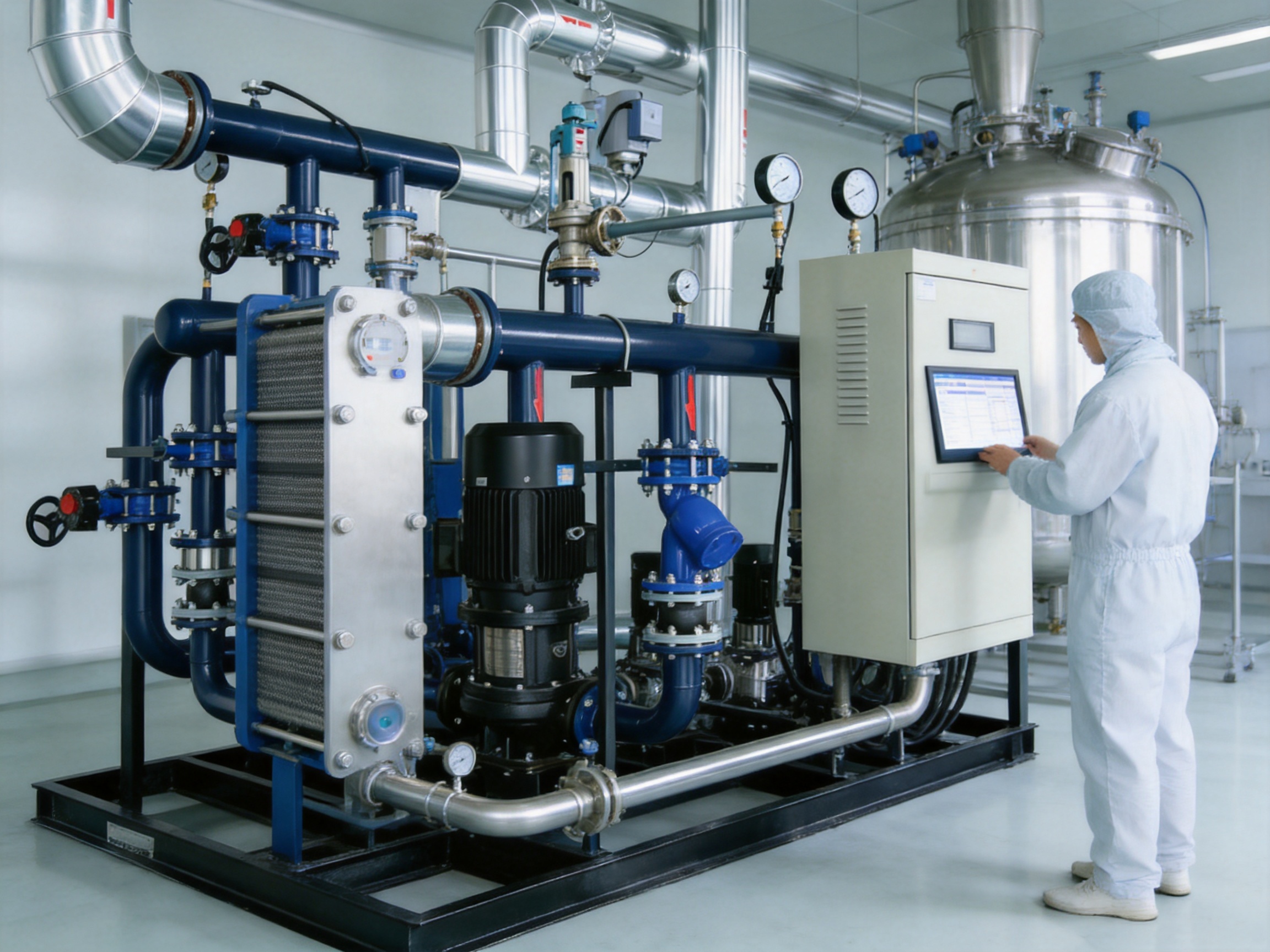
The PLC coordinates the unit’s operating functions. It can receive temperature setpoints, monitor actual process values, regulate valves, control pump operation, manage standby equipment, activate alarms, and provide local or remote operating status.
Depending on the project, the PLC may be connected to a supervisory control and data acquisition system, a plant-wide automation platform, or another production management system. This enables operators to view the unit’s condition from a central control room and incorporate thermal data into broader production records.
Safety and Protection Devices
Thermal systems require protection against abnormal pressure, excessive temperature, pump failure, loss of flow, and emergency situations. The skid can include over-pressure protection, high-temperature alarms, emergency stop devices, interlocks, and protective shutdown logic.
Safety functions should be defined during the engineering stage rather than added after fabrication. A complete risk review should identify possible failure conditions, define the required response, and ensure that the control logic, instruments, and mechanical protection devices work together appropriately.
How the Unit Operates
During normal operation, the operator selects a process mode and enters the required temperature or operating parameters. The PLC reads the values reported by the sensors and compares them with the target conditions. It then adjusts the relevant control elements to maintain the process within the defined range.
For a heating application, hot water or another heating medium flows through one side of the plate heat exchanger. The process medium flows through the other side. Heat passes through the plates, raising the temperature of the process medium. The control system may regulate the hot-medium flow or adjust the circulation rate to avoid overshooting the setpoint.
For a cooling application, chilled water, glycol, or another cooling fluid removes heat from the process medium. The PLC can regulate the cooling flow and operate the circulation pumps according to the process demand.
In a closed-loop application, the circulation pump continuously moves the medium between the skid and the connected vessel or process circuit. The control system responds to changes in temperature and flow. If demand decreases, the system can reduce circulation or adjust the heat-transfer conditions. If demand increases, it can increase the active capacity within the configured operating range.
If a duty pump fails or requires maintenance, the control logic can switch to a standby pump where the system configuration supports this function. If a temperature or pressure value exceeds its allowable limit, the unit can generate an alarm or initiate a protective shutdown according to the approved control philosophy.
This combination of mechanical heat transfer and automatic adjustment helps provide a more stable output than a manually operated system that relies on frequent valve adjustment and operator observation.
Advantages Compared with Conventional Distributed Installations
Higher System Integration
Traditional installations often require the customer to purchase a heat exchanger, pumps, valves, instruments, control equipment, and piping from different sources. These components may arrive at different times and may not have been engineered as a single system.
An integrated skid combines these functions into one coordinated package. Component relationships are reviewed during engineering, and the arrangement is prepared before delivery. This can reduce design gaps between suppliers and lower the risk of incompatible connections or control interfaces.
Reduced On-Site Installation Work
Because a large portion of fabrication and assembly is completed in the factory, on-site installation can be more efficient. The customer generally receives a prepared unit that can be positioned and connected to the facility’s utility and process networks.
Reducing field fabrication can shorten installation schedules and limit the amount of hot work, pipe fitting, instrumentation wiring, and control-panel assembly required at the production site. This is particularly valuable in facilities where construction areas are restricted or where production interruptions must be minimized.
Improved Commissioning Consistency
Factory assembly allows the supplier to inspect component installation, verify piping routes, check instrument placement, and perform control-system testing before shipment. The unit can be reviewed under controlled workshop conditions instead of being assembled entirely in an operating plant.
Although final commissioning at the customer’s site remains necessary, the amount of troubleshooting may be reduced because the basic system arrangement has already been checked. This contributes to more predictable startup and a faster transition to normal operation.
More Stable Temperature Control
Manual heat exchange systems may depend heavily on operator experience. The operator must observe gauges, adjust valves, start or stop pumps, and react to process changes. Such operation can produce variations, especially when the process load changes quickly.
PLC-based control provides a repeatable response. It can compare actual conditions with target values continuously and make controlled adjustments. This supports tighter process management and reduces dependence on manual intervention.
Better Operational Visibility
Integrated instruments provide a clearer picture of the unit’s condition. Operators can observe temperature, pressure, flow, pump status, alarms, and other defined parameters from the local interface or a remote monitoring system.
Improved visibility helps personnel identify gradual performance changes before they become serious failures. For example, a reduction in flow or an increase in pressure drop may indicate fouling, filter blockage, valve malfunction, or pump degradation.
Modular Capacity
The skid can be configured with different heat-transfer areas, pump capacities, valve arrangements, and control functions according to the customer’s process. Multiple circulation pumps may be installed for different operating modes or duty-and-standby operation.
This modularity is valuable for plants that may expand production in stages. A system can be designed around the current requirement while allowing a practical path for future upgrades.
Improved Maintainability
A centralized skid gives maintenance personnel a defined equipment area. The heat exchanger, pumps, valves, and instruments are arranged in a coordinated layout, making inspection and service planning easier than working with scattered components installed in different parts of a facility.
Plate heat exchangers can generally be opened for inspection and cleaning when the design permits. Pumps can be isolated for maintenance, and instruments can be checked at known locations. Clear labeling, accessible components, and documented control logic further improve service efficiency.
Competitive Advantages of the Intelligent Skid Approach
| Evaluation Area | Intelligent Integrated Skid | Conventional Separated Installation | Practical Benefit |
|---|---|---|---|
| Engineering | Mechanical, piping, instrumentation, and controls are designed as one package | Several suppliers may design components independently | Fewer interface risks and clearer responsibility |
| Installation | Factory-assembled skid with prepared connections | More field fabrication and component assembly | Reduced site labor and shorter installation time |
| Control | PLC-based automatic regulation and alarm management | Manual or partially coordinated operation | More consistent temperature control |
| Monitoring | Integrated pressure, temperature, flow, and equipment-status data | Separate gauges or limited central visibility | Faster diagnosis and better traceability |
| Reliability | Main and standby pump options with coordinated protection logic | Redundancy may require additional engineering | Improved continuity where redundancy is required |
| Expansion | Modular heat-transfer area and pump configuration | Expansion may require major redesign | Greater flexibility for changing production loads |
| Maintenance | Centralized layout and service access | Equipment may be distributed across the plant | More efficient inspection and repair |
| Documentation | One coordinated equipment package and control philosophy | Documents may be divided among multiple vendors | Improved handover and lifecycle management |
The table illustrates why integrated skids are increasingly selected for modern process facilities. Their competitive advantage is not based on one component alone. It results from the combined effect of integration, automation, modularity, testing, and lifecycle support.
Applications in the Food and Beverage Industry
Fermentation Temperature Control
Fermentation processes require stable and repeatable temperature conditions. Microorganisms generate heat as they grow, and the process load may change during the batch. A heat transfer skid can remove excess heat or provide controlled heating to maintain the desired fermentation range.
The system can be connected to fermentation vessels, process loops, or a central thermal distribution network. Automatic control reduces the need for operators to adjust the process manually and supports more consistent product quality.
Beverage Processing
Breweries, beverage plants, dairy processors, and functional-food manufacturers use heating and cooling at several stages. Applications may include water heating, product cooling, tank temperature maintenance, syrup preparation, fermentation, and cleaning-related thermal services.
The skid can be configured for the required flow rate, pressure, temperature range, and fluid characteristics. Where hygienic requirements are important, the equipment arrangement and materials can be selected to support cleanability and controlled maintenance.
Dairy and Liquid Food Processing
Liquid food products often require precise thermal treatment. Excessive temperature can damage flavor, texture, or nutritional characteristics, while insufficient temperature may affect safety or process performance. A controlled plate heat exchanger system can provide a stable thermal interface between the utility medium and the product-side circuit.
The exact configuration must be established from the process design, product properties, sanitation method, and applicable quality requirements. The system may be part of a larger production line or used as a utility module supporting several vessels.
Cleaning and Hot-Water Systems
Many food plants require hot water for cleaning, sanitation, or process preparation. A heat transfer skid can heat and circulate water through a dedicated loop. The PLC can maintain the desired temperature and monitor operating conditions during the cleaning cycle.
Using a dedicated integrated unit can help separate thermal utility functions from production equipment while allowing the plant to manage the heating process centrally.
Applications in Biopharmaceutical and Life-Science Manufacturing
Fermentation and Bioreactors
Fermentation tanks and bioreactors generate or receive heat depending on their operating stage. The thermal system must respond to changes while avoiding abrupt temperature fluctuations that could affect biological performance.
An intelligent skid can circulate a controlled medium through a vessel jacket, external loop, or heat-transfer circuit. The control system can maintain the required temperature profile and record relevant process data for review.
Cell Culture
Cell culture processes are sensitive to changes in environmental conditions. Temperature control is one of several critical parameters that influence cell growth and product formation. A stable heat-transfer system supports the broader process-control strategy by supplying controlled heating or cooling to the culture vessel or associated loop.
The final design should account for the required response time, allowable temperature variation, heat load, fluid path, cleaning strategy, and connection requirements of the cell-culture platform.
Buffer and Media Preparation
Buffer and media preparation may require heating, cooling, dissolution, or temperature maintenance. An integrated skid can support the preparation vessel by circulating a thermal medium through its jacket or external heat exchanger.
Accurate control helps operators achieve repeatable preparation conditions. The system can also support the monitoring and documentation needed for batch consistency.
Purification and Downstream Processing
Downstream processes may use temperature-controlled water or other utilities to maintain product conditions, protect sensitive materials, or stabilize process fluids. The heat transfer skid can serve as a utility interface for purification systems, holding vessels, and auxiliary process equipment.
Because downstream steps may have different thermal requirements, the skid can be designed with separate circuits, adjustable capacity, or configurable control recipes when appropriate.
Advanced Manufacturing and Engineering Strengths
The quality of an integrated skid depends heavily on the supplier’s manufacturing discipline. A technically sound concept can still fail if fabrication tolerances, welding quality, surface treatment, instrument installation, or control testing are poorly managed. For this reason, the manufacturing process should be considered a central part of the equipment’s value.
Engineering Based on Process Requirements
Shiloc approaches the equipment as a process system rather than as a collection of standard components. The design can begin with the customer’s flow rate, inlet and outlet temperatures, operating pressure, utility conditions, fluid characteristics, installation space, control requirements, and expected operating modes.
This engineering approach allows the heat exchanger, pump, valves, pipe sizes, instruments, and control logic to be selected together. It also creates a basis for evaluating heat-transfer capacity, pressure drop, energy consumption, maintenance access, and future expansion.
European Know-How and Danish Design Influence
The company’s equipment development is built on European know-how and Danish design principles. In practical terms, this emphasizes functional integration, clear equipment arrangement, maintainability, efficient use of space, and attention to operational safety.
Design quality is reflected in details such as component accessibility, logical flow direction, instrument visibility, organized cable routing, suitable lifting points, service clearances, and a skid structure capable of supporting the assembled equipment during transport and operation.
Integrated Shanghai Manufacturing Facility
Shiloc operates a 3,000-square-meter facility in Shanghai with more than 20 technical specialists. The facility supports equipment processing, welding, polishing, assembly, and quality-control activities.
Having these capabilities within one manufacturing organization can improve coordination between engineering and production. Design information can be transferred directly to workshop personnel, and manufacturing feedback can be incorporated into technical improvements. It also provides a more direct basis for communication when customers request changes during the project.
Fabrication and Welding
Welding quality is essential for pressure-bearing and process-contact piping. The fabrication process should include proper material preparation, alignment, welding procedure control, visual inspection, and any additional testing defined by the project requirements.
Consistent welding practices help reduce leakage risks, deformation, internal irregularities, and rework. For hygienic or cleanable applications, weld quality also affects the ability to achieve a smooth internal surface and avoid areas where residues may accumulate.
Skid frames and support structures must also be fabricated accurately. A stable frame protects connected equipment from excessive vibration and helps maintain alignment during transportation, installation, and operation.
Polishing and Surface Treatment
Polishing contributes to cleanability, corrosion resistance, and the overall finish of equipment surfaces. The required surface treatment depends on the material, process medium, cleaning method, and application standard.
In food and biopharmaceutical projects, surface condition is especially important for process-contact components and areas exposed to cleaning agents. Appropriate polishing and finishing can reduce the risk of product retention and simplify sanitation procedures.
Factory Assembly
During assembly, the heat exchanger, pump sets, valves, instruments, piping, control cabinet, and structural elements are positioned on the skid according to the approved design. Connections are checked for fit, accessibility, and serviceability.
Factory assembly also allows technicians to verify that instruments can be removed, pumps can be serviced, valves can be operated, and panels can be accessed without unnecessary interference from adjacent equipment. These practical checks are difficult to perform when components are installed separately in a busy production area.
Control Panel and PLC Integration
The control cabinet is assembled to match the mechanical equipment and the approved control philosophy. Input and output signals are identified, instruments are connected, and operating sequences are configured.
Control logic may include automatic temperature regulation, pump start and stop functions, main-and-standby switching, alarm handling, emergency stop behavior, high-temperature protection, over-pressure signals, low-flow monitoring, and local or remote control modes.
Before shipment, the control system can be reviewed through simulation, signal checks, sequence testing, and functional verification. This helps identify wiring errors, incorrect signal assignments, and logic problems at the factory rather than during production-site startup.
Quality Control and Traceability
Quality control should cover incoming components, fabrication, assembly, instruments, welding, pressure-related checks, electrical work, control functions, and final documentation. The precise inspection plan should reflect the project specification and regulatory expectations.
Traceability is particularly important for biopharmaceutical and food customers. Equipment records may include component information, inspection results, calibration data, welding documentation, drawings, operating manuals, spare-parts lists, and test reports where required.
A well-organized documentation package supports installation qualification, commissioning, maintenance, future modification, and troubleshooting. It also helps the customer understand how the skid was designed and how it should be operated.
Project Customization and Configuration Options
There is no single heat transfer skid configuration that is suitable for every factory. Process loads, utilities, vessel sizes, operating temperatures, fluid properties, space limitations, and control expectations vary substantially.
Shiloc provides customized solutions based on the customer’s process needs, application environment, and project requirements. Customization may involve the heat exchanger area, number of pumps, pump arrangement, pipe diameter, valve type, instrument selection, skid dimensions, insulation, electrical configuration, control interface, and cleaning method.
The unit may be designed as a dedicated system for one bioreactor or as a central thermal utility serving several process vessels. It may also be configured for a single heating or cooling duty, or for multiple operating modes with different setpoints and flow conditions.
When preparing a project specification, customers should provide as much information as possible. Important data includes the required heating or cooling duty, process-medium type, flow rate, density, viscosity, inlet and outlet temperatures, maximum operating pressure, utility conditions, installation environment, available electrical power, preferred control interface, and applicable quality requirements.
It is also useful to define the expected production schedule, cleaning procedures, standby philosophy, future capacity needs, and acceptable maintenance intervals. Early clarification of these factors helps prevent redesign and ensures that the skid is correctly matched to the complete process.
Installation and Commissioning Considerations
The skid should be installed on a level foundation that can support its operating weight and withstand vibration. Adequate clearance should be provided around pumps, heat exchangers, valves, instruments, and control panels so that inspection and maintenance can be performed safely.
Before startup, all process and utility connections should be checked against the approved drawings. Pipework should be flushed as appropriate, strainers should be inspected, instruments should be installed correctly, and electrical connections should be verified.
Complete pipeline venting is important because trapped air can reduce circulation, cause unstable readings, increase pump noise, and interfere with heat transfer. Valve positions should be confirmed before pumps are started. Instruments should be checked for calibration status and correct signal transmission.
Commissioning generally includes dry electrical checks, instrument-loop checks, pump rotation checks, valve-function checks, leak checks, control-sequence testing, alarm testing, and operation under process conditions. The customer and supplier should agree on the acceptance criteria before commissioning begins.
Remote monitoring and communication interfaces should also be tested. If the skid is connected to a plant control system, the communication protocol, tag list, alarm priorities, and data-recording requirements should be confirmed during the commissioning stage.
Operation, Maintenance, and Troubleshooting
Reduced Secondary Outlet Temperature
If the secondary outlet temperature does not meet the required value, the operator should first check the heat exchanger for scaling, blockage, or reduced effective area. Pipeline filters should be inspected and cleaned. The primary medium temperature and flow rate should be compared with the design conditions.
Other possible causes include incorrect valve positions, inaccurate temperature sensors, inadequate pump performance, excessive process load, or air trapped in the system. Troubleshooting should proceed systematically rather than immediately increasing the setpoint or pump speed.
Abnormal Pump Noise or Vibration
Abnormal noise or vibration may result from loose foundations, unsupported piping, closed or partially closed valves, insufficient inlet pressure, cavitation, air entrainment, bearing wear, or foreign objects inside the pump.
Operators should verify that the pump is properly fixed and that the inlet and outlet valves are in the correct positions. The pump should not be operated outside its specified conditions. If the problem continues, the pump should be isolated and inspected by qualified personnel.
Frequent Pressure Fluctuations
Pressure instability may be caused by changes in the plant network, a faulty pressure-stabilization device, pump switching problems, pipeline leaks, air pockets, blocked filters, or incorrect control logic.
The pressure readings should be compared at several points in the system. This can help identify whether the fluctuation originates in the skid, the connected process equipment, or the utility network.
Preventive Maintenance
Plate heat exchangers should be inspected and cleaned at intervals appropriate to the fluid quality and operating conditions. Cleaning may involve disassembly or an approved online cleaning procedure. The cleaning method must be compatible with the heat exchanger materials, seals, process medium, and customer requirements.
Pump bearings, mechanical seals, couplings, and motor conditions should be checked regularly. Worn seals should be replaced promptly to prevent leakage and secondary equipment damage.
Valves should be inspected for leakage, sticking, actuator problems, and correct feedback signals. Instruments should be calibrated or verified according to the plant’s quality system. Alarm functions and emergency-stop devices should be tested periodically.
During long-term shutdown, the media inside the equipment and connected piping should be drained when appropriate. This is especially important in low-temperature environments where trapped liquid may freeze, expand, and damage components or pipework.
Energy Efficiency and Sustainability
Energy efficiency begins with correct heat exchanger sizing and appropriate control. An exchanger that is too small may require higher utility temperatures, larger flow rates, or longer processing times. An exchanger that is significantly oversized may increase capital cost and create unnecessary pressure loss depending on the design.
Efficient pumps and suitable operating points can reduce electrical consumption. Automatic regulation helps prevent the system from running continuously at maximum capacity when the actual process demand is lower. Main-and-standby arrangements can also support reliable service without requiring every pump to operate continuously.
Thermal insulation may be applied where appropriate to reduce heat loss, protect personnel, and improve temperature stability. Heat recovery can also be considered when hot and cold process streams are available within the facility.
Monitoring temperature, pressure, and flow over time creates an opportunity for performance analysis. Gradual increases in pressure drop or reductions in heat-transfer efficiency may indicate fouling or equipment deterioration. Early maintenance can prevent the system from operating inefficiently for extended periods.
For manufacturers seeking to reduce their environmental impact, the skid can form part of a broader energy-management strategy. Better thermal control may reduce wasted utility energy, minimize rejected batches, and improve the effective use of water and process materials.
Digital Monitoring and Future Development
Intelligent heat transfer systems are developing alongside industrial automation, the Industrial Internet of Things, and digital manufacturing. Future systems are likely to use more detailed operational data to support condition monitoring, predictive maintenance, and automatic optimization.
Instead of responding only to a temperature deviation, an advanced system may analyze the relationship between temperature, flow, pressure, pump speed, valve position, batch stage, and historical performance. This can help identify early signs of heat-exchanger fouling, pump degradation, sensor drift, or abnormal process demand.
Data-based optimization may also improve the selection of operating conditions. The system could identify the lowest practical utility consumption that still maintains the required process temperature. It could recommend cleaning when heat-transfer performance falls below a defined level or adjust standby-pump schedules based on operating hours.
Digital functions must be implemented carefully. Reliable sensors, secure communication, clear alarm priorities, appropriate data retention, and well-defined user permissions are necessary for meaningful digitalization. Automation should support operators rather than create unnecessary complexity.
Modular skid construction is also expected to become more important. Standardized mechanical and control modules can help manufacturers expand production capacity more rapidly. At the same time, configurable design allows the system to be adapted to the specific needs of different products and facilities.
Why Choose an Experienced International Supplier?
Purchasing an integrated process skid involves more than buying physical equipment. International customers also need technical communication, document coordination, logistics support, export handling, and assistance with installation and commissioning.
Shiloc (Shanghai) Industrial Trading Co., Ltd. combines equipment manufacturing, engineering and technical services, import and export capabilities, and international customer support. This combination can simplify cooperation for customers that need to source a complete thermal system from China while maintaining clear technical communication.
The company was established in Shanghai and focuses on international trade solutions and fluid equipment for food and beverage, biopharmaceutical, daily chemical, and fine chemical industries. Its product scope includes heat exchangers, aseptic mixing equipment, and related process systems.
Its manufacturing and technical resources cover processing, welding, polishing, assembly, and quality control. More than 20 technical specialists support the organization, while the Shanghai facility provides a base for equipment fabrication and project coordination.
For customers, the value of an experienced supplier lies in the ability to connect design requirements with manufacturing reality. The supplier should be able to discuss process conditions, recommend a suitable configuration, prepare technical documents, coordinate production, arrange inspection, and support delivery.
Shiloc also provides customized intelligent bioprocess heat transfer skid-mounted systems. Customization can be coordinated from initial equipment selection through technical exchange, manufacturing, delivery support, and after-sales communication.
Selection Guide for Customers
When comparing intelligent heat transfer skid suppliers, customers should evaluate more than the purchase price. The following factors can help create a balanced comparison.
Technical Suitability
The supplier should demonstrate that the proposed heat exchanger and pumps match the required duty, flow, pressure, temperature, and fluid properties. The design should be based on actual process data rather than a generic equipment description.
Integration Capability
Customers should confirm whether the supplier can integrate mechanical equipment, instrumentation, PLC control, safety devices, and documentation. A supplier that only provides the heat exchanger may not be able to support the complete skid requirement.
Manufacturing Resources
The supplier’s workshop, fabrication equipment, welding capabilities, surface-treatment processes, assembly area, and quality-control procedures should be considered. These resources influence delivery reliability and long-term equipment performance.
Testing and Documentation
The project should define the required factory tests, inspection records, calibration documents, drawings, manuals, spare-parts lists, and control-system information. Clear documentation is especially important for food and biopharmaceutical production.
Service and International Coordination
Customers should evaluate how technical questions, shipping documents, installation issues, spare parts, and future modifications will be handled. Good communication reduces project risk and helps maintain the equipment throughout its service life.
Q&A
Q1: What is the main function of an Intelligent Bioprocess Heat Transfer Skid/Unit?
The main function is to provide controlled heating, cooling, or process heat exchange through an integrated package containing heat exchangers, pumps, valves, instruments, piping, and a PLC-based control system. The unit automatically adjusts operating conditions according to defined process parameters.
Q2: Which industries can use this type of skid?
The system is suitable for biopharmaceutical manufacturing, vaccine production, fermentation, cell culture, food biotechnology, beverage processing, dairy processing, industrial cooling, HVAC water systems, central heating, and other applications that require controlled thermal management.
Q3: How is the skid different from a standalone plate heat exchanger?
A standalone plate heat exchanger is only one component. An integrated skid combines the exchanger with circulation pumps, valves, instruments, piping, controls, alarms, and safety devices. This provides a more complete operating solution and reduces the amount of engineering and installation required at the customer’s site.
Q4: Can the heat transfer skid be customized?
Yes. The heat-transfer area, pump quantity, pump capacity, pipe arrangement, valves, instruments, control functions, skid dimensions, and connection configuration can be adapted to the customer’s process requirements and installation conditions.
Q5: Does the system support automatic temperature regulation?
Yes. The PLC can compare the actual temperature with the setpoint and adjust the relevant valves, pumps, or circulation conditions. The exact control method depends on the process design and the selected operating mode.
Q6: Can operators monitor the system remotely?
The control system can support local and remote operation-status monitoring when the required communication interface is included in the project. Temperature, pressure, flow, pump status, alarms, and other defined data can be displayed and recorded according to the control design.
Q7: Why are main and standby pumps useful?
Main-and-standby pump arrangements improve operational continuity. If the duty pump requires maintenance or experiences a fault, the standby pump can be selected manually or automatically, provided that the control logic and process configuration support this function.
Q8: How is the plate heat exchanger maintained?
The heat exchanger should be monitored for reduced performance, increasing pressure drop, and signs of fouling. It can be cleaned by disassembly or through an approved online cleaning procedure, depending on the design and the customer’s process requirements.
Q9: What information is needed to design a suitable unit?
Important information includes the heating or cooling duty, process-medium type, flow rate, inlet and outlet temperatures, operating pressure, utility conditions, installation space, electrical supply, control requirements, cleaning method, future capacity expectations, and applicable hygiene or quality requirements.
Q10: What manufacturing capabilities support these skids?
The manufacturing resources include engineering coordination, processing, welding, polishing, assembly, and quality control. Shiloc operates a 3,000-square-meter Shanghai facility and has more than 20 technical specialists supporting equipment projects.
Q11: Can the skid be used in a regulated biopharmaceutical facility?
The skid can be designed for biopharmaceutical applications, but the final suitability depends on the specific process, materials, surface finish, cleaning requirements, instrumentation, documentation, validation expectations, and applicable customer standards. These requirements should be defined before design and fabrication.
Q12: What safety functions can be included?
Depending on the project, the system can include over-pressure protection, over-temperature alarms, emergency-stop devices, low-flow alarms, pump protection, interlocks, and automatic shutdown functions. The final safety configuration should be based on a documented risk review.
Q13: Can the equipment support future production expansion?
The modular design can allow the heat-transfer area, number of pumps, and control functions to be configured for different loads. Future expansion should be considered during the initial design so that connection points, control capacity, and physical space can be reserved where practical.
Q14: What are the main benefits of buying from an integrated supplier?
An integrated supplier can coordinate process design, mechanical fabrication, instrumentation, automation, quality control, documentation, logistics, and technical communication. This can reduce interface risks and provide a clearer path from equipment selection to installation and operation.
Conclusion
Intelligent Bioprocess Heat Transfer Skid/Units provide a practical and scalable approach to thermal management in food, beverage, biopharmaceutical, and industrial production. By combining plate heat exchangers, circulation pumps, valves, instruments, piping, safety devices, and PLC controls on one skid, the system addresses many of the limitations associated with conventional distributed installations.
Its main advantages include high integration, reduced field installation, automatic temperature regulation, real-time status monitoring, main-and-standby pump options, modular expansion, improved maintainability, and more consistent commissioning. These benefits are especially valuable in processes where temperature directly influences product quality, biological activity, production efficiency, or regulatory traceability.
The manufacturing process is equally important. Engineering based on actual process requirements, European and Danish design influence, Shanghai-based fabrication, welding, polishing, assembly, control integration, and quality-control activities provide the foundation for a reliable equipment package.
Shiloc supports customers as a Chinese manufacturer and international engineering and trade service provider. Its capabilities in equipment manufacturing, technical coordination, customization, export support, and process-system communication allow it to serve customers seeking dependable thermal equipment for food and biopharmaceutical production.
As manufacturing moves toward greater automation, traceability, energy efficiency, and modular expansion, intelligent heat transfer skids will continue to become an important part of modern process infrastructure. Selecting a suitable unit therefore means choosing not only a heat exchanger package, but also a coordinated production-support system designed for stable operation and future development.
References
1. Shiloc (Shanghai) Industrial Trading Co., Ltd. Product information for Intelligent Bioprocess Heat Transfer Skid/Units.
2. Shiloc (Shanghai) Industrial Trading Co., Ltd. Company information and manufacturing capability statement.
3. General engineering principles for plate heat exchanger selection, circulation-pump sizing, process instrumentation, and skid-mounted equipment design.
4. General principles of hygienic equipment design for food and biopharmaceutical processing systems.
5. General practices for industrial PLC control, process monitoring, alarm management, and equipment maintenance.
Product: Intelligent Bioprocess Heat Transfer Skid/Units
PREV:Sanitary Tube-in-Tube Heat Exchangers for Hygienic Food and Biopharmaceutical Processing
NEXT:Automatic UHT Sterilizer: Advanced Process Efficiency for Food and Biopharmaceutical Manufacturing
NEXT:Automatic UHT Sterilizer: Advanced Process Efficiency for Food and Biopharmaceutical Manufacturing
Interested in cooperation or have questions?
Recommended LINS
✦
Food Processing Skid System
CIP Skid System for Food Industry
Food and Beverage Process System
Skid Mounted Process System
Aseptic Processing Equipment for Liquid Foods
Process Skid System
Plate Heat Exchanger Pasteurization System
Milk Processing Heat Exchanger
Industrial Liquid Food Sterilization Equipment
Continuous Liquid Food Sterilizer
Let'S Work Together Welcome Aboard!
-

haikexin@haikexin.com
+8613391278930
-
 +86-21-57560276
-
 No. 2819, Sihu Road,Fengxian District, Shanghai, China
Join Our Mailing List
Copyright © Shiloc (Shanghai) Industrial Trading Co., Ltd. All Rights Reserved.
Process Systems & Equipment For Food & Biopharma Manufacturers
