
 English
 русский
 Português
 Français


 Read More

Product Category
NEW Category
Contact us
Contact Us
We specialise in the research, development and manufacture of electrical wires and cables.
 +86-21-57560276
Side-Entry Tank Mechanical Agitators for Hygienic, Efficient, and Large-Volume Process Mixing
Content
- 1 What Is a Side-Entry Tank Mechanical Agitator?
- 2 Operating Principle and Flow Performance
- 3 Key Construction Features
- 4 Advantages Compared with Conventional Mixing Equipment
- 5 Applications in Food and Beverage Processing
- 6 Applications in Biopharmaceutical Manufacturing
- 7 Applications in Chemical and Petrochemical Processing
- 8 Manufacturing Process and Quality Strengths
- 9 Comparison of Mixing Configurations
- 10 How the Equipment Provides Competitive Value
- 11 Selection Guide for Buyers and Process Engineers
- 12 Installation, Commissioning, and Maintenance
- 13 Quality, Compliance, and Documentation
- 14 Frequently Asked Questions
- 14.1 What is the main purpose of a side-entry tank mechanical agitator?
- 14.2 When is a side-entry agitator preferable to a top-entry agitator?
- 14.3 Which impeller is suitable for low-viscosity liquids?
- 14.4 When should an anchor impeller be selected?
- 14.5 Can the agitator be used for suspension applications?
- 14.6 What materials are available for wetted components?
- 14.7 Is the agitator compatible with CIP and SIP procedures?
- 14.8 Why is a removable shaft useful?
- 14.9 What information should be provided when requesting a quotation?
- 14.10 Can the equipment be customized for a specific tank?
- 14.11 What makes the manufacturing process suitable for demanding industries?
- 14.12 Can side-entry agitators be used in petrochemical applications?
- 15 Conclusion
- 16 References
- 17 Product: Side-entry Tank Mechanical Agitator
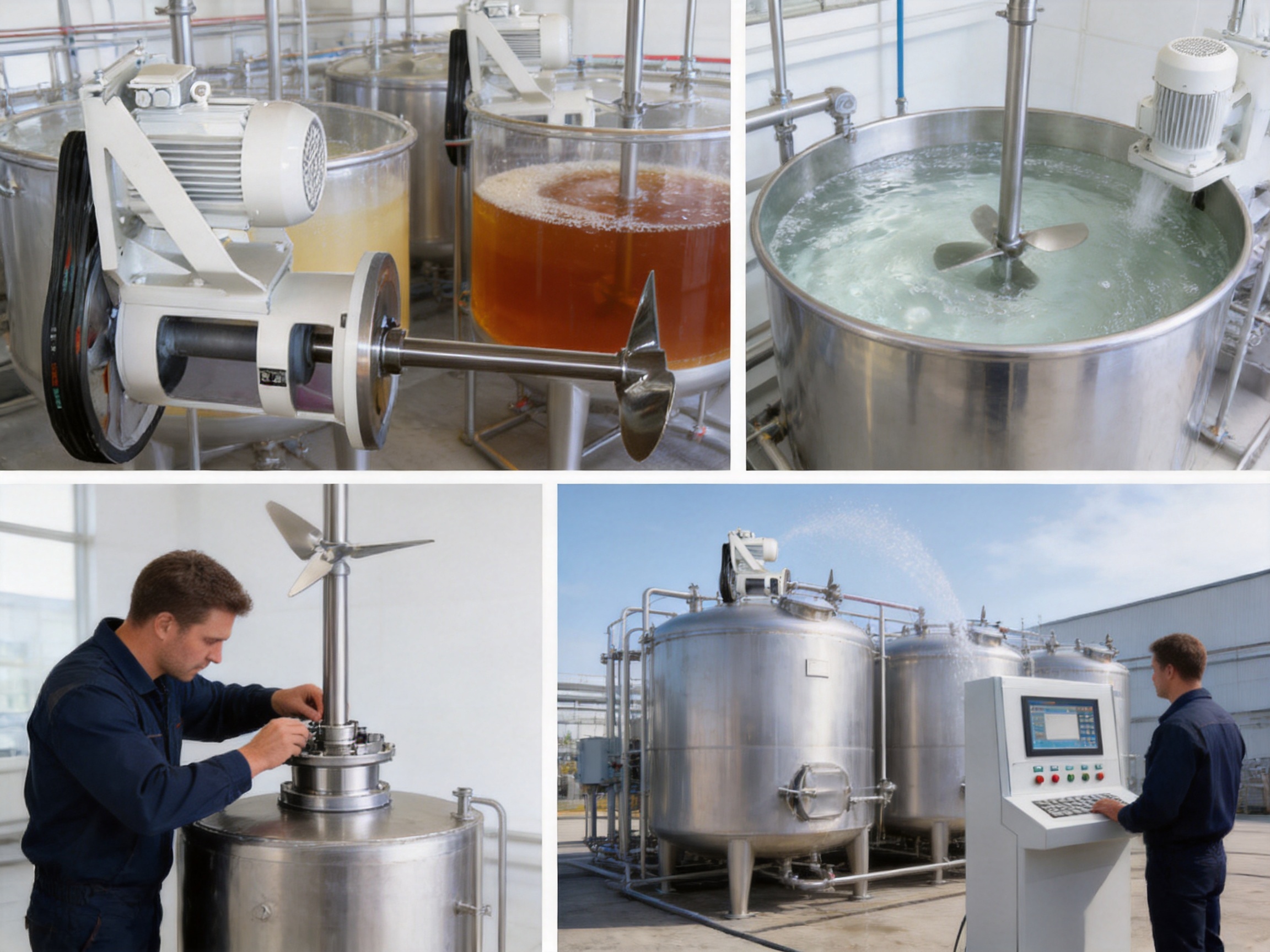
Efficient agitation is essential wherever liquids must remain uniform, suspended, temperature-controlled, or chemically consistent throughout a tank. In food and beverage production, biopharmaceutical manufacturing, personal care processing, fine chemicals, and selected petrochemical applications, inadequate mixing can lead to sedimentation, concentration gradients, heat-transfer limitations, product inconsistency, and difficult cleaning operations. A properly engineered side-entry tank mechanical agitator provides a practical solution by generating controlled circulation from the side wall of the vessel.
The LC Series Side-Mounted Mechanical Agitator is designed for demanding process environments that require stable operation, sanitary construction, flexible configuration, and straightforward maintenance. Its side-entry arrangement creates horizontal and radial circulation within a tank, helping prevent material accumulation and dead zones near the bottom. The design is particularly useful for large storage tanks, blending vessels, intermediate process tanks, and applications where top-mounted equipment would occupy valuable vertical space.
This article explains the working principles, construction, advantages, manufacturing capabilities, application range, selection considerations, and maintenance requirements of side-entry tank mechanical agitators. It also describes how Shiloc (Shanghai) Industrial Trading Co., Ltd. combines European process design experience, modern manufacturing, careful material selection, and engineering support to provide customized mixing equipment for food, beverage, biopharmaceutical, chemical, and related industries.
What Is a Side-Entry Tank Mechanical Agitator?
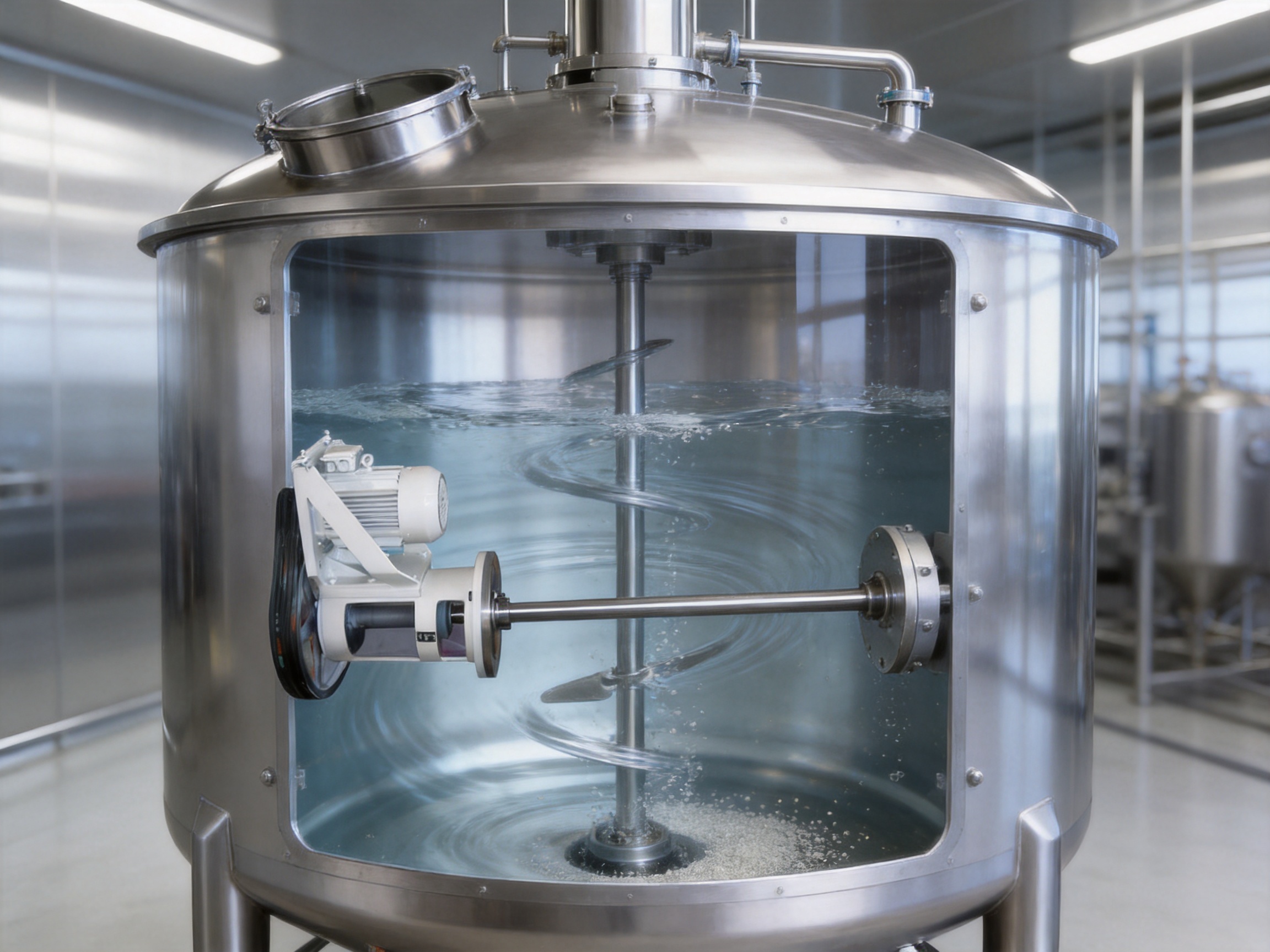
A side-entry tank mechanical agitator is a motor-driven mixing device installed through the side wall of a tank. The motor transfers torque through a gearbox, shaft, and impeller assembly. Once the impeller rotates, it produces a defined flow pattern that circulates the liquid throughout the vessel. Depending on the impeller type, the resulting flow may be primarily axial, radial, tangential, or a combination of these patterns.
Unlike a conventional top-entry agitator, the side-entry design does not require a drive assembly mounted above the tank. This arrangement can simplify the upper section of the vessel, reduce interference with tank covers and piping, and make the equipment suitable for tanks with limited headroom. It can also be advantageous for large-diameter vessels where a side-mounted unit can achieve effective circulation without requiring a very long vertical shaft.
The agitator is normally positioned at a calculated angle and elevation. The installation position depends on tank diameter, liquid height, viscosity, density, solids content, required circulation, and the location of internal tank components. Engineering calculations are used to determine the suitable shaft length, impeller diameter, motor power, rotational speed, and installation orientation.
For storage and blending applications, the main objective is usually bulk circulation. The agitator keeps the liquid moving, reduces the risk of sediment settling, and promotes a more uniform composition. For heat-transfer applications, circulation improves contact between the process liquid and the tank wall or internal heat-transfer surfaces. For suspension applications, the impeller must generate sufficient bottom velocity to keep particles distributed throughout the liquid.
Operating Principle and Flow Performance
The performance of a mechanical agitator depends on the relationship between impeller geometry, rotational speed, fluid properties, and tank configuration. When the motor starts, the impeller transfers mechanical energy to the liquid. The liquid then moves along a circulation loop, rising or descending through the vessel before returning to the impeller zone.
Propeller impellers are commonly selected when efficient axial circulation is required. They are suitable for low- and medium-viscosity liquids, liquid blending, temperature equalization, and suspension duties. The three-blade propeller arrangement used in the LC Series can be configured according to vessel dimensions and process requirements. Its geometry supports high flow generation while maintaining a relatively efficient power demand.
Anchor impellers are generally selected for higher-viscosity products or applications where sweeping action near the tank wall is important. An anchor can reduce stagnant zones close to the vessel surface and may be used for products that require more controlled movement rather than high-speed circulation. High-speed dispersion impellers are used when the process requires stronger shear, rapid incorporation of powders, or improved distribution of fine particles.
Combination impellers can be designed for processes involving multiple mixing objectives. For example, one section of the impeller system may provide bulk circulation while another generates dispersion or localized shear. Dual-shaft configurations can also be used when a single impeller system cannot satisfy the requirements of a complex process.
The correct agitator should not be selected solely by tank volume. Two tanks with the same capacity may require very different agitators if their liquids have different viscosities, densities, solids content, or sensitivity to shear. A technical evaluation should consider the complete process, including filling level, operating temperature, cleaning method, pressure, corrosion conditions, required mixing time, and whether the process is continuous or batch-based.
Key Construction Features
Gear Motor and Drive System
The standard drive configuration uses a Nord or SEW gear motor. These drive systems are recognized for reliable torque transmission, stable operation, and suitability for industrial process equipment. The gearbox reduces motor speed while increasing output torque so that the impeller can operate effectively under the required process load.
Different motor and housing configurations can be supplied according to the installation environment. A stainless steel motor housing may be selected for applications where washdown, corrosion resistance, and improved external hygiene are important. An outdoor-rated motor can be specified for equipment installed outside or in areas exposed to humidity, temperature variation, or weather conditions.
The drive unit is selected in relation to the impeller diameter, rotational speed, product viscosity, specific gravity, and starting load. Proper drive sizing helps prevent overheating, excessive vibration, premature seal wear, and unnecessary energy consumption. It also provides an appropriate safety margin for changes in process conditions.
Welded Flange Integration
The side-entry agitator uses specialized welded flanges for integration with the tank wall. A welded flange provides a secure mechanical connection and supports accurate alignment between the agitator shaft and vessel. It can also reduce the number of irregular joints and crevices that may complicate cleaning.
For sanitary applications, flange geometry and weld quality are particularly important. Smooth transitions, controlled welding, and suitable surface finishing help prevent product retention and support cleaning-in-place procedures. The flange is designed according to the tank wall thickness, nozzle dimensions, operating pressure, and required hygienic standard.
Compared with improvised bolted connections or poorly aligned mounting arrangements, a correctly engineered welded flange can improve structural stability and reduce the possibility of leakage or shaft misalignment. It also allows the agitator to be incorporated into the vessel during tank fabrication rather than treated as an afterthought during installation.
Sanitary Mechanical Seal
The agitator is equipped with a sanitary-grade single-face mechanical seal designed for long-term, high-speed operation. The seal forms a barrier between the rotating shaft and the tank wall, limiting leakage while preventing external contaminants from entering the process area.
Seal selection depends on operating speed, pressure, temperature, fluid characteristics, cleaning chemicals, and the required service life. A level protection arrangement is recommended where loss of liquid could expose the seal faces to dry running. Maintaining adequate liquid around the seal helps dissipate heat and protects the sealing surfaces.
In food, beverage, and biopharmaceutical applications, the seal must also support hygienic operation. The design should minimize product retention, allow effective cleaning, and be compatible with the chemical and thermal conditions of CIP and SIP procedures. Correct installation and regular inspection are essential for protecting the seal and avoiding unplanned downtime.
Removable Agitator Shaft
The removable shaft design supports on-site installation, inspection, and maintenance. This feature can reduce the need to remove the entire tank or disconnect extensive external piping when service is required. Maintenance personnel can access the shaft and impeller assembly more efficiently, which is especially valuable for large storage tanks and production systems with limited shutdown time.
The shaft is manufactured from high-quality 316L or 2205 material according to the process requirements. The wetted surface can be finished to a surface roughness of Ra 0.4 micrometers or better. A smooth surface helps reduce material adhesion, supports hygienic cleaning, and improves resistance to local corrosion caused by deposits or process residues.
For more aggressive process media, other materials may be considered, including 304 stainless steel, 904L stainless steel, duplex stainless steel, Hastelloy, or titanium. Material selection must be based on the actual chemical composition, concentration, temperature, chloride content, cleaning agents, and expected service life.
Impeller and Connection Design
The standard three-blade propeller impeller provides effective circulation for many low- and medium-viscosity applications. The impeller diameter is configured according to vessel dimensions, liquid depth, desired flow rate, and available motor power. Oversized or undersized impellers can both reduce performance, so the design must be matched to the complete process.
The product range also includes anchor impellers, high-speed dispersion impellers, dual-shaft agitators, and combination impeller systems. This broad selection allows the same equipment platform to be adapted for storage, blending, suspension, reaction, dispersion, and heat-transfer duties.
Threads and bolts at connection points are fitted with sealing rings to isolate the threaded areas from the process liquid. This design improves hygiene and reduces the risk that product will enter difficult-to-clean threaded gaps. The connection arrangement is designed with reference to 3-A and EHEDG-related hygienic principles where applicable to the specific project.
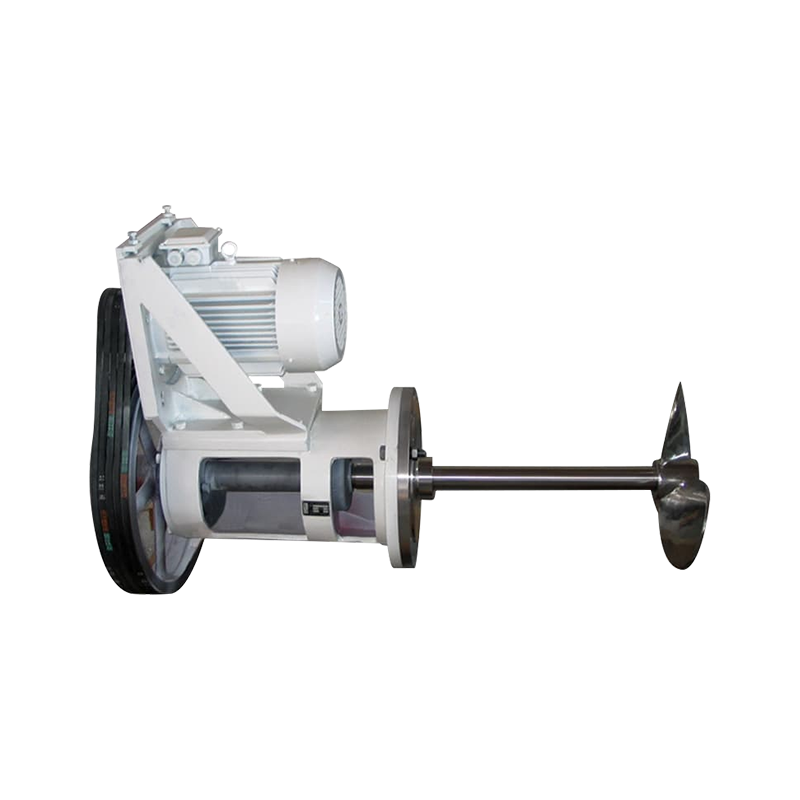
Side-entry Tank Mechanical Agitator
Advantages Compared with Conventional Mixing Equipment
Efficient Circulation in Large Tanks
One of the main advantages of a side-entry agitator is its ability to generate effective circulation in large-volume tanks. A properly positioned side-mounted impeller can move a substantial quantity of liquid while using a compact drive arrangement. This makes the technology suitable for storage vessels and blending tanks where the liquid must remain uniform over an extended period.
In many storage applications, the goal is not intensive high-shear mixing but continuous movement sufficient to prevent settling and concentration differences. The side-entry design can provide this circulation without the complexity of a large top-entry shaft extending through the full height of the vessel.
Reduced Bottom Sedimentation
Sedimentation can result in product loss, difficult cleaning, inaccurate dosing, and reduced tank capacity. It is particularly problematic when liquids contain suspended solids, crystals, powders, pigments, or biological materials. The side-mounted impeller creates a flow pattern that reaches the lower section of the vessel and helps prevent solids from accumulating at the bottom.
Performance depends on particle size, density, concentration, settling velocity, and tank geometry. For demanding suspension applications, the impeller speed and diameter must be calculated carefully. In some cases, a combination impeller or specially shaped blade may be required to provide both bottom sweeping and overall circulation.
Less Interference with the Tank Roof
A top-mounted agitator occupies space above the vessel and may interfere with manways, spray devices, instrumentation, filling systems, or vapor lines. A side-entry agitator leaves the top of the tank more available for these components. This can be especially useful in facilities with limited ceiling height or in tanks that require multiple top-mounted services.
The side installation also allows greater flexibility when retrofitting an existing tank. In suitable cases, a side nozzle and reinforced flange can be added without redesigning the complete roof structure. Any modification must still be checked by qualified engineers for structural strength, pressure rating, and alignment.
Convenient Maintenance
The removable shaft improves maintenance efficiency. Seal inspection, shaft replacement, and impeller servicing can be performed with less disruption to the vessel and connected process system. Reduced maintenance time can improve overall equipment availability and lower the cost of planned shutdowns.
Maintenance benefits are strongest when the equipment is installed with suitable access space, lifting provisions, isolation valves where appropriate, and clear operating procedures. The removable design should be combined with a preventive maintenance plan that includes inspection of the mechanical seal, bearings, gearbox, fasteners, shaft runout, and impeller condition.
Flexible Material and Configuration Options
Some competitors offer a limited selection of materials or impeller arrangements. A more flexible equipment platform allows the customer to select the wetted material, seal construction, surface finish, motor housing, impeller type, and installation arrangement according to the actual process.
The available wetted materials include stainless steel 304, 316L, 904L, duplex stainless steel, Hastelloy, and titanium. These options cover a wide range of hygienic, corrosive, high-purity, and chemically demanding applications. Surface treatments such as ceramic coating, nitriding hardening, PTFE lining, or PFA lining may also be considered when additional wear or chemical resistance is required.
Hygienic and Cleanable Design
For food, beverage, biopharmaceutical, and personal care production, hygiene is not an optional feature. Equipment surfaces must be designed to minimize contamination risk, product retention, and difficult-to-clean areas. Welded flanges, polished wetted surfaces, sanitary seals, sealed connections, and CIP/SIP compatibility contribute to a cleaner process design.
The use of 316L material and a surface roughness of Ra 0.4 micrometers or better supports demanding cleanliness requirements. However, hygienic performance depends on the complete system, including tank geometry, piping, drainage, spray-ball coverage, cleaning chemistry, sterilization temperature, and operating procedures. The agitator should therefore be specified as part of the complete process system rather than as an isolated component.
Applications in Food and Beverage Processing
Food and beverage plants often use large tanks for milk, juice, syrup, water, liquid ingredients, sauces, cultured products, and intermediate formulations. These materials may require continuous circulation to maintain temperature, prevent settling, or keep the composition uniform before filling or further processing.
In dairy applications, the agitator can support storage and blending duties where product must remain homogeneous without excessive shear. The choice of impeller and rotational speed should consider the sensitivity of the product, the risk of foaming, and the required cleaning cycle.
In juice and beverage production, side-entry agitators can be used for liquid blending, syrup incorporation, pulp suspension, and temperature equalization. The impeller arrangement can be selected according to the presence of suspended fruit particles, fibers, sugar concentration, and desired residence time.
Sanitary construction is essential in these industries. Smooth 316L surfaces, sanitary seals, hygienic flange connections, and cleanable shaft and impeller assemblies help support compliance with food safety procedures. The equipment can be integrated into systems designed for CIP and, where required, SIP.
Applications in Biopharmaceutical Manufacturing
Biopharmaceutical processes often involve strict control of contamination, shear, temperature, and material compatibility. Applications may include cell culture, microbial fermentation, buffer preparation, media preparation, suspension preparation, and intermediate storage.
Cell culture and fermentation processes may require gentle but consistent circulation. Excessive shear can damage sensitive biological materials, while insufficient movement may produce concentration gradients or localized temperature differences. The impeller, speed, and motor control must therefore be selected according to the biological system and process objective.
Suspension preparation may require a stronger flow pattern to maintain uniform distribution of cells, particles, or other materials. A side-entry design can be useful in larger vessels where bottom sedimentation must be controlled without installing a long top-entry shaft.
Biopharmaceutical applications also require careful attention to cleanability and sterilization. Materials, seals, welds, surface finishes, and drainability should be evaluated against the applicable GMP procedures and facility standards. The equipment can be configured to support FDA-related material requirements and validated cleaning processes when the complete installation is properly designed and documented.
Applications in Chemical and Petrochemical Processing
Although the LC Series was developed with strong attention to sanitary applications, the side-entry structure is also relevant to selected chemical and petrochemical duties. Large storage tanks frequently require circulation to maintain uniform composition, minimize settling, and support stable transfer to downstream equipment.
Potential applications include blending of intermediate liquids, additive incorporation, liquid storage, suspension maintenance, heat-transfer support, and controlled reaction preparation. The final design must be based on the actual chemical environment. Petrochemical service may require specialized materials, seals, coatings, hazardous-area motor certification, or additional mechanical protection beyond a standard sanitary configuration.
For aggressive liquids, 904L, duplex stainless steel, Hastelloy, titanium, PTFE, or PFA-lined components may provide better resistance than standard 304 or 316L stainless steel. The correct choice depends on chemical concentration, temperature, pressure, chloride exposure, erosion, and cleaning conditions.
In outdoor petrochemical installations, an outdoor-rated motor and suitable protective housing may be required. Electrical classification, grounding, ventilation, and hazardous-area compliance must be evaluated by the project engineering team. The agitator manufacturer can support the mechanical selection, while the customer and local engineering authorities confirm the applicable electrical and site requirements.
Manufacturing Process and Quality Strengths
European-Informed Process Design
Shiloc (Shanghai) Industrial Trading Co., Ltd. combines European know-how and Danish design concepts with local manufacturing and engineering capabilities. This approach focuses on practical process performance, hygienic construction, maintainability, and long-term equipment reliability.
European process equipment design traditionally places strong emphasis on cleanability, material traceability, weld quality, modular construction, and clear separation between product-contact and non-product-contact areas. These principles are reflected in the agitator’s sanitary seal, polished wetted surfaces, welded flange arrangement, sealed connections, and configurable material options.
Integrated Shanghai Manufacturing Facility
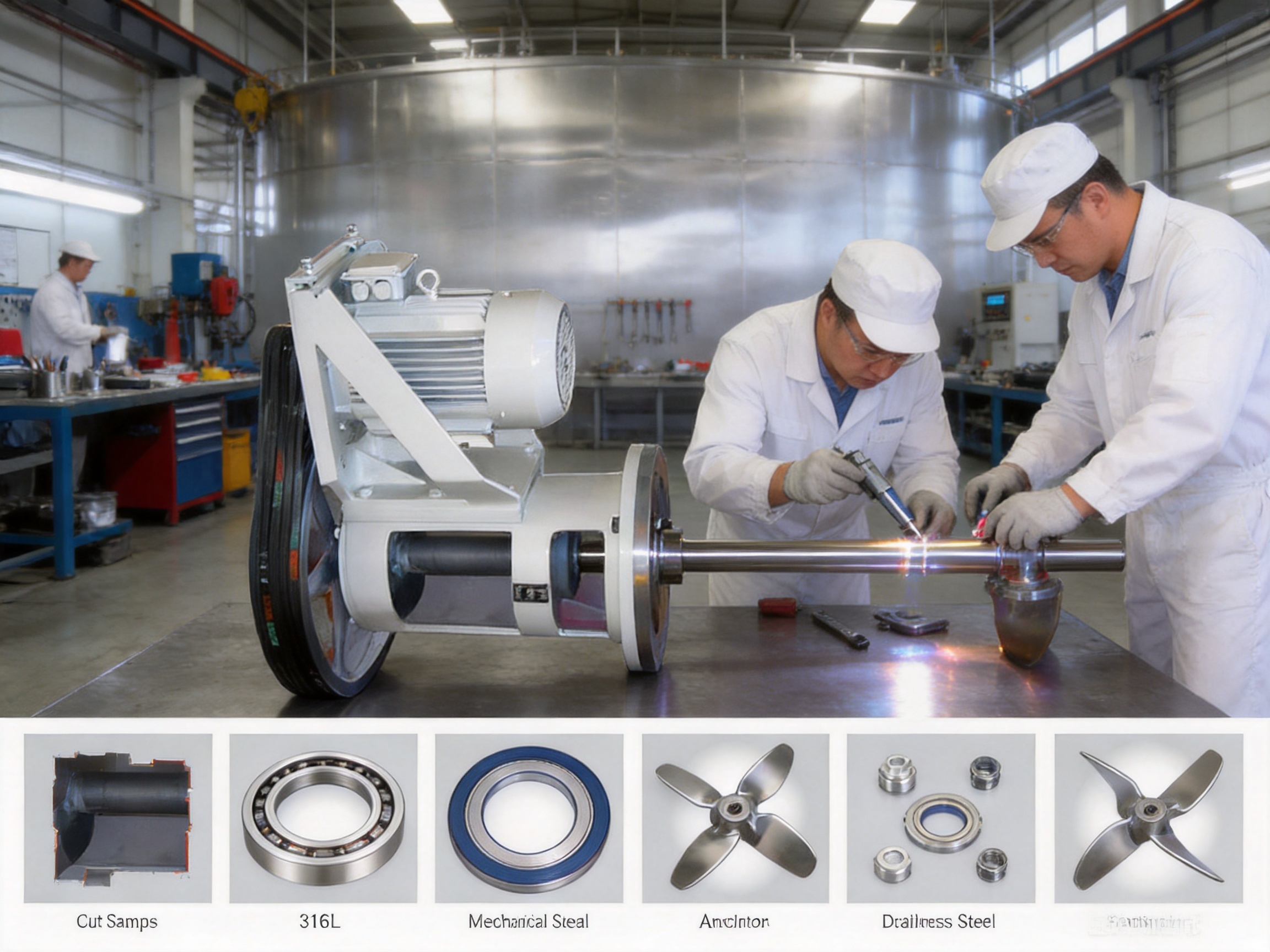
The company operates a 3,000-square-meter facility in Shanghai with capabilities covering processing, welding, polishing, assembly, and quality inspection. Keeping important manufacturing activities within an organized facility helps improve communication between engineering and production teams and supports better control over manufacturing records.
Internal processing can reduce dependence on multiple uncontrolled subcontractors. It also makes it easier to coordinate dimensional inspection, surface finishing, weld correction, assembly checks, and final testing. For customized agitators, this level of integration is valuable because the equipment may include non-standard shaft dimensions, special impeller geometry, unique flange arrangements, or alternative materials.
Experienced Technical Personnel
More than 20 technical specialists support the company’s equipment and engineering activities. Their work may include process assessment, mechanical design, material selection, fabrication planning, equipment integration, quality documentation, and technical communication with customers.
A strong technical team is important because agitator performance depends on more than the motor and impeller. The team must understand the relationship between tank geometry, fluid behavior, shaft strength, seal design, cleaning requirements, and installation conditions. Early technical involvement reduces the risk of selecting an unsuitable standard model for a specialized process.
Controlled Welding and Polishing
Welding quality directly affects hygiene, structural reliability, and corrosion resistance. Product-contact welds should be planned to minimize crevices, incomplete penetration, undercut, distortion, and contamination. After welding, the surfaces may require grinding, polishing, passivation, or other finishing procedures according to the project specification.
Polishing is particularly important for wetted shafts, impellers, flanges, and other surfaces exposed to the process liquid. A smooth finish reduces the opportunity for product adhesion and supports more effective cleaning. The target surface roughness should be verified using appropriate inspection methods where required by the customer or validation program.
The manufacturing process can include dimensional checks after welding and polishing because heat and material removal may affect alignment. Accurate shaft and flange dimensions help maintain proper installation, minimize vibration, and protect mechanical seals during operation.
Material Traceability and Inspection
Material selection is a central part of equipment quality. Stainless steel and high-alloy materials should be identified and controlled throughout fabrication to reduce the risk of material mix-ups. Documentation can include material certificates, heat numbers, welding records, inspection reports, and final assembly records.
Traceability is especially important for food, biopharmaceutical, and high-purity applications. It supports customer audits, maintenance planning, replacement part selection, and future process upgrades. It also provides evidence that the equipment was manufactured according to the agreed material and quality requirements.
Customization and Engineering Support
Standard equipment provides a useful starting point, but industrial mixing projects often require customization. Tank diameter, operating volume, product viscosity, motor power, seal arrangement, nozzle size, installation angle, shaft length, impeller diameter, and material grade may all need adjustment.
The company supports customers by reviewing process conditions and preparing a suitable configuration. Engineering services may include agitator selection, process data review, tank interface confirmation, material recommendations, technical drawings, installation guidance, and after-sales support.
Comparison of Mixing Configurations
The following table summarizes the main differences among common agitator configurations. The appropriate choice depends on the process objective rather than a simple preference for one equipment type.
| Configuration | Typical Flow Pattern | Best-Suited Applications | Main Strength | Important Considerations |
|---|---|---|---|---|
| Side-entry propeller agitator | Primarily axial circulation | Large storage tanks, liquid blending, temperature equalization | Efficient bulk movement with compact installation | Requires correct shaft position and impeller sizing |
| Side-entry anchor agitator | Wall-sweeping and controlled circulation | Higher-viscosity products and wall-sensitive processes | Reduces stagnant zones near tank surfaces | Usually requires higher torque and careful drive selection |
| High-speed dispersion agitator | Radial and localized high-shear flow | Powder incorporation, dispersion, and rapid formulation | Improves particle distribution and component integration | May increase heat generation, foam, or product shear |
| Dual-shaft agitator | Combined circulation and shear | Complex formulations and changing material properties | Performs multiple mixing functions in one vessel | More complex mechanically and typically higher in cost |
| Top-entry agitator | Vertical axial or radial circulation | General-purpose batch mixing and reaction vessels | Broad configuration flexibility | Requires roof-mounted equipment and vertical clearance |
How the Equipment Provides Competitive Value
The strongest competitive advantage of the side-entry tank mechanical agitator is its combination of efficient circulation, hygienic construction, flexible configuration, and maintainability. Some products are optimized only for low-cost storage circulation, while others focus exclusively on sanitary processing. A configurable platform can serve a broader range of customers without sacrificing the ability to adapt the equipment to the actual process.
The removable shaft is another important value feature. Maintenance teams can benefit from reduced service time and easier access to the impeller and seal. This is particularly useful in plants where production interruptions are expensive or where tanks are installed in restricted areas.
Material flexibility also improves lifecycle value. A customer can select a cost-effective stainless steel grade for a mild product or specify a higher-alloy material for corrosive service. This avoids both under-specification, which may cause premature failure, and over-specification, which may create unnecessary capital cost.
Sanitary details provide additional value for regulated industries. Welded flanges, sealed connections, polished wetted surfaces, and compatible mechanical seals can reduce contamination risk and simplify cleaning. These features support the broader hygienic design of the production line and may reduce the effort needed to establish cleaning procedures.
Engineering support is equally important. An agitator that is technically well manufactured can still perform poorly if the impeller, motor, seal, or installation position is not matched to the process. By reviewing process conditions before final selection, the supplier can reduce commissioning problems and improve long-term reliability.
Selection Guide for Buyers and Process Engineers
Define the Process Objective
The first step is to identify what the agitator must accomplish. The objective may be blending two liquids, maintaining a suspension, preventing sedimentation, transferring heat, dispersing powders, supporting a reaction, or keeping a product homogeneous during storage. Each objective requires a different balance of flow, shear, torque, and residence time.
Provide Accurate Fluid Data
Important fluid data includes viscosity, density, temperature, solids concentration, particle size, corrosiveness, foaming tendency, and sensitivity to shear. If viscosity changes with temperature or concentration, the operating range should be provided rather than a single value.
For suspension applications, particle settling behavior and required suspension quality are important. For biological products, shear sensitivity and oxygen-transfer requirements may influence the impeller design. For chemical and petrochemical service, chemical compatibility and vapor conditions must be reviewed carefully.
Confirm Tank Geometry
The tank diameter, straight-side height, liquid level range, bottom shape, roof arrangement, internal coils, baffles, nozzles, and manways all affect agitator performance. The side-entry flange location should be coordinated with internal obstructions and structural reinforcement.
Tank geometry also influences the required shaft length and impeller diameter. A large tank with a shallow liquid level may require a different arrangement from a narrow, tall vessel with a high working level. The agitator should be evaluated at both minimum and maximum operating volumes when the liquid level varies significantly.
Select Materials and Surface Finish
Material selection should consider the process liquid, cleaning agents, sterilization conditions, and expected service life. 316L is widely used for hygienic applications, while 304 may be suitable for less demanding environments. Duplex stainless steel, 904L, Hastelloy, titanium, PTFE, or PFA may be required for more corrosive services.
The specified surface finish should be appropriate for the industry and validation requirements. A finish of Ra 0.4 micrometers or better is suitable for many high-hygiene applications, but the full system specification should determine the final requirement.
Evaluate Installation and Maintenance Conditions
Customers should confirm that sufficient space is available for motor removal, shaft extraction, lifting, seal inspection, and impeller service. Access platforms and lifting devices may be required for large equipment. The installation plan should also include alignment checks, electrical connection, rotation verification, and leak testing.
Installation, Commissioning, and Maintenance
Before installation, inspect the agitator, flange, shaft, impeller, seal, motor, and fasteners for transport damage. Confirm that the tank nozzle and mounting surface match the approved drawings. The shaft should be handled carefully to prevent bending, scratching, or contamination of the polished surface.
During installation, verify flange alignment and ensure that the shaft is not forced into position. Incorrect alignment can increase bearing loads, create vibration, damage the mechanical seal, and reduce gearbox life. Fasteners should be tightened according to the appropriate procedure and checked after initial operation if required.
Before starting the agitator, confirm that the tank contains sufficient liquid to protect the mechanical seal and that all internal components are clear. Check the motor rotation direction, gearbox oil level, electrical protection, emergency stop function, and any interlock connected to the process system.
Commissioning should begin at low speed where variable-speed control is available. Operators should monitor vibration, noise, motor current, seal leakage, and product behavior. The agitator should not be operated outside its specified speed or torque range.
Routine maintenance should include inspection of the mechanical seal, gearbox, bearings, shaft, impeller, flange, fasteners, and motor housing. The cleaning procedure should be reviewed regularly to ensure that chemical concentration, flow rate, temperature, and cycle duration remain suitable for the product and equipment materials.
If abnormal vibration or noise occurs, the agitator should be stopped and inspected. Possible causes include shaft misalignment, impeller damage, loosened fasteners, bearing wear, excessive solids accumulation, or operation at an unsuitable liquid level. Early diagnosis can prevent more serious mechanical damage.
Quality, Compliance, and Documentation
Equipment for food, beverage, and biopharmaceutical applications should be supplied with documentation appropriate to the project. Depending on customer requirements, this may include general arrangement drawings, material certificates, surface-finish records, welding documentation, inspection reports, motor data, seal information, operating instructions, and maintenance recommendations.
Sanitary equipment should be designed with reference to relevant GMP, FDA, 3-A, EHEDG, and customer-specific requirements where applicable. Compliance is not achieved by one component alone. It depends on the complete design, fabrication, installation, cleaning procedure, operating practice, and validation program.
For chemical and petrochemical installations, additional requirements may apply to pressure, hazardous-area classification, fire protection, electrical equipment, corrosion allowance, and environmental exposure. The final specification should be reviewed by the project’s mechanical, electrical, process, and safety teams.
Frequently Asked Questions
What is the main purpose of a side-entry tank mechanical agitator?
The main purpose is to create controlled circulation inside a tank. This circulation helps maintain uniform composition, reduce sedimentation, minimize dead zones, improve heat transfer, and support stable storage or processing conditions.
When is a side-entry agitator preferable to a top-entry agitator?
A side-entry agitator may be preferable when the vessel is large, vertical space is limited, the tank roof must accommodate multiple fittings, or the process primarily requires bulk circulation. The final decision depends on tank geometry, fluid properties, mixing objectives, and maintenance requirements.
Which impeller is suitable for low-viscosity liquids?
A propeller impeller is commonly suitable for low- and medium-viscosity liquids that require efficient axial circulation. The exact diameter, speed, and power must still be selected according to the tank dimensions and process conditions.
When should an anchor impeller be selected?
An anchor impeller is generally considered for higher-viscosity products or applications where wall sweeping and controlled movement are important. It may also be useful when reducing stagnant regions near the vessel wall is a major process objective.
Can the agitator be used for suspension applications?
Yes. The agitator can support suspension preparation and particle maintenance when the impeller, speed, and installation position are properly selected. Particle size, density, concentration, settling velocity, and required suspension quality must be evaluated during design.
What materials are available for wetted components?
Available materials may include stainless steel 304, 316L, 904L, duplex stainless steel, Hastelloy, and titanium. Surface treatments such as ceramic coating, nitriding hardening, PTFE lining, or PFA lining may be considered for special wear or corrosion conditions.
Is the agitator compatible with CIP and SIP procedures?
The sanitary configuration can be designed to support CIP and SIP requirements. Compatibility depends on the complete equipment design, including seal materials, surface finish, flange geometry, drainage, cleaning temperature, sterilization conditions, and the validated cleaning procedure.
Why is a removable shaft useful?
A removable shaft makes inspection, repair, and replacement more convenient. Maintenance personnel can service the shaft, impeller, and seal with less disruption to the tank and surrounding process equipment, which can reduce planned downtime.
What information should be provided when requesting a quotation?
Customers should provide tank dimensions, working volume, liquid level range, fluid viscosity, density, temperature, solids content, chemical composition, mixing objective, required mixing time, operating pressure, cleaning method, material requirements, and installation environment. Details about hazardous-area classification and outdoor exposure should also be provided when applicable.
Can the equipment be customized for a specific tank?
Yes. The agitator can be configured according to tank diameter, liquid height, nozzle size, shaft length, impeller diameter, motor power, speed, seal arrangement, material grade, surface finish, and installation conditions. Customized engineering review is recommended before production.
What makes the manufacturing process suitable for demanding industries?
The manufacturing process combines European-informed design, internal processing, controlled welding, polishing, material selection, quality inspection, and technical support. The Shanghai facility provides capabilities for fabrication and quality control, while the technical team supports equipment integration and process-specific customization.
Can side-entry agitators be used in petrochemical applications?
They can be used in selected petrochemical storage, blending, suspension, and heat-transfer applications when the materials, seals, motor, electrical classification, and corrosion protection are correctly specified. Petrochemical projects require a detailed review of chemical and site conditions before final selection.
Conclusion
The side-entry tank mechanical agitator is a versatile solution for large-volume circulation, blending, suspension, heat-transfer support, and hygienic process mixing. Its side-mounted structure can reduce interference with the tank roof, support installation in limited vertical spaces, and provide effective movement throughout large storage and process vessels.
The LC Series combines a reliable gear motor, welded flange integration, sanitary mechanical seal, removable shaft, polished wetted materials, sealed connection points, and multiple impeller options. These features help the equipment address the practical requirements of food and beverage, biopharmaceutical, personal care, fine chemical, new material, and selected petrochemical applications.
Compared with less adaptable mixing equipment, the system provides advantages in configuration flexibility, maintenance accessibility, hygienic design, material selection, and process integration. Its value is further strengthened when the agitator is selected through a complete engineering review rather than by tank capacity alone.
Shiloc (Shanghai) Industrial Trading Co., Ltd. supports this equipment with European-informed design, Danish design principles, a 3,000-square-meter Shanghai manufacturing facility, more than 20 technical specialists, internal processing, welding, polishing, quality inspection, and international engineering services. This combination allows the company to provide customized process equipment for customers seeking reliable operation, traceability, efficient production, and long-term lifecycle value.
For the best result, customers should define the mixing objective, provide accurate fluid and tank data, confirm hygiene or corrosion requirements, and coordinate installation and maintenance conditions before final equipment selection. With the correct impeller, materials, drive system, seal, and operating parameters, a side-entry tank mechanical agitator can become an important part of a safe, efficient, and maintainable process system.
References
1. ASME Bioprocessing Equipment Standard, hygienic design and bioprocess equipment considerations.
2. 3-A Sanitary Standards, principles for sanitary equipment construction and cleanability.
3. EHEDG Hygienic Design Principles, guidance for hygienic processing equipment.
4. United States Food and Drug Administration, current good manufacturing practice principles for regulated production equipment.
5. Good Manufacturing Practice guidelines for pharmaceutical and biopharmaceutical manufacturing facilities.
6. Stainless Steel and High-Alloy Material Selection Guidelines for Process Equipment.
7. Industrial Mixing Fundamentals, impeller selection, fluid circulation, suspension, and dispersion design.
8. Process Equipment Maintenance Practices, mechanical seal inspection, shaft alignment, gearbox care, and preventive maintenance.
9. Food and Beverage Hygienic Engineering Principles, cleaning-in-place, sterilization-in-place, and surface-finish requirements.
Product: Side-entry Tank Mechanical Agitator
PREV:No previous article
NEXT:Bottom-Entry High-Shear Magnetic Emulsifier for Hygienic Food and Biopharmaceutical Processing
NEXT:Bottom-Entry High-Shear Magnetic Emulsifier for Hygienic Food and Biopharmaceutical Processing
Interested in cooperation or have questions?
Recommended LINS
✦
Process Skid System
Food and Beverage Process System
automated process skid system for food processing
CIP process skid system for food industry
Food Processing Skid System
hygienic process skid for food industry
food and beverage process skid system
CIP Skid System for Food Industry
Skid Mounted Process System
Sanitary Process Skid
Let'S Work Together Welcome Aboard!
-

haikexin@haikexin.com
+8613391278930
-
 +86-21-57560276
 -
 No. 2819, Sihu Road,Fengxian District, Shanghai, China
Join Our Mailing List
Copyright © Shiloc (Shanghai) Industrial Trading Co., Ltd. All Rights Reserved.
Process Systems & Equipment For Food & Biopharma Manufacturers
