
 English
 русский
 Português
 Français



 Read More

Product Category
NEW Category
Contact us
Contact Us
We specialise in the research, development and manufacture of electrical wires and cables.
 +86-21-57560276
Plate Pasteurizer Complete Skid: Efficient, Hygienic, and Modular Thermal Processing
Content
- 1 What Is a Plate Pasteurizer Complete Skid?
- 2 Working Principle of the System
- 3 Core Technical Advantages
- 4 Advantages Over Conventional and Competing Systems
- 5 Energy Efficiency and Operating Cost Reduction
- 6 Manufacturing Process and Engineering Strengths
- 7 Applications in Food and Beverage Processing
- 8 Suitability for Biopharmaceutical and Other Hygienic Industries
- 9 Automation and Digital Process Management
- 10 Installation, Commissioning, and Maintenance
- 11 How the System Supports Total Cost of Ownership
- 12 Why Select Shiloc for Integrated Process Equipment?
- 13 Project Customization Considerations
- 14 Q&A
- 14.1 Q1: What products can be processed with a plate pasteurizer complete skid?
- 14.2 Q2: What is the difference between a plate pasteurizer and a tubular pasteurizer?
- 14.3 Q3: How does the skid reduce energy consumption?
- 14.4 Q4: What is the maximum design temperature?
- 14.5 Q5: What is the heat transfer area range?
- 14.6 Q6: Can the system be used for UHT processing?
- 14.7 Q7: Is the equipment suitable for CIP cleaning?
- 14.8 Q8: What stainless-steel materials are available?
- 14.9 Q9: How does automation improve production reliability?
- 14.10 Q10: Can the capacity be customized?
- 14.11 Q11: Is the skid suitable for biopharmaceutical applications?
- 14.12 Q12: What information is needed for a quotation?
- 15 Conclusion
- 16 References
- 17 Product: Plate Pasteurizer Complete Skid
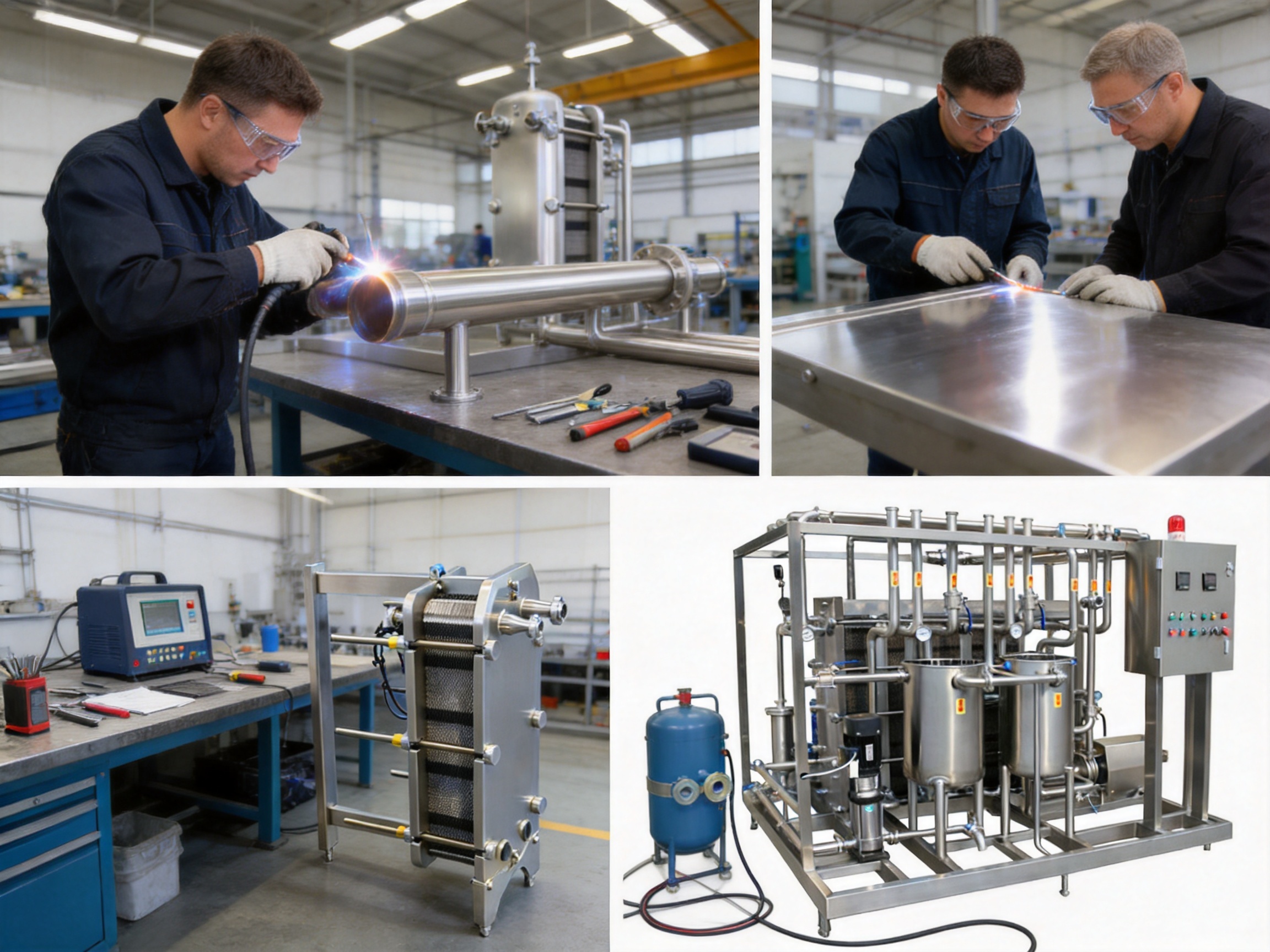
Modern food and beverage manufacturers require thermal processing systems that can deliver reliable microbial control, consistent product quality, efficient energy use, and straightforward maintenance. At the same time, production facilities are under increasing pressure to reduce their environmental footprint, control installation costs, maximize available floor space, and respond quickly to changing market demands. A plate pasteurizer complete skid addresses these requirements by combining heat exchange, product handling, process control, safety protection, piping, valves, pumps, and auxiliary equipment into one integrated system.
Designed for liquid products such as juices, dairy products, liquid beverages, and other pumpable food materials, this skid-mounted system supports preheating, pasteurization or sterilization, holding, and cooling. It can be incorporated into conventional production lines, aseptic filling systems, compact modular plants, and specialized processing areas where precise heat treatment is essential.
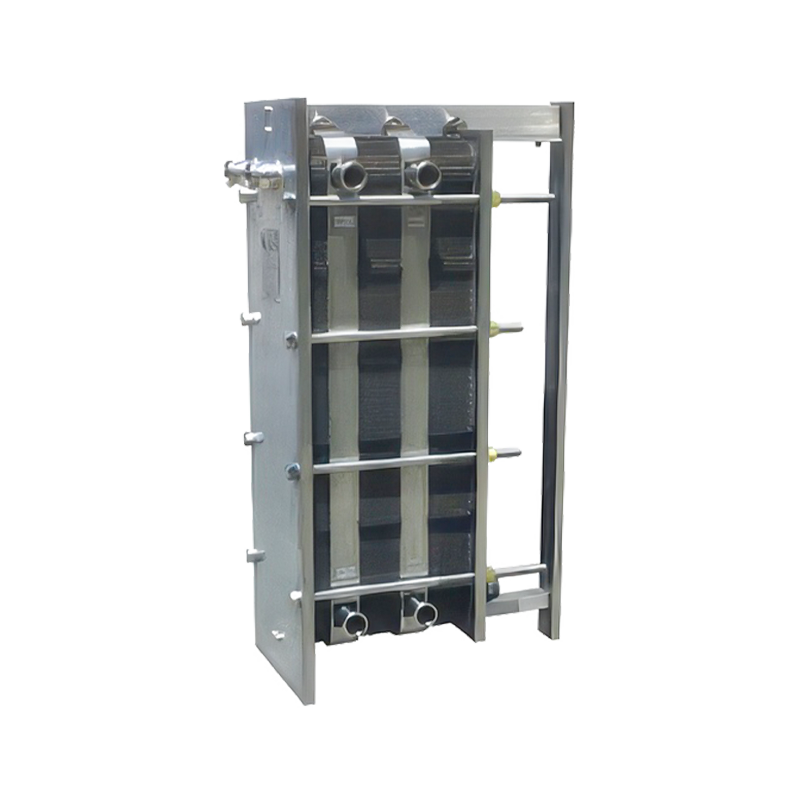
The system is centered on a sanitary plate heat exchanger with herringbone corrugated plates. Product and heating or cooling media flow through separate channels in counter-current directions, creating highly effective thermal exchange. The product is gradually preheated, brought to the required sterilization or pasteurization temperature, held at that temperature for a controlled period, and then cooled to the target outlet temperature.
With a typical heat transfer area of approximately 8–35 square meters, plate spacing of 2–6 millimeters, design pressure up to 16 bar, and a maximum sterilization temperature of approximately 150°C, the complete skid can be configured for a wide range of production conditions. The final capacity, holding time, temperature profile, materials, instrumentation, and control functions can be customized according to product characteristics and process requirements.
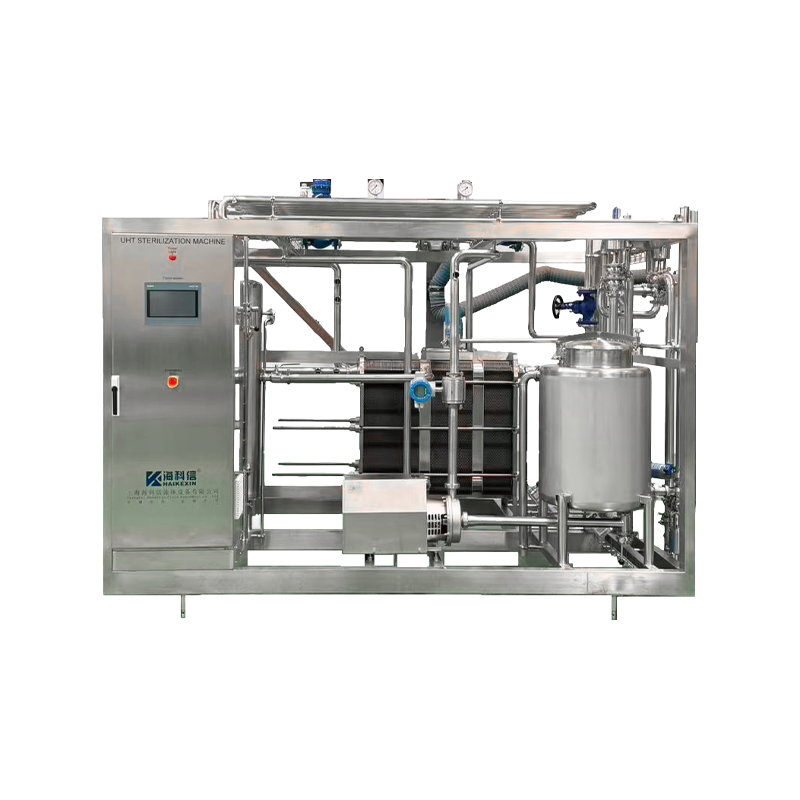
Plate Pasteurizer Complete Skid
What Is a Plate Pasteurizer Complete Skid?
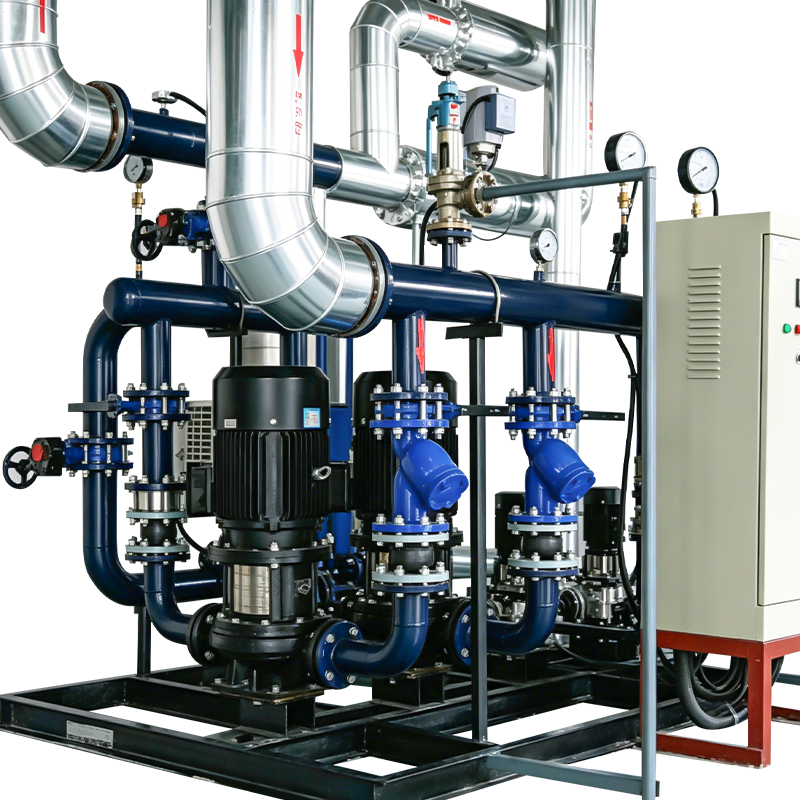
A plate pasteurizer complete skid is an integrated thermal processing unit mounted on a structural frame. Instead of requiring the customer to purchase and assemble a heat exchanger, pump group, control cabinet, product pipeline, valves, sensors, and safety components separately, the complete skid brings these elements together in a coordinated package.
The term “plate pasteurizer” refers to the use of a plate heat exchanger as the main heating and cooling device. The term “complete skid” indicates that the system is supplied as a pre-engineered and modular assembly rather than as an isolated heat exchanger. This distinction is important because thermal processing performance depends not only on the heat transfer surface but also on the compatibility of pumps, flow paths, control logic, instrumentation, cleaning procedures, and safety functions.
A typical system may include the following main elements:
- Sanitary plate heat exchanger sections for regeneration, heating, holding, and cooling
- Product circulation and transfer pumps
- Hot-water, steam, chilled-water, or cooling-medium connections
- Sanitary process piping and hygienic valves
- Temperature, pressure, flow, and level instruments
- Automatic temperature-control and flow-control devices
- Product holding tubes or holding sections where required
- Control cabinet with PLC-based automation
- Safety alarms and overpressure protection
- Drainage, sampling, and cleaning connections
- Skid frame and access arrangements for inspection and maintenance
The integrated arrangement reduces the number of independent interfaces that must be designed and connected at the customer’s facility. It also enables the complete thermal process to be tested and coordinated before shipment, helping simplify site installation and commissioning.
Working Principle of the System
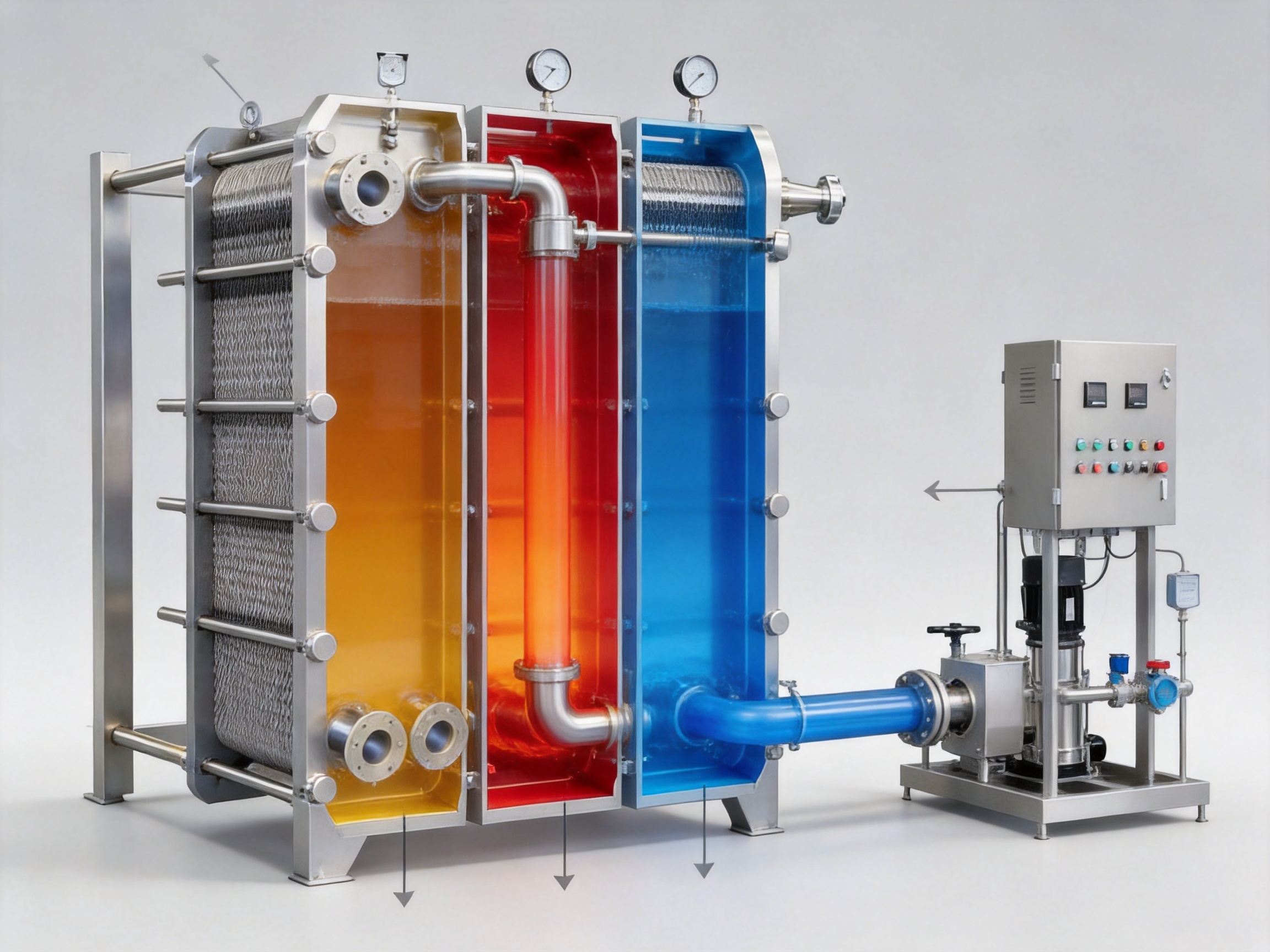
The working principle is based on controlled heat transfer between the product and one or more utility fluids. Thin stainless-steel plates are pressed into a corrugated herringbone pattern and assembled into a plate pack. Gaskets or other approved sealing arrangements separate the product channels from the utility channels. The plate pattern creates turbulence and increases the effective heat transfer coefficient while maintaining a relatively compact equipment footprint.
In a typical regenerative process, incoming product first passes through a section where it exchanges heat with already-treated product leaving the sterilization or pasteurization zone. This regenerative step reduces the external heating duty and can also reduce the cooling duty. The preheated product then enters the final heating section, where hot water or another heating medium raises it to the required process temperature.
After reaching the setpoint, the product moves through a holding section. The holding section provides the required residence time at the specified temperature. Temperature and flow must be controlled together because a change in flow rate can change the holding time. The control system therefore monitors process conditions continuously and can activate alarms or diversion functions when the product does not meet the defined parameters.
Following the holding stage, the product is cooled through regeneration and final cooling sections. Depending on the product and line design, cooling may use chilled water, cooling water, glycol solution, or another suitable medium. The treated product is then transferred to a filling machine, storage tank, fermentation process, blending operation, or downstream packaging system.
Counter-current flow is a key part of the design. When the product and utility fluids move in opposite directions, the temperature difference can be maintained more effectively across the plate pack. This improves thermal driving force and supports efficient heating and cooling over a relatively small heat transfer area.
Core Technical Advantages
High-Efficiency Heat Transfer
One of the primary advantages of a plate pasteurizer complete skid is its high heat transfer efficiency. The plate heat exchanger uses a large effective surface area within a compact assembly. Corrugated plates promote turbulence in the product and utility channels, reducing stagnant areas and improving contact between the fluids and the heat transfer surfaces.
Compared with conventional tube-type equipment, the specified design can improve heat transfer efficiency by more than 30 percent under suitable operating conditions. Actual performance depends on product viscosity, flow rate, temperature difference, fouling behavior, plate pattern, and utility conditions, but the plate configuration generally provides a favorable balance between thermal performance and equipment size.
Efficient heat transfer has several practical effects. The system can reach the target temperature more quickly, reduce heating-medium consumption, lower cooling requirements, and provide more effective regenerative heat recovery. Better thermal performance can also help reduce the size of supporting utility systems, depending on the overall plant design.
Compact Footprint
Space is often a major constraint in food and beverage plants. Production rooms may need to accommodate filling machines, tanks, conveyors, cleaning systems, laboratories, packaging equipment, and material-handling routes. A large thermal processing system can complicate plant layout and increase construction costs.
The plate pasteurizer complete skid is designed to use floor space efficiently. With a heat transfer area of approximately 8–35 square meters, the system can occupy significantly less space than comparable tubular arrangements. The compact configuration is particularly useful for small and medium-sized processing lines, pilot installations, modular factories, and aseptic filling areas.
A reduced footprint provides more than a space-saving benefit. Shorter piping routes can reduce product hold-up volume, pressure losses, installation materials, and cleaning requirements. Compact equipment can also make operator access and process observation easier when the skid is arranged with appropriate maintenance clearances.
Sanitary-Grade Construction
Hygiene is essential in food, beverage, and biopharmaceutical processing. Product-contact surfaces must be designed to minimize contamination risks, facilitate cleaning, and withstand repeated exposure to hot fluids and cleaning chemicals.
The plate materials can be selected from 304 or 316L stainless steel according to the product, cleaning chemistry, chloride exposure, temperature, and regulatory requirements. The specified internal surface roughness range of Ra 0.4–0.8 micrometers supports a smooth and cleanable product path. Smooth surfaces reduce the likelihood of product accumulation and help limit areas where microorganisms or residues may remain after processing.
The equipment design can be aligned with sanitary engineering principles associated with 3-A and EHEDG practices. Compliance or certification requirements should be confirmed for the exact configuration, market, and application. Material certificates, weld procedures, surface finishing records, gasket specifications, and inspection documentation can be included when required by the project.
Flexible Capacity and Process Adaptation
Food and beverage products vary widely in viscosity, acidity, suspended solids, sugar content, protein content, and sensitivity to heat. A successful pasteurization system must therefore be configured around the product rather than treated as a one-size-fits-all machine.
The skid can be designed for different production capacities, flow rates, temperature programs, and utility conditions. Plate selection, channel configuration, number of passes, holding time, pump capacity, valve arrangement, and control logic can all influence the final performance. A system for a low-viscosity beverage may require a different configuration from one designed for dairy products or a higher-viscosity formulation.
With a design pressure of up to 16 bar, the system can support demanding process conditions when the pressure rating of each individual component is properly matched. The operating pressure, product pressure drop, utility pressure, thermal expansion, and relief strategy must be reviewed during engineering to ensure safe and stable operation.
Easy Cleaning and Maintenance
Food processing equipment must be cleaned frequently and effectively. The removable plate pack design allows inspection, gasket replacement, plate cleaning, and maintenance when required. In many applications, the system can also be connected to a clean-in-place, or CIP, circuit without disassembling the main product path.
CIP cleaning typically uses controlled sequences of pre-rinsing, alkaline washing, intermediate rinsing, acid cleaning when required, final rinsing, and sanitization. The exact procedure depends on the product residue, cleaning chemicals, temperature, flow velocity, and plant hygiene program. The plate channels must be designed and operated so that the cleaning solution reaches the relevant product-contact surfaces effectively.
Maintenance is simplified when the skid includes accessible valves, clearly identified instruments, drain points, sample points, and service clearances. The modular structure also helps maintenance personnel isolate individual components and diagnose problems without dismantling unrelated parts of the production line.
Integrated Safety Protection
Thermal processing involves elevated temperatures, pressurized fluids, steam or hot water, and potentially sensitive products. Safety functions are therefore an essential part of the skid design. Typical protection measures include overpressure protection, high-temperature alarms, low-flow alarms, temperature deviation alarms, utility failure alarms, emergency stop functions, and automatic shutdown sequences.
The control system can monitor key operating variables in real time. If the product temperature falls below the validated setpoint, the system may trigger a diversion or stop sequence to prevent under-processed product from entering the finished-product stream. If pressure exceeds the defined limit, the system can initiate protective actions and alert the operator.
Safety design must be adapted to the actual plant, product, utilities, and applicable regulations. Pressure relief devices, electrical protection, guarding, hot-surface protection, and emergency procedures should be reviewed as part of the project engineering process.
Advantages Over Conventional and Competing Systems
Customers evaluating thermal processing equipment often compare plate systems with tubular heat exchangers, manually assembled process lines, and non-integrated equipment packages. Each technology has a place in industry, but the plate pasteurizer complete skid offers several advantages for suitable liquid products.
Plate Heat Exchanger Versus Tube-Type Equipment
Plate heat exchangers generally provide a higher heat transfer coefficient and a more compact design than traditional shell-and-tube or tubular systems in many liquid-processing applications. Their corrugated plates promote turbulence and provide a large heat transfer area within a relatively small frame.
For low- to medium-viscosity liquids that can pass through narrow channels, the plate arrangement can provide rapid heating and cooling with lower equipment volume. The plate pack can also be expanded by adding plates when additional capacity is required, subject to frame and process limitations.
Tubular equipment may be preferred for products containing large particles, fibrous materials, or extremely high viscosity. However, for juices, dairy products, liquid beverages, and other relatively homogeneous fluids, the plate configuration can offer a strong combination of efficiency, cleanliness, compactness, and maintainability.
Complete Skid Versus Separate Components
A separate-component installation requires the plant owner or engineering contractor to coordinate multiple suppliers, define interfaces, connect process piping, integrate instruments, and develop the control sequence. This may provide flexibility, but it also creates more opportunities for compatibility issues, incorrect connections, commissioning delays, and inconsistent documentation.
A complete skid is assembled around a defined process concept. The heat exchanger, pump, valve group, control system, and piping are selected to function together. Factory assembly and testing can reduce site labor and make the installation process more predictable.
| Comparison Area | Integrated Plate Pasteurizer Skid | Separate Equipment Installation |
|---|---|---|
| Installation | Preassembled with coordinated interfaces | Requires extensive on-site assembly |
| Commissioning | Process logic can be checked before shipment | More adjustments may be required at the plant |
| Footprint | Compact and planned as one unit | May require additional space for independent components |
| Control integration | Centralized control architecture | Multiple control interfaces may need coordination |
| Maintenance | Components are arranged for coordinated service | Access may be inconsistent across the installation |
| Documentation | Can be supplied as an integrated package | Documentation may come from several sources |
Automatic Operation Versus Manual Process Control
Manual thermal processing relies heavily on operator attention. Operators may need to monitor temperatures, adjust valves, regulate heating, control flow, and record process data. Such a method can be suitable for simple or intermittent operations, but it increases the risk of variation and human error.
An automatic pasteurization system uses sensors, controllers, actuators, and programmed sequences to manage process conditions. Automatic control can maintain more stable temperatures, respond to changes in flow, identify abnormal conditions, and record operating data for traceability.
Automation does not eliminate the need for trained operators. Instead, it gives operators better information and reduces routine adjustment work. Personnel can focus on production supervision, sanitation verification, quality checks, and preventive maintenance rather than continuously correcting process fluctuations.
Energy Efficiency and Operating Cost Reduction
Energy efficiency is one of the strongest economic arguments for a plate pasteurizer complete skid. Heating and cooling represent substantial operating costs in many food and beverage plants. The system can reduce these costs through efficient heat transfer, regenerative heat recovery, optimized flow control, and automatic temperature management.
Regenerative Heat Recovery
In a regenerative section, hot treated product transfers part of its heat to incoming cold product. This arrangement reduces the amount of external heat required to bring the incoming product to the sterilization temperature. At the same time, the outgoing product is partially cooled before entering the final cooling section.
Regeneration can lower steam or hot-water consumption and reduce the demand on chilled-water systems. It also helps stabilize the temperature profile and can reduce thermal stress on the product. The achievable recovery depends on the product temperature, flow arrangement, heat exchanger design, approach temperature, fouling condition, and process balance.
Accurate Temperature Regulation
Overheating wastes energy and may negatively affect product quality. Underheating can compromise safety and product stability. The automatic control system continuously compares actual process temperature with the target value and adjusts the heating or cooling medium accordingly.
Control valves, temperature sensors, flow meters, and PLC logic work together to keep the process within defined limits. When production demand changes, the system can adjust the utility supply and process parameters more effectively than a manually operated system.
Reduced Pumping Requirements
Efficient plate design can reduce the amount of equipment volume and, in suitable configurations, limit pressure losses. Optimized piping layouts and correctly sized pumps help avoid unnecessary energy consumption. Pump selection should consider product viscosity, flow rate, elevation, pressure drop, cleaning conditions, and future production requirements.
Lower Product Losses
Stable process control can also reduce indirect operating costs. If a product is overheated, under-processed, or exposed to unstable flow conditions, the batch may require rework or disposal. Accurate temperature and flow management helps protect product quality and improve yield.
The compact product path may also reduce line hold-up volume. Lower hold-up can be beneficial during startup, shutdown, product changes, and cleaning because less product may need to be displaced or discarded.
Manufacturing Process and Engineering Strengths
The performance of a complete skid depends not only on the selected heat exchanger but also on the quality of engineering, fabrication, assembly, inspection, and testing. Shiloc (Shanghai) Industrial Trading Co., Ltd. supports equipment solutions for food and beverage, biopharmaceutical, daily chemical, and fine chemical applications. Its manufacturing and technical capabilities are structured around integrated process equipment rather than isolated components.
Engineering Based on European Know-How and Danish Design Principles
The company’s equipment development approach is built on European process equipment know-how and Danish design principles. This foundation emphasizes hygienic construction, efficient process layouts, accessible maintenance, reliable control, cleanable product paths, and careful attention to fabrication quality.
For a plate pasteurizer complete skid, engineering begins with an understanding of the product and production line. Important inputs include product composition, viscosity, flow rate, inlet temperature, target pasteurization temperature, holding time, outlet temperature, cleaning chemicals, utility conditions, production schedule, and required automation level.
These parameters influence the heat transfer area, plate arrangement, pump sizing, valve selection, piping diameter, sensor locations, control strategy, and skid dimensions. A properly engineered system should be designed around the actual process rather than selected only by nominal flow rate.
Material Processing and Stainless-Steel Fabrication
The Shanghai facility covers approximately 3,000 square meters and includes capabilities for processing, welding, polishing, assembly, and quality control. More than 20 technical specialists support the company’s equipment and engineering activities.
Stainless-steel fabrication for hygienic equipment requires consistent preparation and control. Cutting, forming, fit-up, welding, grinding, polishing, cleaning, and passivation must be managed to protect the integrity of product-contact surfaces. Poorly executed welds, rough internal surfaces, dead legs, and inaccessible areas can increase cleaning difficulty and contamination risk.
Where sanitary process piping is required, orbital or controlled manual welding methods may be selected according to the pipe size, material, joint design, and project requirements. Weld inspection, visual examination, dimensional checks, surface-finish verification, and documentation can be incorporated into the quality plan.
Polishing and Surface-Finish Control
Surface finishing is especially important in thermal processing systems. Smooth surfaces support effective cleaning and reduce the possibility of residue retention. The specified product-contact roughness range of Ra 0.4–0.8 micrometers can be applied according to the component and project standard.
Polishing must be performed without introducing excessive distortion, deep scratches, embedded contaminants, or localized overheating. After fabrication, stainless-steel surfaces may require cleaning and passivation to restore corrosion resistance and remove fabrication residues.
Integrated Assembly
The complete skid is assembled with the objective of coordinating mechanical, thermal, electrical, and control functions. Piping is arranged to support product flow, cleaning, drainage, sampling, and maintenance. Valves and instruments are positioned so that operators can identify and service them efficiently.
Assembly also includes control-panel integration and instrument connection. The PLC program, temperature-control logic, alarm functions, pump interlocks, valve sequences, and safety responses should correspond to the actual piping and instrumentation design. Clear labeling and consistent documentation help reduce installation errors at the customer’s facility.
Factory Testing and Quality Control
Factory testing can include dimensional inspection, pressure testing, leak testing, electrical checks, instrument calibration verification, valve function testing, pump rotation checks, control-sequence simulation, and alarm verification. The exact test scope depends on the project specification.
Pre-shipment testing allows potential problems to be identified before the skid reaches the production site. It also provides an opportunity to verify that the system responds correctly to simulated high-temperature, low-flow, high-pressure, utility-failure, and emergency-stop conditions.
Quality documentation may include material certificates, welding records, pressure-test reports, instrument calibration records, factory acceptance test documentation, operating manuals, maintenance instructions, spare-parts lists, and recommended cleaning procedures. Such documentation supports installation, validation, operation, and long-term maintenance.
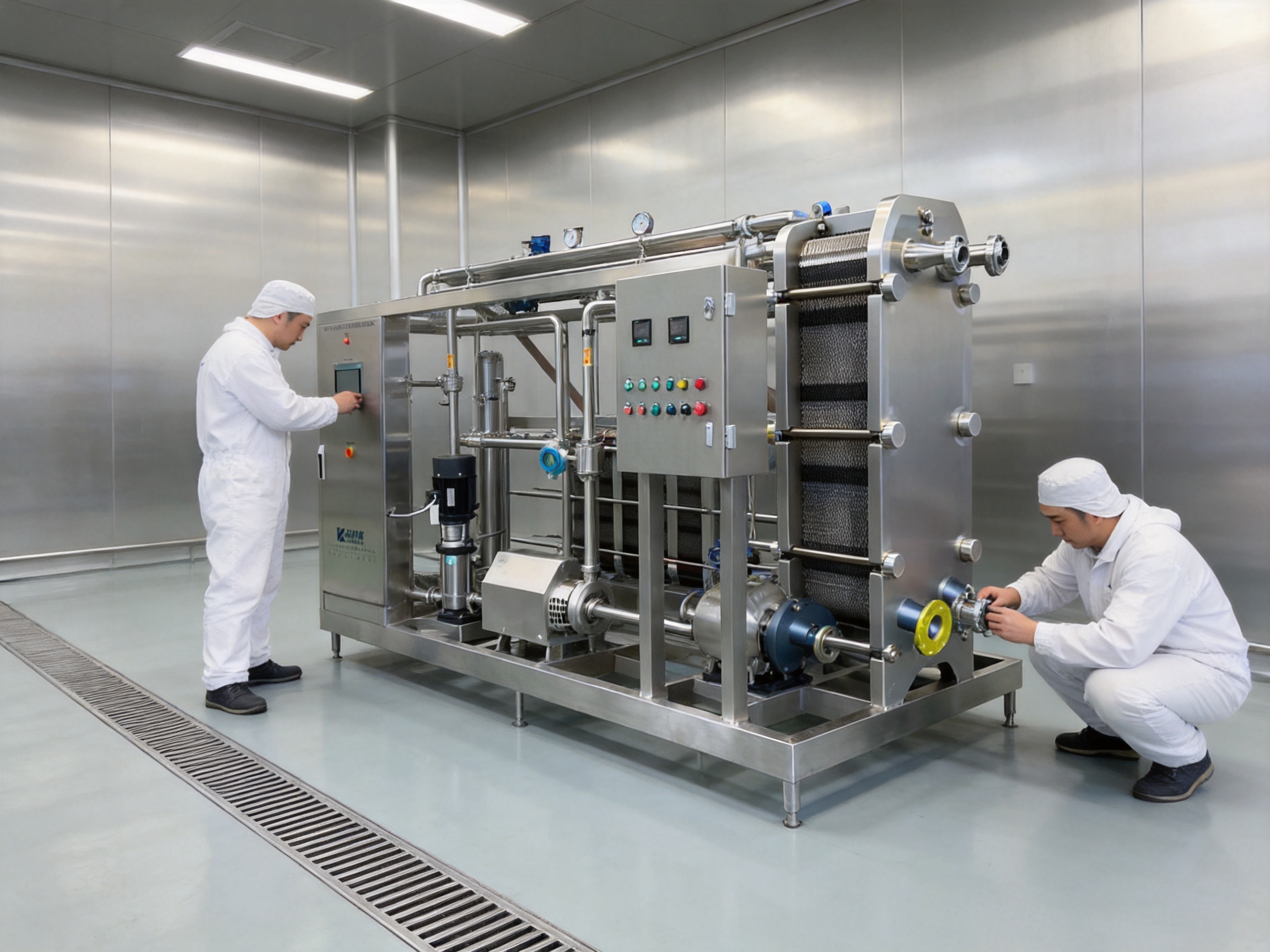
Applications in Food and Beverage Processing
The plate pasteurizer complete skid is suitable for many liquid food and beverage applications. The exact process conditions must be determined through product trials, thermal calculations, microbiological requirements, and applicable regulations.
Juice and Fruit Beverage Processing
Juices and fruit beverages often require controlled heat treatment to improve microbiological stability while preserving flavor, color, and nutritional characteristics. A plate system can preheat, pasteurize, hold, and cool the beverage in a continuous process. The system may be configured with regenerative heat recovery to reduce energy use during high-volume production.
Product properties such as pulp content, particle size, acidity, sugar concentration, and viscosity affect the choice of plate channel and operating conditions. Products with larger suspended particles may require special channel designs or alternative heat exchanger technologies.
Dairy and Milk-Based Products
Dairy products are commonly processed with strict requirements for temperature control, hygiene, cleanability, and traceability. A plate pasteurizer can support the heating and cooling stages required for milk, flavored milk, liquid dairy beverages, and selected dairy formulations.
Because dairy residues can promote fouling, the CIP program must be designed carefully. Cleaning temperature, chemical concentration, flow velocity, cleaning time, and rinse quality should be verified as part of the plant sanitation system.
Liquid Beverages
Tea-based drinks, sports beverages, functional drinks, flavored water, and other liquid products may require pasteurization or sterilization before filling. The skid can be connected to balance tanks, blending systems, filling lines, and downstream packaging equipment.
Automation is particularly valuable for beverage producers with frequent product changes. Recipe-based control, recorded process parameters, and repeatable temperature profiles can support consistent production across multiple formulations.
Small Modular and Aseptic Systems
The compact form of the skid makes it suitable for small modular production systems, demonstration lines, contract manufacturing plants, and aseptic filling sterilization units. The system can be engineered as part of a larger hygienic process line, subject to the requirements of the filling equipment and sterile boundary.
Aseptic applications require especially careful control of sterilization, sterile interfaces, hold times, air management, cleaning, and validation. The pasteurizer or sterilizer should be integrated with the complete aseptic process design rather than treated as an independent unit.
Suitability for Biopharmaceutical and Other Hygienic Industries
The product category also relates to biopharmaceutical and other hygienic industries. A plate heat exchanger skid may be useful for heating or cooling process fluids, buffers, media, water-based solutions, or other liquid streams, provided that the materials, surface finish, cleanability, sterilization method, documentation, and validation requirements are appropriate.
Food and beverage pasteurization requirements are not identical to biopharmaceutical processing requirements. Pharmaceutical and biotechnology applications may require higher levels of documentation, hygienic design review, validation, clean steam compatibility, aseptic assurance, sanitary diaphragm valves, specialized instrumentation, and compliance with additional quality standards.
For this reason, a project intended for biopharmaceutical use should define the applicable regulatory framework at the beginning of the engineering process. The system configuration may need to include upgraded materials, enhanced surface finishing, documented weld quality, traceability of product-contact components, and more extensive factory and site acceptance testing.
Automation and Digital Process Management
Automation is a central feature of a modern complete skid. The PLC-based control system can coordinate pumps, valves, temperature-control loops, utility flows, alarms, and production sequences. The operator interface can display current process values, operating status, alarm conditions, and selected historical data.
Temperature Control
Temperature sensors are installed at strategic points such as the product inlet, heating outlet, holding-section outlet, regeneration outlet, and final product outlet. The control system uses these values to regulate hot-water or steam flow and maintain the required process temperature.
Sensor selection and placement are important. Sensors must have suitable response time, accuracy, hygienic connections, temperature range, and calibration capability. Redundant or independent monitoring may be required for critical safety or quality functions.
Flow and Pressure Monitoring
Flow control influences both heat transfer and holding time. Flow meters and pump-control systems help maintain the required throughput. Pressure sensors can detect blockages, valve errors, pump problems, or abnormal heat exchanger conditions.
Monitoring the pressure difference across the plate pack can also provide useful information about fouling or flow restrictions. A gradual increase in pressure drop may indicate that cleaning or inspection is required.
Alarm and Diversion Functions
Automatic alarms can notify operators of high temperature, low temperature, low flow, high pressure, low utility pressure, pump failure, valve-position errors, or sensor faults. Where required, a product-diversion arrangement can prevent product that has not met the defined thermal conditions from entering the finished-product stream.
Alarm priorities should be established during control-system design. Critical safety or quality alarms should be clearly distinguished from advisory messages. Operators should receive appropriate training on alarm response, manual intervention, and restart procedures.
Data Recording and Traceability
Recorded temperature, flow, pressure, batch, recipe, and alarm data can support production verification and quality management. Data records may also assist with troubleshooting, preventive maintenance, customer audits, and regulatory review.
The level of data management can range from basic local display and manual records to networked supervisory control and fully integrated manufacturing execution systems. The appropriate solution depends on the customer’s production scale, quality system, and digital infrastructure.
Installation, Commissioning, and Maintenance
Although the skid is designed to simplify installation, successful commissioning still requires careful coordination. The installation site should provide suitable foundations, drainage, utility connections, electrical supply, ventilation, access, and maintenance clearances.
Before shipment, the customer should confirm the location of product inlet and outlet connections, heating and cooling utility connections, compressed-air requirements, electrical interfaces, communication protocols, CIP connections, and drainage points. Early confirmation reduces the risk of field modifications.
Installation Process
The general installation sequence includes positioning the skid, leveling and securing the frame, connecting product piping, connecting heating and cooling utilities, connecting CIP lines, installing electrical and communication cables, verifying instruments, and checking valve orientation and flow direction.
All process connections should be cleaned and inspected before startup. Foreign material, welding debris, and construction residues must not be allowed to enter the product path. The piping system should be flushed according to the project cleaning procedure.
Commissioning
Commissioning generally begins with dry checks and utility checks. Pumps, valves, sensors, control cabinets, emergency stops, alarms, and interlocks are tested before product is introduced. Water trials may then be used to verify flow, pressure, temperature response, drainage, and control sequences.
Product trials should confirm the required operating temperature, flow rate, holding time, outlet temperature, and product quality. If the system is used for regulated production, process validation and acceptance criteria should be defined in advance.
Preventive Maintenance
Preventive maintenance can include inspecting gaskets, checking plate-pack compression, verifying pump seals, calibrating sensors, testing safety valves, inspecting sanitary welds, checking valve actuators, reviewing alarm history, and examining the skid frame and support points.
The plate pack should be inspected when pressure drop increases, heat transfer performance declines, leakage occurs, or cleaning results become unsatisfactory. The maintenance interval depends on product fouling characteristics, operating hours, cleaning frequency, and process conditions.
How the System Supports Total Cost of Ownership
The purchase price is only one part of the economic evaluation of thermal processing equipment. Total cost of ownership includes installation, energy, labor, maintenance, product losses, floor space, spare parts, downtime, and system reliability.
The plate pasteurizer complete skid can reduce total ownership costs through several combined effects:
- High heat transfer efficiency can lower heating and cooling energy demand.
- Regenerative heat exchange can recover thermal energy from treated product.
- Preassembled construction can reduce site installation labor.
- Compact design can lower space requirements and facility modification costs.
- Automation can reduce routine labor and process variation.
- Sanitary materials can extend service life and reduce corrosion-related problems.
- Removable plate packs can simplify inspection and repair.
- Integrated documentation can support faster troubleshooting and maintenance.
- Stable processing can reduce product loss caused by thermal deviations.
These benefits should be evaluated using the customer’s actual operating profile. Annual production hours, utility prices, cleaning frequency, labor costs, product value, and maintenance practices all influence the financial result. A process calculation and lifecycle-cost comparison can provide a more accurate basis for equipment selection than a purchase-price comparison alone.
Why Select Shiloc for Integrated Process Equipment?
Shiloc (Shanghai) Industrial Trading Co., Ltd. was established in March 2026 in Fengxian District, Shanghai. The company specializes in the import and export of goods and technology, import and export agency services, equipment manufacturing, and engineering and technical services.
Its business focuses on integrated international trade solutions and process equipment for food and beverage, biopharmaceutical, daily chemical, and fine chemical industries. The company provides equipment manufacturing cooperation, technology import and export, engineering support, and customized equipment solutions.
The company’s Shanghai facility covers approximately 3,000 square meters and is supported by more than 20 technical specialists. Its capabilities include processing, welding, polishing, assembly, and quality control. These capabilities are important for complete skids because the equipment must be managed as a coordinated process system rather than as a collection of unrelated parts.
Shiloc emphasizes innovative design, process optimization, safe and efficient equipment, reliable supply, traceability, and personalized customer service. Its approach combines European know-how and Danish design principles with local manufacturing and technical coordination. This combination can help customers receive a solution adapted to their process, installation conditions, documentation needs, and international supply requirements.
For customers purchasing a plate pasteurizer complete skid, technical coordination is often as important as equipment fabrication. Product data, utility conditions, electrical standards, factory layout, shipping requirements, installation support, spare parts, and after-sales service must all be aligned. An integrated supplier can help reduce communication gaps between process design, manufacturing, and delivery.
Project Customization Considerations
Before designing a plate pasteurizer complete skid, the customer should provide detailed process information. Important data includes product type, product composition, viscosity, density, solids content, particle size, acidity, inlet temperature, target treatment temperature, holding time, outlet temperature, required production capacity, operating hours, and cleaning procedure.
Utility information is equally important. The engineering team should understand the availability and pressure of steam, hot water, chilled water, cooling water, compressed air, electrical power, and process water. Local electrical standards, control-system preferences, plant communication protocols, and hazardous-area classifications should also be identified.
The equipment layout should consider operator access, maintenance removal routes, drainage, ventilation, noise, hot-surface protection, and connection orientation. If the skid must pass through doors, elevators, or restricted plant routes, its shipping dimensions and modularization should be reviewed at an early stage.
Documentation requirements should be agreed before production. These may include general arrangement drawings, process and instrumentation diagrams, electrical drawings, material certificates, welding documentation, surface-finish records, calibration certificates, test reports, operating manuals, maintenance manuals, spare-parts lists, and cleaning recommendations.
Q&A
Q1: What products can be processed with a plate pasteurizer complete skid?
A plate pasteurizer complete skid is commonly used for liquid products such as juices, dairy products, milk-based beverages, tea drinks, functional beverages, flavored water, and other pumpable food materials. Suitability depends on viscosity, solids content, particle size, fouling behavior, and the required thermal process.
Q2: What is the difference between a plate pasteurizer and a tubular pasteurizer?
A plate pasteurizer uses corrugated plates to transfer heat between product and utility fluids, while a tubular pasteurizer uses product tubes or tube bundles. Plate systems are often more compact and provide efficient heat transfer for homogeneous, relatively low- or medium-viscosity liquids. Tubular systems may be more suitable for products containing larger particles, fibers, or highly viscous materials.
Q3: How does the skid reduce energy consumption?
Energy savings come from efficient plate heat transfer, counter-current flow, regenerative heat recovery, accurate temperature control, and optimized pumping. Treated hot product can transfer heat to incoming cold product, reducing the external heating and cooling loads.
Q4: What is the maximum design temperature?
The described configuration supports a maximum sterilization temperature of approximately 150°C. The actual operating temperature must be selected according to the product, process objective, component materials, pressure rating, control strategy, and applicable standards.
Q5: What is the heat transfer area range?
The typical heat transfer area is approximately 8–35 square meters. The final area depends on product properties, production capacity, inlet and outlet temperatures, utility conditions, fouling allowance, and required thermal duty.
Q6: Can the system be used for UHT processing?
It can be configured to support selected UHT or high-temperature processing requirements when the temperature, holding time, pressure, sterilization method, and downstream aseptic equipment are properly designed. The complete process should be validated for the specific product and application.
Q7: Is the equipment suitable for CIP cleaning?
Yes. The removable plate pack and sanitary process arrangement facilitate inspection and CIP cleaning. The CIP procedure must be developed according to the product residue, cleaning chemicals, temperature, flow velocity, time, and plant hygiene requirements.
Q8: What stainless-steel materials are available?
Product-contact plates and process components can be selected from 304 or 316L stainless steel according to corrosion conditions, cleaning chemicals, product composition, and project requirements. The exact material selection should be confirmed during engineering.
Q9: How does automation improve production reliability?
Automation continuously monitors temperature, pressure, flow, and other process conditions. It can regulate heating and cooling, control pumps and valves, record operating data, issue alarms, and initiate protective actions when process parameters move outside defined limits.
Q10: Can the capacity be customized?
Yes. Capacity can be customized by adjusting the plate heat transfer area, channel configuration, pump capacity, holding section, piping size, and control parameters. The design should be based on the required production flow rate and thermal duty.
Q11: Is the skid suitable for biopharmaceutical applications?
It may be suitable for selected biopharmaceutical heating and cooling duties when the system is engineered to meet the application’s material, surface-finish, cleanability, sterilization, documentation, and validation requirements. Pharmaceutical projects should define their specific regulatory and quality expectations before design begins.
Q12: What information is needed for a quotation?
Useful information includes product name and composition, flow rate, viscosity, inlet temperature, target treatment temperature, holding time, outlet temperature, required production capacity, available utilities, cleaning method, automation requirements, installation location, and documentation expectations.
Conclusion
A plate pasteurizer complete skid provides an integrated approach to liquid thermal processing. By combining a high-efficiency plate heat exchanger with pumps, piping, valves, instrumentation, automation, and safety functions, the system can deliver consistent heating and cooling in a compact and maintainable package.
Its principal advantages include efficient heat transfer, regenerative energy recovery, reduced floor-space requirements, sanitary stainless-steel construction, flexible capacity, CIP compatibility, automatic control, and comprehensive safety monitoring. Compared with conventional tube-type equipment and separately assembled process systems, it can provide a practical balance of performance, installation simplicity, process stability, and lifecycle economy for suitable liquid products.
The value of the equipment depends on correct process engineering and manufacturing quality. Material selection, plate configuration, surface finishing, sanitary welding, control integration, factory testing, documentation, and after-sales support all influence long-term performance. With its Shanghai manufacturing facility, technical specialists, equipment processing capabilities, and focus on integrated international process solutions, Shiloc supports customers seeking customized thermal processing equipment for food, beverage, biopharmaceutical, and related hygienic industries.
For manufacturers planning a new production line, upgrading an existing pasteurization system, or developing a compact modular process unit, a complete skid can provide a reliable foundation for efficient and controlled thermal processing.
References
1. General principles of hygienic design for food and beverage processing equipment.
2. Heat exchanger engineering principles for liquid heating, cooling, and regeneration.
3. Clean-in-place system design and validation practices for sanitary process equipment.
4. Industry guidance for pasteurization, sterilization, and thermal process control in liquid food production.
5. Stainless-steel fabrication, welding, polishing, and passivation practices for hygienic equipment.
6. Principles of plate heat exchanger selection, thermal calculation, pressure-drop analysis, and maintenance.
7. Process automation practices for temperature, pressure, flow, alarm, and data-management systems.
8. Hygienic engineering considerations for food, beverage, biotechnology, and biopharmaceutical process systems.
Product: Plate Pasteurizer Complete Skid
PREV:Sanitary Plate Heat Exchangers for High-Performance Food and Biopharmaceutical Processing
NEXT:Side-Entry Tank Mechanical Agitators for Hygienic, Efficient, and Large-Volume Process Mixing
NEXT:Side-Entry Tank Mechanical Agitators for Hygienic, Efficient, and Large-Volume Process Mixing
Interested in cooperation or have questions?
Recommended LINS
✦
Food Processing Skid System
Plate Heat Exchanger Pasteurization System
Skid Mounted Process System
Process Skid System
Ice Cream Mix Pasteurizer
Milk Processing Heat Exchanger
Automatic Milk Pasteurizer
Aseptic Processing Equipment for Liquid Foods
Aseptic Beverage Processing Line
Aseptic Milk Processing Equipment
Let'S Work Together Welcome Aboard!
-

haikexin@haikexin.com
+8613391278930
-
 +86-21-57560276
-
 No. 2819, Sihu Road,Fengxian District, Shanghai, China
Join Our Mailing List
Copyright © Shiloc (Shanghai) Industrial Trading Co., Ltd. All Rights Reserved.
Process Systems & Equipment For Food & Biopharma Manufacturers
