
 English
 русский
 Português
 Français



 Read More

Product Category
NEW Category
Contact us
Contact Us
We specialise in the research, development and manufacture of electrical wires and cables.
 +86-21-57560276
Sanitary Plate Heat Exchangers for Hygienic Food and Biopharmaceutical Processing
Content
- 1 1. The Role of Sanitary Heat Transfer in Modern Processing
- 2 2. Construction of a Sanitary Plate Heat Exchanger
- 3 3. How the Corrugated Plate Design Improves Performance
- 4 4. Advantages Over Less Adaptable Heat Transfer Equipment
- 5 5. Hygienic Design for Food and Biopharmaceutical Use
- 6 6. Customization According to Process Conditions
- 7 7. Advanced Manufacturing Processes and Quality Strengths
- 7.1 7.1 Engineering Review and Process Analysis
- 7.2 7.2 Precision Plate Forming
- 7.3 7.3 Stainless Steel Processing
- 7.4 7.4 Welding and Fabrication
- 7.5 7.5 Polishing and Surface Quality
- 7.6 7.6 Assembly and Gasket Installation
- 7.7 7.7 Inspection and Traceability
- 7.8 7.8 European Know-How and Danish Design Concepts
- 8 8. Fouling Prevention and Cleaning Strategy
- 9 9. Installation, Commissioning, and Operation
- 10 10. Troubleshooting Common Operating Problems
- 11 11. Application Examples
- 12 12. Why Manufacturing and Engineering Support Matter
- 13 13. Selection Checklist for Buyers
- 14 14. Frequently Asked Questions
- 14.1 What is a sanitary plate heat exchanger?
- 14.2 What is the main advantage of a detachable PHE?
- 14.3 Which stainless steel should be selected?
- 14.4 Can a sanitary PHE be used for pasteurization?
- 14.5 How does the corrugated plate reduce fouling?
- 14.6 What causes leakage from a plate heat exchanger?
- 14.7 Is CIP cleaning enough for every application?
- 14.8 Can the heat exchanger be customized?
- 14.9 What manufacturing capabilities should a buyer evaluate?
- 14.10 What information should be supplied for a quotation?
- 15 15. Conclusion
- 16 References
- 17 Product: Sanitary Plate Heat Exchanger (PHE)
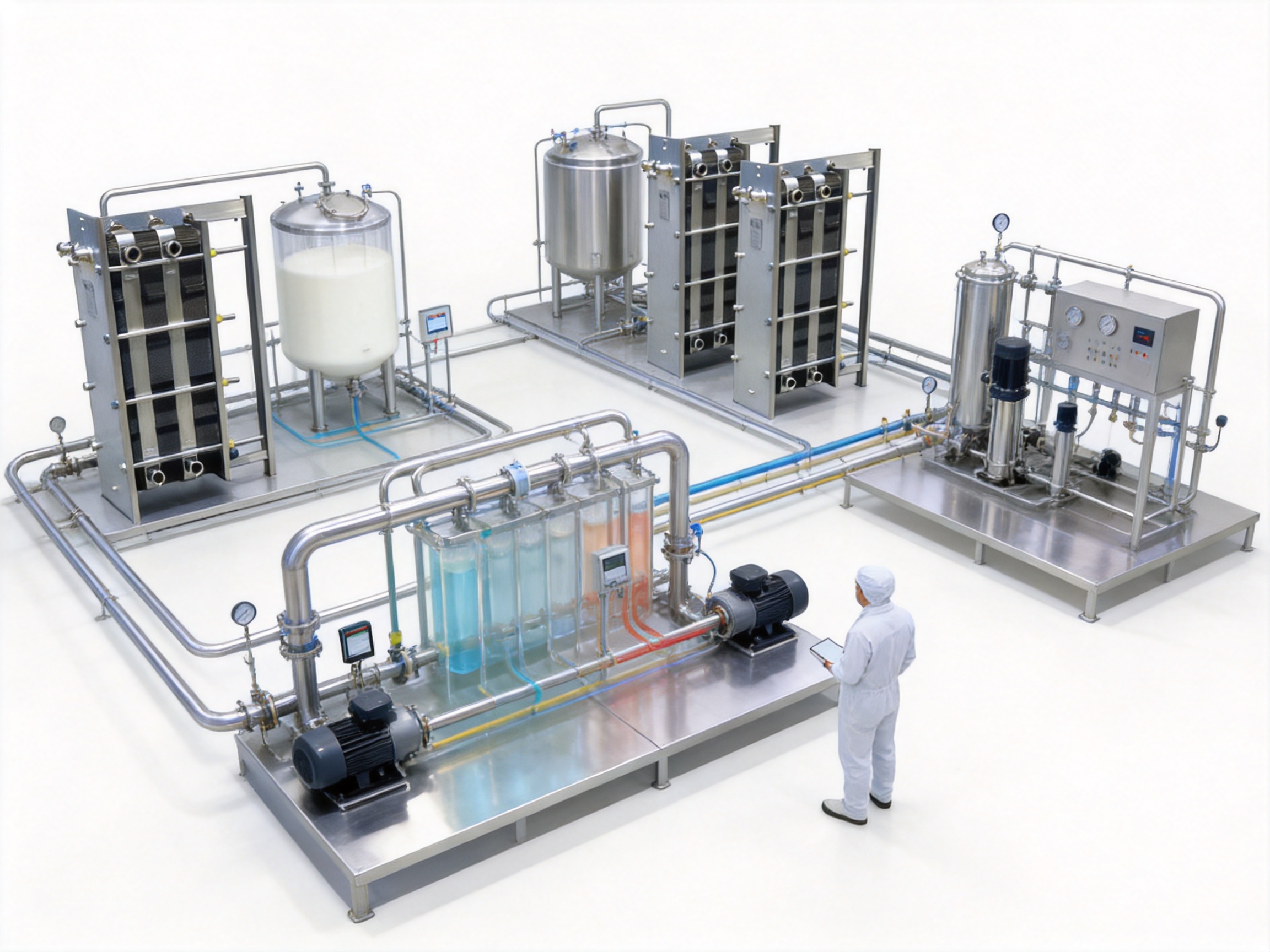
Modern food, beverage, and biopharmaceutical manufacturers must control temperature accurately while maintaining strict hygiene, product quality, energy efficiency, and production continuity. Heating, cooling, pasteurization, sterilization, fermentation, and temperature conditioning are all sensitive operations. A small variation in outlet temperature can influence product safety, shelf life, viscosity, flavor, active ingredient stability, or downstream process performance. At the same time, process equipment must be designed to minimize contamination, support validated cleaning procedures, and withstand repeated thermal and mechanical cycles.
The sanitary plate heat exchanger (PHE) is a practical solution for these demanding conditions. It transfers heat between two process media through thin stainless steel plates without allowing the media to come into direct contact. Corrugated plate surfaces create turbulence, increase heat transfer efficiency, and help reduce the accumulation of deposits. The detachable construction allows operators to inspect, clean, and maintain individual plates and gaskets, making the equipment suitable for applications where hygiene and serviceability are essential.
This article explains the construction, operating principles, hygienic advantages, performance benefits, customization options, manufacturing capabilities, installation requirements, maintenance practices, and application value of sanitary plate heat exchangers. It also examines how advanced material selection, precision fabrication, welding, polishing, inspection, and engineering support can give a well-designed sanitary PHE important advantages over less adaptable heat transfer equipment.
1. The Role of Sanitary Heat Transfer in Modern Processing
Heat transfer is one of the most frequently repeated operations in food and biopharmaceutical manufacturing. Milk may need to be heated for pasteurization and then rapidly cooled. Fruit juice may require controlled heating before filling. Pharmaceutical liquids may need sterilization at a defined temperature for a specified holding time. Fermentation processes may require stable cooling to remove metabolic heat. Sauces, egg liquids, syrups, and other viscous products may need controlled heating to achieve the required flow characteristics.
These applications have a common requirement: heat must be transferred efficiently without compromising product hygiene. Conventional industrial heat exchangers may provide adequate thermal performance but may not offer the accessibility, sealing design, surface finish, or cleanability required for hygienic production. A sanitary PHE addresses these concerns by combining a compact heat transfer structure with food-grade materials, removable plates, replaceable gaskets, and cleaning procedures suitable for hygienic facilities.
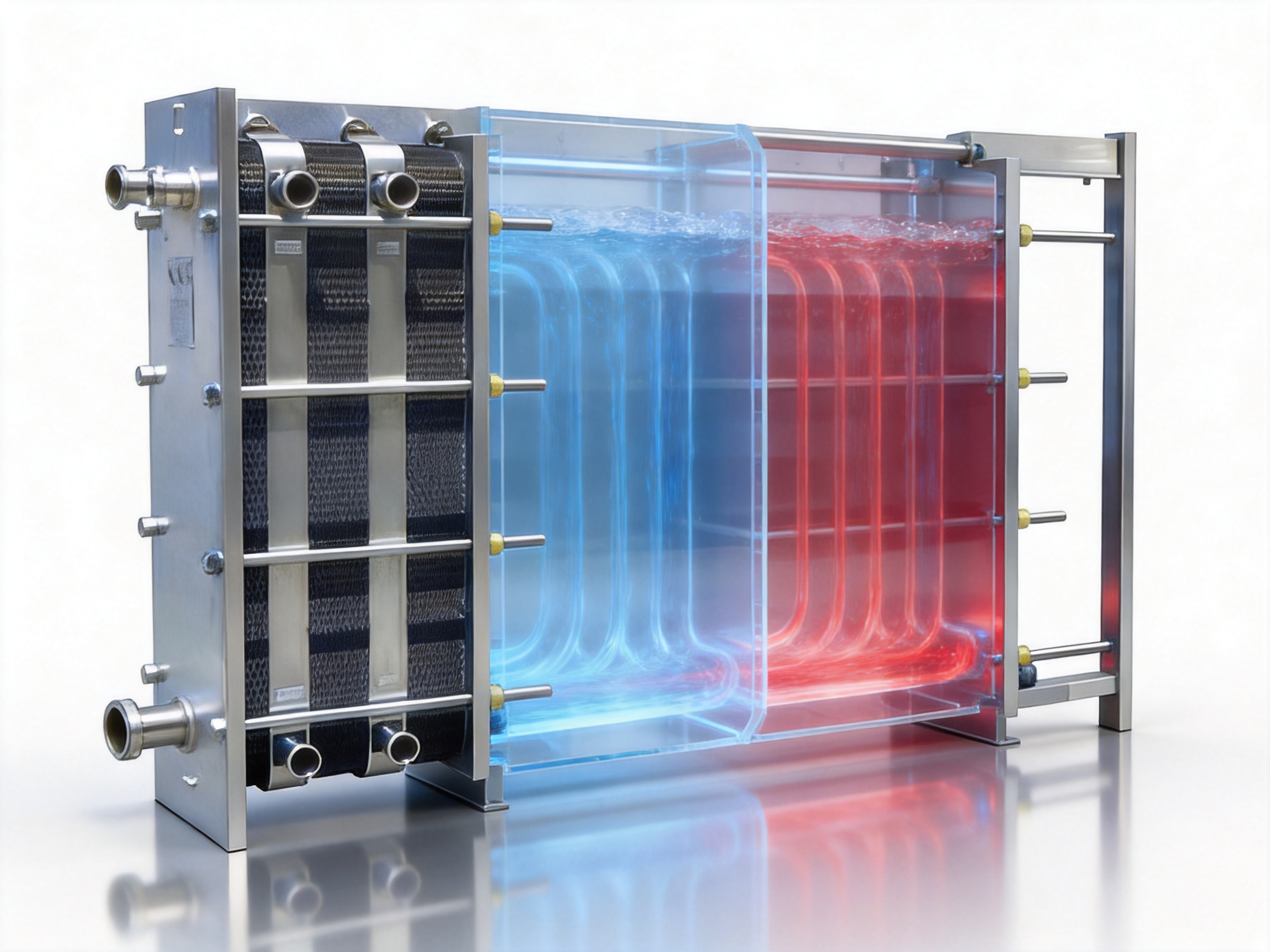
In a typical PHE, one process medium flows through alternate channels while the heating or cooling medium flows through the remaining channels. The stainless steel plates separate the two fluids. Heat passes through the plate walls, while the corrugated pattern promotes turbulence on both sides. Depending on the process design, the fluids may flow in counter-current, co-current, side-by-side, or diagonal arrangements. Counter-current flow is commonly selected when the application requires a high temperature approach and strong thermal efficiency.
The equipment can be used as a standalone unit or integrated into a complete process system. It may be connected to pumps, valves, temperature sensors, flow meters, holding tubes, filling systems, mixing equipment, tanks, and clean-in-place systems. Because the heat transfer area is determined largely by the number and size of plates, the unit can be adapted to different capacities by changing the plate pack configuration.
2. Construction of a Sanitary Plate Heat Exchanger
A sanitary plate heat exchanger consists of several coordinated components. Each component contributes to thermal performance, pressure resistance, hygienic operation, or maintenance convenience. Correct selection of materials and dimensions is essential because the equipment may operate under repeated cycles of heating, cooling, cleaning, sterilization, and pressure variation.
2.1 Heat Transfer Plates
The heat transfer plates form the central working section of the equipment. They are normally manufactured from food-grade stainless steel 304 or 316L. Stainless steel 304 is suitable for many general food and beverage applications, while 316L offers improved corrosion resistance and is often selected for pharmaceutical liquids, aggressive cleaning chemicals, saline products, and media containing chlorides.
Special materials, including titanium alloys, may be considered for highly corrosive media or specific water treatment and chemical service conditions. Material selection should consider product chemistry, cleaning agents, operating temperature, pressure, chloride concentration, sterilization conditions, and the required service life.
The plates are formed with corrugated patterns. These patterns increase the effective surface area and create turbulent flow as the media passes through the narrow channels. Turbulence improves the movement of heat from the fluid to the plate and from the plate to the second fluid. It can also reduce stagnant zones and limit the adhesion of proteins, sugars, minerals, and other deposits.
2.2 Gaskets and Sealing System
Gaskets separate the process channels and prevent leakage between adjacent media. Food-grade EPDM and nitrile rubber are common choices, but the correct material depends on temperature, chemical compatibility, product composition, cleaning chemicals, and sterilization requirements. A gasket that is suitable for water may not be suitable for oils, solvents, strong alkaline cleaners, or high-temperature service.
Gaskets must be accurately positioned in their grooves and compressed within the specified range. Excessive compression may damage the gasket or make future disassembly difficult. Insufficient compression may cause external leakage or cross-contamination between channels. During maintenance, replacement gaskets should match the original design and should not be substituted with unverified materials.
2.3 Fixed and Movable Pressure Plates
The plate pack is held between a fixed pressure plate and a movable pressure plate. These plates distribute the clamping load across the heat transfer plates. The pressure plates must remain properly aligned so that the gaskets seal evenly and the flow channels retain their intended geometry.
The frame may be designed for vertical installation, which allows the plate pack to be supported and serviced efficiently. The exact frame construction depends on plate size, design pressure, process capacity, and the number of plates. A robust frame improves operational stability and helps maintain alignment during repeated opening and closing cycles.
2.4 Clamping Bolts and Alignment Components
Clamping bolts apply the compression force required to seal the plate pack. Bolts should be tightened gradually and evenly according to the manufacturer’s specified sequence and torque or plate-pack dimension. Uneven tightening can distort plates, create local leakage, or cause flow imbalance.
Alignment bars and support structures keep the plates in the correct position. During disassembly, plates should be marked sequentially. This practice helps maintenance personnel restore the original plate arrangement and prevents incorrect installation of plates, gaskets, or flow configurations.
2.5 Connections and Flow Configuration
Connection locations can be configured to match the process layout. Side-by-side and diagonal flow arrangements are available for different inlet and outlet positions. The selected arrangement affects piping convenience, drainage, inspection access, and the overall footprint of the production line.
Connections must be compatible with sanitary piping practices. Product contact surfaces should be cleanable and should not create unnecessary dead legs or areas where liquid can remain trapped. The final connection design should be reviewed together with the piping, valve, instrumentation, and cleaning system.
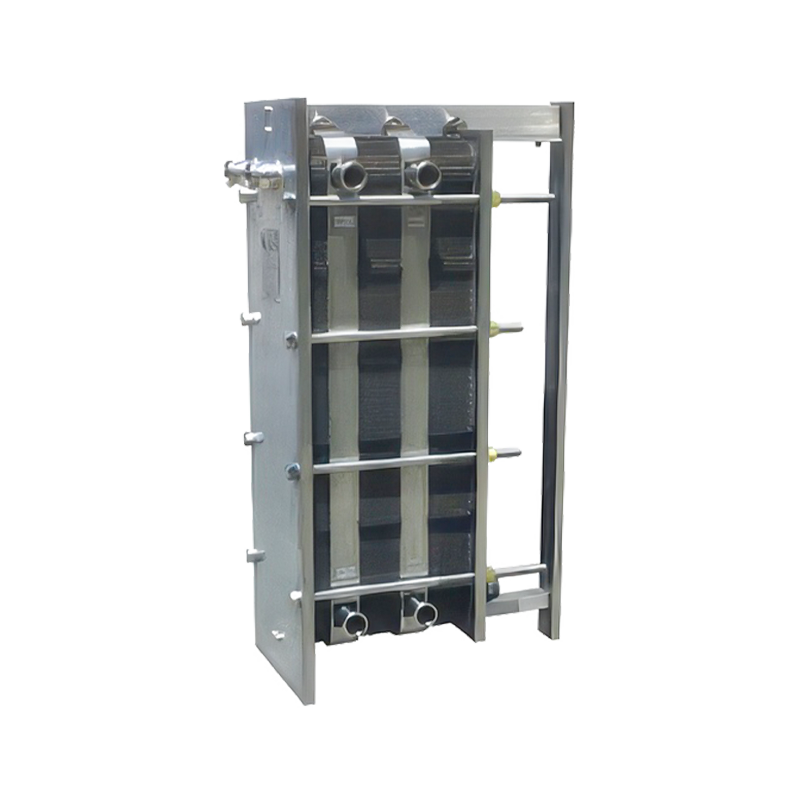
Sanitary Plate Heat Exchanger (PHE)
3. How the Corrugated Plate Design Improves Performance
The corrugated plate is one of the most important performance features of a sanitary PHE. Unlike a flat plate, a corrugated plate creates a more complex flow path. As the fluid changes direction and interacts with the pattern, turbulence increases. This improves the movement of heat within the fluid and reduces the thickness of the boundary layer near the plate surface.
A thinner thermal boundary layer allows heat to pass more effectively through the fluid-film interface. As a result, the heat exchanger can achieve a high heat transfer rate within a relatively compact area. This compactness can reduce equipment footprint, simplify installation, and lower the amount of material required for the frame and supporting structure.
Turbulence also supports more uniform temperature distribution. In applications such as pasteurization and sterilization, consistent temperature is important because the product must receive the required thermal treatment without excessive overheating. In beverage and food applications, improved temperature uniformity can help protect flavor, color, nutritional value, texture, and viscosity.
The corrugated pattern may also reduce fouling adhesion. Fouling cannot be eliminated entirely, particularly when handling products containing proteins, sugars, minerals, fibers, or suspended solids. However, appropriate velocity and turbulence can reduce the opportunity for deposits to settle in low-flow areas. Good plate design must be combined with correct flow rate, suitable temperature control, effective CIP chemistry, and appropriate startup and shutdown procedures.
3.1 Thermal Efficiency
Thermal efficiency depends on several factors, including plate material, plate pattern, media properties, flow rate, temperature difference, fouling resistance, and the number of plates. A well-selected plate pack can provide strong heat transfer without requiring an oversized unit. The compact structure is particularly valuable where production floors are crowded or where process skids must be transported and installed within restricted spaces.
High efficiency can also support energy reduction. When heat is transferred effectively, the system may require less heating steam, hot water, chilled water, or electrical cooling capacity. In a regeneration section, the hot outgoing product can preheat the incoming product, reducing the total energy demand of pasteurization or sterilization.
3.2 Product Protection
Fast and controlled heat transfer can reduce the time that sensitive products spend at elevated temperatures. This is valuable for juices, dairy products, pharmaceutical solutions, and other temperature-sensitive liquids. A properly designed PHE can heat or cool a product rapidly while limiting unnecessary exposure to extreme temperatures.
Product protection depends on the entire process design. The heat exchanger must be correctly sized, and temperature sensors must be installed at appropriate locations. Flow control, holding time, pressure balance, and cleaning validation are also necessary to achieve reliable results.
3.3 Reduced Fouling Risk
Fouling may appear as protein deposits, mineral scale, caramelized sugar, product residue, microbial film, or chemical precipitation. Deposits reduce heat transfer efficiency and increase pressure drop. If fouling continues, the outlet temperature may fall outside the required range, production capacity may decrease, and cleaning frequency may increase.
The sanitary PHE addresses fouling through several design and operating features: corrugated channels, controlled flow distribution, removable plates, accessible sealing surfaces, and compatibility with CIP or manual disassembly cleaning. The best results are achieved when the equipment is selected according to the real properties of the product rather than general assumptions.
4. Advantages Over Less Adaptable Heat Transfer Equipment
Sanitary PHEs compete with several other heat transfer technologies, including tubular heat exchangers, scraped-surface heat exchangers, shell-and-tube units, and welded plate heat exchangers. Each technology has suitable applications. The principal advantage of a detachable sanitary PHE is its balance of efficiency, flexibility, accessibility, and hygienic serviceability.
4.1 Compact Design and High Heat Transfer Density
Compared with many shell-and-tube designs, a plate heat exchanger can provide a high heat transfer area within a smaller volume. The corrugated plate pattern and thin plate walls support efficient thermal transfer. This can reduce the size of the equipment, simplify skid design, and limit the amount of floor space required.
4.2 Adjustable Heat Transfer Area
A detachable unit can often be adapted by adding or removing plates. This is a major benefit for manufacturers whose production capacity changes over time. A company may begin with a smaller production line and later increase capacity without replacing the complete heat exchanger frame. Plate quantity can also be adjusted when process conditions, product viscosity, flow rate, or thermal duty changes.
4.3 Easier Inspection and Deep Cleaning
Welded heat exchangers may be difficult or impossible to open for internal inspection. A detachable PHE allows the operator to separate the plate pack, inspect each surface, replace damaged gaskets, and remove deposits that cannot be eliminated through normal circulation. This accessibility is particularly important in hygienic production, where visual inspection and maintenance records may be part of quality management.
4.4 Flexible Flow Arrangement
Plate heat exchangers can be configured with different pass arrangements and connection layouts. This flexibility makes it easier to integrate the equipment into existing process lines. Side-by-side or diagonal connections may be selected according to piping direction, equipment location, and available maintenance space.
4.5 Lower Maintenance Disruption
Because individual plates and gaskets can be serviced, maintenance may be more targeted than replacing an entire heat transfer assembly. Spare gaskets and selected plates can be kept in inventory. Operators can restore the unit after inspection without changing the complete process design.
4.6 Strong Hygienic Compatibility
Food-grade stainless steel, suitable elastomers, cleanable channels, and detachable construction support hygienic production requirements. The design is suitable for facilities that operate scheduled CIP programs and require periodic disassembly cleaning. Properly selected PHEs can support reliable sanitation without sacrificing thermal performance.
| Comparison Factor | Sanitary Detachable PHE | Shell-and-Tube Heat Exchanger | Welded Plate Heat Exchanger |
| Heat transfer density | High due to corrugated plates and thin walls | Moderate to high depending on tube arrangement | High |
| Internal accessibility | Excellent; plates can be removed individually | Limited to tube-side or shell-side access | Limited because the plate pack is permanently welded |
| Heat transfer area adjustment | Possible by adding or removing plates | Usually requires equipment modification or replacement | Generally not practical after fabrication |
| Gasket replacement | Simple when correct procedures are followed | Depends on design and sealing arrangement | Not applicable to welded internal channels |
| Cleaning flexibility | Supports CIP and disassembly cleaning | Supports circulation cleaning; mechanical access varies | Primarily dependent on CIP performance |
| Application suitability | Food, beverage, pharmaceutical, and industrial liquids | High-pressure or specialized industrial duties | Applications requiring compact welded construction |
5. Hygienic Design for Food and Biopharmaceutical Use
Hygienic design is more than the use of stainless steel. It involves the complete relationship between materials, surface condition, geometry, sealing, drainage, cleaning, inspection, and process control. A sanitary PHE must be selected and installed so that product-contact areas can be reliably cleaned and maintained.
Stainless steel surfaces should be properly processed and protected from contamination during fabrication, storage, and installation. Welding quality is important because poor welds can create crevices, discoloration, rough areas, or corrosion sites. Grinding and polishing practices should be controlled so that the finished surface supports cleanability.
Gaskets should be compatible with the product and cleaning chemicals. They should be installed without twisting, stretching, or contamination. If a gasket becomes brittle, swollen, cracked, or permanently deformed, it should be replaced. Continued use of damaged seals may cause leakage, product loss, or cross-contamination.
The plate configuration should minimize dead zones and support complete drainage where required. The piping arrangement should avoid unnecessary pockets. Drain and vent points should be considered during the engineering stage rather than added after installation.
For biopharmaceutical applications, the heat exchanger may be part of a more closely controlled process in which temperature mapping, cleaning validation, material certificates, surface inspection, and documentation are important. The final specification should define the required level of hygienic design, pressure rating, surface finish, elastomer qualification, and inspection records.
5.1 Food and Beverage Applications
Dairy processing is one of the most common applications. Milk can be heated for pasteurization, cooled before fermentation, or conditioned before filling. The PHE must provide stable flow and temperature while allowing regular cleaning of protein and mineral deposits.
In beverage production, the equipment can be used for fruit juice, tea beverages, flavored drinks, syrups, and other liquid products. Heating may be used for sterilization or pasteurization, while cooling may prepare the product for blending, filling, or storage. The selected plate pattern and channel size should reflect the presence of pulp, fibers, suspended particles, or high sugar concentration.
Food processing applications include sauces, egg liquids, condiments, liquid ingredients, and prepared foods. These products can vary significantly in viscosity and fouling tendency. A customized design may be required to balance pressure drop, flow velocity, thermal duty, and cleaning capability.
5.2 Biopharmaceutical Applications
Pharmaceutical liquids may require heating, cooling, sterilization, or temperature holding. Product purity and process repeatability are critical. Materials must be compatible with the formulation and the cleaning or sterilization method. The PHE should be selected with attention to pressure differentials because a damaged plate or gasket could create unwanted communication between process streams.
Biopharmaceutical systems may use purified water, process water, buffers, culture media, intermediate solutions, or other controlled liquids. Depending on the application, the system may require special documentation, higher surface finish standards, validated cleaning procedures, and carefully controlled assembly.
The use of 316L stainless steel and suitable elastomers can support demanding pharmaceutical service, but material selection alone does not guarantee compliance. The complete equipment design, fabrication process, inspection program, installation, and validation documentation must match the customer’s quality requirements.
6. Customization According to Process Conditions
A sanitary PHE should not be selected only by nominal flow rate. The engineering design must consider the product and utility media, inlet and outlet temperatures, required heat duty, pressure drop, operating pressure, cleaning temperature, cleaning chemicals, viscosity, solids content, fouling tendency, and production schedule.
6.1 Plate Material Selection
304 stainless steel may be appropriate for many general food and beverage applications. 316L is often preferred where corrosion resistance and pharmaceutical compatibility are more demanding. Titanium and other special materials may be considered for selected corrosive services.
Material selection should also account for the utility side. A cooling water stream containing chlorides may create a different corrosion risk from purified water. Similarly, cleaning chemicals can be more aggressive than the product itself. The selected material must withstand the complete operating and cleaning cycle.
6.2 Gasket Selection
EPDM is commonly used in water, food, beverage, and many pharmaceutical liquid applications. Nitrile rubber may be appropriate for certain oils or media where its chemical compatibility is favorable. Temperature limits and cleaning conditions must be verified before final selection.
Gasket hardness, profile, attachment method, and replacement procedure also affect performance. The gasket should be specified as part of the equipment design rather than treated as a generic spare component.
6.3 Pressure and Temperature Design
Design pressure must be selected according to the highest expected operating condition, including startup, shutdown, pump surges, cleaning cycles, and accidental pressure imbalance. The pressure difference between the two media should remain within the designed range to reduce the risk of plate deformation or cross-contamination.
Temperature design must include product temperature, utility temperature, cleaning temperature, thermal expansion, and sterilization conditions where applicable. Sudden thermal shocks should be minimized by using controlled startup and shutdown sequences.
6.4 Flow Arrangement
Flow arrangement affects thermal efficiency, pressure drop, drainage, and piping convenience. Counter-current flow often improves heat recovery and allows closer outlet temperatures. Parallel or other arrangements may be suitable for specific process limitations.
Side-by-side and diagonal connection layouts can help adapt the unit to different equipment locations. The selected arrangement should be coordinated with valve orientation, instrument access, pipe supports, and cleaning flow direction.
6.5 Plate Quantity and Channel Configuration
Adding plates increases heat transfer area, while removing plates may reduce capacity or pressure drop. The plate count must be selected according to the required heat load and flow distribution. The channel arrangement should also reflect product viscosity and solids content. Narrow channels may provide strong thermal performance but may be less suitable for liquids containing large particles or fibers.
7. Advanced Manufacturing Processes and Quality Strengths
The performance of a sanitary PHE depends not only on its design concept but also on how accurately it is manufactured. Plate forming, frame fabrication, welding, polishing, assembly, gasket installation, and final inspection must be controlled as an integrated process.
7.1 Engineering Review and Process Analysis
The manufacturing process should begin with a review of the customer’s operating conditions. Engineers need to understand the media characteristics, temperature requirements, flow rates, heat load, pressure rating, cleaning program, installation space, and connection requirements. This information supports correct selection of plate material, plate pattern, gasket material, flow configuration, and plate quantity.
For specialized projects, process data can be reviewed together with the customer’s piping and instrumentation requirements. This helps identify potential issues before fabrication, such as insufficient maintenance clearance, unsuitable connection direction, excessive pressure drop, or inadequate cleaning flow.
7.2 Precision Plate Forming
Plate forming must create consistent corrugation geometry across the working area. Variations in pattern depth, angle, or plate shape can influence flow distribution and heat transfer performance. Accurate forming also helps maintain uniform gasket compression and reliable alignment during assembly.
Plate edges and gasket grooves must be processed carefully. Sharp edges, deformation, or irregular grooves may damage gaskets or create sealing problems. Dimensional inspection is therefore important before the plates enter the assembly stage.
7.3 Stainless Steel Processing
Stainless steel should be handled in a way that minimizes contamination from carbon steel tools, unclean storage areas, or improper contact surfaces. Dedicated or properly controlled processing practices help protect corrosion resistance and appearance.
Surface treatment, grinding, and polishing must be matched to the required hygienic level. Smooth, uniform surfaces are easier to clean and less likely to retain product residue. The treatment process should avoid introducing scratches, pits, or embedded particles.
7.4 Welding and Fabrication
Frame components, connections, supports, and other fabricated parts require controlled welding. Welding quality affects mechanical strength, dimensional stability, corrosion resistance, and cleanability. Welds should be inspected for defects, incomplete fusion, excessive discoloration, cracking, or irregular surface conditions.
After welding, suitable finishing and polishing may be required. A properly finished weld is easier to inspect and less likely to create a contamination point. Fabrication quality is especially important for equipment used in pharmaceutical and high-hygiene environments.
7.5 Polishing and Surface Quality
Polishing supports cleanability and improves the condition of product-contact surfaces. The appropriate finish depends on the customer’s application and quality standard. The objective is not merely visual appearance; it is to provide a surface that limits residue retention and supports repeatable cleaning.
7.6 Assembly and Gasket Installation
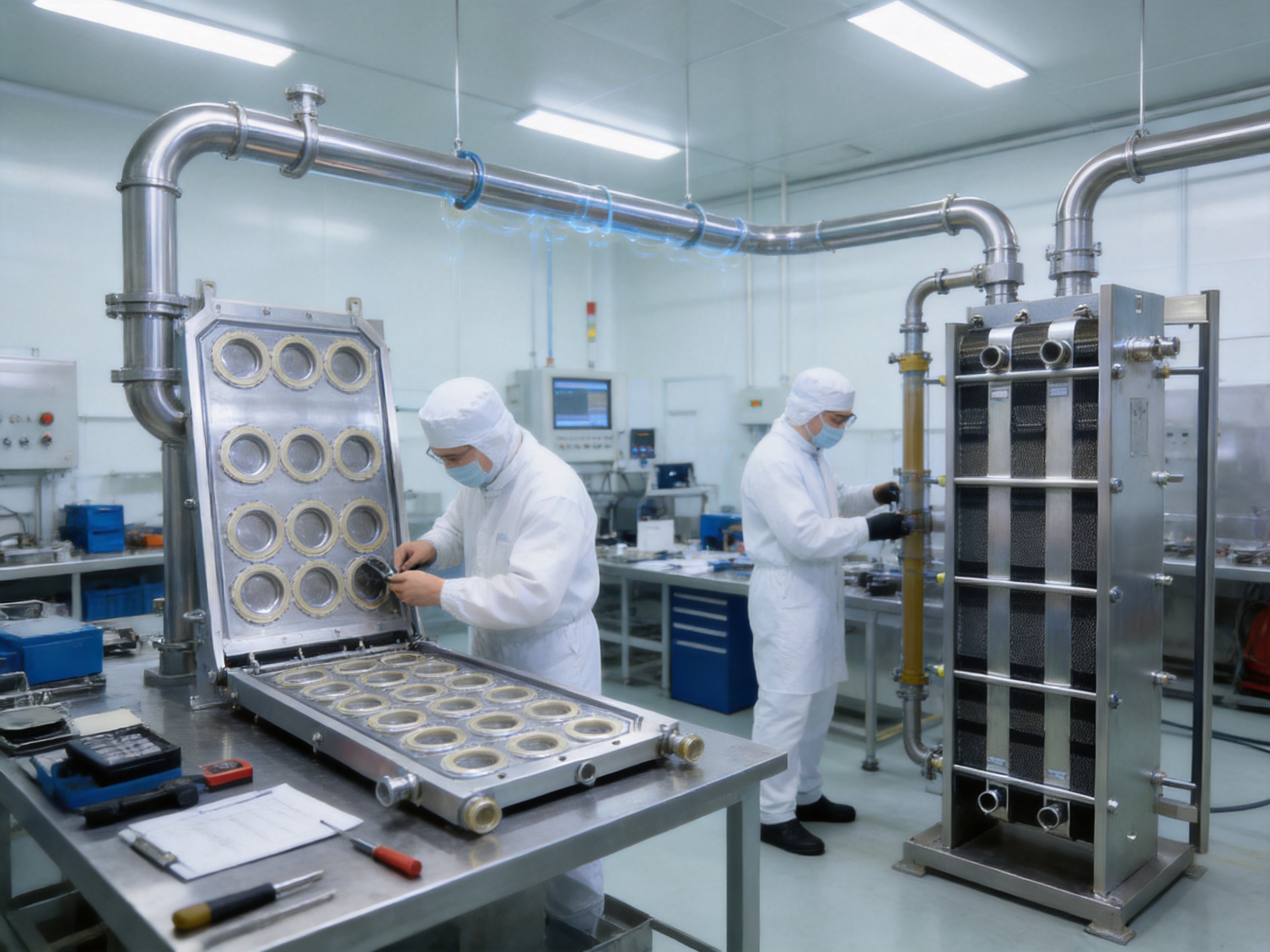
Assembly personnel must install plates in the correct sequence and orientation. Gaskets should be seated properly, and plate packs should be compressed gradually. Incorrect plate orientation can change the flow path, reduce heat transfer, increase pressure drop, or create an unbalanced hydraulic condition.
Bolts should be tightened in a controlled sequence. Measurements of the plate-pack dimension can help confirm that compression is within the specified range. Final assembly should include a check of connections, supports, labels, and accessibility for future maintenance.
7.7 Inspection and Traceability
Quality inspection may include dimensional checks, material verification, surface inspection, gasket inspection, pressure testing, leakage testing, and functional review. The exact program depends on the application and customer requirements.
Traceability strengthens project control. Recording material sources, fabrication stages, inspection results, and component information helps support future maintenance and replacement. It also gives customers greater confidence when the equipment is installed in a regulated production environment.
The manufacturer described in the supplied materials operates a 3,000-square-meter facility in Shanghai and has more than 20 technical specialists. Its capabilities include equipment manufacturing, processing, welding, polishing, quality inspection, engineering support, and international supply coordination. These resources allow the company to manage more of the equipment lifecycle internally rather than relying entirely on disconnected external suppliers.
7.8 European Know-How and Danish Design Concepts
The company integrates European technical experience and Danish design concepts into hygienic equipment development. In practical terms, this approach emphasizes cleanable geometry, reliable fabrication, efficient process layouts, user-oriented maintenance, and attention to operational safety.
Design influence is valuable when it is converted into measurable manufacturing results. The important factors are consistent plate construction, appropriate material selection, controlled welding, accurate polishing, reliable seals, systematic inspection, and practical after-sales support. These factors help distinguish a professionally engineered sanitary PHE from a standard industrial heat exchanger with limited hygienic adaptation.
8. Fouling Prevention and Cleaning Strategy
Fouling prevention begins before the heat exchanger is manufactured. The product’s composition, viscosity, temperature sensitivity, solids content, and cleaning requirements should influence plate selection and channel design. A heat exchanger that is technically adequate for clean water may perform poorly with protein-rich milk, concentrated syrup, fruit pulp, or viscous sauce.
8.1 Control of Flow Velocity
Flow velocity must be high enough to reduce stagnant areas but not so high that pressure drop, product damage, or erosion becomes excessive. The correct velocity depends on the product and plate pattern. A stable flow also supports more uniform heat transfer and temperature distribution.
8.2 Minimize Thermal Overheating
Overheating can accelerate protein denaturation, sugar caramelization, mineral precipitation, or product burning. Temperature control should therefore be precise, especially at the product inlet and outlet. Process automation can help maintain stable conditions and respond quickly to variations in flow or utility temperature.
8.3 Regular CIP Cleaning
CIP is suitable for routine cleaning when the system has been designed for effective circulation. A typical program may include a pre-rinse, alkaline cleaning, intermediate rinse, acid cleaning where required, final rinse, and sanitization. The actual sequence must be developed according to the product residue and chemical compatibility of the equipment.
Cleaning effectiveness depends on time, temperature, chemical concentration, and mechanical action. If any one of these factors is inadequate, deposits may remain. Operators should monitor cleaning parameters and investigate repeated deviations rather than simply extending cleaning time without understanding the cause.
8.4 Disassembly Cleaning
When CIP cannot remove deposits, the plate pack should be opened for inspection and manual cleaning. Plates should be marked in sequence before removal. Cleaning tools should not scratch the stainless steel surfaces. Aggressive mechanical methods can create surface damage and increase future fouling.
During reassembly, plates must be returned to their correct orientation. Gaskets should be inspected and replaced if damaged. Bolts should be tightened evenly, and the plate-pack dimension should be checked before the unit is returned to service.
8.5 Monitor Pressure Drop and Outlet Temperature
A gradual increase in pressure drop may indicate fouling or blockage. A change in outlet temperature at a stable flow rate may indicate reduced heat transfer efficiency. Tracking these parameters helps maintenance personnel plan cleaning before the equipment reaches an unacceptable operating condition.
9. Installation, Commissioning, and Operation
Before installation, inspect plates, gaskets, connections, and frame components. Remove protective materials and surface contaminants. Confirm that the unit is installed in the correct orientation and that adequate clearance is available for plate removal and maintenance.
The supporting structure must be strong enough to carry the equipment and filled operating weight. Piping should be independently supported so that excessive loads are not transferred to the heat exchanger connections. Valves and instruments should be positioned so that operators can control and monitor the equipment safely.
Before introducing product, flush the system as required and verify that the cleaning and drainage arrangements function correctly. During commissioning, increase pressure gradually. Sudden pressure changes can deform plates, displace gaskets, or cause leakage.
Pressure balance is particularly important. If one side is pressurized while the other side is empty or at a much lower pressure, the plate pack may experience an excessive differential. Startup and shutdown sequences should therefore be defined clearly and followed consistently.
Operators should confirm the correct flow direction, temperature response, pressure drop, and absence of external leakage. If the equipment is used for pasteurization or sterilization, the temperature sensors and control system should be checked before production release.
10. Troubleshooting Common Operating Problems
10.1 Reduced Heat Transfer Efficiency
If the outlet temperature does not meet the required value, check for plate fouling, insufficient flow, incorrect utility temperature, air pockets, or an unsuitable plate count. Pressure drop should be compared with the normal operating baseline. The product and utility flow rates should also be verified.
Scaling or blockage may require CIP cleaning or disassembly cleaning. If the process load has increased, additional plates may be necessary. Conversely, an incorrectly configured plate pack may produce poor flow distribution even when the total number of plates appears adequate.
10.2 External Media Leakage
External leakage may result from aged, damaged, displaced, or incorrectly compressed gaskets. Plate deformation, corrosion, or uneven bolt tightening can also create leakage. The unit should be depressurized before inspection, and the plate pack should not be opened while it contains hot or pressurized media.
10.3 Cross-Contamination Between Media
Cross-contamination may be caused by a cracked plate, perforation, gasket failure, or excessive pressure difference. The pressure relationship between the two media should be checked. If a plate is damaged, the source of the damage should be investigated because repeated hydraulic shock, corrosion, or improper maintenance may affect other components.
10.4 Excessive Pressure Drop
High pressure drop may indicate fouling, blocked channels, excessive flow, an incorrect plate arrangement, or a product viscosity change. Cleaning may restore the original performance. If operating conditions have changed permanently, the heat exchanger may require a revised plate configuration.
10.5 Repeated Gasket Failure
Repeated gasket failure may indicate chemical incompatibility, excessive temperature, over-compression, under-compression, incorrect storage, or plate misalignment. The gasket specification and installation procedure should be reviewed. Spare gaskets should be stored in a clean, cool, and dry environment away from direct sunlight and ozone-generating equipment.
11. Application Examples
11.1 Milk Pasteurization
In a dairy pasteurization line, the PHE can heat incoming milk with hot water or steam-generated hot water, provide a holding section for the required treatment time, and cool the pasteurized product before fermentation or filling. Regenerative sections can transfer heat from the outgoing pasteurized milk to the incoming cold milk, reducing energy consumption.
The design must account for protein fouling, cleaning chemicals, hygienic seals, and stable temperature control. Regular CIP is essential, and the plate pack should remain accessible for periodic inspection.
11.2 Juice and Tea Beverage Processing
Fruit juices and tea beverages may require heating for pasteurization or sterilization and cooling before filling. The presence of sugar, pulp, fibers, or suspended particles influences channel selection and cleaning requirements. A corrugated plate design can provide efficient heat transfer while maintaining a compact footprint.
11.3 Sauce and Condiment Processing
Sauces and condiments can be more viscous than milk or juice. They may contain suspended solids or ingredients that adhere to hot surfaces. The PHE should be selected according to viscosity, particle size, flow rate, and allowable pressure drop. In some cases, a wider channel or specialized plate pattern may be necessary.
11.4 Pharmaceutical Liquid Processing
Pharmaceutical liquids may be heated, cooled, or sterilized under closely controlled conditions. The selection of 316L stainless steel, compatible gaskets, suitable surface treatment, and documented inspection can support demanding quality requirements. The equipment should be integrated into a validated process and maintained under controlled procedures.
11.5 HVAC and Industrial Cooling
Although sanitary PHEs are designed for hygienic service, the same efficient plate structure can be used in selected HVAC and industrial cooling applications. Water-to-water heat exchange, process cooling, and heat recovery are common examples. Material and gasket selection should still reflect the actual water chemistry and operating conditions.
12. Why Manufacturing and Engineering Support Matter
Purchasing a heat exchanger is not only a matter of comparing nominal capacity and price. The equipment must fit the production process, cleaning system, piping layout, quality requirements, and maintenance resources. A supplier with manufacturing and engineering capabilities can provide more useful support than a supplier that only resells standard equipment.
Engineering support can assist with plate material selection, gasket compatibility, thermal duty, flow arrangement, pressure rating, connection layout, and maintenance clearance. It can also help identify whether a standard configuration is sufficient or whether a customized solution is necessary.
Manufacturing control supports consistency between the approved design and the delivered equipment. In-house processing, welding, polishing, and inspection can improve communication between engineering and production teams. It may also simplify modifications when customers require special dimensions, connection positions, materials, or documentation.
International trade capability is another practical advantage for overseas customers. Import and export coordination, equipment packaging, documentation, delivery planning, and technical communication are important parts of a complete project. A supplier that combines equipment manufacturing with trade and engineering services can reduce the number of interfaces that customers must manage.
The company described in the supplied materials focuses on food and beverage, biopharmaceutical, daily chemical, and fine chemical industries. Its service scope includes equipment manufacturing, import and export solutions, engineering technical services, heat exchangers, and aseptic mixing equipment. Its stated values include integrity, pragmatism, innovation, development, quality, and global sharing.
13. Selection Checklist for Buyers
Before ordering a sanitary PHE, buyers should prepare accurate process information. The following questions help establish a suitable specification.
- What are the product and utility media?
- What are the inlet and outlet temperatures on both sides?
- What are the required flow rates and heat load?
- What are the normal and maximum operating pressures?
- What is the pressure difference between the two media?
- Does the product contain proteins, sugars, fibers, particles, oils, or corrosive components?
- What cleaning chemicals, temperatures, and sterilization methods will be used?
- Is CIP sufficient, or is regular disassembly cleaning required?
- Which stainless steel grade is appropriate?
- Which gasket material is compatible with the product and cleaning program?
- What connection arrangement is required?
- How much clearance is available for plate removal?
- What documents, inspections, and certificates are required?
- Will future production expansion require additional plates?
Providing complete information at the quotation stage improves equipment selection and reduces the risk of later modifications. It also allows the supplier to evaluate whether a standard plate pattern or customized configuration is more appropriate.
14. Frequently Asked Questions
What is a sanitary plate heat exchanger?
A sanitary plate heat exchanger is a hygienic heat transfer device that uses stainless steel plates and sealed flow channels to transfer heat between two separate media. The corrugated plates improve turbulence and thermal efficiency, while the detachable construction supports inspection, cleaning, and maintenance.
What is the main advantage of a detachable PHE?
The main advantage is accessibility. Individual plates can be removed for inspection, deep cleaning, replacement, or gasket service. The heat transfer area can also be adjusted by adding or removing plates when process capacity changes.
Which stainless steel should be selected?
Stainless steel 304 is suitable for many general food and beverage applications. Stainless steel 316L is often selected for pharmaceutical liquids, more corrosive media, and demanding cleaning conditions. Titanium or other special materials may be considered for specific corrosive services.
Can a sanitary PHE be used for pasteurization?
Yes. Sanitary PHEs are widely used for milk, juice, tea beverages, and other liquid products requiring controlled heating and cooling. The complete system must also include suitable temperature control, flow control, holding time, and hygienic cleaning procedures.
How does the corrugated plate reduce fouling?
The corrugated surface increases turbulence and reduces stagnant areas where deposits can accumulate. It can limit fouling adhesion and help maintain heat transfer performance. Fouling prevention still depends on correct flow velocity, temperature control, product properties, and regular cleaning.
What causes leakage from a plate heat exchanger?
Common causes include aged or damaged gaskets, incorrect gasket installation, uneven bolt tightening, plate deformation, corrosion, excessive pressure difference, and sudden pressure changes. The equipment must be depressurized before inspection and repair.
Is CIP cleaning enough for every application?
CIP is effective for routine cleaning when the equipment and cleaning program are properly designed. Some products create deposits that require manual disassembly cleaning. Operators should use process monitoring and periodic inspection to determine whether CIP is achieving the required result.
Can the heat exchanger be customized?
Yes. Customization may include plate material, plate quantity, gasket material, flow configuration, pressure rating, connection arrangement, frame dimensions, and special surface or documentation requirements. The correct design depends on the actual process conditions.
What manufacturing capabilities should a buyer evaluate?
Buyers should evaluate engineering competence, plate forming quality, stainless steel handling, welding, polishing, gasket installation, pressure testing, quality inspection, material traceability, and after-sales technical support. These capabilities influence long-term performance and hygienic reliability.
What information should be supplied for a quotation?
Customers should provide media names, flow rates, inlet and outlet temperatures, pressure requirements, cleaning conditions, material preferences, connection requirements, installation limitations, and any applicable quality or validation standards.
15. Conclusion
The sanitary plate heat exchanger provides an effective balance of heat transfer efficiency, hygienic design, operational flexibility, and maintenance accessibility. Its corrugated stainless steel plates promote turbulence and efficient thermal exchange. Its detachable construction allows inspection, cleaning, gasket replacement, and adjustment of the heat transfer area. These characteristics make it suitable for dairy, beverage, food processing, pharmaceutical, biopharmaceutical, HVAC, and industrial cooling applications.
Its advantages over less adaptable equipment become especially clear when production requires frequent cleaning, changing capacity, compact installation, product protection, and reliable temperature control. However, performance depends on correct engineering. Plate material, gasket type, channel configuration, pressure rating, flow rate, fouling tendency, and cleaning conditions must all be considered together.
Advanced manufacturing processes are equally important. Consistent plate forming, controlled stainless steel processing, reliable welding, accurate polishing, correct gasket installation, disciplined assembly, and documented inspection help transform a sound design into dependable process equipment. The Shanghai-based company described in the supplied materials combines European technical experience, Danish design concepts, manufacturing resources, engineering support, international trade services, and quality inspection capabilities to serve customers in hygienic process industries.
For manufacturers seeking a durable and adaptable solution, the most valuable sanitary PHE is not simply the unit with the largest heat transfer area or the lowest initial price. It is the unit that matches the process, supports validated cleaning, can be maintained efficiently, integrates correctly with the production line, and remains reliable as operating requirements evolve.
References
1. General principles of plate heat exchanger design, thermal performance, and flow arrangement.
2. Hygienic engineering practices for food and beverage process equipment.
3. Stainless steel material selection for food, pharmaceutical, and chemical service.
4. Elastomer gasket compatibility guidelines for sanitary processing systems.
5. Clean-in-place design and operating principles for liquid food and pharmaceutical equipment.
6. Preventive maintenance practices for detachable plate heat exchangers.
7. Quality control principles for stainless steel fabrication, welding, polishing, and inspection.
8. Process temperature control considerations for pasteurization, sterilization, cooling, and fermentation.
Product: Sanitary Plate Heat Exchanger (PHE)
PREV:Bottom-Mounted Magnetic Mixers for Hygienic Food, Beverage, and Biopharmaceutical Processing
NEXT:Hybrid and Direct Contact Heat Exchangers for Efficient Food, Beverage, and Biopharmaceutical Processing
NEXT:Hybrid and Direct Contact Heat Exchangers for Efficient Food, Beverage, and Biopharmaceutical Processing
Interested in cooperation or have questions?
Recommended LINS
✦
Food Processing Skid System
Food and Beverage Process System
Plate Heat Exchanger Pasteurization System
Aseptic Processing Equipment for Liquid Foods
Sanitary Process Skid
CIP Skid System for Food Industry
Milk Processing Heat Exchanger
UHT Processing Equipment for Plant Based Milk
UHT Processing System for Dairy Products
Industrial Liquid Food Sterilization Equipment
Let'S Work Together Welcome Aboard!
-

haikexin@haikexin.com
+8613391278930
-
 +86-21-57560276
-
 No. 2819, Sihu Road,Fengxian District, Shanghai, China
Join Our Mailing List
Copyright © Shiloc (Shanghai) Industrial Trading Co., Ltd. All Rights Reserved.
Process Systems & Equipment For Food & Biopharma Manufacturers
