
 English
 русский
 Português
 Français



 Read More

Product Category
NEW Category
Contact us
Contact Us
We specialise in the research, development and manufacture of electrical wires and cables.
 +86-21-57560276
Bottom-Mounted Magnetic Mixers for Hygienic Food, Beverage, and Biopharmaceutical Processing
Content
- 1 1. The Role of Mixing in Modern Hygienic Processing
- 2 2. What Is a Bottom-Mounted Magnetic Mixer?
- 3 3. Hygienic Design and Product Protection
- 4 4. Single-Impeller Magnetic Mixers
- 5 5. Multi-Impeller Magnetic Mixers
- 6 6. Impeller Design and Moderate Shear Performance
- 7 7. Technical Materials and Surface Treatment
- 8 8. Model Range and Preliminary Capacity Selection
- 9 9. Advantages Compared with Conventional Top-Entry Agitators
- 10 10. Applications in the Food and Beverage Industry
- 11 11. Applications in Pharmaceutical and Biotechnology Processing
- 12 12. Manufacturing Strengths and Engineering Capabilities
- 13 13. How to Select the Correct Mixer
- 14 14. Installation, Operation, and Maintenance
- 15 15. Process Benefits and Total Cost Considerations
- 16 16. Limitations and Responsible Equipment Selection
- 17 17. Frequently Asked Questions
- 17.1 17.1 What is the main difference between a bottom-mounted magnetic mixer and a top-entry agitator?
- 17.2 17.2 Are these mixers suitable for pharmaceutical and biotechnology applications?
- 17.3 17.3 When should a multi-impeller mixer be selected?
- 17.4 17.4 Can the mixer handle higher-viscosity products?
- 17.5 17.5 What materials are used for product-contact components?
- 17.6 17.6 What bearing materials are available?
- 17.7 17.7 Are the mixers compatible with CIP and SIP?
- 17.8 17.8 What is the recommended speed range?
- 17.9 17.9 How are model capacities determined?
- 17.10 17.10 Can the equipment be customized?
- 17.11 17.11 What information should be provided for a quotation?
- 17.12 17.12 What manufacturing support is available?
- 18 18. Conclusion
- 19 References
- 20 Product: Bottom-mounted Magnetic Mixers (Single/Multi-impeller)
Mixing performance has a direct influence on product quality, process reliability, sterility, production efficiency, and operating cost. In food and beverage manufacturing, a mixing system must distribute ingredients consistently, maintain suspended solids, support heat transfer, and avoid unnecessary product damage. In biopharmaceutical production, the requirements are even more demanding. The equipment must minimize contamination risks, protect sensitive biological materials, withstand cleaning and sterilization procedures, and provide repeatable performance from one batch to the next.
Bottom-mounted magnetic mixers with single- or multi-impeller configurations provide an effective solution for these requirements. By combining a sealed magnetic drive system with hygienically designed impellers, polished stainless-steel product-contact parts, and carefully selected bearing materials, these mixers deliver efficient circulation without the exposed mechanical shaft commonly associated with top-entry agitators.
These systems are suitable for standard liquid blending, dilution, suspension maintenance, powder incorporation, fluid circulation, and heat-transfer applications. They can also be configured for larger vessels, higher-viscosity materials, and demanding processes requiring multiple impeller stages. Their compact installation arrangement is valuable in facilities where overhead space is limited, while the bottom-mounted position promotes effective circulation from the lower region of the vessel.
The equipment is designed for food and beverage manufacturers, pharmaceutical producers, biotechnology companies, daily chemical manufacturers, and fine chemical processors. Through a combination of European technical know-how, Danish design concepts, internal manufacturing capabilities, and application-focused engineering, Shiloc (Shanghai) Industrial Trading Co., Ltd. supplies customized hygienic process equipment for customers requiring dependable mixing and fluid-processing solutions.
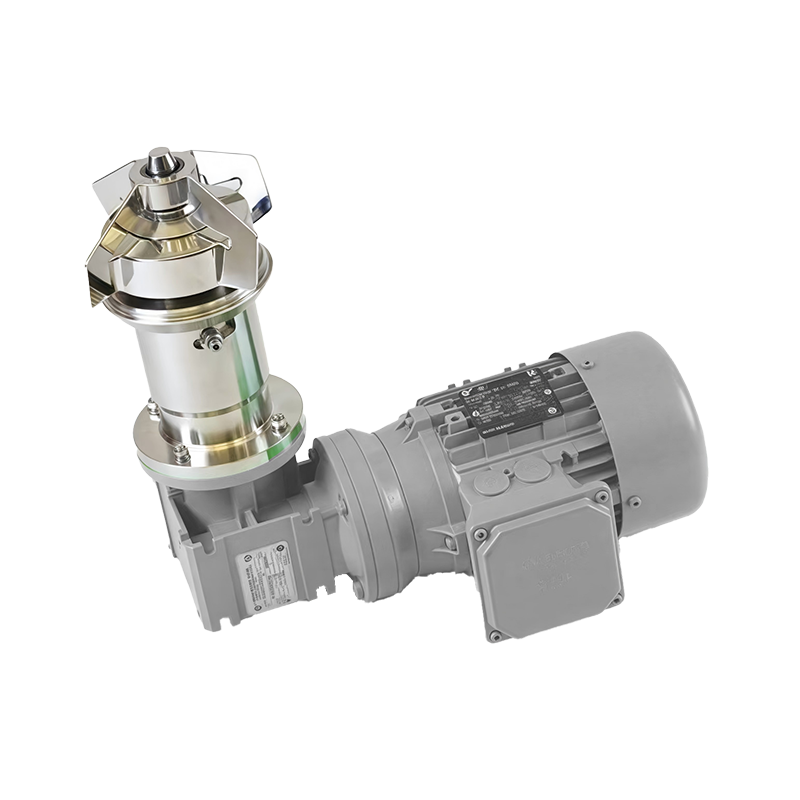
Bottom-mounted Magnetic Mixers (Single/Multi-impeller)
1. The Role of Mixing in Modern Hygienic Processing
Mixing is often considered a basic operation, but the quality of a mixing process can determine whether a product meets its intended specifications. A small difference in concentration, temperature, viscosity, or suspended-solid distribution can affect taste, texture, stability, potency, appearance, or downstream processing behavior.
Food and beverage products may contain sugar, proteins, oils, starches, powders, fruit particles, mineral components, flavoring agents, or other ingredients with significantly different physical properties. These materials must be distributed throughout the liquid without creating excessive foam or damaging delicate structures. A mixer must therefore generate enough circulation to eliminate concentration gradients while avoiding unnecessary shear and energy consumption.
Biopharmaceutical processes introduce additional challenges. Cell cultures, protein solutions, vaccines, media, buffers, and other biological products can be sensitive to shear, temperature variation, air entrainment, and contamination. The equipment must provide gentle and uniform movement while maintaining a closed and cleanable process environment.
Traditional top-entry agitators can perform many mixing duties, but their mechanical shaft passing through the vessel cover creates additional design and maintenance considerations. Shaft seals, mechanical seals, mounting structures, and exposed drive components require careful management. In an aseptic process, every penetration through the vessel boundary must be evaluated as a potential contamination pathway.
Bottom-mounted magnetic mixers address these concerns by placing the mixing assembly at the base of the vessel and transferring motor power through magnetic coupling. The motor remains outside the product-contact space, while the internal impeller operates within the sealed vessel. This structure helps separate the drive system from the process fluid and supports hygienic design objectives.
2. What Is a Bottom-Mounted Magnetic Mixer?
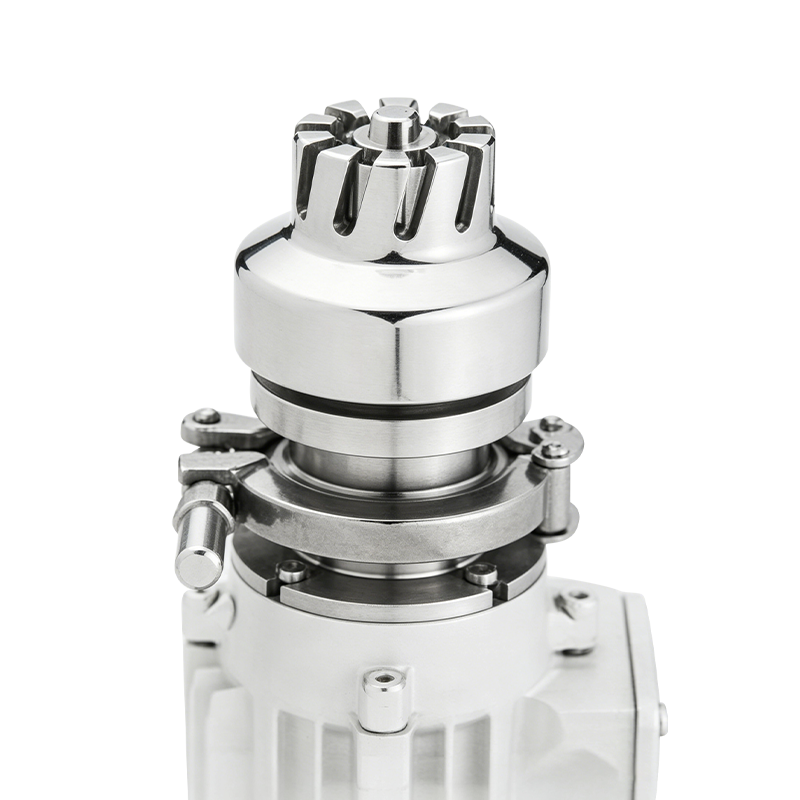
A bottom-mounted magnetic mixer is a vessel mixing device installed through the lower portion of a tank or process vessel. Its main components typically include an external rotor or impeller assembly, an internal rotor, bearings, a bearing locator, an O-ring sealing system, a welded shaft sleeve or flange, a lifting device, and a motor or geared motor.
The external motor generates rotational movement in the magnetic drive assembly. Magnetic forces transmit this movement across a sealed barrier to the internal rotor. The internal rotor is connected to the impeller, which circulates the process fluid without requiring a conventional rotating shaft to pass through the vessel wall.
This design has several important consequences. First, it reduces the number of mechanical penetration points between the product and the external environment. Second, it eliminates the need for a conventional shaft seal in the product-contact zone. Third, it supports a compact and clean installation arrangement. Finally, the impeller can be positioned near the bottom of the vessel, where it can efficiently initiate upward circulation and reduce stagnant regions.
The mixer can be supplied as a single-impeller unit for standard applications or as a multi-impeller configuration for larger vessels and more difficult mixing duties. The correct configuration depends on tank geometry, fill level, viscosity, solids content, required circulation, process temperature, cleaning method, and the desired mixing time.
2.1 Main Construction Components
The external rotor transfers torque from the motor through the magnetic coupling system. Because it remains separated from the product-contact area, it can be selected and maintained according to mechanical and installation requirements rather than direct product compatibility alone.
The internal rotor is located inside the vessel and drives the impeller. Its geometry is engineered to provide an effective flow field with moderate shear. This is important for products that require circulation but may be damaged by aggressive agitation.
Bearings support the rotating internal assembly. Tungsten carbide or silicon carbide may be used according to operating conditions, product compatibility, and wear requirements. These materials provide strong resistance to wear and can support long service life when the mixer is correctly selected and operated.
FEP-encapsulated O-rings provide sealing support in the mixer assembly. The specific seal material must be checked against temperature, cleaning chemicals, process ingredients, and sterilization conditions before final selection.
The shaft sleeve and flange are commonly welded as part of the hygienic assembly. Weld quality, internal surface condition, and polishing are especially important because product-contact surfaces must be easy to clean and should not contain unnecessary crevices or rough areas.
The drive system may use a Nord or SEW geared motor, depending on the required torque, speed, control arrangement, and installation conditions. Variable-speed control can be applied where the process requires different operating speeds during charging, blending, suspension, or discharge.
3. Hygienic Design and Product Protection
The principal advantage of a magnetic mixer in hygienic processing is the separation between the drive motor and the process fluid. A conventional top-entry mixer generally requires a rotating shaft to cross the vessel boundary. A bottom-mounted magnetic mixer transfers motion through magnetic coupling, allowing the internal mixing assembly to remain enclosed within the vessel.
This sealed arrangement helps reduce the risk of external contamination entering the process. It also reduces the possibility of product leakage around a conventional shaft seal. Although no process system eliminates the need for proper validation, installation, inspection, and maintenance, the magnetic drive structure provides a strong foundation for contamination-controlled production.
Product-contact components may be manufactured from 1.4435 or 1.4404 stainless steel, corresponding broadly to hygienic stainless-steel grades commonly used in pharmaceutical and food-processing equipment. The impeller and welded post are specified as SUS316L in the supplied technical information. These materials offer good corrosion resistance and are widely used in applications involving water-based products, cleaning agents, pharmaceutical solutions, and food ingredients.
Surface finish is another essential part of hygienic design. The specified impeller and weld-post finish is Ra 0.5 micrometers with electrolytic polishing. A low-roughness, electropolished surface can reduce locations where residues or microorganisms may remain, provided that the entire system is correctly designed and cleaned.
Hygienic design is not limited to the visible surface finish. The equipment must also be evaluated for dead legs, weld profiles, gasket positioning, drainage, accessibility, bearing lubrication conditions, and compatibility with the plant’s cleaning and sterilization procedures. A well-designed mixer should support effective drainage and cleaning while avoiding unnecessary internal cavities.
For pharmaceutical and biotechnology processes, the mixer should be integrated into the overall aseptic strategy. This may include vessel design, piping layout, clean-in-place procedures, steam-in-place procedures, sterile connections, instrumentation, validation protocols, and maintenance controls. The mixer is one part of a complete hygienic processing system and must be selected accordingly.
3.1 Support for CIP and SIP Operations
Clean-in-place, or CIP, is used to remove product residues from internal equipment surfaces without disassembly. Sterilization-in-place, or SIP, uses heat or another validated sterilization method to reduce or eliminate microorganisms before production. The impeller profile, internal clearances, materials, seals, and installation arrangement must all be compatible with the intended CIP and SIP procedures.
The impeller geometry of these mixers is designed to support efficient fluid movement and meet CIP/SIP requirements when properly integrated into the vessel. The final suitability of a particular design depends on process temperature, cleaning chemistry, flow velocity, exposure time, pressure, and the requirements of the individual production site.
The magnetic drive also reduces the number of externally exposed mechanical components associated with product mixing. This can simplify cleaning around the vessel and reduce maintenance associated with conventional shaft-sealing arrangements. However, the external drive system and surrounding vessel connection still require routine inspection and appropriate sanitation procedures.
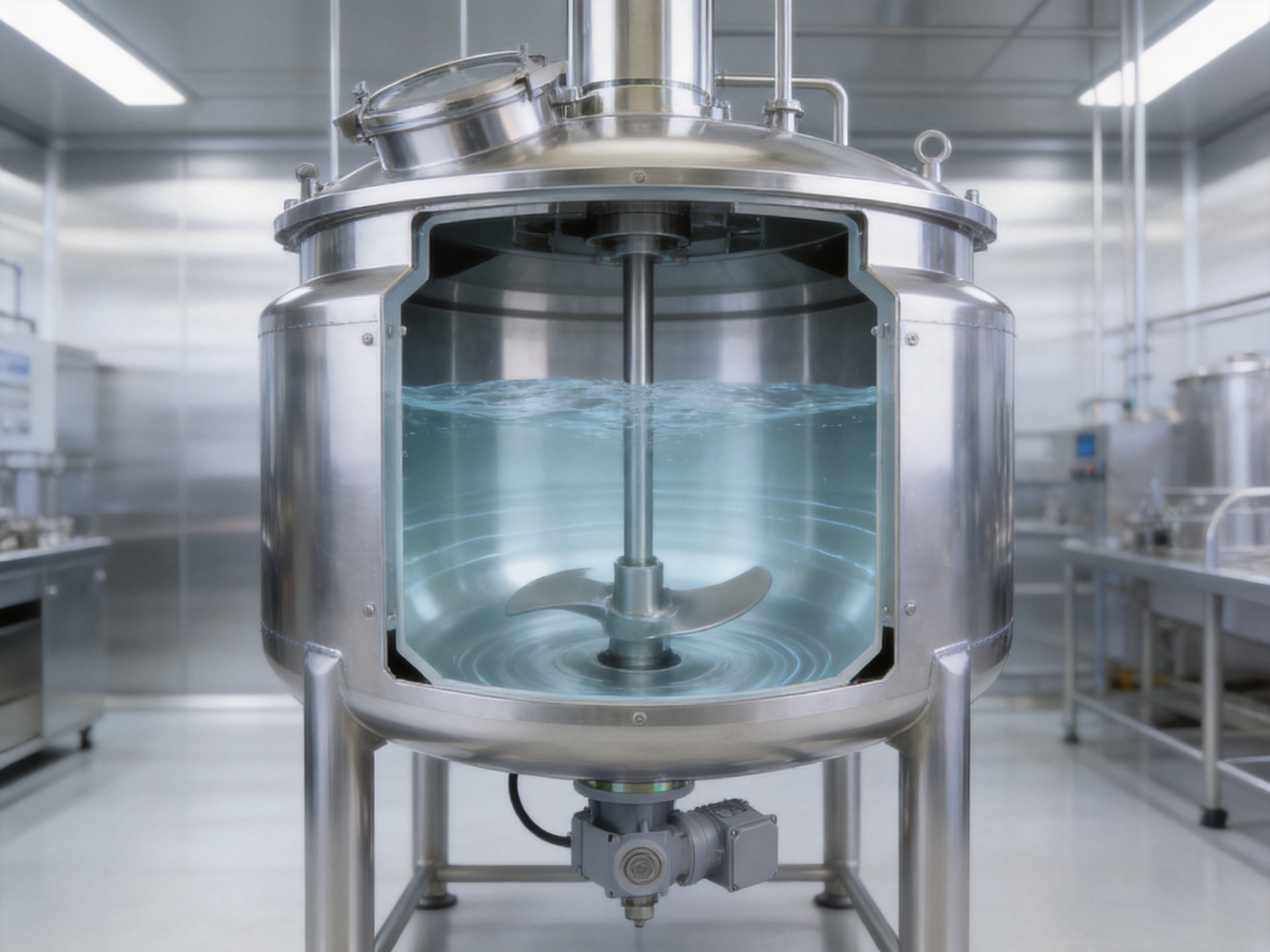
4. Single-Impeller Magnetic Mixers
Single-impeller mixers are intended for standard mixing operations in which one optimized impeller can provide the required circulation throughout the working volume. Typical duties include liquid blending, dilution, suspension maintenance, buffer preparation, ingredient distribution, and moderate heat-transfer enhancement.
The bottom position allows the impeller to introduce movement from the lower part of the tank. This can be useful in vessels where bottom circulation is important or where the installation of an overhead agitator would require a large support frame. In many applications, the bottom-mounted arrangement also provides a practical solution for compact process areas.
Single-impeller equipment is often preferred when the process is relatively straightforward and the vessel volume, viscosity, and solids content remain within a manageable range. It has a comparatively simple structure, fewer internal mixing stages, and straightforward operating principles. This can make it attractive for manufacturers seeking reliable performance and ease of maintenance.
Single-impeller systems can be used in pharmaceutical liquid production, food ingredient processing, beverage preparation, cosmetic and daily chemical production, and general hygienic chemical applications. They are suitable for products that require consistent blending but do not need the extended vertical circulation provided by multiple impellers.
4.1 Typical Benefits of the Single-Impeller Configuration
- Efficient circulation for standard liquid blending.
- Suitable for dilution and suspension-maintenance duties.
- Compact installation compared with many top-entry systems.
- Low start-up volume requirements for mixing.
- Moderate shear characteristics for sensitive products.
- Compatibility with hygienic material and surface-finish requirements.
- Simple structure that supports practical inspection and maintenance.
The correct model must be selected using the actual product properties rather than vessel volume alone. A low-viscosity liquid may require less power than a concentrated syrup, protein solution, or powder-containing suspension. The presence of solids, the desired mixing time, and the vessel aspect ratio can also influence the selection.
5. Multi-Impeller Magnetic Mixers
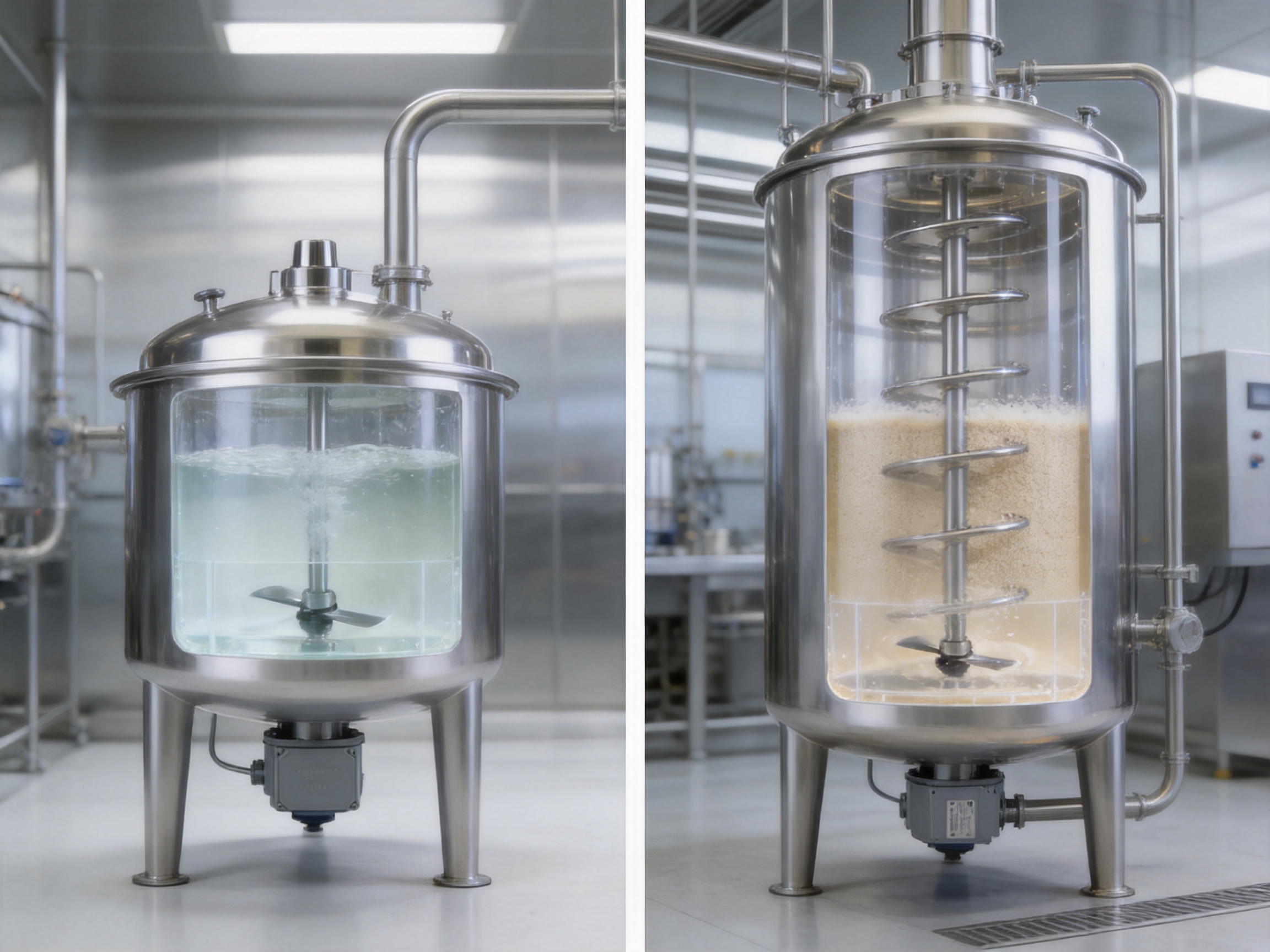
Multi-impeller magnetic mixers use more than one impeller stage to improve circulation across a larger or more demanding working volume. They are particularly useful when a single impeller cannot provide adequate movement throughout the full height of the vessel or when the process requires stronger vertical distribution.
Multiple impeller stages can help maintain more consistent concentration and temperature from the bottom to the top of the vessel. They may also improve suspension maintenance, powder dispersion, and mixing in higher-viscosity materials. The exact benefit depends on the impeller arrangement, vessel geometry, speed, product rheology, and operating procedure.
Multi-impeller designs are appropriate for large tanks, tall vessels, high-volume production, difficult-to-disperse powders, and processes in which concentration differences must be minimized. They can also be used where heat-transfer performance depends on moving the product consistently across the vessel and along the heat-transfer surfaces.
For higher-viscosity products, the mixer must be carefully evaluated because viscosity influences torque, power demand, start-up behavior, and achievable speed. The supplied equipment data includes model ranges tested using water. Water-based capacity values are useful for preliminary comparison, but they cannot replace an application review using the actual product viscosity and processing conditions.
5.1 Single-Impeller and Multi-Impeller Comparison
| Category | Single-Impeller Mixer | Multi-Impeller Mixer |
|---|---|---|
| Primary duty | Standard blending, dilution, circulation, and suspension maintenance | Complex mixing, stronger vertical circulation, powder dispersion, and high-volume processing |
| Internal arrangement | One optimized impeller unit | Multiple impeller stages |
| Typical vessel size | Small to medium process vessels | Medium to large or tall vessels |
| Suitable products | Low- to moderate-viscosity liquids and routine suspensions | Higher-viscosity materials, powder-containing liquids, and difficult suspensions |
| Main strength | Simple construction and reliable operation | Improved distribution and adaptability across larger working volumes |
| Selection focus | Product viscosity, working volume, and required mixing time | Vessel height, viscosity, solids content, circulation, and torque requirements |
6. Impeller Design and Moderate Shear Performance
The impeller is the component that converts rotational energy into fluid movement. Its geometry determines the direction and intensity of circulation, the degree of turbulence, power consumption, suspension capability, and the potential for shear-related product damage.
The impellers used in these mixers are designed to produce an efficient flow field with moderate shear. This balance is valuable in pharmaceutical, biotechnology, and food applications where the product must be thoroughly mixed but excessive mechanical stress could affect quality.
Low-shear operation does not mean that the mixer is incapable of handling challenging products. Instead, the impeller profile is intended to provide useful circulation without relying solely on aggressive high-speed turbulence. The result can be a more controlled mixing environment for liquid blending, suspension maintenance, and heat-transfer duties.
The appropriate speed depends on the product and process objective. A lower speed may be used to maintain a sensitive suspension or limit foaming, while a higher speed may be required for powder incorporation or rapid blending. Variable-speed control allows the operator to use different speed settings during charging, dispersion, blending, and final homogenization.
The supplied product information includes an impeller speed range of approximately 150 to 500 rpm for variable-speed applications. Other product descriptions specify operating ranges from 400 to 1450 rpm, and the LHS series is listed at 1450 rpm. These figures represent different product configurations and should not be treated as a single universal operating range. Final speed selection must be confirmed against the selected model, motor, gearbox, impeller, vessel, and product.
7. Technical Materials and Surface Treatment
Material selection is critical in food, pharmaceutical, and biotechnology equipment because product-contact surfaces must resist corrosion, tolerate cleaning procedures, and maintain a smooth finish over the service life of the machine.
The impeller and welded post are specified as SUS316L, while product-contact parts may be manufactured from 1.4435 or 1.4404 stainless steel. These materials are widely associated with hygienic process equipment and can provide strong resistance in many aqueous and mildly aggressive environments.
Electrolytic polishing is specified for the impeller and welded post, with a surface roughness of approximately Ra 0.5 micrometers. Electropolishing can improve surface smoothness and cleanability. It can also support a more consistent and corrosion-resistant surface when applied correctly after suitable fabrication and weld preparation.
Bearing material may be tungsten carbide or silicon carbide. Tungsten carbide offers high hardness and wear resistance, while silicon carbide can provide excellent hardness and chemical resistance in appropriate operating environments. The choice should be matched to the process fluid, temperature, operating speed, expected service life, and cleaning conditions.
FEP-encapsulated O-rings are used as bearing seals in the stated configuration. Seal selection must account for chemical compatibility and temperature limits. A process involving aggressive cleaning chemicals or repeated high-temperature sterilization may require a more detailed seal review before purchase.
7.1 Importance of Welding and Polishing Quality
In hygienic process equipment, internal welding quality is as important as the base material. Poorly formed welds may create crevices, rough areas, discoloration, or locations where residues can collect. Proper welding procedures, post-weld treatment, inspection, and polishing are therefore essential.
Internal processing capabilities that include welding and polishing allow the equipment supplier to maintain closer control over these stages. This can support better consistency between units and improve traceability. It also allows customized components to be produced according to the vessel design and the customer’s process requirements.
8. Model Range and Preliminary Capacity Selection
The LMP-S series includes bottom-mounted magnetic stirrers for processing capacities from approximately 30 to 30,000 liters. The series includes different blade diameters, motor powers, and operating speeds to address a broad range of vessel sizes.
| Model | Blade Diameter | Power | Listed Speed | Processing Capacity |
|---|---|---|---|---|
| LMP-S30 | 80 mm | 0.12 kW | 450 rpm | 30–50 L |
| LMP-S50 | 100 mm | 0.18 kW | 450 rpm | 50–100 L |
| LMP-S100 | 120 mm | 0.25 kW | 450 rpm | 100–300 L |
| LMP-S500 | 150 mm | 0.37 kW | 400 rpm | 300–500 L |
| LMP-S1000 | 180 mm | 0.55 kW | 400 rpm | 500–1,000 L |
| LMP-S2000 | 200 mm | 0.75 kW | 350 rpm | 1,000–2,000 L |
| LMP-S3500 | 250 mm | 1.1 kW | 350 rpm | 2,000–3,500 L |
| LMP-S5000 | 300 mm | 1.5 kW | 350 rpm | 3,500–5,000 L |
| LMP-S10000 | 350 mm | 2.2 kW | 240 rpm | 5,000–10,000 L |
| LMP-S20000 | 400 mm | 3 kW | 210 rpm | 10,000–20,000 L |
| LMP-S30000 | 450 mm | 4 kW | 210 rpm | 20,000–30,000 L |
The LMP-D series provides another range of bottom-mounted magnetic stirrers, with listed capacities from approximately 5 to 15,000 liters and operating speeds of up to 1450 rpm for the stated configurations.
| Model | Blade Diameter | Power | Listed Speed | Processing Capacity |
|---|---|---|---|---|
| LHS-10 | 50 mm | Confirm during specification | 1450 rpm | 5–10 L |
| LHS-50 | 70 mm | 0.37 kW | 1450 rpm | 10–50 L |
| LHS-150 | 85 mm | 0.55 kW | 1450 rpm | 50–150 L |
| LHS-500 | 100 mm | 1.1 kW | 1450 rpm | 150–500 L |
| LHS-2000 | 130 mm | 2.2 kW | 1450 rpm | 300–2,000 L |
| LHS-3000 | 160 mm | 4 kW | 1450 rpm | 1,000–3,000 L |
| LHS-6000 | 200 mm | 7.5 kW | 1450 rpm | 2,000–6,000 L |
| LHS-15000 | 230 mm | 15 kW | 1450 rpm | 3,000–15,000 L |
The capacities in these tables are based on tests using water as the processing medium. They should be used for preliminary reference only. The appropriate model may change when the actual product has higher viscosity, contains suspended solids, requires a specific mixing time, or must be processed under special temperature and pressure conditions.
9. Advantages Compared with Conventional Top-Entry Agitators
Top-entry agitators remain useful for many industrial processes, but bottom-mounted magnetic mixers offer several advantages in applications where hygiene, contamination control, compact installation, and low-shear operation are priorities.
9.1 Reduced Contamination Pathways
A magnetic coupling separates the motor from the internal mixing assembly. The absence of a conventional rotating shaft passing through the vessel cover can reduce potential contamination pathways and simplify the design of the vessel boundary.
9.2 Reduced Leakage Risk
Traditional shaft-driven systems depend on mechanical seals or other shaft-sealing arrangements. These components require careful installation, monitoring, and maintenance. A magnetic drive avoids direct shaft transmission through the vessel boundary, which can reduce the likelihood of product leakage associated with shaft seals.
9.3 Compact Installation
Top-entry agitators often require overhead clearance, support structures, lifting equipment, and access space above the vessel. Bottom-mounted mixers can reduce these requirements and are useful in facilities where ceiling height or equipment layout is restricted.
9.4 Effective Bottom Circulation
By positioning the impeller close to the bottom of the vessel, the mixer can directly address the region where settled solids or concentration gradients may develop. This is useful for suspension maintenance, dilution, and the incorporation of powders into liquids.
9.5 Lower Shear Potential
The optimized impeller geometry is designed to produce useful circulation with moderate shear. This can be beneficial for biological products, protein solutions, emulsions, and food ingredients that may be affected by excessive agitation.
9.6 Easier Integration with Hygienic Processes
Polished stainless-steel product-contact parts, hygienic seals, magnetic transmission, and CIP/SIP-oriented design provide a strong basis for integration into clean manufacturing systems. The final result depends on the entire process design, but the mixer can support demanding hygiene objectives.
10. Applications in the Food and Beverage Industry
Food and beverage manufacturers use mixing equipment for a wide variety of products, including beverages, syrups, sauces, dairy products, nutritional liquids, flavor systems, liquid sweeteners, and ingredient solutions.
In beverage production, the mixer may be used to dissolve powders, distribute sweeteners, blend flavor components, maintain uniformity, or assist with heat transfer. The operator may use higher speed during powder addition and a lower speed during final blending to reduce foam formation.
In dairy and nutritional applications, gentle circulation is important because the product may contain proteins, fats, suspended nutrients, or heat-sensitive ingredients. The mixer should provide sufficient movement to avoid sedimentation while limiting unnecessary mechanical stress.
In sauces and liquid food products, viscosity may vary widely. A low-viscosity beverage and a concentrated sauce cannot be selected using the same assumptions. The motor power, impeller type, and speed must be checked using the actual rheology and the required batch cycle.
Food manufacturers also benefit from the hygienic construction and cleanable surfaces. Smooth stainless-steel product-contact areas can help reduce residue retention, while the sealed drive system can support a cleaner production environment. Proper cleaning validation remains essential for allergen control and product changeover.
11. Applications in Pharmaceutical and Biotechnology Processing
Biopharmaceutical applications may include buffer preparation, media preparation, solution blending, suspension maintenance, dilution, intermediate holding, and the gentle circulation of sensitive products.
In buffer preparation, the mixer must distribute powders or concentrated solutions evenly without creating excessive foam. The operator may use staged addition and variable speed to promote dissolution while protecting the product environment.
In cell culture and biotechnology processes, the product may be sensitive to shear, local concentration gradients, and temperature differences. A moderate-shear impeller can provide the circulation required to maintain uniform conditions throughout the vessel.
For pharmaceutical liquids, contamination prevention is a primary concern. The sealed magnetic drive, hygienic materials, polished surfaces, and FEP-encapsulated sealing components support the requirements of clean and aseptic production systems when the complete installation is properly designed and validated.
Pharmaceutical equipment selection must also consider documentation, material certificates, surface-finish records, weld inspection, seal information, calibration, installation qualification, operational qualification, and performance qualification. These requirements should be discussed at the beginning of the project rather than after equipment manufacturing has started.
12. Manufacturing Strengths and Engineering Capabilities
Equipment performance depends not only on the concept of the product but also on how the equipment is engineered, manufactured, inspected, and supported. Shiloc (Shanghai) Industrial Trading Co., Ltd. combines equipment manufacturing, international trade, engineering services, and customized technical support for hygienic process industries.
The company operates a 3,000-square-meter production facility in Shanghai and has more than 20 technical specialists. Its capabilities include processing, welding, polishing, quality control, equipment supply, import and export services, engineering consultation, and customized technical solutions.
12.1 European Know-How and Danish Design Concepts
The company’s equipment approach incorporates European process-equipment know-how and Danish design concepts. This design philosophy emphasizes hygienic construction, functional simplicity, reliable operation, maintainability, and practical integration into modern production facilities.
Design decisions are made with attention to the relationship between the mixer, vessel, piping, cleaning system, control system, and production workflow. This process-oriented approach is important because a mixer cannot be evaluated effectively in isolation from the equipment around it.
12.2 Internal Welding and Polishing
Internal welding and polishing capabilities allow the supplier to control important stages of fabrication. Product-contact welds can be prepared, finished, and inspected according to the specified requirements. Internal control can also support customization when the customer requires a special flange, shaft sleeve, vessel connection, impeller size, or installation arrangement.
Electropolished surfaces and controlled finishing help support hygienic performance. The actual surface condition should be verified through appropriate inspection and documentation for each project.
12.3 Quality Control and Traceability
Quality control is essential for equipment used in pharmaceutical, biotechnology, food, and beverage production. Material traceability, welding control, dimensional inspection, surface-finish verification, assembly inspection, drive testing, and final performance checks help reduce risk before delivery.
The company follows ISO9001-related management practices and applies inspection procedures intended to confirm that equipment meets hygiene and performance requirements. Documentation packages can be developed according to the project’s technical and regulatory expectations.
12.4 Customized Technical Solutions
Different customers may require different impeller arrangements, vessel connections, motor types, controls, materials, seal compounds, surface finishes, or documentation packages. A standard model provides a starting point, but process-specific engineering is often necessary for demanding applications.
The supplier supports customers by reviewing process information, recommending suitable equipment, coordinating manufacturing, and providing technical communication throughout the project. This is particularly useful for international customers who require a combination of equipment supply, engineering coordination, and export support.
13. How to Select the Correct Mixer
Correct selection begins with a complete understanding of the process. Vessel volume alone is not sufficient. The following factors should be reviewed before a model is finalized.
13.1 Product Viscosity
Viscosity affects power demand, torque, circulation, start-up behavior, and mixing time. A model tested with water may not provide the same performance in a concentrated syrup, viscous protein solution, polymer-containing liquid, or solids-loaded suspension.
13.2 Mixing Objective
The mixer may be required for simple blending, powder dissolution, suspension maintenance, homogenization, dilution, heat-transfer enhancement, or a combination of these duties. Each objective may require a different speed, impeller geometry, and operating procedure.
13.3 Vessel Geometry
Tank diameter, liquid height, bottom shape, internal fittings, baffles, heating surfaces, coils, and outlet position all influence circulation. A tall vessel may benefit from multiple impellers, while a shallow vessel may be adequately served by one impeller.
13.4 Solids Content
Powders and suspended particles can increase power requirements and may settle if the flow field is insufficient. The particle size, density, concentration, wetting behavior, and settling velocity should be considered.
13.5 Temperature and Pressure
Operating temperature affects viscosity, seal performance, material compatibility, and cleaning requirements. Pressure and vacuum conditions influence the vessel connection and the mechanical design of the mixer assembly.
13.6 Cleaning and Sterilization
The equipment must be compatible with the planned CIP and SIP procedures. Cleaning agents, temperatures, pressure, exposure time, drainage, and sterilization cycles should be reviewed with the supplier before final specification.
13.7 Control Requirements
Variable-frequency drive control can allow the operator to adjust speed for different stages of the process. The control system may also need torque monitoring, speed feedback, interlocks, emergency stop functions, batch integration, and data recording.
14. Installation, Operation, and Maintenance
Installation should be completed according to the approved drawings and technical documentation. The bottom connection must be correctly aligned with the vessel, and the flange, gasket, fasteners, and support structure must be suitable for the operating conditions.
Before operation, the internal rotor and impeller should be checked for freedom of movement. The motor and gearbox should be installed according to the manufacturer’s instructions. Electrical connections, rotation direction, speed control, protective devices, and safety interlocks should be verified before product is introduced.
The mixer should not be started under conditions outside its approved operating range. Start-up volume, minimum liquid level, maximum viscosity, maximum speed, and allowable temperature must be established for the specific installation.
Routine maintenance may include inspection of the motor, gearbox, external rotor, flange, seals, bearings, fasteners, and surface condition. Any unusual noise, vibration, temperature rise, speed instability, or reduction in mixing performance should be investigated promptly.
In pharmaceutical and food applications, maintenance must also be controlled through documented procedures. Product-contact components should be inspected for damage, corrosion, surface deterioration, or residue retention. Replacement seals and bearings should be verified for material compatibility and traceability.
15. Process Benefits and Total Cost Considerations
The value of a bottom-mounted magnetic mixer extends beyond the initial purchase price. A sealed drive system may reduce contamination risks, leakage concerns, and maintenance requirements associated with conventional shaft seals. A compact installation can also reduce structural costs in facilities with limited overhead space.
Improved mixing uniformity can reduce batch variation, shorten blending time, and improve the repeatability of downstream operations. Better suspension maintenance may reduce settling during holding or transfer. More consistent heat transfer can support faster temperature adjustment and reduce localized overheating or cooling.
Energy consumption depends on the product, impeller, speed, vessel, and operating time. A well-selected impeller can deliver the required circulation without unnecessary power. Variable-speed control can further improve efficiency by allowing the mixer to operate at the lowest effective speed for each process stage.
Cleaning performance also affects total cost. Equipment that is easier to clean and inspect can reduce downtime during product changeover. In regulated production, reliable documentation and traceability may reduce project risk and simplify qualification activities.
16. Limitations and Responsible Equipment Selection
Magnetic mixers are not automatically suitable for every application. Very high-viscosity products, highly abrasive slurries, large quantities of heavy solids, extreme temperatures, or unusual pressure conditions may require a specialized design or an alternative mixing technology.
The magnetic coupling has a defined torque capacity. If the product becomes too viscous or solids accumulate around the impeller, the coupling may disengage or the motor may operate outside its intended range. The system should therefore be selected using conservative process data and, where necessary, pilot testing.
The capacity values in standard model tables are based on water testing. They should not be interpreted as guaranteed capacity ratings for every product. The supplier should receive information about viscosity, density, solids, temperature, vessel dimensions, mixing time, and cleaning conditions before providing a final recommendation.
A technical review is also necessary when the product contains abrasive particles or when the process uses aggressive chemical cleaning agents. Bearing material, seal construction, surface treatment, and maintenance intervals may need to be adjusted.
17. Frequently Asked Questions
17.1 What is the main difference between a bottom-mounted magnetic mixer and a top-entry agitator?
A bottom-mounted magnetic mixer uses a sealed magnetic coupling to transmit motion from the external motor to the internal impeller. It does not require a conventional rotating shaft to pass through the vessel cover. A top-entry agitator normally uses a mechanical shaft and a shaft-sealing arrangement. The magnetic design can reduce contamination pathways, leakage risks, overhead space requirements, and seal-related maintenance.
17.2 Are these mixers suitable for pharmaceutical and biotechnology applications?
Yes. They are designed for hygienic processing and can be manufactured with stainless-steel product-contact parts, electropolished surfaces, hygienic seals, and bearing materials suited to controlled production environments. The final suitability depends on the complete vessel and process design, as well as cleaning, sterilization, validation, and documentation requirements.
17.3 When should a multi-impeller mixer be selected?
A multi-impeller mixer is generally considered when the vessel is tall or large, when a single impeller cannot circulate the complete working volume, or when the product has higher viscosity, difficult suspension behavior, or challenging powder-dispersion requirements. The decision should be based on process testing or engineering calculations rather than vessel capacity alone.
17.4 Can the mixer handle higher-viscosity products?
The magnetic drive system is suitable for certain higher-viscosity applications, but the product viscosity must be reviewed before selection. Higher viscosity increases torque demand and may require a larger impeller, higher motor power, a gearbox, lower operating speed, or a multi-impeller arrangement.
17.5 What materials are used for product-contact components?
The supplied specifications identify SUS316L and stainless-steel grades 1.4435 or 1.4404 for product-contact components. The impeller and welded post may have an Ra 0.5-micrometer finish with electrolytic polishing. The exact material and finish should be confirmed in the final technical specification.
17.6 What bearing materials are available?
Tungsten carbide and silicon carbide are listed as bearing-material options. The preferred material depends on the product, temperature, operating speed, chemical exposure, wear conditions, and required service life.
17.7 Are the mixers compatible with CIP and SIP?
The impeller geometry and hygienic construction are designed to support CIP and SIP requirements. Compatibility must be confirmed for the particular installation, including cleaning chemistry, temperature, pressure, flow conditions, sterilization cycle, seals, and vessel design.
17.8 What is the recommended speed range?
The available speed depends on the series and model. The supplied information includes variable-speed operation from approximately 150 to 500 rpm for certain configurations and listed speeds up to 1450 rpm for other models. The final operating speed must be selected according to the approved model and the actual product.
17.9 How are model capacities determined?
The published capacity ranges are based on tests using water. They are useful for preliminary model comparison, but the actual selection must consider viscosity, density, solids content, vessel geometry, mixing time, and process temperature.
17.10 Can the equipment be customized?
Yes. Customization may include impeller configuration, motor and gearbox selection, materials, surface finish, flange arrangement, sealing components, control system, documentation, and installation requirements. A technical review is recommended before manufacturing begins.
17.11 What information should be provided for a quotation?
Useful information includes vessel working and total volume, diameter and height, product name, viscosity, density, solids content, temperature, pressure or vacuum, required mixing time, mixing purpose, CIP/SIP conditions, desired speed range, installation location, material requirements, electrical standards, and documentation expectations.
17.12 What manufacturing support is available?
The supplier provides equipment manufacturing, engineering and technical services, import and export support, equipment consultation, welding, polishing, quality control, and customized solutions for food, beverage, pharmaceutical, biotechnology, daily chemical, and fine chemical applications.
18. Conclusion
Bottom-mounted magnetic mixers provide a hygienic and flexible alternative to conventional top-entry agitators. Their sealed magnetic drive reduces direct mechanical connections between the motor and the product-contact zone, while the bottom-mounted impeller promotes effective circulation from the lower region of the vessel.
Single-impeller models are suitable for standard blending, dilution, suspension maintenance, and liquid circulation. Multi-impeller designs provide stronger vertical circulation and improved adaptability for large vessels, higher-viscosity products, powder dispersion, and demanding suspension applications.
Key performance features include moderate-shear impeller geometry, stainless-steel product-contact construction, electropolished surfaces, tungsten carbide or silicon carbide bearings, FEP-encapsulated O-rings, and compatibility with hygienic cleaning and sterilization strategies. The model range covers small laboratory or pilot-scale vessels as well as production systems with capacities reaching approximately 30,000 liters, subject to product-specific engineering review.
Shiloc (Shanghai) Industrial Trading Co., Ltd. strengthens this product offering through Shanghai-based manufacturing, internal welding and polishing capabilities, quality control, European technical know-how, Danish design concepts, international supply support, and customized engineering services. By combining equipment design with process consultation, the company can help manufacturers develop mixing systems that address hygiene, reliability, installation, documentation, and production-performance requirements.
For the best result, the mixer should be selected as part of a complete process evaluation. Product viscosity, solids content, vessel geometry, operating temperature, cleaning method, required mixing time, and regulatory expectations must all be reviewed. When correctly specified and integrated, a bottom-mounted magnetic mixer can improve product consistency, reduce contamination risks, simplify installation, and support efficient production in food, beverage, pharmaceutical, and biotechnology facilities.
References
1. Supplied technical specifications for bottom-mounted magnetic mixers, including product materials, impeller speeds, bearing options, model ranges, and processing capacities.
2. General hygienic equipment design principles for food, beverage, pharmaceutical, and biotechnology processing systems.
3. General principles of clean-in-place and sterilization-in-place design for process equipment.
4. General stainless-steel fabrication, welding, electropolishing, and surface-finish practices for hygienic equipment.
5. General engineering principles for impeller selection, fluid circulation, suspension maintenance, and mixing power requirements.
6. Company information and manufacturing capabilities supplied by Shiloc (Shanghai) Industrial Trading Co., Ltd.
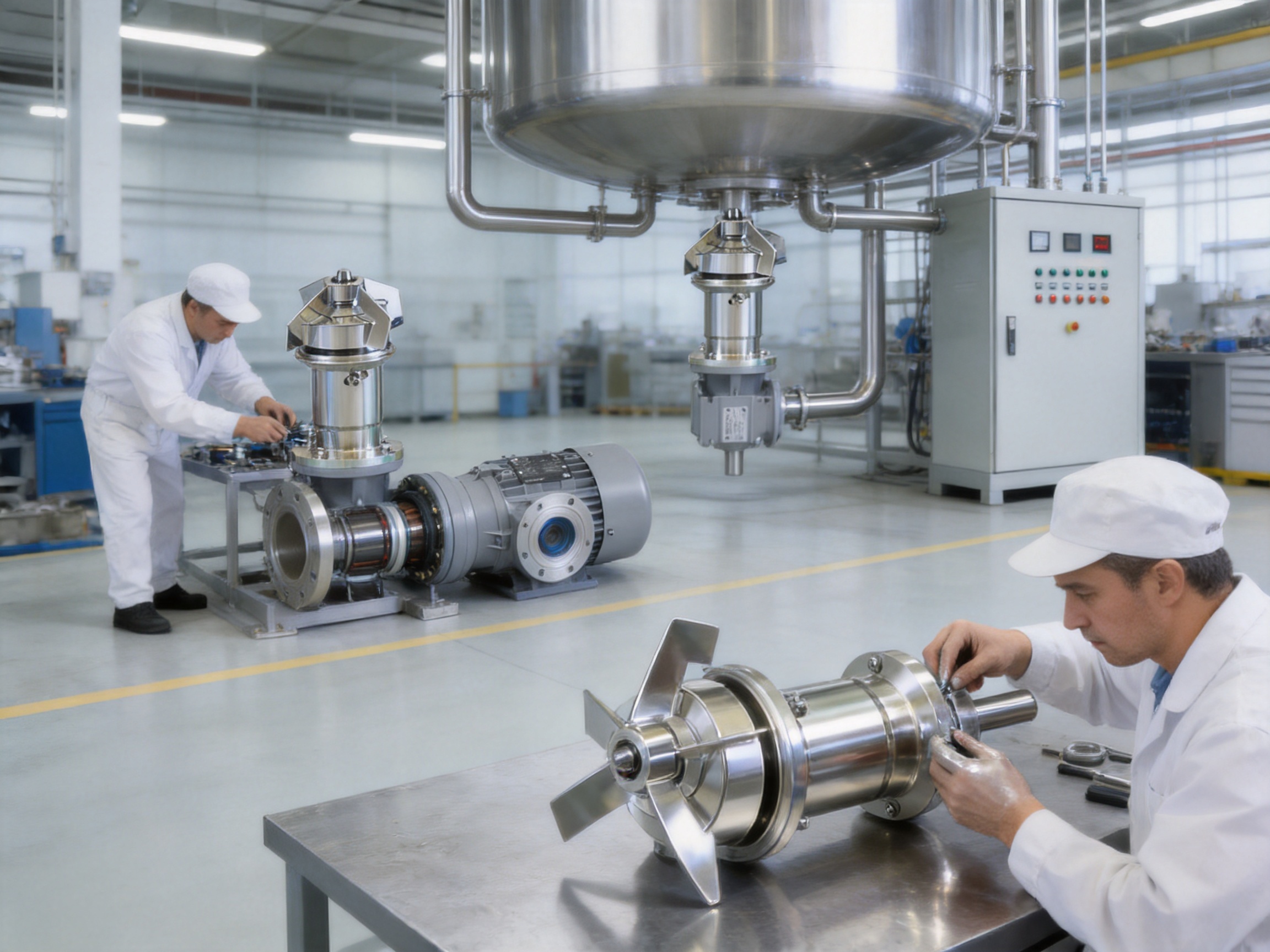
Product: Bottom-mounted Magnetic Mixers (Single/Multi-impeller)
PREV:No previous article
NEXT:Sanitary Plate Heat Exchangers for Hygienic Food and Biopharmaceutical Processing
NEXT:Sanitary Plate Heat Exchangers for Hygienic Food and Biopharmaceutical Processing
Interested in cooperation or have questions?
Recommended LINS
✦
Food and Beverage Process System
Food Processing Skid System
Aseptic Processing Equipment for Liquid Foods
CIP Skid System for Food Industry
Beverage Flash Pasteurization System
Aseptic Beverage Processing Line
UHT Processing Equipment for Plant Based Milk
UHT Processing System for Dairy Products
Automatic UHT Sterilizer for Milk
Milk Processing Heat Exchanger
Let'S Work Together Welcome Aboard!
-

haikexin@haikexin.com
+8613391278930
-
 +86-21-57560276
-
 No. 2819, Sihu Road,Fengxian District, Shanghai, China
Join Our Mailing List
Copyright © Shiloc (Shanghai) Industrial Trading Co., Ltd. All Rights Reserved.
Process Systems & Equipment For Food & Biopharma Manufacturers
