
 English
 русский
 Português
 Français



 Read More

Product Category
NEW Category
Contact us
Contact Us
We specialise in the research, development and manufacture of electrical wires and cables.
 +86-21-57560276
Hybrid and Direct Contact Heat Exchangers for Efficient Food, Beverage, and Biopharmaceutical Processing
Content
- 1 What Is a Hybrid / Direct Contact Heat Exchanger?
- 2 How Direct Contact Heat Transfer Works
- 3 Main Structural Features
- 4 Key Advantages Compared with Conventional Equipment
- 5 Applications in Food and Beverage Manufacturing
- 6 Applications in Biopharmaceutical and Related Industries
- 7 Applications in Chemical and Environmental Engineering
- 8 Engineering and Selection Considerations
- 9 Manufacturing Strengths and Quality Approach
- 10 Installation and Commissioning Guidance
- 11 Operation and Maintenance
- 12 Troubleshooting Common Problems
- 13 Comparison with Conventional Shell-and-Tube Heat Exchangers
- 14 Why Work with an Application-Oriented Supplier?
- 15 Project Information Required for a Technical Proposal
- 16 Frequently Asked Questions
- 16.1 Q1: What is the main advantage of a Hybrid / Direct Contact Heat Exchanger?
- 16.2 Q2: Can the equipment be used for every food and beverage product?
- 16.3 Q3: Is the equipment suitable for biopharmaceutical manufacturing?
- 16.4 Q4: What materials are available?
- 16.5 Q5: Can the shell dimensions and pressure rating be customized?
- 16.6 Q6: Does the equipment eliminate fouling and maintenance?
- 16.7 Q7: How can uneven mixing be corrected?
- 16.8 Q8: What causes vibration or water hammer?
- 16.9 Q9: How should the equipment be installed?
- 16.10 Q10: What information should be sent when requesting a quotation?
- 16.11 Q11: Can the equipment be integrated into an automated process?
- 16.12 Q12: What makes Shiloc suitable for international projects?
- 17 Conclusion
- 18 References
- 19 Product: Hybrid / Direct Contact Heat Exchanger
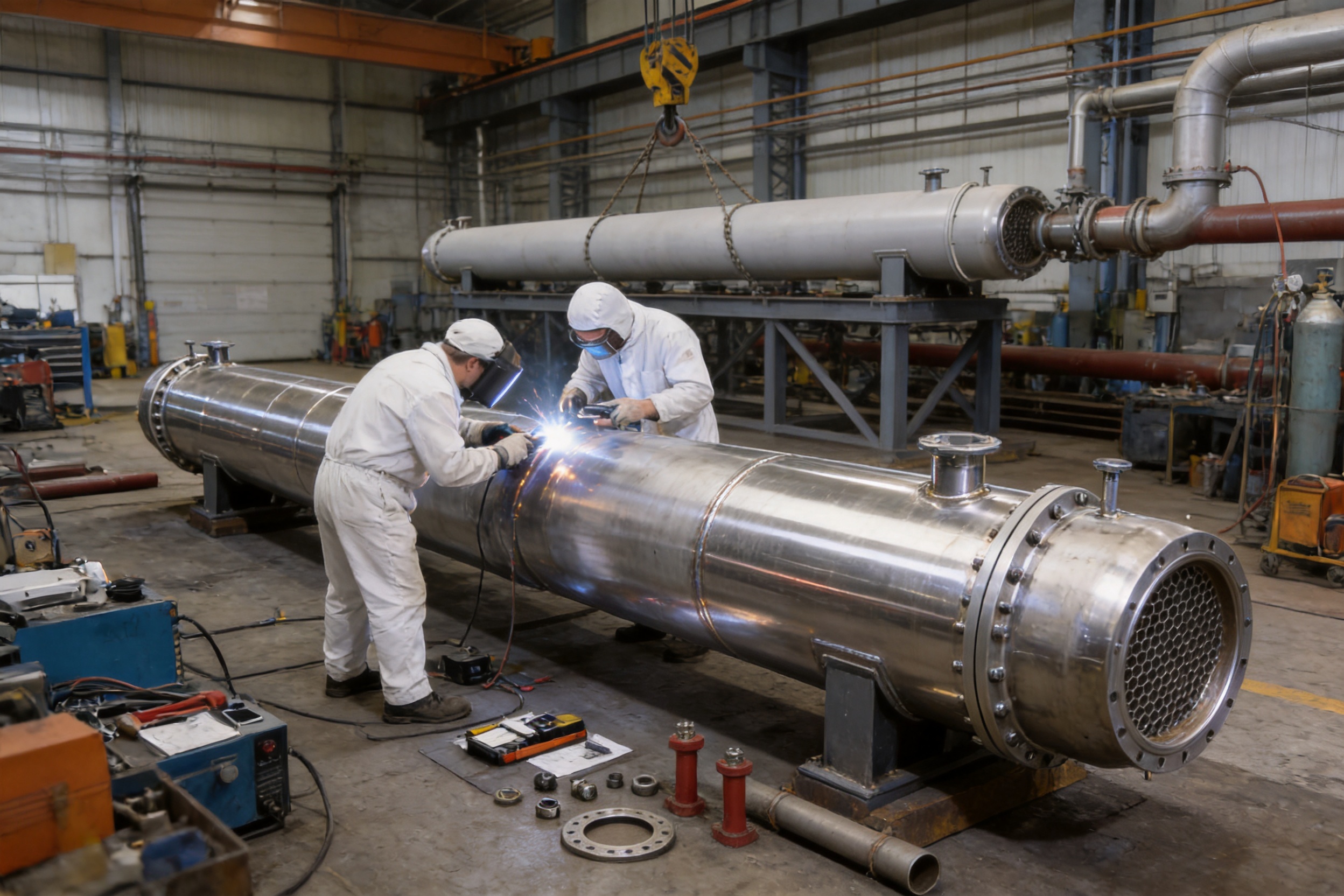
Heat transfer is one of the most important functions in food and beverage manufacturing, biopharmaceutical production, chemical processing, environmental engineering, and industrial energy management. Heating, cooling, condensation, evaporation, waste heat recovery, and process temperature control all depend on reliable and efficient thermal equipment. As manufacturers pursue lower energy consumption, higher production capacity, improved process stability, and reduced maintenance costs, conventional heat exchangers are increasingly being evaluated against alternative technologies.
The Hybrid / Direct Contact Heat Exchanger provides an efficient approach for applications in which the process media can safely and intentionally come into direct contact. Instead of forcing heat to pass through a metal tube wall or plate, the equipment allows hot and cold media to mix directly. Heat transfer therefore takes place through intimate contact between the fluids, gases, or steam involved in the process. This design can reduce thermal resistance, simplify the internal structure, and combine heating, cooling, condensation, and mixing in a single piece of equipment.
For food and beverage manufacturers, the equipment can support process water heating, direct steam heating, condensation, waste gas cooling, and selected heat recovery duties. For biopharmaceutical and related process industries, it may be considered for utility-side heating and cooling, cleanable process support systems, and other applications where the media compatibility, hygienic design, validation strategy, and separation requirements have been carefully assessed.
The equipment is supplied by Shiloc (Shanghai) Industrial Trading Co., Ltd., a Shanghai-based company serving international customers in food and beverage, biopharmaceutical, daily chemical, fine chemical, and general industrial applications. Shiloc combines equipment supply, engineering communication, international procurement support, and technical service. Its manufacturing and coordination capabilities are intended to help customers obtain a suitable solution rather than simply purchase a standard vessel.
This article explains the operating principle, structural advantages, industrial applications, design considerations, manufacturing strengths, installation requirements, troubleshooting methods, and selection criteria associated with Hybrid / Direct Contact Heat Exchangers.
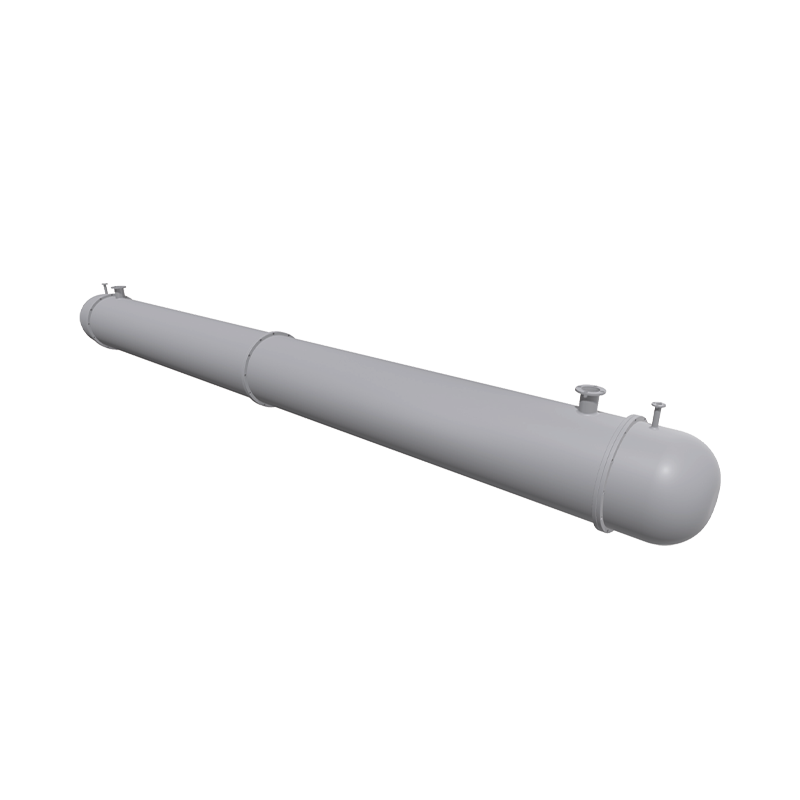
Hybrid / Direct Contact Heat Exchanger
What Is a Hybrid / Direct Contact Heat Exchanger?
A Hybrid / Direct Contact Heat Exchanger is a process vessel designed to transfer heat through direct interaction between two or more media. In a conventional shell-and-tube heat exchanger, the hot and cold streams remain separated by tube walls. Heat travels from the hot stream through the tube material and then into the cold stream. The tube wall is necessary when the fluids must remain physically separated, but it also creates thermal resistance and introduces surfaces that may experience fouling, scaling, corrosion, or blockage.
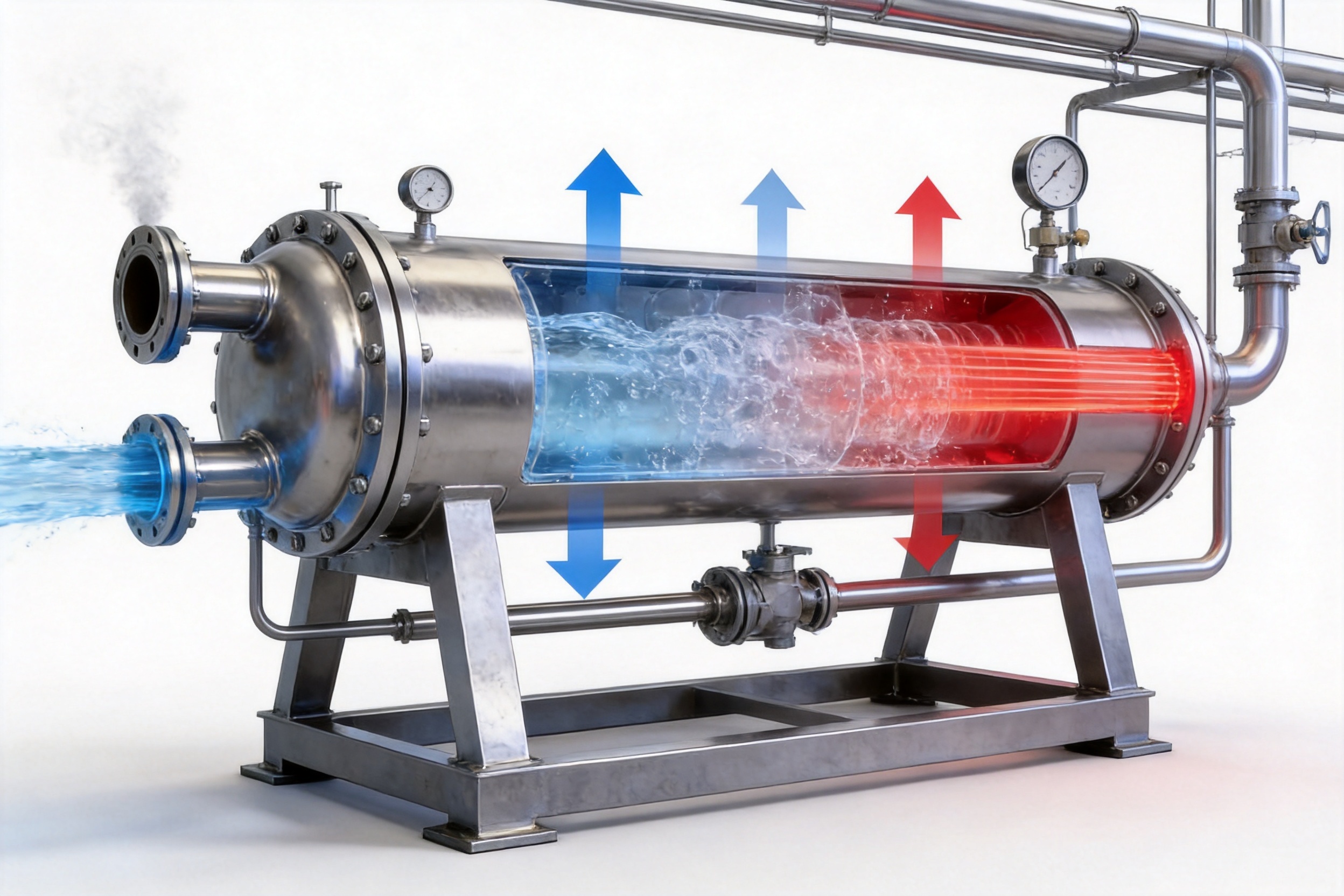
In a direct contact heat exchanger, the media are introduced into the same process space under controlled conditions. The hot and cold streams mix, and the temperature difference drives rapid heat transfer. Steam may contact water directly and condense into it. A hot gas may be cooled by direct contact with a liquid. A process liquid may be heated by the controlled injection of steam. Depending on the process design, the equipment can simultaneously perform heat transfer and mixing.
The supplied design uses a horizontal, long cylindrical shell. Media enter through dedicated connections and are distributed inside the shell to promote contact. The shell is designed to withstand specified pressure and temperature conditions. Connection points are generally flanged so that the equipment can be integrated with standard industrial piping systems.
The term “hybrid” reflects the ability to adapt the equipment concept to different process arrangements. A system may use direct contact in the main heat transfer zone while incorporating selected indirect, distribution, separation, or control features elsewhere in the process line. The final design can be adjusted according to media properties, temperature targets, pressure ratings, flow rates, hygiene requirements, and the need for downstream separation.
How Direct Contact Heat Transfer Works
Heat naturally moves from a higher-temperature medium to a lower-temperature medium. In an indirect exchanger, the transfer rate is influenced by the thermal conductivity and thickness of the separating wall, the condition of the heat transfer surfaces, the flow regime, and the temperature difference between the streams. In a direct contact exchanger, the separating wall between the media is removed from the main heat transfer path.
When hot and cold media meet, a large effective contact area can be created through mixing, jet injection, spraying, turbulent flow, bubbling, or gas-liquid interaction. The actual method depends on the process design and the physical properties of the media. A steam stream injected into water can condense rapidly because the steam is surrounded by a large volume of cooler liquid. Similarly, a hot gas can transfer heat to a liquid absorbent or cooling stream through direct gas-liquid contact.
The performance of the equipment depends on more than temperature difference alone. Important factors include flow rate, injection velocity, inlet angle, density, viscosity, phase behavior, pressure, gas solubility, particle loading, and the required outlet temperature. The inlet arrangement must create stable and predictable contact without causing excessive turbulence, water hammer, vibration, or entrainment.
A direct contact configuration is most appropriate when the media may be mixed without harming product quality, process safety, or downstream operation. Steam and water are common examples. In other processes, a hot gas and a scrubbing liquid may be intentionally combined. However, direct contact is not automatically appropriate for every duty. When product purity requires complete physical separation of the heating and cooling streams, an indirect heat exchanger may be preferable.
Main Structural Features
Horizontal Cylindrical Shell
The horizontal cylindrical shell provides a practical process volume for controlled media interaction. Its long geometry allows the inlet streams to develop, mix, transfer heat, and move toward the outlet under defined hydraulic conditions. The shell form also supports pressure-resistant construction and can be integrated into existing industrial layouts.
The equipment length and diameter can be selected according to the required flow capacity, residence time, operating pressure, temperature range, and process arrangement. A larger vessel may be selected for high flow rates or greater contact volume, while a more compact configuration may be appropriate for smaller utility systems.
Direct Media Injection
Media enter the equipment through dedicated inlets. The position, orientation, size, and angle of each inlet influence the quality of mixing and the overall heat transfer result. Correct injection design helps prevent short-circuiting, stagnant areas, uneven temperature distribution, and excessive local velocity.
For steam heating, the injection arrangement must support effective condensation while limiting water hammer and uncondensed steam carryover. For gas cooling or scrubbing, the arrangement must promote sufficient contact between the gas and liquid without creating excessive pressure drop or liquid entrainment.
Pressure-Resistant Shell
The shell can be manufactured for specified pressure and temperature conditions. The appropriate shell thickness, material, flange rating, reinforcement, support configuration, and inspection requirements depend on the process duty. Carbon steel may be suitable for selected utility and industrial services, while stainless steel can be specified for more demanding corrosion, cleanliness, or product-contact requirements.
Material selection must be based on the complete media composition rather than temperature alone. Chlorides, acids, alkalis, dissolved gases, cleaning chemicals, suspended solids, and condensate chemistry can all affect material performance. Customers should provide detailed process data so that the equipment can be engineered for the intended operating environment.
Flanged Connections
Flanged connections allow the heat exchanger to connect with standard industrial piping and make maintenance or replacement more manageable. Gasket material, flange face condition, bolt grade, tightening sequence, and torque are important to long-term sealing performance.
In hygienic food or biopharmaceutical systems, the connection concept may require additional review. Where direct product contact is involved, the customer may require sanitary fittings, surface finish specifications, drainability, clean-in-place compatibility, documentation, and validated cleaning procedures. The connection method should therefore be selected as part of the complete process design.
Key Advantages Compared with Conventional Equipment
Reduced Thermal Resistance
The most fundamental advantage of direct contact heat exchange is the reduction of thermal resistance associated with tube walls or plates. Heat does not have to pass through a metal barrier between the streams. When the media are compatible and properly distributed, this can support rapid heat transfer and efficient use of the available temperature difference.
Reduced thermal resistance can be particularly valuable in direct steam heating, condensation, waste gas cooling, and other duties where one stream can safely enter the other. The equipment may achieve the required thermal result with a simpler contact volume than would otherwise be needed with a large indirect heat transfer surface.
Integrated Mixing and Heat Transfer
A conventional heat exchanger normally transfers heat while keeping the streams separate. A direct contact unit can transfer heat and mix the media in one operation. This integrated function can reduce the number of process steps and may simplify the arrangement of pumps, tanks, mixers, and auxiliary heat transfer equipment.
For process water heating, for example, steam can be introduced directly into the water. The steam condenses while heating the water, and the resulting condensate becomes part of the heated stream when the process permits it. In a gas treatment system, cooling and scrubbing can occur together as the hot gas contacts the liquid medium.
Simple Internal Structure
Because the main heat transfer function does not depend on a large bundle of internal tubes, the equipment can have fewer internal components than a conventional shell-and-tube exchanger. Fewer internal parts can reduce the number of locations where deposits accumulate and can simplify inspection and maintenance.
This does not mean that the equipment is maintenance-free. Inlet devices, welds, shell surfaces, gaskets, supports, drains, and downstream separation equipment still require inspection. However, the absence of a dense tube bundle can make access and cleaning less complicated in appropriate applications.
Lower Risk of Tube-Side Blockage
Conventional exchangers that process media containing suspended solids or fibrous material may experience tube-side blockage. Narrow passages can be sensitive to particles, scale, biological growth, or viscous deposits. The open shell arrangement of a direct contact unit may be more tolerant of certain impurities, provided that the media and flow conditions have been evaluated correctly.
Particle tolerance is not unlimited. Large solids, sticky materials, heavy deposits, or corrosive contaminants can still create operating problems. A suitable filtration, separation, flushing, or cleaning strategy should be included whenever the process contains impurities.
Potentially Lower Maintenance Burden
Maintenance requirements are influenced by the whole process system, but the simple internal structure can reduce some of the service tasks associated with tube bundles. There may be fewer tubes to inspect, plug, mechanically clean, or replace. The equipment can therefore be attractive for industrial duties where fouling risk, solids loading, or frequent thermal cycling makes complex heat transfer surfaces difficult to maintain.
Flexible Application Range
The equipment can be configured for heating, cooling, condensation, and energy recovery. It may be used with steam, water, process gases, and other liquid media that can be directly mixed. The shell material, pressure rating, dimensions, and inlet arrangements can be adapted to the process requirements.
This flexibility allows the same basic equipment concept to serve different sectors. Food and beverage facilities may use it for utility water heating or steam condensation. Environmental systems may use it for hot gas cooling and scrubbing. Chemical plants may use it for directly mixable heating or cooling services. Industrial energy systems may use it to recover heat from selected waste streams.
Efficient Use of Equipment Space
Since mixing and heat transfer occur in a shared process volume, the complete system may require fewer separate units. This can help simplify piping layouts and reduce the footprint of selected installations. The final footprint depends on flow capacity, access requirements, safety clearances, pumps, controls, and downstream equipment, but integrated operation can provide a practical layout benefit.
Applications in Food and Beverage Manufacturing
Process Water Heating
Food and beverage plants use heated water for washing, blending, sanitation, cooking, extraction, dissolving, and utility operations. Direct steam heating can provide a fast method of raising water temperature when steam quality and water quality are suitable for the intended duty.
The Hybrid / Direct Contact Heat Exchanger can receive water and steam through separate inlets. The streams contact each other inside the shell, transferring heat rapidly. The resulting water temperature can be controlled by regulating steam flow, water flow, inlet pressure, and the mixing arrangement.
For product-contact applications, the steam source must meet the required quality standard, and the design must account for condensate addition. If the steam condensate cannot enter the product or process water, direct steam heating may not be appropriate. In that case, an indirect heating system or a separate clean utility arrangement should be evaluated.
Steam Condensation and Condensate Recovery
Condensate recovery can reduce energy and water consumption by returning usable heat and treated water to the utility system. Direct contact condensation allows steam to transfer its latent heat directly to a cooler liquid. The design can support rapid condensation and may reduce the need for a large surface-based condenser in suitable applications.
The recovered condensate must be evaluated for quality, chemical compatibility, temperature, dissolved gases, and intended reuse. A condensate recovery system may include filtration, monitoring, pumps, storage, and controls in addition to the heat exchanger itself.
Heating of Cleaning and Sanitation Water
Cleaning-in-place and sanitation systems often require reliable hot water at controlled temperatures. A direct contact heating unit can support rapid temperature response during demand changes. Its usefulness depends on the cleaning chemicals, water quality, steam quality, and hygienic requirements of the facility.
When the equipment is installed on a utility side rather than in direct product service, it can provide a practical source of heated cleaning water. The equipment should still be designed for the expected chemical environment and should include appropriate drainage and inspection provisions.
Waste Gas Cooling
Food processing operations, thermal treatment systems, boilers, dryers, and ovens can produce hot exhaust gases. Direct contact with a cooling liquid can lower the gas temperature before filtration, scrubbing, or discharge. At the same time, soluble contaminants may be transferred from the gas into the liquid.
The process designer must consider gas composition, dust loading, condensation, liquid carryover, corrosion, pressure drop, and the treatment or disposal of the resulting liquid stream. In many cases, the heat exchanger is one part of a larger gas treatment system rather than a standalone pollution-control solution.
Applications in Biopharmaceutical and Related Industries
Biopharmaceutical manufacturing places high demands on process control, material compatibility, traceability, cleaning, validation, and contamination prevention. Direct contact heat exchange is not suitable for every biopharmaceutical product stream because direct mixing may compromise separation or sterility. However, it can be considered for carefully selected utility and support applications.
Utility-Side Heating and Cooling
Potential applications include heating process water, cooling non-product waste gases, conditioning utility streams, and recovering heat from compatible plant services. When the heat exchanger is not in direct contact with the pharmaceutical product, the design focus may be placed on utility performance, corrosion resistance, cleanability, and reliable control.
Clean Utility Considerations
For clean water or clean steam services, the equipment may need a stainless-steel construction, controlled surface finish, suitable seals, drainability, documented materials, and a defined cleaning or sanitization procedure. Whether a direct contact arrangement is acceptable depends on the quality requirements of the receiving stream and the applicable facility standards.
Customers should distinguish between a general industrial direct contact unit and a validated hygienic process system. A biopharmaceutical application may require additional engineering documentation, welding records, surface inspection, pressure testing, material certificates, calibration records, and qualification support. These requirements should be defined before fabrication.
Waste and Off-Gas Treatment
Biopharmaceutical facilities may generate warm or contaminated air and process gases that require cooling or scrubbing before further treatment. A direct gas-liquid contact arrangement can help reduce gas temperature and transfer selected soluble components into a liquid phase. The liquid treatment, biological safety, containment, and waste management requirements must be addressed as part of the overall system.
Applications in Chemical and Environmental Engineering
Chemical processes often involve high temperatures, corrosive media, unusual viscosities, and variable flow conditions. Where the streams can be mixed safely, direct contact heat exchange can provide a flexible alternative to complicated surface exchangers. It may be used for heating, cooling, condensation, gas treatment, and selected energy recovery operations.
Environmental systems can use direct contact technology for hot gas cooling, wet scrubbing, evaporation support, and waste heat utilization. The equipment can be adapted to media containing certain impurities, although the process must account for fouling, corrosion, solids separation, and liquid treatment.
In all such applications, the design must be based on actual process data rather than a general assumption that direct contact will always deliver higher performance. Flow rate, temperature, pressure, composition, solids content, and required outlet conditions are essential to proper sizing.
Engineering and Selection Considerations
Media Compatibility
The first selection question is whether the media may be mixed. The customer should define which stream becomes part of the other stream after heat exchange. This is especially important for food, pharmaceutical, chemical, and environmental applications where contamination, dilution, concentration changes, or chemical reactions may occur.
Steam quality, water quality, gas composition, pH, dissolved oxygen, chloride concentration, cleaning chemicals, and suspended solids should be reviewed. Material selection should be based on both normal and upset conditions.
Heat Duty
The required heat duty is determined by mass flow, specific heat, phase change, inlet temperature, and target outlet temperature. For condensation, the latent heat of the condensing vapor is also important. A basic energy balance can establish the approximate duty, but detailed design may require dynamic behavior, pressure loss, phase equilibrium, and control response to be considered.
Pressure and Temperature
Operating pressure affects boiling point, steam condensation, gas density, flow velocity, and equipment stress. The design pressure should account for normal operation, blocked outlets, control-valve failure, thermal expansion, and other foreseeable conditions. The design temperature should consider start-up, shutdown, cleaning, steam exposure, and process excursions.
Flow Distribution
Uniform distribution is central to good performance. Uneven flow can cause temperature variation, local condensation, vibration, high velocity, dead zones, or insufficient heat transfer. The inlet angle and internal distribution arrangement should be reviewed using the expected flow ratio of the media.
Pressure Drop
The equipment should achieve the required contact and heat transfer without creating unacceptable pressure loss. Excessive pressure drop can increase pump energy consumption, restrict plant capacity, and interfere with upstream or downstream equipment. Pressure drop should be evaluated for minimum, normal, and maximum flow conditions.
Material and Surface Finish
Carbon steel can provide an economical solution for selected industrial services. Stainless steel may be preferred where corrosion resistance, cleanliness, or product compatibility is more important. For food and biopharmaceutical applications, the surface finish, weld quality, internal geometry, drainability, and cleaning method may be as important as the base material.
Cleaning and Inspection
Although the absence of a tube bundle can simplify cleaning, the shell and inlet areas must still be accessible and inspectable. The design should provide suitable drains, inspection openings, flushing connections, and cleaning procedures where required. The cleaning method may involve water flushing, chemical circulation, manual inspection, or a combination of methods.
Manufacturing Strengths and Quality Approach
Shiloc (Shanghai) Industrial Trading Co., Ltd. was established in March 2026 in Fengxian District, Shanghai. The company focuses on international trade, equipment manufacturing, engineering and technical services, and import and export agency support. Its product scope includes fluid equipment for food and beverage, biopharmaceutical, daily chemical, and fine chemical industries.
The company operates a 3,000-square-meter Shanghai facility with more than 20 technical specialists. Its capabilities cover processing, welding, polishing, and quality control. These capabilities are relevant to the manufacture and delivery of pressure-resistant process equipment because performance depends not only on the design concept but also on material preparation, dimensional accuracy, weld integrity, surface condition, assembly, and inspection.
European Know-How and Danish Design Influence
Shiloc combines European know-how and Danish design principles with local manufacturing and international supply capabilities. This approach emphasizes practical process engineering, clean construction, reliable operation, and attention to the complete customer application.
Design influence alone does not replace process-specific engineering. The value comes from applying sound design principles to actual customer requirements, including media properties, flow conditions, operating limits, connection standards, material selection, and maintenance expectations.
Processing and Fabrication
Manufacturing a horizontal pressure-resistant shell requires controlled material preparation, accurate rolling or forming, alignment, welding, nozzle fabrication, flange installation, support fabrication, and dimensional inspection. Each stage can affect the final pressure integrity and installation performance.
Welding quality is particularly important. Appropriate welding procedures, qualified personnel, controlled heat input, inspection, and post-weld finishing help reduce the risk of defects, distortion, corrosion initiation, and leakage. For hygienic applications, internal welds and surface transitions should be finished to the required standard so that they do not create unnecessary retention points.
Polishing and Surface Quality
Polishing can improve cleanability and reduce the tendency of deposits to remain on the internal surfaces. The required finish depends on the service. General utility applications may have different surface requirements from food, pharmaceutical, or clean-water service.
Surface quality should be specified clearly, including the areas requiring polishing, the acceptable roughness range where applicable, treatment of welds, and methods for avoiding contamination after finishing. Documentation and inspection should correspond to the customer’s quality system.
Quality Control and Traceability
Reliable equipment requires more than a final visual inspection. Quality control may include material verification, dimensional checks, weld inspection, pressure testing, flange and nozzle inspection, surface inspection, leak testing, and review of documentation. The exact inspection plan should match the pressure class, industry, material, and customer requirements.
Traceability is especially valuable in food, beverage, biopharmaceutical, and chemical projects. Material certificates, welding records, inspection reports, test results, and equipment identification records help customers manage installation, qualification, maintenance, and future replacement.
International Procurement and Technical Coordination
Cross-border equipment procurement involves more than manufacturing. Customers may need support with technical clarification, drawings, specifications, shipping arrangements, packaging, export documentation, communication, and coordination with local contractors.
Shiloc’s international trade team supports customers from initial product consultation and solution communication through procurement and technical service coordination. This one-stop approach can help reduce misunderstandings between the end user, equipment manufacturer, engineering contractor, and logistics provider.
Installation and Commissioning Guidance
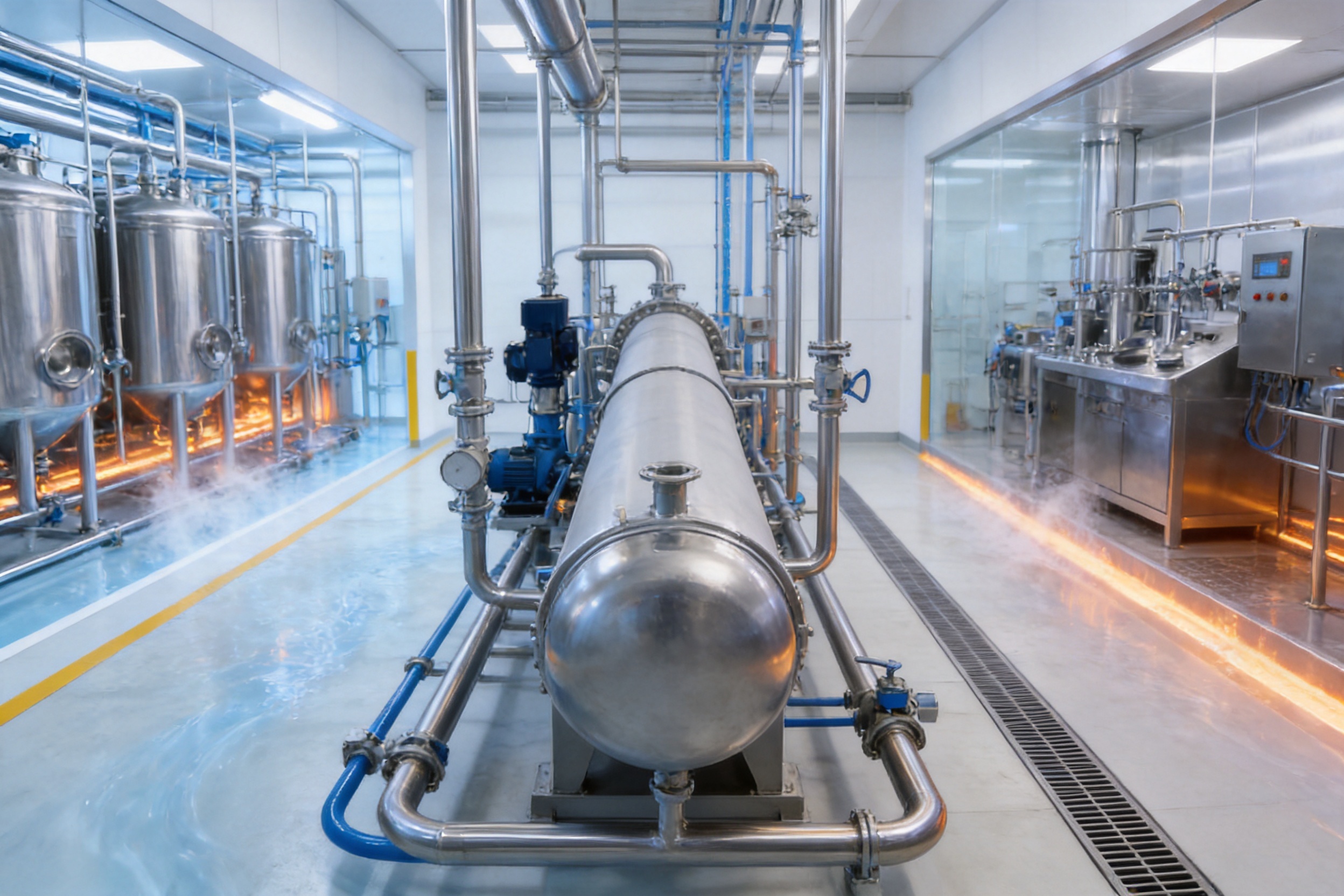
Before installation, the customer should confirm the media flow direction, inlet and outlet positions, flange standards, support locations, service clearances, drain points, insulation requirements, instrumentation connections, and lifting method. Incorrect flow direction or reversed connections can lead to poor heat transfer, unstable operation, or equipment damage.
The equipment should be installed on a stable support structure capable of carrying its operating weight, including the shell, media, insulation, connected piping, and any temporary loads. Connected piping should be independently supported so that excessive forces are not transferred to the shell or flanges.
All piping should be cleaned before connection. Welding debris, scale, rust, gasket fragments, and construction materials can enter the equipment and cause blockage or contamination. Flange faces should be checked for damage and aligned without forcing the pipe into position.
Gaskets should be suitable for the operating media, pressure, temperature, and cleaning chemicals. Bolts should be tightened evenly in a crosswise sequence using the specified torque. Uneven tightening can deform the gasket, create leakage, or damage the flange.
During commissioning, valves should be opened gradually. Pressure and temperature should be increased step by step to prevent thermal shock, sudden flow changes, water hammer, and mechanical stress. Instruments should be checked before full operation, and the initial operating data should be recorded for future troubleshooting.
Operation and Maintenance
Operators should monitor inlet and outlet temperatures, pressure, flow rate, vibration, noise, and signs of leakage. A change in the normal temperature profile may indicate poor distribution, altered flow ratios, steam supply problems, fouling, or an instrument fault.
Regular inspection should include the shell, nozzles, flanges, gaskets, supports, drains, insulation, and visible weld areas. The inspection interval depends on the service severity, pressure category, operating hours, media properties, and applicable regulations.
Impurities and sediments should be removed before they accumulate. A process containing solids may require flushing, filtration, settling, or periodic cleaning. If corrosion is suspected, the operator should investigate the media chemistry, oxygen exposure, chloride concentration, cleaning chemicals, and local deposits.
During long-term shutdown, the equipment should be drained when appropriate. Residual water can freeze in cold environments or contribute to corrosion. The correct shutdown method depends on the media and the plant’s preservation procedure. Valves, vents, drains, and isolation points should be managed according to the site safety system.
Troubleshooting Common Problems
Uneven Media Mixing or Large Temperature Differences
Uneven mixing may result from an incorrect inlet flow rate, unsuitable injection angle, blocked distribution components, or an operating flow ratio outside the design range. Operators should check the actual flow rates, confirm that the inlets are correctly connected, inspect for obstruction, and verify the condition of internal distribution devices.
Temperature sensors should also be checked. A sensor installed too close to an inlet may measure a local temperature rather than the mixed outlet temperature. If the process conditions have changed significantly from the original design, the equipment may require a revised operating procedure or engineering review.
Vibration or Excessive Noise
Vibration or noise can be associated with excessive flow, unstable two-phase conditions, water hammer, cavitation, loose supports, or improperly restrained piping. The operator should compare the current flow with the design range and inspect support bolts, pipe anchors, valves, and drains.
Steam systems require particular attention to condensate drainage and sudden valve opening. Trapped condensate can cause damaging water hammer when accelerated by steam. The installation should include appropriate drainage and operating procedures.
Leakage at Shell Connections
Leakage may be caused by aged or damaged gaskets, uneven bolt tightening, corroded flange faces, deformation, thermal cycling, or excessive external piping load. The equipment should be isolated and depressurized before inspection. Gaskets should not be reused when their condition is uncertain.
If leakage returns after gasket replacement, the flange faces, alignment, bolt condition, pressure level, and piping support should be reviewed. Repeated leakage may indicate a system-level problem rather than a simple gasket failure.
Insufficient Heating or Cooling
Insufficient thermal performance can result from inadequate steam pressure, low flow, incorrect media ratio, poor mixing, excessive heat loss, blocked inlets, or a process temperature target beyond the equipment’s original design. The first step is to compare actual operating data with the design basis.
Control valves and flow meters should be verified, and temperature instruments should be calibrated where necessary. If the media properties or production rate have changed, the original equipment may need to be reassessed.
Comparison with Conventional Shell-and-Tube Heat Exchangers
| Evaluation Factor | Hybrid / Direct Contact Heat Exchanger | Conventional Shell-and-Tube Heat Exchanger |
|---|---|---|
| Heat transfer method | Direct mixing and contact between compatible media | Indirect transfer through tube walls |
| Media separation | Media are combined when the process permits | Media remain physically separated |
| Thermal resistance | Reduced resistance from the absence of a primary tube wall | Includes tube-wall and surface-fouling resistance |
| Mixing function | Heat transfer and mixing can occur together | Normally requires separate mixing equipment |
| Internal structure | Open shell arrangement with fewer internal tube components | Tube bundle, baffles, channels, and associated internals |
| Suitability for impurities | Can accommodate selected impurity-containing streams when engineered correctly | Small passages may be sensitive to fouling or blockage |
| Contamination control | Requires media compatibility because streams contact each other | Provides physical separation between streams |
| Typical applications | Direct steam heating, condensation, gas cooling, scrubbing, and compatible heat recovery | Product heating or cooling where media must remain separate |
| Maintenance focus | Shell, inlets, distribution devices, gaskets, drains, and supports | Tube bundle, channels, gaskets, fouling, leaks, and pressure loss |
| Best selection basis | Compatible media and need for integrated mixing and heat transfer | Strict stream separation and controlled surface heat transfer |
The comparison shows that the direct contact design is not intended to replace every conventional heat exchanger. Its principal advantage appears when the process allows mixing and benefits from rapid heat transfer. A shell-and-tube exchanger remains highly valuable when product purity, cross-contamination prevention, pressure separation, or independent control of the two streams is essential.
Why Work with an Application-Oriented Supplier?
Heat exchanger selection can fail when it is treated as a simple catalog purchase. A correctly sized shell may still perform poorly if the inlet arrangement, media ratio, control strategy, material, or downstream separation system is unsuitable. An application-oriented supplier helps connect the equipment design with the customer’s complete process.
Shiloc supports customers with product consultation, technical communication, customization coordination, international procurement, and service support. Its experience in fluid equipment for food, beverage, biopharmaceutical, daily chemical, and fine chemical industries allows the company to consider process requirements beyond the equipment shell itself.
Customization may include shell material, dimensions, pressure rating, connection standards, inlet positions, support arrangements, surface treatment, and process-specific operating parameters. The customer should provide accurate information regarding flow rate, media composition, pressure, temperature, heat duty, allowable pressure drop, hygiene requirements, cleaning method, and site conditions.
The company’s Shanghai facility, technical specialists, processing, welding, polishing, and quality-control capabilities provide a manufacturing foundation for custom process equipment. Its international trade experience can also assist customers who need coordinated export documentation, logistics, technical clarification, and communication across different project teams.
Project Information Required for a Technical Proposal
A preliminary technical proposal should normally include the following information:
1. The name and purpose of each medium.
2. Normal, minimum, and maximum flow rates.
3. Inlet and outlet temperatures.
4. Operating and design pressures.
5. Required heating, cooling, or condensation duty.
6. Physical properties such as density, viscosity, specific heat, solids content, and phase condition.
7. Chemical composition and corrosion considerations.
8. Whether direct mixing is permitted.
9. Required materials and surface finish.
10. Connection standards and installation orientation.
11. Cleaning, sanitization, or validation requirements.
12. Applicable local codes, inspection requirements, and documentation expectations.
13. Available utilities, including steam pressure, cooling water, compressed air, and electrical controls.
14. Space limitations, support conditions, lifting restrictions, and shipping requirements.
With this information, the supplier can evaluate whether a direct contact, hybrid, or indirect configuration is the most appropriate solution.
Frequently Asked Questions
Q1: What is the main advantage of a Hybrid / Direct Contact Heat Exchanger?
The principal advantage is that compatible hot and cold media exchange heat through direct contact rather than through a tube wall. This reduces thermal resistance and allows mixing and heat transfer to occur in one process volume. The result can be rapid heating, cooling, or condensation with a relatively simple internal structure.
Q2: Can the equipment be used for every food and beverage product?
No. It can be used only when the media may be safely and intentionally mixed. Direct steam heating may be suitable for process water or certain products when the steam quality and condensate addition are acceptable. If the heating medium must remain completely separate from the product, an indirect heat exchanger should be considered.
Q3: Is the equipment suitable for biopharmaceutical manufacturing?
It may be suitable for selected utility-side, clean-service, gas-treatment, and support applications, subject to detailed engineering review. Product-contact biopharmaceutical applications require careful consideration of separation, sterility, cleaning, validation, materials, surface finish, and documentation. The equipment should not be selected solely on the basis of its heat transfer performance.
Q4: What materials are available?
Carbon steel and stainless steel are available options, with the final selection based on media composition, pressure, temperature, corrosion risk, cleanliness, and customer standards. Stainless steel is often considered for food, clean utility, and corrosion-sensitive services, while carbon steel may be appropriate for selected industrial applications.
Q5: Can the shell dimensions and pressure rating be customized?
Yes. Length, diameter, shell material, pressure rating, connection arrangement, inlet positions, support configuration, and other parameters can be adjusted according to the process requirements. Customization should be based on complete operating and design data.
Q6: Does the equipment eliminate fouling and maintenance?
No heat exchanger is completely free from fouling or maintenance. The absence of a tube bundle can reduce certain blockage and cleaning concerns, but deposits may still form on shell surfaces, inlet devices, welds, drains, or downstream components. Regular inspection and cleaning remain necessary.
Q7: How can uneven mixing be corrected?
Operators should check the media flow rates, inlet direction, injection angle, distribution devices, pressure conditions, and flow ratio. They should also verify that the temperature sensors are correctly positioned and functioning. If the operating conditions differ from the original design, a technical review may be required.
Q8: What causes vibration or water hammer?
Possible causes include flow rates above the design range, unstable two-phase flow, rapid valve opening, trapped condensate, cavitation, inadequate supports, or excessive piping loads. Steam systems should be checked for condensate drainage and controlled start-up procedures.
Q9: How should the equipment be installed?
The media flow direction and connection positions should be confirmed before installation. The support structure must carry the operating weight, and connected pipes should be independently supported. Flanges should be aligned without force, suitable gaskets should be installed, and bolts should be tightened evenly to the required torque.
Q10: What information should be sent when requesting a quotation?
The customer should provide media names and compositions, flow rates, inlet and outlet temperatures, pressure conditions, heat duty, allowable pressure drop, material requirements, direct-mixing limitations, connection standards, cleaning requirements, site conditions, and applicable codes or documentation requirements.
Q11: Can the equipment be integrated into an automated process?
Yes. Flow, pressure, temperature, steam supply, valve position, and safety interlocks can be integrated into a wider control system. The control philosophy depends on whether the unit is used for heating, cooling, condensation, gas treatment, or energy recovery.
Q12: What makes Shiloc suitable for international projects?
Shiloc combines equipment manufacturing and technical coordination with international trade and import-export agency services. The company can support product consultation, customization communication, procurement, logistics coordination, documentation, and technical service for overseas customers.
Conclusion
The Hybrid / Direct Contact Heat Exchanger offers a practical alternative to conventional indirect heat transfer equipment for processes in which hot and cold media can be directly mixed. By removing the primary tube-wall barrier, the design can reduce thermal resistance and enable rapid heat transfer. Its ability to combine mixing with heating, cooling, or condensation can simplify selected process systems and reduce the need for separate equipment.
The horizontal cylindrical shell, direct media injection, pressure-resistant construction, flanged connections, and configurable materials make the equipment adaptable to process water heating, steam condensation, waste gas cooling, gas scrubbing, chemical processing, and selected energy recovery duties. Its simple internal structure can also reduce certain blockage and maintenance risks compared with dense tube bundles.
However, successful application depends on correct media compatibility, flow distribution, pressure and temperature design, material selection, control strategy, cleaning method, and downstream process integration. Direct contact technology is most effective when the process benefits from mixing and does not require complete separation between the streams.
Shiloc (Shanghai) Industrial Trading Co., Ltd. supports this equipment concept with manufacturing capabilities in processing, welding, polishing, and quality control, together with technical communication and international procurement services. Its Shanghai facility, technical team, European know-how, and Danish design influence provide a foundation for customized process equipment and cross-border project support.
For food, beverage, biopharmaceutical, chemical, and environmental manufacturers seeking efficient and adaptable thermal equipment, the right solution begins with a complete understanding of the process. When the operating conditions are correctly defined, the Hybrid / Direct Contact Heat Exchanger can become more than a heating or cooling vessel: it can serve as an integrated process tool for improved energy utilization, reliable operation, and practical plant development.
References
1. Perry’s Chemical Engineers’ Handbook, sections covering heat transfer, phase change, fluid flow, and process equipment selection.
2. Coulson and Richardson’s Chemical Engineering, Volume 1, principles of fluid flow and heat transfer.
3. Coulson and Richardson’s Chemical Engineering, Volume 6, process design and equipment selection.
4. Principles and Design of Heat Exchangers, engineering references on indirect and direct contact heat transfer.
5. ASME Boiler and Pressure Vessel Code, guidance for pressure-containing equipment design, fabrication, inspection, and testing.
6. Hygienic design guidance for food and beverage processing equipment, including cleanability, drainability, materials, and surface finishing.
7. Good Manufacturing Practice principles for biopharmaceutical facilities, including contamination control, validation, documentation, and clean utility management.
8. Industrial steam system engineering references covering condensation, condensate recovery, water hammer prevention, and steam quality.
9. Industrial gas treatment and wet scrubbing engineering references covering gas-liquid contact, cooling, absorption, corrosion, and liquid management.
10. Process equipment maintenance references covering inspection, gasket management, corrosion control, vibration diagnosis, and commissioning procedures.
Product: Hybrid / Direct Contact Heat Exchanger
PREV:Sanitary Plate Heat Exchangers for Hygienic Food and Biopharmaceutical Processing
NEXT:Sanitary Capillary Heat Exchangers for Food and Biopharmaceutical Process Systems
NEXT:Sanitary Capillary Heat Exchangers for Food and Biopharmaceutical Process Systems
Interested in cooperation or have questions?
Recommended LINS
✦
Food and Beverage Process System
Food Processing Skid System
Aseptic Processing Equipment for Liquid Foods
UHT Processing System for Dairy Products
UHT Processing Equipment for Plant Based Milk
Direct Steam Injection UHT System
Aseptic Beverage Processing Line
CIP Skid System for Food Industry
Milk Processing Heat Exchanger
Beverage Flash Pasteurization System
Let'S Work Together Welcome Aboard!
-

haikexin@haikexin.com
+8613391278930
-
 +86-21-57560276
-
 No. 2819, Sihu Road,Fengxian District, Shanghai, China
Join Our Mailing List
Copyright © Shiloc (Shanghai) Industrial Trading Co., Ltd. All Rights Reserved.
Process Systems & Equipment For Food & Biopharma Manufacturers
