
 English
 русский
 Português
 Français



 Read More

Product Category
NEW Category
Contact us
Contact Us
We specialise in the research, development and manufacture of electrical wires and cables.
 +86-21-57560276
Bottom-Mounted Magnetic Mixers for Hygienic Food, Beverage, and Biopharmaceutical Processing
Content
- 1 1. Operating Principle of a Bottom-Mounted Magnetic Mixer
- 2 2. Single-Impeller and Multi-Impeller Configurations
- 3 3. Hygienic Design for Pharmaceutical and Bioprocessing Applications
- 4 4. Advantages Over Conventional Top-Entry Agitators
- 5 5. Performance Characteristics and Available Models
- 6 6. Materials, Surface Finish, and Bearing Technology
- 7 7. Applications in Food and Beverage Processing
- 8 8. Applications in Pharmaceutical and Biotechnology Manufacturing
- 9 9. Supporting UHT Sterilizer and Thermal Processing Lines
- 10 10. Manufacturing Processes and Quality Strengths
- 11 11. Selecting the Correct Mixer
- 12 12. Installation, Operation, and Maintenance
- 13 13. Competitive Advantages of the Equipment Solution
- 14 14. Frequently Asked Questions
- 14.1 Q1: What is a bottom-mounted magnetic mixer?
- 14.2 Q2: What is the main benefit of magnetic drive technology?
- 14.3 Q3: When should a multi-impeller mixer be selected?
- 14.4 Q4: Are these mixers suitable for pharmaceutical and biopharmaceutical production?
- 14.5 Q5: Can a magnetic mixer be used with a UHT sterilizer?
- 14.6 Q6: What surface finish is available?
- 14.7 Q7: What bearing materials are available?
- 14.8 Q8: Are the listed capacities guaranteed for every product?
- 14.9 Q9: Does the mixer require variable-speed control?
- 14.10 Q10: What services can the supplier provide?
- 15 15. Conclusion
- 16 References
- 17 Product: Bottom-mounted Magnetic Mixers (Single/Multi-impeller)
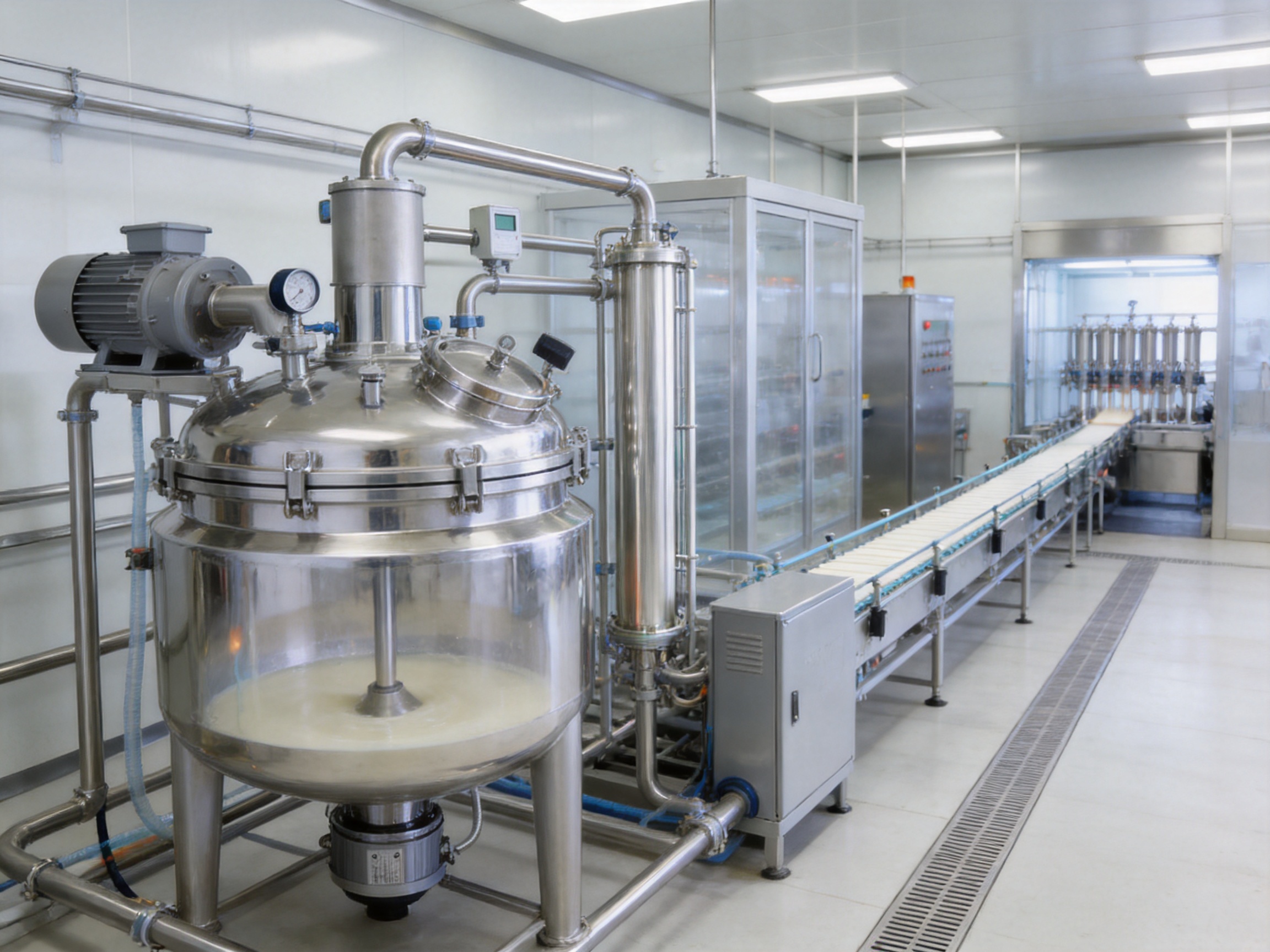
Modern food, beverage, pharmaceutical, and biotechnology manufacturers require mixing equipment that can deliver consistent product quality while supporting hygienic production, reliable cleaning, and efficient plant operation. As formulations become more sensitive and regulatory expectations become stricter, conventional agitators are increasingly being evaluated against alternatives that reduce contamination risks, minimize maintenance, and improve process control. Bottom-mounted magnetic mixers, available in single-impeller and multi-impeller configurations, provide a practical solution for these requirements.
These mixers are designed for blending, dilution, suspension maintenance, powder dispersion, fluid circulation, and heat transfer enhancement. Their sealed magnetic drive system separates the motor and transmission components from the product-contact zone. This configuration eliminates the need for a conventional rotating shaft to pass through the vessel wall or cover, helping reduce potential leakage paths and contamination risks. It also supports demanding cleaning and sterilization procedures used in pharmaceutical, biotechnology, food, and beverage manufacturing.
The equipment is suitable for applications ranging from small-volume pharmaceutical preparations to large-volume process vessels. Depending on the vessel geometry, fluid properties, required shear level, and production capacity, manufacturers can select a single-impeller mixer for standard circulation or a multi-impeller system for larger vessels, higher viscosities, powder dispersion, and more demanding suspension duties.
In addition to the performance of the mixer itself, successful process equipment depends on manufacturing quality, material selection, surface treatment, welding, polishing, inspection, and technical support. Shiloc (Shanghai) Industrial Trading Co., Ltd. combines European know-how and Danish design concepts with manufacturing and engineering capabilities in Shanghai. Its equipment solutions are aimed at customers in the food and beverage, biopharmaceutical, daily chemical, and fine chemical industries.
This article explains the operating principles, advantages, configuration options, materials, manufacturing processes, applications, selection criteria, and maintenance considerations associated with bottom-mounted magnetic mixers. It also discusses how these mixers can support integrated hygienic process systems, including vessels, heat exchangers, and UHT sterilizer lines.
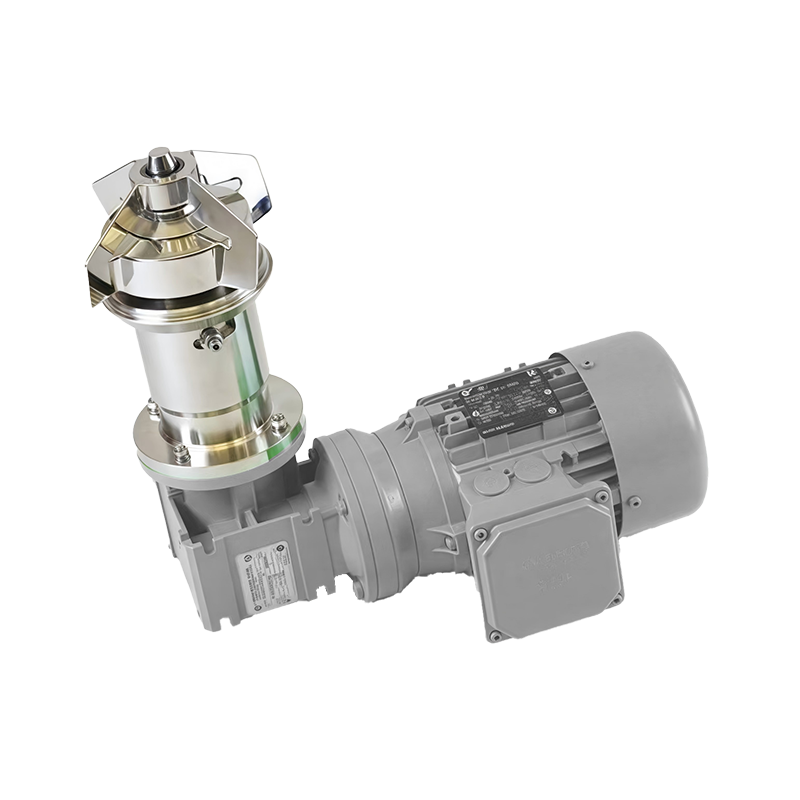
Bottom-mounted Magnetic Mixers (Single/Multi-impeller)
1. Operating Principle of a Bottom-Mounted Magnetic Mixer
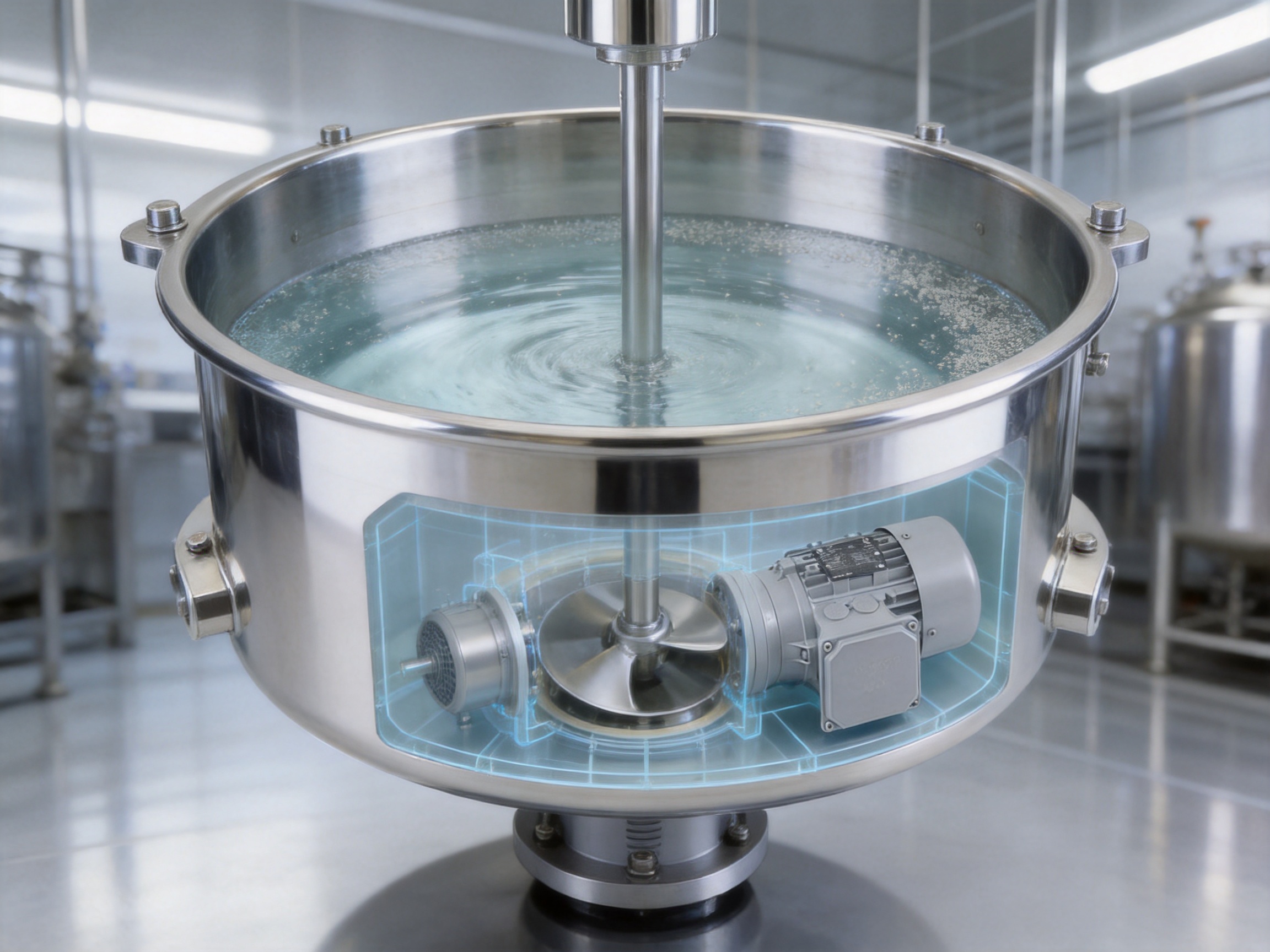
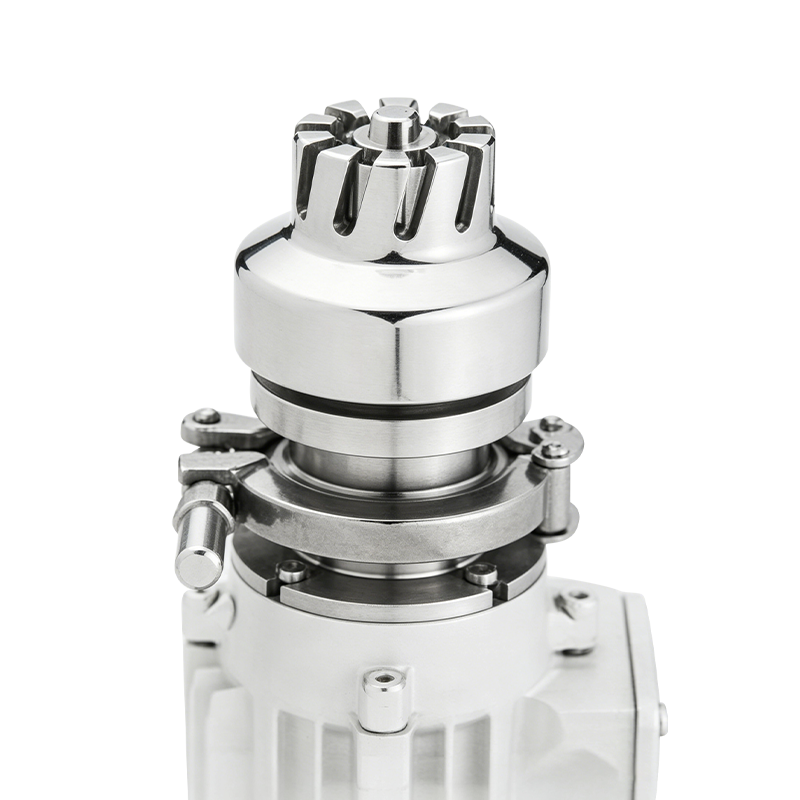
A bottom-mounted magnetic mixer transfers rotational energy to an internal impeller without requiring a direct mechanical shaft connection between the motor and the product-contact area. The external rotor is connected to the motor, while an internal rotor is positioned inside the vessel. Magnetic forces transmit torque through the separation barrier, causing the internal impeller to rotate and mix the process fluid.
The product-contact assembly generally includes an impeller, bearing locator, bearing, O-ring, shaft sleeve, welded flange, lifting device, and internal rotor. On the drive side, the system includes the external rotor, motor, and, where required, a motor with gearbox. This arrangement creates a compact and enclosed drive structure that is suitable for hygienic vessels and closed processing systems.
Because the motor shaft does not extend directly into the product, the mixer avoids many of the sealing challenges associated with conventional top-entry agitators. A traditional top-entry mixer commonly requires a mechanical seal or packing arrangement around the shaft penetration. These components must withstand rotational movement, temperature changes, cleaning chemicals, pressure fluctuations, and sterilization cycles. A magnetic coupling removes the rotating shaft penetration and can simplify the hygienic design of the vessel.
The bottom installation position also supports effective circulation from the lower section of the vessel. This is particularly useful when solids tend to settle, when the vessel has a relatively low working volume, or when the process requires strong circulation through a heating or cooling surface. The impeller geometry can be selected to generate an appropriate combination of axial flow, radial flow, and moderate shear.
For sensitive biological or pharmaceutical products, excessive shear can damage cells, proteins, particles, or other fragile components. The optimized impeller profile used in these mixers is intended to provide efficient flow while maintaining comparatively low shear forces. For powder-liquid systems, the impeller can help draw liquid across the lower vessel region and improve dispersion of powders that would otherwise form floating layers, lumps, or settled deposits.
2. Single-Impeller and Multi-Impeller Configurations
2.1 Single-Impeller Mixers
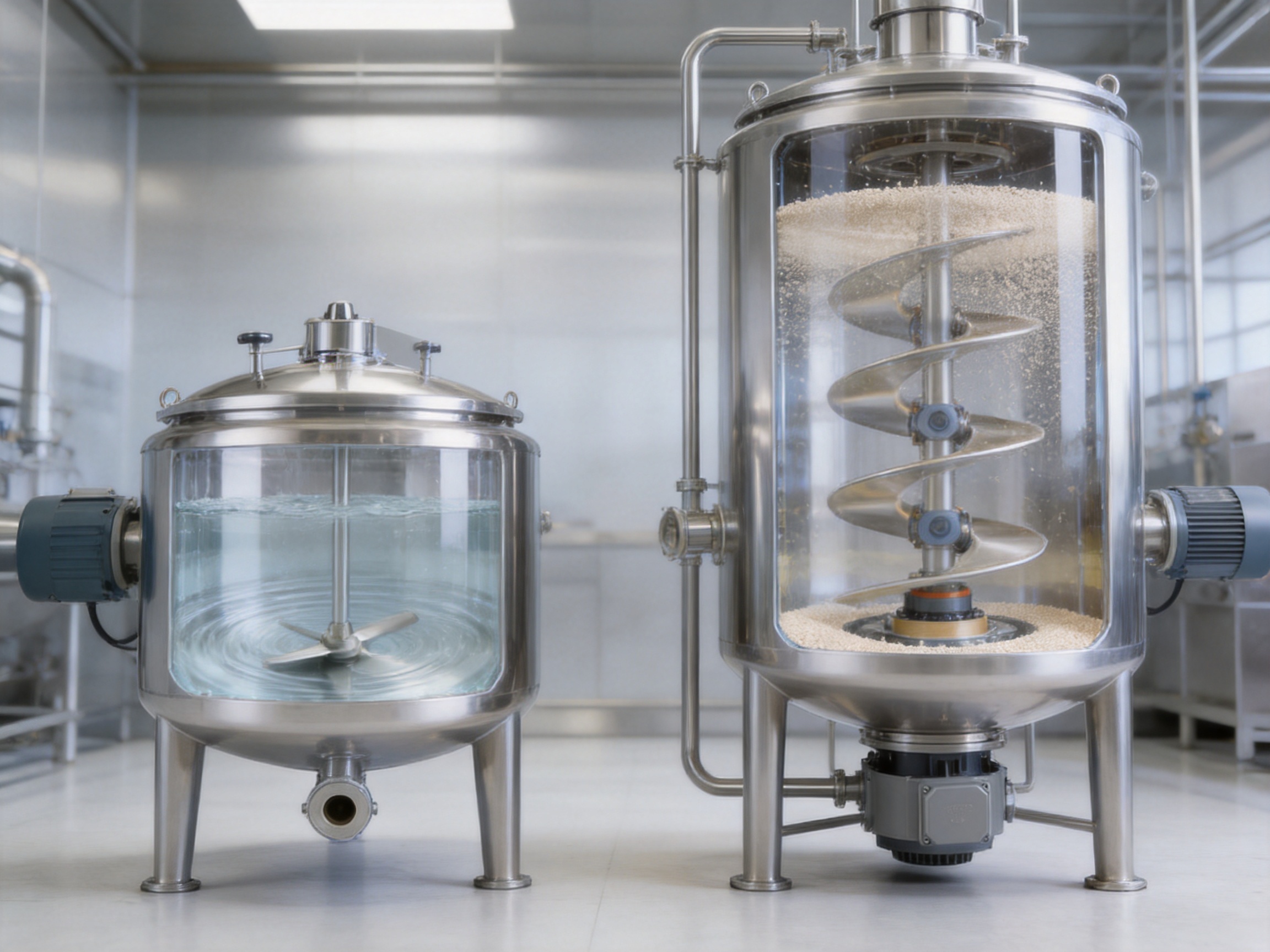
A single-impeller bottom-mounted mixer contains one optimized mixing element located at the lower part of the vessel. This configuration is well suited to standard blending, dilution, suspension maintenance, and liquid circulation. It offers a relatively simple structure, fewer internal components, and straightforward installation and inspection.
Single-impeller systems are often selected for small and medium-sized vessels or for fluids that can be mixed effectively with one circulation zone. They are suitable for pharmaceutical liquids, beverage ingredients, food formulations, chemical solutions, buffer preparations, and other products with moderate viscosity and predictable flow behavior.
One of the principal advantages of a single-impeller design is its low start-up volume requirement. The impeller can begin generating useful circulation at a comparatively low liquid level, which is valuable in batch processes where the vessel is not always filled to its maximum capacity. This characteristic can also reduce product hold-up and support more efficient use of expensive ingredients.
Single-impeller mixers are also advantageous where installation space above the vessel is limited. Since the drive is mounted below the vessel rather than on a large overhead support, the system can help simplify plant layout. The compact arrangement may provide greater flexibility for skids, modular processing lines, and vessels installed near filling, sterilization, or packaging equipment.
2.2 Multi-Impeller Mixers
Multi-impeller mixers use two or more mixing stages to improve vertical circulation throughout a larger or taller vessel. Multiple impellers can help reduce concentration differences between the top and bottom regions of the tank, especially when the fluid is viscous or when solids must remain uniformly suspended.
This configuration is suitable for large-volume processing, powder dispersion, difficult suspension duties, and products with more complex rheological behavior. Multi-impeller designs can also improve heat transfer by moving the product more consistently across heat-transfer surfaces. This is important when the process involves controlled heating, cooling, temperature equalization, or circulation through an external heat exchanger.
In a tall vessel, one impeller may create a strong local flow pattern without fully mixing the upper section. Adding additional impeller stages can extend the circulation path and reduce stagnant zones. The actual arrangement must be engineered according to vessel diameter, liquid height, viscosity, solids concentration, impeller diameter, required turnover rate, and allowable shear.
Multi-impeller systems are particularly useful when a process involves powders that are difficult to wet or disperse. The lower impeller can help draw material into the liquid, while upper impellers maintain circulation and prevent concentration gradients. This arrangement is not a replacement for specialized high-shear dispersers in every application, but it can provide a balanced solution where efficient dispersion and gentle product handling are both important.
| Category | Single-Impeller Mixer | Multi-Impeller Mixer |
|---|---|---|
| Typical duty | Blending, dilution, circulation, and suspension maintenance | Large-volume mixing, powder dispersion, and complex suspension duties |
| Vessel suitability | Small to medium vessels or moderate liquid heights | Large or tall vessels requiring improved vertical circulation |
| Internal arrangement | One optimized impeller unit | Multiple impeller stages |
| Process advantage | Simple structure and low start-up volume | Improved uniformity and stronger circulation throughout the vessel |
| Typical product behavior | Low to moderate viscosity liquids | Higher viscosity fluids, powders, and difficult suspensions |
| Selection priority | Efficient standard mixing with a compact layout | Enhanced turnover, dispersion, and heat-transfer performance |
3. Hygienic Design for Pharmaceutical and Bioprocessing Applications
Pharmaceutical and bioprocessing equipment must protect the product from contamination and must also be capable of being cleaned and sterilized reliably. Hygienic design begins with the product-contact materials, but it also includes surface finish, weld quality, drainage, seal selection, geometry, inspection access, and compatibility with cleaning-in-place and sterilization-in-place procedures.
Bottom-mounted magnetic mixers are designed to reduce exposed mechanical interfaces in the product zone. The magnetic drive system separates the motor from the process liquid, helping prevent external contaminants from entering through a rotating shaft seal. This is especially important for sterile or aseptic processes in which microbial control is a central production requirement.
Product-contact and welded components can be manufactured from 1.4435 or 1.4404 stainless steel grades, commonly associated with 316L-type hygienic applications. These materials provide corrosion resistance and are widely used in pharmaceutical, food, beverage, and chemical equipment. Material selection must nevertheless be confirmed against the actual product chemistry, cleaning agents, temperature, chloride concentration, and operating pressure.
The impeller and weld post are specified as SUS316L, and the surface finish can reach approximately Ra 0.5 micrometers with electrolytic polishing. A smooth, polished surface reduces the ability of product residues and microorganisms to adhere to the equipment. Electropolishing can also improve cleanability and provide a consistent finish on suitable stainless-steel surfaces.
Bearings may be manufactured from tungsten carbide or silicon carbide. These materials are selected for their wear resistance and suitability for demanding operating environments. FEP-encapsulated O-rings are used for sealing in the bearing area, subject to appropriate confirmation of temperature, chemical compatibility, and sterilization conditions.
For pharmaceutical applications, the complete system should be evaluated rather than only the mixer. Vessel geometry, spray devices, drainability, instrument connections, piping, valves, gaskets, pumps, filters, and downstream equipment must all support the required hygienic standard. A well-designed magnetic mixer cannot compensate for a poorly designed vessel outlet or an inaccessible dead leg elsewhere in the process system.
4. Advantages Over Conventional Top-Entry Agitators
4.1 Reduced Contamination Pathways
The most significant advantage of a magnetic mixer is the elimination of a conventional rotating shaft penetration into the vessel. Traditional mechanical agitators often use dynamic seals that can wear over time. A worn seal may create leakage, allow contamination, or require unplanned maintenance. A magnetic coupling provides torque transmission through a sealed barrier and therefore reduces the number of direct mechanical interfaces exposed to the process.
This design is valuable in aseptic manufacturing, where even a small contamination pathway can compromise a batch. It also benefits food and beverage producers that must maintain hygienic conditions between cleaning cycles and minimize the risk of product exposure to the external environment.
4.2 Improved Cleanability and Sterilizability
A sealed mixer can support CIP and SIP procedures when the complete equipment design is correctly specified. Smooth product-contact surfaces, polished welds, appropriate seals, and suitable impeller geometry help cleaning fluids reach the relevant surfaces and remove residues.
In a UHT sterilizer system, for example, product may be heated to a high temperature for a short holding period before being cooled and transferred under controlled hygienic conditions. A magnetic mixer can support upstream formulation, ingredient blending, buffer preparation, or intermediate holding, while its sealed design helps preserve the hygienic integrity of the process line. The mixer itself must be selected for the temperature, pressure, cleaning chemistry, and sterilization cycle used in the UHT process.
4.3 Lower Mechanical Exposure
Top-entry systems typically require an overhead motor, shaft, coupling, support structure, and mechanical seal assembly. These components can increase the height of the vessel and complicate maintenance access. Bottom-mounted magnetic mixers provide a more compact installation concept, although the vessel base and external drive still require adequate structural support and service access.
By reducing exposed rotating components, magnetic systems can also improve operator safety around the vessel top. The equipment should still be protected with appropriate guards, interlocks, and lockout procedures, but the absence of an exposed top shaft can simplify the working environment.
4.4 Effective Bottom Circulation
Bottom-mounted impellers are positioned close to the lower region of the vessel, where settled solids and poorly mixed liquid can accumulate. This location can provide strong circulation from the bottom upward and help reduce dead zones near the vessel floor. It is especially helpful for suspension maintenance and for processes involving powders, crystals, pigments, nutritional ingredients, or other solids.
4.5 Adaptation to Sensitive Products
The impeller geometry is designed to create an efficient flow field with moderate shear. This can benefit biological products, pharmaceutical formulations, emulsions, and food products that require circulation without excessive mechanical stress. The appropriate impeller speed must be established through process testing, because shear performance depends on speed, viscosity, impeller diameter, fluid density, solids content, and vessel geometry.
5. Performance Characteristics and Available Models
The product range includes LMP-S single-impeller bottom-mounted magnetic stirrers and LMP-D configurations. Model selection is based on blade diameter, motor power, rotational speed, and processing volume. The stated capacities are based on testing with water, so the actual model must be selected according to the viscosity and behavior of the process medium.
The LMP-S series covers processing capacities from approximately 30 liters to 30,000 liters. Blade diameters range from 80 to 450 millimeters, while motor power ranges from 0.12 to 4 kilowatts. The listed rotational speeds range from approximately 210 to 450 rpm, depending on the model.
| Model | Blade Diameter | Power | Speed | Nominal Processing Capacity |
|---|---|---|---|---|
| LMP-S30 | 80 mm | 0.12 kW | 450 rpm | 30–50 L |
| LMP-S50 | 100 mm | 0.18 kW | 450 rpm | 50–100 L |
| LMP-S100 | 120 mm | 0.25 kW | 450 rpm | 100–300 L |
| LMP-S500 | 150 mm | 0.37 kW | 400 rpm | 300–500 L |
| LMP-S1000 | 180 mm | 0.55 kW | 400 rpm | 500–1,000 L |
| LMP-S2000 | 200 mm | 0.75 kW | 350 rpm | 1,000–2,000 L |
| LMP-S3500 | 250 mm | 1.1 kW | 350 rpm | 2,000–3,500 L |
| LMP-S5000 | 300 mm | 1.5 kW | 350 rpm | 3,500–5,000 L |
| LMP-S10000 | 350 mm | 2.2 kW | 240 rpm | 5,000–10,000 L |
| LMP-S20000 | 400 mm | 3 kW | 210 rpm | 10,000–20,000 L |
| LMP-S30000 | 450 mm | 4 kW | 210 rpm | 20,000–30,000 L |
The LMP-D or high-speed range includes models for smaller and larger process volumes, with listed speeds of approximately 1,450 rpm. The available power ratings extend from small laboratory or pilot-scale units to larger industrial mixers. Because the supplied model information includes a small-unit power entry that should be technically confirmed before ordering, the final selection should always be based on a formal technical datasheet and application review.
| Model | Blade Diameter | Listed Power | Speed | Nominal Processing Capacity |
|---|---|---|---|---|
| LHS-10 | 50 mm | Application confirmation required | 1,450 rpm | 5–10 L |
| LHS-50 | 70 mm | 0.37 kW | 1,450 rpm | 10–50 L |
| LHS-150 | 85 mm | 0.55 kW | 1,450 rpm | 50–150 L |
| LHS-500 | 100 mm | 1.1 kW | 1,450 rpm | 150–500 L |
| LHS-2000 | 130 mm | 2.2 kW | 1,450 rpm | 300–2,000 L |
| LHS-3000 | 160 mm | 4 kW | 1,450 rpm | 1,000–3,000 L |
| LHS-6000 | 200 mm | 7.5 kW | 1,450 rpm | 2,000–6,000 L |
| LHS-15000 | 230 mm | 15 kW | 1,450 rpm | 3,000–15,000 L |
The equipment description identifies a general speed capability from approximately 400 to 1,450 rpm, while another specification identifies variable-speed impeller operation from approximately 150 to 500 rpm for selected configurations. These figures reflect different product ranges and operating arrangements rather than one universal speed range. The final speed should be established according to the chosen model, motor, gearbox, fluid properties, and process objective.
6. Materials, Surface Finish, and Bearing Technology
Material selection is central to the service life and hygienic performance of a mixer. The impeller, weld post, shaft sleeve, flange, and other product-contact parts must resist corrosion, withstand repeated cleaning cycles, and remain compatible with the process fluid. Stainless steel grades equivalent to 316L are widely used because they combine corrosion resistance with suitability for hygienic fabrication.
A surface finish of approximately Ra 0.5 micrometers, together with electrolytic polishing, supports a smooth and cleanable product-contact surface. The finish must be measured and documented using appropriate inspection procedures. Welds should be continuous where required, free of visible cracks or crevices, and processed to prevent residue accumulation.
Tungsten carbide and silicon carbide bearings provide high hardness and wear resistance. The appropriate bearing material depends on the product, solids content, operating temperature, lubrication conditions, speed, and chemical environment. In a magnetic mixer, the bearing operates in or near the product-contact assembly, so compatibility with the process medium and cleaning solution must be carefully verified.
FEP-encapsulated O-rings combine an elastomeric core with a chemically resistant fluoropolymer covering. They are used to provide sealing performance in demanding environments, but the exact O-ring compound and temperature rating must be confirmed for each application. Sterilization cycles, caustic cleaning, acid cleaning, solvents, and product ingredients can all affect seal performance.
Motor selection is also important. Nord or SEW geared motors may be used for suitable configurations, with power selected according to impeller size, product viscosity, required torque, and speed. Variable-frequency control can provide greater flexibility during start-up, normal operation, suspension maintenance, and cleaning validation studies.
7. Applications in Food and Beverage Processing
Food and beverage manufacturers commonly use bottom-mounted magnetic mixers for ingredient blending, syrup preparation, beverage bases, dairy formulations, nutritional products, sauces, flavor solutions, and liquid supplements. The sealed drive and hygienic material selection support processes in which product purity, cleanability, and repeatable quality are important.
In beverage production, a mixer may be used to dissolve sweeteners, stabilize additives, blend concentrates, or maintain uniformity before filtration, pasteurization, or filling. In dairy and nutritional processing, gentle circulation can help maintain a consistent composition while limiting unnecessary shear. For sauces and other viscous products, a multi-impeller configuration may improve circulation and reduce concentration differences.
Food powders can be difficult to disperse because they may float, agglomerate, or form partially hydrated lumps. A bottom-mounted mixer can help establish circulation from the vessel floor and introduce liquid movement into the powder addition zone. However, powder feeding rate, wetting characteristics, air entrainment, and the product’s rheology must be evaluated during process development.
When a process includes heating or cooling, the mixer helps move product across the vessel wall or through an external heat exchanger. Improved circulation can support more uniform temperature distribution and reduce the risk of localized overheating. For products treated in a UHT sterilizer, upstream mixing can help ensure that ingredients are uniformly distributed before thermal treatment. Downstream aseptic holding and transfer require the same attention to hygienic design as the mixing stage.
8. Applications in Pharmaceutical and Biotechnology Manufacturing
Pharmaceutical and biotechnology processes often require precise formulation, low contamination risk, gentle product handling, and reliable batch repeatability. Bottom-mounted magnetic mixers can be used for buffer preparation, media preparation, liquid blending, dilution, suspension maintenance, intermediate formulation, and controlled circulation.
In bioprocessing, excessive shear may affect cells or sensitive biomolecules. The moderate-shear impeller design can provide circulation without relying on unnecessarily high rotational speeds. The correct operating point depends on the biological material and must be established through process development and validation.
For pharmaceutical liquid formulations, the mixer can support the uniform distribution of active ingredients, excipients, salts, and stabilizers. The low start-up volume is useful when a batch begins with a relatively small amount of liquid and additional ingredients are added progressively.
In aseptic applications, the mixer must be integrated into a complete sterile process strategy. This includes vessel sterilization, sterile transfer, filter integrity, instrument design, gasket selection, drainability, and validated CIP and SIP cycles. The mixer’s magnetic coupling reduces the risk associated with a conventional shaft seal, but all other process interfaces must also be designed to the required standard.
9. Supporting UHT Sterilizer and Thermal Processing Lines
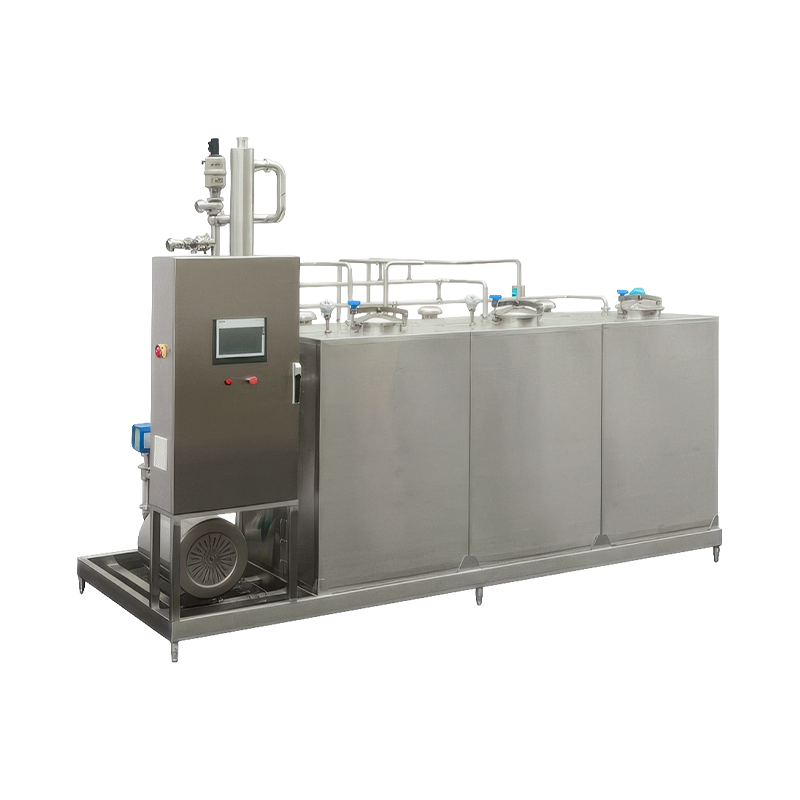
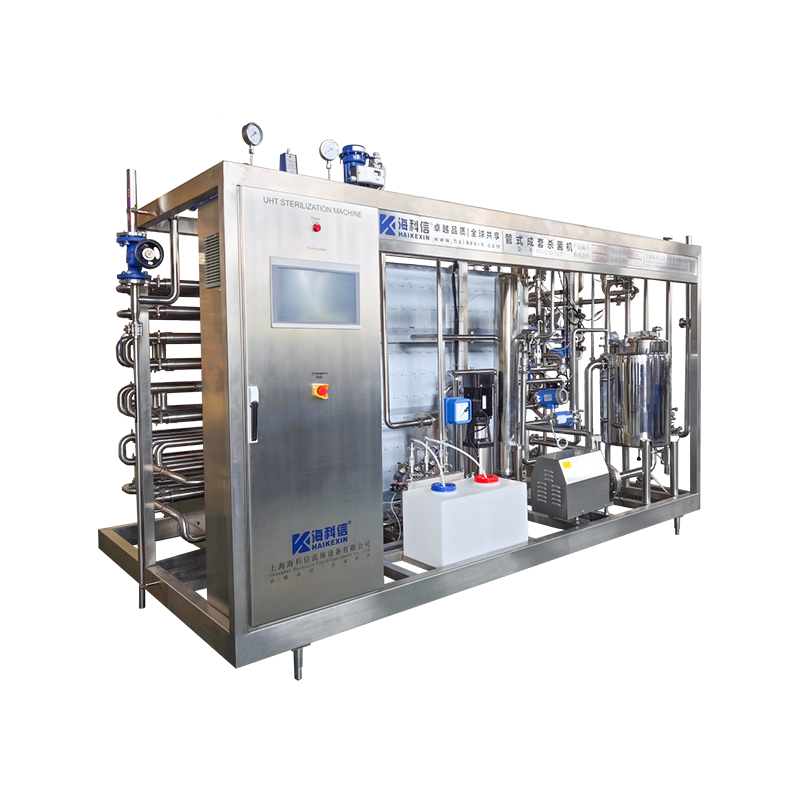
UHT sterilizer systems are used to treat liquid products at elevated temperatures for short holding times. They are common in dairy, beverage, nutritional, and other liquid-food applications where commercial sterility and extended shelf life are required. A UHT line normally includes product preparation, preheating, high-temperature treatment, holding, cooling, aseptic transfer, and filling or downstream packaging.
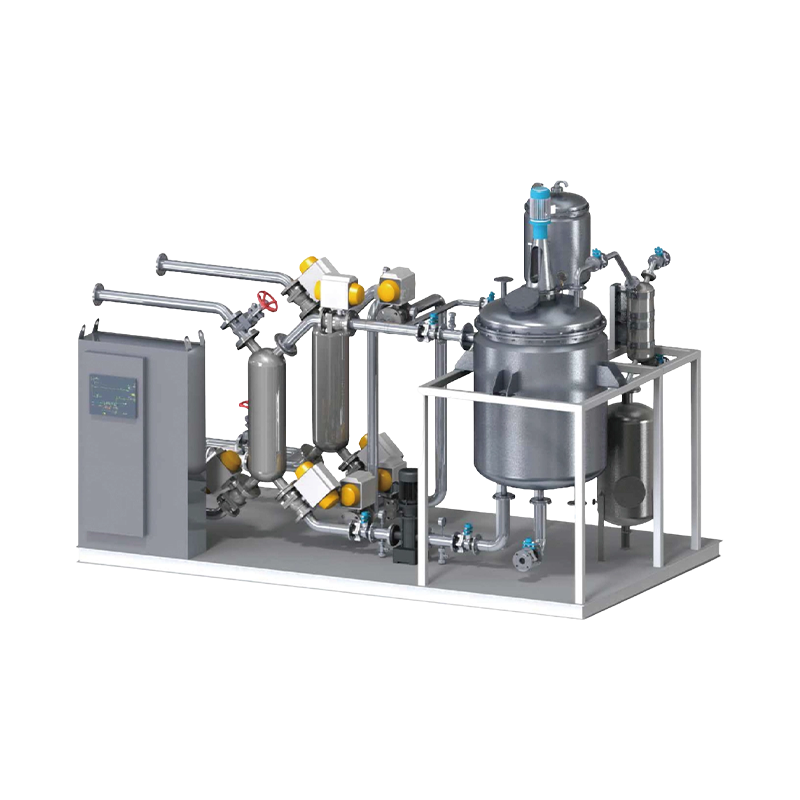
Bottom-mounted magnetic mixers can support several parts of this process architecture. Before UHT treatment, the mixer can blend ingredients and maintain uniform composition in a preparation vessel. It can support the dissolution of powders, the dilution of concentrates, and the suspension of particles or stabilizers. Consistent pre-treatment is important because variations in concentration can affect heat transfer, product viscosity, sterilization performance, and final quality.
The mixer can also assist with temperature equalization in a preheating or holding vessel. By creating circulation, it helps reduce localized temperature differences and improves contact between the product and heat-transfer surfaces. In systems that use external heat exchangers, the mixer can maintain a consistent feed to the circulation loop.
Equipment used around a UHT sterilizer must withstand the specified process temperatures, pressure conditions, cleaning chemicals, and sterilization procedures. The mixer, seals, bearings, welds, vessel, valves, instruments, and piping must be reviewed as one system. The thermal profile and residence time are controlled by the UHT sterilizer, not by the mixer; therefore, the mixer should support uniform preparation without disturbing the validated sterilization conditions.
For aseptic beverage or pharmaceutical-like nutritional products, the closed magnetic drive can reduce contamination pathways before and after thermal treatment. This is particularly valuable where product is transferred from a preparation vessel to a sterilizer and then into an aseptic filling system.
10. Manufacturing Processes and Quality Strengths
The performance of a hygienic mixer depends not only on design calculations but also on manufacturing discipline. Shiloc’s production capabilities include processing, stainless-steel welding, polishing, quality control, equipment manufacturing, and engineering support. These capabilities allow the company to manage important stages of fabrication and to provide customized equipment solutions.
10.1 Engineering and Application Review
Each project should begin with a review of the process medium, viscosity, density, solids concentration, operating temperature, vessel dimensions, working volume, required mixing time, cleaning method, sterilization method, and desired flow pattern. This information is used to select the impeller configuration, motor power, bearing arrangement, material grade, seal material, and control method.
Because the published capacities are based on water testing, an application review is particularly important for viscous or non-Newtonian products. A mixer that performs well with water may require a larger impeller, higher torque, lower speed, multiple impellers, or a different motor for a high-viscosity formulation.
10.2 Stainless-Steel Welding
Hygienic welding requires consistent joint preparation, controlled heat input, appropriate shielding, and careful post-weld treatment. Poorly controlled welding can create discoloration, distortion, porosity, crevices, or rough areas that compromise cleanability and corrosion resistance.
The company’s internal welding capability supports the fabrication of impeller assemblies, weld posts, shaft sleeves, flanges, and related stainless-steel components. After welding, surfaces can be processed and polished to achieve the required hygienic finish.
10.3 Polishing and Electropolishing
Polishing removes irregularities and improves surface smoothness. Electropolishing can further refine the surface of suitable stainless-steel components and help produce a consistent, cleanable finish. Surface treatment is especially important for parts exposed to pharmaceutical products, food ingredients, cleaning chemicals, and sterilization cycles.
Surface roughness should be confirmed using appropriate measurement methods, and critical welds should be inspected for defects. Documentation of material certificates, surface finish, welding procedures, and inspection results can support customer quality systems and project traceability.
10.4 Assembly and Inspection
During assembly, the impeller, bearing, rotor, O-rings, shaft sleeve, and flange must be installed with correct clearances and alignment. The magnetic coupling must transmit the required torque without excessive heat generation, vibration, or instability. Motors and gearboxes should be checked for correct rotation, output speed, and compatibility with the control system.
Inspection may include dimensional checks, visual examination, surface-finish verification, leak testing, rotational testing, vibration checks, and functional testing. For customized systems, factory acceptance testing can be arranged according to the project’s technical requirements.
10.5 Integrated Technical Support
Shiloc operates a Shanghai facility of approximately 3,000 square meters and has more than 20 technical specialists. Its activities include equipment manufacturing, import and export services, engineering consultation, and customized technical solutions. This combination enables the company to support projects that require more than a standard catalog mixer.
Its international supply network allows core materials and components to be sourced from established global suppliers, while internal processing and inspection support traceability. The company’s management practices are described as ISO9001-related, with quality control intended to ensure that equipment is inspected before delivery.
11. Selecting the Correct Mixer
The correct mixer should never be selected based only on vessel volume. A reliable selection process considers the complete operating envelope.
Define the mixing objective, such as blending, dilution, suspension maintenance, powder dispersion, dissolution, or heat-transfer enhancement.
Measure or estimate viscosity at the actual processing temperature, including changes during heating, cooling, concentration, or reaction.
Record density, solids concentration, particle size, settling tendency, and sensitivity to shear.
Confirm minimum and maximum working volumes, liquid height, vessel diameter, and vessel aspect ratio.
Determine the required mixing time and acceptable concentration or temperature uniformity.
Specify CIP and SIP conditions, including temperature, pressure, chemical concentration, duration, and flow rate.
Confirm product-contact material, bearing material, seal material, and required surface finish.
Evaluate whether a single-impeller or multi-impeller configuration is more appropriate.
Select motor power and speed control according to torque demand rather than water performance alone.
Review installation, maintenance access, drainage, instrumentation, and connection requirements.
Single-impeller mixers are generally suitable when one circulation zone can achieve the required uniformity. Multi-impeller systems are more appropriate for tall vessels, high liquid levels, higher viscosities, difficult powder dispersion, or processes requiring improved vertical circulation.
12. Installation, Operation, and Maintenance
Before installation, the vessel bottom, mounting flange, gasket surfaces, and support structure should be inspected. The mixer must be aligned correctly, and the vessel should be capable of supporting the static and dynamic loads generated during operation. Electrical connections, motor protection, speed control, and rotation direction should be verified before product introduction.
The mixer should not be operated outside its minimum liquid level unless the design specifically permits dry or partially submerged operation. Insufficient liquid can increase bearing wear, create unstable magnetic coupling, and reduce cooling or lubrication around product-contact components.
Operators should introduce powders and concentrated ingredients according to an established procedure. Sudden addition of large quantities of powder can overload the mixer, create agglomerates, or cause temporary increases in viscosity. Controlled addition and appropriate liquid circulation can improve dispersion performance.
Routine maintenance should include inspection of bearings, O-rings, flange connections, motor condition, gearbox oil where applicable, vibration, noise, temperature, and magnetic coupling behavior. Any change in vibration or operating sound may indicate bearing wear, misalignment, foreign material, or a process condition outside the original design basis.
Cleaning procedures should be validated for the actual product. CIP flow must reach all relevant surfaces, and cleaning solutions must be compatible with stainless steel, bearings, elastomers, and other wetted parts. SIP cycles should be reviewed to confirm that all components can withstand the specified temperature and duration.
Maintenance records should include operating hours, cleaning cycles, inspections, component replacements, and any process deviations. This information can help predict bearing or seal replacement intervals and support continuous improvement.
13. Competitive Advantages of the Equipment Solution
Bottom-mounted magnetic mixers offer several advantages over conventional mechanical agitators and less specialized mixing equipment. The sealed magnetic drive reduces contamination pathways, the bottom location improves lower-vessel circulation, and the available single- and multi-impeller configurations provide flexibility for different process requirements.
The use of polished 316L-type stainless steel, tungsten carbide or silicon carbide bearings, and FEP-encapsulated O-rings supports hygienic service. The equipment is designed for applications involving CIP and SIP requirements, while the impeller geometry provides a balance between mixing efficiency and moderate shear.
Compared with a simple low-cost mixer designed only for water-like liquids, this equipment is more suitable for regulated production environments where material traceability, surface finish, cleanability, contamination control, and engineering documentation are important. Compared with a conventional top-entry agitator, it can reduce the mechanical complexity associated with a rotating shaft seal and overhead installation.
The strongest competitive advantage, however, comes from combining the product with application engineering and manufacturing support. A mixer must be matched to the fluid and process rather than selected solely from a volume chart. Shiloc’s ability to provide equipment manufacturing, welding, polishing, sourcing, engineering consultation, import and export services, and customized solutions allows customers to address the broader requirements of a process line.
This approach is useful for companies developing new pharmaceutical or food facilities, upgrading an existing vessel, integrating mixing with a UHT sterilizer, or standardizing equipment across multiple production sites. The company’s Shanghai base also supports communication, inspection, and coordination for international projects.
14. Frequently Asked Questions
Q1: What is a bottom-mounted magnetic mixer?
A bottom-mounted magnetic mixer is a vessel mixer installed at the lower part of a tank. It uses magnetic coupling to transfer motor torque to an internal impeller without a conventional rotating shaft passing directly through the vessel wall or cover.
Q2: What is the main benefit of magnetic drive technology?
The main benefit is the reduction of contamination and leakage pathways associated with a conventional mechanical shaft seal. The sealed structure is suitable for hygienic, pharmaceutical, biotechnology, food, and beverage processes when the complete system is correctly designed and validated.
Q3: When should a multi-impeller mixer be selected?
A multi-impeller mixer should be considered for large or tall vessels, higher-viscosity products, difficult powder dispersion, demanding suspension processes, or applications requiring stronger vertical circulation and improved heat-transfer performance.
Q4: Are these mixers suitable for pharmaceutical and biopharmaceutical production?
Yes. The mixers are designed for pharmaceutical and biotechnology applications and can use polished 316L-type product-contact materials, hygienic seals, and magnetic drive technology. The final system must be engineered and validated according to the applicable process, cleaning, sterilization, and regulatory requirements.
Q5: Can a magnetic mixer be used with a UHT sterilizer?
Yes. It can support ingredient preparation, blending, dissolution, suspension maintenance, and temperature equalization upstream of a UHT sterilizer. The mixer must be selected for the temperature, pressure, cleaning chemicals, sterilization cycle, and product properties used in the UHT process.
Q6: What surface finish is available?
The impeller and weld post can be manufactured from SUS316L, with a surface finish of approximately Ra 0.5 micrometers and electrolytic polishing. The required finish should be confirmed for each project and documented through inspection.
Q7: What bearing materials are available?
Tungsten carbide and silicon carbide are available for the bearing components. The choice depends on process temperature, product chemistry, solids content, speed, wear conditions, and cleaning requirements.
Q8: Are the listed capacities guaranteed for every product?
No. The stated model capacities are based on testing with water. Actual performance depends on viscosity, density, solids content, vessel geometry, liquid height, impeller design, speed, and mixing objective. A technical selection review is required for non-water products.
Q9: Does the mixer require variable-speed control?
Variable-speed control is recommended when the process includes different operating stages, changing viscosity, powder addition, shear-sensitive ingredients, or suspension maintenance. It allows the operator to adjust the process according to actual conditions.
Q10: What services can the supplier provide?
Available support includes equipment manufacturing, engineering consultation, import and export services, customized technical solutions, stainless-steel welding, polishing, quality control, and process equipment coordination for food, beverage, pharmaceutical, biotechnology, daily chemical, and fine chemical applications.
15. Conclusion
Bottom-mounted magnetic mixers provide a hygienic and flexible alternative to conventional top-entry agitators. Their sealed magnetic drive reduces contamination pathways, while the bottom-mounted impeller promotes effective circulation near the vessel floor. Single-impeller models provide efficient performance for standard blending, dilution, and suspension duties. Multi-impeller models extend the technology to larger vessels, higher viscosities, powder dispersion, and complex circulation requirements.
Polished stainless-steel product-contact parts, wear-resistant bearings, FEP-encapsulated O-rings, and compatible motor and gearbox options support demanding industrial service. The mixers can be integrated into pharmaceutical, biotechnological, food, beverage, and UHT sterilizer-related process systems, provided that the complete installation is engineered for the required hygiene, temperature, pressure, cleaning, and sterilization conditions.
Shiloc’s combination of European and Danish design concepts, Shanghai manufacturing capabilities, internal welding and polishing, technical specialists, global sourcing, and engineering services provides a foundation for customized process equipment projects. By evaluating product characteristics and process objectives before selecting the model, manufacturers can obtain a mixing system that improves product consistency, supports hygienic production, and contributes to efficient long-term plant operation.
References
1. Materials supplied for the specification and application of bottom-mounted magnetic mixers, including model data, construction details, and operating characteristics.
2. General principles of hygienic design for food, beverage, pharmaceutical, and bioprocess equipment.
3. General engineering practices for cleaning-in-place and sterilization-in-place systems.
4. Stainless-steel fabrication and surface-finishing practices for hygienic process equipment.
5. General process-engineering principles for UHT sterilizer systems and aseptic liquid processing.
6. General guidance on selecting agitators according to viscosity, vessel geometry, mixing objective, and product sensitivity.
7. Company information and manufacturing capability materials provided for Shiloc (Shanghai) Industrial Trading Co., Ltd.
Product: Bottom-mounted Magnetic Mixers (Single/Multi-impeller)
PREV:Ultra-High Temperature Tube Pasteurizer for Safe, Efficient Food and Biopharmaceutical Processing
NEXT:Double-Pipe and Multi-Tube Heat Exchangers for Hygienic, High-Viscosity Industrial Processing
NEXT:Double-Pipe and Multi-Tube Heat Exchangers for Hygienic, High-Viscosity Industrial Processing
Interested in cooperation or have questions?
Recommended LINS
✦
Food and Beverage Process System
Food Processing Skid System
Aseptic Processing Equipment for Liquid Foods
CIP Skid System for Food Industry
Beverage Flash Pasteurization System
Aseptic Beverage Processing Line
UHT Processing Equipment for Plant Based Milk
UHT Processing System for Dairy Products
Automatic UHT Sterilizer for Milk
Milk Processing Heat Exchanger
Let'S Work Together Welcome Aboard!
-

haikexin@haikexin.com
+8613391278930
-
 +86-21-57560276
-
 No. 2819, Sihu Road,Fengxian District, Shanghai, China
Join Our Mailing List
Copyright © Shiloc (Shanghai) Industrial Trading Co., Ltd. All Rights Reserved.
Process Systems & Equipment For Food & Biopharma Manufacturers
