
 English
 русский
 Português
 Français



 Read More

Product Category
NEW Category
Contact us
Contact Us
We specialise in the research, development and manufacture of electrical wires and cables.
 +86-21-57560276
Double-Pipe and Multi-Tube Heat Exchangers for Hygienic, High-Viscosity Industrial Processing
Content
- 1 1. Understanding Double-Pipe and Multi-Tube Heat Exchangers
- 2 2. Why Tubular Heat Exchange Remains Important
- 3 3. Advantages Over Alternative Heat-Exchange Technologies
- 4 4. Hygienic Design for Food and Biopharmaceutical Processing
- 5 5. Product Configuration and Engineering Flexibility
- 6 6. Advanced Manufacturing and Quality Strengths
- 7 7. Industrial Applications
- 8 8. How to Select the Correct Heat Exchanger
- 9 9. Operation, Maintenance, and Troubleshooting
- 10 10. Why Work with a Specialized Equipment Partner?
- 11 11. Frequently Asked Questions
- 11.1 Q1: What is the main difference between a double-pipe and a multi-tube heat exchanger?
- 11.2 Q2: Can this equipment handle high-viscosity products?
- 11.3 Q3: Is the heat exchanger suitable for food and beverage production?
- 11.4 Q4: Can it be used in biopharmaceutical processing?
- 11.5 Q5: Does the equipment support clean-in-place operation?
- 11.6 Q6: Can the tube sections be arranged in series or parallel?
- 11.7 Q7: Which materials are commonly used?
- 11.8 Q8: Can the flow be parallel or countercurrent?
- 11.9 Q9: What information is needed for a quotation and technical design?
- 11.10 Q10: How does the manufacturer support international customers?
- 11.11 Q11: What causes reduced heat-transfer efficiency?
- 11.12 Q12: What causes leakage at a tube-section connection?
- 12 12. Conclusion
- 13 References
- 14 Product: Double-pipe / Multi-tube Heat Exchanger
Industrial manufacturers increasingly require heat-transfer equipment that combines thermal efficiency, hygienic construction, mechanical reliability, and ease of maintenance. Food and beverage processors, biopharmaceutical manufacturers, chemical producers, and other process industries must control heating, cooling, pasteurization, sterilization, and heat-recovery operations while handling demanding fluids, limited installation space, and strict production standards.
Double-pipe and multi-tube heat exchangers provide a practical response to these requirements. Their tubular construction allows fluids to exchange heat through robust metal walls while remaining physically separated. Depending on the process design, the equipment can be configured for parallel flow, countercurrent flow, single-pass operation, or multi-pass operation. Tube sections can also be arranged in series or parallel to match the required flow rate, heat load, pressure drop, and installation layout.
Compared with many conventional heat-transfer technologies, this equipment offers a valuable balance between structural strength, process flexibility, cleaning accessibility, and media adaptability. It can be designed for relatively simple water-to-water duties, demanding high-viscosity products, particle-containing fluids, hygienic liquid processing, and industrial services involving elevated temperature or pressure.
Shiloc (Shanghai) Industrial Trading Co., Ltd. supplies customized process equipment and international engineering support for food and beverage, biopharmaceutical, daily chemical, and fine chemical applications. With European know-how, Danish design principles, and manufacturing capabilities in Shanghai, the company focuses on practical equipment design, controlled fabrication, traceability, and responsive technical service.
This article explains the operating principles, construction, advantages, applications, manufacturing strengths, selection criteria, maintenance requirements, and frequently asked questions associated with double-pipe and multi-tube heat exchangers.
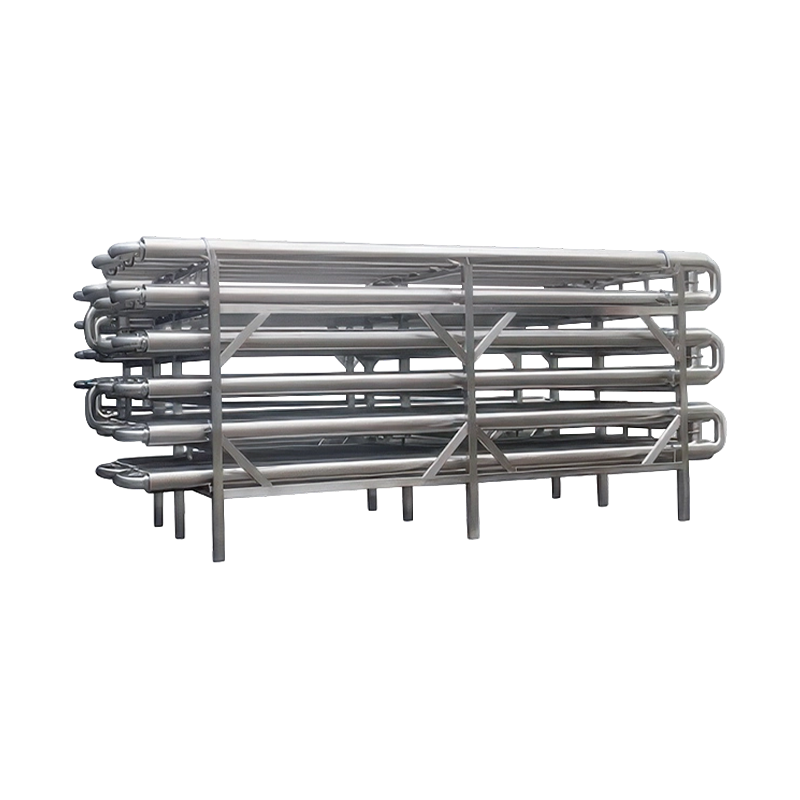
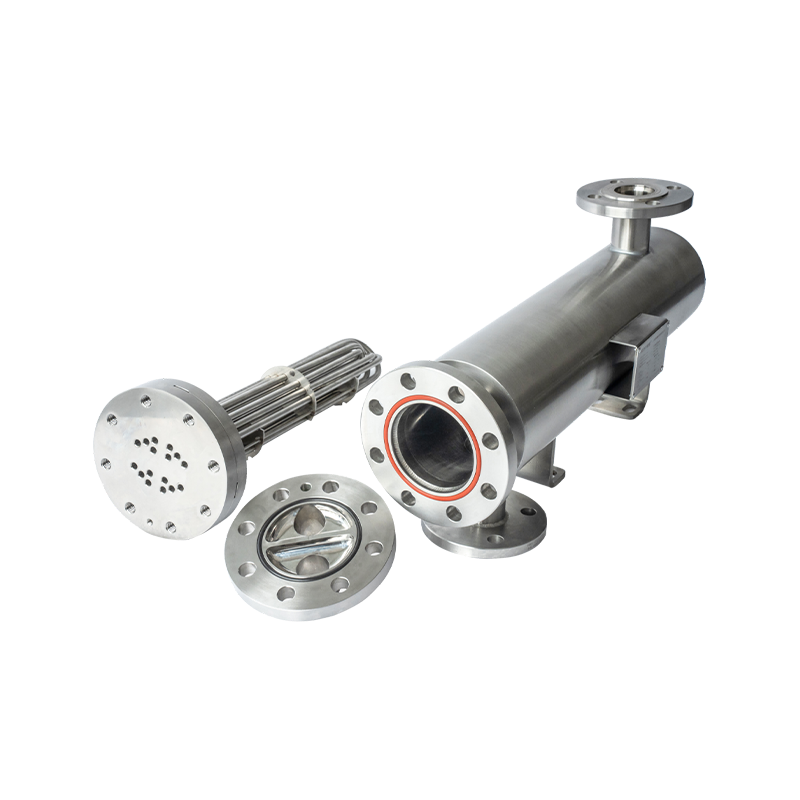
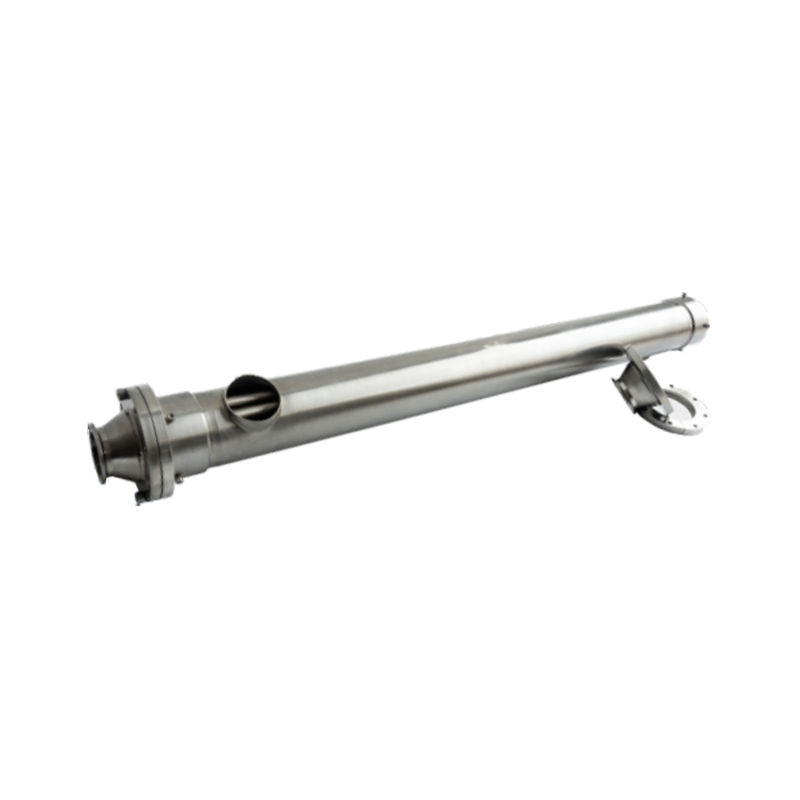
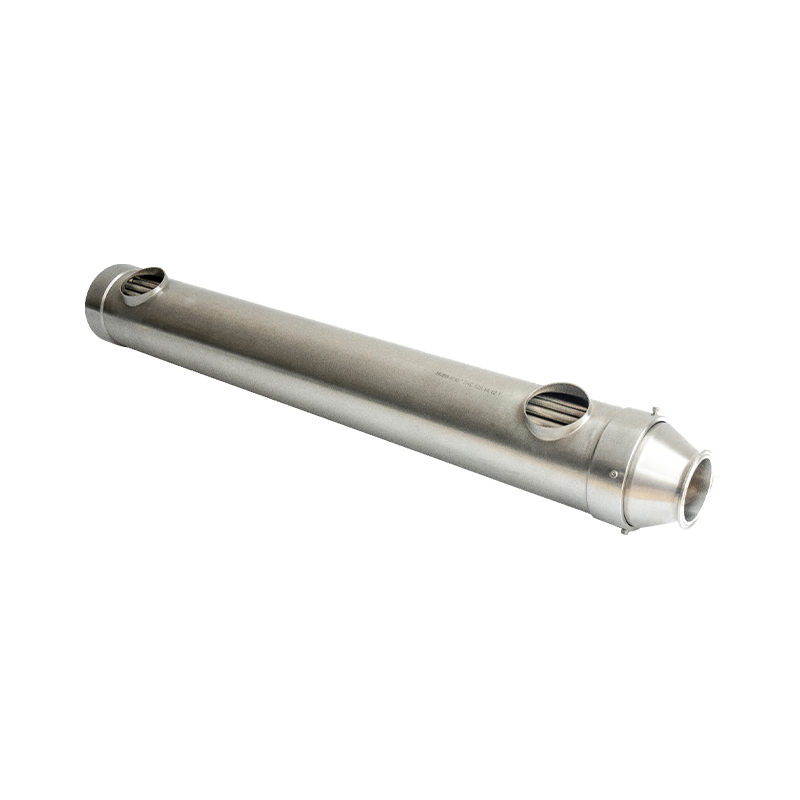
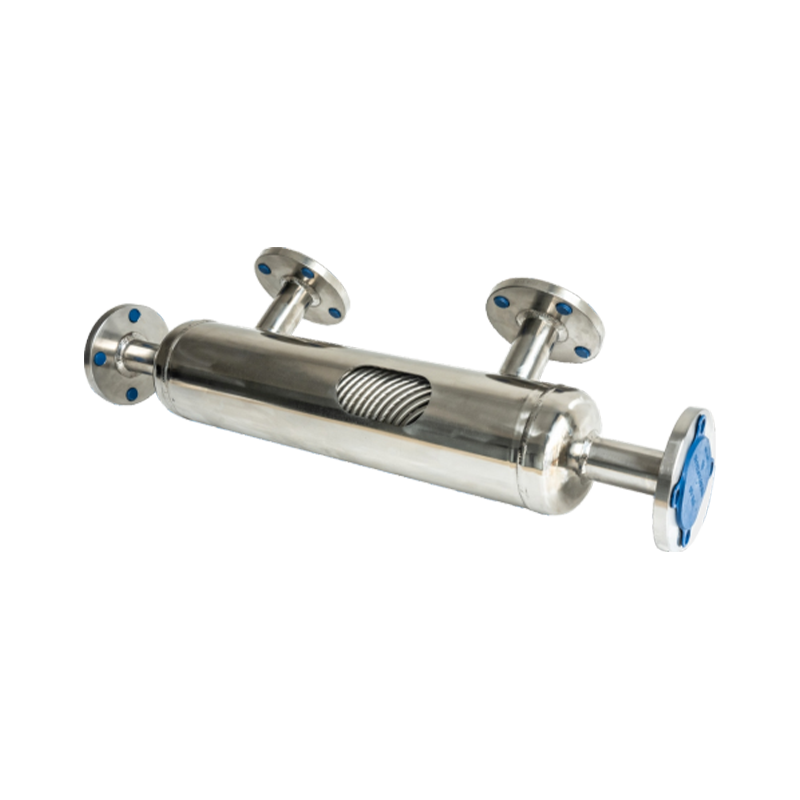
Double-pipe / Multi-tube Heat Exchanger
1. Understanding Double-Pipe and Multi-Tube Heat Exchangers
1.1 Basic Operating Principle
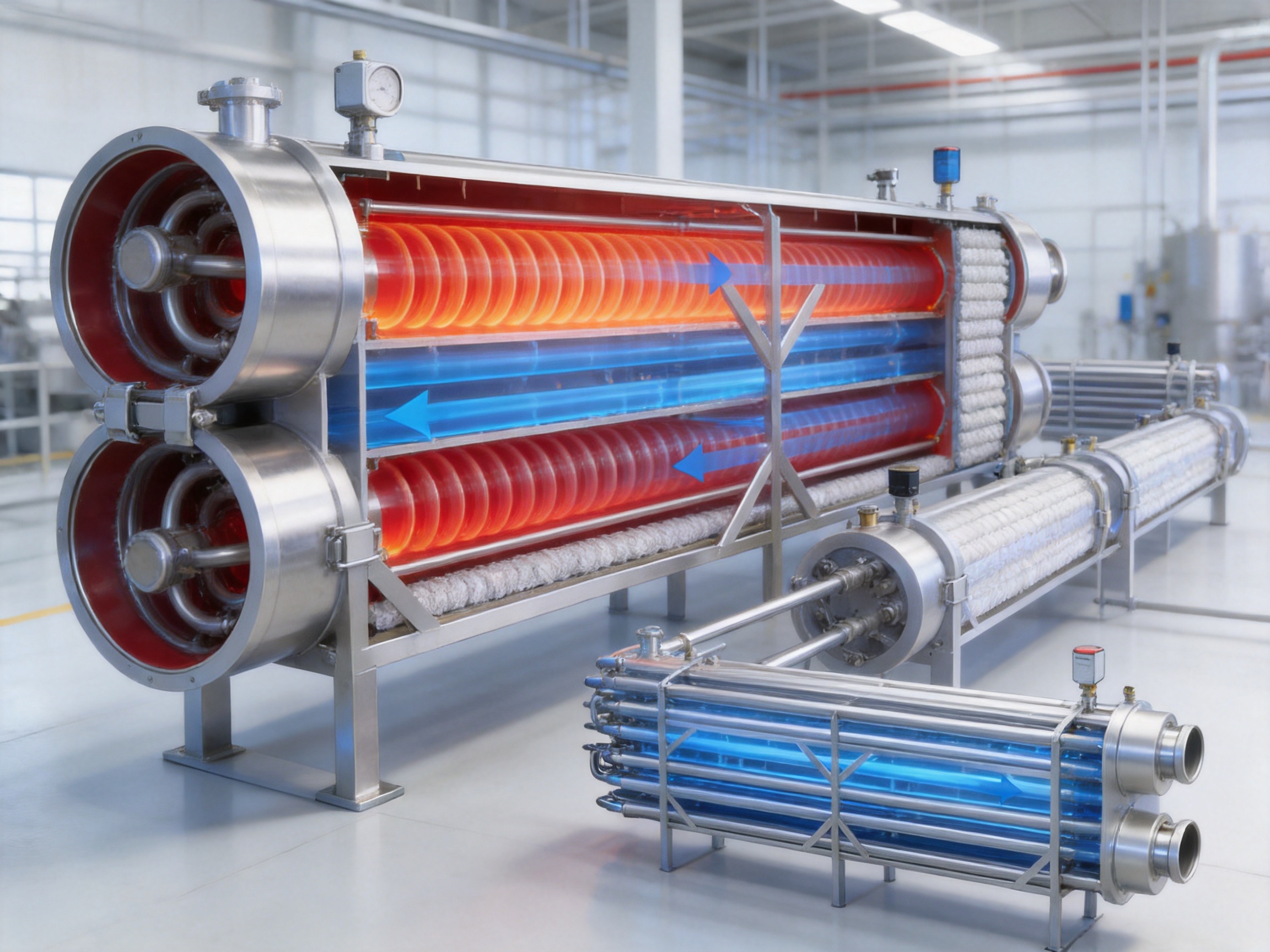
A double-pipe heat exchanger consists of two concentric tubes. One process medium flows through the inner tube, while the second medium flows through the annular space between the inner and outer tubes. Heat passes through the wall of the inner tube, transferring energy from the hotter fluid to the colder fluid without allowing the two media to mix.
The equipment can operate in either parallel flow or countercurrent flow. In parallel flow, both media enter from the same general direction. In countercurrent operation, the fluids move in opposite directions. Countercurrent flow is often preferred when a larger temperature driving force and improved thermal recovery are required, because the temperature difference can be maintained more effectively along the length of the exchanger.
A multi-tube heat exchanger applies the same general principle while incorporating several heat-transfer tubes within an outer flow path or housing. Adding tubes increases the available heat-transfer area and can improve processing capacity without requiring a single extremely long tube. The number, diameter, length, and arrangement of the tubes can be adapted to the process duty.
Both designs are modular. Individual sections may be connected in series to increase the effective heat-transfer length or in parallel to increase the permitted flow rate and reduce pressure drop. This modular approach allows the equipment to be configured around a customer’s process requirements rather than forcing the production line to fit a fixed exchanger geometry.
1.2 Main Components
The principal components typically include inner heat-transfer tubes, outer tubes or shells, tube-section connections, end fittings, product and utility ports, seals or gaskets, supports, and structural frames. Depending on the design, additional components may include bends, manifolds, inspection ports, temperature sensors, pressure connections, insulation, and control-system interfaces.
For hygienic applications, product-contact surfaces are commonly manufactured from stainless steel 304 or 316L. The final material selection depends on the fluid composition, chloride concentration, acidity, cleaning chemicals, temperature, pressure, and applicable regulatory or customer requirements. Stainless steel provides corrosion resistance, mechanical strength, cleanability, and compatibility with many food, pharmaceutical, chemical, and industrial fluids.
Connection methods may include flanges, sanitary clamp connections, welded joints, or a combination of these methods. Quick-clamp connections can support rapid disassembly, while welded construction can reduce the number of potential leakage points. The correct connection configuration depends on the pressure rating, cleaning method, maintenance strategy, and hygienic standard of the application.
1.3 Difference Between Double-Pipe and Multi-Tube Designs
A double-pipe exchanger normally uses one inner tube and one outer tube. It is well suited to small and medium flow rates, compact installations, pilot systems, skid-mounted equipment, and processes requiring a straightforward flow path.
A multi-tube exchanger uses multiple heat-transfer tubes to increase the available surface area and processing capacity. It can be a practical choice for larger flow rates, higher thermal duties, or applications where a single large tube would create an impractical equipment length. Multi-tube arrangements also provide greater design flexibility because the number and arrangement of tubes can be adjusted according to the required duty.
The distinction is not simply a question of size. A double-pipe configuration may offer a particularly simple and accessible flow path, while a multi-tube configuration can provide higher capacity within a compact footprint. The correct selection depends on product viscosity, particle content, flow rate, allowable pressure drop, cleaning method, thermal duty, and available installation space.
2. Why Tubular Heat Exchange Remains Important
2.1 Strong Mechanical Construction
Tubular heat exchangers use metal tube walls as the primary heat-transfer surface. This construction provides a strong barrier between the process and utility media and can be engineered for demanding pressure and temperature conditions. Compared with some thin-channel technologies, tubular construction may offer greater resistance to mechanical stress and a wider operating envelope for selected applications.
The strength of the design is particularly valuable in systems involving steam, hot water, thermal oil, pressurized process liquids, or fluids that experience changing viscosity during heating and cooling. Proper material selection, wall thickness, welding practice, pressure testing, and operating controls remain essential, but the basic tubular structure provides a robust foundation.
2.2 Adaptability to Difficult Media
Many process fluids cannot be handled efficiently by equipment designed only for clean, low-viscosity liquids. Syrups, sauces, concentrates, emulsions, creams, oils, pharmaceutical solutions, and chemical intermediates may have high viscosity or contain suspended particles. Narrow passages and complex internal geometries can increase the risk of clogging or create difficult cleaning conditions.
Double-pipe and selected multi-tube designs can use relatively large-diameter product channels with smooth internal surfaces. This creates a lower-resistance flow path and can reduce the risk of blockage when compared with systems that rely on very narrow channels. The design is especially useful when a product must retain its flowability during heating or when particles must pass through the exchanger without excessive restriction.
However, the phrase “suitable for difficult media” does not mean that every fluid can be processed without engineering review. Particle size, solids concentration, rheology, shear sensitivity, fouling tendency, and minimum velocity must be considered. Shiloc can evaluate these characteristics when developing a customized exchanger configuration.
2.3 Flexible Thermal Performance
Thermal performance depends on the heat-transfer area, temperature difference, fluid properties, flow velocity, wall material, fouling resistance, and flow arrangement. A modular tubular exchanger allows these factors to be adjusted through tube diameter, tube length, tube quantity, number of passes, and series or parallel arrangement.
Countercurrent flow can improve the average temperature driving force and support closer approach temperatures in suitable applications. Flow velocity can be adjusted to improve heat transfer or reduce the likelihood of material deposition. The equipment can be designed for heating, cooling, pasteurization, holding, sterilization, condensation, or heat recovery.
In some large-diameter single-tube designs, heat distribution across the center of the product stream may vary slightly. Under normal operating conditions, this variation may have little effect on overall performance, especially when the design includes appropriate residence time, flow control, mixing upstream or downstream, and validated temperature monitoring. For critical thermal processes, the system should be tested and validated under actual operating conditions.
2.4 Straightforward Maintenance
Maintenance accessibility is a major consideration for industrial heat exchangers. Fouling reduces heat-transfer efficiency, increases pressure drop, and may affect product quality. A design that can be inspected and cleaned without excessive downtime offers significant value over the equipment’s service life.
Detachable tube sections can be separated for manual inspection, mechanical cleaning, replacement of seals, or removal of accumulated residues. Where the process supports it, clean-in-place operation can circulate cleaning solutions through the product and utility paths without complete disassembly. The choice between manual cleaning and CIP depends on the product, residue type, hygienic requirements, cleaning chemistry, flow rate, temperature, and validation program.
The ability to use both disassembly cleaning and CIP gives operators greater flexibility. Routine cleaning may be completed through a validated CIP cycle, while periodic inspection or heavy fouling can be addressed by removing and opening the relevant tube sections.
3. Advantages Over Alternative Heat-Exchange Technologies
3.1 Comparison with Plate Heat Exchangers
Plate heat exchangers are compact and can provide high heat-transfer efficiency for many clean-liquid applications. However, their narrow channels and gasketed plate packs may be less suitable for certain high-viscosity products, particle-containing fluids, or processes with severe fouling. Frequent opening and cleaning may also be necessary when products deposit rapidly.
Double-pipe and multi-tube heat exchangers generally offer larger and more direct flow channels. This can reduce clogging risk and make them more adaptable to fluids with suspended solids, fibrous components, or high viscosity. Their tubular walls also provide a robust separation barrier and can be selected for demanding pressure conditions.
Plate equipment remains highly effective for many applications, so the choice should not be based on a universal ranking. The tubular design is advantageous when product characteristics, cleaning requirements, pressure conditions, or mechanical robustness are more important than the smallest possible footprint.
3.2 Comparison with Conventional Shell-and-Tube Exchangers
Shell-and-tube heat exchangers are widely used in industrial processing and can provide substantial heat-transfer area. However, larger shell-and-tube units may require more installation space, heavier supporting structures, and more complex inspection procedures. For small and medium-sized systems, the equipment may be larger than necessary.
Double-pipe and multi-tube exchangers can offer a more compact and modular alternative. The tube sections can be arranged to suit the available space, and selected modules can be removed or serviced without dismantling an entire large vessel. This can be beneficial for skid-mounted systems, pilot lines, production expansions, and installations with limited access.
For very large duties, a shell-and-tube configuration may still be the most economical solution. The strength of the double-pipe or multi-tube approach is its flexibility in special processes, moderate capacities, hygienic services, high-viscosity duties, and applications requiring accessible flow paths.
3.3 Comparison with Scraped-Surface Heat Exchangers
Scraped-surface heat exchangers are designed for highly viscous or heat-sensitive products and use mechanical elements to remove deposits from the heat-transfer surface. They can be effective in applications where severe fouling occurs or where the product must be continuously scraped during processing.
However, scraped-surface systems include moving parts, drive assemblies, seals, and additional maintenance requirements. They can also involve higher initial complexity and operating costs. A large-diameter tubular exchanger may provide a simpler solution for products that are viscous but can still flow reliably through a smooth, unobstructed passage.
The tubular design is therefore particularly attractive when low mechanical complexity, easy access, sanitary construction, and low flow resistance are desired. If the product forms an exceptionally thick or rapidly hardening layer, a scraped-surface system may be more appropriate and should be evaluated during process design.
3.4 Comparison with Batch Heating Systems
Batch tanks with heating jackets are useful for flexible production and products that require agitation. Nevertheless, heat transfer through a vessel wall can be slower, especially when product viscosity is high or the tank has a large volume. Batch systems may also require additional floor space and longer processing cycles.
A tubular exchanger can provide continuous heating or cooling and a more controlled residence time. It can be integrated with holding tubes, pumps, valves, temperature sensors, and automated control systems to form a complete pasteurization or thermal-processing line. This may improve production consistency and reduce the time required to reach the target temperature.
4. Hygienic Design for Food and Biopharmaceutical Processing
4.1 Food-Grade Materials
Food and biopharmaceutical applications require materials that can withstand repeated contact with the process fluid and cleaning chemicals. Stainless steel 304 and 316L are widely used because they combine corrosion resistance, strength, cleanability, and compatibility with many sanitary processes.
316L is often selected for more demanding environments, particularly where chloride exposure, pharmaceutical cleaning agents, or higher corrosion resistance is important. The final grade should be confirmed through a material-compatibility review rather than selected solely by industry habit.
4.2 Smooth and Accessible Product Paths
Hygienic design aims to minimize areas where product can accumulate, remain stagnant, or become difficult to remove. Smooth internal surfaces, carefully designed transitions, appropriate drainability, and reduced dead legs help support effective cleaning and reduce the risk of cross-contamination.
The tubular structure can provide a relatively direct product path. With suitable connection design and installation, the system can be drained, flushed, cleaned, and inspected efficiently. Tube-section connections must be aligned accurately, and seals must be installed correctly to avoid crevices, leakage, or unnecessary retention zones.
Hygiene performance depends on the complete system, not only the exchanger. Pumps, valves, piping, instruments, tanks, and control sequences must be designed consistently. Cleaning temperature, chemical concentration, flow velocity, exposure time, and rinse quality should be established through process-specific validation.
4.3 CIP and Manual Cleaning
Clean-in-place systems circulate water, alkaline cleaners, acid solutions, disinfectants, and final rinses through the exchanger. The cleaning sequence should be selected according to the type of residue. Protein, sugar, fat, mineral scale, and chemical deposits may require different cleaning conditions.
Manual disassembly remains valuable for inspection and for removing residues that cannot be reliably removed by CIP alone. A detachable design allows operators to open selected tube sections, inspect surfaces, replace gaskets, and confirm the effectiveness of routine cleaning.
For biopharmaceutical applications, cleaning and sterilization procedures should be developed according to the process risk, product sensitivity, regulatory expectations, and validation strategy. If steam-in-place or other sterilization methods are required, the exchanger materials, seals, welds, drainage, and instrumentation must be designed accordingly.
5. Product Configuration and Engineering Flexibility
5.1 Series and Parallel Arrangements
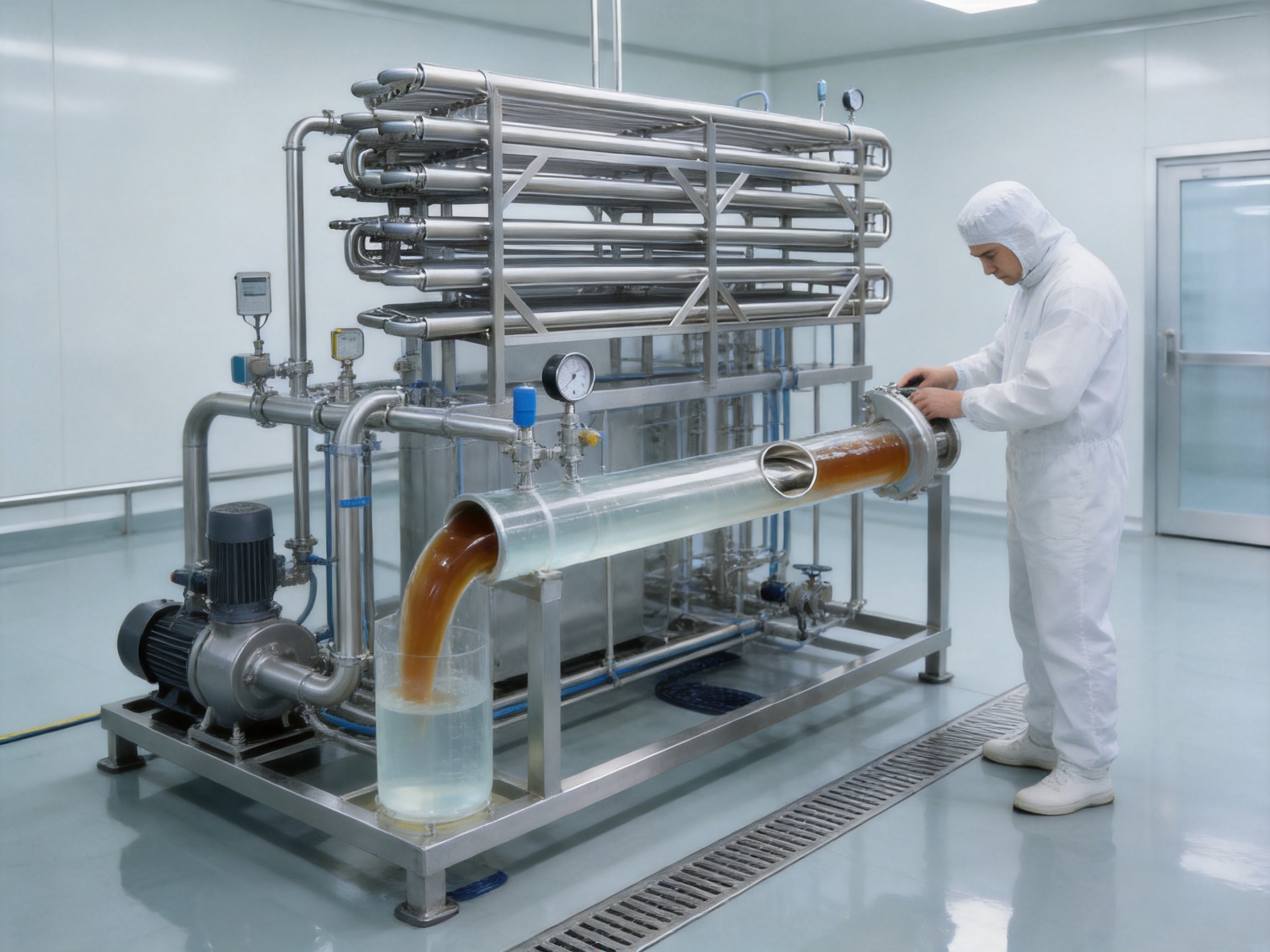
Tube sections can be connected in series when a longer heat-transfer path or greater thermal duty is required. Series arrangements may also provide staged heating or cooling, allowing the process to approach the target temperature gradually.
Parallel arrangements divide the flow among several paths. This can increase total capacity while controlling velocity and pressure drop. Parallel flow paths must be balanced correctly to prevent uneven distribution. Manifold design, pipe resistance, valve settings, and installation geometry all influence flow balance.
A combined configuration can also be used. For example, several parallel groups may be connected in series to provide both high capacity and sufficient residence time. This is one of the main advantages of modular tubular equipment: the configuration can evolve with the process rather than being limited to a single fixed geometry.
5.2 Single-Pass and Multi-Pass Operation
Single-pass operation uses one continuous path through the exchanger. It is straightforward and may reduce pressure drop and cleaning complexity. Multi-pass operation redirects the fluid through multiple tube sections, increasing the effective path length within a compact space.
Multi-pass arrangements can be useful when installation space is limited or when a greater heat-transfer duty is required. They must be evaluated carefully for pressure drop, product shear, cleanability, and flow distribution. The appropriate design is determined by thermal calculations and process data.
5.3 Connection Options
Flanged connections can provide robust mechanical joining and are often used in industrial systems. Sanitary clamp connections are convenient for rapid assembly and disassembly and are common in hygienic production environments. Welded connections can reduce the number of removable joints and may support a clean internal profile when fabricated and finished correctly.
Shiloc can coordinate connection requirements with the customer’s existing piping standards, cleanability expectations, pressure rating, and maintenance procedures. Interface compatibility is important because even a well-designed exchanger can create installation difficulties if its ports do not match the plant’s pipework, valves, supports, or instrumentation.
5.4 Product and Utility Flow Direction
The product may flow through the inner tube while the heating or cooling medium flows through the annulus, or the arrangement may be reversed depending on the process. Flow direction can be selected to optimize thermal performance, cleaning, pressure drop, and product protection.
Countercurrent flow is often preferred for efficient heat recovery. Parallel flow may be selected for specific temperature-control requirements, startup behavior, or process limitations. Flow direction should be confirmed during thermal and hydraulic design rather than selected independently from the rest of the system.
6. Advanced Manufacturing and Quality Strengths
6.1 European Know-How and Danish Design Principles
Shiloc combines European process-equipment know-how with Danish design principles. This approach emphasizes practical functionality, cleanability, operational safety, maintainability, and efficient use of materials. The objective is not merely to produce a metal assembly, but to create equipment that fits the customer’s process and remains serviceable throughout its operating life.
Design work considers the product characteristics, utility conditions, operating sequence, cleaning strategy, installation environment, and future maintenance requirements. This process-oriented approach helps reduce the risk of selecting a heat exchanger based only on nominal heat-transfer area without considering actual production behavior.
6.2 Manufacturing Facility and Technical Personnel
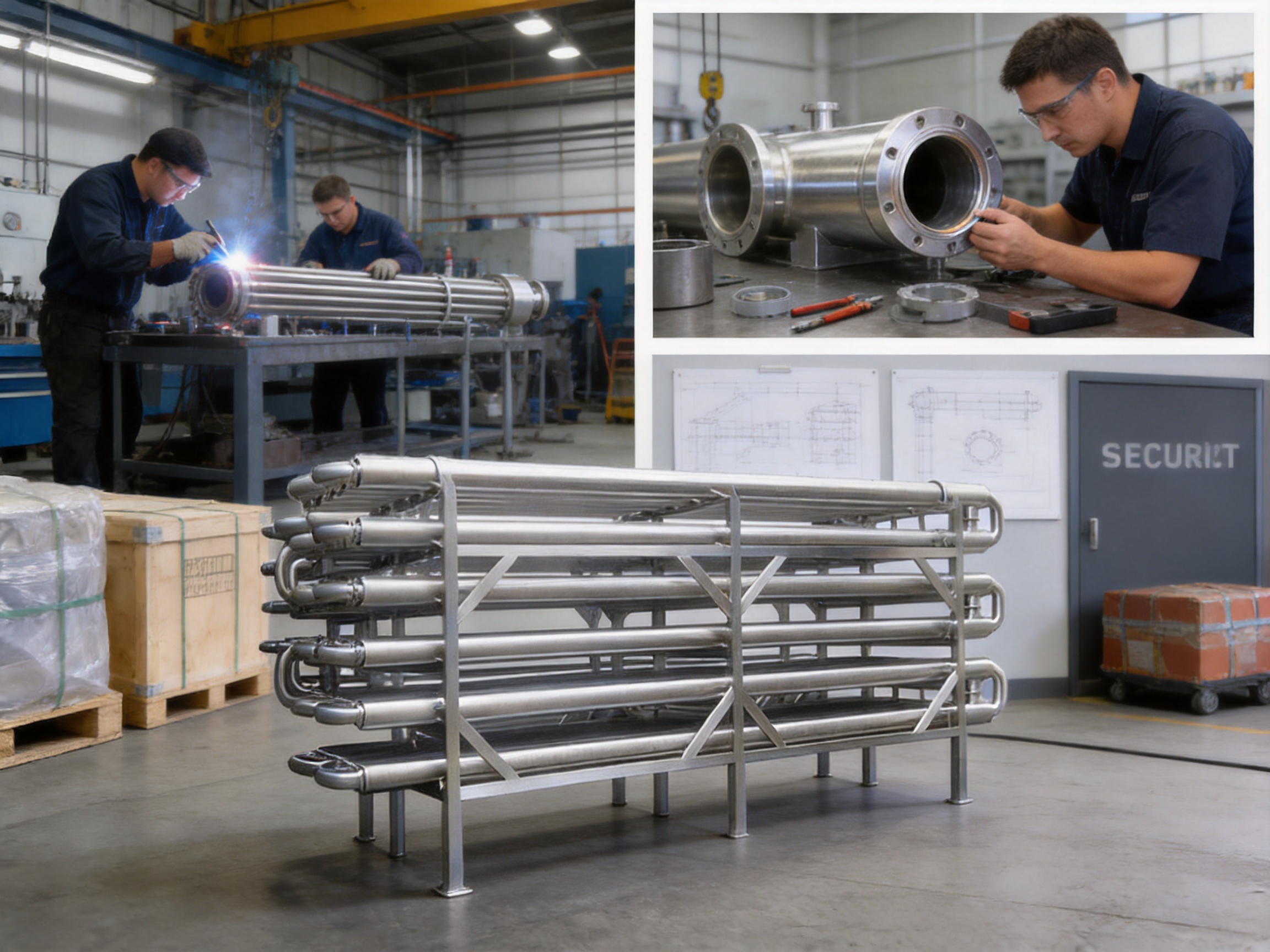
The company operates a 3,000-square-meter facility in Shanghai and has more than 20 technical specialists. Its capabilities cover processing, welding, polishing, and quality control. These capabilities support the production of customized process equipment for food, beverage, biopharmaceutical, daily chemical, and fine chemical applications.
A dedicated facility can improve coordination between design, fabrication, inspection, and delivery. Technical communication is especially important for customized exchangers because the final result depends on numerous details, including tube arrangement, port orientation, support structure, surface finish, gasket selection, instrument connections, and packaging requirements.
6.3 Stainless Steel Processing
Stainless steel fabrication for hygienic equipment requires controlled handling to prevent contamination and preserve corrosion resistance. Cutting, forming, welding, grinding, polishing, cleaning, and packaging must be managed carefully. Tools and work practices should be suitable for stainless steel so that iron contamination and surface damage are minimized.
Tube dimensions and alignment influence both hydraulic performance and assembly quality. Accurate fabrication helps ensure that tube sections fit correctly, seals seat properly, and connections remain stable during pressure and temperature changes.
6.4 Welding and Surface Finishing
Weld quality is critical in process equipment. Proper welding procedures can reduce the risk of cracks, porosity, incomplete penetration, distortion, and internal irregularities. For hygienic equipment, welds should be finished in a manner that supports cleanability and reduces product retention.
Polishing and surface finishing can improve the condition of product-contact surfaces. The required finish depends on the application, product sensitivity, cleaning method, and customer specification. A smooth, consistent surface is especially valuable when handling fluids that contain proteins, sugars, oils, or other materials prone to adhere to metal surfaces.
6.5 Quality Control and Traceability
Quality control may include incoming material verification, dimensional inspection, weld inspection, surface inspection, pressure testing, leak testing, cleaning, packaging inspection, and documentation review. The exact inspection plan should reflect the equipment design and customer requirements.
Traceability helps connect the finished exchanger with its materials, production records, inspection results, and shipment documentation. This is important for regulated industries and for any customer that requires controlled maintenance, replacement parts, or future equipment expansion.
Shiloc’s emphasis on traceability, quality control, and process documentation supports more reliable international procurement. Customers can communicate technical requirements through drawings, specifications, process data, and inspection criteria before production begins.
6.6 Engineering and International Trade Support
Purchasing a customized heat exchanger across international borders involves more than selecting a product and arranging shipment. Technical communication, document preparation, packaging, customs coordination, delivery planning, and after-sales communication all affect the project outcome.
Shiloc provides import and export agency support together with engineering and technical services. This enables the company to coordinate product consultation, supply-chain communication, technical clarification, export documentation, and delivery support. For customers purchasing specialized equipment from China, one coordinated service channel can reduce communication gaps between engineering, manufacturing, and logistics teams.
7. Industrial Applications
7.1 Food and Beverage Processing
Food and beverage applications include dairy products, fruit juices, liquid foods, sauces, concentrates, syrups, edible oils, and other products requiring controlled heating or cooling. Typical duties include pasteurization, preheating, cooling, holding, temperature adjustment, and heat recovery.
For dairy and juice processing, temperature accuracy and hygienic cleaning are essential. The exchanger may be installed with a holding tube, balance tank, pump, control valve, temperature sensor, and automated divert system. The complete line can be designed to maintain the required thermal profile while protecting product quality.
High-viscosity sauces and concentrates may benefit from a large, smooth product passage that reduces restriction. Particle-containing products require attention to particle size, tube diameter, velocity, and cleaning. The exchanger should be selected based on actual product data rather than generic assumptions.
7.2 Biopharmaceutical Processing
Biopharmaceutical liquids may require heating, cooling, sterilization, controlled temperature holding, or preparation of process solutions. These applications place strong demands on materials, surface finish, cleanability, validation, and documentation.
Stainless steel 316L may be selected for demanding product-contact environments. Sanitary connections, drainability, reduced dead legs, and compatible seals support hygienic operation. Depending on the process, the exchanger may be integrated with CIP, sterilization, automated control, and data-recording systems.
Each biopharmaceutical application must be evaluated individually. Product sensitivity, allowable residence time, shear conditions, sterilization method, cleaning agent, and regulatory documentation requirements all influence the final design.
7.3 Chemical and Fine Chemical Production
Chemical processes often involve heating or cooling of reaction feeds, intermediates, solvents, oils, emulsions, and high-viscosity products. Tubular exchangers can be configured for heat recovery, temperature conditioning, reaction support, condensation, or utility service.
Material compatibility is particularly important in chemical applications. Stainless steel may be appropriate for many fluids, while other materials or special surface treatments may be necessary for aggressive media. Pressure, temperature cycling, corrosion, viscosity changes, and fouling behavior must be reviewed during engineering.
7.4 Daily Chemical Products
Personal-care and household products such as liquid detergents, shampoos, creams, lotions, and cleaning formulations may require controlled heating and cooling during mixing or transfer. Some products are highly viscous, while others contain suspended materials or are sensitive to excessive shear.
A tubular heat exchanger can be integrated into a formulation or transfer system to control temperature before filling, packaging, or storage. The design should address product retention, cleaning time, viscosity at startup, and compatibility with the customer’s filling or blending equipment.
7.5 Industrial Cooling and Heat Recovery
Outside hygienic processing, double-pipe and multi-tube heat exchangers can be used in industrial cooling systems, thermal management equipment, energy-conversion systems, and waste-heat recovery. They may transfer heat between water, oil, steam, gases, and process liquids where the materials and design are appropriate.
Heat recovery can reduce utility consumption by transferring energy from a hot outlet stream to a cold inlet stream. Countercurrent arrangements are often valuable in these applications because they can improve the recovery of available thermal energy.
8. How to Select the Correct Heat Exchanger
8.1 Define the Process Media
The first step is to identify both the product and utility media. Important information includes fluid composition, density, viscosity, specific heat, thermal conductivity, corrosiveness, solids concentration, particle size, crystallization tendency, and fouling behavior.
Viscosity may vary significantly with temperature. A product that flows easily at its processing temperature may become difficult to pump during startup or cleaning. These changes affect pressure drop and heat-transfer performance, so design calculations should use realistic operating ranges rather than a single nominal viscosity value.
8.2 Establish Thermal Requirements
The required heat-transfer duty is generally determined by mass flow rate, specific heat, inlet temperature, outlet temperature, and any phase-change requirement. For condensation or evaporation duties, latent heat must also be considered.
Both normal and worst-case conditions should be reviewed. Seasonal utility-temperature changes, production-rate variation, startup conditions, product concentration changes, and fouling over time can influence the required heat-transfer area.
8.3 Evaluate Pressure and Temperature
Operating pressure and design pressure must be distinguished. The equipment should be designed with appropriate safety margins and pressure ratings for both product and utility sides. Pressure surges, pump shutoff pressure, thermal expansion, blocked outlets, and steam conditions should be considered.
Temperature limits apply not only to the process fluid but also to tube materials, gaskets, welds, coatings, instruments, and structural supports. Repeated thermal cycling can affect seals and connections, making controlled startup and shutdown important.
8.4 Consider Flow Rate and Pressure Drop
Flow rate influences heat-transfer coefficients, residence time, product quality, and pump selection. Excessive velocity may increase pressure drop, shear, or erosion, while insufficient velocity may reduce heat transfer and allow deposits to form.
For multi-tube designs, flow distribution between tubes must be reviewed. Uneven distribution can create hot spots, cold zones, or inconsistent residence times. Manifolds and piping should be designed to support balanced flow.
8.5 Assess Cleaning and Maintenance
The cleaning method should be defined before the exchanger is finalized. Questions include whether the system will use CIP, manual disassembly, or both; what chemicals are available; whether sterilization is required; how quickly the line must be cleaned; and whether operators need direct access for inspection.
Seal replacement, spare-part availability, lifting requirements, drain connections, and maintenance clearance should be considered during installation planning. A compact exchanger is not truly practical if there is insufficient space to remove tube sections or service connections.
8.6 Confirm Installation Conditions
Available floor space, elevation, pipe routing, support points, utility connections, access doors, drainage, insulation, and control-panel location all influence the final equipment arrangement. Shiloc can coordinate the exchanger design with the customer’s layout and existing process system.
| Selection Factor | Key Information Required | Design Impact |
|---|---|---|
| Process medium | Composition, viscosity, particles, corrosiveness, fouling tendency | Material, tube diameter, surface finish, cleaning method |
| Thermal duty | Flow rate, inlet and outlet temperatures, heat load | Heat-transfer area, tube length, number of passes |
| Pressure conditions | Operating pressure, design pressure, pressure surges | Wall thickness, connections, testing requirements |
| Hygiene requirements | Product standards, CIP, sterilization, drainability | Materials, weld finish, seals, connection design |
| Installation space | Available length, height, access, pipe routing | Series or parallel arrangement, support structure |
| Maintenance strategy | Inspection frequency, spare parts, cleaning time | Detachable sections, access clearance, gasket selection |
9. Operation, Maintenance, and Troubleshooting
9.1 Startup Procedure
Before startup, operators should verify that tube sections are properly aligned, seals are correctly installed, connections are tightened, valves are in the correct position, and instruments are functioning. The product and utility circuits should be checked for foreign material, trapped air, blocked drains, and unexpected restrictions.
Pressure and temperature should be increased gradually. Sudden thermal or pressure changes can stress tubes, welds, gaskets, and connections. A controlled startup also gives operators time to observe leaks, abnormal vibration, unstable flow, or unexpected pressure drop.
9.2 Routine Operation
Operating data should include inlet and outlet temperatures, flow rates, pressure on both sides, pump status, and cleaning-cycle results. Tracking these values over time helps identify fouling, flow imbalance, seal deterioration, or changes in product properties.
A gradual reduction in thermal performance may indicate fouling on the inner or outer tube walls. Increased pressure drop may indicate clogging, excessive viscosity, particle accumulation, or a valve or piping problem. Operators should investigate these symptoms before they result in product loss or an unplanned shutdown.
9.3 Reduced Heat-Exchange Efficiency
If the outlet temperature does not meet the specification, operators should first check the utility temperature, product flow rate, pressure stability, sensor accuracy, and valve position. Fouling on either side of the heat-transfer wall should then be considered.
The tube arrangement and flow direction should be compared with the approved design. Incorrect series or parallel connections can reduce the effective heat-transfer area or create uneven distribution. Insulation damage may also affect temperature performance, particularly in high-temperature service.
9.4 Clogging on the Media Side
Clogging can result from particles, crystallization, product solidification, inadequate flow velocity, or a product temperature that is too low. The affected tube section should be isolated and cleaned according to the approved procedure. If necessary, the section can be disassembled to remove residual material or impurities.
Operators should verify that particle content and particle size remain within the equipment’s design range. Increasing flow rate may help in some cases, but excessive velocity can create other problems. Any process adjustment should be evaluated for pressure drop, product quality, and pump capability.
9.5 Leakage at Connections
Leakage may result from an aged gasket, incorrect seal installation, tube-section misalignment, inadequate tightening, thermal cycling, or mechanical stress from connected piping. The system should be depressurized and made safe before inspection.
Gaskets should be replaced when they show signs of compression damage, swelling, cracking, hardening, or chemical attack. Connections should be tightened according to the applicable specification. Piping should be independently supported so that external loads are not transferred to the exchanger ports.
9.6 Long-Term Shutdown
When the equipment will remain out of service for an extended period, process media should be drained from the tubes and connected piping. Residual product can harden, ferment, corrode surfaces, or become difficult to remove. In cold environments, trapped water may freeze and damage components.
After draining, the system should be cleaned, rinsed, dried where appropriate, and protected according to the material and storage conditions. Open connections may require hygienic covers to prevent dust or foreign materials from entering the equipment.
10. Why Work with a Specialized Equipment Partner?
A heat exchanger is only one component of a complete process system. Its performance depends on pumps, valves, piping, instrumentation, cleaning systems, control logic, utility availability, and operator procedures. A specialized supplier can help connect these elements during the design stage.
Shiloc focuses on process equipment and international engineering services for food and beverage, biopharmaceutical, daily chemical, and fine chemical industries. Its product and service scope includes heat exchangers, aseptic mixing equipment, technical consultation, equipment manufacturing, export coordination, and supply-chain support.
The company’s Shanghai facility, technical team, fabrication capabilities, and quality-control procedures support customized production rather than only standard catalog supply. This is important when customers require special port orientations, nonstandard tube lengths, particular connection types, customized frames, hygienic surface treatment, or integration with existing production equipment.
Its import and export agency experience can also help customers manage international purchasing. Technical specifications, drawings, inspection requirements, packaging, shipping documents, and delivery coordination can be handled as part of a more integrated supply process.
For customers, the value of a supply partner should be measured by more than the purchase price. Design accuracy, fabrication quality, documentation, responsiveness, spare-part support, and the ability to communicate across engineering and commercial teams can have a major effect on total project cost and production reliability.
11. Frequently Asked Questions
Q1: What is the main difference between a double-pipe and a multi-tube heat exchanger?
A: A double-pipe heat exchanger uses one inner tube and one outer tube, with the two media flowing through separate passages. A multi-tube heat exchanger uses several heat-transfer tubes to increase the available heat-transfer area and processing capacity. The double-pipe design is often suitable for small or medium flow rates, while the multi-tube design can be configured for higher capacity or more compact installation.
Q2: Can this equipment handle high-viscosity products?
A: Yes, suitable configurations can handle many high-viscosity products. Large-diameter tubes and smooth flow paths can reduce resistance and clogging risk. The final design must consider viscosity at startup and operating temperature, solids content, particle size, flow rate, pressure drop, and fouling behavior.
Q3: Is the heat exchanger suitable for food and beverage production?
A: Yes. Stainless steel construction, hygienic flow paths, suitable connections, detachable tube sections, and CIP compatibility make the equipment suitable for many food and beverage applications, including pasteurization, heating, cooling, and holding. The complete installation should be designed and validated according to the applicable hygienic requirements.
Q4: Can it be used in biopharmaceutical processing?
A: It can be used for selected biopharmaceutical heating, cooling, sterilization, and process-liquid applications. Material grade, surface finish, weld quality, seals, drainability, cleaning, sterilization, documentation, and validation requirements must be confirmed for each project.
Q5: Does the equipment support clean-in-place operation?
A: Yes, configurations can support CIP when the flow paths, connections, drainage, cleaning velocities, chemical compatibility, and operating procedures are properly designed. Manual disassembly can also be used for periodic inspection or heavy fouling.
Q6: Can the tube sections be arranged in series or parallel?
A: Yes. Series arrangements can increase effective heat-transfer length, while parallel arrangements can increase capacity and help control pressure drop. Combined series-parallel configurations are also possible, subject to hydraulic and thermal calculations.
Q7: Which materials are commonly used?
A: Food-grade stainless steel 304 and 316L are commonly used for product-contact tubes and components. The correct material depends on fluid chemistry, chloride exposure, cleaning chemicals, temperature, pressure, and customer requirements. Other materials may be considered for specialized industrial media.
Q8: Can the flow be parallel or countercurrent?
A: Yes. Both flow arrangements can be designed. Countercurrent flow often improves thermal driving force and heat recovery, while parallel flow may be appropriate for specific temperature-control or startup requirements.
Q9: What information is needed for a quotation and technical design?
A: Important information includes product and utility media, flow rates, inlet and outlet temperatures, operating and design pressures, viscosity, particle content, required heat-transfer duty, cleaning method, connection standards, installation limitations, material requirements, and control or instrumentation needs.
Q10: How does the manufacturer support international customers?
A: Shiloc provides product consultation, technical communication, customized equipment manufacturing, quality coordination, import and export agency services, supply-chain support, and delivery assistance. These services help customers coordinate the engineering and commercial aspects of international equipment procurement.
Q11: What causes reduced heat-transfer efficiency?
A: Common causes include fouling, inadequate utility temperature, unstable flow, incorrect flow direction, poor flow distribution, inaccurate sensors, insufficient heat-transfer area, or changes in product properties. The exchanger and the complete process system should be checked systematically.
Q12: What causes leakage at a tube-section connection?
A: Possible causes include damaged or aged gaskets, incorrect installation, misalignment, insufficient tightening, excessive vibration, thermal cycling, or external piping loads. Safe isolation and depressurization should be completed before inspection or repair.
12. Conclusion
Double-pipe and multi-tube heat exchangers offer a versatile solution for industrial heating, cooling, pasteurization, sterilization, condensation, and heat recovery. Their principal strengths include robust tubular construction, flexible series and parallel arrangements, compatibility with high-viscosity or particle-containing media, hygienic stainless steel options, and accessible cleaning and maintenance.
Compared with plate, large shell-and-tube, scraped-surface, and batch heating alternatives, the tubular design can provide an effective balance between pressure resistance, installation flexibility, flow-path simplicity, and process adaptability. Its performance depends on correct engineering, including thermal sizing, hydraulic calculation, material selection, flow distribution, cleaning design, and integration with the wider process system.
Shiloc combines European know-how, Danish design principles, Shanghai manufacturing capabilities, technical personnel, stainless steel processing, welding, polishing, quality control, and international trade support. This combination enables the company to provide more than a standard heat exchanger: it supports customers with customized equipment and coordinated engineering and supply-chain services.
For food and beverage processors, biopharmaceutical manufacturers, chemical producers, daily chemical companies, and industrial users, the right double-pipe or multi-tube heat exchanger can improve temperature control, reduce fouling-related downtime, simplify maintenance, and support reliable production. The most effective solution begins with a detailed understanding of the medium, process conditions, cleaning strategy, installation environment, and long-term operating objectives.
References
1. Tubular Heat Exchanger Design Principles, Industrial Thermal Processing Reference Materials.
2. Hygienic Design Guidelines for Food and Beverage Processing Equipment.
3. Stainless Steel Selection and Corrosion Considerations for Process Equipment.
4. Clean-in-Place System Design and Validation Practices.
5. Heat Transfer Fundamentals for Countercurrent and Parallel-Flow Exchangers.
6. Process Equipment Welding, Surface Finishing, and Quality-Control Practices.
7. Pharmaceutical and Biopharmaceutical Process Equipment Design Considerations.
8. Industrial Heat Recovery and Utility-Efficiency Engineering Principles.
Product: Double-pipe / Multi-tube Heat Exchanger
PREV:Bottom-Mounted Magnetic Mixers for Hygienic Food, Beverage, and Biopharmaceutical Processing
NEXT:Sanitary Pure Steam Sampling Condensers for Reliable Pharmaceutical and Food Process Control
NEXT:Sanitary Pure Steam Sampling Condensers for Reliable Pharmaceutical and Food Process Control
Interested in cooperation or have questions?
Recommended LINS
✦
Milk Processing Heat Exchanger
Aseptic Processing Equipment for Liquid Foods
Industrial Liquid Food Sterilization Equipment
High Temperature Short Time Sterilizer
UHT Processing Equipment for Plant Based Milk
UHT Processing System for Dairy Products
Food Processing Skid System
Automatic UHT Sterilizer for Milk
Plate Heat Exchanger Pasteurization System
Aseptic Beverage Processing Line
Let'S Work Together Welcome Aboard!
-

haikexin@haikexin.com
+8613391278930
-
 +86-21-57560276
-
 No. 2819, Sihu Road,Fengxian District, Shanghai, China
Join Our Mailing List
Copyright © Shiloc (Shanghai) Industrial Trading Co., Ltd. All Rights Reserved.
Process Systems & Equipment For Food & Biopharma Manufacturers
