
 English
 русский
 Português
 Français



 Read More

Product Category
NEW Category
Contact us
Contact Us
We specialise in the research, development and manufacture of electrical wires and cables.
 +86-21-57560276
Food-Grade CIP Systems for Efficient, Hygienic, and Traceable Process Cleaning
Content
- 1 1. What Is a Food-Grade CIP System?
- 2 2. Why Food Manufacturers Need Automated CIP Cleaning
- 3 3. Main Components of the System
- 4 4. Cleaning Process and Operating Sequence
- 5 5. Advantages Over Conventional and Less Integrated Systems
- 5.1 5.1 Reduced Manual Intervention
- 5.2 5.2 Better Cleaning Repeatability
- 5.3 5.3 Improved Access to Enclosed Equipment
- 5.4 5.4 Lower Cross-Contamination Risk
- 5.5 5.5 Traceable Cleaning Records
- 5.6 5.6 More Efficient Use of Water and Chemicals
- 5.7 5.7 Better Working Conditions
- 5.8 5.8 Flexible Configuration
- 6 6. Hygienic Design and Material Selection
- 7 7. Manufacturing Strengths and Engineering Capabilities
- 8 8. Applications in Food and Beverage Processing
- 9 9. Automation, Data Recording, and Traceability
- 10 10. Maintenance and Long-Term Operation
- 11 11. How to Select the Correct CIP System
- 12 12. Why Choose a Customized Integrated Solution?
- 13 13. Commercial and Operational Value
- 14 14. Company Strengths and Service Approach
- 15 15. Implementation Considerations
- 16 16. Conclusion
- 17 Questions and Answers
- 17.1 Q1: What is a food-grade CIP system used for?
- 17.2 Q2: How does a CIP system reduce manual cleaning requirements?
- 17.3 Q3: Which cleaning stages can the system perform?
- 17.4 Q4: What materials are commonly used for the equipment?
- 17.5 Q5: Can the CIP system record cleaning data?
- 17.6 Q6: Is a CIP system suitable for dairy production?
- 17.7 Q7: Can the system clean beverage production lines?
- 17.8 Q8: How should acid and alkaline solutions be stored?
- 17.9 Q9: What should be checked if cleaning is incomplete?
- 17.10 Q10: What should be considered when selecting a CIP supplier?
- 17.11 Q11: Can a CIP system be expanded in the future?
- 17.12 Q12: Does CIP eliminate the need for all manual inspection?
- 18 References
- 19 Product: Food-Grade CIP (Clean-in-Place) System
In modern food and beverage manufacturing, cleaning is not a secondary maintenance activity. It is a central part of product safety, production efficiency, equipment protection, and regulatory compliance. Processing lines used for dairy products, beverages, sauces, liquid foods, and other hygienic applications must be cleaned thoroughly between production cycles. Residual product, fat, protein, sugar, minerals, microorganisms, and cleaning chemicals can compromise quality if they are not removed through a controlled and repeatable process.
A Food-Grade CIP (Clean-in-Place) System provides an integrated solution for cleaning the internal surfaces of process equipment without extensive dismantling. By circulating water and chemical cleaning media through tanks, pipelines, pumps, valves, heat exchangers, mixing vessels, and other production equipment, the system reduces manual cleaning work while improving consistency and traceability. Its automated control architecture manages cleaning temperature, chemical concentration, circulation time, liquid level, and process sequence to support reliable sanitation.
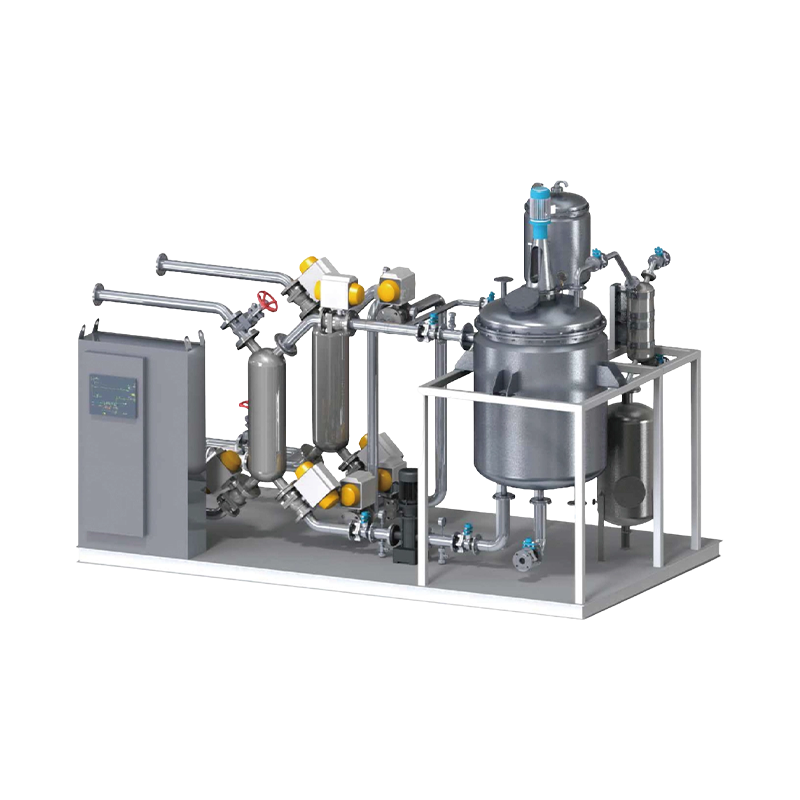
Designed for food and beverage applications, the system combines hygienic stainless steel construction, process pumps, storage tanks, pipeline modules, sensors, valves, and PLC-based controls. It can be configured for pre-rinsing, alkaline washing, intermediate rinsing, acid washing, final rinsing, and other customized cleaning stages. Depending on the process requirements, it can also support disinfection or sterilization procedures.
Shiloc (Shanghai) Industrial Trading Co., Ltd. provides process systems and equipment for food and beverage, biopharmaceutical, daily chemical, and fine chemical manufacturers. The company combines European know-how and Danish design concepts with local manufacturing, processing, welding, polishing, engineering, and quality control capabilities. This combination allows customers to receive customized hygienic equipment designed around their process conditions rather than relying only on standardized equipment configurations.
This article explains the working principles, configuration, advantages, manufacturing strengths, applications, maintenance requirements, selection criteria, and commercial value of a food-grade CIP system.
1. What Is a Food-Grade CIP System?
A food-grade CIP system is an automated or semi-automated cleaning installation that cleans the internal surfaces of production equipment while the equipment remains assembled. Instead of removing pipelines, opening tanks, or manually scrubbing process components, operators connect the CIP system to the production circuit and circulate cleaning solutions through the required equipment.
The system generally includes several storage tanks, circulation pumps, heat exchangers or heating devices, sanitary valves, return pipelines, instrumentation, control cabinets, and a human-machine interface. These components operate together to deliver the mechanical, thermal, chemical, and time-based conditions required for effective cleaning.
The basic cleaning mechanism depends on four important factors: chemical concentration, temperature, mechanical action, and contact time. Chemical concentration helps dissolve organic and inorganic residues. Temperature improves the cleaning power of many detergents and assists in removing fats and proteins. Mechanical action is created by fluid velocity, turbulence, spray devices, and circulation pressure. Contact time allows the cleaning media to act on deposits and contaminants.
A well-designed CIP system coordinates these factors according to the product and equipment being cleaned. For example, a dairy application may require an alkaline solution to remove milk fat and protein, followed by an acid solution to remove mineral scale. A beverage line may require different rinse durations and chemical concentrations because sugar, colorants, fruit pulp, or flavoring residues behave differently.
| Cleaning Stage | Typical Purpose | Common Media |
|---|---|---|
| Pre-rinsing | Removes loose product residues and prepares surfaces for chemical cleaning | Water |
| Alkaline washing | Breaks down fats, proteins, and other organic deposits | Alkaline detergent and water |
| Intermediate rinsing | Removes residual alkaline solution before the next stage | Water |
| Acid washing | Removes mineral deposits, scale, and inorganic residues | Acidic detergent and water |
| Final rinsing | Removes remaining chemicals and prepares the equipment for production | Clean water or treated water |
| Disinfection or sterilization | Reduces microbial contamination according to process requirements | Approved disinfectant, hot water, or other validated medium |
Because the process is controlled through a programmed sequence, a CIP system can provide a repeatable cleaning routine for every production batch. This reduces dependence on individual operator experience and makes it easier to document that the required cleaning procedure was completed.
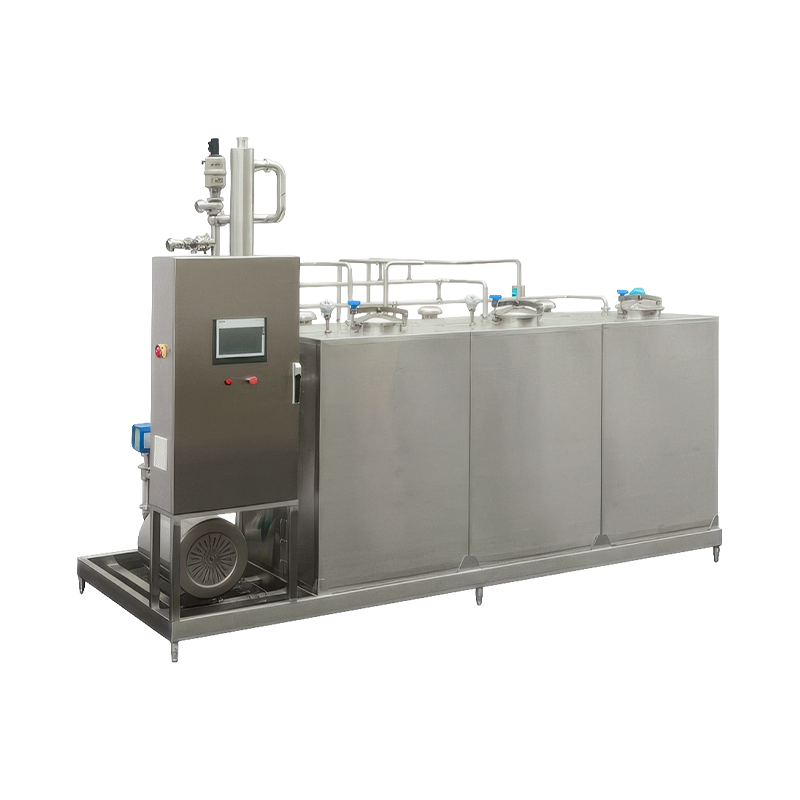
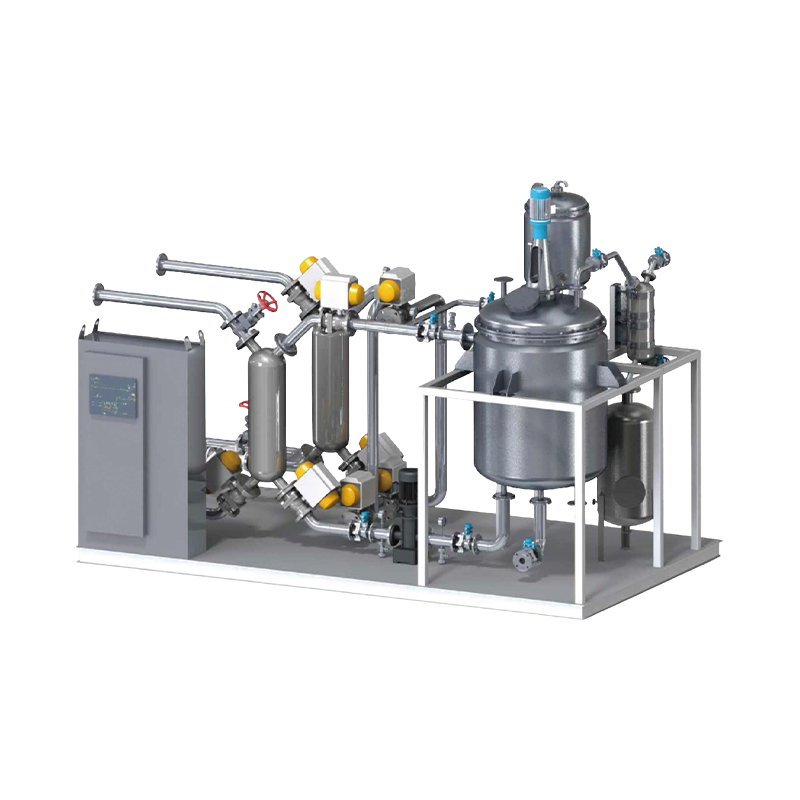
Food-Grade CIP (Clean-in-Place) System
2. Why Food Manufacturers Need Automated CIP Cleaning
Food processing equipment is exposed to materials that can quickly create difficult-to-remove residues. Milk and cream may leave fat and protein films. Fruit beverages may leave sugar, pulp, pigments, and flavor compounds. Sauces and condiments may contain oil, starch, spices, proteins, and suspended solids. If residues remain inside a pipeline or tank, they may support microbial growth, cause product carryover, create unpleasant odors, or reduce the quality of the next production batch.
Manual cleaning can be effective when performed correctly, but it often requires substantial labor and careful supervision. Operators may need to drain equipment, remove fittings, open manways, dismantle valves, clean individual parts, inspect surfaces, and reassemble the line. These activities increase cleaning time and expose workers to detergents, hot water, confined spaces, and repetitive tasks.
Manual procedures may also vary from one shift to another. Differences in scrubbing force, cleaning duration, rinse volume, water temperature, and detergent dosage can produce inconsistent results. Difficult-to-access areas, such as long pipelines, valve cavities, heat exchanger passages, and enclosed tank outlets, may not receive uniform attention.
A food-grade CIP system addresses these limitations by integrating the cleaning procedure into the production infrastructure. Once the appropriate program is selected, the system can automatically perform the required cleaning stages. Operators continue to supervise the process and respond to alarms, but they do not need to perform every repetitive cleaning activity manually.
| Performance Area | Manual Cleaning | Food-Grade CIP Cleaning |
|---|---|---|
| Equipment preparation | Often requires dismantling and manual access | Uses sanitary connections and circulation paths |
| Labor demand | High and dependent on operator availability | Reduced through automated sequences |
| Cleaning consistency | May vary between operators and shifts | Based on preset parameters and recipes |
| Internal pipelines | Difficult to clean and inspect manually | Cleaning media circulate through the process circuit |
| Process documentation | May rely on handwritten records | Temperature, time, concentration, and alarms can be recorded |
| Worker exposure | Greater exposure to chemicals and hot liquids | Reduced direct contact with cleaning media |
| Production changeover | Often slower because of preparation and reassembly | Supports faster and more organized cleaning cycles |
The value of CIP is therefore not limited to labor reduction. It also supports more stable production scheduling, better process control, improved hygiene management, and more reliable equipment availability.
3. Main Components of the System
3.1 Stainless Steel Storage Tanks
The system uses separate tanks to store clean water, alkaline solution, acidic solution, and, where necessary, other cleaning or disinfection media. Separate storage helps prevent unwanted chemical reactions and allows each solution to be recovered and reused when process conditions permit.
Food-grade stainless steel 304 or 316L can be selected according to the application. Stainless steel provides corrosion resistance, mechanical strength, cleanability, and compatibility with hygienic processing environments. The surface finish, weld quality, internal geometry, drainability, and connection design are important factors in preventing residue accumulation.
Tank volume is determined by the process circuit, required flow rate, return volume, cleaning sequence, and desired degree of solution recovery. Modular tank design allows manufacturers to configure the system for small production lines, medium-sized factories, or larger integrated plants.
3.2 Circulation Pumps
Circulation pumps provide the flow and pressure required to move cleaning solutions through process pipelines and equipment. Pump selection depends on pipeline length, elevation, pipe diameter, heat exchanger resistance, spray device requirements, valve arrangement, and the viscosity of the cleaning media.
The pump should provide sufficient velocity and turbulence to create effective mechanical cleaning action. At the same time, it must be compatible with the temperature and chemical characteristics of the cleaning solution. Sanitary pump construction, suitable seals, smooth internal surfaces, and easy inspection are important for reliable operation.
3.3 Sanitary Pipeline Modules and Valves
Pipeline modules direct cleaning solutions from the selected tank to the equipment being cleaned and return the liquid to the appropriate storage tank or drain. Sanitary valves control the flow path and help isolate production circuits, cleaning circuits, and recovery circuits.
Valve feedback signals can confirm whether a valve has reached its commanded position. This prevents the control system from proceeding when the flow path is not correctly configured. Proper valve arrangement also reduces the risk of mixing product, water, alkaline solution, and acid.
3.4 Heating and Temperature Control
Cleaning temperature can be adjusted from room temperature to approximately 85°C, depending on the process design and chemical requirements. Heating may be provided through an integrated heat exchanger, an external heating system, or another approved thermal arrangement.
Temperature sensors continuously monitor the cleaning medium. The PLC can maintain the programmed temperature range and generate an alarm if the actual temperature is too low or too high. Stable temperature control supports repeatable cleaning and helps protect equipment from unnecessary thermal stress.
3.5 PLC and Touch Screen Control
The PLC control system coordinates pumps, valves, heaters, level sensors, temperature sensors, concentration monitoring, alarms, and process timing. Operators can select a cleaning recipe through the touch screen and adjust approved parameters according to the production requirements.
Typical control functions include automatic filling, heating, circulation, solution recovery, draining, rinsing, sequence confirmation, alarm management, and recipe storage. The system can also provide manual operation modes for commissioning, maintenance, troubleshooting, and individual component testing.
3.6 Instrumentation and Safety Devices
Level protection prevents pumps from operating without sufficient liquid. Temperature monitoring helps maintain the required cleaning conditions. Emergency stop devices allow operators to stop the system quickly in an abnormal situation. Additional protective functions may include pump overload protection, valve position monitoring, high-temperature alarms, low-level alarms, and access or interlock controls.
These safety features are important because a CIP system handles hot liquids, chemical detergents, pressurized flow, and automated equipment movement. A properly designed control system provides protection for operators, equipment, and production assets.
4. Cleaning Process and Operating Sequence
The exact cleaning recipe depends on the product, equipment, residue type, hygiene standard, and validation requirements. The following sequence represents a common arrangement for liquid food production.
4.1 Pre-Rinsing
Pre-rinsing removes loose product residues before chemical cleaning begins. This stage helps prevent unnecessary detergent contamination and reduces the chemical load required during alkaline or acid washing. The rinse may continue until the return liquid reaches a defined condition or until a programmed time and volume have been achieved.
4.2 Alkaline Washing
Alkaline washing is commonly used to remove fats, proteins, oils, and other organic deposits. The CIP system draws the alkaline solution from its designated tank, heats it to the required temperature, and circulates it through the process equipment for the programmed duration.
Concentration, temperature, flow rate, and contact time must be selected according to the cleaning chemistry and product residue. If the concentration is too low, cleaning performance may be insufficient. If it is too high, chemical consumption and material stress may increase without providing proportional benefits.
4.3 Intermediate Rinsing
After alkaline washing, the equipment is rinsed to remove residual detergent. This step prevents the alkaline solution from mixing with the acid solution used later. The rinse can continue until the system meets the programmed time, conductivity, pH, or other process condition.
4.4 Acid Washing
Acid washing is used to remove mineral scale, inorganic deposits, and residues that may accumulate on heat transfer surfaces and process equipment. Dairy systems, for example, may develop mineral deposits when exposed to repeated heating and cooling cycles. Acid cleaning helps restore surface condition and maintain heat transfer performance.
4.5 Final Rinsing
The final rinse removes residual acid and prepares the equipment for production. Depending on the product and factory water system, the final rinse may use clean water, filtered water, treated water, or another specified medium. The final rinse must be controlled carefully because residual cleaning chemicals may affect product taste, quality, or safety.
4.6 Disinfection or Sterilization
Where required, the system can include a disinfection or sterilization step. This may involve hot water, approved chemical disinfectants, or another validated method. The selected method must be compatible with the equipment materials, seals, product requirements, and site procedures.
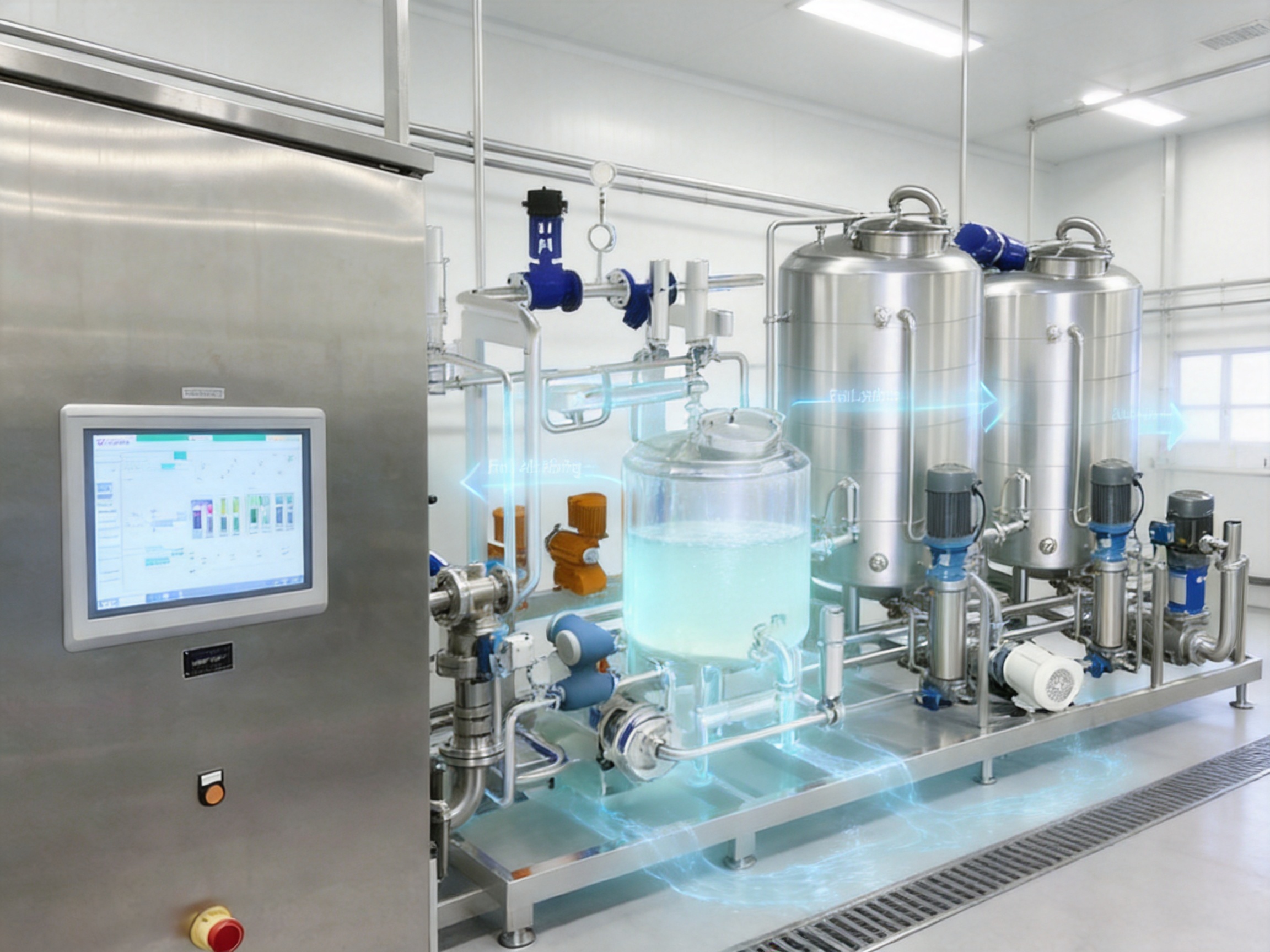
The cleaning cycle can be programmed as a complete sequence or as separate recipes for different production lines. For example, a beverage line may require a shorter cycle than a dairy fermentation system, while a sauce line may require longer alkaline circulation due to higher viscosity and heavier residue.
5. Advantages Over Conventional and Less Integrated Systems
5.1 Reduced Manual Intervention
The most visible advantage is the reduction in manual cleaning work. Operators do not need to dismantle the entire production line for every cleaning cycle. This saves labor and reduces the time spent on opening equipment, moving components, scrubbing surfaces, and reassembling connections.
5.2 Better Cleaning Repeatability
Preset programs help ensure that each cycle follows the same sequence. The system can control temperature, time, pump operation, valve position, and solution selection more consistently than manual procedures. Repeatability is particularly important for factories producing multiple batches or operating several shifts.
5.3 Improved Access to Enclosed Equipment
Internal pipelines, tanks, heat exchangers, mixing vessels, and valve assemblies can be difficult to clean by hand. CIP circulation allows the cleaning media to reach enclosed surfaces that are not easily accessible to operators. The effectiveness of this approach still depends on hygienic equipment design, appropriate flow velocity, and correct spray or circulation arrangements.
5.4 Lower Cross-Contamination Risk
Controlled flow paths, dedicated solution tanks, automated valve sequencing, and documented cleaning recipes help reduce the risk of transferring residue from one product batch to another. Separate storage of alkaline and acidic solutions also prevents unwanted chemical reactions and supports safer operation.
5.5 Traceable Cleaning Records
Temperature, time, concentration, process stage, alarms, and operator actions can be recorded by the control system. These records support production management, internal audits, process improvement, and quality documentation. Exportable data can provide evidence that the programmed cleaning procedure was completed.
5.6 More Efficient Use of Water and Chemicals
Manual cleaning may use uncertain quantities of water and detergent because operators often compensate for uncertainty with additional rinsing or chemical dosage. A programmed CIP cycle can use defined volumes and recovery procedures. When the cleaning solution remains within its approved concentration and cleanliness range, it may be returned to a storage tank for reuse.
5.7 Better Working Conditions
Automated circulation reduces direct operator exposure to hot water, acid, alkaline solutions, and confined equipment areas. Operators still require proper training and personal protective equipment, but the system can reduce the frequency of manual contact with cleaning chemicals.
5.8 Flexible Configuration
A modular system can be adapted to different tank volumes, cleaning circuits, product types, and process arrangements. This flexibility is valuable for manufacturers with several product lines or changing production requirements. Additional tanks, pumps, sensors, or control functions can be incorporated when the process scope expands.
| Advantage | Operational Result | Business Value |
|---|---|---|
| Automated sequences | Less repetitive manual work | Lower labor dependence |
| Controlled parameters | More stable cleaning conditions | Improved product consistency |
| Sanitary circulation | Better access to enclosed surfaces | Reduced contamination risk |
| Data recording | Documented cleaning performance | Improved traceability and audit readiness |
| Modular construction | Adaptation to different process lines | Long-term equipment flexibility |
| Solution recovery | Potentially lower water and chemical consumption | Improved operating economy |
6. Hygienic Design and Material Selection
A CIP system cannot compensate for poor hygienic design in the equipment being cleaned. The production line and the CIP skid must be treated as one integrated cleaning system. Product contact surfaces should be smooth, drainable, corrosion-resistant, and free from unnecessary dead legs or crevices.
Stainless steel 304 is suitable for many general food and beverage applications. Stainless steel 316L may be selected where greater resistance to certain chemicals, salts, acids, or challenging process conditions is required. The appropriate grade should be selected based on the product composition, cleaning chemicals, temperature, chloride exposure, and operating frequency.
Welding quality is another critical consideration. Poorly executed welds may create rough areas, cracks, cavities, or contamination points. Precision welding followed by suitable polishing can improve cleanability and reduce residue retention. Internal surfaces should be inspected according to the project requirements, and the finish should be compatible with the hygiene standard of the application.
Connections, gaskets, valve seats, pump seals, and instrument fittings must also be selected for repeated exposure to cleaning chemicals and elevated temperatures. Material compatibility affects service life, maintenance frequency, and the risk of seal degradation.
Effective hygienic design typically considers the following principles:
- Smooth and cleanable product contact surfaces
- Suitable stainless steel grades for the chemical environment
- Drainable tanks and pipelines
- Minimized dead legs and stagnant areas
- Properly finished welds
- Sanitary valves and fittings
- Compatible seals and elastomers
- Accessible inspection and maintenance points
- Appropriate flow velocity and spray coverage
- Separation of clean and contaminated flow paths
These design principles support the performance of the CIP system and help reduce the possibility of residue accumulation during repeated production cycles.
7. Manufacturing Strengths and Engineering Capabilities
The performance of a CIP system depends not only on its concept but also on the quality of its engineering and manufacturing. Shiloc provides equipment solutions through a combination of process design, equipment fabrication, sanitary welding, polishing, assembly, control integration, and quality management.
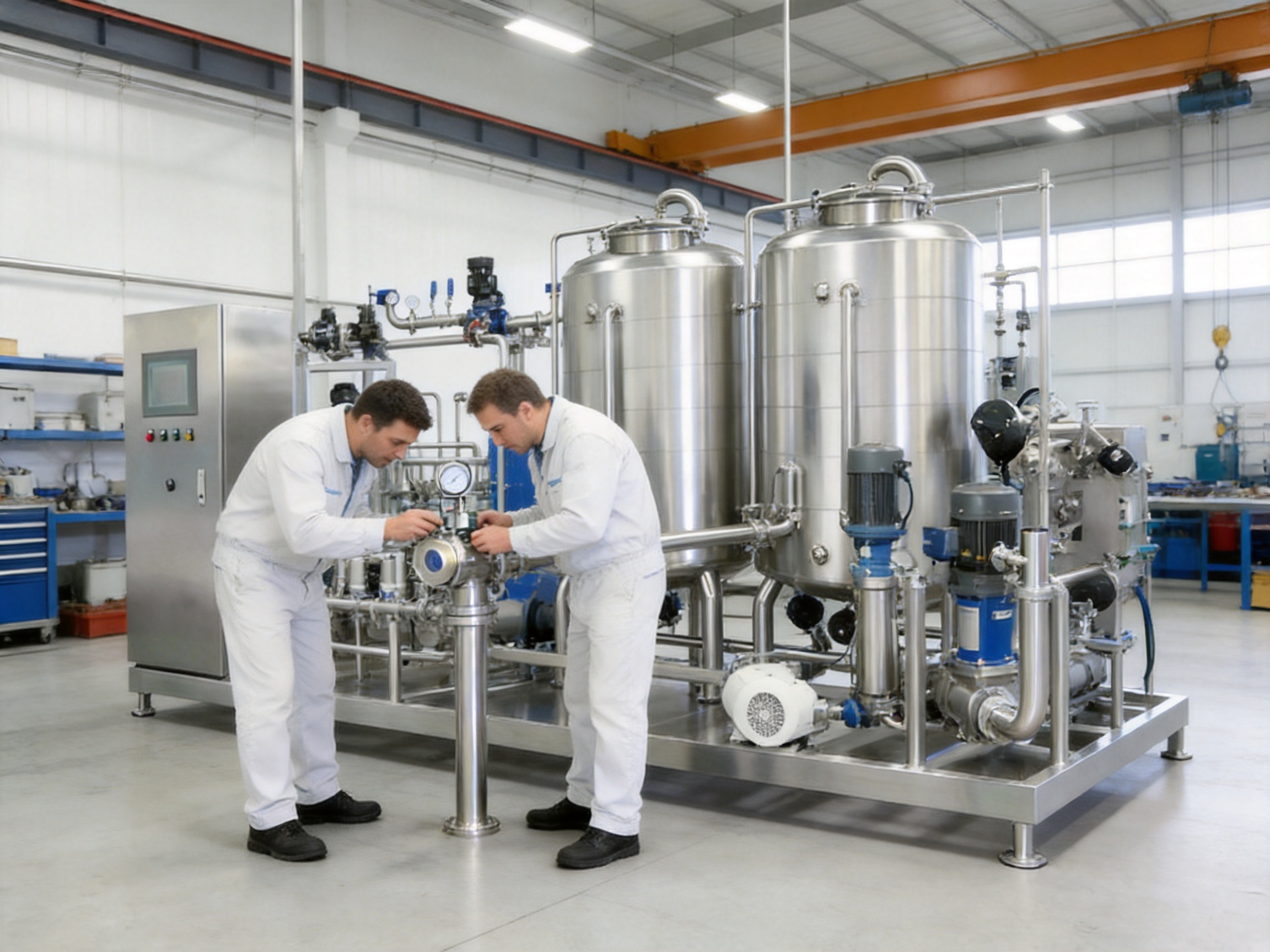
The company operates a 3,000-square-meter facility in Shanghai and has more than 20 technical specialists involved in equipment processing, welding, polishing, engineering support, and quality control. This in-house capability helps improve coordination between design and fabrication. It also allows technical teams to identify manufacturing constraints early and adjust the design before final assembly.
7.1 European Know-How and Danish Design Concepts
The company applies European know-how and Danish design concepts to hygienic process equipment. These concepts emphasize cleanability, functional layout, process efficiency, safety, and practical operation. The objective is not simply to build a group of tanks and pumps, but to create a coordinated cleaning platform that fits the customer’s production process.
Design decisions can include tank arrangement, pump selection, pipeline routing, valve matrix configuration, instrument placement, operator access, maintenance clearance, and future expansion requirements. A well-planned layout can reduce unnecessary pipe length, improve drainage, simplify maintenance, and make the system easier for operators to understand.
7.2 In-House Processing
In-house processing supports stronger control over dimensions, connection positions, component integration, and finishing quality. When fabrication and assembly are managed within a coordinated production environment, engineering personnel can communicate directly with welders, polishers, electricians, and assembly technicians.
This approach can reduce misunderstandings between separate suppliers and improve the ability to implement customized designs. It is especially valuable for CIP projects because the system often needs to connect with existing tanks, filling equipment, pasteurizers, fermentation vessels, mixing systems, and production pipelines.
7.3 Welding and Polishing
Sanitary welding and polishing are essential manufacturing processes for food-grade equipment. Welds must provide mechanical integrity while maintaining a smooth and hygienic internal surface. After welding, surface treatment and polishing can reduce roughness and improve cleanability.
Technical specialists inspect the fabrication process to help ensure that tank shells, pipeline modules, valve assemblies, and support structures meet the project drawings. The quality of these processes affects both the appearance and the long-term sanitation performance of the equipment.
7.4 Quality Control and Traceability
Quality control should extend from incoming materials to final assembly. Material verification, dimensional inspection, weld inspection, pressure testing, electrical checks, control sequence testing, and visual inspection can all form part of the manufacturing process.
Traceability helps link the finished system to its design documents, component records, inspection results, and operating documentation. This supports maintenance, future modifications, troubleshooting, and customer quality management.
7.5 Engineering and Technical Services
Shiloc provides international trade and engineering technical services in addition to equipment manufacturing. This allows the company to support customers during product selection, technical clarification, configuration, documentation, shipment coordination, installation guidance, and after-sales communication.
For international customers, effective communication is particularly important. Process information must be translated into practical equipment requirements, including flow rate, tank volume, chemical compatibility, heating capacity, electrical standards, control language, connection dimensions, and site limitations.
8. Applications in Food and Beverage Processing
8.1 Dairy Processing
Dairy facilities use CIP systems to clean pasteurizers, fermentation tanks, milk storage tanks, cream lines, filling circuits, and transfer pipelines. Milk proteins and fats can adhere strongly to heated surfaces, while mineral deposits may build up during repeated thermal processing. A combination of alkaline and acid cleaning is often used to address these different types of residue.
The CIP program can be customized according to the product, temperature history, equipment geometry, and required cleaning frequency. Careful control of temperature and chemical concentration helps protect stainless steel surfaces and seals while achieving the required cleaning result.
8.2 Beverage Production
Juice, tea beverages, flavored drinks, sports drinks, and other liquid products may leave sugar, pulp, color, flavor, or botanical residues in process pipelines and mixing tanks. A CIP system can clean blending vessels, syrup lines, transfer pipelines, heat exchangers, and filling machine circuits.
Beverage producers often need rapid changeovers between products. An automated cleaning recipe can support faster transitions while maintaining documented sanitation conditions. The system may also be configured for different cleaning programs based on beverage color, viscosity, sugar content, and allergen considerations.
8.3 Sauces and Condiments
Sauce and condiment production can involve oil, starch, proteins, spices, suspended solids, and high-viscosity materials. These residues may require longer circulation times, higher mechanical action, or specialized detergent selection. Pipeline diameter, pump capacity, valve arrangement, and tank drainability are important factors in designing a suitable cleaning circuit.
8.4 Egg Liquid and Liquid Food Processing
Liquid egg products and other protein-rich foods require strict hygiene control because residues can adhere to surfaces and create favorable conditions for microbial growth. CIP cleaning can reduce manual intervention around storage tanks, transfer lines, heat treatment equipment, and filling systems.
8.5 Pharmaceutical and Cosmetics Applications
Although the system described is primarily intended for food-grade applications, similar CIP principles apply to liquid pharmaceutical, cosmetic, and daily chemical production. These industries may require higher levels of documentation, validated cleaning procedures, specialized materials, and more stringent control of residue limits.
System configuration can be adapted to the required hygiene level, chemical compatibility, temperature range, process volume, and validation strategy. The final design should be reviewed against the applicable industry standards and customer specifications.
9. Automation, Data Recording, and Traceability
Automation is one of the most important differences between a basic cleaning station and an integrated CIP system. The PLC receives signals from level sensors, temperature sensors, valve feedback devices, pump controls, and other instruments. It then uses these signals to control the sequence and determine whether the system can proceed to the next stage.
A typical automated sequence may verify that the selected tank contains sufficient liquid, confirm that the correct valve path is open, start the circulation pump, monitor temperature, maintain the required circulation time, and record the process result. If a sensor signal is missing or an operating condition falls outside the permitted range, the system can stop the sequence or generate an alarm.
Data recording may include:
- Cleaning program identification
- Start and end time
- Temperature profile
- Cleaning stage duration
- Tank liquid level
- Detergent concentration or related process value
- Pump operating status
- Valve position feedback
- Alarm and fault information
- Operator login or operation history
These records help manufacturers identify process deviations and improve cleaning recipes. They can also support customer audits, internal quality reviews, and production release procedures.
Traceability is especially useful when a manufacturer produces different products on the same line. If a quality issue is discovered, the factory can review the cleaning record associated with the relevant batch and determine whether the programmed cycle was completed correctly.
10. Maintenance and Long-Term Operation
Regular maintenance is necessary to preserve CIP performance. The system should be inspected according to a documented maintenance schedule, with attention given to pumps, seals, valves, sensors, heating components, filters, nozzles, tanks, and control cabinets.
Before startup, operators should check the liquid levels, detergent concentration, valve status, emergency stop condition, and general equipment condition. The correct cleaning program should be selected according to the equipment and product requirements.
After each cleaning cycle, residual liquid should be drained as required. Tanks and pipelines should be rinsed according to the operating procedure to prevent detergent precipitation or chemical concentration caused by evaporation. Acid and alkaline solutions must be stored separately and should never be mixed unintentionally.
Circulation pumps should be checked for abnormal noise, vibration, leakage, reduced pressure, and changes in flow. Pump impellers, mechanical seals, and gaskets may wear over time, particularly in systems that operate at high temperatures or use aggressive cleaning chemicals.
Valves and valve seats should be inspected for leakage, slow operation, incomplete closure, and feedback errors. Sensors should be calibrated or verified at defined intervals. Temperature sensors and concentration-related instruments are important because inaccurate signals can result in under-cleaning, excessive chemical use, or unsafe conditions.
| Observed Problem | Possible Cause | Recommended Action |
|---|---|---|
| Residual product or scale remains | Insufficient temperature, concentration, flow, or cleaning time | Review the recipe, check the pump, inspect spray devices, and extend the cycle if required |
| Low circulation pressure | Pump blockage, closed valve, low tank level, or clogged filter | Check the impeller, valve position, filter, pipeline, and liquid level |
| Program does not start | Incorrect parameter, missing sensor signal, or emergency stop condition | Review PLC settings, sensor status, interlocks, and alarm messages |
| Cleaning solution leaks | Worn seal, loose connection, or damaged gasket | Stop the system safely and repair or replace the affected component |
| Unstable temperature | Heating fault, sensor error, insufficient flow, or control problem | Inspect the heater, sensor, pump, and temperature control loop |
Preventive maintenance is generally more effective than waiting for a failure. Planned replacement of seals, gaskets, filters, and other wear parts can reduce unplanned downtime and protect the production schedule.
11. How to Select the Correct CIP System
CIP selection should begin with the production process rather than with the equipment catalog. The customer should identify which tanks, pipelines, heat exchangers, pumps, filling machines, and other components must be cleaned. The cleaning circuit should then be mapped to determine the required flow rate, pressure, tank volume, and connection arrangement.
Important selection factors include:
- Type of product and residue
- Number and size of tanks
- Total pipeline length and diameter
- Required cleaning flow rate
- Temperature range
- Alkaline and acid chemical requirements
- Desired number of storage tanks
- Required level of automation
- Data recording and traceability requirements
- Available utilities, including water, steam, electricity, and drainage
- Available installation space
- Future expansion plans
- Applicable hygiene and safety requirements
The customer should also provide information about the existing production equipment. Connection sizes, pipe elevations, valve types, tank outlet positions, equipment materials, and control interfaces all affect the final configuration.
A supplier with engineering capability can review this information and propose a system that balances cleaning performance, capital cost, operating cost, maintenance access, and future flexibility. An oversized system may consume more water and energy than necessary, while an undersized system may fail to provide sufficient flow, tank capacity, or heating performance.
12. Why Choose a Customized Integrated Solution?
Standardized CIP units can be suitable for simple applications, but many food and beverage factories have unique production layouts and cleaning requirements. A customized integrated skid can be designed around the customer’s process equipment, available utilities, factory layout, and operating procedures.
Customization may include the number and size of tanks, pump capacity, heating method, valve matrix, instrumentation, pipe routing, control language, data export format, skid dimensions, access platforms, and connection standards. The system can also be configured for future expansion when a factory expects to add production tanks or new product categories.
An integrated design reduces the need for the customer to coordinate multiple suppliers for tanks, pumps, valves, control cabinets, and process engineering. A unified supplier can take responsibility for the overall functional relationship between these components.
Shiloc supports customized equipment solutions for food and beverage, biopharmaceutical, daily chemical, and fine chemical applications. Its experience with heat exchangers, aseptic mixing equipment, fluid equipment, welding, polishing, and technical services allows the company to consider the wider process environment rather than treating the CIP system as an isolated machine.
13. Commercial and Operational Value
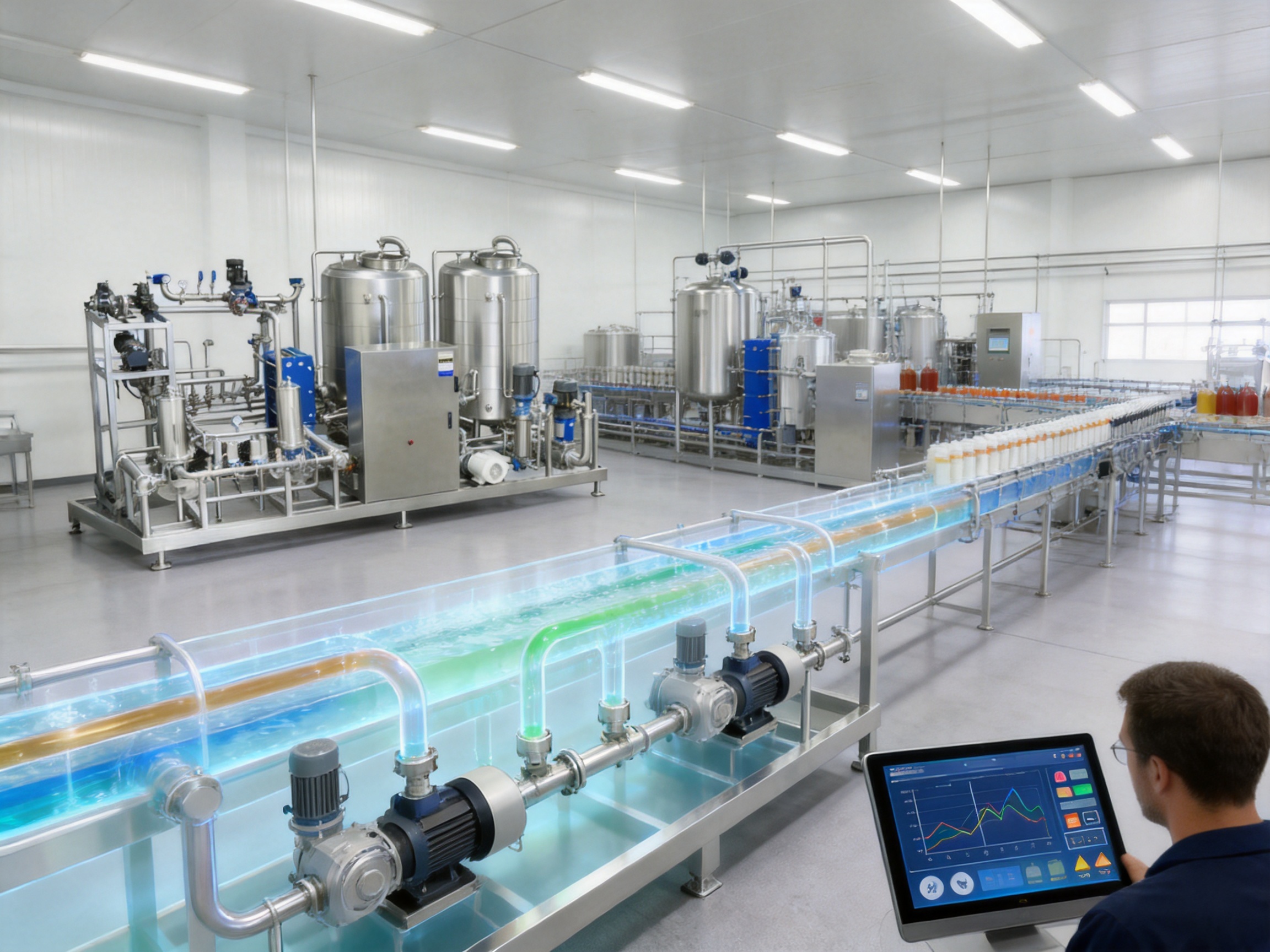
The financial value of a CIP system should be evaluated over its operating life rather than only by the initial purchase price. Labor savings are one consideration, but other benefits may include reduced cleaning downtime, fewer product losses, more stable equipment utilization, lower cross-contamination risk, reduced chemical waste, and better production planning.
For a factory with frequent product changeovers, even a modest reduction in cleaning preparation and completion time can create additional productive hours. The value of these hours depends on the production capacity and product margin of the facility.
Consistent cleaning can also reduce the probability of quality incidents caused by product carryover or inadequate sanitation. Avoiding a contamination event, rejected batch, or unplanned investigation may provide significant value beyond direct labor savings.
Data recording supports management decisions. By reviewing cleaning time, chemical consumption, alarms, and cycle performance, a manufacturer can identify inefficient recipes, recurring equipment problems, or opportunities to optimize water and energy use.
The system may also support workforce development by allowing operators to follow clearly defined procedures. Instead of relying entirely on informal experience, the factory can establish approved cleaning recipes, training materials, alarm responses, and maintenance instructions.
14. Company Strengths and Service Approach
Shiloc (Shanghai) Industrial Trading Co., Ltd. was established in March 2026 in Fengxian District, Shanghai. The company specializes in the import and export of goods and technology, import and export agency services, equipment manufacturing, and engineering and technical services.
Its product and service scope covers process equipment for food and beverage, biopharmaceutical, daily chemical, and fine chemical industries. The company provides equipment such as heat exchangers and aseptic mixing systems while also supporting customized process solutions.
The company’s 3,000-square-meter Shanghai facility includes capabilities for processing, welding, polishing, assembly, and quality control. More than 20 technical specialists support the manufacturing and engineering activities. This structure allows the company to combine trading services with practical equipment knowledge.
Its approach is based on European know-how, Danish design concepts, process optimization, safe and efficient equipment, reliable supply, traceability, and personalized customer service. The company also emphasizes integrity, pragmatism, innovation, development, excellent quality, and global sharing.
Quality management is supported by ISO9001, environmental, and safety certifications. These certifications do not replace application-specific engineering or cleaning validation, but they demonstrate the importance given to documented processes and management control.
For overseas customers, the company can provide technical communication, equipment configuration, manufacturing coordination, export support, and engineering services. This is valuable for projects where the customer needs a single point of contact for both equipment supply and technical clarification.
15. Implementation Considerations
A successful CIP project requires cooperation between the equipment supplier and the end user. The customer should define the process scope, product characteristics, cleaning chemicals, hygiene targets, utility conditions, and production schedule. The supplier should then convert this information into a process design, equipment layout, control philosophy, and manufacturing plan.
Before delivery, the system should undergo appropriate factory inspections and functional testing. Tests may include pump operation, valve sequencing, sensor signals, heating performance, alarm functions, emergency stop operation, leak checks, control program execution, and data recording.
At the installation site, the customer should verify utility connections, drainage, electrical supply, access clearance, pipeline connection, and integration with the production line. Operators should receive training on startup, recipe selection, manual operation, alarm response, chemical handling, and routine maintenance.
Cleaning effectiveness should be evaluated according to the customer’s quality system and applicable requirements. Depending on the application, this may include visual inspection, rinse testing, conductivity or pH checks, microbiological testing, residue analysis, or other validation methods.
The objective is to confirm that the complete system, including the production equipment and CIP skid, achieves the required cleaning outcome under defined operating conditions.
16. Conclusion
A Food-Grade CIP System provides a practical and scalable method for cleaning tanks, pipelines, heat exchangers, mixing equipment, and other process components without extensive disassembly. Through automated circulation, controlled temperature, managed chemical concentration, programmed timing, and traceable operating data, it reduces manual cleaning work and supports consistent hygiene performance.
The system’s advantages include lower labor dependence, improved cleaning repeatability, reduced cross-contamination risk, better access to enclosed equipment, more organized production changeovers, and stronger documentation. Its modular structure allows manufacturers to configure tank capacity, pump performance, cleaning media, temperature range, control functions, and pipeline connections according to their process requirements.
Equipment quality depends on more than the control program. Hygienic materials, sanitary valves, reliable pumps, smooth welds, polished surfaces, drainable designs, accurate instruments, and effective safety systems all contribute to long-term performance. Manufacturing capabilities in processing, welding, polishing, assembly, and quality control are therefore essential.
Shiloc combines European know-how and Danish design concepts with Shanghai-based manufacturing and engineering resources. Through its facility, technical specialists, quality management systems, and international trade services, the company provides customized process equipment solutions for food and beverage and other hygienic industries.
For manufacturers seeking to improve sanitation, reduce manual work, protect production continuity, and strengthen cleaning traceability, a properly designed food-grade CIP system can become a key part of the overall process infrastructure.
Questions and Answers
Q1: What is a food-grade CIP system used for?
A food-grade CIP system is used to clean the internal surfaces of production equipment without extensive dismantling. It can clean tanks, pipelines, heat exchangers, mixing vessels, pasteurizers, fermentation equipment, transfer lines, and other process components.
Q2: How does a CIP system reduce manual cleaning requirements?
The system replaces many repetitive manual tasks with automated cleaning sequences. Operators select or start a programmed recipe, while the system manages pumps, valves, temperature, circulation time, liquid levels, and cleaning stages. Manual supervision is still required, but continuous scrubbing and repeated equipment disassembly are reduced.
Q3: Which cleaning stages can the system perform?
A typical system can perform pre-rinsing, alkaline washing, intermediate rinsing, acid washing, final rinsing, and, when required, disinfection or sterilization. The sequence and parameters can be customized according to the product residue and process equipment.
Q4: What materials are commonly used for the equipment?
Food-grade stainless steel 304 and 316L are commonly used. The correct material depends on the product, cleaning chemicals, temperature, chloride exposure, and hygiene requirements. Seals, gaskets, valves, and pump components must also be compatible with the cleaning conditions.
Q5: Can the CIP system record cleaning data?
Yes. A PLC and touch screen control system can record information such as cleaning time, temperature, concentration-related values, process stages, alarms, pump status, and valve feedback. The data can support production management, quality review, and traceability.
Q6: Is a CIP system suitable for dairy production?
Yes. CIP systems are widely used for pasteurizers, fermentation tanks, milk storage tanks, cream lines, and dairy transfer pipelines. Alkaline cleaning can remove fats and proteins, while acid cleaning can help remove mineral deposits.
Q7: Can the system clean beverage production lines?
Yes. It can be configured for juice, tea beverages, flavored drinks, syrup, and other liquid beverage lines. The cleaning recipe can be adjusted for sugar, pulp, color, flavor, viscosity, and product changeover requirements.
Q8: How should acid and alkaline solutions be stored?
Acidic and alkaline solutions should be stored in separate tanks and handled through controlled flow paths. They should not be mixed because the reaction may create heat, gas, or other unsafe conditions. The control system should use valve interlocks and process verification where appropriate.
Q9: What should be checked if cleaning is incomplete?
Operators should check detergent concentration, cleaning temperature, circulation time, pump pressure, valve position, liquid level, filters, spray devices, and pipeline blockages. The cleaning recipe may need adjustment, but the cause should be investigated before simply increasing chemical dosage or temperature.
Q10: What should be considered when selecting a CIP supplier?
Important factors include hygienic design capability, material selection, pump and valve engineering, automation experience, manufacturing quality, welding and polishing standards, documentation, testing, technical support, customization ability, and international delivery experience.
Q11: Can a CIP system be expanded in the future?
A modular design can allow future expansion through additional tanks, pumps, valves, sensors, cleaning circuits, or control functions. Expansion should be considered during the initial design so that space, utility capacity, control architecture, and connection points are properly planned.
Q12: Does CIP eliminate the need for all manual inspection?
No. CIP reduces manual cleaning work but does not eliminate the need for operator supervision, preventive maintenance, visual inspection, process verification, chemical handling procedures, or periodic cleaning validation. Automated cleaning works best when supported by trained personnel and an effective quality system.
References
1. General principles of hygienic design for food and beverage processing equipment.
2. Good manufacturing practices for food, beverage, pharmaceutical, and cosmetic production facilities.
3. Technical guidance on clean-in-place system design, chemical cleaning, thermal cleaning, and sanitary process engineering.
4. Manufacturer documentation for stainless steel 304 and 316L hygienic process equipment.
5. Engineering principles for sanitary pumps, valves, heat exchangers, tanks, and process pipelines.
6. Quality management principles based on ISO 9001 systems.
7. Food and beverage sanitation procedures for dairy, beverage, sauce, liquid food, and related processing operations.
8. Industrial guidance on process automation, PLC control, alarm management, data recording, and equipment traceability.
Product: Food-Grade CIP (Clean-in-Place) System
PREV:Side-Entry Tank Mechanical Agitator: Hygienic, Efficient, and Customizable Mixing for Process Industries
NEXT:Double-Pipe and Multi-Tube Heat Exchangers: Efficient, Hygienic, and Flexible Thermal Processing Solutions
NEXT:Double-Pipe and Multi-Tube Heat Exchangers: Efficient, Hygienic, and Flexible Thermal Processing Solutions
Interested in cooperation or have questions?
Recommended LINS
✦
CIP Skid System for Food Industry
Food and Beverage Process System
Food Processing Skid System
Aseptic Processing Equipment for Liquid Foods
CIP process skid system for food industry
Process Skid System
UHT Processing Equipment for Plant Based Milk
UHT Processing System for Dairy Products
CIP cleaning skid system
Milk Processing Heat Exchanger
Let'S Work Together Welcome Aboard!
-

haikexin@haikexin.com
+8613391278930
-
 +86-21-57560276
-
 No. 2819, Sihu Road,Fengxian District, Shanghai, China
Join Our Mailing List
Copyright © Shiloc (Shanghai) Industrial Trading Co., Ltd. All Rights Reserved.
Process Systems & Equipment For Food & Biopharma Manufacturers
