
 English
 русский
 Português
 Français



 Read More

Product Category
NEW Category
Contact us
Contact Us
We specialise in the research, development and manufacture of electrical wires and cables.
 +86-21-57560276
Sanitary Capillary Heat Exchangers for High-Purity Food and Biopharmaceutical Processing
Content
- 1 What Is a Sanitary Capillary Heat Exchanger?
- 2 Why Hygienic Heat Transfer Matters
- 3 Core Construction and Operating Principle
- 4 Key Advantages Over Conventional Alternatives
- 5 Sanitary Materials and Surface Quality
- 6 Cleaning, Sterilization, and Maintenance
- 7 Technical Specifications
- 8 Available Models and Dimensional Reference
- 9 Applications in the Food and Beverage Industry
- 10 Applications in Pharmaceutical and Biopharmaceutical Processing
- 11 Advanced Manufacturing Processes
- 12 Manufacturing Strengths and Engineering Support
- 13 How the Equipment Compares with Other Heat Exchanger Types
- 14 Process Selection Guidelines
- 15 Installation and Commissioning Recommendations
- 16 Troubleshooting Common Problems
- 17 Lifecycle Value and Sustainability
- 18 Why Supplier Capability Matters
- 19 Frequently Asked Questions
- 19.1 Q1: What types of media can be processed?
- 19.2 Q2: Is the heat exchanger suitable for pharmaceutical and biopharmaceutical applications?
- 19.3 Q3: What is the main benefit of the capillary tube bundle?
- 19.4 Q4: Can the unit be cleaned in place?
- 19.5 Q5: What material is normally used for product-contact surfaces?
- 19.6 Q6: What surface finish is available?
- 19.7 Q7: What connection types are available?
- 19.8 Q8: How should the correct model be selected?
- 19.9 Q9: Can the equipment be customized?
- 19.10 Q10: What should be checked if thermal performance decreases?
- 19.11 Q11: What causes leakage at a sanitary clamp?
- 19.12 Q12: What support can overseas customers receive?
- 20 Conclusion
- 21 References
- 22 Product: Sanitary Capillary Heat Exchanger
Food, beverage, pharmaceutical, and bioprocess manufacturers increasingly require heat transfer equipment that combines thermal efficiency with strict hygienic performance. Heating, cooling, sterilization, pasteurization, and temperature maintenance must be completed reliably without introducing contamination, creating stagnant zones, damaging sensitive ingredients, or increasing cleaning and maintenance costs. A sanitary capillary heat exchanger is designed to address these requirements through a compact tube-bundle structure, sanitary materials, optimized flow channels, and easy-to-clean connections.
The sanitary capillary heat exchanger described in this article is intended for process applications involving low-flow and high-purity media. It uses a bundle of fine capillary tubes to increase the available heat transfer area within a relatively small equipment volume. The design can be applied to process water, injection water, pharmaceutical liquids, low-viscosity food products, biological preparations, steam, and other compatible heating or cooling media.
Compared with many conventional heat exchangers, the capillary design offers several important advantages. A greater heat transfer area can be achieved in a compact body, helping improve thermal response and reduce installation space. The sanitary structure is designed to reduce dead legs and material retention. Quick-clamp connections simplify installation and disassembly, while stainless steel 316L construction supports food-grade, pharmaceutical-grade, and high-purity process requirements.
For demanding applications, equipment selection involves more than comparing nominal heat transfer capacity. Manufacturers must consider surface finish, material compatibility, pressure and temperature ratings, cleaning procedures, connection standards, production traceability, and the supplier’s ability to customize the equipment. The manufacturing and engineering capabilities of the supplier are therefore directly connected to the long-term value of the heat exchanger.
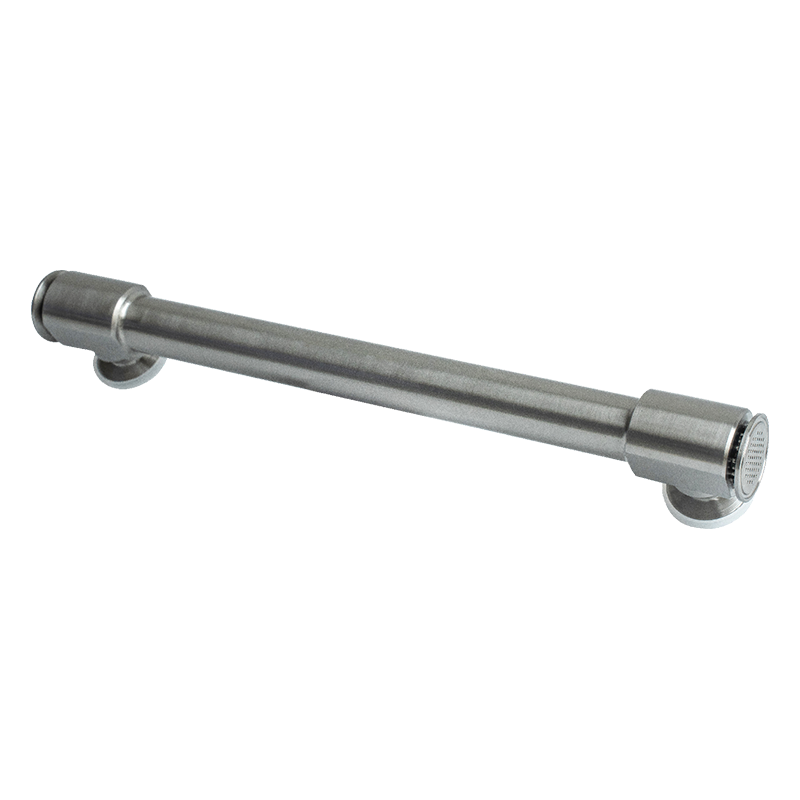
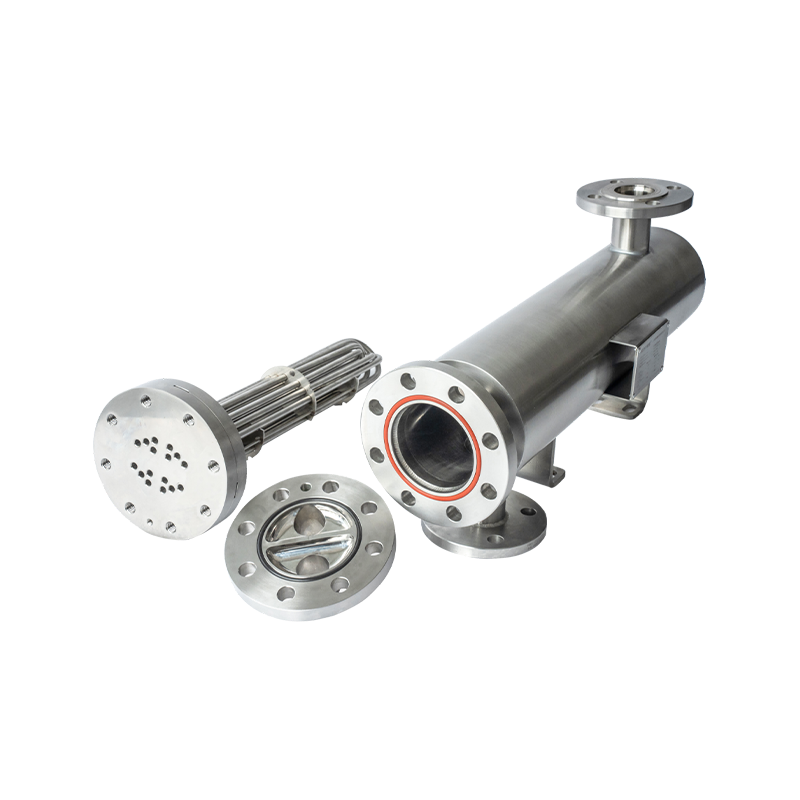
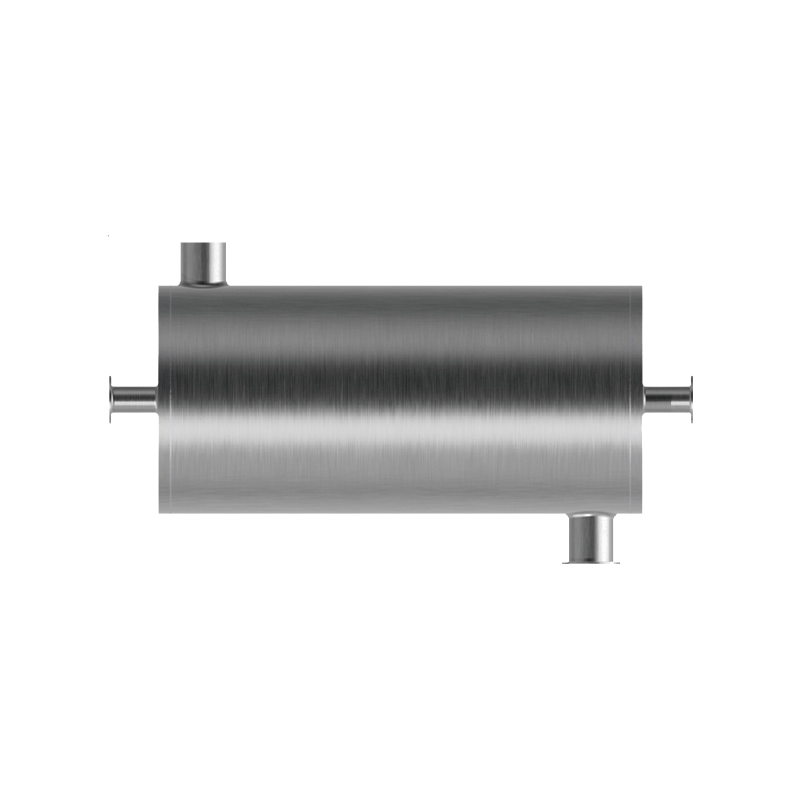
Sanitary Capillary Heat Exchanger
What Is a Sanitary Capillary Heat Exchanger?
A sanitary capillary heat exchanger is a process heat transfer unit designed for applications where cleanliness, low contamination risk, and precise temperature control are essential. Its primary heat transfer element is a bundle of small-diameter tubes, commonly referred to as capillary tubes. One process medium flows through the tube side, while a second heating or cooling medium flows through the shell side. Heat passes through the tube walls without directly mixing the two media.
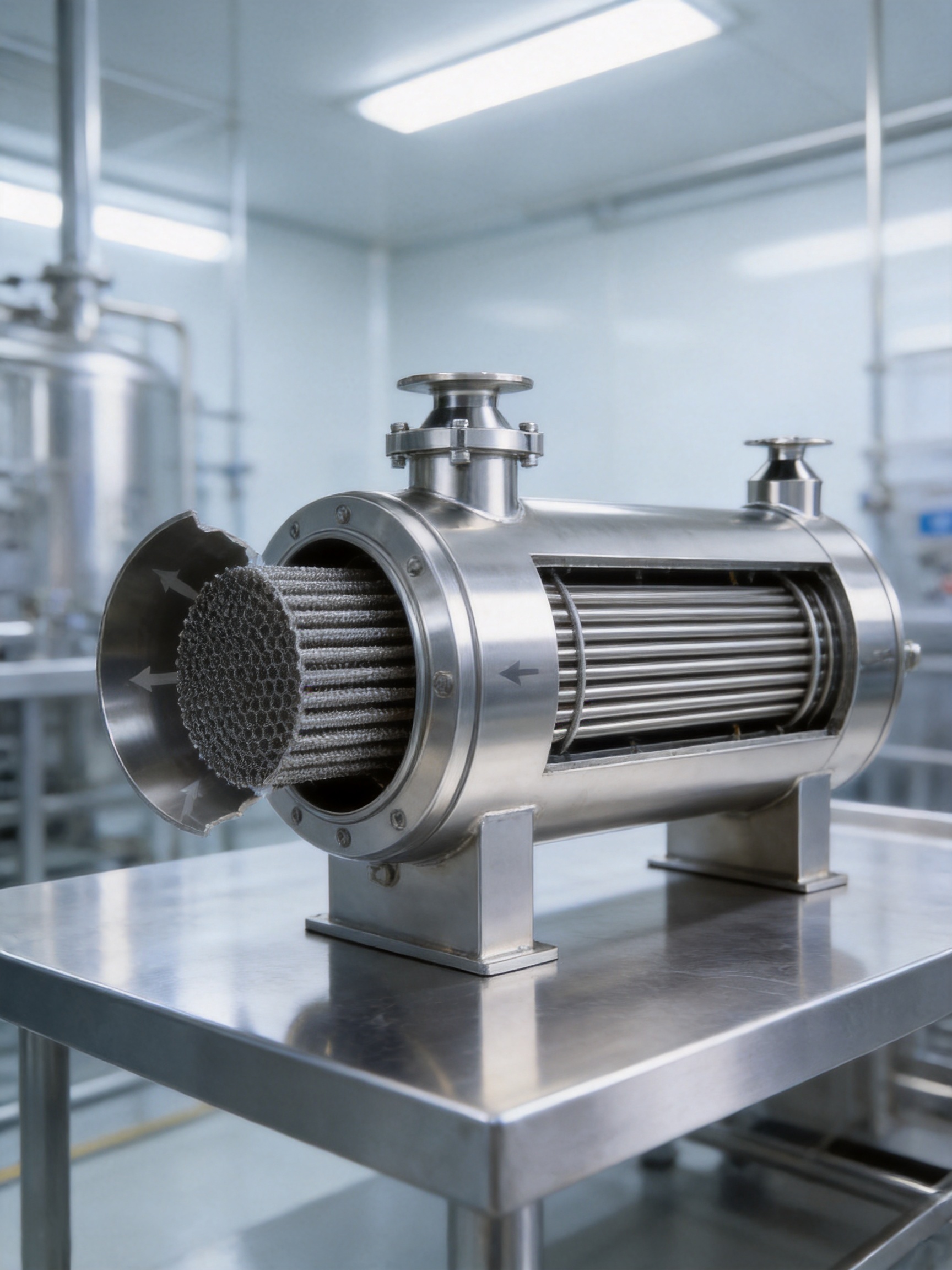
The tube and shell sides can be arranged for countercurrent flow. In a countercurrent arrangement, the hot and cold media move in opposite directions. This configuration can provide a favorable temperature gradient along the equipment length and support efficient heat recovery or temperature adjustment. The final design depends on the required inlet and outlet temperatures, flow rates, pressure drop, fluid properties, and available utility conditions.
The term “sanitary” refers to the equipment’s suitability for hygienic processing environments. Important features may include stainless steel 316L product-contact surfaces, smooth internal walls, minimized dead legs, sanitary clamp or flange connections, cleanable flow paths, and compatibility with clean-in-place procedures. These features help reduce the possibility of product accumulation and cross-contamination.
The capillary structure provides a high surface-area-to-volume ratio. This allows heat transfer to take place efficiently even when the equipment has a slim and compact profile. Such a configuration is particularly useful where the process involves low flow rates, small batch production, pilot-scale manufacturing, laboratory systems, or space-constrained aseptic skids.
In practice, a sanitary capillary heat exchanger may be used to cool purified water, heat a pharmaceutical liquid, regulate the temperature of a biological preparation, pasteurize a beverage component, or transfer heat between a process stream and steam. The equipment is not limited to one industry; rather, it is selected where sanitary construction and accurate thermal control are both required.
Why Hygienic Heat Transfer Matters
In food and beverage manufacturing, even a small amount of retained product can create microbial, allergen, or flavor-related risks. Dairy products, fruit juices, nutritional beverages, sauces, and other liquid foods may contain solids, proteins, sugars, fats, or organic components that adhere to surfaces when temperature or flow conditions are not properly controlled. If these residues are not removed, they can affect subsequent batches and reduce equipment reliability.
Pharmaceutical and biopharmaceutical processes require an even higher level of control. Process water, injection water, pharmaceutical liquids, biological preparations, and sterile intermediates may be highly sensitive to contamination. The heat exchanger must support a validated cleaning and sterilization strategy while maintaining material integrity and predictable thermal performance.
A hygienic heat exchanger should therefore be assessed as part of the complete process system. The unit must connect properly to sanitary piping, avoid unnecessary stagnant zones, drain effectively, and withstand the pressure and temperature conditions associated with operation and cleaning. A heat exchanger with high theoretical thermal performance may not be suitable if it is difficult to inspect, difficult to clean, or vulnerable to seal failure.
Sanitary design also supports operational continuity. When cleaning can be performed efficiently, production interruptions may be shortened. When connections can be opened without complex procedures, inspection and maintenance can be carried out more conveniently. When internal surfaces are smooth and the flow path is appropriately designed, the potential for product retention may be reduced.
For this reason, hygienic performance is not simply a regulatory consideration. It can influence product quality, batch consistency, maintenance frequency, energy consumption, changeover time, and total ownership cost.
Core Construction and Operating Principle
The sanitary capillary heat exchanger uses a tube bundle enclosed within a shell-side structure. The tube side carries one medium, while the shell side carries another. The tube walls provide the separation barrier and the heat transfer surface. Depending on the process design, the equipment can be configured for heating, cooling, heat recovery, or temperature stabilization.
The small tube diameter increases the number of tubes that can be installed within a given body size. As the number of tubes increases, the effective heat transfer area can also increase. The capillary passages can be suitable for low-flow service, allowing a small stream to receive controlled heating or cooling without requiring a large conventional exchanger.
Flow distribution is important in a capillary heat exchanger. The inlet and outlet structure must guide the process medium across the intended tube bundle while limiting uneven flow, excessive pressure drop, or local overheating. A properly designed manifold and tube arrangement support consistent thermal performance across the equipment.
Countercurrent operation is often advantageous because it maintains a useful temperature difference over much of the exchanger length. However, the appropriate flow arrangement must be selected according to the process. In some applications, a different configuration may be required to manage pressure drop, product sensitivity, cleaning velocity, or utility limitations.
The equipment’s thermal performance depends on multiple factors, including tube material, wall thickness, tube diameter, fluid viscosity, flow rate, fouling tendency, temperature difference, pressure, and heat transfer area. A responsible selection process should therefore be based on actual process conditions rather than a single catalog value.
Key Advantages Over Conventional Alternatives
Compact Heat Transfer Area
The capillary tube bundle creates a large heat transfer area within a compact equipment envelope. This can be valuable in production rooms where floor space is limited or where the heat exchanger must be integrated into a small aseptic module. A compact unit may also reduce the length of connecting pipes and simplify skid layout.
For laboratory and pilot-scale equipment, compactness can make the difference between a practical and impractical installation. Small systems often have limited utility capacity and restricted equipment footprints. A slim heat exchanger can provide the required thermal function without forcing a major redesign of the process skid.
Improved Low-Flow Performance
Conventional heat exchangers may be oversized for low-flow service or may operate less effectively when the process stream is intermittent. A capillary configuration can provide suitable flow passages for low-volume liquid streams and precise temperature adjustment. This makes the technology relevant to pharmaceutical liquids, biological preparations, purified water, and small-batch food production.
Low-flow adaptation is also useful where the product must be exposed to heat for a carefully controlled time. Precise thermal adjustment can support the protection of active ingredients, product taste, biological activity, and other quality attributes.
Hygienic and Cleanable Flow Paths
The sanitary design aims to minimize dead legs and stagnant regions. When fluid has fewer opportunities to remain trapped, the risk of residue accumulation and microbial growth may be reduced. Smooth product-contact surfaces can also help cleaning solutions reach the areas that require cleaning.
The equipment can support both clean-in-place procedures and disassembly cleaning. CIP is valuable for production continuity, while disassembly allows direct inspection and manual cleaning when required. The choice between these methods depends on the process validation strategy, product properties, cleaning chemistry, and facility procedures.
Convenient Sanitary Connections
Sanitary quick-clamp fittings simplify installation and removal. Properly aligned clamps and gaskets can provide a reliable connection while allowing the unit to be disconnected for maintenance. Compared with complex permanent piping arrangements, quick-connect systems can reduce installation time and improve access during inspection.
Some configurations may use sanitary flange connections depending on pressure, piping standards, or customer requirements. The connection type should be selected according to the complete process system, including gasket material, cleaning temperature, operating pressure, and piping loads.
Fast Thermal Response
The compact structure and small tube diameter can contribute to a quick thermal response. A smaller internal volume may reduce the amount of product held inside the unit, allowing the process temperature to change more rapidly when utility conditions are adjusted.
Fast response is valuable in temperature-sensitive applications. It can help reduce overshoot during heating, limit unnecessary exposure to high temperature, and maintain tighter control during cooling. Actual response time depends on flow rate, thermal mass, control valve performance, sensor position, and the heat capacity of the media.
Flexible Material Options
Stainless steel 316L is a common product-contact material because of its corrosion resistance, cleanability, and suitability for food and pharmaceutical environments. For more demanding temperature or corrosion conditions, alloy options such as Hastelloy or Inconel may be considered when technically justified.
Material selection must be based on the actual process media and utility conditions. Factors such as chloride concentration, acidity, alkalinity, cleaning chemicals, sterilization temperature, pressure cycling, and product purity should be reviewed before finalizing the design.
Sanitary Materials and Surface Quality
Product-contact material is one of the most important factors in hygienic equipment design. Stainless steel 316L is widely used because it combines mechanical strength, corrosion resistance, weldability, and a suitable surface for polishing. It is commonly selected for process equipment used in pharmaceutical, biopharmaceutical, food, beverage, and high-purity water applications.
The supplied specifications identify 316L stainless steel as a standard contact material and also indicate that Hastelloy, Inconel, and other alloys may be available. The correct selection depends on the process environment. A material that is appropriate for purified water may not be suitable for a highly corrosive chemical or an aggressive cleaning solution.
Surface roughness is another important consideration. The available specification indicates a surface finish of Ra ≤ 0.4 micrometers. A smooth surface can reduce the opportunity for product adhesion and make cleaning more effective. However, surface finish should be considered together with weld quality, geometry, drainability, gasket condition, and cleaning validation.
Electropolishing may be included as part of the surface treatment or manufacturing specification. Electropolishing can improve surface smoothness and remove microscopic burrs or contaminants from stainless steel surfaces. The suitability of electropolishing depends on the component geometry, material, and required finish.
For high-purity applications, material certificates, surface-finish records, welding documentation, dimensional inspection, and pressure testing may be requested. These records support traceability and help the customer verify that the equipment corresponds to the approved design.
Cleaning, Sterilization, and Maintenance
A sanitary capillary heat exchanger should be incorporated into a cleaning strategy from the beginning of the project. CIP performance depends on the cleaning fluid’s temperature, concentration, flow velocity, contact time, and ability to reach all product-contact surfaces. The piping layout must also support drainage and avoid uncleanable branches.
Cleaning conditions should be selected according to the product and equipment materials. A food application may require alkaline cleaning followed by rinsing and, where appropriate, acid cleaning. A pharmaceutical process may use validated detergents, purified water, hot water, steam, or other approved procedures. The cleaning cycle must be compatible with seals, gaskets, welds, surface finishes, and alloy selection.
Disassembly cleaning may be useful when the process media are sticky, protein-rich, particulate-containing, or particularly sensitive. Periodic opening allows operators to inspect the capillary tube bundle, manifolds, seals, and internal surfaces. The frequency of inspection should be based on product characteristics, operating hours, pressure drop, temperature performance, and historical fouling behavior.
Sterilization procedures may be required before startup, after maintenance, or during long-term shutdown. When equipment is taken out of service, the remaining media should be drained. Standing liquid can create conditions favorable to microbial growth, corrosion, or residue formation.
Cleaning validation should not rely only on visual inspection. Depending on the application, operators may use conductivity, total organic carbon, microbial testing, rinse sampling, swab sampling, pressure testing, or other approved methods. The appropriate validation method is determined by the product, process risk, and applicable quality system.
Technical Specifications
The following values summarize the available reference specifications. Final ratings must be confirmed against the selected material, connection type, design configuration, process conditions, and applicable engineering standards.
| Parameter | Reference specification |
| Maximum tube-side working pressure | 83 bar |
| Maximum shell-side working pressure | 55 bar |
| Maximum steam pressure | 8.6 bar |
| Maximum working temperature | 425°C |
| Standard contact material | 316L stainless steel |
| Optional material range | Hastelloy, Inconel, and other suitable alloys |
| Surface finish reference | Ra ≤ 0.4 micrometers |
| Cleaning compatibility | Clean-in-place and disassembly cleaning |
| Compliance orientation | cGMP and FDA-oriented sanitary construction |
| Typical connection approach | Sanitary quick-clamp or sanitary flange connection, depending on design |
Pressure and temperature ratings must never be interpreted independently of the complete design. The weakest component in the pressure boundary, including tubes, shell, welds, fittings, gaskets, and instruments, determines the safe operating limit. The customer should also consider pressure surges, thermal cycling, steam quality, utility-side condensation, and the effects of cleaning procedures.
Available Models and Dimensional Reference
The reference models below illustrate several capillary heat exchanger sizes. The pipe diameter and heat transfer area values should be verified during technical selection because terminology such as pipe diameter, tube diameter, electro-polishing value, and heat transfer area can vary according to the supplier’s drawing and quotation format.
| Model | Pipe diameter | Electro-polishing reference | Heat transfer area | Total length | Weight |
| HY-CE-0304 | 4 | 0.25 | 0.30 | 280 mm | 3.5 kg |
| HY-CE-0305 | 4 | 0.25 | 0.43 | 406 mm | 4.0 kg |
| HY-CE-0306 | 4 | 0.25 | 0.61 | 533 mm | 4.5 kg |
| HY-CE-0307 | 4 | 0.25 | 0.80 | 660 mm | 5.5 kg |
These compact dimensions make the units suitable for small process skids, laboratory systems, pilot lines, aseptic modules, and equipment rooms where installation space is restricted. A longer model with a greater heat transfer area may be selected when additional thermal duty is required, while a shorter model may be sufficient for low-duty temperature control.
Model selection should not be based only on total length or nominal area. The process engineer should compare required duty, flow rate, allowable pressure drop, inlet and outlet temperatures, utility conditions, cleaning cycle, and future capacity requirements. In some cases, a larger exchanger operated at a lower load may provide greater flexibility and lower pressure drop.
Applications in the Food and Beverage Industry
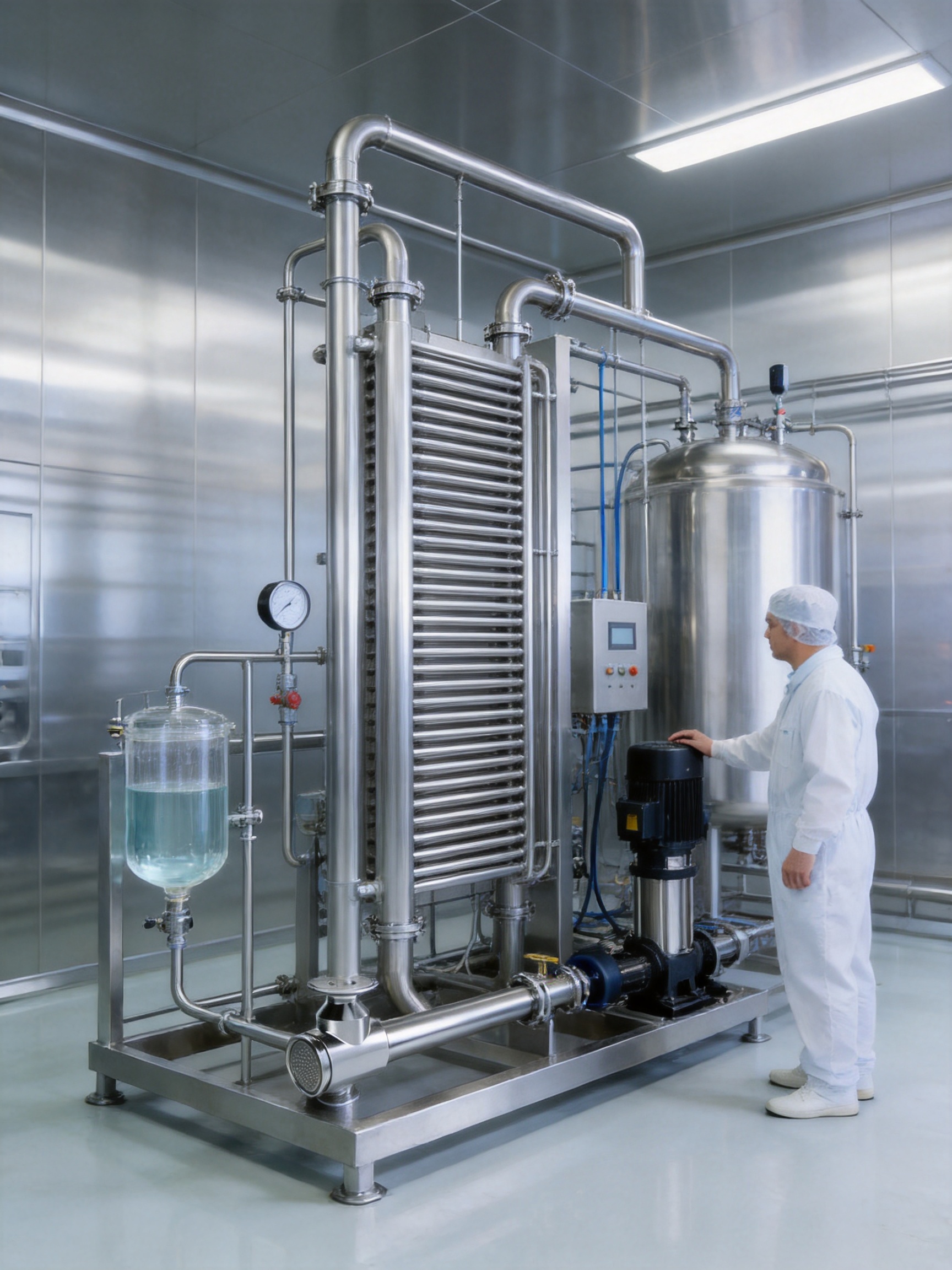
Food and beverage production involves a wide range of heating and cooling duties. The sanitary capillary heat exchanger can support in-line heating, cooling, pasteurization, temperature holding, and utility-side heat transfer for small and medium process streams.
In dairy processing, the unit may be used for controlled heating or cooling of milk, cream, cultured products, or other low-viscosity liquids. Dairy products can be sensitive to overheating and fouling, making flow distribution, surface quality, and cleaning performance especially important.
For beverages and juices, the equipment can support temperature adjustment before filling, blending, filtration, or further processing. A compact heat exchanger may be useful in pilot production, specialty beverage lines, or small-batch systems where the flow rate is not sufficient for a large plate or shell-and-tube unit.
Pasteurization applications require accurate control of time and temperature. The exchanger can be integrated with temperature sensors, control valves, holding tubes, pumps, and automated monitoring systems. The final pasteurization design must be validated according to the product and applicable food safety requirements.
Food manufacturers may also use sanitary heat exchangers for water heating, ingredient preparation, tank temperature control, and heat recovery. Where allergen management or frequent product changeover is important, cleanable flow paths and accessible sanitary connections can help simplify cleaning and reduce changeover risk.
Applications in Pharmaceutical and Biopharmaceutical Processing
Pharmaceutical liquids and biopharmaceutical preparations often require controlled thermal conditions. A process may involve heating for dissolution, cooling after a reaction, maintaining a formulation temperature, preparing purified water, or regulating a biological solution before filtration or filling.
Injection water and other high-purity water streams require particular attention to material quality, surface condition, drainability, and microbial control. A sanitary capillary heat exchanger can be designed for precise temperature regulation in compact water treatment or formulation systems. The final system must still meet the customer’s validated water, sterilization, and quality requirements.
In bioprocessing, low-flow biological preparations may be sensitive to shear, temperature variation, residence time, and contamination. A compact heat exchanger with controlled flow passages can help maintain a stable process temperature while limiting unnecessary hold-up volume. The suitability of the unit must be assessed against the biological product’s sensitivity and the required cleaning or sterilization method.
Pharmaceutical production may also require heating or cooling of buffers, solutions, cleaning fluids, and process water. The heat exchanger can be integrated into preparation vessels, transfer lines, single-use support systems, pilot plants, and laboratory-scale equipment. Its compact construction can be especially beneficial when the equipment must fit inside a restricted cleanroom or aseptic enclosure.
Biopharmaceutical customers commonly require documentation and traceability. Depending on the project, documentation may include material certificates, weld records, surface-finish reports, pressure-test records, dimensional drawings, inspection records, certificates of conformity, and operating or maintenance instructions.
Advanced Manufacturing Processes
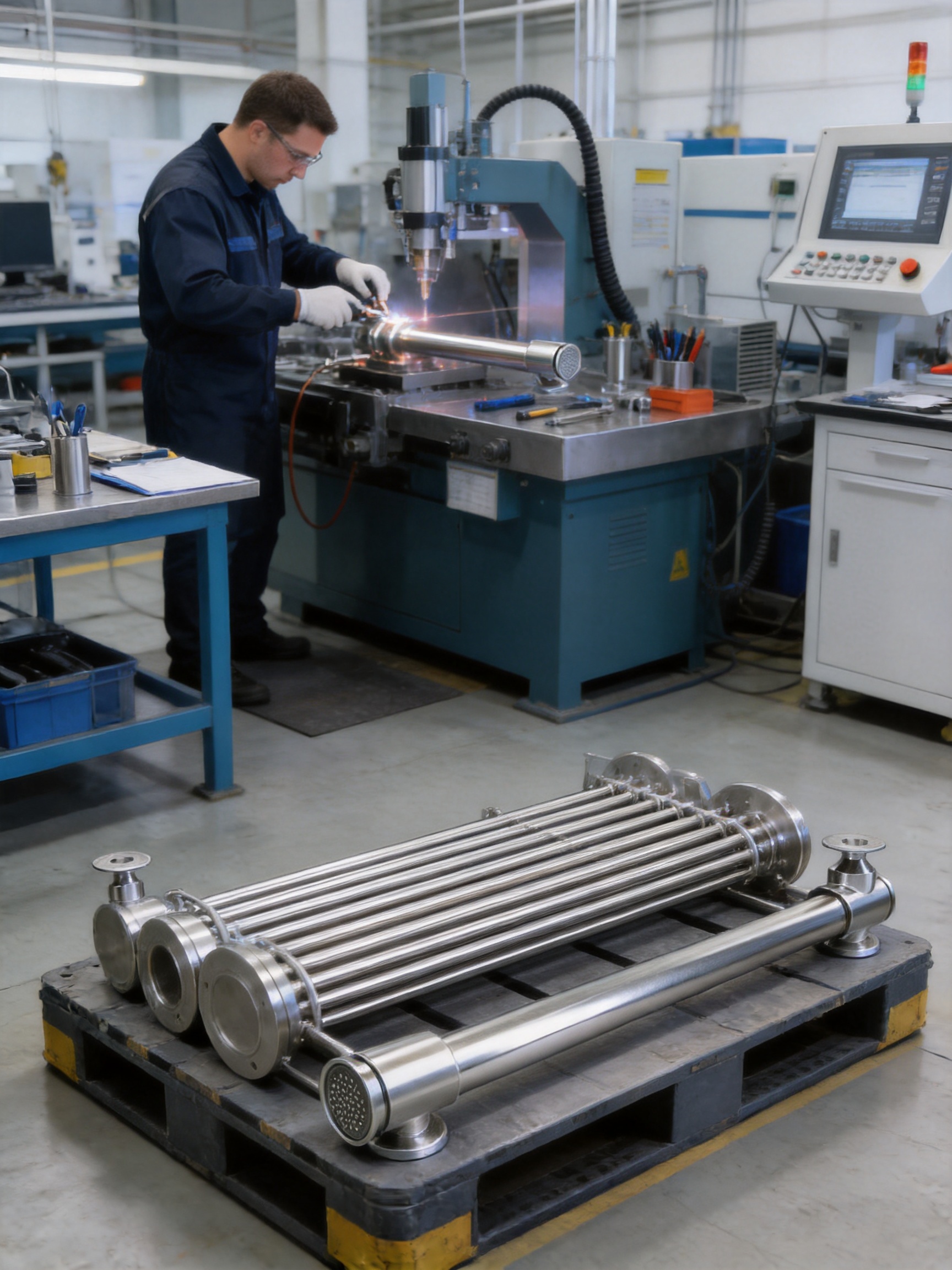
The performance of a sanitary heat exchanger depends heavily on manufacturing quality. Capillary tubes have small flow passages, so dimensional accuracy, cleanliness, tube alignment, weld integrity, and surface condition are critical. Manufacturing must be controlled from material preparation through final inspection.
Material Preparation and Traceability
Production begins with the selection and verification of stainless steel or alloy materials. Material grades should be confirmed against the approved technical specification. Heat numbers, material certificates, and incoming inspection records help maintain traceability throughout fabrication.
Materials should be protected from contamination during cutting, forming, welding, polishing, and assembly. Dedicated handling practices may be used to reduce the risk of iron contamination or damage to polished surfaces. When a project requires high-purity service, material segregation and controlled storage become particularly important.
Precision Tube Fabrication
Capillary tubes must be cut, positioned, and assembled with consistent dimensions. Small deviations can affect flow distribution, pressure drop, and heat transfer performance. Tube ends should be prepared carefully to support high-quality connections and minimize internal burrs.
The tube bundle must be held securely to prevent vibration, movement, or uneven spacing during operation. The arrangement should support effective shell-side flow while maintaining accessibility for cleaning and inspection. The design must also account for thermal expansion so that temperature cycling does not create excessive mechanical stress.
Controlled Welding
Welding is a major quality factor in sanitary process equipment. Welds should be smooth, fully penetrated where required, and free from cracks, undercut, porosity, inclusions, and excessive oxidation. Welding procedures should be selected according to the material, wall thickness, joint geometry, and cleanliness requirements.
Orbital welding or other controlled welding methods may be used where consistent repeatability is important. Welders and operators should follow approved procedures, and weld records can be retained as part of the project documentation. Internal weld quality is particularly important because rough or irregular welds can create retention points that are difficult to clean.
Polishing and Electropolishing
After fabrication, product-contact surfaces may undergo mechanical polishing, chemical treatment, electropolishing, or a combination of processes. The objective is to achieve the specified surface quality while avoiding distortion or damage to the capillary tubes and manifolds.
Polishing must be followed by thorough cleaning and inspection. Residual abrasives, metal particles, oils, and processing chemicals must be removed before final assembly. Surface roughness measurements can be taken at defined locations according to the customer’s quality plan.
Assembly and Connection Integration
The tube bundle, shell, manifolds, gaskets, clamps, and fittings must be assembled according to controlled drawings. Connection alignment is important because excessive external piping stress can deform fittings or create leakage at the seal interface.
Gaskets should be compatible with the process media, cleaning chemicals, temperature range, and pressure. During assembly, sealing surfaces must be protected from scratches and contamination. The final unit should be clearly identified with model information, pressure ratings, material details, and other required markings.
Pressure and Functional Testing
Pressure testing verifies the integrity of the pressure boundary. Depending on the design and applicable standards, hydrostatic or pneumatic testing may be performed under controlled conditions. Testing should be conducted with appropriate safety procedures and documented results.
Additional inspections may include dimensional verification, visual examination, surface-finish measurement, leak testing, flow testing, and confirmation of connection dimensions. For customized units, factory acceptance testing can be arranged according to the customer’s inspection and test plan.
Manufacturing Strengths and Engineering Support
Shiloc (Shanghai) Industrial Trading Co., Ltd. combines international trade services with equipment manufacturing and engineering support for food, beverage, biopharmaceutical, daily chemical, and fine chemical applications. The company’s Shanghai facility covers approximately 3,000 square meters and includes capabilities related to processing, welding, polishing, and quality control.
A manufacturing organization with these capabilities can support more than the production of a standard catalog item. It can help customers review process conditions, confirm connection standards, select materials, coordinate customized dimensions, and prepare equipment for integration into an international project.
The company reports a technical team of more than 20 specialists. This technical capacity can support communication between process engineers, manufacturing personnel, quality inspectors, and overseas customers. Clear technical communication is particularly important when a project includes custom pressure ratings, unusual utility conditions, special surface finishes, or specific documentation requirements.
The company’s stated manufacturing approach is based on European know-how and Danish design. In practical terms, this orientation can be applied to equipment layout, hygienic construction, weld quality, process optimization, and attention to maintainability. Design knowledge is most valuable when it is translated into verifiable drawings, production procedures, inspection records, and reliable field performance.
Another strength is the ability to coordinate manufacturing with international supply and export services. Overseas customers may require assistance with technical clarification, commercial documentation, packing, shipping coordination, customs information, and import or export agency procedures. Having these activities managed through one supplier can simplify procurement and reduce communication gaps.
For custom sanitary equipment, the supplier’s responsiveness is an important competitive factor. Customers often need to adjust tube length, heat transfer area, material, connection type, surface finish, pressure rating, or documentation package. A supplier that can evaluate these requirements and coordinate them with production is better positioned to deliver a practical solution than a supplier offering only fixed dimensions.
How the Equipment Compares with Other Heat Exchanger Types
Compared with Conventional Shell-and-Tube Exchangers
Traditional shell-and-tube heat exchangers are widely used and can offer high capacity for large industrial processes. However, they may be physically larger and less convenient for very low-flow or compact skid applications. A sanitary capillary unit can provide a smaller footprint and more rapid response where the required thermal duty is modest.
Conventional shell-and-tube equipment may also have more complex internal structures depending on the number of passes, baffles, tube sheets, and connections. The appropriate comparison must consider cleanability, inspection access, pressure drop, product hold-up, and the specific sanitary design rather than assuming that one exchanger type is universally superior.
Compared with Plate Heat Exchangers
Plate heat exchangers provide efficient heat transfer and are common in food and beverage applications. They can be highly compact, but gasketed plate units may require careful gasket selection, tightening control, and periodic replacement. They may also be less suitable for certain high-pressure, high-temperature, or very sensitive low-flow services.
A capillary heat exchanger may be preferred where a tubular pressure boundary, small internal volume, or custom tube-side configuration is advantageous. The final selection should consider the fluid’s particulate content, viscosity, cleaning method, allowable pressure drop, thermal duty, and maintenance strategy.
Compared with Double-Pipe Exchangers
Double-pipe exchangers are straightforward and can be useful for small duties. However, they may require a longer installation length to achieve sufficient heat transfer area. A capillary bundle can provide more area in a shorter body and may be more suitable for systems requiring compact integration.
Compared with Brazed or Welded Compact Exchangers
Brazed and welded compact exchangers can offer high thermal performance, but their internal passages may be difficult to inspect or clean in certain sanitary applications. The suitability of these alternatives depends on whether the process requires full drainability, disassembly access, chemical cleaning, or direct inspection of product-contact surfaces.
The competitive advantage of a sanitary capillary heat exchanger is therefore not simply its heat transfer coefficient. Its value comes from the combination of compactness, low-flow suitability, sanitary materials, cleanable passages, flexible connections, and customization potential.
Process Selection Guidelines
The first step in selecting a unit is to define the process media. The customer should identify the product fluid, heating or cooling utility, viscosity, density, specific heat, corrosiveness, solids content, fouling tendency, and sanitary classification.
The required thermal duty should then be calculated from the mass flow rate, specific heat, and desired temperature change. For phase-change applications, latent heat and condensation behavior must also be considered. The supplier should receive accurate inlet and outlet temperatures for both streams, along with expected minimum and maximum flow rates.
Pressure conditions are equally important. The design should account for normal working pressure, maximum operating pressure, pressure surges, pump shutoff pressure, steam pressure, and cleaning pressure. Tube-side and shell-side pressure ratings must be reviewed separately.
Allowable pressure drop should be defined before equipment sizing. A very small tube diameter may improve heat transfer area but can create excessive pressure drop if the flow rate or viscosity is high. The best design balances thermal duty, pumping requirements, flow stability, and cleaning velocity.
Connection standards should be confirmed at the beginning of the project. Sanitary clamp sizes, flange dimensions, gasket materials, tube orientation, drain ports, vent ports, and instrument connections all influence installation. Correct alignment reduces mechanical stress and lowers the risk of leakage.
Finally, the customer should define the documentation and validation requirements. Food, pharmaceutical, and biopharmaceutical projects may have different expectations for material certificates, weld logs, surface-finish records, pressure tests, factory acceptance tests, and operating instructions.
Installation and Commissioning Recommendations
Before installation, inspect the exchanger for shipping damage, contamination, dents, loose fittings, and damaged sealing surfaces. Confirm that the model and connection dimensions match the approved drawing. Protective caps should remain in place until the unit is ready to connect.
Install the heat exchanger with adequate support. The connected piping should not impose excessive weight, vibration, bending, or torsional load on the sanitary fittings. Where necessary, use independent pipe supports and flexible arrangements to accommodate thermal expansion.
Align clamps and gaskets carefully. The clamp should be fully engaged and tightened according to the applicable procedure. Over-tightening can damage a gasket or fitting, while under-tightening can create leakage during pressure or temperature changes.
Before introducing the full operating pressure or temperature, gradually fill and warm the system. A controlled startup helps identify trapped air, unstable flow, loose connections, or seal problems without subjecting the equipment to an abrupt thermal or mechanical shock.
During commissioning, verify inlet and outlet temperatures, flow rates, pressure drop, control response, and leakage performance. Confirm that the actual temperature difference corresponds reasonably with the design expectation. Any abnormal vibration, noise, pressure instability, or rapid fouling should be investigated before continuous operation.
After commissioning, establish baseline operating data. Baseline values make it easier to identify future fouling, blockage, reduced flow, or declining thermal performance.
Troubleshooting Common Problems
Outlet Temperature Does Not Meet the Requirement
Possible causes include fouling, capillary tube blockage, insufficient flow, incorrect utility temperature, poor flow distribution, a control valve problem, or an incorrect design assumption. Check the inlet and outlet temperatures of both media, confirm stable flow and pressure, and compare the measured temperature difference with the design data.
If the thermal performance gradually declines over time, fouling is a likely possibility. The exchanger should be cleaned according to the approved procedure and inspected if the problem continues.
Leakage at a Quick-Connect Fitting
Check whether the gasket is aged, damaged, contaminated, or incorrectly positioned. Confirm that the clamp is properly engaged and that the fitting faces are aligned. External piping stress, vibration, or thermal expansion may also distort the connection and create leakage.
If leakage reappears after gasket replacement, inspect the fitting surfaces and verify that the pressure and temperature do not exceed the connection rating.
Increased Pressure Drop
Increased pressure drop may indicate capillary tube fouling, blockage, a closed valve, incorrect flow direction, or a change in fluid viscosity. Compare current pressure readings with the commissioning baseline. If the pressure drop continues to rise, schedule cleaning and internal inspection.
Product Residue Remains After Cleaning
Review CIP flow velocity, cleaning temperature, detergent concentration, contact time, and rinse quality. Confirm that the cleaning solution reaches all product-contact surfaces and that the equipment can drain fully. If residue persists, disassembly cleaning may be necessary.
Unstable Temperature Control
Temperature instability can result from low or fluctuating flow, incorrect sensor location, control valve hunting, utility pressure variation, air pockets, or insufficient heat transfer area. The control system and process piping should be reviewed together with the exchanger.
Lifecycle Value and Sustainability
A compact and efficient heat exchanger can contribute to lower energy use by transferring heat effectively and reducing unnecessary utility consumption. A small internal volume may also reduce the amount of product and cleaning fluid required during transitions, although actual savings depend on the complete process design.
Long service life is supported by appropriate material selection, controlled welding, effective cleaning, correct installation, and regular inspection. Replacing gaskets and maintaining sanitary connections can help prevent avoidable downtime.
Heat recovery is another potential application. Waste heat from one process stream may be transferred to incoming water or another compatible stream. This can reduce the demand for steam, chilled water, or electrical heating. Heat recovery must be evaluated carefully to ensure that the two media remain separated and that hygienic requirements are preserved.
Customization can also support sustainability. Instead of selecting an oversized unit that consumes more space and materials than necessary, the customer can specify a heat transfer area and configuration matched to the actual process. At the same time, the design should allow reasonable capacity for future production changes.
Why Supplier Capability Matters
The supplier’s capability affects the equipment long after the purchase order is issued. A supplier that understands sanitary process design can help identify risks related to dead legs, drainage, surface finish, seal compatibility, and cleaning access. A supplier with manufacturing resources can translate those requirements into controlled fabrication procedures.
Shiloc’s combined role as an equipment manufacturer, engineering service provider, and international trading company is intended to support this complete project process. Customers can communicate process requirements, review technical options, coordinate manufacturing, and arrange export-related services through a single organization.
The company’s focus on food and beverage, biopharmaceutical, daily chemical, and fine chemical industries provides an industry-oriented basis for equipment selection. Its stated capabilities in processing, welding, polishing, and quality control are relevant to the manufacture of hygienic heat transfer equipment.
International customers may also benefit from assistance with technical communication and supply chain coordination. Equipment procurement across borders often involves multiple parties, including end users, engineering contractors, piping suppliers, inspection agencies, freight forwarders, and customs representatives. Clear coordination can reduce delays and prevent misunderstandings concerning drawings, specifications, and delivery documents.
A reliable supplier should be evaluated on more than price. Important criteria include engineering response time, ability to handle custom requirements, manufacturing consistency, documentation quality, inspection capability, spare parts support, and willingness to provide practical operating guidance.
Frequently Asked Questions
Q1: What types of media can be processed?
A1: Typical applications include low-viscosity liquid foods, pharmaceutical liquids, purified water, injection water, process water, biological preparations, steam, and other compatible heating or cooling media. The final material and configuration must be confirmed according to viscosity, corrosiveness, solids content, temperature, pressure, and cleaning requirements.
Q2: Is the heat exchanger suitable for pharmaceutical and biopharmaceutical applications?
A2: It is designed for hygienic process environments and can be used for suitable pharmaceutical and biopharmaceutical duties such as process water temperature control, pharmaceutical liquid heating or cooling, and low-flow biological preparation temperature regulation. The complete system must still meet the customer’s validation, sterilization, documentation, and quality requirements.
Q3: What is the main benefit of the capillary tube bundle?
A3: The capillary tube bundle increases the heat transfer area within a compact structure. It can provide effective thermal control for low-flow streams while reducing equipment footprint. The actual benefit depends on flow rate, temperature difference, fluid properties, and the selected heat transfer area.
Q4: Can the unit be cleaned in place?
A4: The design supports clean-in-place procedures when the piping layout, flow velocity, cleaning chemistry, temperature, and equipment configuration are correctly specified. Disassembly cleaning is also supported for applications requiring direct internal inspection or manual cleaning.
Q5: What material is normally used for product-contact surfaces?
A5: Sanitary-grade 316L stainless steel is the standard contact material described for this product. Hastelloy, Inconel, and other alloys may be considered for special corrosion, temperature, or mechanical requirements.
Q6: What surface finish is available?
A6: The reference specification indicates a surface finish of Ra ≤ 0.4 micrometers. The exact measurement locations, finishing process, and acceptance criteria should be confirmed in the technical specification and inspection plan.
Q7: What connection types are available?
A7: Sanitary quick-clamp connections are available for convenient installation and disassembly. Sanitary flange connections may also be used depending on pressure, piping standards, and project requirements.
Q8: How should the correct model be selected?
A8: Selection should consider heat duty, inlet and outlet temperatures, flow rates, pressure drop, operating pressure, utility conditions, media properties, cleaning method, space limitations, and required documentation. A supplier should review these parameters before confirming the model.
Q9: Can the equipment be customized?
A9: Customization may include heat transfer area, total length, material, connection arrangement, surface finish, pressure rating, and documentation. Shiloc provides customized sanitary heat exchanger solutions based on customer process requirements and application conditions.
Q10: What should be checked if thermal performance decreases?
A10: Check for fouling or blockage, unstable flow, insufficient utility temperature, incorrect valve operation, air pockets, and changes in media properties. Compare current pressure and temperature data with the commissioning baseline, then clean or inspect the exchanger if necessary.
Q11: What causes leakage at a sanitary clamp?
A11: Common causes include an aged or damaged gasket, incorrect alignment, incomplete clamp engagement, contaminated sealing surfaces, excessive piping stress, vibration, or pressure and temperature conditions beyond the connection rating.
Q12: What support can overseas customers receive?
A12: Overseas customers can receive technical communication, supply chain coordination, manufacturing coordination, export documentation assistance, and international import and export agency support. The specific service scope should be confirmed for each project.
Conclusion
Sanitary capillary heat exchangers provide a practical solution for hygienic heating and cooling duties in food, beverage, pharmaceutical, biopharmaceutical, laboratory, and high-purity process systems. Their capillary tube bundle creates substantial heat transfer area in a compact body, while the sanitary structure supports cleanability, low-flow performance, and precise temperature control.
The advantages over conventional alternatives are most evident in applications requiring compact installation, rapid thermal response, low product hold-up, sanitary connections, and flexible customization. However, successful performance depends on more than the exchanger itself. Correct process sizing, suitable materials, controlled welding, high-quality surface finishing, appropriate cleaning, and correct installation are all necessary.
Shiloc (Shanghai) Industrial Trading Co., Ltd. supports these requirements through a combination of equipment manufacturing, engineering coordination, quality control, and international trade services. Its Shanghai facility, technical team, processing and welding capabilities, polishing resources, and export support provide a foundation for customized sanitary heat exchange projects.
For customers selecting equipment for high-purity or hygienic production, the best approach is to review the complete lifecycle: process requirements, thermal performance, sanitary design, manufacturing quality, cleaning strategy, documentation, installation, maintenance, and supplier support. When these factors are considered together, a sanitary capillary heat exchanger can become a reliable component of a safe, efficient, and space-conscious process system.
References
1. ASME Bioprocessing Equipment Standard, hygienic design and fabrication principles for bioprocess equipment.
2. Current Good Manufacturing Practice guidance for pharmaceutical and biopharmaceutical manufacturing facilities.
3. Food and Drug Administration guidance concerning materials and equipment used in food and pharmaceutical processing.
4. Hygienic design principles for food processing equipment, including cleanability, drainability, surface finish, and dead-leg control.
5. Stainless steel material and fabrication practices for 316L sanitary process equipment.
6. Heat exchanger engineering references covering shell-side and tube-side flow, countercurrent operation, pressure drop, fouling, and thermal design.
7. Clean-in-place system design principles for food, beverage, pharmaceutical, and biopharmaceutical processing.
8. Supplier technical specifications and dimensional reference data for sanitary capillary heat exchanger models.
Product: Sanitary Capillary Heat Exchanger
PREV:No previous article
NEXT:Sanitary Tube-in-Tube Heat Exchangers for Hygienic Food and Biopharmaceutical Processing
NEXT:Sanitary Tube-in-Tube Heat Exchangers for Hygienic Food and Biopharmaceutical Processing
Interested in cooperation or have questions?
Recommended LINS
✦
Food Processing Skid System
Aseptic Processing Equipment for Liquid Foods
Food and Beverage Process System
UHT Processing System for Dairy Products
UHT Processing Equipment for Plant Based Milk
High Temperature Short Time Sterilizer
CIP Skid System for Food Industry
Milk Processing Heat Exchanger
Sanitary Process Skid
Industrial Liquid Food Sterilization Equipment
Let'S Work Together Welcome Aboard!
-

haikexin@haikexin.com
+8613391278930
-
 +86-21-57560276
-
 No. 2819, Sihu Road,Fengxian District, Shanghai, China
Join Our Mailing List
Copyright © Shiloc (Shanghai) Industrial Trading Co., Ltd. All Rights Reserved.
Process Systems & Equipment For Food & Biopharma Manufacturers
