
 English
 русский
 Português
 Français

 Read More

Product Category
NEW Category
Contact us
Contact Us
We specialise in the research, development and manufacture of electrical wires and cables.
 +86-21-57560276
Related News
Precision Temperature Control Units for Food and Biopharmaceutical Process Manufacturers
Content
- 1 What Is a Precision Temperature Control Unit?
- 2 Why Temperature Control Matters in Food and Beverage Production
- 3 Core System Architecture
- 4 Closed-Loop Control and Process Stability
- 5 Heating, Cooling, and Automatic Changeover
- 6 Advantages Compared with Basic Temperature Regulation Systems
- 7 Applications in Food and Beverage Manufacturing
- 8 Biopharmaceutical and Biochemical Applications
- 9 Hygienic Design and Material Selection
- 10 Advanced Manufacturing and Engineering Strengths
- 11 Control Functions and Data Traceability
- 12 Safety Features
- 13 Common Operating Problems and Troubleshooting
- 14 Installation and Commissioning
- 15 Maintenance Recommendations
- 16 Selection Criteria for a Precision TCU
- 17 Technical Comparison of Integrated and Basic Systems
- 18 Value for Manufacturers
- 19 Why Manufacturing Capability Matters When Choosing a Supplier
- 20 Recommended Project Workflow
- 21 Conclusion
- 22 Questions and Answers
- 22.1 What is the main function of a precision temperature control unit?
- 22.2 Which types of food processes can use a TCU?
- 22.3 Can the TCU switch automatically between heating and cooling?
- 22.4 How does closed-loop control improve production?
- 22.5 What materials are used for food-grade TCU construction?
- 22.6 Is the TCU suitable for biopharmaceutical applications?
- 22.7 What safety functions can be included?
- 22.8 What data can the system record?
- 22.9 How often should the system be maintained?
- 22.10 What information is needed to design a customized TCU?
- 23 References
- 24 Product: Precision Temperature Control Unit (TCU) for F&B
Temperature is one of the most important process variables in food, beverage, and biopharmaceutical manufacturing. It affects reaction speed, viscosity, microbial stability, ingredient functionality, product texture, fermentation performance, energy consumption, and final product quality. Even a relatively small temperature deviation can cause a batch to fall outside its defined process range, especially when working with heat-sensitive proteins, enzymes, cultures, vitamins, emulsions, or active biological materials.
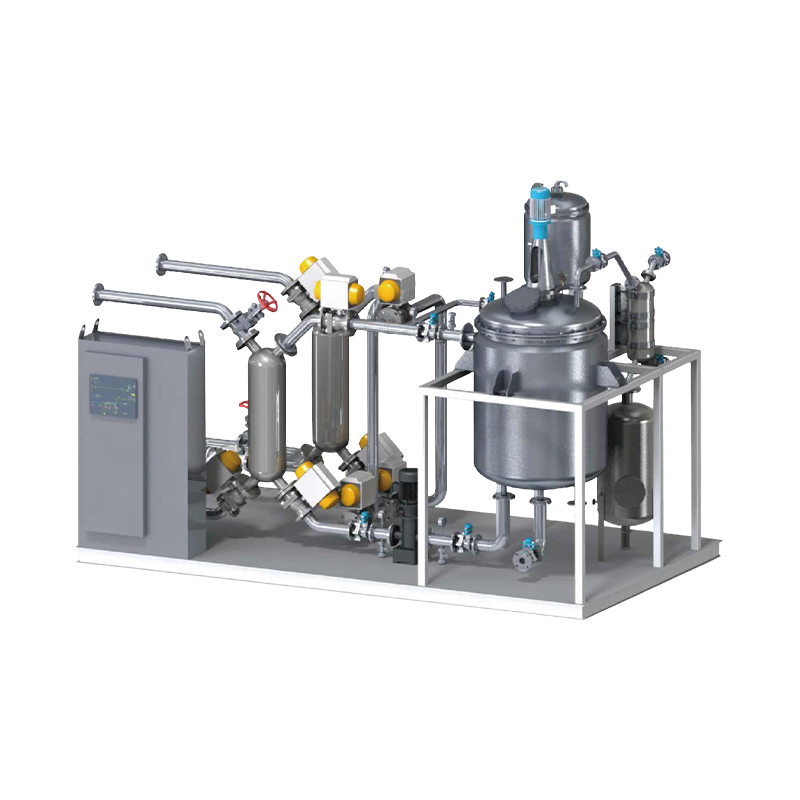
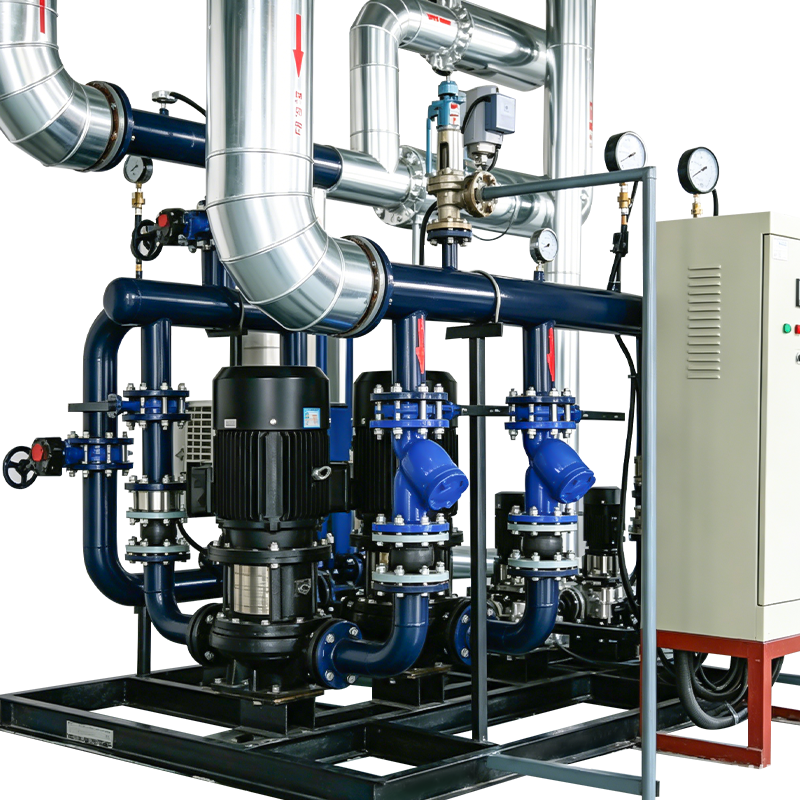
The Precision Temperature Control Unit (TCU) is an integrated process skid designed to provide accurate, stable, and repeatable heating and cooling for reactors, mixing tanks, fermentation vessels, storage tanks, and other process equipment. Rather than relying on manually adjusted utility valves or independent heating and cooling devices, the TCU combines thermal exchange, medium circulation, automated valve control, measurement, safety protection, and programmable logic control in one coordinated system.
For food and beverage manufacturers, this integrated design supports hygienic production, consistent product quality, reduced waste, and more efficient production cycles. For biopharmaceutical manufacturers, the same core architecture can be adapted for controlled reactions, enzymatic processes, culture support, buffer preparation, and other applications requiring reliable thermal management.
This article explains the operating principles, process benefits, hygienic construction, automation functions, manufacturing strengths, maintenance requirements, and selection criteria associated with a precision temperature control unit for modern process industries.
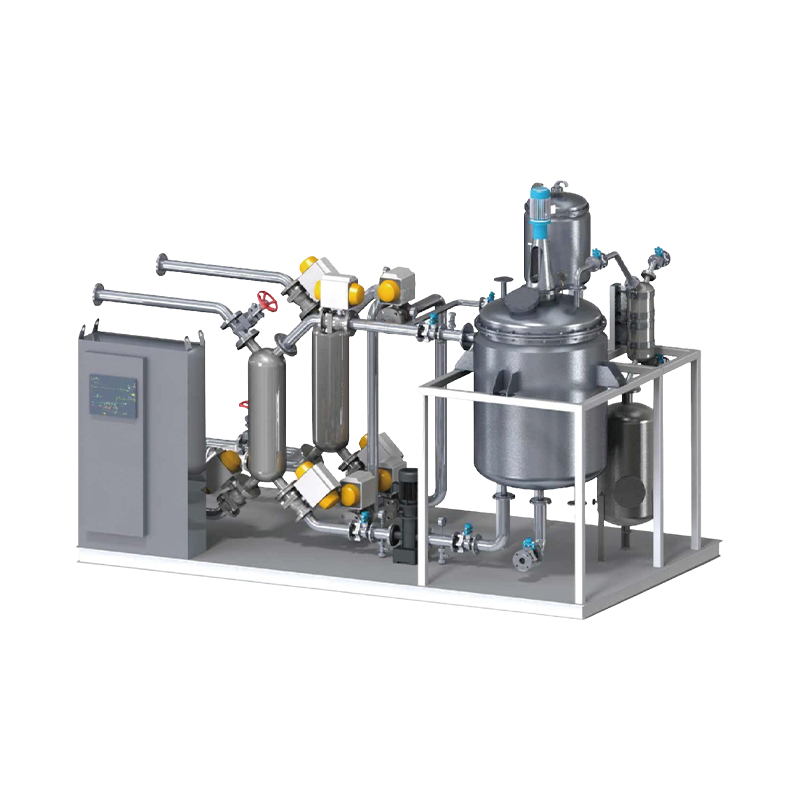
Precision Temperature Control Unit (TCU) for F&B
What Is a Precision Temperature Control Unit?
A precision temperature control unit is a closed-loop thermal management system that regulates the temperature of a process vessel or production machine by circulating a heating or cooling medium through an external heat-transfer circuit. The unit receives temperature feedback from sensors installed in the process equipment or circulation loop. A PLC then compares the actual temperature with the programmed setpoint and adjusts valves, pumps, heating modules, cooling modules, or heat-exchange conditions to correct any deviation.
The TCU may be connected to a reactor, blending tank, fermentation vessel, pasteurization system, concentration unit, or other process equipment. Depending on the production requirements, it can perform heating, cooling, or automatic switching between the two. It can also follow a programmed temperature curve, allowing a process to move through several defined stages without continuous manual intervention.
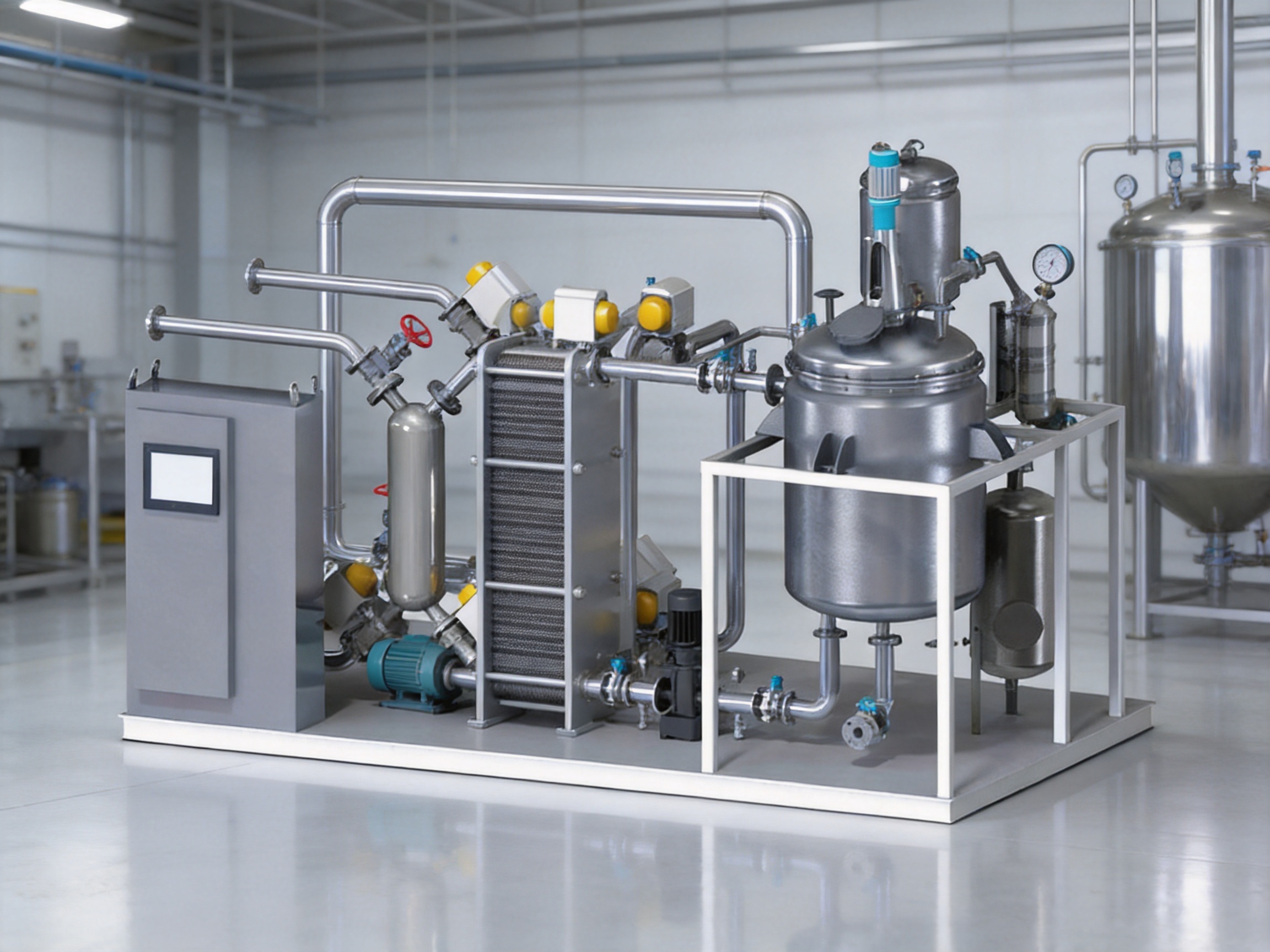
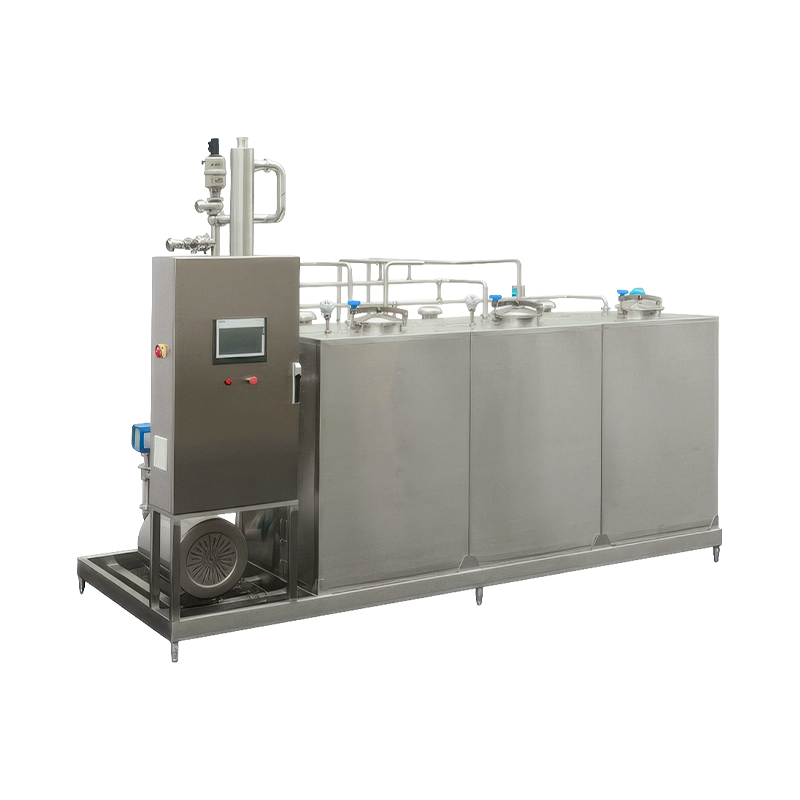
A typical unit contains a heat-exchange tank, circulation pump, plate heat exchanger, control valve group, temperature and pressure instruments, process piping, electrical controls, safety devices, and a stainless-steel support frame. The equipment is assembled as a modular skid so that many functions are completed and tested before delivery. This reduces on-site installation work and helps simplify commissioning.
Unlike a simple hot-water circulation system, a precision TCU actively manages changing process conditions. When the product absorbs heat, when the vessel load changes, or when the process moves from heating to cooling, the control system responds to the measured conditions. This dynamic response is essential for processes where temperature stability is more important than merely reaching a target temperature.
Why Temperature Control Matters in Food and Beverage Production
Food and beverage processes often involve several thermal stages. Ingredients may need to be heated to improve solubility, maintained at a stable temperature during mixing, cooled to protect flavor or nutritional value, and then held within a narrow range during filling or storage. Each stage can affect the physical and chemical properties of the product.
In dairy processing, temperature influences pasteurization, fermentation, protein behavior, viscosity, and shelf stability. In beverage production, it affects ingredient dissolution, flavor retention, color, carbonation support, and microbial control. In sauce and condiment manufacturing, temperature directly affects viscosity, emulsification, cooking characteristics, and filling behavior.
Many food ingredients are sensitive to excessive heat. Proteins can denature, enzymes can lose activity, vitamins can degrade, and natural pigments can change color. Excessive heating can also produce burnt flavors or undesirable reactions. On the other hand, insufficient heating may result in incomplete processing, poor dispersion, unstable emulsions, or inadequate microbial reduction.
Temperature fluctuation is another major concern. A process may reach the correct average temperature while still experiencing local hot spots, slow cooling zones, or repeated oscillations around the setpoint. These variations can produce differences between batches and may complicate quality assurance. A closed-loop TCU helps reduce these variations by continuously measuring process conditions and adjusting the thermal output.
Core System Architecture
Heat Exchange Tank
The heat exchange tank stores and conditions the circulating thermal medium. Depending on the process design, the medium may be heated, cooled, or directed through an external heat exchanger before returning to the process equipment. The tank provides a stable thermal buffer and helps the system respond smoothly when the process demand changes.
The tank is manufactured from stainless steel suitable for the intended production environment. Its design can be adapted to the required working volume, operating pressure, thermal medium, and cleaning method. Properly selected tank geometry helps reduce stagnant zones and supports reliable drainage during shutdown and maintenance.
Circulation Pump
The circulation pump delivers the thermal medium through the TCU, connecting pipelines, heat exchanger, and process jacket or internal coil. Stable flow is essential because temperature control depends not only on the supply temperature but also on the rate at which heat is transferred.
A correctly selected pump supports the required flow, pressure, and operating range while avoiding excessive shear, vibration, or energy consumption. Pump selection should consider the viscosity of the medium, pipeline length, elevation differences, valve resistance, heat exchanger pressure drop, and the requirements of the connected process equipment.
Plate Heat Exchanger
The plate heat exchanger transfers heat between the circulating process medium and the available heating or cooling utility. Its compact structure provides a large heat-transfer area in a relatively small footprint. This supports fast thermal response and helps reduce the size of the overall skid.
Plate heat exchangers can be configured for hot water, chilled water, glycol solutions, steam-related heating circuits, or other compatible utilities. The material, gasket selection, plate design, and connection configuration must be selected according to the application, temperature range, pressure, sanitation requirements, and chemical compatibility.
Control Valve Group
The control valve group regulates the flow of heating or cooling utility entering the heat exchanger. Proportional valves allow the system to adjust thermal output gradually rather than operating only in a fully open or fully closed condition. This improves control stability and reduces temperature overshoot.
Valve arrangement may include isolation valves, control valves, check valves, safety valves, drains, vents, and bypass lines. The exact configuration depends on the process design and customer requirements. Well-organized valve layouts make the skid easier to operate, inspect, clean, and service.
Instrumentation and Sensors
Temperature sensors provide the feedback required for closed-loop control. Depending on the design, sensors may monitor the process vessel, supply line, return line, heat exchange tank, or utility circuit. Pressure sensors, flow instruments, level switches, and conductivity or other optional instruments can also be integrated.
Sensor placement is important. A sensor installed in an unsuitable location may respond too slowly or fail to represent the actual process temperature. During commissioning, the sensor position, calibration status, wiring, and response should be checked carefully. Accurate measurement is the foundation of accurate control.
PLC and Touch Screen Interface
The PLC coordinates the pump, valves, heaters, cooling utilities, alarms, interlocks, and process signals. Operators can enter setpoints, define temperature stages, set ramp rates, establish holding times, and configure alarm limits through the touch screen interface.
The control system can also receive signals from reactors, fermentation tanks, mixers, production lines, and supervisory systems. This allows the TCU to start, stop, or change operating modes in response to the wider production sequence. Such integration reduces manual operation and supports synchronized process control.
Closed-Loop Control and Process Stability
The primary advantage of a precision TCU is its closed-loop operating principle. In an open-loop system, an operator may set a valve position or utility temperature and hope that the process remains within range. Changes in product volume, ambient conditions, flow resistance, or heat demand can then cause the actual process temperature to drift.
In a closed-loop TCU, the actual temperature is continuously measured. The PLC compares this value with the target temperature and calculates the required adjustment. If the process is cooler than the setpoint, the system can increase heating-medium flow or thermal output. If the process becomes too warm, the heating valve can close while cooling is introduced or increased.
This feedback process helps correct deviations before they become serious. It also supports repeatable temperature profiles from batch to batch. When combined with suitable pump capacity, efficient heat exchange, correctly positioned sensors, and well-tuned control parameters, the TCU can deliver a stable thermal environment throughout the process.
Temperature control performance depends on many factors, including heat-transfer area, process volume, product viscosity, vessel geometry, agitation, utility capacity, insulation, sensor accuracy, and control tuning. A reliable equipment supplier should therefore evaluate the entire thermal system rather than selecting a unit based only on nominal heating capacity.
Heating, Cooling, and Automatic Changeover
Many production processes require both heating and cooling. A sauce may need to be heated for cooking and then cooled before filling. A beverage may require warm blending followed by rapid cooling. A fermentation process may require heat-up, temperature holding, and controlled cooling. A biopharmaceutical reaction may follow a defined temperature curve with several transitions.
The TCU is designed to support these different conditions through coordinated control of heating and cooling circuits. The PLC can execute a programmed sequence in which the unit heats the process to a defined setpoint, holds the temperature for a specified time, and then changes to cooling mode when the process step is complete.
Automatic changeover reduces operator intervention and helps prevent incorrect valve operation. Interlocks can be used to prevent heating and cooling utilities from opening simultaneously when that condition would be unsafe or inefficient. The system can also verify pump operation, liquid level, valve position, and sensor status before allowing a process step to begin.
Fast changeover is especially useful when production schedules involve multiple products or frequent batch turnover. The system can be designed for the required ramp rate while avoiding excessive thermal shock to the vessel, heat exchanger, product, or piping components.
Advantages Compared with Basic Temperature Regulation Systems
Integrated Construction
Basic temperature control arrangements often require separate pumps, valves, heat exchangers, control panels, and field-installed piping. This can increase installation time, create more connection points, and make responsibility for system performance less clear.
The integrated TCU combines these functions into a coordinated skid. Factory assembly allows the manufacturer to arrange components for accessibility, inspect pipe routing, verify instrument connections, and perform functional checks before shipment. The customer receives a more complete system rather than a collection of disconnected components.
More Consistent Temperature Control
Manual or simple on-off control can create large temperature swings. A proportional control valve group and PLC-based feedback system provide more gradual correction. This reduces overshooting and improves temperature stability during heating, cooling, and holding stages.
Improved stability is valuable for products with narrow processing windows. It can help reduce differences in viscosity, texture, flavor, color, dispersion, and microbial performance. It also makes process validation and production documentation more straightforward.
Reduced Installation Complexity
Because the TCU is supplied as a modular process skid, much of the assembly work is completed in the manufacturing facility. Site technicians generally need to connect the utility lines, process connections, electrical supply, control signals, and drainage points according to the approved installation documents.
This can reduce field welding, shorten installation schedules, and lower the risk of inconsistent workmanship. It also makes future expansion easier because additional modules or control functions can be incorporated into a defined skid architecture.
Improved Hygienic Performance
Food and biopharmaceutical applications require careful control of contamination risks. Stainless-steel construction, smooth internal surfaces, hygienic welding, appropriate seals, drainable piping, and minimized dead zones all contribute to a more sanitary design.
A basic industrial heating system may not be suitable for direct integration into a hygienic production line. The TCU can instead be configured with food-grade 304 or 316L stainless steel, sanitary connections, accessible components, and cleaning-compatible materials. The correct material grade depends on the product, cleaning chemicals, temperature, chloride exposure, and regulatory expectations.
Better Data Traceability
Manual temperature records are time-consuming and may contain gaps or transcription errors. An automated TCU can record temperature, pressure, flow, alarm status, process stage, and other selected parameters. These records can support production review, troubleshooting, quality documentation, and traceability programs.
Data functions can be adapted to the customer’s automation structure. The TCU may operate as a local control system or exchange signals with a larger manufacturing execution, supervisory control, or plant automation platform.
Stronger Safety Protection
A properly designed TCU includes protective functions that may not be available in simple heating arrangements. These can include over-temperature alarms, pressure protection, dry-run prevention, emergency stop circuits, low-level detection, pump protection, and abnormal sensor alarms.
Safety interlocks help prevent equipment operation under unsuitable conditions. For example, the control system can prevent the circulation pump from running when the medium level is too low or stop heating when the temperature sensor signal is lost. The final safety configuration should be established through a project-specific risk assessment.
Applications in Food and Beverage Manufacturing
Dairy Processing
TCUs can support pasteurization equipment, fermentation tanks, blending vessels, cream processing systems, and other dairy applications. Stable heating and cooling help maintain defined thermal conditions while protecting the quality of proteins, cultures, fats, and other dairy components.
During fermentation, temperature stability is especially important because culture activity can change significantly with relatively small temperature differences. A TCU can maintain the vessel within the intended range and respond to heat generated by biological activity or changes in production conditions.
Beverage Production
Juice, tea, functional beverages, flavored water, plant-based drinks, and other liquid products often require controlled blending and thermal maintenance. A TCU can regulate the temperature of mixing tanks, storage vessels, reactors, and transfer lines.
Stable temperature improves ingredient dissolution, reduces sedimentation risks, supports consistent flavor development, and helps maintain the desired viscosity. When connected to a production line, the TCU can operate in coordination with mixing, filling, or transfer steps.
Sauce and Condiment Manufacturing
Sauces, dressings, marinades, concentrates, and emulsified products may require controlled heating to develop flavor and achieve the desired viscosity. Excessive heating can damage ingredients or create burnt notes, while insufficient heating can result in poor dispersion or incomplete cooking.
The TCU can provide a defined heating curve and then support controlled cooling before filling or packaging. Stable circulation and heat transfer help reduce localized overheating, particularly when the product becomes more viscous during processing.
Syrups and Liquid Ingredients
Syrups and concentrated ingredients may require heating to improve flow, dissolve solids, or support transfer through piping. Temperature maintenance is also important when a product must remain pumpable during storage or filling.
A TCU can maintain the product vessel or transfer system within a controlled temperature range. This helps reduce viscosity variation and supports more consistent filling performance.
Chocolate and Confectionery Processing
Chocolate, coatings, fillings, and confectionery materials can be highly sensitive to temperature. Controlled melting and holding conditions are required to achieve suitable flow, appearance, texture, and stability.
A precision TCU can provide gradual heating and stable holding conditions, helping reduce the risk of overheating and supporting repeatable processing across production batches.
Fermentation and Enzymatic Processes
Fermentation, enzymatic hydrolysis, and strain cultivation require carefully controlled thermal conditions. Temperature affects biological activity, reaction speed, product yield, and process duration.
The TCU can be connected to a fermentation or reaction vessel and programmed to follow a defined process curve. It can also exchange operating signals with the vessel agitator, dosing equipment, or production control system.
Biopharmaceutical and Biochemical Applications
Although this product is designed for food and beverage process environments, its modular architecture is also applicable to selected biopharmaceutical and biochemical processes. These industries require controlled temperatures, hygienic materials, reliable documentation, and carefully managed process conditions.
Potential applications include buffer preparation, media preparation, enzymatic reactions, culture support, temperature-controlled mixing, liquid formulation, and thermal maintenance during transfer. The exact design must be adapted to the product classification, cleaning strategy, sterilization requirements, pressure rating, validation expectations, and applicable regulations.
In biopharmaceutical manufacturing, temperature control is often closely linked to product activity and process reproducibility. The TCU can help maintain a defined thermal profile while providing alarms, records, and system interlocks. For higher-grade applications, additional requirements such as validated cleaning, sterilization-in-place capability, documentation packages, surface-finish specifications, and material certificates may be needed.
The system should not be treated as a generic utility package when it is connected to a critical biopharmaceutical process. A complete engineering review is necessary to define the product-contact boundary, non-product-contact boundary, utility quality, control philosophy, and commissioning documentation.
Hygienic Design and Material Selection
Stainless steel is commonly selected for food-grade and biopharmaceutical equipment because it offers corrosion resistance, mechanical durability, cleanability, and a smooth surface when properly fabricated and finished. Food-grade 304 stainless steel may be suitable for many general applications, while 316L stainless steel is often selected for more demanding chemical, chloride, or pharmaceutical environments.
All wetted materials should be compatible with the process medium and cleaning agents. Seals and gaskets should be selected according to temperature, pressure, chemical exposure, and hygienic requirements. Food-grade elastomers may be used where appropriate, while higher-specification applications may require specific compliance documentation.
Sanitary welding is important because poor weld quality can create crevices, rough areas, discoloration, or contamination traps. Proper welding procedures, internal inspection, polishing, and passivation can improve surface condition and corrosion resistance. Pipe routing should also support drainage and avoid unnecessary dead legs.
The external frame and housing may be manufactured from stainless steel or carbon steel depending on the installation environment and customer preference. Stainless-steel external surfaces are advantageous in washdown areas because they are easier to clean and more resistant to corrosion. Carbon-steel frames may provide a cost-effective structural solution in dry or protected environments when properly coated.
Hygienic design should be considered together with cleaning practice. A unit that is technically stainless steel may still be difficult to clean if it contains inaccessible components, poor drainage, unsuitable seals, or unnecessary recesses. The equipment layout should therefore support inspection, maintenance, and sanitation throughout its operating life.
Advanced Manufacturing and Engineering Strengths
Equipment reliability depends not only on the design concept but also on the manufacturing process used to convert that concept into a finished skid. Shiloc (Shanghai) Industrial Trading Co., Ltd. combines equipment manufacturing, engineering services, international trade, and process equipment integration to deliver thermal management systems for food, beverage, biopharmaceutical, daily chemical, and fine chemical applications.
European Know-How and Danish Design Principles
The company’s engineering approach is supported by European know-how and Danish design concepts. These influences are reflected in an emphasis on clean process layouts, practical accessibility, modular integration, functional simplicity, and hygienic equipment construction.
Design work begins with an understanding of the customer’s process rather than with a standard equipment size alone. Engineers review the product characteristics, required temperature range, heating and cooling media, vessel volume, process flow, control sequence, utility conditions, cleaning method, and future expansion plans.
This process-oriented design method helps ensure that the TCU is correctly matched to the connected equipment. It also reduces the likelihood of selecting a unit that has sufficient nominal heating capacity but inadequate flow, poor control response, or unsuitable process connections.
In-House Processing Capability
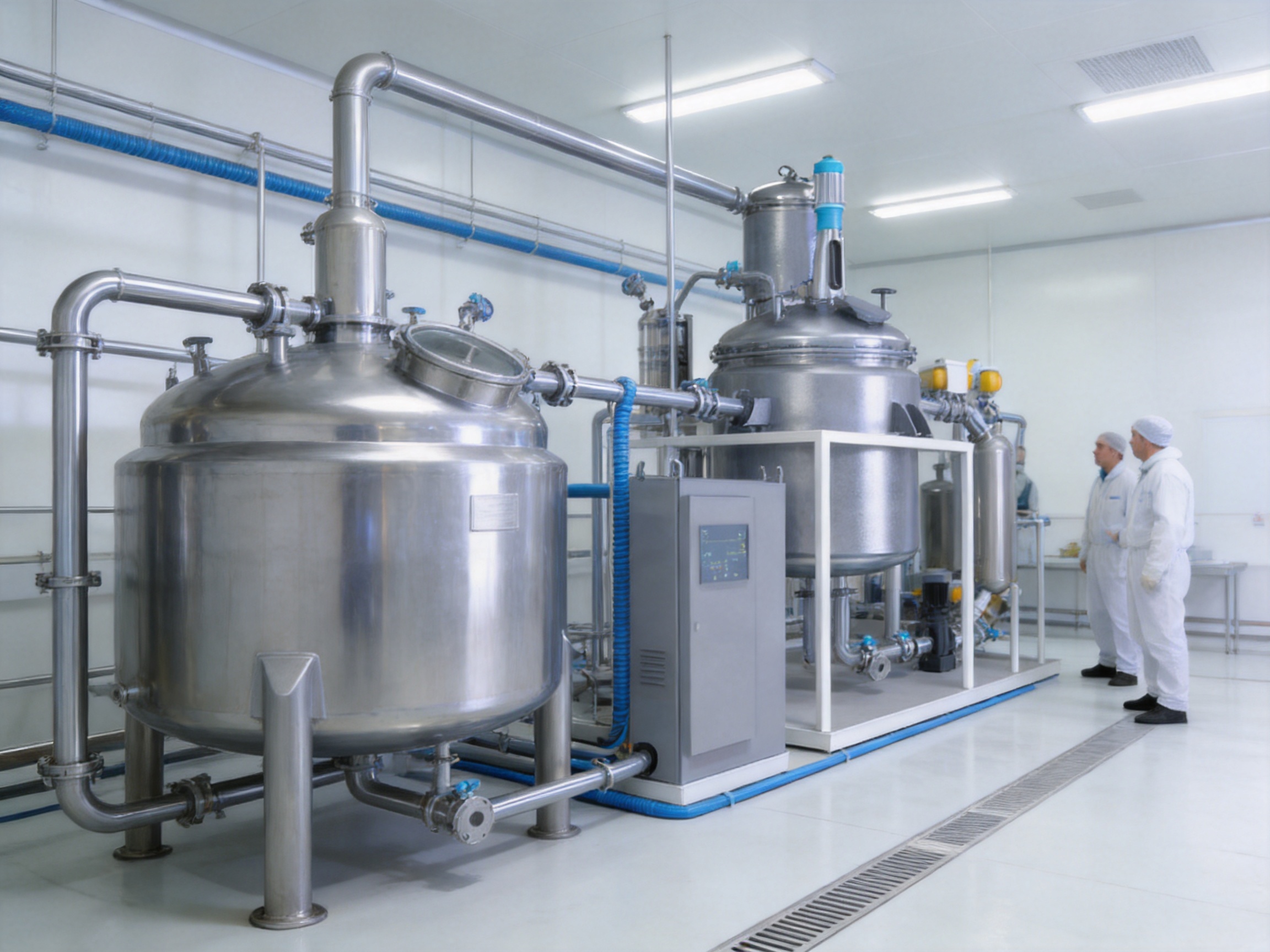
The company operates a 3,000-square-meter manufacturing facility in Shanghai with more than 20 technical specialists. The facility supports processing, welding, polishing, assembly, inspection, and quality control activities.
In-house manufacturing provides better control over production coordination and enables engineering personnel to communicate directly with fabrication and assembly teams. This can shorten the feedback cycle when a design requires modification and helps maintain consistency between drawings and the final product.
Internal control of key production activities also improves traceability. Materials, welding activities, surface finishing, dimensional inspection, and functional testing can be organized under a defined quality process. This is particularly important for customers that require documentation for audits, installation qualification, or production validation.
Material Control and Traceability
Core materials are sourced from Europe according to the information provided for the company’s manufacturing operations. Material selection is made with consideration for corrosion resistance, hygiene, pressure, temperature, and process compatibility.
Material identification and production records help connect the incoming material to the finished equipment. Depending on the project, documentation may include material certificates, component records, inspection reports, welding records, pressure test records, surface-finish information, and final acceptance documentation.
Traceability is valuable when equipment is installed in a regulated or quality-sensitive production facility. It allows the customer to understand which materials and components were used and provides a stronger basis for future maintenance or replacement decisions.
Welding and Surface Finishing
Stainless-steel equipment requires controlled welding and finishing practices. Weld preparation, fit-up, heat input, shielding, post-weld cleaning, and inspection all affect the long-term performance of the process boundary.
After welding, internal and external surfaces may be polished or treated according to the application. Suitable finishing reduces roughness, supports cleanability, and improves the visual and functional quality of the equipment. Where required, additional surface treatment or passivation can be specified for enhanced corrosion resistance.
Attention to welding and polishing distinguishes a hygienic process skid from a general industrial utility assembly. It also supports more reliable integration with food, beverage, and biochemical production systems where sanitation and repeatability are important.
Engineering and Customization
Process requirements vary widely between customers. A small mixing tank for a beverage ingredient may require a different pump and heat exchanger from a large fermentation vessel. A high-viscosity sauce may need a different circulation arrangement from a low-viscosity liquid. A biopharmaceutical application may require more extensive documentation and cleaning provisions than a general food process.
The TCU can therefore be customized in areas such as heat-transfer capacity, medium volume, pump specification, valve type, sensor arrangement, control logic, frame dimensions, piping connections, insulation, drainage, communication protocols, and data recording functions.
Customization does not mean modifying a standard unit without engineering review. It should be based on heat-balance calculations, process information, utility data, equipment drawings, and defined acceptance criteria. This engineering discipline helps ensure that customized equipment remains reliable, maintainable, and safe.
Quality Management
The company maintains a quality management system supported by ISO9001, environmental, and safety certifications, according to the supplied company information. A structured management system helps establish consistent procedures for purchasing, manufacturing, inspection, nonconformance handling, documentation, and customer service.
Quality assurance for a TCU may include design review, incoming material inspection, dimensional checks, weld inspection, pressure testing, electrical inspection, instrument verification, control-system testing, alarm testing, and final visual inspection.
Factory acceptance testing can be organized before shipment to verify that pumps, valves, sensors, PLC functions, alarms, and operating sequences perform according to the approved design. Early detection of issues reduces the time and cost of troubleshooting after installation at the customer’s facility.
Control Functions and Data Traceability
The touch screen interface provides operators with access to operating parameters, process status, alarm information, and trend displays. Authorized users can define setpoints, temperature limits, process stages, holding times, and control modes.
Preset process curves allow a batch to follow a repeatable sequence. For example, the system may heat a vessel to a target temperature, hold it for a selected period, reduce the temperature at a controlled rate, and maintain a final cooling temperature. The precise sequence depends on the customer’s process.
Data recording supports traceability and process improvement. Recorded values may include process temperature, supply and return temperature, pressure, flow, medium level, valve status, alarm events, and batch-related information. The data can be exported for production records, quality review, maintenance analysis, and troubleshooting.
When the TCU is linked with a production line, the control system can receive start and stop commands, batch signals, vessel status signals, or permissive conditions. It can also send operating status, alarm status, temperature status, and process completion signals to other equipment.
Remote monitoring and higher-level integration may be available depending on the selected control architecture. Communication requirements should be defined during the design stage so that the PLC, hardware, software, network structure, and cybersecurity expectations are properly coordinated.
Safety Features
Thermal equipment should be designed with safety functions appropriate to its pressure, temperature, utility, and process conditions. The TCU may include an over-temperature alarm that warns operators or stops the heating function when the measured temperature exceeds the permitted limit.
Pressure protection can include pressure switches, relief valves, expansion provisions, and monitoring of abnormal pressure conditions. The arrangement should account for thermal expansion of the circulating medium and the possibility of blocked or closed valves.
Dry-run prevention protects the circulation pump and heating components when the medium level is too low. The control system can use level switches, pressure feedback, flow confirmation, or a combination of signals to verify that circulation is safe before enabling operation.
An emergency stop circuit allows the operator to bring the system to a safe state during an abnormal event. Additional interlocks may prevent operation when a sensor signal is missing, a pump fault is detected, a valve fails to reach its commanded position, or a connected process vessel is not ready.
Safety functions should be defined during the risk assessment and verified during factory and site testing. Operators should also receive training on startup, shutdown, alarm response, emergency procedures, and maintenance isolation.
Common Operating Problems and Troubleshooting
Temperature Fluctuations Beyond the Process Range
Excessive temperature fluctuation may be caused by an incorrectly installed sensor, inaccurate calibration, insufficient circulation flow, poorly tuned control parameters, inadequate heat-transfer area, or fouling inside the heat exchanger.
The first checks should include sensor location, sensor calibration, pump operation, valve response, medium level, and process agitation. If the circulation flow is unstable, the pump, filter, valves, and pipeline should be inspected. Heat exchanger fouling should also be considered, especially when the system has operated for a long period without cleaning.
Unqualified Heating or Cooling Rate
If the system heats or cools too slowly, the utility supply may not provide sufficient pressure, temperature, or flow. The control valve may not open fully, the pump may be operating outside its design range, or filters may be blocked.
Operators should verify the heating or cooling source, valve opening, medium flow, heat exchanger condition, insulation, and pipeline filters. The required ramp rate should also be compared with the original design basis because product viscosity, batch volume, or utility conditions may have changed.
Abnormal Pipeline Pressure
High or low pressure can indicate a blockage, leakage, closed valve, insufficient medium level, incorrect expansion tank pressure, pump malfunction, or safety valve problem. Pressure should be investigated before the system continues operating.
Pipeline inspection should include flanges, seals, welds, flexible connections, valves, heat exchanger channels, filters, expansion components, and drains. Maintenance work must be performed according to the applicable isolation and pressure-release procedures.
Sensor or Communication Alarms
A sensor alarm may result from a damaged probe, loose wiring, incorrect configuration, loss of power, calibration drift, or an open circuit. Communication alarms may be related to PLC modules, network connections, software settings, or external equipment signals.
Operators should not bypass an alarm without understanding its cause. The control system should be returned to normal operation only after the sensor or communication function has been tested and the process impact has been evaluated.
Installation and Commissioning
The installation location should provide adequate space for operation, inspection, maintenance, drainage, ventilation, and safe access to the control panel. The skid should be positioned on a stable foundation capable of supporting its operating weight and vibration loads.
Utility connections should be designed according to the approved piping and instrumentation diagrams. Heating media, cooling media, process circulation lines, compressed air, electrical power, drainage, and communication cables should be clearly identified and installed with suitable isolation provisions.
Before startup, technicians should verify the medium level, valve positions, pipeline cleanliness, sensor signals, pump rotation, electrical connections, grounding, emergency stop function, and alarm settings. Filters should be checked for foreign material, and all temporary shipping protections should be removed.
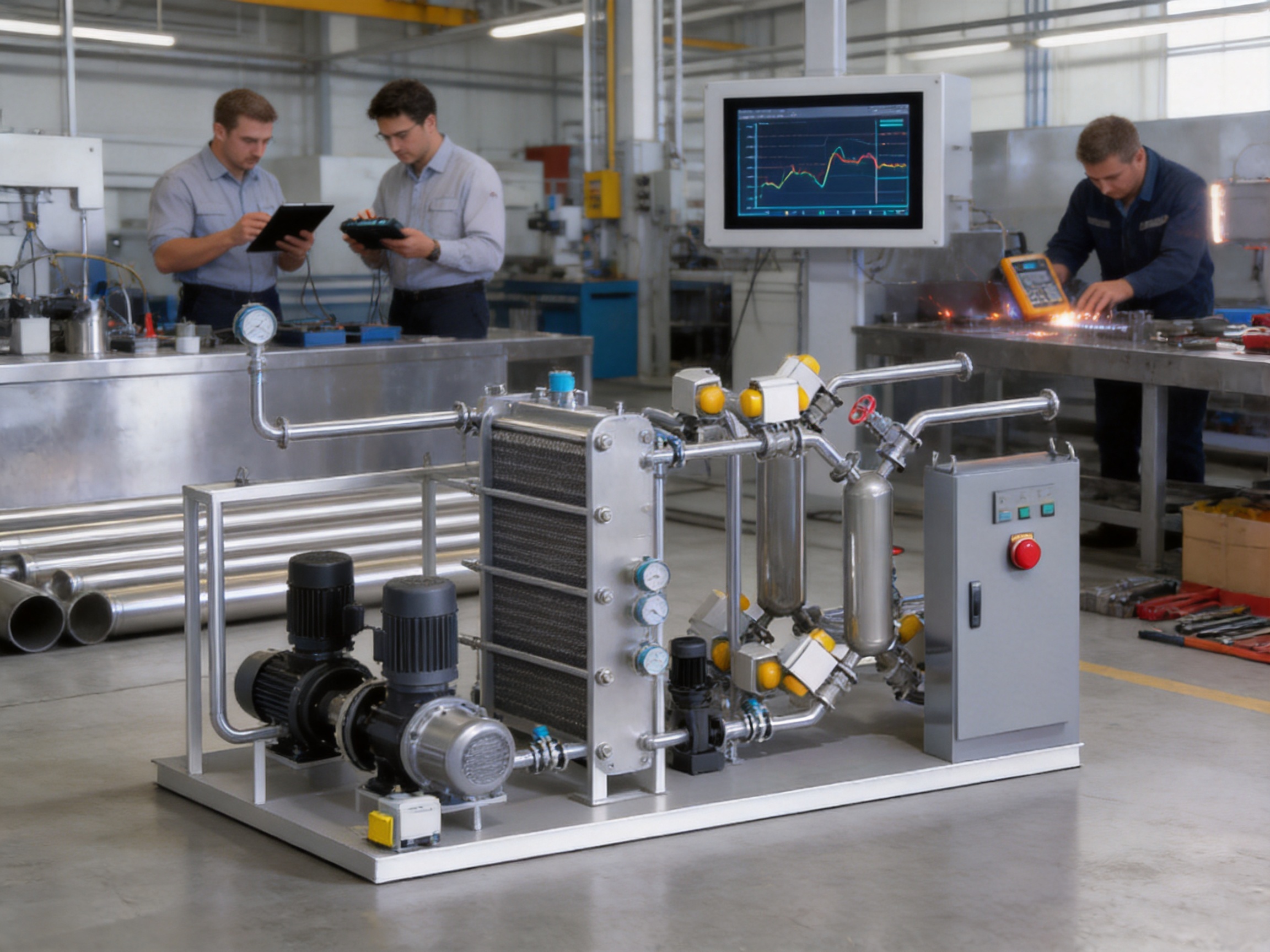
Commissioning should proceed in stages. A dry inspection is followed by water or compatible medium circulation, pump testing, valve testing, sensor verification, control-loop testing, safety-interlock testing, and process simulation. Where possible, the temperature response should be checked under representative operating conditions.
Factory acceptance testing before shipment can reduce site commissioning time. Site acceptance testing then confirms that the TCU performs correctly when connected to the customer’s actual vessel, utilities, production controls, and operating environment.
Maintenance Recommendations
Regular maintenance helps preserve thermal performance, control accuracy, hygiene, and equipment service life. The maintenance schedule should be based on operating hours, product characteristics, cleaning chemicals, utility quality, and the manufacturer’s recommendations.
Heat exchangers and pipeline filters should be cleaned regularly. Fouling reduces heat-transfer efficiency, increases pressure drop, and can cause the control system to operate for longer periods to achieve the same process result. The cleaning method should be compatible with the exchanger materials, gaskets, process medium, and available cleaning equipment.
Pumps should be inspected for abnormal noise, vibration, leakage, seal wear, and changes in flow. Mechanical seals and other wear components should be replaced when deterioration is identified. Running a pump without adequate medium can cause rapid damage.
Valves should be checked for leakage, response time, actuator condition, and correct feedback. Proportional valves should be inspected for stable modulation and proper calibration. Manual isolation valves should remain accessible and clearly labeled.
Temperature and pressure sensors should be calibrated at defined intervals. Calibration records should be retained when the equipment is used in a quality-sensitive or regulated process. Sensors should also be inspected for mechanical damage, contamination, and signal instability.
During shutdown in low-temperature environments, the circulating medium should be drained when freezing could damage pipes, heat exchangers, pumps, or valves. If the system must remain filled, an appropriate freeze-protection strategy should be established.
Selection Criteria for a Precision TCU
Selecting the correct TCU requires a complete understanding of the process. The first consideration is the required temperature range, including normal operating temperature, minimum and maximum temperature, heating target, cooling target, and any temperature ramp requirements.
Heating and cooling capacity should be calculated from the product mass, vessel mass, specific heat, initial and final temperatures, required processing time, heat losses, and available utility conditions. Cooling calculations should also account for heat generated by mixing, reaction, fermentation, or environmental exposure.
Flow requirements are equally important. The system should provide enough circulation to transfer heat effectively through the vessel jacket, coil, or external loop. The pump should be selected according to the actual resistance of the system rather than only the vessel connection size.
Product characteristics must be reviewed. Viscosity, solids content, sensitivity to shear, foaming behavior, crystallization tendency, and fouling potential can influence heat-transfer performance and equipment selection.
Automation compatibility should also be defined. Customers may require a local touch screen, remote supervisory control, recipe management, electronic records, batch signals, data export, or communication with an existing production system.
Hygienic requirements should cover materials, surface finish, connections, drainage, cleaning method, sterilization method, seals, and documentation. For biopharmaceutical applications, validation and compliance requirements should be identified before the design is finalized.
Future production expansion should be considered. A TCU with suitable spare capacity, modular controls, accessible connections, and upgradeable software may provide better long-term value than a system sized only for the first production phase.
Technical Comparison of Integrated and Basic Systems
| Evaluation Area | Basic Temperature Regulation | Precision Integrated TCU |
|---|---|---|
| System structure | Separate components installed individually | Integrated heat exchange, circulation, valves, and controls |
| Temperature response | Often dependent on manual adjustment or simple switching | Closed-loop feedback with automatic correction |
| Process flexibility | Usually limited to one operating condition | Supports heating, cooling, changeover, and programmed curves |
| Installation work | More field piping and commissioning work | Factory-assembled modular skid reduces site work |
| Hygienic suitability | May require significant modification | Stainless-steel and sanitary design options |
| Data management | Manual records or limited monitoring | Automatic recording of temperature, pressure, flow, and alarms |
| Safety functions | May depend on separate devices | Integrated alarms, interlocks, emergency stop, and dry-run protection |
| Expansion potential | Often difficult to modify | Modular design supports customization and future integration |
| Maintenance visibility | Multiple suppliers and disconnected components | Centralized equipment layout and coordinated documentation |
Value for Manufacturers
The value of a precision TCU extends beyond temperature accuracy. Stable thermal control can reduce rejected batches, rework, ingredient loss, and unplanned downtime. More repeatable processes also simplify operator training and improve the ability to standardize production across different shifts.
Shorter heating and cooling cycles can increase production capacity without requiring a larger vessel. More efficient heat exchange reduces unnecessary utility consumption. Automated recipes reduce the possibility of operator error and make it easier to reproduce successful process conditions.
Integrated data recording supports root-cause analysis. If a batch shows an unexpected viscosity or flavor result, operators can review the recorded temperature profile, pressure trend, flow condition, and alarm history. This can help determine whether the cause was related to raw materials, mixing, temperature control, utility supply, or another process variable.
Hygienic design can also reduce cleaning difficulty and contamination risk. Smooth surfaces, suitable materials, accessible valves, and drainable piping help support sanitation programs and reduce the possibility of product residue accumulation.
Why Manufacturing Capability Matters When Choosing a Supplier
A temperature control unit is not simply a collection of pumps and valves. Its performance depends on thermal calculations, control logic, piping design, material selection, welding quality, instrumentation, assembly accuracy, and commissioning support.
A supplier with manufacturing and engineering capability can evaluate the full process and coordinate these elements under one project. This reduces the risk that separate component suppliers will provide equipment with incompatible capacities, connection standards, control signals, or maintenance requirements.
Shiloc (Shanghai) Industrial Trading Co., Ltd. combines process equipment manufacturing with engineering and technical services. Its focus on food, beverage, biopharmaceutical, daily chemical, and fine chemical applications provides a basis for adapting the TCU to different production environments.
The company’s manufacturing resources include a Shanghai facility, technical specialists, stainless-steel processing, welding, polishing, assembly, and quality inspection. European material sourcing and Danish design concepts are incorporated into its equipment development approach. These capabilities support reliable supply, shorter communication paths, traceability, and customized engineering assistance.
As an international trading and engineering company, Shiloc can also support equipment sourcing, import and export operations, project coordination, and technical service. This integrated model can be useful for customers purchasing complete process skids rather than individual components.
Recommended Project Workflow
A successful TCU project begins with a process information review. The customer should provide the connected equipment drawings, product properties, batch size, operating temperature, heating and cooling requirements, utility conditions, desired cycle time, cleaning method, control preferences, and site limitations.
The engineering team can then establish the heat balance, select the heat exchanger, calculate circulation requirements, define the control valves, select instruments, and develop the preliminary piping and instrumentation diagram.
After design review, the supplier can prepare the skid layout, equipment list, electrical design, control philosophy, material specification, and testing plan. Customer approval should be obtained before fabrication begins.
During manufacturing, materials and components are inspected, piping is fabricated, welds are completed and finished, instruments are installed, the control panel is assembled, and the skid is tested. Any required documentation is compiled as the project progresses.
Factory testing verifies the operation of pumps, valves, sensors, PLC functions, alarms, interlocks, and programmed sequences. After shipment, site installation and acceptance testing confirm correct operation under actual plant conditions.
Training should cover normal operation, recipe or setpoint entry, alarm response, cleaning, inspection, emergency shutdown, and routine maintenance. A complete handover package helps the customer operate the equipment safely and maintain its performance.
Conclusion
The Precision Temperature Control Unit provides a practical and advanced solution for manufacturers that require stable, repeatable, and hygienic thermal processing. By integrating heat exchange, circulation, proportional control, sensors, PLC automation, safety protection, and data recording, the system addresses many limitations associated with basic heating and cooling arrangements.
For food and beverage manufacturers, the TCU can help control pasteurization, fermentation, blending, cooking, concentration, syrup preparation, chocolate processing, sauce production, and liquid transfer. For biochemical and biopharmaceutical users, it can support controlled reactions, culture processes, buffer preparation, formulation, and other temperature-sensitive operations when configured to meet the required standards.
The principal benefits include improved temperature stability, faster and more controlled heating and cooling, reduced product waste, better energy utilization, hygienic construction, automatic process sequencing, safety interlocks, and traceable operating data. The modular skid arrangement also reduces on-site installation work and simplifies integration with reactors, mixing tanks, fermentation vessels, and automated production lines.
Equipment quality depends heavily on engineering and manufacturing execution. Material control, stainless-steel fabrication, hygienic welding, surface finishing, component inspection, PLC testing, and complete documentation all contribute to reliable long-term performance. With its Shanghai manufacturing facility, technical specialists, European material sourcing, Danish design influence, and integrated engineering capabilities, Shiloc (Shanghai) Industrial Trading Co., Ltd. provides customized thermal processing solutions for customers seeking dependable process equipment.
When selecting a TCU, manufacturers should evaluate more than heating capacity. Temperature range, ramp rate, flow, product properties, utility conditions, sanitation, automation, data management, safety, maintenance, and future expansion must all be considered. A properly engineered unit can become a central part of a modern production system, improving consistency, efficiency, traceability, and operational confidence.
Questions and Answers
What is the main function of a precision temperature control unit?
The main function is to provide controlled heating, cooling, and temperature holding for process equipment. The TCU circulates a thermal medium through a heat-transfer circuit and uses sensor feedback and PLC control to maintain the required process temperature.
Which types of food processes can use a TCU?
Applications include dairy fermentation, pasteurization, beverage blending, sauce cooking, syrup preparation, chocolate melting, concentration, liquid ingredient storage, fermentation support, and temperature-controlled product transfer.
Can the TCU switch automatically between heating and cooling?
Yes. When configured with suitable heating and cooling circuits, valves, sensors, and control logic, the TCU can automatically change between heating and cooling according to a programmed process sequence.
How does closed-loop control improve production?
Closed-loop control continuously compares the measured temperature with the target temperature and corrects deviations automatically. This reduces temperature fluctuation, limits overshoot, improves batch repeatability, and reduces reliance on manual valve adjustment.
What materials are used for food-grade TCU construction?
Food-grade stainless steel 304 or 316L is commonly used for process-contact tanks and piping. The appropriate grade depends on the process medium, cleaning chemicals, temperature, corrosion conditions, and hygiene requirements. Food-grade elastomers may be used for suitable seals and gaskets.
Is the TCU suitable for biopharmaceutical applications?
The TCU can be adapted for selected biopharmaceutical and biochemical applications such as enzymatic reactions, culture support, buffer preparation, and controlled mixing. The final design must address the customer’s cleaning, sterilization, validation, documentation, and regulatory requirements.
What safety functions can be included?
Typical functions include over-temperature alarms, pressure protection, emergency stop, dry-run prevention, low-level detection, pump protection, sensor-failure alarms, valve-position monitoring, and interlocks with connected process equipment.
What data can the system record?
Depending on the control configuration, the system can record temperature, pressure, flow, medium level, valve status, alarm events, process stages, and other selected operating parameters. Data can be exported for production management, quality review, and traceability.
How often should the system be maintained?
Maintenance frequency depends on operating hours, product characteristics, utility quality, cleaning chemicals, and process conditions. Heat exchangers and filters should be cleaned regularly, while pumps, seals, valves, sensors, and safety devices should be inspected according to a documented maintenance schedule.
What information is needed to design a customized TCU?
Important information includes vessel volume, product properties, batch size, operating temperature, heating and cooling targets, required ramp rate, process cycle time, heating and cooling utilities, flow requirements, cleaning method, automation interface, site dimensions, and future production plans.
References
1. Food and Agriculture Organization of the United Nations. Food Processing Hygiene and Temperature Management Principles.
2. International Organization for Standardization. ISO 9001: Quality Management Systems—Requirements.
3. International Organization for Standardization. ISO 22000: Food Safety Management Systems—Requirements for Organizations in the Food Chain.
4. European Hygienic Engineering and Design Group. Hygienic Design Principles for Food Processing Equipment.
5. ASME. Bioprocessing Equipment Standards and Recommended Practices.
6. Perry’s Chemical Engineers’ Handbook. Heat Transfer and Process Equipment Design Principles.
7. Shiloc (Shanghai) Industrial Trading Co., Ltd. Product and Company Information for Integrated Process Equipment and Thermal Management Systems.
Product: Precision Temperature Control Unit (TCU) for F&B
PREV:Plate Pasteurizer Complete Skid: Efficient, Hygienic, and Modular Thermal Processing for Food and Biopharmaceutical Manufacturers
NEXT:Ultra-High Temperature Tube Pasteurizer for Food, Beverage, and Biopharmaceutical Processing
NEXT:Ultra-High Temperature Tube Pasteurizer for Food, Beverage, and Biopharmaceutical Processing
Interested in cooperation or have questions?
Recommended LINS
✦
Food and Beverage Process System
Food Processing Skid System
Process Skid System
CIP Skid System for Food Industry
automated process skid system for food processing
CIP process skid system for food industry
hygienic process skid for food industry
food and beverage process skid system
Skid Mounted Process System
Sanitary Process Skid
Let'S Work Together Welcome Aboard!
-

haikexin@haikexin.com
+8613391278930
-
 +86-21-57560276
 -
 No. 2819, Sihu Road,Fengxian District, Shanghai, China
Join Our Mailing List
Copyright © Shiloc (Shanghai) Industrial Trading Co., Ltd. All Rights Reserved.
Process Systems & Equipment For Food & Biopharma Manufacturers
