
 English
 русский
 Português
 Français



 Read More

Product Category
NEW Category
Contact us
Contact Us
We specialise in the research, development and manufacture of electrical wires and cables.
 +86-21-57560276
Sanitary DTS Heat Exchangers: Safe, Efficient, and Customizable Heat Transfer for Food and Biopharmaceutical Processing
Content
- 1 Why Hygienic Heat Transfer Requires a Different Design Approach
- 2 Core Operating Principle of the Sanitary DTS Heat Exchanger
- 3 Double-Tube-Sheet Protection Against Cross-Contamination
- 4 Full Drainability for Hygienic Processing
- 5 Hygienic Materials and Surface Finish
- 6 U-Tube Construction and Expansion Joint-Free Operation
- 7 Advanced Tube-to-Baffle Joining Process
- 8 Thermal Performance and Energy Efficiency
- 9 Engineering Design Support and Customization
- 10 Manufacturing Capabilities and Quality Control
- 11 Testing and Inspection Before Shipment
- 12 Applicable Standards and Compliance Considerations
- 13 Typical Technical Specifications
- 14 Advantages Over Conventional Single-Tube-Sheet Heat Exchangers
- 15 Applications in Food and Beverage Manufacturing
- 16 Applications in Biopharmaceutical and Pharmaceutical Processing
- 17 Installation, Operation, and Maintenance Considerations
- 18 How to Select the Right Sanitary DTS Heat Exchanger
- 19 Why Supplier Capability Matters
- 20 Q&A: Sanitary DTS Heat Exchanger
- 20.1 Q1: What does DTS mean in a sanitary heat exchanger?
- 20.2 Q2: How does the double-tube-sheet structure reduce cross-contamination risk?
- 20.3 Q3: Is the DTS heat exchanger suitable for water-for-injection systems?
- 20.4 Q4: Can the equipment be installed horizontally?
- 20.5 Q5: Why is a U-tube design used?
- 20.6 Q6: Are the U-bends included in the heat transfer area?
- 20.7 Q7: What materials are available?
- 20.8 Q8: What surface finish can be supplied?
- 20.9 Q9: Can the tube diameter and shell dimensions be customized?
- 20.10 Q10: What testing is performed before shipment?
- 20.11 Q11: Which standards can be considered?
- 20.12 Q12: Is the heat exchanger suitable for viscous food products?
- 20.13 Q13: What information should be provided for a quotation?
- 20.14 Q14: Does the double-tube-sheet design eliminate maintenance?
- 20.15 Q15: What is the main advantage over a standard heat exchanger?
- 21 Conclusion
- 22 References
- 23 Product: Sanitary DTS (Double Tube Sheet) Heat Exchanger
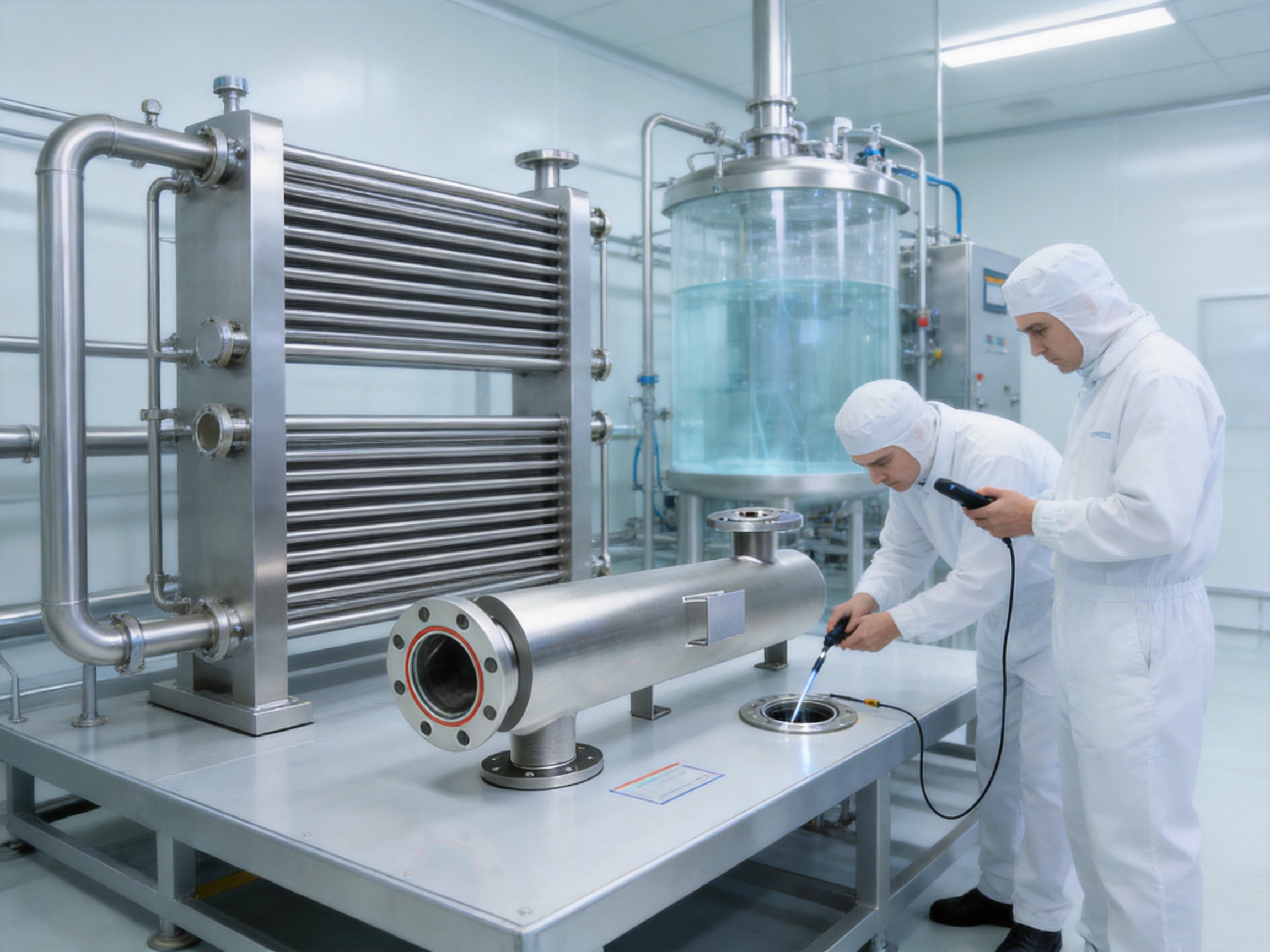
In food, beverage, and biopharmaceutical manufacturing, a heat exchanger is more than a device for heating or cooling fluids. It is an important part of the process safety system. Its design influences product quality, contamination control, cleaning performance, energy consumption, maintenance requirements, and production continuity. When two fluids must exchange heat without coming into direct contact, the integrity of the heat transfer surface becomes essential.
The Sanitary DTS (Double Tube Sheet) Heat Exchanger is designed for applications in which cross-contamination cannot be tolerated. It combines a hygienic U-tube configuration, dual-tube-sheet protection, drainable construction, stainless steel wetted surfaces, and customer-specific engineering. These features make it especially suitable for purified water, water-for-injection systems, pharmaceutical process fluids, food products, beverages, and other sensitive media.
Unlike a conventional single-tube-sheet heat exchanger, the DTS design creates an additional separation barrier between the product side and the utility side. The space between the two tube sheets can serve as a leak detection zone. If a tube or connection develops a leak, the affected medium can be identified before it enters the other circuit. This arrangement gives operators an opportunity to respond earlier, reduce contamination risks, and protect both the product and the process.
Manufactured and supplied by Shiloc (Shanghai) Industrial Trading Co., Ltd., the sanitary DTS heat exchanger can be engineered according to process conditions, installation restrictions, connection requirements, heat transfer duties, and applicable regulatory expectations. The equipment is supported by design calculation, fabrication, inspection, testing, and international trade coordination capabilities.
Why Hygienic Heat Transfer Requires a Different Design Approach
Heat exchangers used in general industrial services often prioritize compactness, low initial cost, and high thermal performance. Those objectives remain important in sanitary processing, but they are not sufficient. Food and biopharmaceutical equipment must also support hygienic operation, effective cleaning, complete drainage, inspection, traceability, and reliable separation of process media.
In a typical process, one fluid may be a product, purified water, buffer, culture medium, or pharmaceutical preparation. The other fluid may be plant steam, chilled water, hot water, glycol, or another utility. Although the two streams are separated by heat transfer tubes, a tube failure can create a direct path for one medium to enter the other. In ordinary utility service, this may be an operational problem. In pharmaceutical or high-care food production, it can become a product quality event, a batch loss, or a serious compliance issue.
The double-tube-sheet arrangement addresses this risk structurally. The ends of the tube bundle are secured with two separate tube sheets rather than one. The intermediate space acts as a monitoring and drainage area. The design therefore supports an important principle of hygienic engineering: a potential failure should be visible, detectable, and controllable before it becomes a hidden contamination event.
Hygienic design also requires attention to stagnant zones, internal surfaces, dead legs, residual liquid, weld quality, surface finish, and cleaning validation. A heat exchanger that transfers heat efficiently but retains liquid after drainage may create an environment for residue accumulation or microbial growth. For this reason, the sanitary DTS unit can be configured with a full-drain or side-drain arrangement and can be installed according to the drainage requirements of the process.
Core Operating Principle of the Sanitary DTS Heat Exchanger
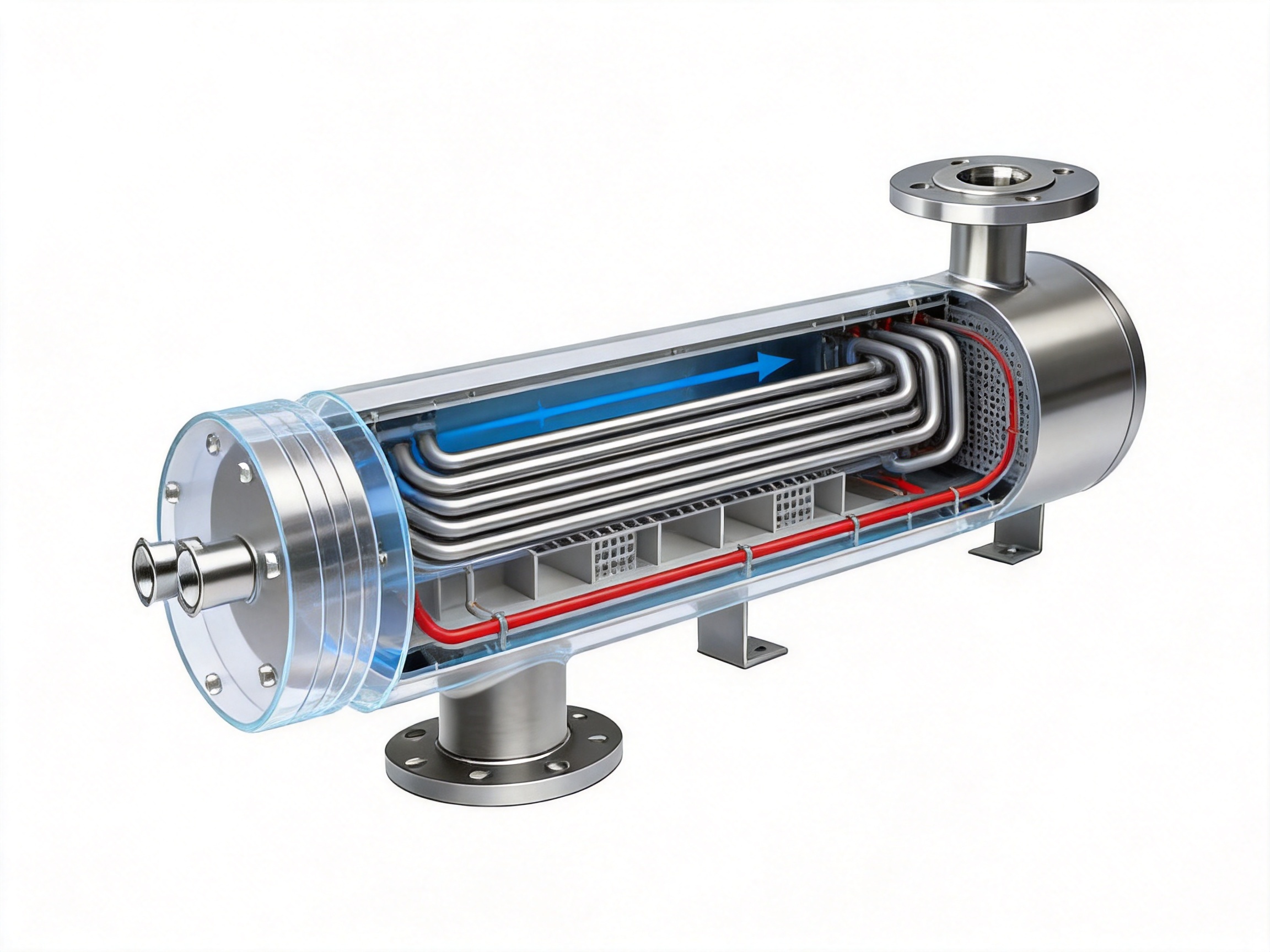
The sanitary DTS heat exchanger uses a tube-and-shell arrangement with a U-tube bundle. Depending on the selected configuration, the product or process fluid passes through the inner tube bundle while the heating or cooling medium flows through the shell-side or outer flow path in the opposite direction. This counter-current arrangement can provide a favorable temperature driving force across the equipment.
The U-tube design allows the tube bundle to accommodate thermal expansion without requiring a conventional expansion joint. Each tube is bent into a U-shaped configuration, allowing the tube length to respond naturally to temperature changes. This reduces the mechanical complexity associated with expansion joints and can lower the number of components that require inspection or maintenance.
The tube ends are fixed in a forged, thickened, aseptic double-tube-sheet assembly. The tube sheets provide structural support, maintain separation between circuits, and create the leak detection points required for double-barrier protection. The U-bends remain within the bundle, while the heat transfer area is calculated from the straight tube sections only. This calculation method avoids overstating the effective heat transfer area and provides a transparent basis for equipment selection.
The equipment can be supplied for vertical or horizontal installation. The preferred orientation depends on available space, process piping, drainage requirements, access for inspection, and the customer’s operating procedures. Factory-installed lifting and mounting brackets can simplify transportation, positioning, and installation at the customer’s site.
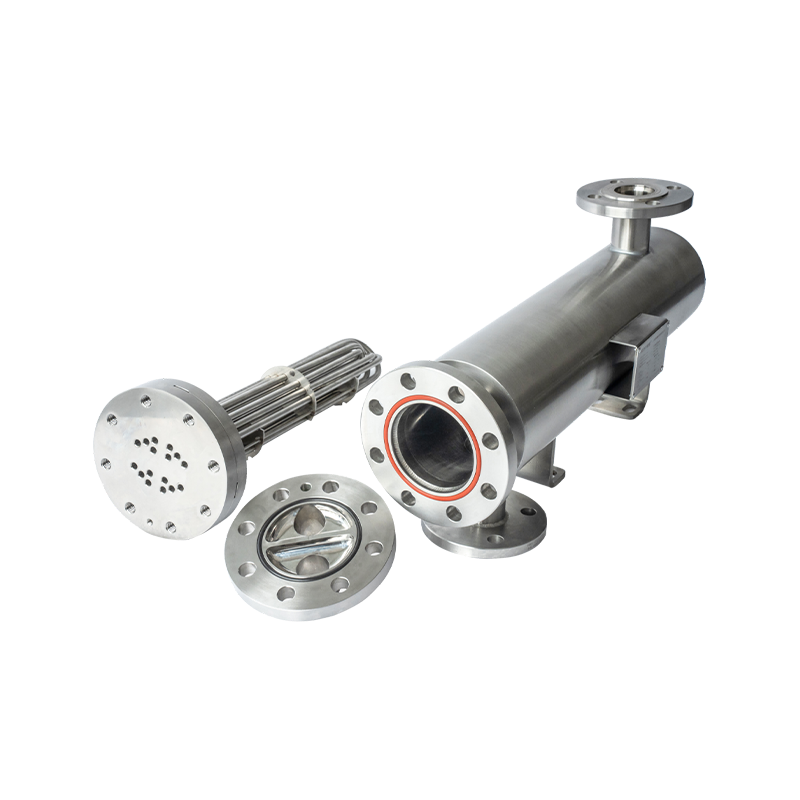
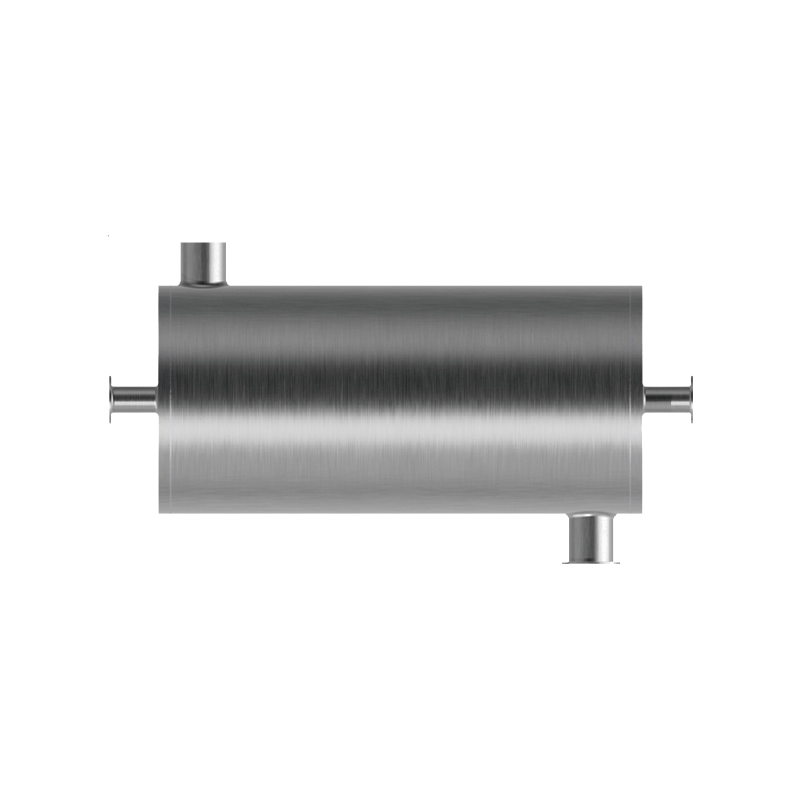
Sanitary DTS (Double Tube Sheet) Heat Exchanger
Double-Tube-Sheet Protection Against Cross-Contamination
The most important distinguishing feature of the sanitary DTS heat exchanger is its dual-tube-sheet safety design. In a conventional heat exchanger, the tube ends are normally sealed into a single tube sheet. If a tube-to-tube-sheet joint fails, the leak may pass directly between the product and utility circuits. Detecting this type of failure can be difficult if there is no dedicated monitoring area.
In a DTS design, two tube sheets create an intermediate barrier. The tube ends are independently supported and separated at the connection area. The space between the tube sheets can be connected to a drain, vent, or monitoring arrangement. If a tube failure occurs, the leaking fluid is directed toward a detectable point rather than immediately entering the opposite circuit.
This design does not eliminate the need for inspection, pressure testing, preventive maintenance, or proper operating procedures. Instead, it provides an additional layer of protection. The result is a more controlled failure mode and improved visibility of potential problems. For high-value products and sensitive biological processes, this additional protection can be more important than a small difference in initial equipment cost.
The double-tube-sheet structure is particularly valuable in the following applications:
• Cooling water-for-injection systems and purified water systems.
• Heating or cooling of pharmaceutical solutions and process buffers.
• Temperature control of food and beverage products with strict hygiene requirements.
• Heat transfer between a clean product and a non-sterile utility.
• Processes where utility-side contamination could compromise a batch.
• Processes where product-side leakage could contaminate the plant utility system.
By placing leak detection at the tube-sheet interface, the equipment supports a preventive approach to contamination control. Operators can investigate an abnormal condition before it develops into a larger process failure.
Full Drainability for Hygienic Processing
Drainability is a fundamental requirement for sanitary process equipment. After production, cleaning, rinsing, or sterilization, the internal surfaces should be capable of releasing residual liquid rather than retaining it in low points or inaccessible cavities.
The Sanitary DTS heat exchanger can be designed for complete or near-complete drainage according to the installation orientation and process piping configuration. Side-drain connections and carefully selected equipment geometry help remove product and cleaning liquids. For vertical installation, gravity drainage may be incorporated into the process arrangement. For horizontal installation, the slope, nozzle position, support structure, and drain connection require particular attention.
Full-drain construction can provide several operational benefits. It reduces the amount of product left inside the equipment during changeover, improves cleaning effectiveness, limits residue accumulation, and supports more predictable cleaning validation. It can also reduce product loss, which is important when processing expensive pharmaceutical formulations, specialty ingredients, or high-value nutritional products.
Drainability must be evaluated as part of the complete system rather than as an isolated equipment feature. The customer’s piping, valves, gaskets, fittings, and downstream collection points must also support drainage. During project engineering, the equipment manufacturer can review the installation position, process connections, line slopes, and drain routing to help create a coherent hygienic system.
The unit is suitable for integration into clean water and water-for-injection systems. However, final system qualification and compliance depend on the complete process design, the selected materials, the manufacturing documentation, cleaning procedures, sterilization method, and the applicable requirements of the end user and regulatory authority.
Hygienic Materials and Surface Finish
Materials that contact the process medium must offer corrosion resistance, mechanical strength, cleanability, and compatibility with the product and cleaning chemicals. Imported SUS316L stainless steel heat exchange tubes are available for demanding sanitary applications. Depending on the process and specification, other materials may also be considered, including 304 stainless steel and specialized alloys such as KFM where appropriate.
SUS316L is widely used in pharmaceutical, food, beverage, and biotechnology equipment because of its corrosion resistance and suitability for polished hygienic surfaces. The low-carbon grade supports welded fabrication and can reduce the risk of corrosion associated with certain welding conditions when appropriate procedures are applied.
Surface finish is another important part of hygienic performance. A smoother surface is easier to clean and offers fewer locations for product residue to collect. The supplied equipment can be specified with mechanically polished or electropolished surfaces. The stated surface roughness target can be below Ra 0.25 micrometers for selected surfaces, while other project specifications may require Ra 0.4, 0.6, or 0.8 micrometers.
Actual surface finish requirements should be confirmed for each wetted component, because tube interiors, tube sheets, shells, fittings, weld zones, and external surfaces may have different specifications. A complete quality plan should identify the required finish, the measurement method, the inspection location, and the acceptance criteria.
Sanitary-grade welded tubes can be supplied with internal roughness generally not exceeding approximately Ra 0.75 micrometers, while seamless electrode tubes may achieve an internal surface roughness in the approximate range of Ra 0.3 to 0.6 micrometers, depending on the selected tube and finishing process. Final values should be confirmed against the project specification and inspection report.
U-Tube Construction and Expansion Joint-Free Operation
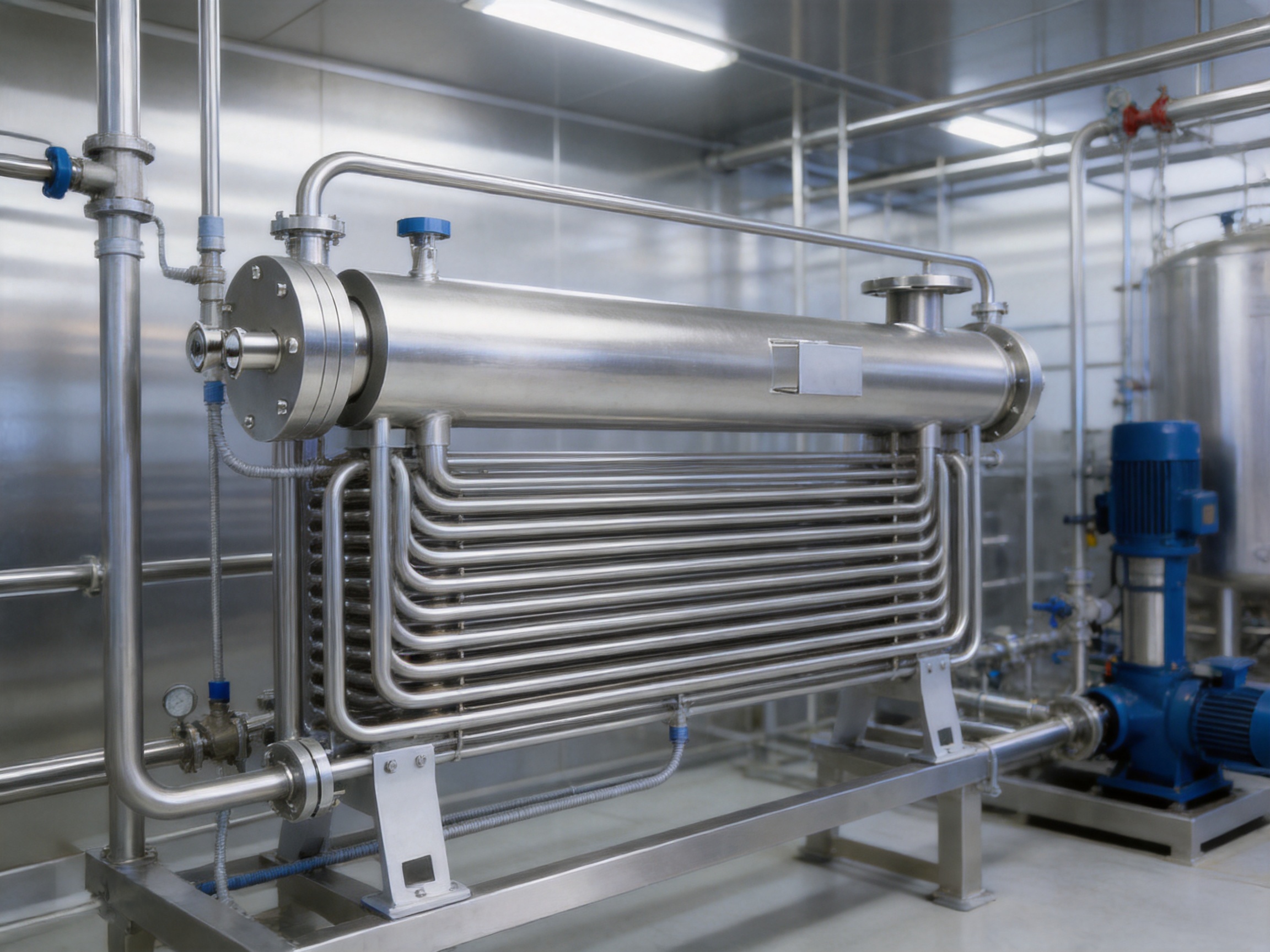
The U-tube configuration is recommended in many pressure and thermal applications because it allows each tube to accommodate differential expansion. When the product and utility sides operate at different temperatures, the tubes and shell may expand by different amounts. A U-shaped tube can flex within the bend, reducing excessive stress at the tube-to-tube-sheet connection.
An expansion joint-free design can offer practical advantages over designs that depend on separate expansion bellows or compensators. Fewer specialized components may simplify fabrication, reduce potential leakage points, and decrease maintenance requirements. The absence of an expansion joint can also improve the equipment’s long-term mechanical reliability when the U-tube geometry and operating conditions are correctly selected.
U-bend quality is important. The bend radius must comply with the applicable engineering requirements, and the tubes must maintain proper geometry and spacing. Poorly controlled bending can lead to wall thinning, ovality, surface damage, or tube contact. The manufacturing process therefore requires suitable forming equipment, inspection controls, and quality assurance procedures.
The design supplied for this product follows the stated ASME-oriented requirements for U-tube construction. The tube bundle is configured to provide reliable flow distribution, practical cleaning access, and stable mechanical support. Tube and baffle connections are produced using an advanced hydraulic expansion process, which is intended to reduce surface damage and improve consistency compared with more aggressive mechanical expansion methods.
Advanced Tube-to-Baffle Joining Process
Tube-to-baffle connections influence heat exchanger stability, vibration resistance, and service life. During operation, tubes experience fluid forces, thermal cycling, pressure changes, and mechanical loads. If tube supports are inconsistent or the tube wall is damaged during assembly, the equipment may be more vulnerable to vibration, fretting, fatigue, or premature leakage.
The hydraulic expansion process used for tube and baffle assembly applies controlled fluid pressure to expand the tube into the baffle opening. Compared with conventional roller expansion, the process can reduce localized surface damage, excessive thinning, and deformation caused by uncontrolled mechanical contact. It can also help produce a more consistent interface over the length of the bundle.
Consistent tube support is especially important in multi-pass heat exchangers and units with high flow velocity. The baffles help guide the shell-side flow, support the tubes, and influence heat transfer performance. The number, spacing, and arrangement of baffles must be selected according to the fluid properties, allowable pressure drop, vibration risk, and required heat transfer duty.
The use of monolithic bidirectional thin-wall tubes can reduce stress concentration at the tube-to-baffle interface. When combined with controlled expansion, appropriate tube spacing, and accurate fabrication, this approach can help extend service life and reduce maintenance interruptions.
Manufacturing quality depends not only on the joining method but also on material control, tooling accuracy, cleaning between fabrication stages, dimensional inspection, welding procedures, and final testing. The manufacturing team must ensure that the completed tube bundle meets the required geometry before it is enclosed within the shell.
Thermal Performance and Energy Efficiency
A sanitary heat exchanger must meet its required heating or cooling duty while staying within the customer’s limits for pressure drop, temperature approach, flow velocity, and product residence time. A unit that provides high heat transfer but causes excessive pressure loss may require a larger pump, generate unnecessary energy consumption, or disturb the process flow.
Equipment selection is therefore based on a balance between thermal performance and hydraulic behavior. Design engineers use process data such as inlet and outlet temperatures, mass flow rate, density, viscosity, specific heat, thermal conductivity, fouling tendency, allowable pressure drop, operating pressure, and design pressure.
The heat transfer calculation considers the effective straight-tube area. U-bends are excluded from the declared heat transfer area, providing a conservative and transparent basis for comparison. This avoids presenting a nominal area that includes regions with limited or uncertain heat transfer contribution.
Internal flow velocity is selected to support heat transfer while controlling erosion, vibration, pressure drop, and product shear. The best velocity depends on the fluid. Low-viscosity water may permit higher velocity, while viscous food products or shear-sensitive biological fluids may require a gentler flow regime.
Design margins can be included to accommodate moderate changes in production capacity, seasonal utility conditions, fouling, or future business growth. The margin should be reasonable rather than excessive. An oversized unit may increase capital cost, create low-flow conditions, or complicate clean-in-place procedures.
Fouling factors are applied according to the relevant design recommendations and the properties of the process fluids. Fouling can reduce heat transfer performance over time and increase pressure drop. By considering fouling during design, the heat exchanger can maintain a more stable operating range throughout the cleaning cycle and expected service interval.
Counter-current and cross-flow effects are analyzed for multi-pass designs. This is important because actual flow patterns may differ from a simple idealized calculation. A complete analysis helps optimize tube passes, shell-side flow, baffle arrangement, pressure drop, and temperature performance.
Engineering Design Support and Customization
Sanitary process lines rarely have identical requirements. Differences in product viscosity, flow rate, temperature, pressure, utility availability, plant layout, cleaning method, and regulatory expectations can make a standard heat exchanger unsuitable for a specific application.
The Sanitary DTS heat exchanger can be customized in several areas:
• Heat transfer area and tube count.
• Tube diameter, wall thickness, material, and length.
• Shell diameter and overall equipment dimensions.
• Number of tube passes and flow arrangement.
• Product-side and utility-side connections.
• Tri-Clamp, flange, or other sanitary connection configurations.
• Vertical or horizontal installation.
• Drain, vent, leak detection, and instrumentation connections.
• Surface finish and electropolishing requirements.
• Mounting, lifting, insulation, and support arrangements.
• Documentation, inspection, testing, and certification packages.
Professional selection begins with accurate process information. Customers should provide the fluids on both sides, flow rates, inlet and outlet temperatures, operating and design pressures, maximum allowable pressure drop, cleaning chemicals, sterilization conditions, connection standards, installation limitations, and required documentation.
Shiloc uses heat exchanger selection tools, design databases, and engineering experience to evaluate the required configuration. The objective is not simply to select the largest available unit. It is to match the thermal and mechanical design to the actual process so that the equipment performs reliably without unnecessary cost or complexity.
For international projects, the engineering process may also include coordination of metric and imperial dimensions, regional pressure equipment requirements, documentation language, shipping limitations, customs information, and site installation conditions. An experienced supplier can reduce communication gaps between the end user, engineering contractor, equipment fabricator, and logistics provider.
Manufacturing Capabilities and Quality Control
The performance of a sanitary heat exchanger depends heavily on the quality of its fabrication. A sound design can be compromised by poor welding, inadequate cleaning, inconsistent polishing, incorrect tube expansion, or insufficient inspection. Manufacturing controls must therefore cover the entire product lifecycle, from material receipt through final packing.
Shiloc operates a Shanghai facility of approximately 3,000 square meters with technical specialists supporting processing, welding, polishing, assembly, inspection, and quality control. The company combines industrial trade services with equipment manufacturing and engineering support. This structure allows project communication, fabrication coordination, and export preparation to be managed through an integrated organization.
Material traceability is a key part of hygienic equipment manufacturing. Stainless steel sheets, tubes, fittings, and other pressure-retaining materials should be identified and documented. Heat numbers, material certificates, welding records, inspection results, and final equipment identification can be included in the project documentation package according to customer requirements.
Welding quality is also critical. Hygienic welding should be performed using qualified procedures and trained personnel. Weld geometry, penetration, discoloration, internal surface condition, and post-weld treatment all influence cleanability and corrosion resistance. Where required, welds can be inspected visually, endoscopically, or by other appropriate methods.
Surface preparation may include mechanical polishing and electropolishing. These processes improve surface smoothness and remove or reduce surface irregularities. The final roughness should be verified using suitable instruments, including a surface profilometer, with readings recorded against the project acceptance criteria.
Assembly areas should be controlled to prevent introduction of debris or foreign matter. Following completion of fabrication and inspection, the equipment can undergo internal cleaning, blowout inspection, endoscopic examination, and protective packing. These steps help ensure that the heat exchanger arrives in a condition suitable for installation preparation.
Testing and Inspection Before Shipment
Each sanitary DTS heat exchanger should undergo a documented inspection and testing program before shipment. The exact scope depends on the design pressure, material, customer specification, and applicable standard, but the following activities are available within the stated product quality program.
Pressure retention testing: Hydrostatic testing verifies that the pressure-retaining components can withstand the specified test pressure without unacceptable leakage, deformation, or loss of integrity. Testing must be conducted with appropriate safety controls, calibrated instruments, and documented results.
Drainability testing: Drainage checks confirm that the internal arrangement and drain connections can remove the process medium under the specified installation conditions. This is particularly important for systems used with purified water, injection water, and pharmaceutical products.
Surface roughness testing: A profilometer can be used to verify the Ra value of polished or electropolished surfaces. The target may be below 0.25 micrometers for specified areas, or another value defined by the customer’s hygienic standard.
Endoscopic inspection: An endoscope can be used to examine internal tube sections, weld regions, connections, and areas that are difficult to inspect directly. This helps identify foreign matter, surface defects, incomplete cleaning, or other conditions that could affect hygienic performance.
Internal blowout inspection before packing: The internal passages are checked before final packing to confirm that they are free of loose particles, fabrication debris, and residual contamination.
Dimensional and visual inspection: Equipment dimensions, nozzle orientation, support locations, surface condition, nameplate information, and overall workmanship are checked against the approved drawings.
Computer-verified performance: Thermal and hydraulic calculations can be reviewed using engineering software and compared with the required operating conditions. This creates a technical record supporting the selected heat transfer area and flow configuration.
Vibration and resonance analysis: The design process includes vibration assessment for the tube bundle. This is important for preventing flow-induced vibration, tube wear, and long-term fatigue damage.
Applicable Standards and Compliance Considerations
The equipment can be designed and documented with reference to recognized standards and regulatory frameworks, including ASME BPE, TEMA recommendations, ASME pressure vessel requirements, Canadian Registration Number requirements, and CE/PED requirements where applicable.
ASME BPE provides guidance relevant to bioprocess equipment, including hygienic design, materials, surface finish, fabrication, welding, and inspection. TEMA recommendations are widely used for heat exchanger design and can support the selection of fouling factors, mechanical construction practices, and performance evaluation.
Pressure equipment requirements vary by country, equipment category, design pressure, volume, fluid classification, and installation location. CE/PED documentation may be required for certain European applications. Canadian projects may require CRN registration. The final compliance route should be confirmed at the beginning of the project rather than after fabrication has started.
Reference to a standard does not automatically mean that every clause applies to every unit. The customer, engineering contractor, and manufacturer should define the applicable edition, design category, inspection level, material requirements, welding qualifications, documentation package, and certification responsibilities in the purchase specification.
For pharmaceutical and food applications, equipment compliance is also connected to the overall process validation program. Factory testing, material certificates, surface finish records, pressure test reports, weld documentation, calibration records, and cleaning information may be required as part of commissioning and qualification.
Typical Technical Specifications
The following values provide a general reference for the product family. Actual specifications must be confirmed for the selected model and process duty.
| Parameter | Reference Range or Configuration |
| Heat transfer area | Approximately 1–20 m² |
| Design temperature | Up to approximately 143°C, subject to final design |
| Design pressure | Approximately 10 bar reference value, subject to final design |
| Available materials | 304 stainless steel, 316L stainless steel, and selected special alloys |
| Product and utility connections | Tri-Clamp, flanged, or customer-specified connections |
| Surface finish | Ra values such as below 0.25, 0.4, 0.6, or 0.8 micrometers according to specification |
| Installation | Vertical or horizontal |
| Tube configuration | U-tube, multi-pass arrangement as required |
The reference dimensions below illustrate several available configurations.
| Model | Number of U-Tubes | U-Tube Diameter | Shell Diameter | Total Length | Reference Weight |
| HY-SD-09065 | 9 | 10 mm | 90 mm | 1,050 mm | 56 kg |
| HY-SD-11065 | 11 | 10 mm | 102 mm | 1,050 mm | 75 kg |
| HY-SD-19150 | 19 | 10 mm | 116 mm | 1,900 mm | 90 kg |
| HY-SD-21150 | 21 | 10 mm | 140 mm | 1,900 mm | 115 kg |
These models are dimensional references rather than universal selections. Heat transfer duty, fluid properties, operating pressure, installation orientation, lifting method, and connection layout should be reviewed before a final model is confirmed.
Advantages Over Conventional Single-Tube-Sheet Heat Exchangers
The Sanitary DTS design offers several advantages compared with a conventional single-tube-sheet heat exchanger used in a similar service.
Improved contamination control: The dual-tube-sheet structure creates a dedicated separation and leak detection zone. This can provide earlier warning of tube or joint failure and reduce the probability of undetected cross-contamination.
Better support for hygienic validation: Drainable construction, polished stainless steel surfaces, internal inspection, and documented testing support cleaning and validation activities.
Lower dependence on expansion joints: The U-tube structure accommodates thermal expansion without relying on a separate expansion joint, reducing component count and potential maintenance points.
Transparent heat transfer calculation: Only straight tube sections are counted as effective heat transfer area. This gives customers a clearer basis for comparing equipment capacity.
Flexible installation: Vertical or horizontal installation allows the unit to fit a wider range of plant layouts. Factory-welded mounting and lifting brackets can simplify site work.
Custom engineering: Tube diameter, shell dimensions, connection configuration, surface finish, materials, and process parameters can be adjusted to match the application.
Robust inspection program: Pressure testing, drainability verification, roughness measurement, endoscopic inspection, visual checks, and internal cleaning inspections can be included before shipment.
Suitability for sensitive industries: The product is designed for food, beverage, biopharmaceutical, pharmaceutical water, and other applications where hygiene and media separation are major priorities.
The DTS design may require more material, fabrication work, and inspection than a basic single-tube-sheet unit. However, the additional investment may be justified when the cost of product contamination, batch loss, regulatory investigation, or unplanned downtime is high.
Applications in Food and Beverage Manufacturing
Food and beverage processes often involve repeated heating, cooling, pasteurization, water treatment, and product changeover. The heat exchanger must handle variable production schedules while remaining easy to clean and inspect.
Potential applications include beverage cooling, ingredient solution heating, purified water cooling, syrup temperature control, dairy process heating, liquid food cooling, and clean utility separation. The exact design depends on product viscosity, solids content, sensitivity to shear, cleaning chemicals, and required process temperature.
For food applications, drainage and surface finish can reduce the risk of residue accumulation. The double-tube-sheet configuration can also protect the product from contamination by cooling water or heating media. Where multiple products are processed on the same line, a drainable design may help reduce carryover during product changeover.
Food manufacturers may also benefit from the unit’s compact U-tube arrangement and flexible installation. Existing production buildings frequently have limited space, irregular pipe routing, or restricted access. A customized shell diameter, connection direction, and support arrangement can make integration easier than using a fixed standard design.
Applications in Biopharmaceutical and Pharmaceutical Processing
Biopharmaceutical processes place especially high demands on contamination control and documentation. Process fluids may include purified water, water for injection, buffers, cell culture media, fermentation liquids, pharmaceutical solutions, and cleaning or sterilization fluids.
The DTS heat exchanger is suitable for applications where the product side must remain isolated from a utility circuit. Double tube sheets and leak detection points can support the contamination control strategy. Smooth internal surfaces and drainable geometry can help improve the repeatability of cleaning and sanitization procedures.
Pharmaceutical projects also require close attention to documentation. Material certificates, weld records, surface finish results, pressure test reports, dimensional drawings, calibration information, and inspection records may be required for equipment release and qualification.
The equipment can be designed in alignment with ASME BPE-oriented practices and customer quality systems. The final acceptance package may be customized to include inspection and test plans, certificates of conformity, pressure test records, surface roughness reports, endoscopic inspection records, and other documents specified in the purchase order.
Because biopharmaceutical processes can be highly sensitive to residence time and shear, thermal design should be performed using actual process data. The selection should consider whether the fluid contains cells, proteins, particles, or temperature-sensitive ingredients. A technically suitable heat exchanger must provide required thermal performance without imposing unnecessary mechanical or thermal stress on the product.
Installation, Operation, and Maintenance Considerations
Correct installation is essential to achieving the intended benefits of a sanitary DTS heat exchanger. The unit should be installed in the orientation shown on the approved drawing, with adequate access for inspection, drainage, maintenance, and connection of leak detection lines.
Pipe supports should prevent excessive loads from being transferred to the heat exchanger nozzles. Thermal expansion of connected piping should be evaluated. Valves, instruments, and drains should be arranged so that the product and utility circuits can be isolated safely.
Before commissioning, the equipment should be rinsed or cleaned according to the approved procedure. The process operator should verify flow direction, pressure limits, temperature limits, drain function, instrument calibration, and the operation of any leak detection arrangement.
During operation, key parameters should be monitored. These may include inlet and outlet temperatures, flow rates, pressure drop, operating pressure, utility consumption, and the condition of the leak detection outlet. A change in pressure drop or thermal performance may indicate fouling, blockage, altered flow distribution, or a developing mechanical issue.
Maintenance intervals should be based on service conditions rather than a universal calendar schedule. Fluids with high fouling potential may require more frequent cleaning. Pressure cycling, thermal cycling, aggressive cleaning chemicals, and vibration can influence inspection intervals.
If a leak is detected, the equipment should be isolated according to the site’s operating and quality procedures. The product and utility circuits should be assessed independently. The heat exchanger should not be returned to service until the cause of the leak has been identified, the equipment has been repaired or replaced as required, and the appropriate inspection and release steps have been completed.
How to Select the Right Sanitary DTS Heat Exchanger
A reliable selection process begins with a complete technical data sheet. The following information is normally required:
• Product name and composition.
• Product-side flow rate and utility-side flow rate.
• Inlet and outlet temperatures for both circuits.
• Operating and design pressure.
• Maximum allowable pressure drop.
• Density, viscosity, specific heat, and thermal conductivity.
• Fouling tendency and solids content.
• Cleaning, sanitization, or sterilization conditions.
• Required material grade and surface finish.
• Connection standard and nominal size.
• Installation orientation and available space.
• Drainage, venting, and leak detection requirements.
• Applicable standards, certifications, and documentation.
• Shipping, lifting, and site access limitations.
The supplier should then prepare a preliminary thermal and mechanical selection. The customer can review the proposed heat transfer area, tube count, shell diameter, pressure drop, materials, connection locations, and overall dimensions. For complex projects, a design review should be completed before fabrication.
It is also important to distinguish between design pressure, operating pressure, test pressure, and allowable pressure drop. These values serve different purposes and should not be substituted for one another. Similarly, a stated surface roughness value should be linked to a specific surface and inspection method.
When the equipment is part of a validated pharmaceutical system, documentation requirements should be identified at the quotation stage. Late changes to inspection scope, certification, or surface finish can affect cost and delivery time.
Why Supplier Capability Matters
Choosing a sanitary heat exchanger is also a decision about supplier capability. A supplier should be able to explain how the unit is designed, fabricated, inspected, tested, documented, packed, and supported after delivery.
Shiloc (Shanghai) Industrial Trading Co., Ltd. combines international trade services with engineering and equipment manufacturing capabilities. Its Shanghai operation supports processing, welding, polishing, assembly, quality control, and export coordination. The company works with food and beverage, biopharmaceutical, daily chemical, and fine chemical customers.
The company’s stated manufacturing approach is based on European know-how and Danish design principles, combined with local engineering and fabrication resources. Its technical team supports customized equipment rather than relying only on fixed catalog dimensions.
For global customers, procurement support can include technical communication, quotation coordination, drawing review, inspection planning, export documentation, logistics coordination, and communication with project stakeholders. This can be valuable when a project involves multiple suppliers, international standards, or a demanding delivery schedule.
A capable supplier should also be willing to explain limitations. No heat exchanger can compensate for incorrect process data, unsuitable cleaning chemicals, improper installation, or operation outside the design envelope. Clear technical communication is therefore part of product quality.
Q&A: Sanitary DTS Heat Exchanger
Q1: What does DTS mean in a sanitary heat exchanger?
DTS means Double Tube Sheet. The equipment uses two tube sheets at the tube ends to create an additional separation barrier between the product circuit and the utility circuit. The intermediate area can function as a leak detection and drainage zone.
Q2: How does the double-tube-sheet structure reduce cross-contamination risk?
If a tube or tube connection develops a leak, the fluid can be directed toward the space between the tube sheets rather than immediately entering the opposite circuit. This makes the failure more detectable and gives operators an opportunity to isolate the equipment before contamination spreads.
Q3: Is the DTS heat exchanger suitable for water-for-injection systems?
It can be designed for water-for-injection and purified water applications, subject to the complete system design, material selection, surface finish, cleaning and sterilization procedures, installation configuration, and applicable qualification requirements.
Q4: Can the equipment be installed horizontally?
Yes. The equipment can be configured for horizontal or vertical installation. The preferred arrangement depends on space, process piping, drainage, access, and the customer’s site requirements.
Q5: Why is a U-tube design used?
A U-tube design allows the tubes to accommodate thermal expansion through the bend. This can reduce thermal stress and eliminate the need for a separate expansion joint in the heat exchanger design.
Q6: Are the U-bends included in the heat transfer area?
No. The stated design method calculates heat transfer area from the straight tube sections only. Excluding the U-bends provides a transparent and conservative basis for capacity calculations.
Q7: What materials are available?
Common options include 304 stainless steel and 316L stainless steel. Specialized alloys may be considered for particular process or corrosion conditions. The material should be selected according to the product, utility, cleaning chemicals, temperature, pressure, and applicable standards.
Q8: What surface finish can be supplied?
Mechanical polishing and electropolishing are available. Depending on the specified surface, the target may be below Ra 0.25 micrometers or another value such as Ra 0.4, 0.6, or 0.8 micrometers. The final requirement should identify the exact surfaces and inspection method.
Q9: Can the tube diameter and shell dimensions be customized?
Yes. Tube diameter, tube count, shell diameter, total length, connection arrangement, mounting brackets, and other dimensions can be customized according to thermal duty, pressure conditions, available space, and installation requirements.
Q10: What testing is performed before shipment?
Testing and inspection may include hydrostatic pressure testing, drainability testing, surface roughness measurement, endoscopic inspection, visual and dimensional inspection, internal blowout inspection, computer-verified performance review, and documentation checks.
Q11: Which standards can be considered?
The equipment can be designed with reference to ASME BPE, TEMA recommendations, ASME pressure equipment requirements, CE/PED, Canadian Registration Number requirements, and other relevant customer or regional standards. The applicable standards must be confirmed for each project.
Q12: Is the heat exchanger suitable for viscous food products?
It may be suitable, but selection must consider viscosity, solids content, shear sensitivity, fouling behavior, flow rate, cleaning method, and allowable pressure drop. A thermal and hydraulic calculation should be completed using actual product data.
Q13: What information should be provided for a quotation?
Customers should provide the fluids on both sides, flow rates, inlet and outlet temperatures, operating and design pressures, allowable pressure drop, material and surface finish requirements, connections, installation orientation, available space, cleaning conditions, applicable standards, and required documentation.
Q14: Does the double-tube-sheet design eliminate maintenance?
No. It reduces certain contamination risks and can improve leak detection, but regular inspection, cleaning, pressure testing, monitoring, and preventive maintenance remain necessary. Maintenance frequency should reflect operating conditions and the criticality of the process.
Q15: What is the main advantage over a standard heat exchanger?
The principal advantage is the additional safety barrier provided by the double-tube-sheet structure. This is combined with drainability, hygienic materials, customized design, U-tube thermal expansion control, and detailed inspection capabilities.
Conclusion
The Sanitary DTS Heat Exchanger is designed for process environments where thermal performance must be combined with contamination control, cleanability, drainability, and long-term mechanical reliability. Its double-tube-sheet structure provides a dedicated barrier and leak detection zone between product and utility circuits. Its U-tube construction accommodates thermal expansion while avoiding reliance on a separate expansion joint.
Additional advantages include SUS316L stainless steel tube options, polished hygienic surfaces, full-drain configurations, customizable dimensions, vertical or horizontal installation, hydraulic tube-to-baffle expansion, and a detailed pre-shipment inspection program.
For food, beverage, pharmaceutical, and biopharmaceutical manufacturers, equipment selection should be based on more than nominal heat transfer area. The complete design must address product safety, pressure containment, cleaning, drainage, inspection, documentation, installation, and future maintenance. A customized sanitary DTS heat exchanger can provide a practical solution when the process cannot accept hidden leakage or uncontrolled media mixing.
With engineering support, manufacturing resources, quality control, and international procurement capabilities, Shiloc (Shanghai) Industrial Trading Co., Ltd. provides a project-oriented approach to sanitary heat transfer equipment. The final product can be tailored to process requirements while supporting the reliability and hygienic standards expected in modern high-care manufacturing facilities.
References
ASME BPE, Bioprocessing Equipment Standard, American Society of Mechanical Engineers.
TEMA Standards, Standards of the Tubular Exchanger Manufacturers Association.
Pressure Equipment Directive 2014/68/EU, European pressure equipment requirements.
Current Good Manufacturing Practice guidance for pharmaceutical and biopharmaceutical manufacturing.
Food and pharmaceutical hygienic equipment design principles for cleanability, drainability, and contamination control.
Manufacturer engineering data and technical specifications for sanitary double-tube-sheet heat exchangers.
Manufacturer quality procedures for hydraulic tube expansion, surface finishing, pressure testing, endoscopic inspection, and pre-shipment verification.
Product: Sanitary DTS (Double Tube Sheet) Heat Exchanger
PREV:Food-Grade CIP Systems: Automated Hygiene, Consistent Cleaning, and Efficient Process Control
NEXT:Sanitary Plate Heat Exchangers for High-Performance Food and Biopharmaceutical Processing
NEXT:Sanitary Plate Heat Exchangers for High-Performance Food and Biopharmaceutical Processing
Interested in cooperation or have questions?
Recommended LINS
✦
Food and Beverage Process System
Food Processing Skid System
Aseptic Processing Equipment for Liquid Foods
Milk Processing Heat Exchanger
UHT Processing System for Dairy Products
UHT Processing Equipment for Plant Based Milk
Indirect Heating UHT Sterilizer
Sanitary Process Skid
Plate Heat Exchanger Pasteurization System
food and beverage process skid system
Let'S Work Together Welcome Aboard!
-

haikexin@haikexin.com
+8613391278930
-
 +86-21-57560276
-
 No. 2819, Sihu Road,Fengxian District, Shanghai, China
Join Our Mailing List
Copyright © Shiloc (Shanghai) Industrial Trading Co., Ltd. All Rights Reserved.
Process Systems & Equipment For Food & Biopharma Manufacturers
