
 English
 русский
 Português
 Français


 Read More

Product Category
NEW Category
Contact us
Contact Us
We specialise in the research, development and manufacture of electrical wires and cables.
 +86-21-57560276
Sanitary Pure Steam Sampling Condensers for Reliable Pharmaceutical and Food Process Testing
Content
- 1 Why Pure Steam Sampling Requires Specialized Equipment
- 2 Operating Principle of the Coil-in-Coil Condenser
- 3 Key Hygienic Design Features
- 4 Performance Advantages Compared with Conventional Condensers
- 5 Available Models and Dimensional Selection
- 6 Manufacturing Process and Quality Strengths
- 7 Customization for Pharmaceutical, Biotech, and Food Applications
- 8 Installation and Operation Considerations
- 9 How to Select the Right Sanitary Sampling Condenser
- 10 Why Choose Shiloc for Sanitary Heat Transfer Equipment
- 11 Recommended Quality and Validation Documentation
- 12 Frequently Asked Questions
- 12.1 What is a sanitary pure steam sampling condenser?
- 12.2 Why is a regular industrial condenser not always suitable?
- 12.3 What materials are used in the condenser?
- 12.4 How does the coil-in-coil design improve performance?
- 12.5 Can the condenser handle frequent start-stop operation?
- 12.6 Is the condenser suitable for CIP and SIP?
- 12.7 What tests can be performed on the condensate?
- 12.8 Can the equipment be customized?
- 12.9 How should the condenser be sized?
- 12.10 What should be checked during installation?
- 12.11 What support can Shiloc provide to overseas customers?
- 13 Conclusion
- 14 References
- 15 Product: Sanitary Pure Steam Sampling Condensers
Pure steam is a critical utility in pharmaceutical manufacturing, biotechnology, food and beverage processing, medical device production, and other high-cleanliness industries. It is used for sterilization, equipment cleaning, process assurance, and environmental control. Because pure steam often comes into direct or indirect contact with process equipment and product-contact surfaces, its quality must be monitored carefully.
Reliable sampling is an essential part of that monitoring process. However, pure steam exits a system at elevated temperature and cannot normally be collected directly for conductivity, total organic carbon, endotoxin, microbiological, or other quality tests. The steam must first be safely condensed and cooled while maintaining sample integrity. A sanitary pure steam sampling condenser performs this function through a compact, hygienic, and efficient heat transfer design.
Unlike a general-purpose industrial condenser, a sanitary sampling condenser must address several demanding requirements at the same time. It must provide effective condensation at a low sampling flow rate, prevent external contamination, avoid product-contact dead spots, withstand repeated heating and cooling cycles, and integrate smoothly with clean steam systems. It should also be easy to drain, clean, sterilize, inspect, and maintain.
Sanitary pure steam sampling condensers supplied by Shiloc (Shanghai) Industrial Trading Co., Ltd. are designed for these specialized requirements. Manufactured from 316L stainless steel and available with electropolished fluid-contact surfaces, the units combine a compact coil-in-coil configuration with hygienic construction, counter-current cooling, CIP/SIP compatibility, and flexible connection options. The result is a practical solution for collecting representative condensate samples from pure steam systems.
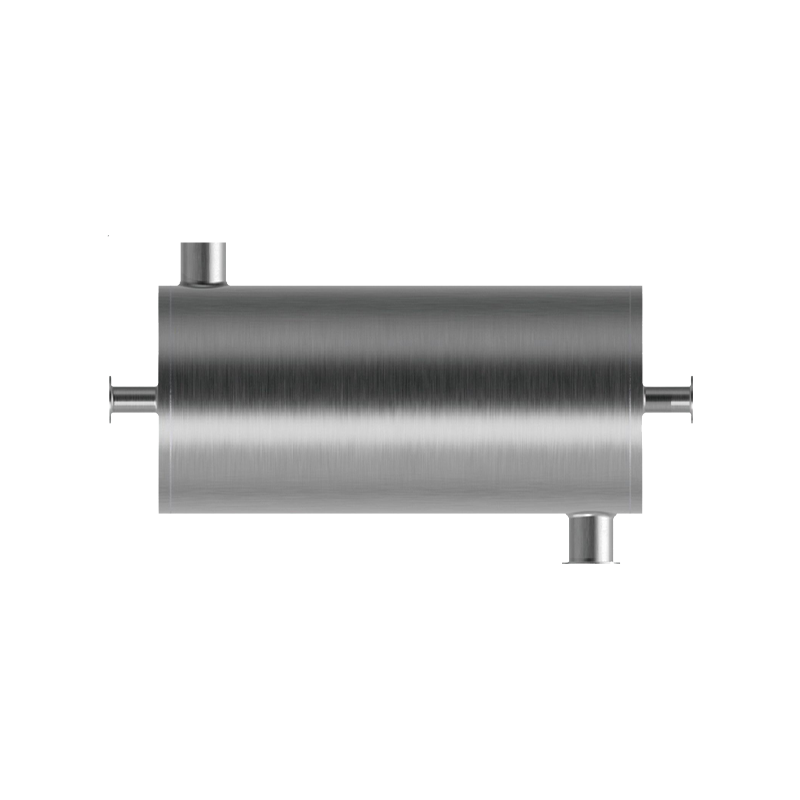
Sanitary Pure Steam Sampling Condensers
Why Pure Steam Sampling Requires Specialized Equipment
Pure steam quality testing is intended to confirm that the steam system is operating within the required chemical, physical, and microbiological conditions. Typical tests may include conductivity, total organic carbon, non-condensable gases, dryness, superheat, and endotoxin-related evaluation, depending on the system design and applicable quality program.
Collecting a sample directly from high-temperature steam creates both safety and analytical challenges. Direct steam discharge can expose operators to burns and can generate unstable sampling conditions. Steam must also be converted into a liquid sample before many laboratory instruments can analyze it accurately. If condensation is incomplete, inconsistent, or contaminated, the test result may not accurately represent the condition of the pure steam system.
A sampling condenser therefore has two important responsibilities. First, it must remove sufficient heat to transform the steam into a stable condensate. Second, it must preserve the cleanliness and representativeness of that condensate from the sample point to the collection vessel.
Ordinary industrial condensers may be acceptable for utility steam or process fluids that are not subject to strict hygiene requirements. However, they can include features that are unsuitable for pharmaceutical or food-grade sampling, such as threaded internal joints, rough surfaces, difficult-to-drain chambers, excessive internal volume, or geometries that create stagnant areas. These features can increase the risk of residue retention, microbial growth, cross-contamination, and inaccurate sampling.
A sanitary pure steam sampling condenser is designed around the sample rather than simply around heat removal. Every part of the fluid path must support cleanliness, drainability, and repeatable performance. The cooling arrangement must provide enough heat transfer capacity for the sampling flow, while the construction must remain mechanically stable during repeated SIP cycles and thermal transitions.
Operating Principle of the Coil-in-Coil Condenser
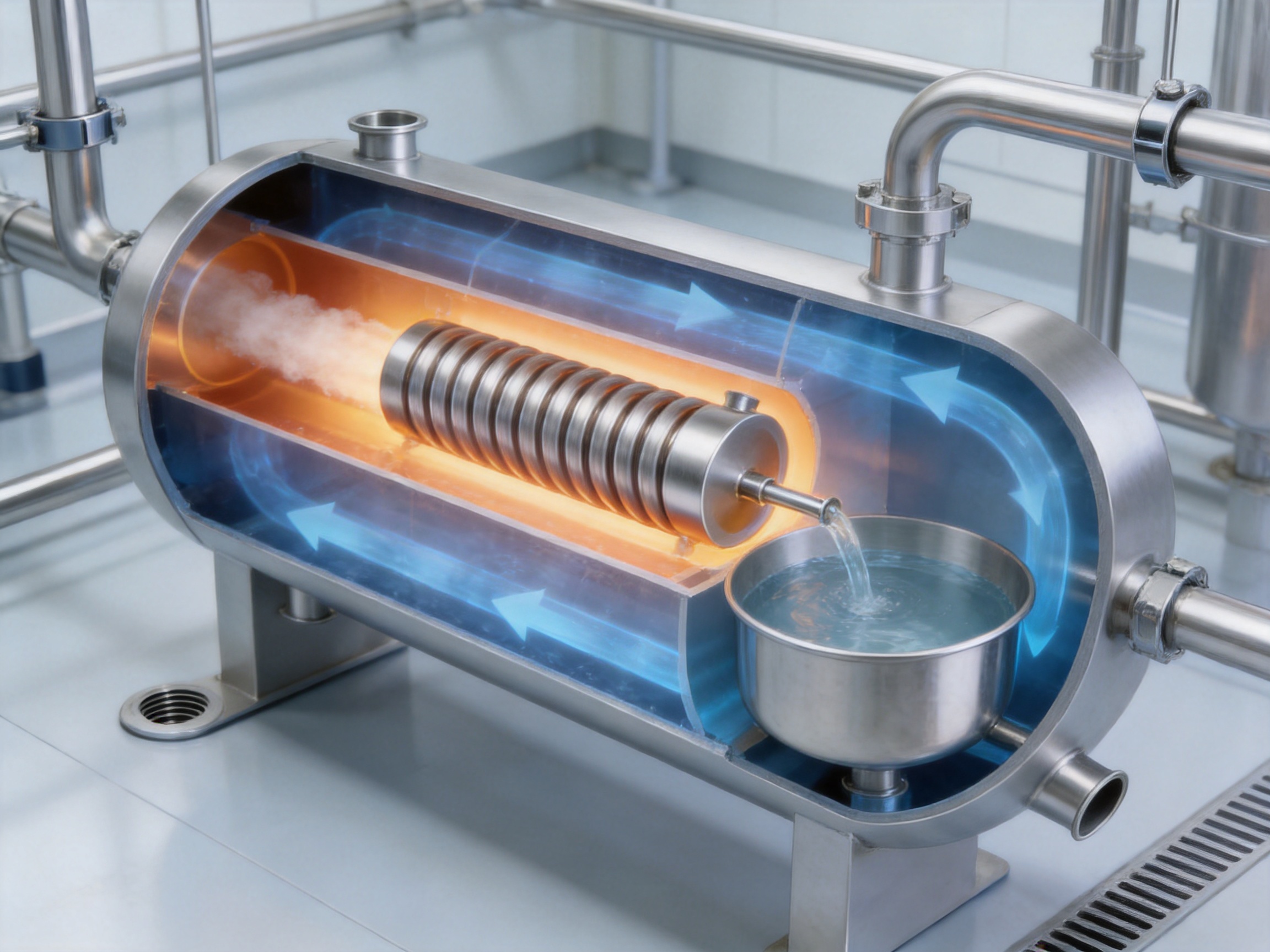
The condenser uses a compact coil-in-coil heat exchange structure. Pure steam flows through the sanitary inner coil, while cooling water flows through the surrounding heat transfer passage. The two media remain separated by the stainless steel wall, allowing heat to move from the steam to the cooling medium without direct contact.
The flow arrangement can be considered counter-current. Cooling water enters from the opposite direction to the steam or condensate flow, creating a favorable temperature gradient along the effective heat transfer length. Counter-current operation improves the use of the available surface area and supports stable outlet temperatures, particularly when the sampling flow is low.
When steam enters the inner coil, it releases latent heat as it condenses. The resulting condensate is then cooled further until it reaches a temperature appropriate for safe collection and laboratory testing. The required cooling performance depends on the steam pressure, inlet temperature, sample flow rate, cooling-water temperature, coil length, tube diameter, and required condensate outlet temperature.
The coil geometry offers several advantages over a straight, oversized pipe arrangement. It provides a longer effective heat transfer path in a relatively short overall package. It also allows the equipment to be installed near a small sampling point where space may be limited. Because the coil functions mechanically like a spring, it can absorb a degree of thermal expansion and contraction, reducing the concentration of thermal stress in the assembly.
The compact structure is particularly suitable for low-flow applications. Pure steam sampling does not normally require the large heat transfer areas associated with production-scale condensers. A correctly sized sampling condenser can provide complete condensation without occupying unnecessary space or introducing excessive internal volume into the sampling arrangement.
Key Hygienic Design Features
316L Stainless Steel Construction
316L stainless steel is widely used for hygienic pharmaceutical and food process equipment because of its corrosion resistance, cleanability, weldability, and suitability for high-purity service. The low-carbon grade helps reduce the risk of sensitization during welding and supports reliable fabrication of sanitary components.
For a pure steam sampling condenser, material selection is important because the sample-contact surface must not release contaminants or react adversely with the condensate. The 316L construction provides a durable and corrosion-resistant fluid path for repeated exposure to hot condensate, clean steam, cleaning solutions, and sterilization conditions.
Electropolished Internal Surfaces
The inner surface roughness is specified at Ra ≤ 0.25 μm for the sanitary coil. A smooth, electropolished surface reduces the microscopic irregularities where particles, organic residues, and microorganisms could otherwise accumulate.
Electropolishing removes a controlled amount of material from the stainless steel surface and improves the surface condition of the fluid-contact area. It can also enhance corrosion resistance by promoting a cleaner and more uniform passive layer. In sampling applications, a smooth surface supports more effective draining and reduces the possibility that retained liquid from a previous sample will influence a later test.
Surface finish should always be considered together with geometry, slope, welding quality, and cleaning procedure. A smooth surface alone cannot eliminate contamination risk if the equipment contains inaccessible pockets or poorly designed connections. The condenser therefore combines surface treatment with a simplified internal flow path and a fully drainable configuration.
Reduced Internal Joints and Dead Spots
Internal joints, abrupt changes in direction, cavities, and stagnant zones can be problematic in high-purity sampling equipment. They may retain condensate after operation and make complete cleaning or sterilization more difficult. They can also create a difference between the material entering the sampling point and the material ultimately collected.
The coil-in-coil design minimizes unnecessary internal joints in the sample path. The compact flow channel supports a continuous path from steam inlet to condensate outlet. With appropriate installation and drainage, the arrangement helps reduce residual liquid and limits opportunities for cross-contamination.
Compared with conventional shell-and-tube or fabricated chamber designs used for general industrial service, the sanitary sampling condenser can provide a simpler fluid-contact structure. This is especially valuable where the sample quantity is small and even a small retained volume could affect test repeatability.
Tri-Clamp and Hygienic Connections
Tri-clamp connections support fast installation, disassembly, inspection, and cleaning. They are widely used in hygienic process systems because they avoid the internal threads and difficult-to-clean crevices associated with many conventional pipe connections.
The connection standard can be adapted to the requirements of a particular installation. Depending on the project, customers may specify interface dimensions, connection standards, valve arrangements, drain orientation, and mounting details. Such flexibility is important when the condenser must be added to an existing pure steam distribution loop or installed within a validated sampling station.
CIP and SIP Compatibility
Clean-in-place and steam-in-place compatibility allows the condenser to be integrated into established sanitary cleaning and sterilization procedures. During CIP, suitable cleaning fluids can pass through the relevant fluid path to remove residues. During SIP, clean steam can be used to sterilize the wetted surfaces when the system configuration and operating parameters support that procedure.
The exact CIP and SIP conditions should be confirmed for each project. Temperature, pressure, chemical concentration, exposure time, flow velocity, drainage, and equipment orientation all affect cleaning and sterilization effectiveness. A professional supplier should review these conditions during selection and provide drawings and technical data for the user’s validation documentation.
Performance Advantages Compared with Conventional Condensers
Sanitary pure steam sampling condensers differ from general-purpose condensers in both design objective and application scale. The goal is not simply to condense a large quantity of vapor. The goal is to create a clean, representative, and safely handled sample under controlled conditions.
Compact Installation Footprint
The spiral coil arrangement provides a relatively long heat transfer path within a short overall length. This makes the condenser suitable for small sampling points, laboratory utility panels, equipment skids, and compact validation systems.
A smaller footprint can simplify piping design and reduce the distance between the pure steam sample point and the collection vessel. Shorter connections can reduce hold-up volume and may make the system easier to drain and inspect. The compact arrangement is also helpful when retrofitting an existing process system where available space is limited.
Efficient Heat Transfer at Low Flow Rates
Pure steam sampling generally involves a low flow rate. A large conventional exchanger may therefore be inefficient, unnecessarily expensive, or difficult to control. The coiled flow path provides a useful heat transfer area without requiring a large vessel.
The internal flow within the coil and the cooling-water flow can be arranged to approximate counter-current heat exchange. This supports effective heat removal across the length of the condenser. Proper selection of coil length and cooling-water flow helps ensure that the steam is fully condensed and that the outlet temperature is suitable for sampling.
Resistance to Thermal Stress
Pure steam systems commonly experience frequent start-up, shutdown, sterilization, cooling, and recovery cycles. These transitions create repeated thermal expansion and contraction. Rigid assemblies may concentrate stress at welds, supports, or connections if movement is not considered during design.
The coiled tube acts as a flexible spring. It can accommodate thermal movement more effectively than a completely rigid straight arrangement, helping reduce the risk of leakage caused by thermal stress. This characteristic supports long-term reliability in systems with frequent temperature changes.
Improved Drainability
Drainability is essential in sanitary equipment because retained water can dilute a later sample, support microbial growth, or complicate sterilization. The condenser is designed to be fully drainable when installed in the correct orientation and connected to a suitable drain path.
Drainability should be verified as part of the complete installation rather than judged only from the equipment drawing. Piping slope, valve location, support position, venting, and collection vessel design can all influence whether the system drains completely. Installation instructions should therefore be followed carefully.
Reduced Risk of Sample Contamination
Material compatibility, electropolished surfaces, reduced internal joints, sanitary connections, and CIP/SIP suitability work together to control contamination risk. These features are especially important when condensate is being tested for conductivity, TOC, endotoxins, or other parameters affected by trace contamination.
The condenser does not replace a complete sampling procedure. Operators must still use clean collection containers, follow validated flushing and sampling instructions, control exposure to the environment, and prevent contact with non-sanitary surfaces. Nevertheless, the condenser provides a strong hygienic foundation for the sampling system.
| Feature | Sanitary Pure Steam Sampling Condenser | Typical General-Purpose Condenser | Practical Benefit |
| Primary application | Pure steam quality sampling | Industrial heating or cooling | Designed around sample integrity and hygiene |
| Fluid-contact material | 316L stainless steel | May vary by industrial service | Suitable for high-cleanliness applications |
| Internal surface | Electropolished, Ra ≤ 0.25 μm | May use standard mill finish | Reduced residue retention and improved cleanability |
| Heat exchange structure | Compact coil-in-coil arrangement | Often shell-and-tube or straight-pipe design | Efficient heat transfer in a small footprint |
| Thermal movement | Coil provides spring-like flexibility | Rigid structure may concentrate stress | Improved resistance to repeated thermal cycling |
| Connection approach | Tri-clamp and sanitary options | May use threaded or industrial flanged connections | Faster hygienic installation and maintenance |
| Drainability | Designed for full drainage when correctly installed | May include difficult-to-drain areas | Reduced residual liquid and contamination risk |
| Customization | Coil length, interface, dimensions, and structure | Often based on standard industrial specifications | Better compatibility with individual sampling systems |
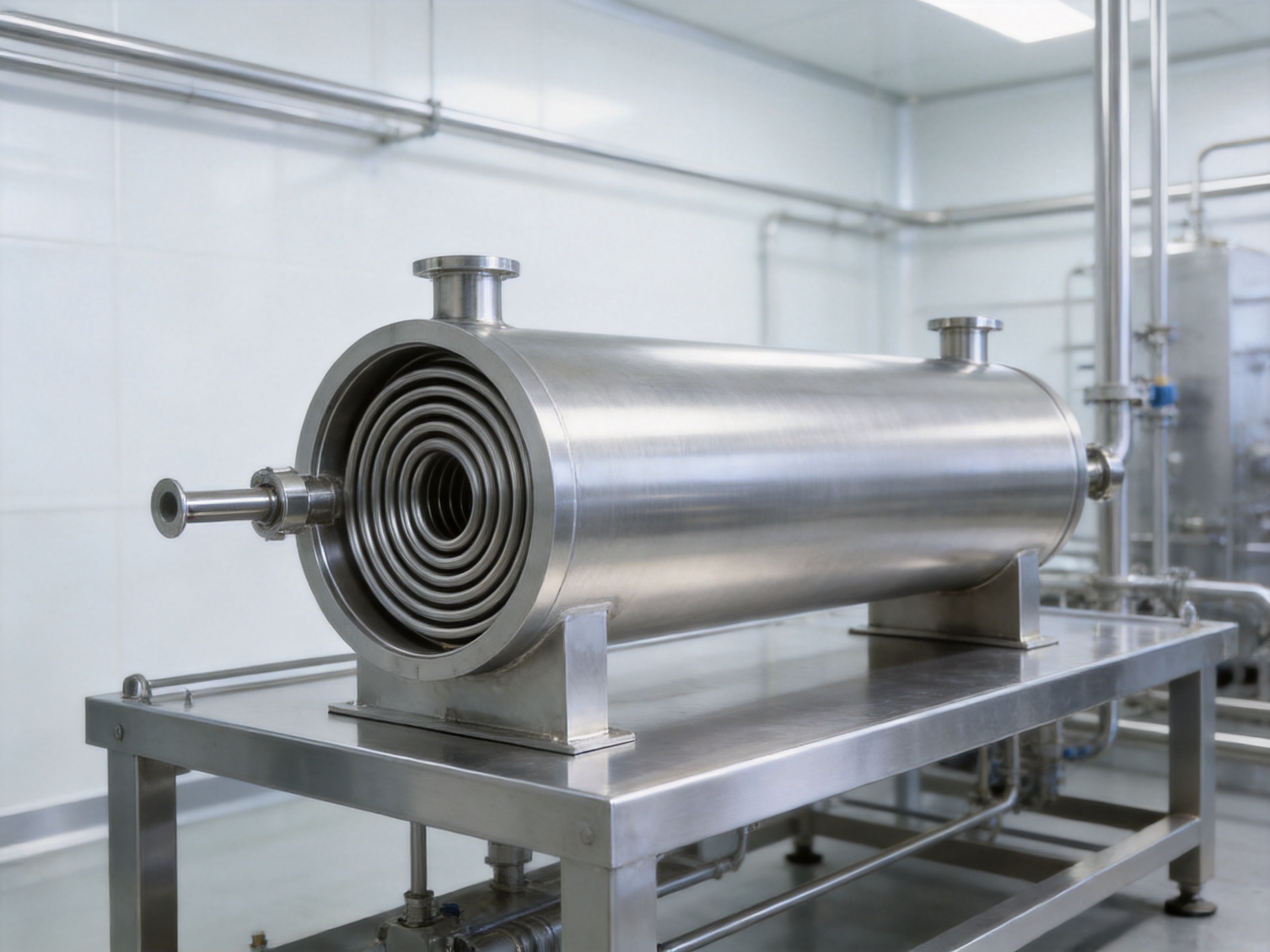
Available Models and Dimensional Selection
The dimensions reference table provides several standard configurations for different installation and heat transfer requirements. The models use one coiled tube, with variations in straight pipe diameter, shell diameter, and total length.
| Model | Number of Coiled Tubes | Straight Pipe Diameter (mm) | Shell Diameter (mm) | Total Length (mm) | Weight (kg) |
| HY-CH-01030 | 1 | 9.53 | 89 | 400 | 7 |
| HY-CH-03040 | 1 | 12.7 | 108 | 500 | 9 |
| HY-CH-05050 | 1 | 12.7 | 114 | 600 | 11 |
| HY-CH-08055 | 1 | 12.7 | 129 | 650 | 13 |
Model selection should be based on actual operating conditions rather than total length alone. Important factors include pure steam pressure, inlet temperature, sample flow rate, cooling-water temperature, cooling-water pressure, desired condensate outlet temperature, available installation space, and the required connection standard.
A shorter model may be suitable for a low-flow sampling point with relatively cool utility water. A longer coil may be more appropriate when the cooling-water temperature is higher, the steam pressure is greater, or the outlet condensate must be cooled more extensively before collection.
The cooling-water flow should also be considered. Too little cooling water may result in incomplete condensation or an outlet temperature that is too high for safe handling. Excessive cooling-water flow may increase utility consumption without providing a meaningful performance benefit. Proper sizing and control allow the condenser to operate efficiently while supporting consistent sampling conditions.
Manufacturing Process and Quality Strengths
Engineering Based on Hygienic Process Requirements
The manufacturing process begins with understanding the application rather than selecting a generic exchanger from a catalog. Pure steam sampling systems may differ in pressure, flow rate, space constraints, piping arrangement, sterilization cycle, and documentation requirements. These details influence the coil geometry, connection layout, support design, material specification, and surface treatment.
Shiloc (Shanghai) Industrial Trading Co., Ltd. combines manufacturing resources with engineering and technical service capabilities. This allows the company to support customers from product consultation and technical communication through configuration, production coordination, inspection, and international delivery.
The company’s process equipment activities are supported by European know-how and Danish design principles. This design foundation emphasizes practical process integration, safe operation, cleanability, equipment reliability, and efficient use of materials. The objective is to provide equipment that performs consistently in real production environments rather than merely meeting a basic dimensional specification.
Precision Stainless Steel Fabrication
316L stainless steel fabrication requires attention to material identification, cutting accuracy, forming, welding, surface preparation, and final inspection. The coil and shell components must be manufactured with sufficient dimensional accuracy to maintain the designed flow path and heat transfer relationship.
During fabrication, contamination from carbon steel tools, unsuitable abrasives, or unclean work surfaces must be controlled. Stainless steel used for high-purity equipment should be protected from iron contamination and unnecessary surface damage. Appropriate workshop procedures help preserve corrosion resistance and support the required sanitary finish.
Controlled Welding and Finishing
Welded areas are among the most important parts of a sanitary heat exchanger. Poorly controlled welds can create discoloration, roughness, undercutting, cracks, crevices, or areas that are difficult to clean. Weld quality therefore affects both mechanical integrity and hygienic performance.
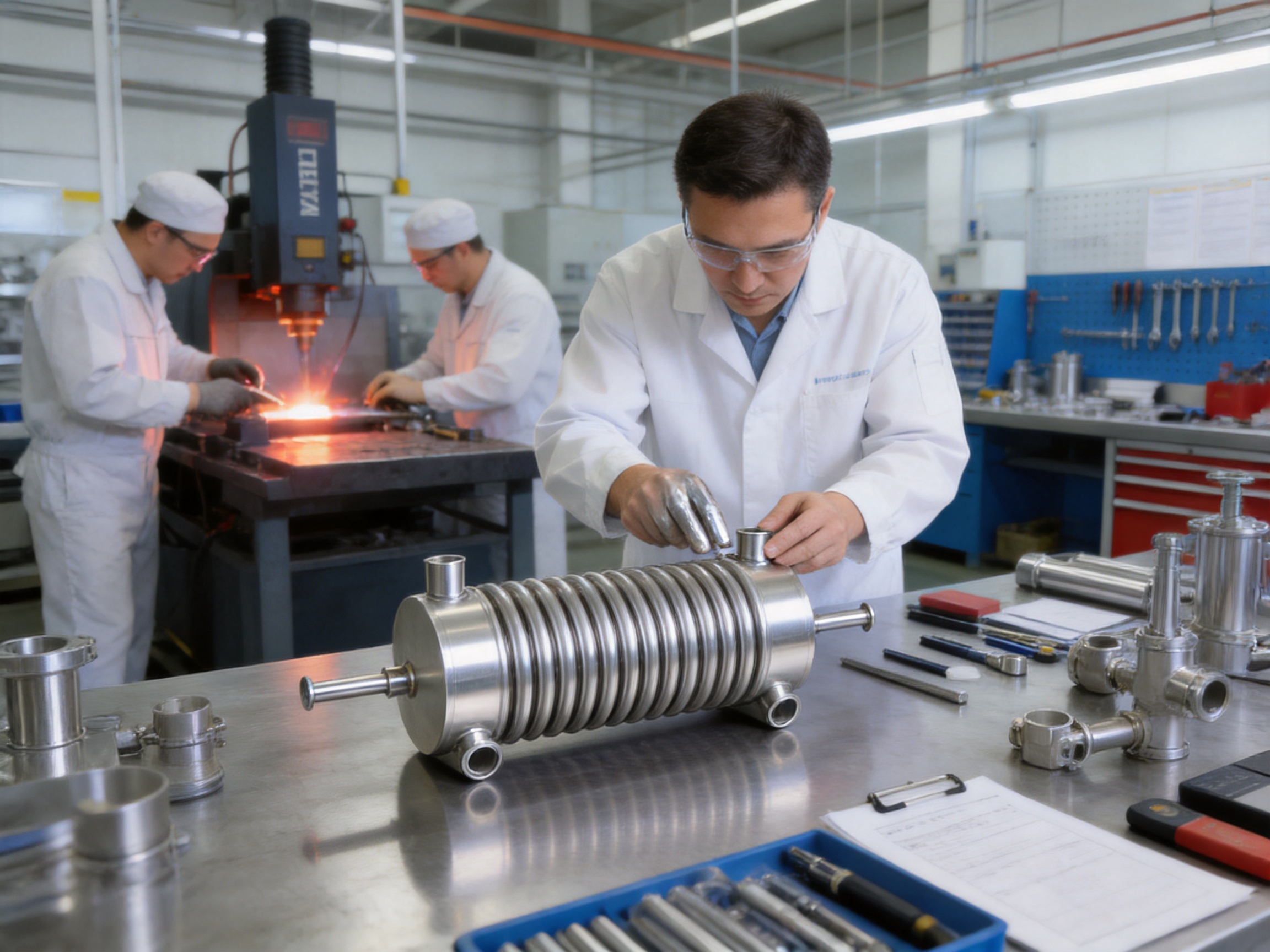
The company’s Shanghai facility includes capabilities covering processing, welding, polishing, and quality control. These capabilities support closer coordination between fabrication and finishing operations. When welding, polishing, and inspection are managed as connected stages, it becomes easier to identify and correct surface or dimensional issues before final delivery.
After welding, appropriate surface treatment and polishing help produce a consistent fluid-contact finish. Electropolishing of the sanitary coil supports the specified Ra ≤ 0.25 μm internal surface condition. The final finish should be verified using suitable inspection methods and documented according to the project requirements.
Quality Control and Traceability
Traceability is important for equipment used in regulated manufacturing environments. Customers may need to identify the material grade, production batch, welding records, surface treatment, pressure testing, dimensional inspection, and final release status.
Shiloc focuses on quality control and reliable supply as part of its equipment service. The company can coordinate technical documentation and inspection requirements for domestic and international customers. Depending on the project, documentation may include general arrangement drawings, material information, inspection reports, pressure test records, surface roughness information, and packing details.
Documentation requirements vary by customer and application. Pharmaceutical manufacturers may require more extensive records than a general food processing installation. Technical requirements should be defined before production so that the correct inspection points and documents can be incorporated into the manufacturing plan.
Dedicated Facility and Technical Personnel
Shiloc operates a 3,000-square-meter facility in Shanghai and has more than 20 technical specialists. The facility supports processing, welding, polishing, and quality control activities for fluid equipment and related process systems.
A dedicated facility can improve production coordination, shorten communication paths, and provide greater control over manufacturing progress. Technical personnel can participate in design clarification, material review, fabrication planning, quality inspection, and customer communication. This is particularly valuable when a condenser must be customized for an existing process system.
International Trade and Project Coordination
For overseas customers, equipment quality is only one part of a successful procurement project. Technical communication, export documentation, packaging, logistics coordination, customs information, and delivery scheduling can all affect project progress.
Shiloc is structured to provide import and export services, import and export agency support, equipment manufacturing, and engineering and technical services. Its experienced trade team can coordinate product consultation, technical clarification, document preparation, and international shipment. This one-stop approach can reduce the administrative burden on customers purchasing sanitary equipment from China.
International customers may also benefit from receiving technical information in a coordinated format. Drawings, specifications, inspection documents, packing lists, commercial documents, and shipping information can be prepared according to the project’s requirements. Clear communication reduces the risk of misunderstandings regarding connections, dimensions, surface finish, or installation conditions.
Customization for Pharmaceutical, Biotech, and Food Applications
Standard models are useful for common sampling requirements, but many process systems require customized details. A pharmaceutical plant may have strict connection standards and limited space inside a utility panel. A biotechnology facility may require a specific sterilization arrangement. A food and beverage plant may need a particular mounting method or integration with an existing clean utility skid.
Customization may include coil length, shell diameter, total dimensions, inlet and outlet orientation, connection type, tri-clamp size, drain configuration, support structure, pressure rating, surface finish, and documentation package.
Customization should be based on a complete technical review. The customer should provide the pure steam pressure and temperature, sample flow rate, cooling-water conditions, desired condensate temperature, available space, connection drawings, cleaning and sterilization parameters, and any applicable internal standards.
The condenser can be adapted for small sampling points where a large heat exchanger would be impractical. It can also be designed for integration with sample coolers, collection vessels, valves, temperature indicators, conductivity sensors, or laboratory sampling panels, depending on the project scope.
Pharmaceutical Manufacturing
In pharmaceutical production, pure steam may be used to sterilize process equipment, vessels, filling components, transfer lines, and other critical surfaces. Sampling condensers support routine monitoring and validation by providing a controlled method for collecting condensate.
The sanitary construction helps reduce the possibility that the sampling device will introduce contamination into the test. The smooth 316L coil, drainable structure, and CIP/SIP compatibility are aligned with the expectations of high-cleanliness manufacturing systems. The condenser can be installed at a designated sampling point and operated according to the site’s approved sampling procedure.
Biotechnology and Biopharmaceutical Processing
Biotechnology facilities often require flexible and reliable clean utility systems. Production may involve frequent process changes, small-scale development equipment, pilot systems, and highly controlled laboratory or manufacturing environments.
The compact design of the sampling condenser is useful where utility panels and process skids have limited space. The coil’s ability to accommodate thermal movement supports repeated sterilization cycles. Customized connections and dimensions allow the unit to be integrated into new or existing bioprocess equipment.
Food and Beverage Processing
Food and beverage manufacturers use hygienic steam and clean utilities for equipment sterilization, cleaning, heating, and process support. Although the validation requirements may differ from those of pharmaceutical facilities, the need for cleanable, corrosion-resistant, and reliable equipment remains important.
The sanitary condenser provides a practical method for checking pure steam or clean steam quality. Electropolished surfaces and hygienic connections help support cleaning programs, while the compact structure can be installed near production lines, utility skids, or laboratory sampling areas.
Medical Device and Laboratory Systems
Medical device manufacturing and laboratory environments may require high-purity steam monitoring for sterilization and equipment qualification. In these applications, sample consistency and safe handling are important because the condensate may be used as evidence of system performance.
A compact sampling condenser can be installed as part of a validation station or laboratory utility panel. The product’s customizable interface and low-flow suitability allow it to serve systems that do not require a large industrial heat exchanger.
Installation and Operation Considerations
The condenser should be installed according to the approved process drawing and operating specification. The sample inlet, condensate outlet, cooling-water inlet, and cooling-water outlet must be identified clearly to ensure the intended flow direction.
Correct orientation is important for drainage. The condenser and connected piping should be arranged so that condensate and cleaning fluids can flow toward the designated drain without trapped low points. Supports should hold the equipment securely while allowing for the thermal movement considered in the design.
Cooling-water flow should be established before opening the pure steam sample valve, unless the operating procedure specifies another sequence. Stable cooling conditions help prevent excessive outlet temperature and support consistent condensation. Operators should follow site procedures for flushing, stabilization, collection, and sample labeling.
Before initial use, the system should be inspected for correct assembly, clean connections, appropriate gaskets, open drains, and proper valve orientation. A pressure or leak test may be performed according to the project requirements. The sampling procedure should specify how long the system is flushed and when the collected sample is considered representative.
After sampling, the system should be drained and cleaned or sterilized according to the validated procedure. If the condenser will remain idle for an extended period, the user should consider the risk of retained moisture and follow the site’s storage or preservation instructions.
How to Select the Right Sanitary Sampling Condenser
Selection should begin with the process data. The supplier needs to understand the steam conditions, required sample quality, cooling medium, installation environment, and documentation expectations.
| Selection Item | Information to Confirm | Why It Matters |
| Pure steam pressure | Normal, minimum, and maximum operating pressure | Influences condensation temperature and mechanical design |
| Steam temperature | Normal and maximum inlet temperature | Determines heat removal requirements |
| Sample flow rate | Expected and maximum flow | Supports correct coil length and heat transfer sizing |
| Cooling water | Inlet temperature, pressure, and available flow | Determines cooling capacity and control requirements |
| Condensate outlet temperature | Required collection temperature | Ensures safe handling and appropriate testing |
| Connections | Tri-clamp size, tube standard, and orientation | Ensures compatibility with existing piping |
| Installation space | Available height, width, depth, and service clearance | Determines the practical model and mounting method |
| Cleaning and sterilization | CIP chemicals, SIP temperature, pressure, and cycle time | Confirms compatibility with the site procedure |
| Documentation | Drawings, material records, inspection reports, and testing records | Supports commissioning, qualification, and traceability |
Customers should also consider whether the condenser will operate continuously or intermittently, whether the sampling point is exposed to a cleanroom or utility area, and whether the collection vessel requires special protection. These details can affect the final arrangement even when the heat transfer requirement is modest.
Why Choose Shiloc for Sanitary Heat Transfer Equipment
Shiloc (Shanghai) Industrial Trading Co., Ltd. provides more than a standard catalog component. The company combines product manufacturing, technical support, international trade services, and engineering coordination for food, beverage, biopharmaceutical, daily chemical, and fine chemical applications.
Its product and service strengths include a focus on sanitary materials, practical process design, customized equipment, surface treatment, welding, quality control, traceability, and responsive customer communication. The company’s Shanghai facility and technical personnel provide a foundation for coordinating manufacturing and project requirements.
The company’s design approach is influenced by European know-how and Danish engineering concepts. This supports a focus on functional equipment, process safety, efficient heat transfer, cleanability, and dependable long-term operation. Rather than treating the sampling condenser as an isolated component, Shiloc can consider how it will interact with the customer’s steam system, cooling loop, sampling procedure, and documentation program.
For international clients, the import and export service team provides additional value. Customers can receive support with technical discussions, product configuration, document preparation, export arrangements, and logistics coordination. This can be particularly useful for companies purchasing custom sanitary equipment for overseas projects.
Shiloc’s core values include integrity, pragmatism, innovation, development, excellent quality, and global sharing. These values are reflected in an approach that emphasizes reliable supply, transparent technical communication, personalized service, and equipment suited to real operating conditions.
Recommended Quality and Validation Documentation
Documentation should be agreed before purchase because requirements differ between industries and projects. A basic package may include a product specification, dimensional drawing, connection information, material description, operating limits, and installation guidance.
For regulated pharmaceutical or biopharmaceutical projects, the customer may request additional documents such as material certificates, surface roughness records, welding documentation, pressure or leak test reports, inspection records, packing records, and a certificate of conformity.
The customer may also need to verify that the final equipment matches the approved drawing. Dimensional checks, connection checks, surface inspection, and identification of the product model should be included in the release process. If the condenser is part of a larger skid, the supplier should coordinate interface information with the skid designer.
Qualification and validation remain the responsibility of the end user and project team. The supplier can provide technical data and manufacturing records, but the user must establish the sampling procedure, cleaning and sterilization cycle, acceptance criteria, and operational controls appropriate to the facility.
Frequently Asked Questions
What is a sanitary pure steam sampling condenser?
A sanitary pure steam sampling condenser is a compact heat exchanger used to convert high-temperature pure steam into cooled condensate for quality testing. It is designed with hygienic materials, cleanable surfaces, drainable flow paths, and connections suitable for pharmaceutical, biotechnology, food, beverage, and other high-cleanliness applications.
Why is a regular industrial condenser not always suitable?
Regular industrial condensers may be designed primarily for heat removal and may include rougher surfaces, internal joints, threaded connections, large hold-up volumes, or areas that are difficult to drain. A sanitary sampling condenser places greater emphasis on sample integrity, contamination control, cleanability, drainability, and compatibility with CIP/SIP procedures.
What materials are used in the condenser?
The sanitary coil is manufactured from 316L stainless steel. The inner fluid-contact surface can be electropolished to a roughness of Ra ≤ 0.25 μm, supporting smooth flow, cleanability, corrosion resistance, and reduced residue retention.
How does the coil-in-coil design improve performance?
The coil-in-coil structure creates an efficient heat transfer path in a compact package. Steam flows through the inner coil while cooling water passes through the surrounding channel. The arrangement can provide counter-current heat exchange, helping achieve complete condensation with a relatively small heat transfer area.
Can the condenser handle frequent start-stop operation?
The coiled tube has spring-like flexibility and can accommodate thermal expansion and contraction more effectively than a completely rigid straight assembly. This makes the design suitable for systems that experience repeated start-up, shutdown, sterilization, and cooling cycles. Actual operating limits should be confirmed for the selected model.
Is the condenser suitable for CIP and SIP?
Yes, the condenser is designed for CIP/SIP-compatible sanitary integration. The exact cleaning chemicals, temperature, pressure, flow, cycle duration, and drainage conditions must be reviewed for each project and incorporated into the user’s validated procedure.
What tests can be performed on the condensate?
The cooled condensate may be used for tests such as conductivity, total organic carbon, endotoxin-related evaluation, microbiological analysis, and other pure steam quality checks required by the user’s quality system. The appropriate tests depend on the industry, process, and applicable standards.
Can the equipment be customized?
Yes. Customization may include coil length, overall dimensions, interface type, tri-clamp size, connection orientation, structural arrangement, material details, mounting method, and documentation package. Custom design should be based on the steam, cooling-water, installation, and validation requirements of the project.
How should the condenser be sized?
Sizing should consider steam pressure and temperature, sample flow rate, cooling-water temperature and flow, required condensate outlet temperature, available space, and connection requirements. Selecting a model only by physical dimensions may result in inadequate or excessive cooling performance.
What should be checked during installation?
Users should confirm flow direction, connection compatibility, gasket condition, support arrangement, drainage, cooling-water availability, valve orientation, and service clearance. The system should be inspected and tested according to the approved installation and commissioning procedure before routine sampling begins.
What support can Shiloc provide to overseas customers?
Shiloc can support product consultation, technical communication, customized configuration, manufacturing coordination, quality documentation, export procedures, and logistics coordination. The company’s import and export service team helps customers manage the technical and administrative aspects of international procurement.
Conclusion
Accurate pure steam testing depends on more than laboratory equipment. It begins with a sampling system that can safely condense steam, preserve sample integrity, minimize contamination risk, and operate consistently through repeated cleaning and sterilization cycles.
Sanitary pure steam sampling condensers provide a specialized solution for this requirement. Their 316L stainless steel construction, electropolished internal surfaces, compact coil-in-coil arrangement, counter-current cooling, reduced internal joints, full drainability, and sanitary connections distinguish them from conventional industrial condensers. The design is particularly suitable for low-flow sampling points and installations where space, cleanliness, and thermal reliability are important.
Shiloc (Shanghai) Industrial Trading Co., Ltd. supports these products with manufacturing capabilities in processing, welding, polishing, and quality control. Its 3,000-square-meter Shanghai facility, technical specialists, European-influenced design approach, customization resources, and international trade services allow the company to support both standard and project-specific requirements.
For pharmaceutical, biopharmaceutical, food and beverage, medical device, laboratory, and other high-cleanliness applications, the correct condenser should be selected as part of the complete sampling system. When process data, installation conditions, cleaning requirements, documentation, and validation expectations are reviewed together, a sanitary pure steam sampling condenser can provide a dependable foundation for safe and representative pure steam quality monitoring.
References
1. ASME Bioprocessing Equipment principles relating to hygienic design, materials, fabrication, inspection, and documentation.
2. European Pharmacopoeia guidance concerning pharmaceutical water, pure steam, condensate quality, and related quality control practices.
3. United States Pharmacopeia general principles for pharmaceutical water systems, conductivity, total organic carbon, and microbiological quality evaluation.
4. Current good manufacturing practice principles for pharmaceutical and biopharmaceutical facilities.
5. Hygienic design principles for food and beverage process equipment, including cleanability, drainability, surface finish, and sanitary connections.
6. Stainless steel fabrication and electropolishing practices for high-purity process equipment.
Product: Sanitary Pure Steam Sampling Condensers
PREV:Sanitary Pure Steam Sampling Condensers for Reliable Pharmaceutical and Food Process Control
NEXT:Bottom-Mounted Magnetic Mixers for Hygienic Food, Beverage, and Biopharmaceutical Processing
NEXT:Bottom-Mounted Magnetic Mixers for Hygienic Food, Beverage, and Biopharmaceutical Processing
Interested in cooperation or have questions?
Recommended LINS
✦
Food and Beverage Process System
Food Processing Skid System
Sanitary Process Skid
Process Skid System
CIP Skid System for Food Industry
automated process skid system for food processing
CIP process skid system for food industry
hygienic process skid for food industry
Skid Mounted Process System
food and beverage process skid system
Let'S Work Together Welcome Aboard!
-

haikexin@haikexin.com
+8613391278930
-
 +86-21-57560276
 -
 No. 2819, Sihu Road,Fengxian District, Shanghai, China
Join Our Mailing List
Copyright © Shiloc (Shanghai) Industrial Trading Co., Ltd. All Rights Reserved.
Process Systems & Equipment For Food & Biopharma Manufacturers
