
 English
 русский
 Português
 Français


 Read More

Product Category
NEW Category
Contact us
Contact Us
We specialise in the research, development and manufacture of electrical wires and cables.
 +86-21-57560276
Related News
Bottom-Mounted Magnetic Mixers for Hygienic Food, Beverage, and Biopharmaceutical Processing
Content
- 1 Why Mixing Technology Matters in Hygienic Manufacturing
- 2 Operating Principle of a Bottom-Mounted Magnetic Mixer
- 3 Single-Impeller and Multi-Impeller Configurations
- 4 Key Advantages Compared with Conventional Top-Entry Agitators
- 5 Materials, Bearings, Seals, and Surface Finish
- 6 Speed, Power, and Capacity Range
- 7 Applications in Food and Beverage Processing
- 8 Applications in Pharmaceutical and Biopharmaceutical Manufacturing
- 9 Manufacturing Capabilities and Quality Strengths
- 10 Engineering and Customization Process
- 11 Cleaning, Sterilization, and Maintenance Considerations
- 12 How to Select the Correct Model
- 13 Advantages for Equipment Buyers and Process Operators
- 14 Why Work with an Engineering-Oriented Supplier
- 15 Frequently Asked Questions
- 15.1 What is a bottom-mounted magnetic mixer?
- 15.2 What is the main advantage over a top-entry agitator?
- 15.3 When is a single-impeller mixer appropriate?
- 15.4 When should a multi-impeller mixer be considered?
- 15.5 Are these mixers suitable for pharmaceutical and biotechnology applications?
- 15.6 Can the mixer support CIP and SIP?
- 15.7 What materials are used for product-contact parts?
- 15.8 What bearing materials are available?
- 15.9 What speed range is available?
- 15.10 Are the stated capacities valid for all liquids?
- 15.11 Can the equipment be customized?
- 15.12 What information should a customer provide for mixer selection?
- 16 Conclusion
- 17 References
- 18 Product: Bottom-mounted Magnetic Mixers (Single/Multi-impeller)
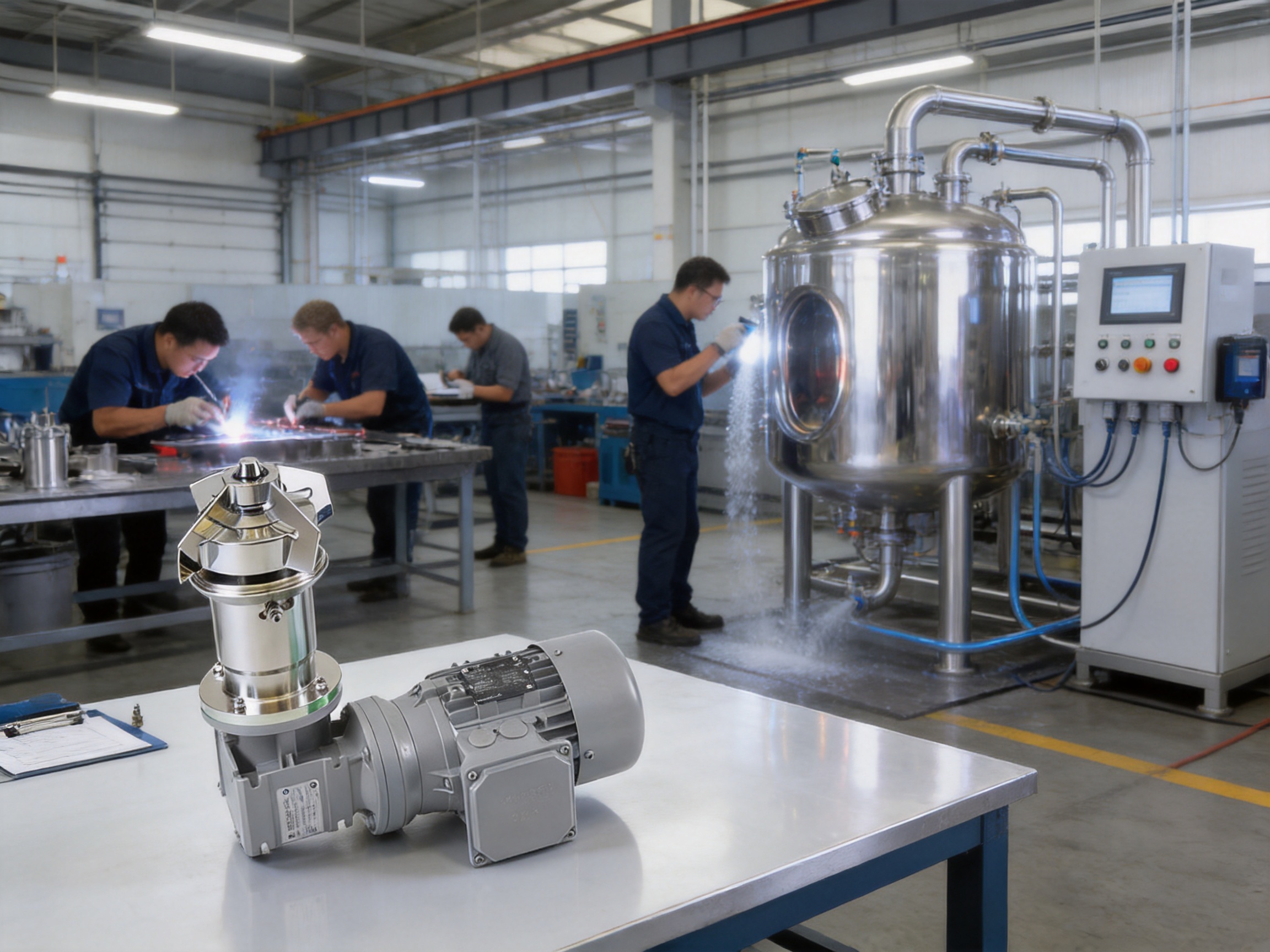
Modern food, beverage, pharmaceutical, and bioprocessing facilities require mixing equipment that delivers consistent process performance while protecting product purity. The mixer must provide effective circulation, suspension, blending, and heat transfer without creating unnecessary shear, contamination pathways, or cleaning challenges. At the same time, manufacturers increasingly need equipment that can operate reliably in compact production areas, support automated process control, and meet demanding hygienic design expectations.
Bottom-mounted magnetic mixers with single- or multi-impeller configurations are designed to address these requirements. By transferring power through a sealed magnetic drive rather than a conventional exposed mechanical shaft, the equipment separates the motor and gearbox from the product-contact zone. This design reduces the number of potential leakage points, supports hygienic operation, and provides a practical alternative to traditional top-entry agitators.
The equipment is suitable for liquid blending, dilution, suspension maintenance, powder incorporation, fluid circulation, and heat transfer enhancement. Depending on the vessel size, process viscosity, and required mixing intensity, users can select a single-impeller model for standard applications or a multi-impeller configuration for larger vessels and more challenging process conditions.
Shiloc (Shanghai) Industrial Trading Co., Ltd. supplies aseptic mixing equipment and related process solutions for food and beverage, biopharmaceutical, daily chemical, and fine chemical manufacturers. Its manufacturing and engineering capabilities combine European process knowledge, Danish design concepts, internal welding and polishing, technical consultation, and international supply support.
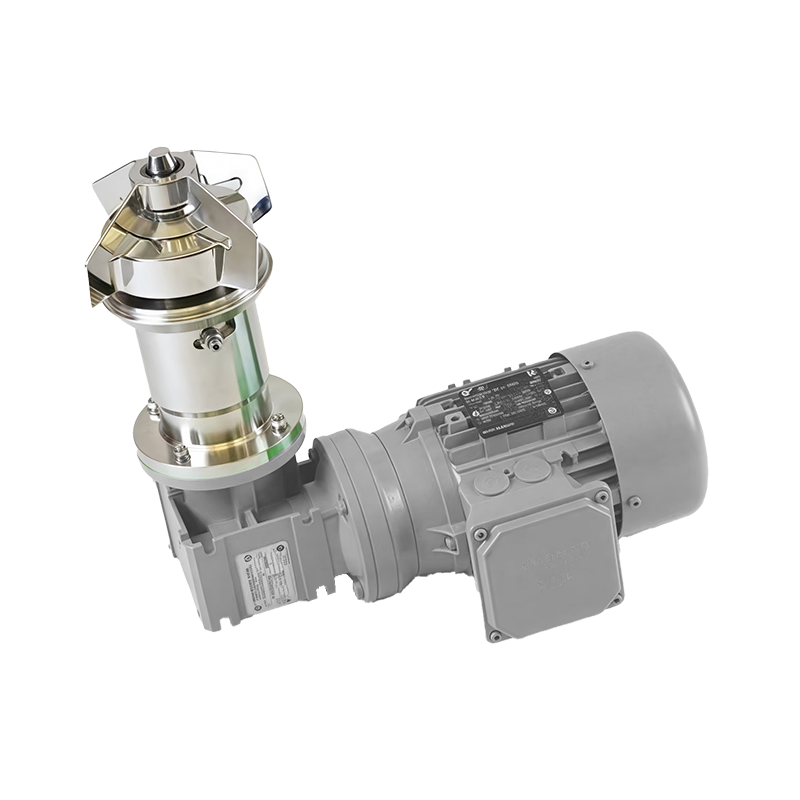
Bottom-mounted Magnetic Mixers (Single/Multi-impeller)
Why Mixing Technology Matters in Hygienic Manufacturing
Mixing is often treated as a simple operation, but its influence extends throughout the entire manufacturing process. In a food or beverage plant, inadequate mixing can cause concentration differences, inconsistent flavor distribution, uneven nutritional content, or unstable product quality. In pharmaceutical and biotechnology production, poor circulation can affect active ingredient uniformity, cell or protein stability, suspension behavior, and batch reproducibility.
Mixing also influences heat transfer. A well-designed flow pattern helps distribute thermal energy more evenly throughout a vessel. This is important during heating, cooling, dilution, dissolution, and temperature-controlled holding. If stagnant zones develop, some areas may become overheated or insufficiently cooled, increasing the risk of product degradation or process inconsistency.
The mixer must also match the physical properties of the product. Low-viscosity liquids may require efficient circulation at moderate power, while higher-viscosity products need stronger torque and carefully selected impeller geometry. Powders that are difficult to disperse may require a different flow pattern from liquids that only need gentle blending. Suspensions may need continuous circulation to prevent settling without exposing sensitive materials to excessive shear.
For hygienic production, mechanical performance is only one part of the equipment specification. The mixer must also be compatible with cleaning-in-place and sterilization-in-place procedures. Product-contact materials, weld quality, surface finish, bearing construction, seal design, and vessel integration all affect cleanability and sterility. A mixer that performs well mechanically but creates difficult-to-clean areas may increase production risk and operating cost.
Bottom-mounted magnetic mixers are developed around this complete process perspective. They combine a sealed drive arrangement, optimized impeller flow, hygienic materials, polished product-contact surfaces, and flexible speed control. The result is a mixing platform that can be adapted to a wide range of applications while minimizing contamination and maintenance concerns.
Operating Principle of a Bottom-Mounted Magnetic Mixer
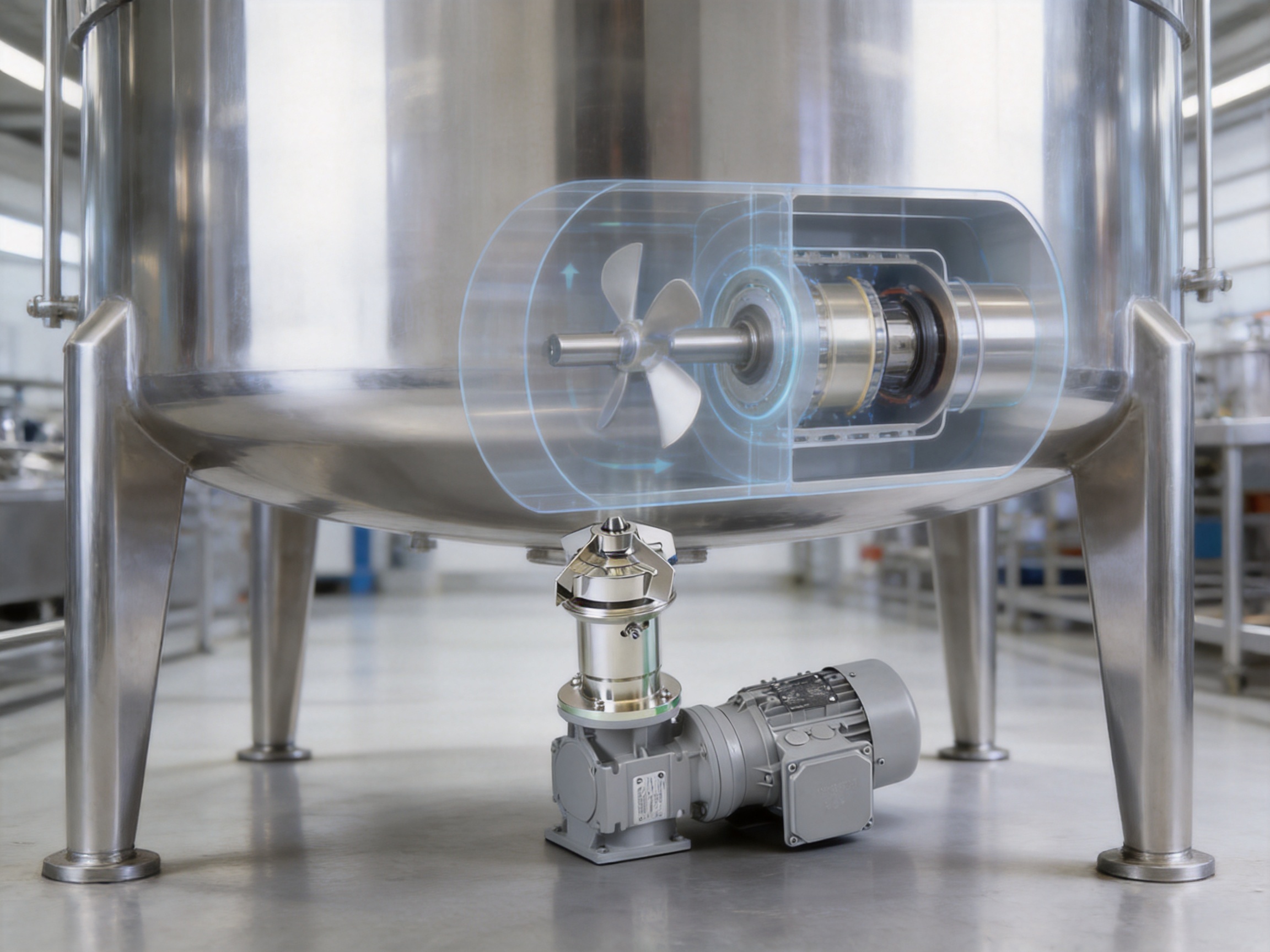
A bottom-mounted magnetic mixer is installed through the lower section of a process vessel. The external drive system contains the motor, and where required, a gearbox. Magnetic coupling transfers rotational energy across a sealed barrier to the internal rotor and impeller assembly. Because the motor shaft does not extend directly into the product area, the product-contact section can remain enclosed and mechanically separated from the external environment.
The internal impeller rotates around a hygienically designed bearing arrangement. Product-contact components may include the impeller, shaft sleeve, bearing locator, bearing, O-rings, welded flange, and associated internal structures. Depending on the equipment design and application, bearings can be manufactured from tungsten carbide or silicon carbide, while seals may use FEP-encapsulated O-rings.
The magnetic drive provides several important process benefits. First, it eliminates the direct rotating shaft connection commonly associated with top-entry mixers. Second, it reduces the need for complex dynamic shaft seals in the product zone. Third, it supports a compact installation arrangement that does not require a large overhead drive structure. Finally, it helps separate the product from the motor and gearbox, which is valuable in aseptic and contamination-sensitive processes.
The impeller geometry is selected to produce an efficient flow field with moderate shear. Flow direction, circulation intensity, axial movement, and local turbulence can be adjusted through impeller shape and operating speed. Single-impeller designs are commonly used for standard liquid mixing and suspension maintenance, while multi-impeller systems provide additional circulation for taller vessels, higher volumes, or more demanding materials.
Magnetic mixing does not mean that every application can use the same mixer size or impeller design. Viscosity, density, solids loading, vessel geometry, working volume, temperature, powder characteristics, and required mixing time must all be evaluated. Model capacities are typically based on water testing, so final selection should be confirmed against the actual process medium.
Single-Impeller and Multi-Impeller Configurations
Single-Impeller Mixers for Standard Applications
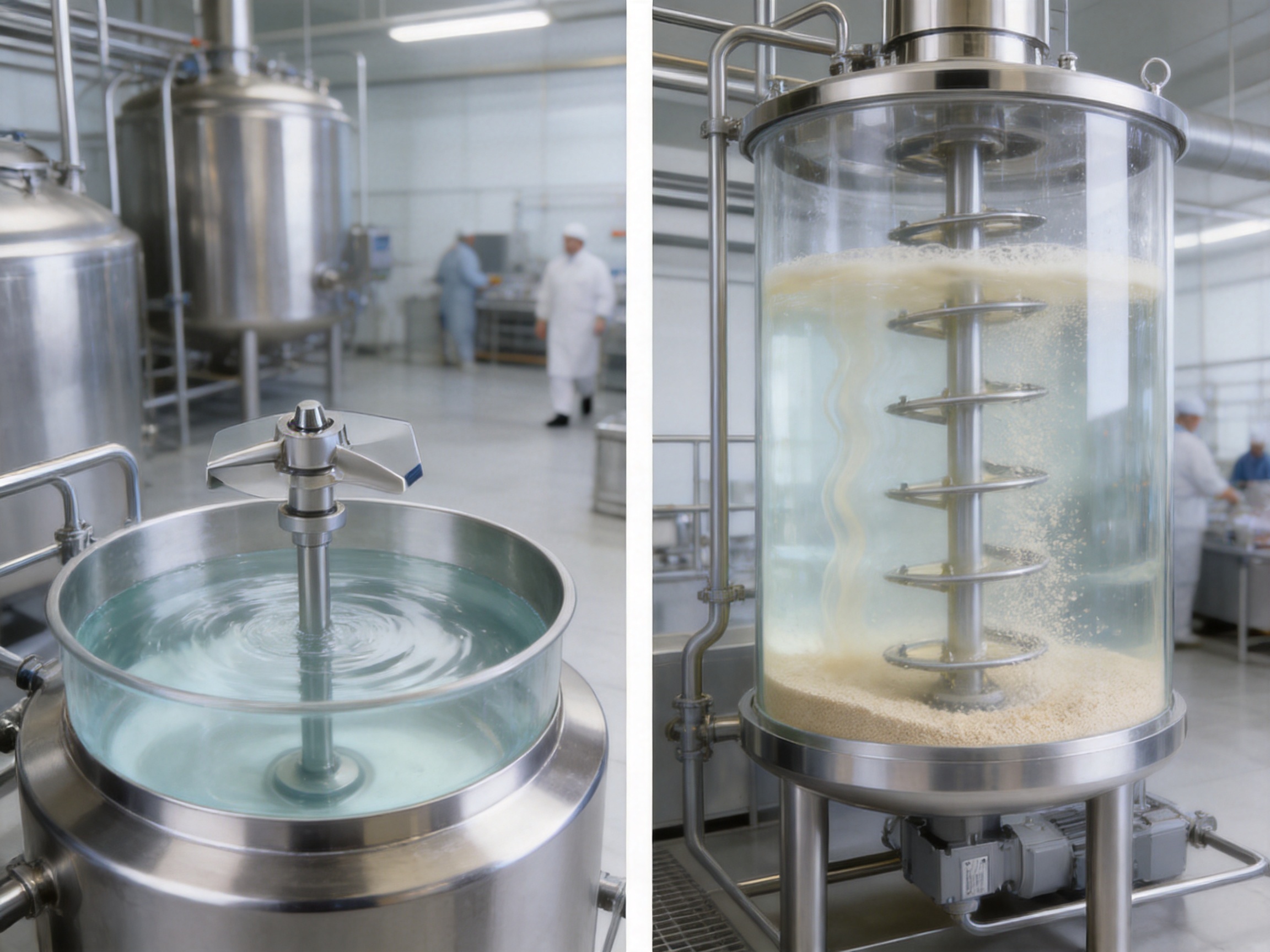
Single-impeller bottom-mounted magnetic mixers are intended for applications in which one optimized impeller can produce adequate circulation throughout the working volume. They are suitable for blending miscible liquids, dilution, suspension maintenance, low- to moderate-viscosity processing, and heat transfer improvement.
The bottom installation position allows the impeller to introduce energy directly into the lower region of the vessel. This can help reduce bottom dead zones and support circulation from the lower section toward the upper portion of the tank. In suitable vessel geometries, the arrangement promotes uniform concentration and temperature distribution without requiring a top-entry shaft.
Single-impeller equipment may be preferred when the process has a relatively low working height, when the product is easy to blend, or when the primary objective is reliable and economical circulation. The simpler configuration can also reduce installation complexity and make routine inspection easier.
Although the structure is relatively simple, single-impeller equipment can still provide hygienic performance. Product-contact parts may be manufactured from 1.4435 or 1.4404 stainless steel, corresponding to commonly used hygienic grades for pharmaceutical and food-processing equipment. Where specified, impellers and welded components can use SUS316L material, with a polished finish and electrolytic polishing to improve cleanability.
Multi-Impeller Mixers for Large or Difficult Processes
Multi-impeller magnetic mixers use more than one impeller stage to improve circulation over a greater vessel height or within a larger working volume. The additional impellers can help distribute mixing energy more evenly and reduce concentration differences between the upper and lower sections of the tank.
This configuration is useful for higher-volume processing, higher-viscosity materials, powder dispersion, and suspension applications in which a single impeller may not provide sufficient vertical circulation. It may also be selected where process uniformity must be maintained during long holding periods or where solids have a strong tendency to settle.
Multi-impeller systems do not simply increase the number of blades. The stages must be engineered to work together. Impeller spacing, rotational direction, vessel height, clearance, power distribution, and fluid properties all influence performance. A correctly designed system can provide improved flow distribution without automatically requiring excessive speed or high shear.
For sensitive biological, pharmaceutical, or nutritional products, the objective is not maximum turbulence. Instead, the mixer should create enough movement to achieve the required uniformity while avoiding unnecessary mechanical stress. The impeller profile and speed range must therefore be selected according to the process objective rather than based only on vessel capacity.
| Comparison Item | Single-Impeller Configuration | Multi-Impeller Configuration |
| Typical application | Standard blending, dilution, circulation, and suspension maintenance | Large-volume mixing, powder dispersion, higher viscosity, and demanding suspension processes |
| Flow coverage | Suitable for moderate vessel height and working volume | Improved vertical circulation across taller or larger vessels |
| System complexity | Lower mechanical complexity and straightforward installation | More detailed engineering for impeller spacing and power distribution |
| Process flexibility | Effective for routine liquid processing | Better suited to complex fluid behavior and difficult-to-mix products |
| Selection priority | Working volume, viscosity, and required mixing time | Vessel geometry, solids loading, viscosity, and uniformity requirements |
Key Advantages Compared with Conventional Top-Entry Agitators
Reduced Contamination Risk
A conventional top-entry agitator generally uses a mechanical shaft that passes through the vessel cover. The shaft penetration requires a seal or sealing assembly capable of maintaining separation between the internal product and the external environment. While well-designed mechanical seals can perform effectively, they introduce additional components that must be specified, maintained, inspected, and cleaned.
A bottom-mounted magnetic mixer transfers motion through a sealed magnetic coupling. The motor and gearbox remain outside the product-contact space, while the internal impeller operates behind a sealed barrier. This arrangement reduces direct mechanical connections and helps limit possible contamination pathways. It is particularly valuable for sterile, aseptic, or high-purity processes.
Improved Hygienic Design
Hygienic equipment must minimize product retention and allow cleaning agents to reach all relevant surfaces. Smooth product-contact materials, controlled weld profiles, polished surfaces, and appropriate seal materials contribute to this objective. The available surface finish for the impeller and welded post is specified at approximately Ra 0.5 micrometers with electrolytic polishing, subject to the final equipment configuration and customer requirements.
A polished surface is less likely to retain residues than a rough or poorly finished surface. It can also support more effective cleaning and reduce locations where microorganisms or product deposits might accumulate. Material selection is equally important. Stainless steels such as 1.4435, 1.4404, and SUS316L are widely used in hygienic processing because of their corrosion resistance and suitability for clean manufacturing environments.
Lower Installation Requirements
Top-entry agitators often require overhead support frames, service platforms, lifting arrangements, and sufficient vertical clearance for motor and gearbox access. These requirements can complicate plant layout, especially in facilities with restricted ceiling height or multiple process vessels.
Bottom-mounted magnetic mixers can provide greater installation flexibility because the drive is positioned at the bottom of the vessel. The arrangement may reduce the need for overhead structures and can be useful in compact processing rooms. The vessel design must still provide adequate access for inspection and maintenance, but the overall equipment layout can be more efficient.
Reliable Mixing at Low Start-Up Volume
Some process vessels must begin mixing before they reach their normal operating volume. This may occur during powder wetting, staged filling, solution preparation, or batch transfer. A bottom-mounted impeller can be positioned to engage the product at a relatively low liquid level, supporting early circulation and reducing the risk of localized concentration differences.
Low start-up volume capability is particularly helpful when powders are added progressively or when the formulation requires controlled dilution. The exact minimum operating level depends on impeller location, vessel geometry, process material, and the specific model, so it should be confirmed during engineering review.
Controlled Shear and Efficient Energy Transfer
Many pharmaceutical, biotechnology, food, and beverage materials require careful control of shear. Excessive shear can damage biological structures, affect texture, create unwanted foaming, or change the physical properties of sensitive ingredients. The impeller geometry used in these mixers is designed to create an effective flow field with moderate shear rates.
The goal is to use energy efficiently. Strong circulation should not depend solely on very high rotational speed. A suitable impeller profile can move product through the vessel while maintaining the desired process conditions. Variable-speed control allows the operator to adjust mixing intensity for different phases, such as powder wetting, blending, suspension maintenance, or final homogenization.
Materials, Bearings, Seals, and Surface Finish
Product-contact materials are central to equipment safety and regulatory suitability. The supplied mixer designs use stainless steel construction for the impeller and welded product-contact components. SUS316L, 1.4435, and 1.4404 grades are available according to the specification and application. These materials provide corrosion resistance and are compatible with many food, pharmaceutical, and biotechnology products.
The impeller and welded post may receive a surface finish of approximately Ra 0.5 micrometers with electrolytic polishing. Electropolishing can improve surface smoothness and remove microscopic irregularities from stainless steel surfaces. The final finish should be verified against the customer’s hygienic design standard, vessel specification, and applicable validation requirements.
Bearings are available in tungsten carbide or silicon carbide. Both materials offer high hardness and wear resistance. The selection may depend on product properties, operating conditions, cleaning chemistry, temperature, expected service life, and compatibility with the process environment.
Tungsten carbide bearings can provide durable support for continuous mixing duties. Silicon carbide may be selected where specific chemical or tribological properties are desired. Bearing clearances and lubrication conditions must be considered during engineering because the process fluid may serve as part of the operating environment for the internal bearing arrangement.
FEP-encapsulated O-rings are used as bearing seals in the specified design. Encapsulation can provide the elasticity of an elastomeric core together with improved chemical resistance from the fluoropolymer covering. Final seal selection must be reviewed against cleaning agents, sterilization temperature, product chemistry, pressure, and operating frequency.
The welded construction of the shaft sleeve and flange also requires careful control. Weld penetration, surface continuity, dimensional accuracy, and post-weld finishing all influence long-term hygienic performance. Internal welding and polishing capabilities allow the supplier to manage important stages of the manufacturing process and maintain closer control over product-contact quality.
Speed, Power, and Capacity Range
The product range includes models for small laboratory or pilot-scale vessels as well as large production systems. The LMP-S series covers bottom-mounted magnetic stirrers with blade diameters from approximately 80 to 450 millimeters, power ratings from 0.12 to 4 kilowatts, and processing capacities ranging from approximately 30 to 30,000 liters when tested with water.
The LMP-D series provides higher-speed configurations. Listed models cover blade diameters from approximately 50 to 230 millimeters, with stated speeds up to 1,450 revolutions per minute and capacities from approximately 5 to 15,000 liters, depending on the model. One listed small model contains a power entry that should be technically verified before final quotation or selection, as equipment power must always be confirmed against the approved technical drawing and motor specification.
| Series | Typical Blade Diameter Range | Stated Power Range | Stated Speed Range | Indicative Water Capacity |
| LMP-S | 80–450 mm | 0.12–4 kW | 210–450 rpm | 30–30,000 L |
| LMP-D | 50–230 mm | Approximately 0.37–15 kW, subject to model verification | Up to 1,450 rpm | Approximately 5–15,000 L |
The following models illustrate the range of the LMP-S series:
| Model | Blade Diameter | Power | Speed | Indicative Capacity |
| LMP-S30 | 80 mm | 0.12 kW | 450 rpm | 30–50 L |
| LMP-S50 | 100 mm | 0.18 kW | 450 rpm | 50–100 L |
| LMP-S100 | 120 mm | 0.25 kW | 450 rpm | 100–300 L |
| LMP-S500 | 150 mm | 0.37 kW | 400 rpm | 300–500 L |
| LMP-S1000 | 180 mm | 0.55 kW | 400 rpm | 500–1,000 L |
| LMP-S2000 | 200 mm | 0.75 kW | 350 rpm | 1,000–2,000 L |
| LMP-S3500 | 250 mm | 1.1 kW | 350 rpm | 2,000–3,500 L |
| LMP-S5000 | 300 mm | 1.5 kW | 350 rpm | 3,500–5,000 L |
| LMP-S10000 | 350 mm | 2.2 kW | 240 rpm | 5,000–10,000 L |
| LMP-S20000 | 400 mm | 3 kW | 210 rpm | 10,000–20,000 L |
| LMP-S30000 | 450 mm | 4 kW | 210 rpm | 20,000–30,000 L |
These capacity figures are indicative rather than universal design limits. They are based on testing with water, which has relatively low viscosity and predictable flow behavior. A product with higher viscosity, significant solids content, non-Newtonian behavior, or difficult powder characteristics may require a larger motor, a different impeller, a multi-impeller design, or a reduced working volume.
Applications in Food and Beverage Processing
Food and beverage manufacturers use mixing equipment for liquid preparation, ingredient blending, dilution, syrup production, beverage bases, sauces, dairy products, nutritional liquids, and other formulated products. Each application has its own requirements for shear, temperature control, solids suspension, cleaning, and production speed.
For liquid blending, a single-impeller mixer can create sufficient circulation to distribute miscible ingredients throughout the vessel. During dilution, the mixer supports uniform concentration as water or another liquid is introduced. For products containing suspended particles, continuous bottom circulation can help reduce settling and maintain a consistent product structure.
Powder addition is another important application. Powders can float, agglomerate, form lumps, or adhere to vessel walls when introduced into a liquid without adequate circulation. A suitably selected bottom-mounted impeller can help draw liquid through the lower flow field and distribute added material more evenly. The correct addition rate and powder feeding method remain essential; the mixer alone cannot compensate for unsuitable formulation or feeding conditions.
Food and beverage plants also benefit from hygienic construction. Stainless steel product-contact materials, polished surfaces, controlled welds, and compatibility with CIP procedures help reduce residue retention. The sealed magnetic drive can simplify the contamination-control strategy by keeping the external motor assembly separate from the product.
For temperature-sensitive products, mixing may be coordinated with jacketed-vessel heating or cooling. The mixer improves circulation near the vessel wall and throughout the working volume, supporting more uniform heat transfer. The process engineer must still evaluate heat-transfer area, viscosity changes with temperature, and the possibility of foaming or air entrainment.
Applications in Pharmaceutical and Biopharmaceutical Manufacturing
Pharmaceutical and biopharmaceutical processes place particularly high demands on equipment design. Product purity, batch consistency, sterilization, cleanability, traceability, and material compatibility must be considered together. Magnetic mixers are well suited to applications in which the product must remain isolated from the external mechanical drive.
Typical uses include preparation of process liquids, buffer blending, media preparation, dilution, suspension maintenance, intermediate holding, and controlled heat transfer. In biotechnology, gentle circulation may be required to protect sensitive biological materials or maintain a stable suspension. In pharmaceutical production, uniform distribution of active or inactive ingredients is essential for reproducible batch quality.
The mixer design supports hygienic requirements through stainless steel product-contact components, polished surfaces, sealed magnetic transmission, and selected bearing and sealing materials. The product description states that the design follows FDA-oriented principles for pharmaceutical and biotechnology industries. Customers should confirm the precise regulatory documentation, material certificates, surface-finish records, and validation package required for their jurisdiction and quality system.
CIP and SIP compatibility is also a key consideration. A mixer intended for these procedures must be integrated correctly into the vessel, piping, spray device, drain arrangement, temperature controls, and sterilization cycle. Process parameters such as cleaning chemical concentration, flow velocity, exposure time, sterilization temperature, and pressure should be reviewed during design qualification.
The bottom-mounted arrangement can be beneficial in closed processing systems where overhead penetrations are minimized. It may also support equipment standardization across multiple vessel sizes. However, the final hygienic performance depends on the complete installation, not only the mixer. Vessel geometry, welds, valves, instruments, gaskets, transfer lines, and drainage must all be evaluated as part of the process system.
Manufacturing Capabilities and Quality Strengths
The performance of a hygienic mixer depends heavily on how it is manufactured. Correct design data must be translated into accurate dimensions, reliable welds, consistent surface finish, properly fitted bearings, and complete inspection records. Manufacturing quality is therefore a direct contributor to process reliability.
Shiloc operates a Shanghai production facility of approximately 3,000 square meters and employs more than 20 technical specialists. Its stated capabilities include equipment manufacturing, processing, welding, polishing, quality control, import and export services, engineering consultation, and customized technical support.
European Know-How and Danish Design Concepts
The company combines European know-how and Danish design concepts with local manufacturing resources. This approach is intended to unite hygienic process design principles with practical production capability. For customers, the benefit is the possibility of receiving a complete equipment solution rather than a basic standard mixer without application engineering.
Design considerations can include vessel integration, impeller selection, motor and gearbox matching, magnetic coupling performance, product-contact materials, surface finish, sealing, installation space, and cleaning requirements. An engineering-oriented approach is especially important when the product differs substantially from water or when the process includes powder addition, suspension, or heat transfer.
Internal Welding and Polishing
Welding and polishing are among the most important manufacturing stages for hygienic equipment. Welded product-contact areas must be structurally sound and free from crevices, undercut, excessive oxidation, or surface defects that could retain product. After welding, the surface must be treated and finished according to the specified hygienic standard.
Internal control of welding and polishing can improve coordination between design requirements and production execution. It also supports better traceability of manufacturing steps. When product-contact surfaces are polished to a specified roughness and treated through electrolytic polishing, the final condition can be inspected and documented as part of the quality-control process.
Material and Component Traceability
Traceability is essential in regulated and hygienic industries. Customers may require material certificates for stainless steel, records for elastomer and bearing materials, welding documentation, dimensional inspection reports, surface-finish measurements, and final equipment testing records.
By sourcing core materials from reliable suppliers and managing processing through an internal manufacturing structure, the company seeks to provide consistent quality and traceability. Documentation requirements should be agreed at the beginning of a project. The final quality package may include drawings, certificates, inspection records, test reports, operating instructions, spare-parts lists, and maintenance recommendations.
Quality Management and Final Inspection
The company describes its management practices as aligned with ISO9001-related quality principles. A quality system provides a framework for controlling design changes, purchasing, production, inspection, nonconforming products, corrective actions, and customer feedback.
Before delivery, each mixer should be inspected against the approved specification. Typical checks may include dimensional verification, rotation testing, motor and gearbox confirmation, magnetic coupling operation, bearing fit, seal installation, weld and polish inspection, surface-finish verification, and review of documentation. The exact inspection scope depends on the customer’s technical agreement and validation requirements.
Engineering and Customization Process
A reliable mixer selection begins with process information. The most important data includes working volume, total vessel volume, minimum mixing level, maximum and minimum viscosity, density, solids concentration, particle size, temperature, pressure, required mixing time, cleaning method, sterilization cycle, and the desired degree of uniformity.
The process objective must also be defined. Blending two miscible liquids is different from dispersing a powder, maintaining a suspension, preventing sedimentation, or improving heat transfer. A mixer that is ideal for one objective may be unsuitable for another. Understanding the purpose of mixing allows the impeller configuration and operating range to be selected more accurately.
Vessel geometry is equally important. Diameter, height, bottom shape, internal coils, heating surfaces, baffles, nozzles, and other components affect the flow field. Bottom-mounted equipment must be positioned with appropriate clearance and structural support. Multi-impeller designs require additional analysis of impeller spacing and vertical circulation.
The engineering process may include the following stages:
- Review the process medium and define the mixing objective.
- Confirm vessel dimensions, working volume, minimum operating level, and installation location.
- Evaluate viscosity, density, solids content, powder behavior, and temperature range.
- Select a single- or multi-impeller arrangement and estimate power requirements.
- Verify material compatibility for stainless steel, bearings, seals, and gaskets.
- Review surface-finish, CIP, SIP, and documentation requirements.
- Prepare the equipment drawing and technical specification for approval.
- Manufacture, inspect, test, and document the completed mixer.
- Support installation evaluation, commissioning, and performance verification.
Customization may involve impeller diameter, drive power, variable-speed control, gearbox selection, flange dimensions, bearing materials, seal materials, surface finish, motor brand, electrical requirements, and vessel-interface details. Motor and gearbox options listed in the product information include Nord or SEW gearmotor solutions, subject to the final power and operating specification.
Cleaning, Sterilization, and Maintenance Considerations
Equipment used in hygienic industries must be designed for efficient cleaning. The cleaning strategy should address all product-contact surfaces, internal clearances, welds, seals, bearing areas, and vessel interfaces. CIP procedures should be developed and verified using the actual cleaning chemistry and process parameters.
The magnetic drive reduces the need for a conventional shaft seal that directly separates a rotating shaft from the product. This can reduce maintenance complexity and help limit the risk of seal-related leakage. Nevertheless, the magnetic coupling, bearings, O-rings, flange, and internal assembly remain critical components that require appropriate inspection and service planning.
Preventive maintenance may include checking motor and gearbox condition, monitoring abnormal vibration or noise, verifying operating speed, inspecting external fasteners and mounting interfaces, and reviewing process performance. If the mixer shows reduced circulation, unusual temperature rise, or unstable rotation, possible causes may include excessive viscosity, an unsuitable operating level, bearing wear, product deposits, magnetic coupling overload, or an incorrect speed setting.
Cleaning and sterilization cycles should not exceed the chemical, temperature, pressure, or mechanical limits of the selected materials. FEP-encapsulated O-rings, tungsten carbide or silicon carbide bearings, and stainless steel components each have specific operating boundaries. These limits should be confirmed from the final equipment documentation before commissioning.
Maintenance access should be considered during vessel design. Although the bottom-mounted configuration can reduce overhead requirements, the installation must still allow safe access for inspection, removal, replacement, and testing. Clear procedures help reduce downtime and ensure that the equipment remains within validated operating conditions.
How to Select the Correct Model
The model number should not be selected from vessel volume alone. The listed capacity ranges are based on water testing, while actual products may behave very differently. A viscous syrup, protein solution, concentrated formulation, or suspension may require substantially more torque than water at the same volume.
First, identify the normal and minimum working volumes. The mixer must operate effectively at the lowest expected liquid level and provide adequate circulation at the maximum level. Next, determine the viscosity profile. Some products become more viscous at lower temperatures or higher concentrations, so both processing and cleaning conditions should be considered.
Third, evaluate the solids and powder characteristics. Particle size, wettability, density, tendency to agglomerate, and required dispersion time all influence the impeller choice. Fourth, review the required shear level. Sensitive materials may require moderate-speed circulation, while difficult powder incorporation may require a higher-intensity design.
Finally, assess vessel geometry and cleaning requirements. A tall vessel may benefit from multi-impeller circulation. Internal coils or heat-transfer surfaces may affect the flow pattern. CIP and SIP requirements may influence materials, surface finish, drainage, and the position of the mixer within the vessel.
The supplier can assist with selection by reviewing process data and recommending a model, speed range, impeller configuration, and motor arrangement. Where the application is critical, pilot testing or process simulation may be appropriate before full-scale production equipment is ordered.
Advantages for Equipment Buyers and Process Operators
For equipment buyers, the main advantage of this product category is the combination of hygienic design and application flexibility. A single equipment family can support small, medium, and large vessel sizes, while single- and multi-impeller configurations address different process challenges.
For process operators, variable-speed control provides flexibility during different production stages. A lower speed may be used for gentle holding or suspension maintenance, while a higher speed can support blending or powder incorporation when permitted by the product specification.
For maintenance teams, the sealed magnetic drive can reduce concerns associated with exposed shaft connections and dynamic product-side seals. For facility planners, the bottom-mounted arrangement can simplify equipment layout and reduce dependence on overhead support structures.
For quality teams, stainless steel product-contact materials, polished surfaces, controlled welds, and documented inspection can support hygienic manufacturing programs. The actual compliance status depends on the complete design, materials, manufacturing records, installation, cleaning validation, and the requirements of the customer’s quality system.
Why Work with an Engineering-Oriented Supplier
Mixing equipment should be treated as part of a process system rather than as an isolated motor and impeller. The vessel, heat exchanger, piping, instrumentation, control system, cleaning circuit, and transfer equipment all influence the final result. An engineering-oriented supplier can help coordinate these interfaces.
Shiloc provides equipment manufacturing together with import and export services, engineering and technical consultation, and customized equipment support. This structure can be useful for customers that need a combination of locally manufactured equipment, internationally sourced components, and technical coordination.
The company serves food and beverage, biopharmaceutical, daily chemical, and fine chemical industries. Its broader process-equipment focus includes aseptic mixing equipment and heat exchange solutions. This industry coverage allows the supplier to consider mixing, thermal management, hygienic design, and process integration together.
The company’s stated values include integrity, pragmatism, innovation, development, excellent quality, and global sharing. In practical terms, these principles are reflected in the need for clear technical communication, accurate documentation, realistic model selection, controlled manufacturing, and responsive after-sales support.
Frequently Asked Questions
What is a bottom-mounted magnetic mixer?
A bottom-mounted magnetic mixer is a vessel agitator installed through the lower section of a process tank. It uses magnetic coupling to transfer rotational energy from an external motor to an internal impeller without a direct mechanical shaft connection passing into the product zone.
What is the main advantage over a top-entry agitator?
The main advantage is the sealed magnetic drive arrangement. It separates the motor and gearbox from the product-contact area, reduces potential contamination pathways, and can simplify hygienic design. It may also reduce overhead installation requirements and support more compact equipment layouts.
When is a single-impeller mixer appropriate?
A single-impeller mixer is generally appropriate for standard liquid blending, dilution, circulation, suspension maintenance, and heat transfer applications where one impeller can cover the required working volume. Final selection depends on viscosity, vessel geometry, mixing time, and product sensitivity.
When should a multi-impeller mixer be considered?
A multi-impeller mixer should be considered for taller vessels, larger working volumes, higher-viscosity products, powder dispersion, difficult suspension applications, or processes requiring stronger vertical circulation and improved uniformity.
Are these mixers suitable for pharmaceutical and biotechnology applications?
Yes. The designs are intended for pharmaceutical and bioprocessing applications and can use hygienic stainless steel materials, polished product-contact surfaces, sealed magnetic drive technology, and selected bearing and seal materials. Customers should verify the final documentation and validation requirements for their specific process and regulatory environment.
Can the mixer support CIP and SIP?
The impeller and product-contact design is intended to support CIP and SIP requirements when correctly integrated into a suitable vessel and process system. Cleaning chemistry, flow, temperature, pressure, sterilization conditions, drainage, and equipment materials must be reviewed and validated for the specific installation.
What materials are used for product-contact parts?
Specified options include SUS316L, 1.4435, and 1.4404 stainless steel for impellers, welded posts, and other product-contact components. The final material grade should be confirmed in the approved technical specification and material-certification package.
What bearing materials are available?
The specified bearing options are tungsten carbide and silicon carbide. The appropriate material depends on the product, cleaning chemistry, temperature, operating conditions, and expected service life.
What speed range is available?
The supplied information includes variable-speed operation in the approximate range of 150 to 500 revolutions per minute for certain configurations, while higher-speed models are listed at up to 1,450 revolutions per minute. The correct operating range depends on the selected series, motor, impeller, vessel, and product.
Are the stated capacities valid for all liquids?
No. The stated model capacities are based on tests using water. Products with higher viscosity, unusual flow behavior, solids, powders, or sensitive ingredients may require a different model or configuration. Selection should be based on the actual process medium.
Can the equipment be customized?
Customization may include impeller configuration, blade diameter, motor and gearbox selection, speed control, bearing material, seal material, flange dimensions, surface finish, electrical requirements, and vessel-interface details. The extent of customization should be established during technical review.
What information should a customer provide for mixer selection?
Important information includes vessel size and geometry, working volume, minimum liquid level, product viscosity, density, solids concentration, powder characteristics, temperature, pressure, mixing purpose, desired mixing time, cleaning method, sterilization cycle, and material requirements.
Conclusion
Bottom-mounted magnetic mixers provide a practical and hygienic solution for food, beverage, pharmaceutical, biotechnology, and fine chemical processing. Their sealed magnetic drive reduces direct mechanical connections to the product area, while optimized impeller geometry provides efficient circulation with moderate shear.
Single-impeller models are well suited to standard blending, dilution, circulation, and suspension maintenance. Multi-impeller systems offer additional flow coverage for larger vessels, higher viscosities, powder dispersion, and demanding suspension processes. Stainless steel construction, polished surfaces, hygienic welds, durable bearings, and FEP-encapsulated sealing options further support use in clean and aseptic production environments.
The success of any mixer depends on correct engineering selection. Capacity must be evaluated against the actual product rather than water alone, and the vessel, cleaning system, operating level, and process objective must all be considered. With internal welding and polishing capabilities, technical specialists, quality-control procedures, and international supply support, Shiloc is positioned to provide customized process equipment solutions rather than a one-size-fits-all product.
For manufacturers seeking improved contamination control, compact installation, stable mixing, and flexible process performance, a properly selected bottom-mounted magnetic mixer can deliver significant advantages over conventional top-entry equipment.
References
1. Product technical information for bottom-mounted magnetic mixers, including LMP-S and LMP-D series specifications.
2. General principles of hygienic equipment design for food, beverage, pharmaceutical, and biotechnology processing.
3. FDA-oriented principles for materials and equipment used in pharmaceutical and biotechnology manufacturing.
4. ISO 9001 quality management system principles and manufacturing quality-control practices.
5. General guidance on cleaning-in-place and sterilization-in-place system design.
6. Stainless steel material and surface-finish practices for hygienic process equipment.
7. Engineering principles for impeller selection, fluid circulation, suspension maintenance, and heat transfer in process vessels.
Product: Bottom-mounted Magnetic Mixers (Single/Multi-impeller)
PREV:Sanitary Pure Steam Sampling Condensers for Reliable Pharmaceutical and Food Process Testing
NEXT:Ultra-High Temperature Tube Pasteurizer for Food and Biopharmaceutical Processing
NEXT:Ultra-High Temperature Tube Pasteurizer for Food and Biopharmaceutical Processing
Interested in cooperation or have questions?
Recommended LINS
✦
Food and Beverage Process System
Food Processing Skid System
CIP Skid System for Food Industry
Skid Mounted Process System
food and beverage process skid system
hygienic process skid for food industry
CIP process skid system for food industry
automated process skid system for food processing
modular food processing skid system
beverage processing skid system
Let'S Work Together Welcome Aboard!
-

haikexin@haikexin.com
+8613391278930
-
 +86-21-57560276
 -
 No. 2819, Sihu Road,Fengxian District, Shanghai, China
Join Our Mailing List
Copyright © Shiloc (Shanghai) Industrial Trading Co., Ltd. All Rights Reserved.
Process Systems & Equipment For Food & Biopharma Manufacturers
