
 English
 русский
 Português
 Français


 Read More

Product Category
NEW Category
Contact us
Contact Us
We specialise in the research, development and manufacture of electrical wires and cables.
 +86-21-57560276
Intelligent Industrial Heat Exchanger Units for Food and Biopharmaceutical Processing
Content
- 1 What Is an Intelligent Industrial Heat Exchanger Unit?
- 2 How the Unit Works
- 3 Main Components of the Packaged System
- 4 Advantages Over Conventional and Fragmented Solutions
- 5 Comparison of Solution Types
- 6 Applications in Food and Beverage Manufacturing
- 7 Applications in Biopharmaceutical and Biotechnology Production
- 8 Advanced Manufacturing and Engineering Strengths
- 9 Design Features for Hygienic and Regulated Industries
- 10 Energy Efficiency and Operating Cost Benefits
- 11 Safety and Protective Functions
- 12 Installation and Commissioning Guidance
- 13 Maintenance and Troubleshooting
- 14 Customization Options
- 15 How to Select the Right Unit
- 16 Project Support from Engineering to Delivery
- 17 Why a Packaged Intelligent Unit Is a Strategic Investment
- 18 Conclusion
- 19 Questions and Answers
- 19.1 What industries can use an intelligent industrial heat exchanger unit?
- 19.2 What is the main difference between this unit and a conventional heat exchanger?
- 19.3 Can the unit be used for both heating and cooling?
- 19.4 Can the unit connect to an existing factory utility network?
- 19.5 Is the plate heat exchanger easy to clean?
- 19.6 What information is needed for equipment selection?
- 19.7 Can the unit include a standby pump?
- 19.8 Can the system be monitored remotely?
- 19.9 What safety functions are available?
- 19.10 How does the unit help reduce energy consumption?
- 19.11 What causes reduced heat exchange efficiency?
- 19.12 What causes abnormal circulation pump noise?
- 19.13 Can the unit be customized for biopharmaceutical applications?
- 19.14 Does factory testing eliminate site commissioning?
- 19.15 How can long-term reliability be maintained?
- 20 References
- 21 Product: Intelligent Industrial Heat Exchanger Unit
Reliable temperature control is essential in food and beverage manufacturing, biopharmaceutical production, biotechnology, daily chemical processing, and other industries that depend on precise and hygienic fluid handling. Heating, cooling, heat recovery, and temperature stabilization directly influence product quality, process safety, production efficiency, and operating cost. A temperature deviation of only a few degrees can affect fermentation, sterilization, pasteurization, crystallization, cleaning, storage, or formulation performance.
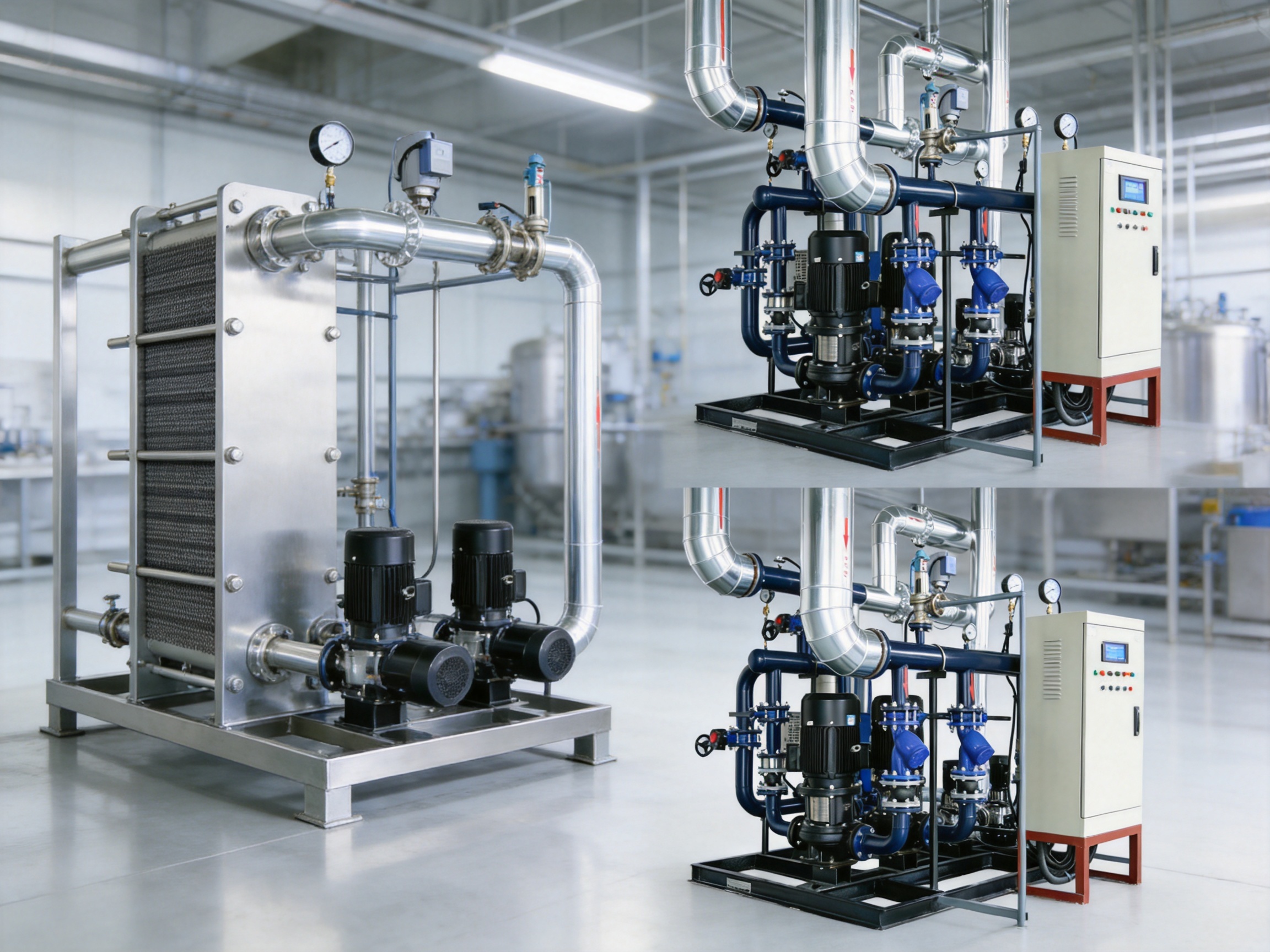
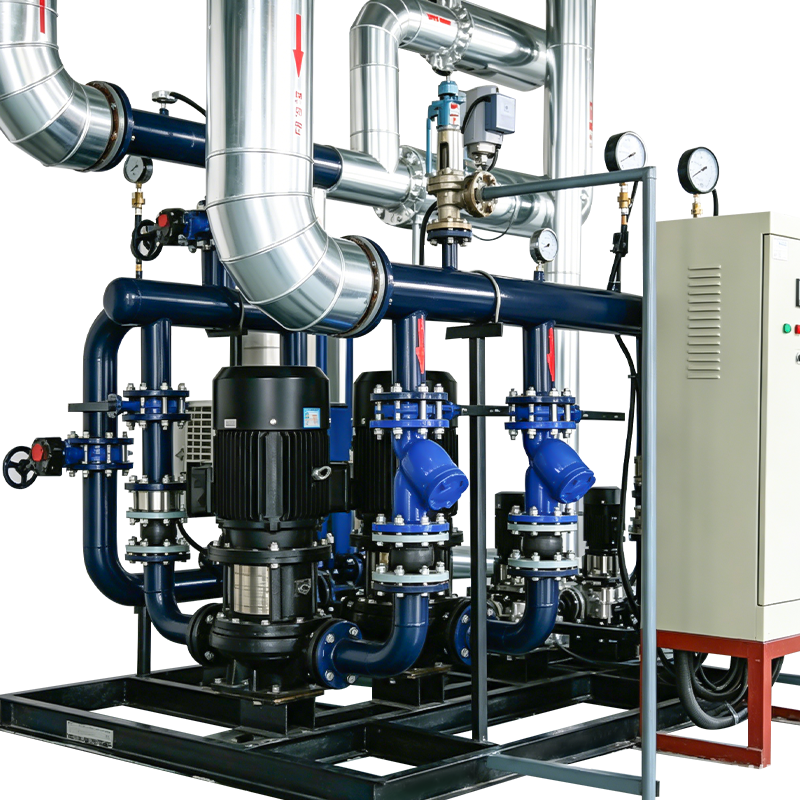
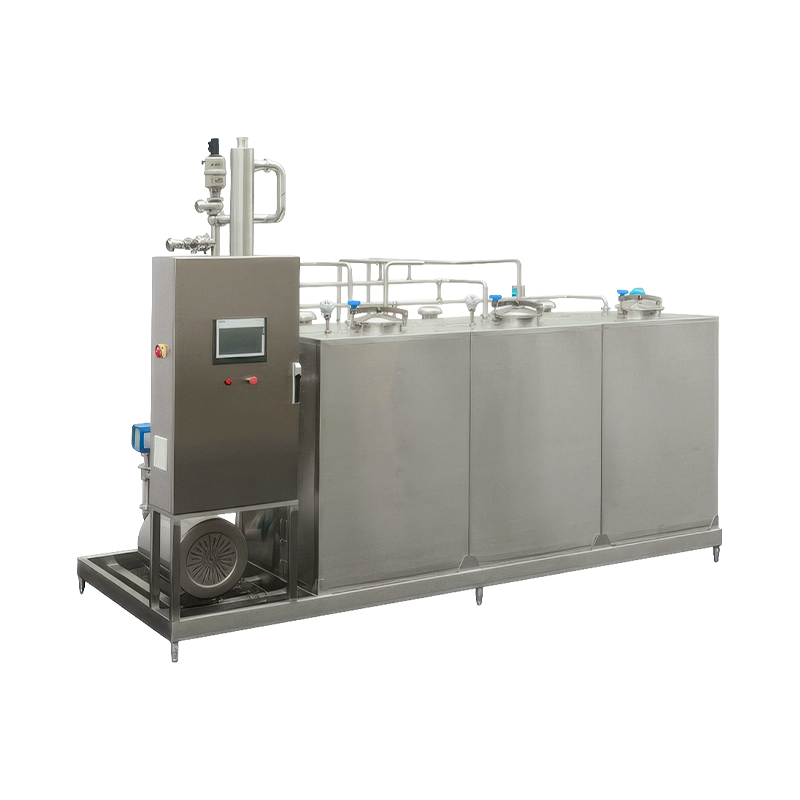
The intelligent industrial heat exchanger unit is designed to address these requirements through the integration of thermal transfer equipment, circulation pumps, valves, instruments, automation, and safety systems on a single skid-mounted platform. Instead of supplying a standalone heat exchanger that must be integrated by the customer, the unit combines the primary process components into a coordinated and tested package.
This integrated approach simplifies installation, reduces commissioning work, supports automatic process regulation, and improves operating visibility. It is particularly valuable for manufacturers that require dependable thermal control, hygienic construction, flexible configuration, and compatibility with modern factory automation systems.
The unit can be configured for heating, cooling, primary-to-secondary heat transfer, pressure isolation, process heat exchange, and other applications. A plate heat exchanger transfers energy between separate media while preventing them from mixing. Sensors continuously measure temperature, pressure, flow, and equipment status. A PLC-based control system then adjusts pumps and valves according to the selected operating parameters.
For food and biopharmaceutical manufacturers, this combination of efficient heat transfer, controlled fluid movement, monitoring, and modular engineering provides a practical alternative to fragmented equipment procurement and site-built process assemblies.
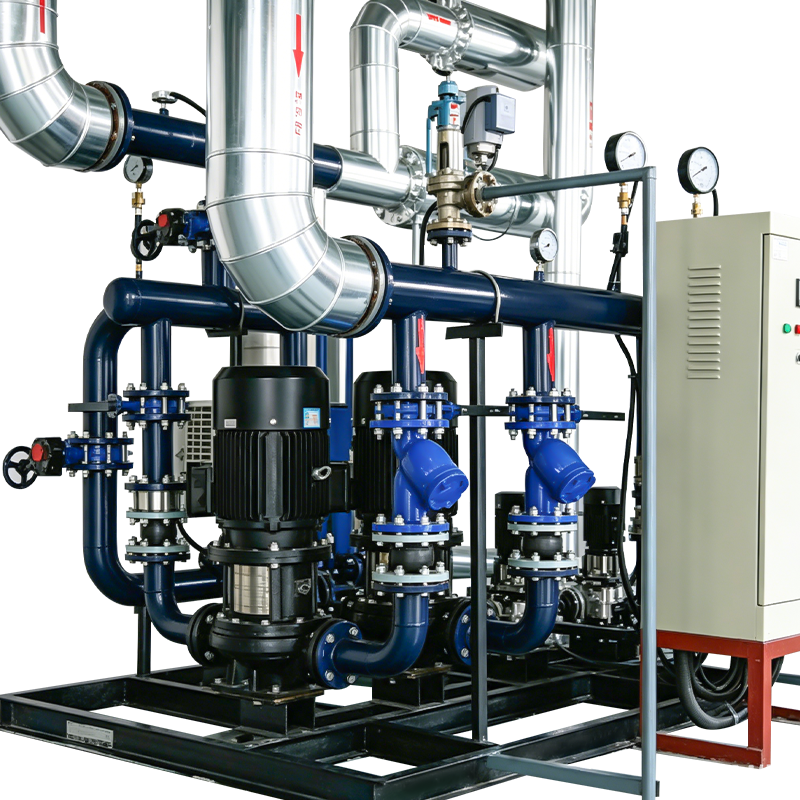
Intelligent Industrial Heat Exchanger Unit
What Is an Intelligent Industrial Heat Exchanger Unit?
An intelligent industrial heat exchanger unit is a packaged thermal management system that transfers heat between two or more fluid circuits while automatically maintaining specified operating conditions. The system normally includes a plate heat exchanger, circulation pumps, process pipelines, manual and automated valves, pressure and temperature instruments, flow sensors, safety devices, and a control cabinet or PLC system.
The term “intelligent” refers to the unit’s ability to monitor operating data and respond automatically to changing process conditions. Rather than depending entirely on manual adjustment, the controller receives signals from field instruments and regulates the equipment to maintain the required outlet temperature, circulation flow, pressure, or operating sequence.
A typical unit may be connected to a hot water, chilled water, steam condensate, glycol, process water, or other utility network. The secondary side can serve a production process, tank jacket, equipment loop, building system, or cleaning circuit. Depending on the application, the unit can heat a product-related medium, cool a process fluid, isolate two networks, or recover energy from one stream for use in another.
The skid-mounted arrangement means that major components are assembled on a common structural frame. Piping, instruments, electrical connections, and control logic can be completed before shipment. After delivery, the customer generally needs to position the skid, connect the relevant utility and process pipelines, complete electrical connections, and verify site conditions before operation.
This approach is especially suitable for facilities where installation time is limited, floor space must be used efficiently, or consistent engineering quality is required across multiple production lines.
How the Unit Works
The operating principle is based on indirect heat transfer. A hot fluid and a cold fluid pass through separate channels inside the plate heat exchanger. Heat moves through the thin metal plates from the higher-temperature medium to the lower-temperature medium. Because the two fluids remain physically separated, the process can be controlled without direct mixing between the heating and cooling circuits.
When heating is required, a hot utility transfers energy to the secondary process medium. When cooling is required, chilled water, cooling water, glycol, or another low-temperature medium removes heat from the process circuit. The controller compares actual measurements with the target settings and changes the operating conditions as necessary.
For example, if the secondary outlet temperature falls below its set point, the control system may increase the heating-medium flow by opening a control valve or increasing pump output. If the outlet temperature becomes too high, the system may reduce the hot-medium flow or increase the cooling effect. The same logic can be applied to pressure, circulation flow, and pump sequencing.
The control system may receive information from inlet and outlet temperature sensors, pressure gauges, pressure transmitters, flow meters, differential pressure sensors, pump status signals, valve position feedback, and alarm devices. Based on these signals, the PLC can execute automatic control sequences and transmit operating information to a local HMI or a remote monitoring system.
This closed-loop arrangement improves temperature consistency compared with a manually adjusted system. It also helps operators identify developing problems, such as an obstructed filter, a fouled heat exchanger, inadequate utility flow, abnormal pump vibration, or a pressure fluctuation in the connected pipe network.
Main Components of the Packaged System
Plate Heat Exchanger
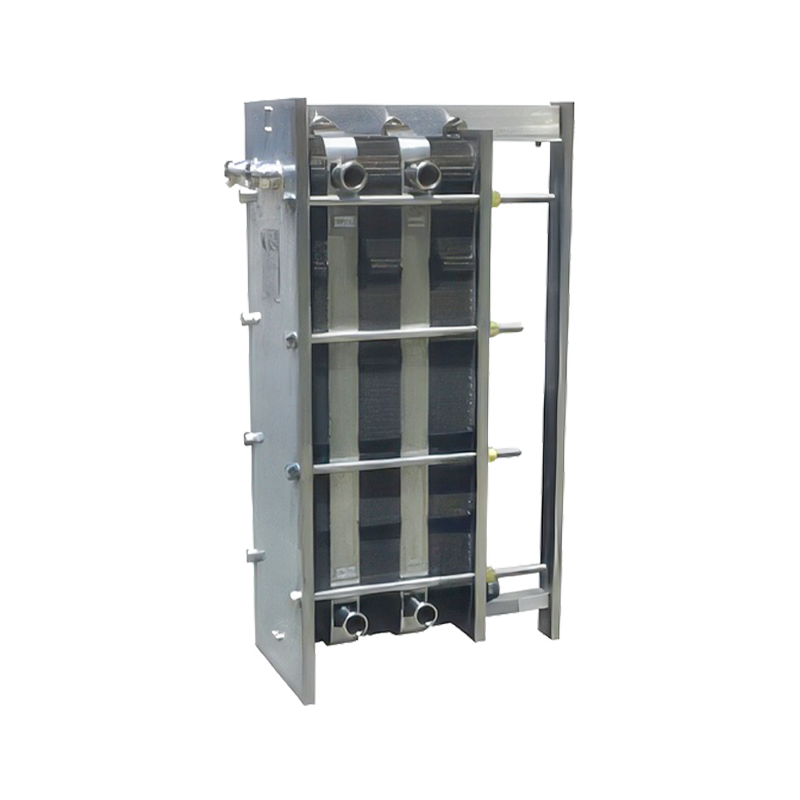
The plate heat exchanger is the central thermal transfer element. It consists of a series of corrugated plates assembled with separate flow channels. The corrugation creates turbulence and increases the effective heat transfer area, allowing a compact unit to achieve substantial thermal performance.
Plate heat exchangers are well suited to food, beverage, pharmaceutical, and biotechnology applications because they provide a compact footprint, efficient heat transfer, and convenient maintenance access. The plate pack can generally be opened for inspection, disassembly cleaning, gasket replacement, or plate examination when required by the process.
Material selection depends on the process medium, temperature, pressure, cleaning chemistry, and hygiene requirements. Stainless steel is commonly selected for product-related and utility-contact surfaces because of its corrosion resistance, cleanability, and suitability for hygienic applications. More specialized alloys may be considered for aggressive or high-corrosion media.
Circulation Pump Sets
Circulation pumps maintain the required fluid movement through the heat exchanger and connected process loop. Stable circulation is essential because insufficient flow can reduce heat transfer, cause temperature instability, or create uneven process conditions.
The unit can be equipped with multiple pumps according to the load and operating philosophy. Main and standby pump arrangements can improve availability by allowing a backup pump to operate when the duty pump is stopped for maintenance or experiences a fault. Pump configuration can also be adapted to different flow rates, pressure requirements, and circuit layouts.
Depending on the design, pump operation may be controlled through start-stop logic, variable-frequency regulation, automatic sequencing, or a combination of these methods. The control system can monitor pump status and provide alarms for overload, loss of signal, abnormal pressure, or other defined conditions.
Pipelines and Valves
Integrated pipelines connect the heat exchanger, pumps, instruments, and external interfaces. The piping layout is arranged to support efficient fluid circulation, convenient operation, drainage, venting, and maintenance.
Valves perform several functions, including isolation, flow regulation, bypass control, non-return protection, draining, venting, and emergency shutdown. Automated valves can be adjusted by the PLC to control heat transfer capacity or execute defined operating sequences. Manual valves provide local isolation and support maintenance procedures.
In hygienic industries, the design of process-contact piping and valves must consider dead legs, internal surface quality, drainage, cleanability, and compatibility with cleaning and sanitizing procedures. The final configuration should be selected according to the product, process, regulatory environment, and customer specifications.
Instrumentation
Temperature instruments monitor the thermal condition of the incoming and outgoing fluids. Pressure instruments help verify pump performance, detect blockages, protect the heat exchanger, and identify abnormal conditions in the connected network. Flow meters provide information required for process control, capacity verification, and performance analysis.
Where appropriate, differential pressure measurement can help identify increasing resistance across the heat exchanger or filters. A gradual increase in differential pressure may indicate scaling, fouling, blockage, or a change in fluid properties.
Accurate instrumentation is important for both control and maintenance. A sensor that is incorrectly installed, poorly calibrated, or exposed to unsuitable process conditions can produce misleading information and lead to improper control decisions. For this reason, instrument selection, installation, calibration, and testing are essential parts of the overall engineering process.
PLC and HMI Control
The PLC acts as the control center of the unit. It receives signals from sensors, executes programmed logic, operates pumps and valves, manages alarms, and coordinates startup and shutdown sequences.
The HMI gives operators access to temperature, pressure, flow, pump status, valve position, alarm information, and operating settings. Depending on the project requirements, the control system can support local operation, remote monitoring, data recording, and communication with a broader factory automation platform.
Control functions may include automatic temperature regulation, pump alternation, standby pump switching, over-temperature alarm, over-pressure protection, emergency stop, low-flow protection, and fault indication. The exact control philosophy is configured according to the process requirements and the customer’s automation standards.
Advantages Over Conventional and Fragmented Solutions
Many conventional heat exchange installations are assembled from separate components purchased from different suppliers. The heat exchanger may come from one manufacturer, the pumps from another, the valves from a third supplier, and the control cabinet from a local integrator. While this approach can work, it places significant responsibility on the customer or engineering contractor to coordinate design, connection, programming, testing, and troubleshooting.
An integrated intelligent unit offers several practical advantages over this fragmented model.
Reduced Site Installation Work
Because major components are assembled on a common skid, less fabrication and alignment work is required at the customer’s facility. The piping arrangement, instrument positions, and electrical interfaces can be prepared before shipment. This can reduce the time needed for field installation and lower the risk of inconsistent workmanship between different contractors.
For facilities operating under strict production schedules, shorter installation and commissioning periods can be an important commercial advantage. A packaged system may also reduce disruption to existing production areas during an expansion or retrofit project.
Coordinated Engineering
A complete unit is engineered as one system rather than as a collection of unrelated components. The heat exchanger capacity, pump head, pipe diameter, valve characteristics, instrument range, and control logic can be evaluated together.
Coordinated engineering helps reduce compatibility problems. For example, a pump should provide the required flow and pressure without creating excessive velocity or vibration. A control valve should have an appropriate operating range. Instruments should be selected for the expected temperature, pressure, fluid properties, and accuracy. The control logic should reflect the actual hydraulic and thermal design.
When these factors are considered together, the resulting package can be easier to operate and maintain than a system assembled without a single point of engineering responsibility.
Automatic Temperature Regulation
Manual adjustment can be slow and inconsistent, especially when production loads change quickly. Automatic regulation allows the system to respond continuously to actual operating conditions.
The controller can adjust flow, valve position, or pump operation to maintain a defined outlet temperature. This is valuable in processes where stable thermal conditions affect product quality, biological activity, viscosity, solubility, reaction rate, or cleaning performance.
Improved Monitoring and Fault Awareness
A conventional system may provide only local pressure gauges and thermometers. The intelligent unit can combine multiple sensor signals and display them in a single interface. Operators can view the condition of the thermal circuit, recognize deviations, and respond before a minor problem becomes a production interruption.
Alarm functions can be configured for over-temperature, over-pressure, low flow, pump failure, sensor abnormality, or other defined conditions. Historical data can also support process review, troubleshooting, maintenance planning, and energy analysis.
Modular Capacity
The skid design supports modular configuration. The number of pumps, heat transfer area, piping arrangement, instrument package, and control functions can be selected according to the required load.
This flexibility allows the same engineering concept to be adapted to a small process loop, a multi-line production facility, a building heating network, or a larger industrial utility system. It also makes the platform suitable for phased expansion, provided that future capacity requirements are considered during the initial design.
Maintainability
The use of a plate heat exchanger provides access for inspection and cleaning. Pumps can be arranged with isolation valves and standby capacity where required. Instruments and valves can be positioned to support operation and service.
Good maintainability reduces the time required to diagnose faults and restore operation. It also supports preventive maintenance activities such as filter cleaning, gasket inspection, pump seal replacement, instrument calibration, and heat exchanger cleaning.
More Efficient Use of Floor Space
Compared with widely distributed equipment, a skid-mounted system can use the available floor area more efficiently. The compact arrangement is useful in production plants where utility rooms, technical corridors, and process areas are already crowded.
The final footprint depends on the heat transfer duty, piping connections, pump configuration, access requirements, and control cabinet arrangement. Layout design must always preserve sufficient space for inspection, plate removal, valve operation, and safe maintenance.
Comparison of Solution Types
| Evaluation Factor | Standalone Heat Exchanger | Fragmented Site Assembly | Intelligent Skid-Mounted Unit |
|---|---|---|---|
| Installation scope | Requires additional pumps, valves, piping, and controls | Extensive field coordination and fabrication | Major components integrated before delivery |
| Temperature control | Often depends on external control equipment | Varies according to the integrator | Automatic PLC-based regulation |
| Commissioning | Separate system commissioning required | May require several suppliers and contractors | Factory assembly and pre-delivery testing can simplify startup |
| Monitoring | Limited unless additional instruments are added | May use several independent interfaces | Centralized monitoring of temperature, pressure, flow, and status |
| Maintenance | Depends on surrounding installation | Access and spare parts may be inconsistent | Components are arranged as a coordinated serviceable package |
| Expansion | May require redesign of surrounding systems | Depends on original site installation | Modular configuration can support different process loads |
| Responsibility | Equipment supplier responsibility is limited | Responsibility may be divided among multiple parties | One integrated project scope supports clearer coordination |
Applications in Food and Beverage Manufacturing
Pasteurization and Product Heating
Food and beverage processes often require controlled heating to achieve microbial reduction, improve product consistency, or prepare a fluid for subsequent processing. An intelligent heat exchanger unit can provide controlled heating of water, product-related fluids, or utility circuits.
Stable temperature control supports repeatable processing. The unit can respond to changes in flow or incoming temperature and regulate the heating medium accordingly. The suitability of the heat exchanger, gasket materials, surface finish, and control range must be confirmed for the specific product and cleaning regime.
Cooling of Liquid Products
Many beverages and liquid foods must be cooled rapidly after heating or processing. Cooling water, chilled water, or glycol can be circulated through one side of the plate heat exchanger while the product-related medium passes through the other side.
Automatic control helps avoid excessive cooling, insufficient cooling, or thermal fluctuations caused by changing production rates. The system can also be connected to existing refrigeration or chilled-water networks.
Tank and Process Loop Temperature Control
Storage tanks, mixing vessels, fermentation systems, and preparation tanks may require heating or cooling through an external circulation loop. The skid-mounted unit can regulate the temperature of the circulating medium supplied to a jacket, coil, or process heat transfer circuit.
This arrangement can help maintain uniform conditions in the tank while keeping the main heating or cooling equipment outside the vessel area. It may also simplify maintenance because the pumps, heat exchanger, and instruments are grouped in one accessible location.
Cleaning and Sanitizing Systems
Cleaning-in-place systems often require heated water or cleaning solutions. The heat exchanger unit can support the controlled heating of cleaning media and the management of circulation conditions.
Cleaning parameters should be defined according to the process validation strategy, equipment materials, cleaning chemicals, temperature limits, and required contact time. The packaged system can provide monitoring and control functions, but the final cleaning program must be established by the process owner.
Applications in Biopharmaceutical and Biotechnology Production
Buffer and Media Preparation
Biopharmaceutical facilities frequently prepare buffers, culture media, and process solutions under controlled temperature conditions. An intelligent heat exchanger unit can heat or cool a utility loop connected to preparation vessels or circulation systems.
Temperature stability is important because it can influence dissolution, mixing, viscosity, chemical stability, and biological performance. The system should be designed with appropriate materials, cleanability, instrumentation, and documentation for the intended use.
Fermentation and Cell Culture Support
Fermentation and cell culture processes often require precise thermal control. A heat exchanger unit can regulate the temperature of a circulation loop connected to a vessel jacket or external heat transfer circuit.
Because biological processes can be sensitive to temperature changes, automatic control and rapid response are valuable. The control strategy may include a defined operating range, high- and low-temperature alarms, pump status monitoring, and data recording for process review.
Purified Water and Utility Systems
Purified water, process water, and other utility circuits may require heating, cooling, or temperature stabilization. The heat exchanger unit can be adapted to the required flow, pressure, material, and hygienic design conditions.
For critical utility applications, the customer may require specific documentation, surface finish, weld quality, passivation, instrument calibration, and validation support. These requirements should be incorporated into the technical specification before manufacturing begins.
Thermal Control During Cleaning and Sterilization
Biopharmaceutical equipment may require controlled cleaning, sanitization, or sterilization cycles. The heat exchanger unit can support the heating or cooling of relevant utility circuits when its materials and design are suitable for the specified temperature, pressure, and chemical conditions.
The unit does not replace the customer’s validated process procedure. Instead, it provides a controlled and monitorable thermal platform that can be integrated into the broader facility utility and automation system.
Advanced Manufacturing and Engineering Strengths
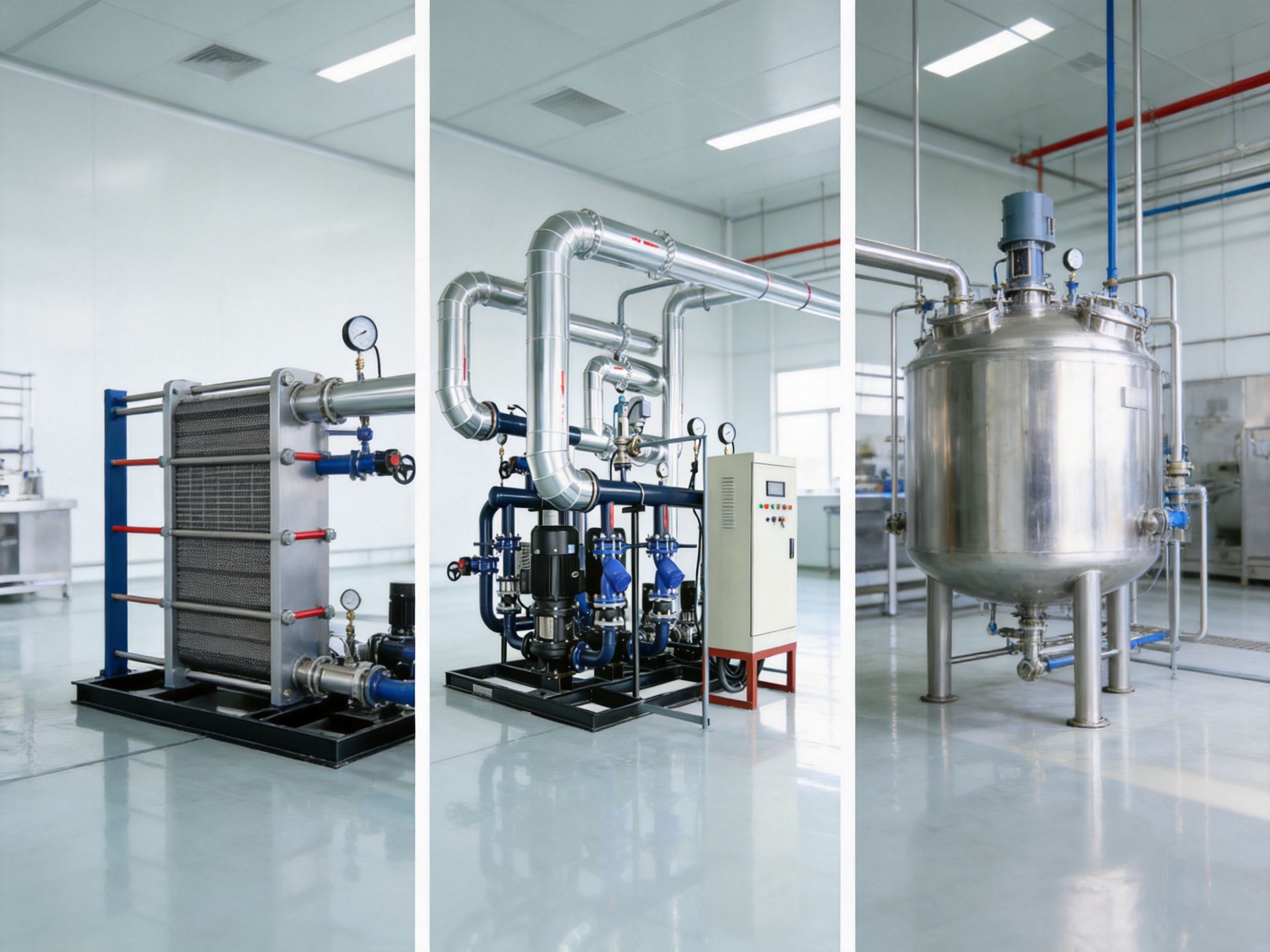
The performance of a packaged heat exchanger unit depends not only on component selection but also on manufacturing discipline. A technically sound design can lose its value if pipe routing is inconsistent, welds are poorly controlled, instruments are incorrectly installed, or the control system is not tested properly.
The manufacturing approach supporting this product is based on integrated engineering, process-oriented fabrication, controlled welding, surface treatment, assembly, testing, and quality inspection. These capabilities are particularly relevant to food, beverage, pharmaceutical, and fine chemical customers, where equipment must combine mechanical reliability with hygienic and traceable construction.
Process-Oriented Engineering
Each project begins with an understanding of the customer’s process requirements. Important inputs include heating or cooling duty, inlet and outlet temperatures, design pressure, operating pressure, fluid properties, flow rate, utility conditions, available floor space, connection standards, control philosophy, and cleaning requirements.
Engineering teams can then evaluate the heat exchanger area, pump capacity, valve arrangement, piping diameter, instrument range, skid dimensions, and control functions. This process reduces the risk of selecting components that are individually suitable but collectively mismatched.
For food and biopharmaceutical projects, the engineering review should also consider hygienic drainage, cleanability, product-contact materials, surface finish, gasket compatibility, equipment access, and the customer’s documentation requirements.
Fabrication and Welding
Controlled fabrication is necessary to produce reliable pipelines and frames. Stainless steel piping may require specific welding procedures, qualified operators, controlled heat input, suitable shielding gas, and appropriate protection against contamination.
Weld quality affects structural strength, leak tightness, cleanability, and long-term corrosion resistance. Where required by the project, weld inspection, visual examination, dimensional checking, and other quality controls can be incorporated into the manufacturing plan.
Careful pipe fitting also helps ensure that the completed skid matches the approved drawings. Accurate fabrication reduces installation stress, improves alignment with the heat exchanger and pumps, and supports more predictable field connections.
Polishing and Surface Quality
In hygienic industries, internal surface quality can influence cleaning performance and contamination control. Smooth and properly finished surfaces are easier to clean and less likely to retain process residues.
The required surface finish depends on the application and customer specification. Processing, polishing, passivation, and inspection procedures should be selected according to the materials and the intended service. External surfaces may also be treated to improve corrosion resistance, appearance, and durability in the installation environment.
Skid Assembly
Skid assembly brings the mechanical, electrical, and control elements together. The frame must provide adequate support for the heat exchanger, pumps, piping, valves, instruments, and control cabinet. It must also allow lifting, positioning, maintenance access, and connection to the customer’s utilities.
During assembly, components are installed according to approved drawings and identified connection points. Instruments should be positioned so that readings are accessible and maintenance can be performed without unnecessary dismantling. Drain and vent points should be located to support complete system filling, air removal, and emptying.
Control System Development
Control programming is developed around the thermal and hydraulic behavior of the unit. Engineers define startup sequences, normal operating logic, alarm conditions, pump changeover, valve control, shutdown behavior, and emergency stop functions.
The HMI can display process values, equipment status, alarm messages, set points, and operating trends. If remote communication is required, the system can be configured to exchange data with the customer’s supervisory control, manufacturing execution, or building management platform, subject to the selected communication standards.
Factory Testing
Pre-delivery testing is an important advantage of a packaged system. Mechanical connections, instrument wiring, control logic, pump rotation, valve operation, alarm functions, and emergency stop circuits can be checked before shipment.
Factory testing does not eliminate the need for site acceptance and commissioning, because the unit must ultimately operate with the customer’s pipe networks and utilities. However, it can identify assembly or programming issues earlier, when corrective action is easier and less expensive.
Quality Control and Traceability
Quality control may include incoming component inspection, material verification, dimensional checks, pressure testing, electrical testing, instrument calibration review, weld inspection, surface inspection, and final documentation.
Traceability is particularly valuable for regulated industries. Customers may require records relating to materials, welding, pressure tests, calibration, component certificates, inspection results, and software or control-system verification. The exact documentation package should be defined at the contract and design stages.
The manufacturing organization behind the unit operates a 3,000-square-meter Shanghai facility with technical specialists and capabilities covering processing, welding, polishing, assembly, and quality control. These in-house or closely coordinated capabilities support better communication between design and manufacturing teams and help maintain consistency from technical review through final delivery.
Design Features for Hygienic and Regulated Industries
Food and biopharmaceutical applications require more than ordinary thermal performance. Equipment must be compatible with the process environment, cleaning methods, maintenance procedures, and quality system of the facility.
Material selection is one of the first considerations. Stainless steel is often preferred for product-related circuits because of its corrosion resistance and hygienic properties. The exact grade, gasket material, surface finish, and component design must be selected according to the process fluid, operating temperature, pressure, cleaning chemicals, and applicable customer standards.
Drainability is another important factor. A system that cannot be fully drained may retain liquid after shutdown, creating cleaning, freezing, corrosion, or microbiological concerns. Properly positioned drains, vents, slopes, and isolation valves can improve operational control and maintenance.
Dead legs and unnecessary pockets should be minimized in process-contact piping. Valves and fittings should be selected for the required cleaning and operating conditions. Instrument connections should be designed to provide reliable measurement without compromising cleanability.
For biopharmaceutical projects, the customer may require a more extensive qualification and documentation package. The heat exchanger unit can be engineered to support the customer’s validation strategy, but acceptance criteria, testing responsibilities, and documentation levels must be agreed before production.
Energy Efficiency and Operating Cost Benefits
Heat exchanger efficiency is influenced by the temperature difference between the two media, flow rates, heat transfer area, plate condition, fluid properties, and control strategy. An intelligent unit improves the opportunity for efficient operation by coordinating these variables.
Automatic regulation can reduce unnecessary heating or cooling. If the process load decreases, the system can reduce pump output or control-valve opening rather than continuing to operate at maximum capacity. This can lower utility consumption and reduce stress on pumps and valves.
Efficient heat transfer can also reduce the size of the required equipment for a given duty. Plate heat exchangers generally provide a high heat transfer rate within a compact area, although the final design must consider pressure drop, fouling tendency, cleaning requirements, and allowable temperature approach.
Heat recovery is another potential application. A warm process stream may transfer energy to a colder utility or process stream, reducing the demand for external heating. The economic value of recovery depends on the operating schedule, flow rates, temperatures, and energy prices.
Monitoring data helps operators identify gradual performance deterioration. An increase in differential pressure, a longer time to reach the target temperature, or a change in utility consumption may indicate fouling or another issue. Early attention can prevent more severe efficiency loss.
Safety and Protective Functions
The intelligent industrial heat exchanger unit incorporates safety functions appropriate to the design conditions. These may include over-pressure protection, over-temperature alarms, emergency stop devices, pump protection, low-flow alarms, and equipment status monitoring.
Pressure protection is important because the heat exchanger and connected pipelines have defined design limits. Relief devices, pressure switches, transmitters, isolation arrangements, and control logic should be selected according to the applicable engineering requirements.
Over-temperature protection can prevent damage to the product, heat exchanger, gaskets, piping, or connected equipment. The system may generate an alarm, close a control valve, stop a pump, or execute another defined response when the measured temperature exceeds the permitted value.
Emergency stop devices provide a rapid means of bringing the unit to a safe state. The emergency response should be reviewed with the customer because the safest action may differ according to whether the system is heating, cooling, circulating a hazardous medium, or connected to a validated production process.
Safe operation also depends on correct installation, proper venting, suitable insulation where required, electrical protection, operator training, and compliance with local regulations. The unit should not be operated outside its approved temperature, pressure, flow, or material limits.
Installation and Commissioning Guidance
Before startup, the skid should be positioned on a suitable foundation or support structure capable of carrying the operating weight. Lifting and positioning must be performed according to the equipment’s handling requirements.
External pipelines should be connected without imposing excessive mechanical stress on the skid nozzles. The direction of flow, connection identification, valve positions, and pipe support arrangement should be checked against the approved drawings.
All connected circuits should be flushed where appropriate to remove construction debris, welding residue, foreign objects, and other contaminants. Pipeline filters should be installed and inspected according to the system design.
Before introducing the operating medium, operators should verify instrument installation, sensor wiring, pump rotation, valve operation, electrical grounding, control-panel connections, and emergency stop function. Instruments should be calibrated or verified according to the project requirements.
Complete pipeline venting is essential. Trapped air can reduce circulation, cause pump noise, create unstable temperature readings, and contribute to cavitation. The system should be filled gradually, with vents opened at appropriate high points and closed after air has been removed.
Initial startup should be conducted at controlled conditions. Operators can begin with low flow, confirm correct circulation, inspect for leaks, and gradually increase the load. Temperature and pressure should be observed on both sides of the heat exchanger during the first operating period.
Site commissioning should confirm that the unit achieves the required outlet temperature, flow rate, pressure, control response, alarm behavior, and communication functions under actual operating conditions.
Maintenance and Troubleshooting
Reduced Heat Exchange Efficiency
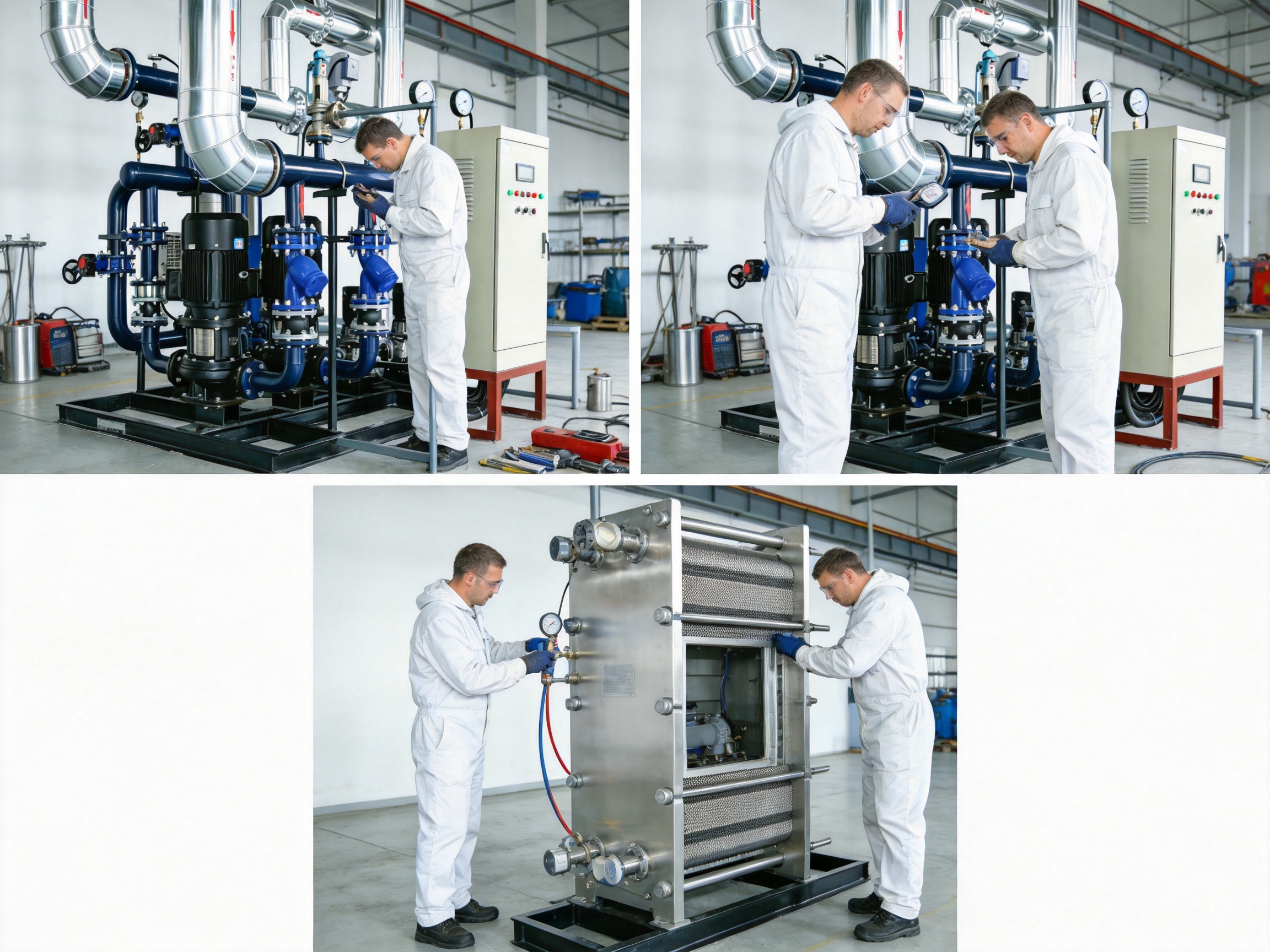
If the secondary outlet temperature does not reach the expected value, the first checks should include plate scaling, channel blockage, filter condition, primary-medium temperature, primary-medium flow rate, and control-valve operation.
Fouling between plates can reduce heat transfer and increase pressure drop. Cleaning may involve disassembly and manual or chemical cleaning, or an online cleaning method if the system and process permit it. Cleaning chemicals must be compatible with the plate material, gaskets, piping, and customer procedures.
Abnormal Pump Noise or Vibration
Unusual pump noise or vibration may result from poor foundation fixing, loose pipe supports, incorrect valve position, insufficient inlet pressure, air in the system, cavitation, bearing wear, seal damage, or foreign objects.
Operators should check the pump inlet and outlet valves, verify the fluid level and available suction pressure, inspect filters, and confirm that the pump is operating within its specified range. Continued operation under severe vibration can damage bearings, seals, couplings, and connected piping.
Frequent Pressure Fluctuations
Pressure instability may be caused by a malfunctioning pressure stabilization device, changes in the external network, pump switching logic, pipeline leakage, air pockets, or a partially blocked heat exchanger or filter.
The control sequence for main and standby pumps should be reviewed to ensure that switching does not produce sudden pressure changes. The connected network should also be checked for leaks, insufficient expansion capacity, or unstable supply conditions.
Temperature Overshoot
Temperature overshoot may occur when a control valve is oversized, the sensor response is slow, the controller parameters are unsuitable, the heating medium is too hot, or the process load changes rapidly.
Corrective action may include reviewing the control-valve range, checking sensor location, adjusting control parameters, verifying instrument calibration, and confirming that the process set points match the approved operating procedure.
Preventive Maintenance
Preventive maintenance should include routine inspection of pumps, seals, bearings, valves, gauges, sensors, electrical connections, and skid supports. Plate heat exchangers should be inspected and cleaned at intervals determined by fluid quality, operating hours, pressure-drop trends, and thermal performance.
Long-term shutdowns require special attention. Media should be drained when freezing, corrosion, contamination, or degradation may occur. Low-temperature environments may require additional protection against freezing and pipeline cracking.
Customization Options
The unit can be adapted to different applications through modular engineering. Heat transfer area can be selected according to the required thermal duty and temperature approach. Pump quantity and capacity can be configured for duty, standby, or variable-load operation.
Control functions may range from basic local operation to PLC-based automatic regulation with HMI visualization, alarm history, remote monitoring, and factory automation communication. The choice depends on the customer’s process complexity and digitalization strategy.
Pipe materials, valve types, instrument brands, connection standards, frame dimensions, insulation, surface treatment, and electrical specifications can be defined according to the project. For hygienic applications, the customer may also specify surface finish, gasket material, drainability, clean-in-place compatibility, and documentation requirements.
The skid can be designed for connection to hot-water, chilled-water, glycol, steam-related, or other utility networks, provided that the selected components are suitable for the medium. Process conditions should be reviewed carefully before final design approval.
How to Select the Right Unit
Selection should begin with a complete process data sheet. Required information normally includes the type of fluid on each side, flow rate, inlet temperature, required outlet temperature, operating pressure, design pressure, specific heat, viscosity, density, allowable pressure drop, and operating schedule.
The customer should also define whether the system is intended for heating, cooling, heat recovery, pressure isolation, or multiple operating modes. The required control accuracy, response time, turndown range, and alarm philosophy should be identified.
Material and hygiene requirements must be considered at the beginning rather than after the mechanical design is complete. Product-contact surfaces, utility-contact surfaces, seals, gaskets, valves, and instruments may all require different specifications.
Available installation space, lifting restrictions, external pipe routing, electrical supply, control-system architecture, and maintenance access should be evaluated. A compact skid is useful only if operators can safely access the equipment and remove serviceable components.
Finally, the customer should define the required inspection, testing, documentation, training, spare parts, and after-sales support. A clear technical specification helps avoid changes during manufacturing and improves alignment between the equipment supplier and the end user.
Project Support from Engineering to Delivery
Shiloc (Shanghai) Industrial Trading Co., Ltd. provides equipment supply, international trade coordination, engineering and technical services, and project support for food and beverage, biopharmaceutical, daily chemical, and fine chemical applications.
Established in March 2026 in Fengxian District, Shanghai, the company combines equipment and process knowledge with international sourcing and project coordination. Its service scope covers import and export of goods and technology, import and export agency services, equipment manufacturing, and engineering support.
The company’s Shanghai facility covers approximately 3,000 square meters and includes capabilities for processing, welding, polishing, assembly, and quality control. More than 20 technical specialists support project communication, engineering coordination, manufacturing supervision, inspection, and delivery preparation.
European know-how and Danish design concepts contribute to the company’s approach to hygienic equipment, process optimization, reliable construction, and practical operation. These design principles are applied together with project-specific engineering so that the final unit can address actual production requirements rather than relying only on a standard catalog configuration.
Customer support can include technical clarification, equipment selection, configuration review, manufacturing coordination, inspection arrangements, delivery planning, and customized project communication. This integrated service model is valuable for customers who need a complete process equipment solution rather than a single component.
The company emphasizes integrity, pragmatism, innovation, development, quality, and global cooperation. These values support a customer-oriented approach focused on reliable supply, traceability, safe and efficient equipment, process improvement, and long-term service relationships.
Why a Packaged Intelligent Unit Is a Strategic Investment
A heat exchanger is often viewed as a single piece of equipment, but its real performance depends on the surrounding hydraulic, control, electrical, and maintenance systems. An intelligent packaged unit addresses these elements together.
For a new facility, the skid can simplify layout and installation planning. For an existing plant, it can provide a structured way to upgrade manual or poorly coordinated thermal systems. For a growing manufacturer, the modular format can support additional capacity and more consistent equipment standards across multiple production lines.
The most significant value comes from combining dependable heat transfer with operational information. Operators can see what the unit is doing, control it according to defined parameters, and receive early indications of abnormal conditions. Maintenance teams can use recorded trends to plan service rather than relying only on emergency repairs.
For industries where quality, hygiene, energy consumption, and production continuity are important, these advantages can contribute to lower total cost of ownership. The final result depends on correct design, proper installation, suitable operation, and regular maintenance, but the integrated platform provides a strong foundation.
Conclusion
The intelligent industrial heat exchanger unit combines plate heat exchange, circulation pumping, pipeline valves, instrumentation, PLC control, monitoring, and safety functions into one skid-mounted system. It is designed to support heating, cooling, heat recovery, pressure isolation, and process temperature regulation across food and beverage, biopharmaceutical, biotechnology, chemical, HVAC, and industrial utility applications.
Compared with a standalone heat exchanger or fragmented site assembly, the integrated unit offers coordinated engineering, reduced installation work, automatic regulation, centralized monitoring, modular configuration, improved maintainability, and clearer project responsibility.
Its value is strengthened by manufacturing capabilities covering processing, welding, polishing, assembly, testing, and quality control. These capabilities support the production of equipment suited to demanding hygienic and industrial environments, while customization allows the unit to be matched to specific process conditions and customer automation requirements.
By combining efficient thermal transfer with intelligent control and practical manufacturing support, the system helps manufacturers improve temperature stability, energy management, production reliability, and long-term equipment serviceability.
Questions and Answers
What industries can use an intelligent industrial heat exchanger unit?
The unit can be used in food and beverage manufacturing, biopharmaceutical production, biotechnology, chemical processing, daily chemical production, fine chemical manufacturing, industrial cooling, HVAC, central heating, refrigeration, energy systems, and other applications that require controlled heat transfer.
What is the main difference between this unit and a conventional heat exchanger?
A conventional heat exchanger may be supplied as an individual thermal transfer component. The intelligent unit integrates the heat exchanger with pumps, valves, instruments, PLC control, monitoring, and safety functions. It can automatically adjust operating conditions instead of relying mainly on manual intervention or separate control equipment.
Can the unit be used for both heating and cooling?
Yes. The unit can be configured for heating, cooling, or multiple operating modes. The selected heat exchanger area, pump arrangement, valves, control logic, and materials must match the required operating conditions and the characteristics of the heating and cooling media.
Can the unit connect to an existing factory utility network?
Yes. It can be designed to connect to existing hot-water, chilled-water, glycol, process-water, or other suitable utility networks. Connection size, pressure, temperature, flow, control signals, and installation space must be reviewed during engineering.
Is the plate heat exchanger easy to clean?
Plate heat exchangers are designed to support disassembly, inspection, and cleaning. Cleaning frequency and method depend on the process medium, fouling tendency, operating hours, cleaning chemicals, and customer procedures. Online cleaning may also be possible when the design and process permit it.
What information is needed for equipment selection?
Important information includes the fluids on both sides, flow rates, inlet and outlet temperatures, operating and design pressures, required heat transfer duty, allowable pressure drop, fluid properties, cleaning requirements, materials, control accuracy, installation space, and connection standards.
Can the unit include a standby pump?
Yes. Multiple circulation pumps can be configured with main and standby operation. Automatic pump switching can help maintain availability when the duty pump requires maintenance or experiences a fault.
Can the system be monitored remotely?
The PLC and HMI configuration can support local and remote operation status monitoring. Communication with a broader factory automation or supervisory system can be considered according to the customer’s control architecture and required communication protocol.
What safety functions are available?
Typical safety functions include over-pressure protection, over-temperature alarms, emergency stop, pump protection, flow monitoring, alarm indication, and abnormal instrument signal detection. The final safety configuration is determined by the process and project requirements.
How does the unit help reduce energy consumption?
The system monitors operating conditions and automatically adjusts flow, valve position, and pump operation according to the required thermal load. This can reduce unnecessary heating or cooling. Heat recovery applications may also allow energy from one process stream to be used by another.
What causes reduced heat exchange efficiency?
Common causes include plate scaling, fouling, blockage, dirty filters, insufficient primary-medium temperature, low flow, incorrect valve position, trapped air, sensor errors, and changes in process conditions. Checking temperature, flow, pressure drop, and heat exchanger cleanliness can help identify the cause.
What causes abnormal circulation pump noise?
Possible causes include loose fixing, unsupported pipelines, incorrect valve opening, insufficient inlet pressure, air in the circuit, cavitation, bearing wear, seal damage, or foreign objects. The pump should be inspected and operated within its specified conditions.
Can the unit be customized for biopharmaceutical applications?
Yes. Customization may include hygienic materials, surface finish, gasket selection, drainability, cleanability, instrument specifications, control functions, documentation, testing, and connection standards. The final design should be based on the customer’s process and quality requirements.
Does factory testing eliminate site commissioning?
No. Factory testing verifies the assembled unit and its control functions before delivery. Site commissioning is still required to confirm performance after connection to the customer’s actual utility and process networks.
How can long-term reliability be maintained?
Reliability depends on correct startup, suitable operating conditions, regular plate cleaning, filter inspection, pump maintenance, instrument calibration, valve inspection, leak checks, and appropriate shutdown procedures. Operators should respond promptly to alarms and abnormal trends.
References
1. General principles of plate heat exchanger design, operation, maintenance, and fouling control.
2. Good engineering practices for hygienic process equipment in food and beverage manufacturing.
3. General requirements for process temperature control in biopharmaceutical and biotechnology facilities.
4. Industrial guidance on PLC-based automation, sensor feedback, alarm management, and remote equipment monitoring.
5. Engineering practices for pump selection, circulation systems, cavitation prevention, and preventive maintenance.
6. General quality-control practices for stainless steel fabrication, process piping, welding, polishing, pressure testing, and equipment traceability.
7. Principles of energy efficiency, heat recovery, and thermal utility optimization in industrial production.
Product: Intelligent Industrial Heat Exchanger Unit
PREV:Automatic Food Pasteurization System: Advanced Process Technology for Safe, Efficient, and High-Quality Production
NEXT:Bottom-Entry High-Shear Magnetic Emulsifiers for Hygienic Food and Biopharmaceutical Processing
NEXT:Bottom-Entry High-Shear Magnetic Emulsifiers for Hygienic Food and Biopharmaceutical Processing
Interested in cooperation or have questions?
Recommended LINS
✦
Food Processing Skid System
Food and Beverage Process System
CIP Skid System for Food Industry
food and beverage process skid system
hygienic process skid for food industry
CIP process skid system for food industry
automated process skid system for food processing
modular food processing skid system
beverage processing skid system
food processing equipment skid system
Let'S Work Together Welcome Aboard!
-

haikexin@haikexin.com
+8613391278930
-
 +86-21-57560276
 -
 No. 2819, Sihu Road,Fengxian District, Shanghai, China
Join Our Mailing List
Copyright © Shiloc (Shanghai) Industrial Trading Co., Ltd. All Rights Reserved.
Process Systems & Equipment For Food & Biopharma Manufacturers
