
 English
 русский
 Português
 Français

 Read More

Product Category
NEW Category
Contact us
Contact Us
We specialise in the research, development and manufacture of electrical wires and cables.
 +86-21-57560276
Sanitary Steam Ejectors and Injectors for Food and Biopharmaceutical Process Systems
Content
- 1 What Is a Sanitary Steam Ejector or Injector?
- 2 Why Direct Steam Injection Is Important in Hygienic Processing
- 3 Core Advantages Compared with Conventional Alternatives
- 4 Operating Principle and Flow Behavior
- 5 Product Categories and Typical Applications
- 6 How the Design Helps Reduce Cavitation-Like Instability
- 7 Installation Recommendations
- 8 Start-Up, Shutdown, and Routine Operation
- 9 Troubleshooting Common Problems
- 10 Manufacturing Quality and Engineering Capability
- 11 Customization for Different Process Requirements
- 12 Advantages of an Integrated Supplier
- 13 Comparison with Mechanical Mixing and Indirect Heating Equipment
- 14 Quality, Documentation, and Regulatory Considerations
- 15 Recommended Selection Procedure
- 16 Frequently Asked Questions
- 16.0.1 What is the main function of a sanitary steam injector?
- 16.0.2 Does a sanitary steam injector have moving parts?
- 16.0.3 What materials are available?
- 16.0.4 Can the injector be used for pharmaceutical or biopharmaceutical processing?
- 16.0.5 How can cavitation-like noise and vibration be prevented?
- 16.0.6 What causes reduced entrainment efficiency?
- 16.0.7 How should the equipment be shut down?
- 16.0.8 What connection types are supported?
- 16.0.9 Can the injector be installed on a tank?
- 16.0.10 What information is required for customization?
- 16.0.11 What makes this equipment different from a mechanical mixer?
- 16.0.12 How does the manufacturer support customers?
- 17 Conclusion
- 18 References
- 19 Product: Sanitary Steam Ejector / Injector
Sanitary steam ejectors and injectors are compact process devices designed to combine steam with liquid or gaseous media for direct heating, mixing, entrainment, conveying, and vacuum assistance. By applying the Venturi principle, these systems use high-pressure steam as the motive fluid rather than relying on electric motors, rotating impellers, or other mechanical drive components. The result is a hygienic and space-efficient solution for demanding food, beverage, pharmaceutical, biopharmaceutical, daily chemical, and fine chemical applications.
In modern process manufacturing, equipment must do more than deliver heat. It must support reliable production, hygienic operation, repeatable processing, efficient cleaning, minimized contamination risk, and straightforward integration with existing pipelines and tanks. A properly selected sanitary steam injector can address several of these requirements simultaneously. Steam transfers heat directly to the process medium, while the high-velocity flow creates an entrainment effect that draws liquid or gas into the mixing chamber.
The sanitary steam ejector/injector described in this article is manufactured from food-grade stainless steel, including 304 and 316L options, and is available with hygienic connection arrangements such as flanges and quick-clamp interfaces. Its integrated structure contains no moving parts and can be customized according to steam pressure, entrained-media flow rate, temperature, material compatibility, and process objectives.
Beyond the equipment itself, successful steam injection depends on engineering design, manufacturing quality, installation accuracy, and operating discipline. Shiloc (Shanghai) Industrial Trading Co., Ltd. combines equipment manufacturing coordination, process engineering, stainless steel fabrication, international trade, and technical service capabilities to provide customized process equipment for food and beverage and biopharmaceutical manufacturers.
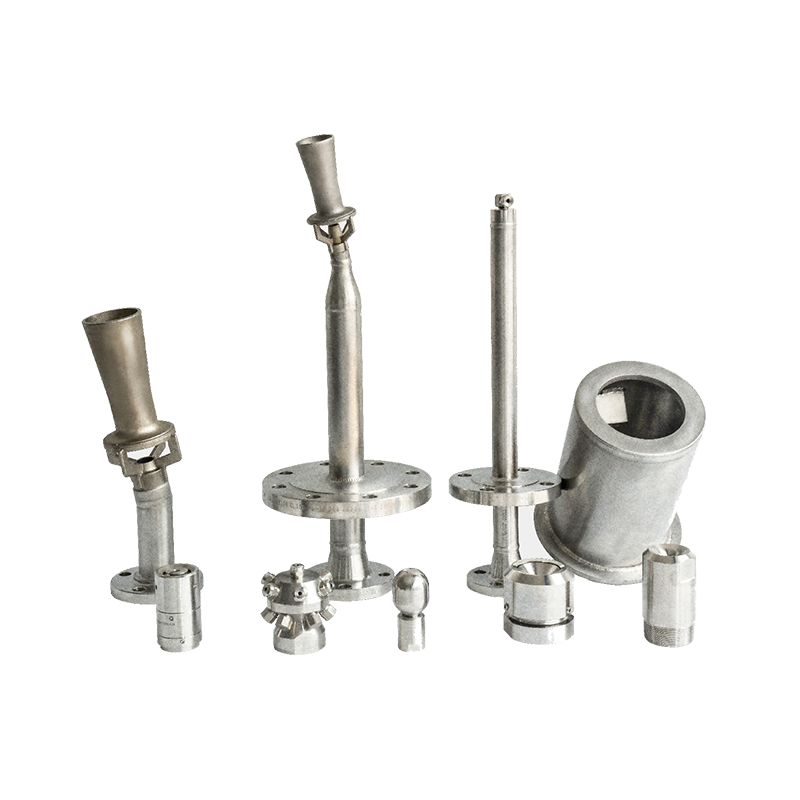
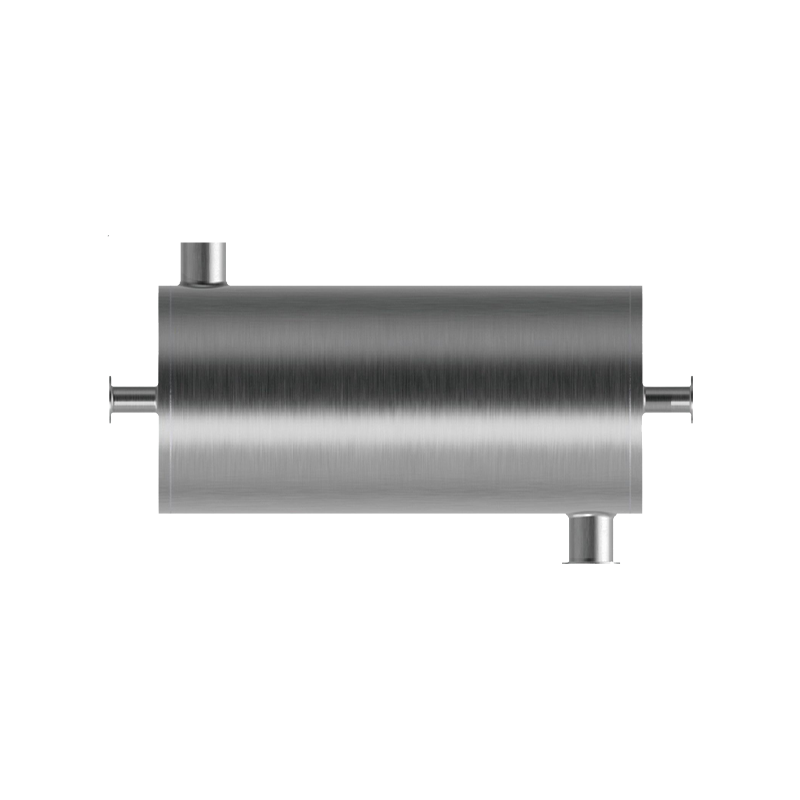
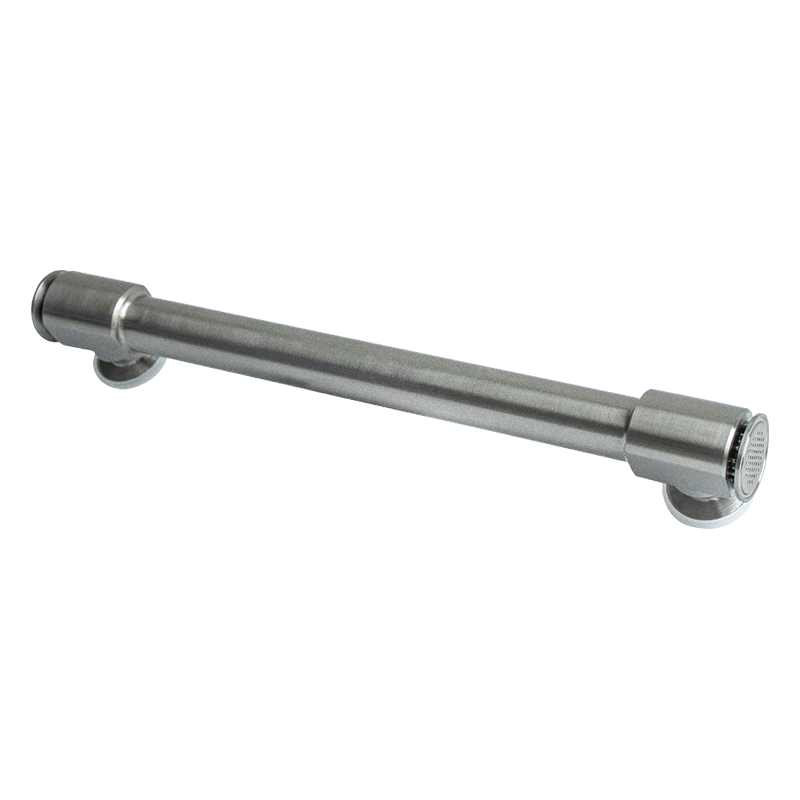
Sanitary Steam Ejector / Injector
What Is a Sanitary Steam Ejector or Injector?
A sanitary steam ejector or injector is a static process device that uses pressurized steam to entrain, heat, and mix another process medium. The main components generally include a steam inlet, a precision nozzle, an entrainment chamber, a process-media inlet, and an outlet connection. Depending on the application, the outlet may discharge a heated liquid, a mixed fluid, an entrained gas stream, or a vacuum-assisted process flow.
The device operates according to the Venturi principle. Steam enters the nozzle at a relatively high pressure. As it passes through the restricted nozzle opening, its velocity increases. This high-speed jet produces a lower-pressure region near the entrainment chamber. The pressure difference draws the secondary medium into the chamber, where steam and process media mix and exchange energy.
When the secondary medium is a liquid, the injector can provide direct heating. Steam condenses into the liquid and transfers its latent heat directly, producing a rapid temperature response. When the secondary medium is a gas, the device can support entrainment, dilution, conveying, or vacuum-related functions. When the process requires blending or circulation assistance, the steam jet can promote fluid movement without a mechanical agitator.
The term “ejector” is often used when the device emphasizes entrainment, suction, or vacuum generation, while “injector” is commonly used when direct steam injection and heating are the primary functions. In practice, one hygienic device may perform several of these functions depending on its nozzle geometry, operating pressure, installation arrangement, and process conditions.
Why Direct Steam Injection Is Important in Hygienic Processing
Indirect heating systems use a barrier, such as a heat exchanger wall, to separate the heating medium from the process product. This arrangement can be appropriate for many applications, but it may also introduce thermal resistance, fouling surfaces, larger equipment footprints, and slower response times. Direct steam injection removes the heat-transfer wall between the steam and the compatible process medium.
When clean steam is injected correctly, heat is transferred through direct condensation. This can provide rapid heating and efficient use of steam energy. The process temperature can respond quickly to changes in steam flow, which is valuable for pasteurization, sterilization, hot-water preparation, liquid processing, and batch temperature adjustment.
Direct heating is particularly useful where the process medium can accept a controlled amount of condensate without negatively affecting product composition. Water, certain liquid foods, process solutions, and compatible pharmaceutical liquids may be suitable. Product and steam quality must always be evaluated by the responsible process engineer, especially in regulated pharmaceutical or biopharmaceutical applications.
The injector can also reduce the number of separate components required in a process line. Instead of using a large external heat exchanger, a mechanical mixer, and a separate circulation arrangement, a properly engineered steam injection point may perform heating and mixing within a compact assembly. This can reduce installation space and simplify the overall process layout.
Core Advantages Compared with Conventional Alternatives
No Moving Parts
The most fundamental advantage of the sanitary steam ejector/injector is its static design. There are no rotating shafts, impellers, bearings, gearboxes, or motor-driven mixing elements inside the product-contact zone. Eliminating these components reduces the number of mechanical failure points and removes the need for lubrication or drive-unit alignment.
Fewer moving parts can also simplify maintenance planning. Routine work is concentrated on inspection and cleaning of the nozzle, chamber, connections, and associated valves rather than on servicing a rotating assembly. In applications where equipment access is limited, this compact static construction can be a major operational advantage.
The absence of mechanical agitation also reduces the risk of seal wear and shaft leakage. Although the complete process installation still requires suitable valves, gaskets, instruments, and piping seals, the integrated ejector/injector body itself can be designed with reduced sealing complexity.
Rapid and Efficient Direct Heating
Steam condenses directly into the process medium, allowing the energy contained in the steam to be transferred efficiently. Unlike many indirect heating arrangements, there is no primary heat-transfer wall that must first be heated before the product receives energy. This can shorten warm-up time and help production systems reach their target temperature more quickly.
Rapid response is beneficial in continuous processing and in batch systems that require accurate temperature adjustment. It can also help reduce the duration of thermal exposure. The actual result depends on steam quality, pressure stability, nozzle design, media properties, flow rate, and control strategy, but the direct-contact principle provides a strong foundation for efficient heat transfer.
Compact Installation
The equipment can be installed directly on a process pipeline or tank. This makes it suitable for facilities where floor space is limited or where a new heating function must be added to an existing production line. Compared with large skid-mounted heating or mixing systems, an inline injector generally requires less structural support and fewer auxiliary components.
A compact installation may also reduce piping length and improve the response of the process control loop. Shorter product paths can help reduce hold-up volume, which is important for hygienic production, product recovery, cleaning, and changeover operations.
Hygienic Stainless Steel Construction
Food-grade stainless steel 304 is suitable for many general food, beverage, utility-water, and industrial applications. Stainless steel 316L is often selected when higher corrosion resistance, more demanding cleaning conditions, or pharmaceutical and biopharmaceutical requirements must be considered. The final material selection should be based on the product chemistry, cleaning agents, temperature, chloride exposure, and applicable standards.
A sanitary design typically emphasizes smooth internal surfaces, minimized dead legs, cleanable flow paths, compatible gaskets, and hygienic connections. A dead-leg-free or reduced-dead-leg structure helps limit areas where product can stagnate. Quick-clamp connections can simplify disassembly, while flanged connections may be preferred for larger systems or specific plant standards.
Reduced Maintenance Requirements
Because the injector does not contain internal rotating equipment, maintenance requirements can be lower than those associated with mechanical mixers. The nozzle remains a critical service item, however. Scale, particulate contamination, corrosion, or deformation can change the jet profile and reduce entrainment efficiency.
Preventive maintenance should therefore include regular inspection of the nozzle, chamber, steam strainer, valves, check valves, gaskets, and pressure instruments. Maintenance intervals should be established according to steam quality, water hardness, product viscosity, cleaning frequency, and operating hours.
Flexible Process Functions
A sanitary steam injector can be configured for several functions. These include in-line heating, pasteurization support, sterilization-related heating, process-water heating, liquid mixing, gas entrainment, vacuum assistance, and hot-water system operation. This flexibility allows one basic equipment concept to serve different production lines.
Customization is particularly important because the same device cannot be expected to perform identically under all combinations of steam pressure, liquid flow, gas load, temperature, and backpressure. Nozzle dimensions, connection size, chamber geometry, and materials should be selected from actual process data.
Operating Principle and Flow Behavior
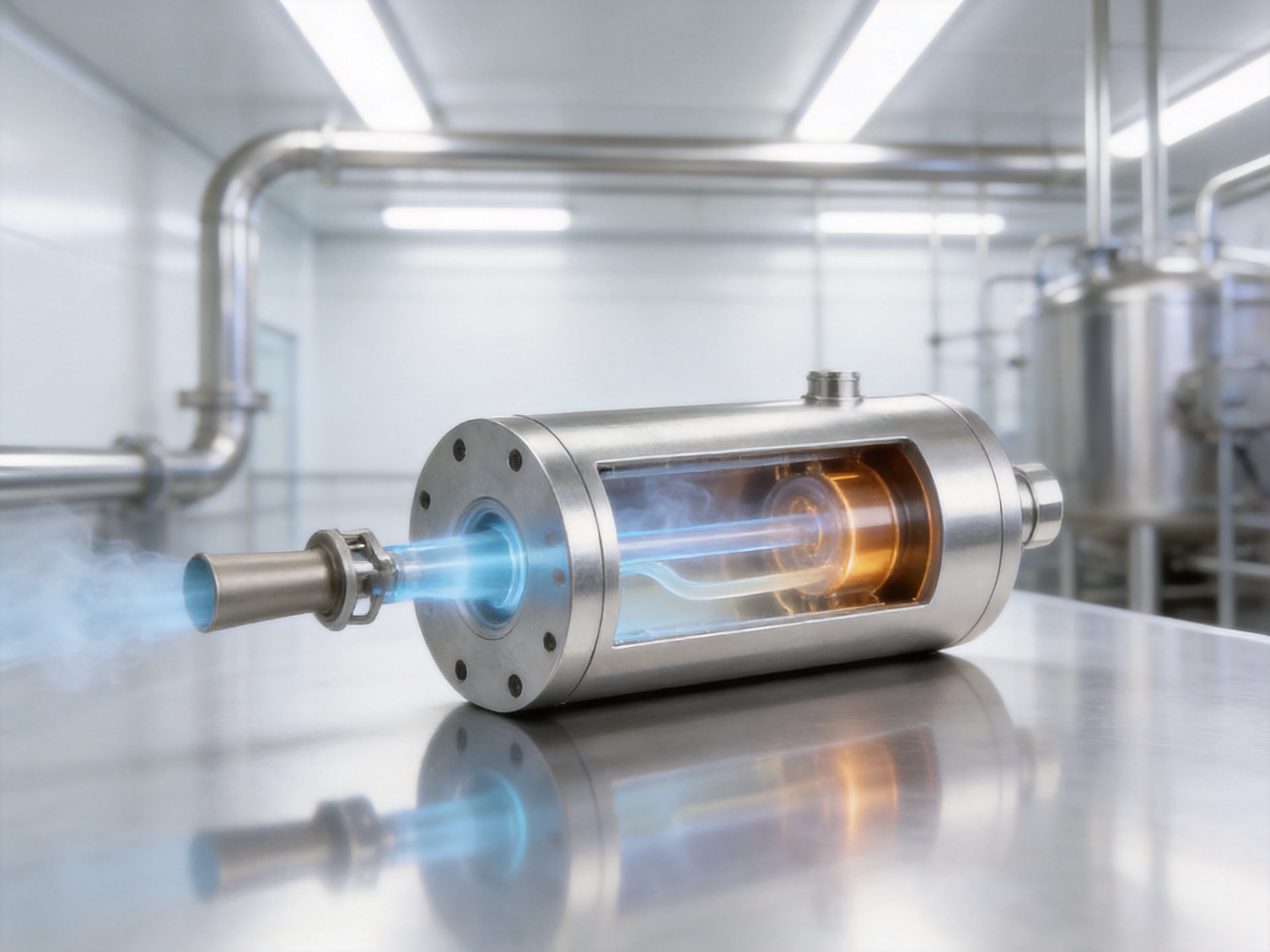
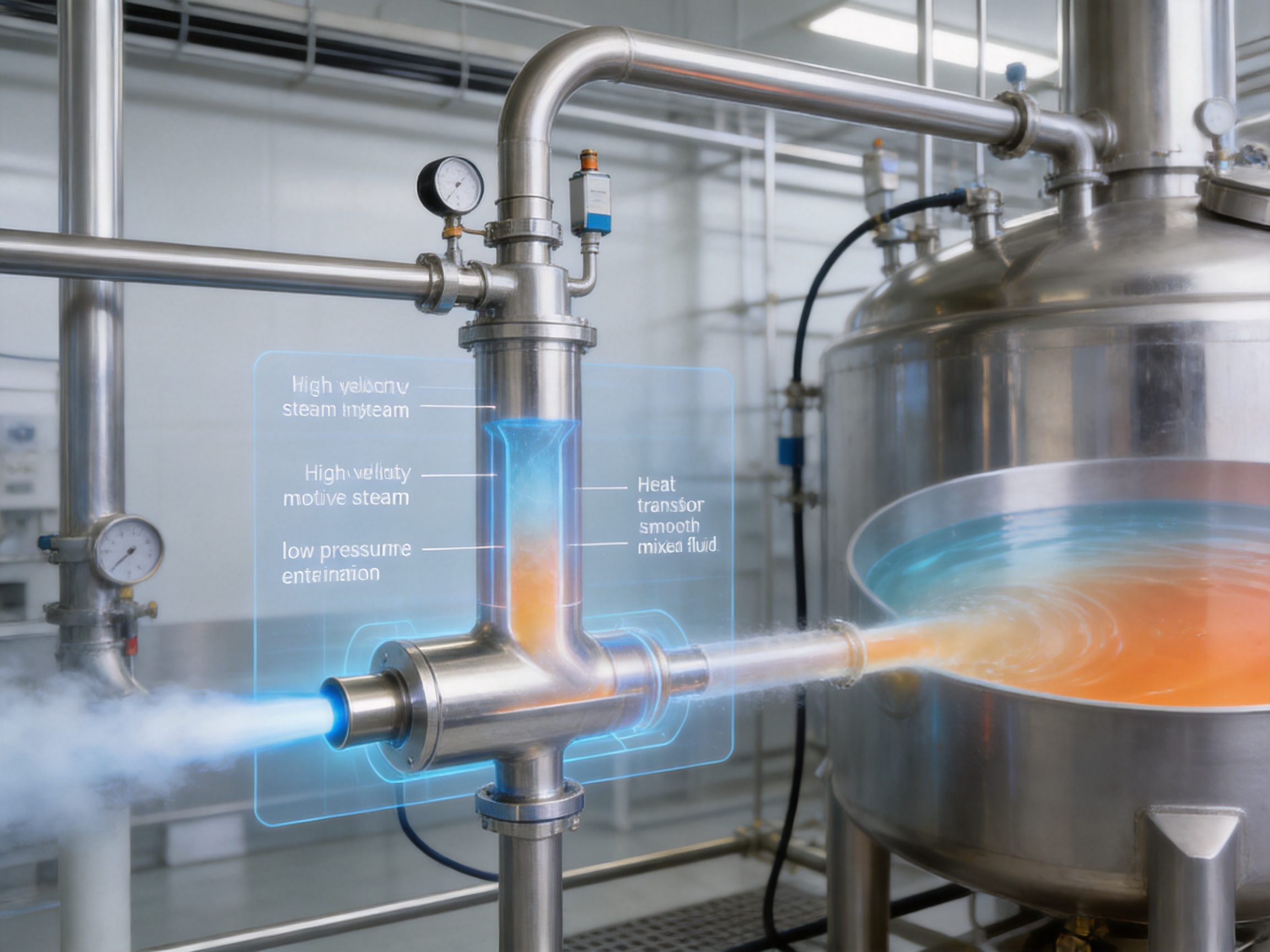
The performance of an ejector or injector depends on the relationship between motive steam and entrained media. The steam pressure must be sufficiently high to produce the required jet velocity and pressure differential. At the same time, the downstream pressure must remain within the design range so that the mixed flow can discharge properly.
Steam enters through the motive-fluid connection and accelerates through the nozzle. The nozzle converts part of the pressure energy into velocity energy. The resulting jet forms a low-pressure zone that draws the secondary medium through its inlet. The two streams then interact in the mixing chamber, where momentum transfer, condensation, turbulence control, and temperature equalization take place.
The geometry of the nozzle and chamber affects suction capacity, mixing quality, noise, vibration, and pressure recovery. A nozzle that is too small may restrict steam flow and create excessive pressure loss. A nozzle that is too large may fail to generate the required velocity or may consume more steam than necessary. The chamber must also provide sufficient space for mixing without creating unnecessary hold-up or difficult-to-clean areas.
Steam and product flow direction must be confirmed before installation. Reverse installation can prevent the intended pressure relationship from developing and may cause backflow, poor heating, unstable operation, or damage to connected equipment. Isolation valves, strainers, check valves, pressure gauges, temperature sensors, and control valves should be arranged according to the process design.
Product Categories and Typical Applications
| Product Category | Primary Function | Typical Process Media | Typical Applications |
| Direct Heating Injector | Rapid heat transfer through direct steam condensation | Water, liquid foods, beverages, compatible process solutions | Pasteurization, hot-water preparation, liquid heating |
| Mixing and Entrainment Ejector | Combines steam with liquid or gas and promotes flow | Process water, liquid products, process gases | Blending, gas entrainment, process assistance |
| Vacuum Assistance Injector | Uses high-speed steam flow to create suction or vacuum conditions | Air, process gases, vapors, compatible liquids | Vacuum support, degassing assistance, sanitary process systems |
| Tank-Mounted Steam Injector | Heats and circulates tank contents | Water, liquid food products, process solutions | Batch heating and temperature conditioning |
| Inline Sanitary Injector | Heats or mixes media within a pipeline | Low- to medium-viscosity liquids and gases | Continuous processing and compact skid systems |
Food and Beverage Processing
Food and beverage manufacturers often require fast temperature adjustment while maintaining strict hygiene. Sanitary steam injectors can be used for water heating, dairy processing, beverage preparation, liquid sugar systems, soup and sauce processing, and other compatible applications.
In dairy and beverage lines, the device can support in-line heating or pasteurization-related operations. Direct steam contact allows rapid heat transfer, which can be useful when the process requires a controlled temperature increase over a limited residence time. The appropriate steam quality, product compatibility, and regulatory requirements must be confirmed before implementation.
The equipment may also be used to prepare hot water for cleaning systems or production operations. Because the injector can be mounted directly in a line or tank, it can fit into compact utility arrangements. A suitable control system can modulate steam flow in response to temperature measurements and production demand.
Pharmaceutical and Biopharmaceutical Applications
Pharmaceutical and biopharmaceutical facilities place strong emphasis on cleanliness, traceability, material compatibility, cleanability, and controlled process conditions. A stainless steel sanitary injector may support heating, sterilization-related operations, hot-water systems, and vacuum formation where direct steam contact is acceptable and the process has been properly validated.
316L stainless steel is commonly considered for demanding hygienic applications because of its corrosion resistance and compatibility with many cleaning and sanitizing procedures. Internal surface finish, weld quality, connection design, gasket selection, drainability, and documentation are all important. The equipment selection should be reviewed against the user requirement specification and the facility’s applicable validation program.
For biopharmaceutical systems, the process engineer must determine whether the steam is clean steam or another specified steam grade, whether direct contact is permitted, and how the equipment will be cleaned or sterilized. The injector should not be treated as a universal replacement for every aseptic process component. Its suitability depends on the complete system design and the product-contact requirements.
Industrial and Fine Chemical Processing
Industrial users may apply steam ejectors for process-water heating, waste-gas entrainment, vapor handling, vacuum assistance, and liquid mixing. Fine chemical applications may benefit from the compact layout and absence of moving parts, especially where a conventional agitator would require additional mechanical seals or a larger vessel design.
Chemical compatibility must be assessed carefully. Stainless steel selection, gasket materials, steam quality, operating temperature, and cleaning chemistry should be matched to the process. If the medium contains corrosive compounds, abrasive solids, or high concentrations of chlorides, an alternative material or protective design may be required.
HVAC and Hot-Water Systems
In hot-water systems, a steam injector can provide direct heating and mixing in a compact arrangement. The device can be integrated into a tank or circulation line to bring water to the required operating temperature. This approach may be useful where a separate heat exchanger would be unnecessarily large or where fast temperature response is preferred.
Proper control is essential. The steam valve should open gradually, and the system should include protection against water hammer, excessive pressure, backflow, and over-temperature conditions. Temperature and pressure instruments should be positioned so that the control system receives representative measurements.
How the Design Helps Reduce Cavitation-Like Instability
Operators often use the term cavitation to describe noise, vibration, unstable flow, or localized vapor formation in a steam injection system. The exact physical mechanism may involve pressure collapse, flashing, condensation shock, water hammer, gas ingestion, or an unsuitable operating point rather than classical pump cavitation. Regardless of terminology, unstable pressure behavior can reduce heating performance and increase mechanical stress.
The first step in prevention is to maintain operating conditions within the design range. Steam pressure, downstream pressure, entrained-media pressure, flow rate, temperature, and backpressure must be considered together. A high steam pressure alone does not guarantee good operation if the downstream system is restricted or if the secondary medium cannot enter the chamber at the required rate.
Steam supply lines should be designed to remove condensate and minimize water hammer. The steam line may require appropriate drainage, separators, strainers, traps, and gradual-opening valves. Sudden admission of steam into a cold or condensate-filled line can create pressure shocks that are often mistaken for injector cavitation.
The entrained medium should enter without excessive gas pockets or flow restrictions. In liquid systems, air can affect suction behavior and cause unstable mixing. In gas systems, the density and composition of the gas influence entrainment capacity. The inlet piping should therefore be correctly sized and arranged to avoid unnecessary elbows, restrictions, or low points that can collect liquid.
Nozzle condition is another key factor. Deposits can narrow the opening and alter the steam jet. Erosion or deformation can change the spray pattern and reduce the intended pressure differential. Regular inspection and cleaning help preserve predictable performance.
Installation Recommendations
Confirm the Flow Direction
The installer should identify the steam inlet, entrained-media inlet, and mixed-fluid outlet before connecting the equipment. Directional markings and process drawings should be checked against the actual installation. Incorrect orientation can cause poor suction, backflow, excessive pressure drop, or ineffective heating.
Use Appropriate Hygienic Connections
Connection type should match the plant piping standard and the required cleaning method. Quick-clamp connections can make disassembly easier for inspection and cleaning. Flanged connections can provide robust installation for larger lines or fixed process systems. Gaskets must be compatible with the product, steam, cleaning chemicals, temperature, and pressure.
Provide Steam-Line Protection
A steam strainer or filter can help protect the nozzle from particulate contamination. The steam line should be arranged to prevent condensate accumulation. Where required, drains, traps, separators, pressure-reducing valves, and safety devices should be included in the wider system design.
Install Control and Measurement Instruments
Pressure gauges or transmitters should be installed at meaningful locations rather than relying solely on a distant steam header reading. Temperature sensors should measure the actual mixed-fluid condition. Flow measurement may be necessary where the process requires accurate dosing or repeatable heating.
Support the Piping Properly
The injector should not be used as a structural support for unsupported piping. Pipe loads, thermal expansion, vibration, and connection stresses should be considered. Proper supports help prevent misalignment and reduce the risk of fatigue at connections.
Allow Access for Inspection
The installation should provide enough space to inspect or remove the nozzle and chamber. Even a low-maintenance static device requires periodic verification. An inaccessible injector may increase downtime when cleaning or troubleshooting becomes necessary.
Start-Up, Shutdown, and Routine Operation
Before start-up, confirm that the process line is correctly connected, the valves are in the intended position, and the steam supply is within the specified pressure range. Check that the entrained medium is available and that downstream equipment can accept the mixed flow. Any strainers, traps, check valves, and instruments should be operational.
Steam should be introduced gradually. Slowly opening the steam valve allows the line and injector to stabilize and reduces the chance of water hammer caused by sudden pressure changes. The operator should observe pressure, temperature, sound, vibration, and flow behavior during the initial start-up.
Once the injector reaches a stable operating point, the control system can adjust steam flow according to the required process temperature or flow condition. Operators should avoid rapid and unnecessary changes in both steam and secondary-media flow unless the equipment and control strategy are designed for such changes.
During shutdown, the steam valve should generally be closed first. The remaining process medium should then be drained or isolated according to the process procedure. This sequence helps reduce the possibility of steam-driven backflow or uncontrolled movement of the entrained medium.
Cleaning and sanitization procedures must be established according to the process. If the injector is compatible with clean-in-place operation, the cleaning flow, temperature, chemical concentration, and duration should be validated. If manual inspection is required, the equipment should be isolated, depressurized, cooled, and drained before disassembly.
Troubleshooting Common Problems
Reduced Entrainment or Heating Efficiency
Reduced performance may result from insufficient steam pressure, excessive downstream pressure, an incorrect nozzle, blocked flow paths, or an unsuitable secondary-media flow rate. Operators should first compare actual conditions with the design values. The nozzle and chamber should then be inspected for scale, foreign material, or deformation.
Steam quality should also be reviewed. Excessive condensate or contamination can reduce jet performance. The pressure and flow of the entrained medium should be verified, because a restricted or unstable secondary-media supply may prevent the injector from reaching its intended operating point.
Noise and Vibration
Noise or vibration may be associated with water hammer, unstable pressure, gas pockets, improper installation, loose supports, nozzle damage, or downstream restrictions. The steam line should be checked for condensate accumulation and sudden valve action. Pipe supports and connection alignment should also be examined.
If operating conditions are correct, inspect the nozzle and chamber for wear, scale, or deformation. A damaged nozzle can create an irregular jet that increases turbulence and pressure fluctuation. The equipment should be removed from service if vibration threatens the integrity of the piping or connected components.
Backflow of Entrained Media
Backflow can occur when the pressure difference between the steam and secondary medium is insufficient, when the device is installed in the wrong direction, or when a check valve is missing or malfunctioning. Confirm that the steam pressure and media pressure meet the specified relationship. Verify the installation direction and inspect the check valve for contamination or failure.
Unexpected Temperature Variation
Temperature variation may result from fluctuating steam pressure, inconsistent product flow, poor sensor placement, delayed control response, or an incorrectly sized injector. The temperature sensor should measure the fully mixed stream at an appropriate location. The control valve and pressure-regulation equipment should also be checked for hunting or inadequate capacity.
Frequent Nozzle Fouling
Frequent fouling may indicate poor steam filtration, hard-water scale, unsuitable cleaning procedures, product carryover, or excessive particulate content. The maintenance program should identify the source rather than simply cleaning the nozzle more often. Improving filtration, water treatment, drainage, or cleaning may extend service intervals.
Manufacturing Quality and Engineering Capability
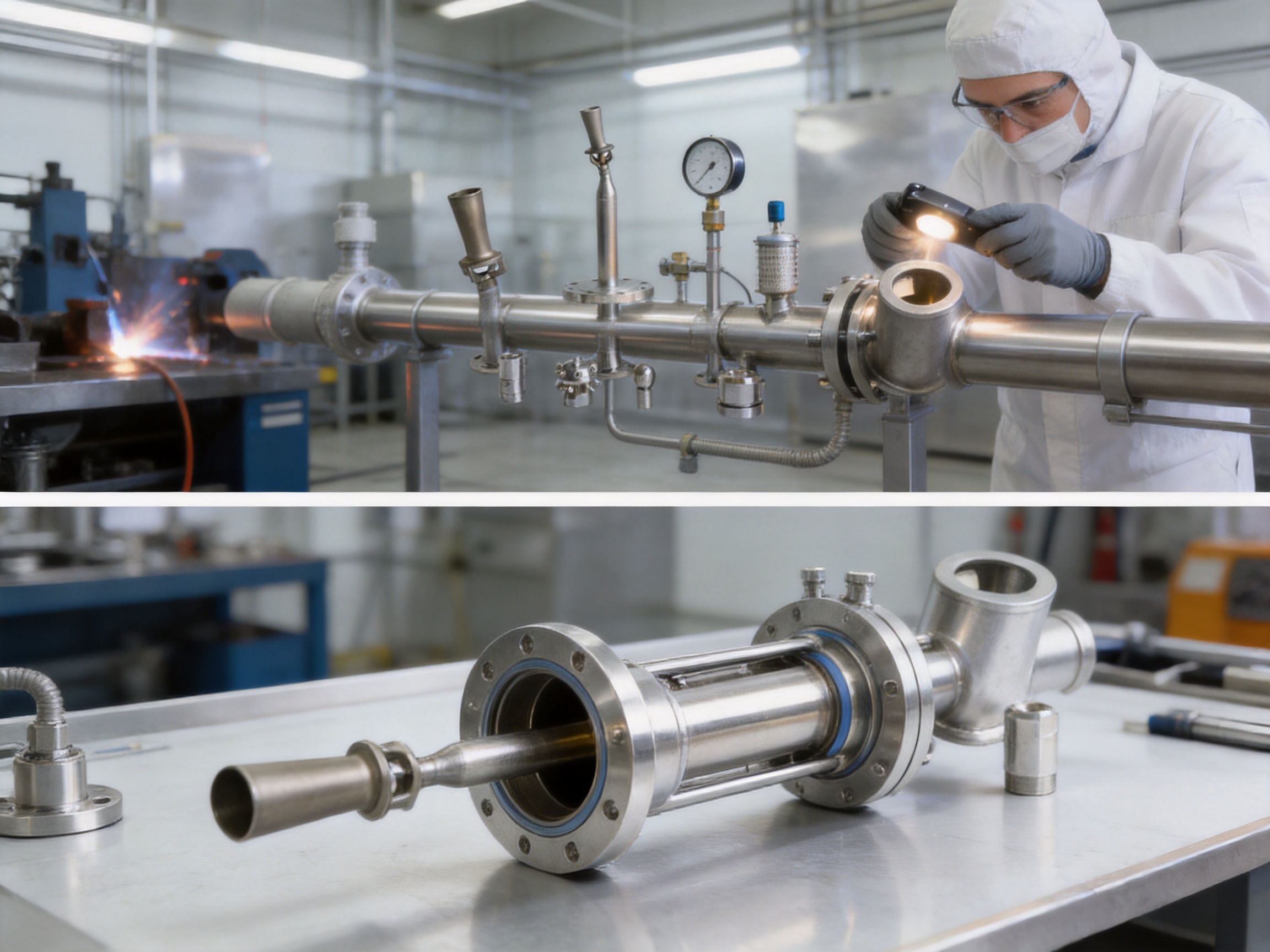
The performance of a sanitary steam injector depends heavily on manufacturing precision. A theoretical Venturi design cannot deliver consistent results if the nozzle dimensions vary excessively, internal surfaces are rough, welds are poorly finished, or connections are misaligned. Manufacturing control is therefore as important as the operating principle.
Shiloc (Shanghai) Industrial Trading Co., Ltd. supports sanitary equipment projects through a combination of international engineering knowledge, Danish design concepts, local manufacturing coordination, process consultation, and quality control. Its Shanghai facility covers approximately 3,000 square meters and includes technical specialists responsible for processing, welding, polishing, inspection, and production support.
Stainless steel fabrication begins with appropriate material selection and traceability. Material certificates, heat numbers, and purchase records can help establish the origin and grade of product-contact components. The choice between 304 and 316L should be based on the actual service conditions rather than on a generic preference.
Precision machining is essential for the steam nozzle and internal flow passages. The nozzle throat, inlet geometry, and outlet profile influence velocity and entrainment. Dimensional control helps ensure that the manufactured component remains consistent with the engineering design.
Welding quality is particularly important in hygienic equipment. Welds should be formed and finished to reduce crevices, contamination traps, and corrosion initiation points. Depending on the application, weld inspection, internal examination, surface treatment, passivation, and documentation may be required.
Polishing and surface finishing contribute to cleanability and product protection. Smooth internal surfaces reduce the likelihood of product retention and make it easier for cleaning fluids to contact the process path. The required finish should be defined according to the customer’s hygienic standard and validation expectations.
Final inspection may include dimensional checks, connection verification, visual examination, pressure testing, leak testing, surface inspection, and review of documentation. For customized equipment, inspection should also confirm that the delivered nozzle and chamber correspond to the approved process design.
Customization for Different Process Requirements
There is no single universal specification for a sanitary steam injector. The correct configuration depends on the motive steam pressure, steam temperature, secondary-media flow, secondary-media temperature, viscosity, density, solids content, downstream pressure, required heating duty, and desired outlet condition.
Connection size and style are selected according to the pipeline and expected flow rate. The body material and internal components are chosen according to corrosion and hygiene requirements. Nozzle geometry is developed or selected according to the required entrainment ratio and pressure conditions.
Some customers require a compact inline device, while others need a tank-mounted arrangement. A tank application may require attention to nozzle orientation, circulation pattern, liquid level, drainability, and access for cleaning. An inline system may place more emphasis on pressure drop, flow control, sensor location, and integration with upstream and downstream equipment.
Steam quality is also a major design input. Food, pharmaceutical, and biopharmaceutical customers may have different requirements for filtered steam, clean steam, or pure steam systems. The injector configuration should be reviewed against the facility’s steam-generation and distribution system.
Shiloc’s technical team can support configuration review, equipment selection, manufacturing coordination, export arrangements, and delivery management. This integrated approach helps customers avoid the common problem of purchasing a device without sufficiently considering the complete process line.
Advantages of an Integrated Supplier
Purchasing from an integrated process-equipment supplier can provide benefits beyond the physical product. The supplier can help interpret process data, identify missing specifications, coordinate manufacturing, review connection requirements, and prepare documentation for installation and operation.
For international customers, import and export experience is also valuable. Equipment must be prepared for shipment, protected against contamination and damage, accompanied by suitable documents, and delivered according to the customer’s schedule. A supplier with international trade and agency-service capabilities can coordinate these activities more efficiently.
Shiloc was established in March 2026 in Fengxian District, Shanghai, as a comprehensive trading and engineering company. Its business scope includes goods and technology import and export, import and export agency services, equipment manufacturing support, and engineering and technical services.
The company serves food and beverage, biopharmaceutical, pharmaceutical, daily chemical, and fine chemical customers. Its broader equipment portfolio includes heat exchangers and aseptic mixing equipment, allowing the company to consider the steam injector as part of a wider sanitary process system rather than as an isolated component.
Its technical organization includes more than 20 specialists and supports processing, welding, polishing, quality control, and coordination with manufacturing resources. The company emphasizes European know-how, Danish design concepts, safe and efficient equipment, traceability, process optimization, and personalized service.
Comparison with Mechanical Mixing and Indirect Heating Equipment
A mechanical mixer can provide strong agitation and may be necessary for high-viscosity products, solids suspension, or applications where steam contact is not permitted. However, mechanical equipment includes rotating components, drive systems, shafts, bearings, and seals. These parts can increase maintenance requirements and may require more installation space.
The sanitary steam ejector/injector is advantageous when direct steam contact is acceptable and the process requires heating, entrainment, or moderate mixing rather than intensive mechanical agitation. Its compact body and static design can simplify integration and reduce mechanical complexity.
An indirect heat exchanger provides separation between the steam and the product. This is essential for many products and process conditions. Nevertheless, indirect systems may require larger heat-transfer surfaces, additional circulation equipment, and more attention to fouling. The direct injector can be more efficient for compatible liquid streams because steam condensation transfers heat immediately.
The choice should not be based solely on equipment price. Engineers should compare total installed cost, energy use, footprint, maintenance, cleaning requirements, product compatibility, control complexity, and validation needs. In the correct application, a sanitary injector can offer a strong balance between performance and simplicity.
Quality, Documentation, and Regulatory Considerations
Food, pharmaceutical, and biopharmaceutical customers often require documentation that demonstrates material identity, manufacturing control, inspection status, and conformity with the purchase specification. The exact documentation package varies by project, but may include material certificates, drawings, inspection records, pressure-test reports, surface-finish information, gasket data, and operating instructions.
Hygienic design should be evaluated within the complete installation. A clean injector cannot compensate for poorly designed upstream piping, unsuitable valves, uncleanable tank connections, or improper drain arrangements. The product-contact path, cleaning circuit, steam supply, instrumentation, and discharge line must work together.
Validation requirements should be discussed before manufacture. Pharmaceutical and biopharmaceutical facilities may need additional information for qualification, risk assessment, change control, and commissioning. The supplier should understand whether the equipment will be used in a regulated or validated process and should align its documentation with the customer’s expectations.
Safety must also be considered. Steam is a high-energy utility, and the process may involve high temperature and pressure. Appropriate pressure-relief devices, isolation procedures, guarding, warning labels, operator training, and site-specific safety controls are required. Equipment selection and installation should be performed by qualified professionals.
Recommended Selection Procedure
The first step is to define the process objective. The customer should state whether the primary requirement is heating, pasteurization support, sterilization-related temperature control, mixing, gas entrainment, vacuum assistance, or a combination of functions.
The next step is to collect operating data. Important information includes steam pressure and temperature, steam quality, secondary-media flow rate, secondary-media pressure, inlet and outlet temperatures, viscosity, density, solids content, downstream pressure, cleaning method, and required connection size.
Material and hygiene requirements should then be established. The customer should identify the product-contact material, internal surface expectations, gasket type, connection standard, drainability requirements, and applicable plant or industry standards.
Finally, the supplier and customer should review the installation drawing, control philosophy, start-up procedure, cleaning procedure, inspection plan, and documentation requirements. This engineering review reduces the risk of selecting an injector that is mechanically compatible but process-inappropriate.
Frequently Asked Questions
What is the main function of a sanitary steam injector?
Its main function is to use high-pressure steam to entrain and directly heat a compatible liquid or gaseous medium. Depending on the design, it can also support mixing, conveying, gas entrainment, and vacuum formation.
Does a sanitary steam injector have moving parts?
No. The main injector body uses a static Venturi-based structure without rotating components. This reduces mechanical failure points and maintenance requirements. External valves, instruments, gaskets, and piping components still require normal inspection and servicing.
What materials are available?
Food-grade stainless steel 304 and 316L are the principal material options described for this product. The appropriate grade depends on the process medium, cleaning chemicals, temperature, corrosion risk, and hygienic requirements.
Can the injector be used for pharmaceutical or biopharmaceutical processing?
It can support suitable pharmaceutical and biopharmaceutical heating, sterilization-related, and vacuum-assistance applications when direct steam contact is permitted and the complete system meets the customer’s hygiene and validation requirements. Steam quality, surface finish, welds, seals, documentation, and cleaning procedures must be evaluated for each project.
How can cavitation-like noise and vibration be prevented?
Maintain steam pressure and secondary-media flow within the design range, prevent water hammer, open the steam valve gradually, install the device in the correct direction, avoid unnecessary flow restrictions, and inspect the nozzle for scale or deformation. Proper pipe support and condensate drainage are also important.
What causes reduced entrainment efficiency?
Common causes include insufficient or unstable steam pressure, excessive downstream backpressure, an incorrect flow rate of the entrained medium, nozzle fouling, scale, foreign material, nozzle wear, and incorrect installation. Actual operating conditions should be compared with the approved design values.
How should the equipment be shut down?
In general, the steam supply should be closed first, followed by controlled isolation or draining of residual process media. The exact sequence must follow the site’s operating procedure and account for pressure, temperature, product safety, and connected equipment.
What connection types are supported?
The equipment can support different interface forms, including flanges and quick-clamp connections. The final connection selection depends on pipeline size, hygienic requirements, plant standards, pressure rating, and maintenance preferences.
Can the injector be installed on a tank?
Yes. It can be configured for direct installation on a tank or within a tank circulation arrangement. Tank applications require review of nozzle orientation, liquid level, mixing pattern, drainability, access, and cleaning conditions.
What information is required for customization?
Suppliers normally need steam pressure and temperature, steam quality, entrained-media type, flow rate, pressure, temperature, viscosity, density, required heating duty, connection size, material requirements, cleaning method, and installation details.
What makes this equipment different from a mechanical mixer?
The sanitary steam ejector/injector has no internal rotating components and uses the energy of steam to create entrainment and mixing. It is compact and low-maintenance, although a mechanical mixer may remain more suitable for high-viscosity, solids-heavy, or non-steam-contact applications.
How does the manufacturer support customers?
Shiloc (Shanghai) Industrial Trading Co., Ltd. provides product selection, technical consultation, manufacturing coordination, stainless steel processing support, welding and polishing capabilities, quality control, international supply services, and customized engineering assistance.
Conclusion
The sanitary steam ejector/injector is a practical process solution for manufacturers that need rapid direct heating, controlled entrainment, hygienic mixing, or vacuum assistance in a compact format. Its Venturi operating principle uses steam as both the energy source and the motive fluid, eliminating the need for internal rotating equipment.
Compared with conventional mechanical mixing or indirect heating arrangements, the device can offer fewer moving parts, reduced maintenance, fast heat transfer, compact installation, and flexible integration with pipelines or tanks. Stainless steel 304 or 316L construction, hygienic connections, minimized dead-leg design, and an integrated structure make it suitable for many food, beverage, pharmaceutical, biopharmaceutical, industrial, and HVAC applications.
Performance depends on correct sizing and disciplined operation. Steam pressure, secondary-media flow, downstream backpressure, nozzle geometry, condensate management, installation direction, and cleaning practices must all be considered. Preventing water hammer, unstable pressure, nozzle fouling, and backflow is essential for dependable service.
Manufacturing quality is equally important. Precision nozzle fabrication, controlled stainless steel welding, suitable surface finishing, material traceability, inspection, and documentation support consistent performance and hygienic operation. Through its Shanghai facility, technical specialists, European engineering background, Danish design concepts, and international supply capabilities, Shiloc supports customers seeking customized process equipment for modern food and biopharmaceutical production.
References
1. Perry’s Chemical Engineers’ Handbook, sections covering fluid flow, ejectors, steam systems, and heat transfer.
2. ASME Bioprocessing Equipment, principles for hygienic design, materials, fabrication, and documentation.
3. European Hygienic Engineering and Design Group, guidance on hygienic equipment design and cleanability.
4. 3-A Sanitary Standards, principles for sanitary equipment used in food and dairy processing.
5. ASME BPE, recommendations for bioprocessing equipment, surface finish, materials, welding, and hygienic piping.
6. Standard engineering practice for steam distribution, condensate removal, water-hammer prevention, and pressure control.
7. Manufacturer technical information for sanitary steam ejector and injector systems, including operating principles, connection options, materials, and maintenance recommendations.
Product: Sanitary Steam Ejector / Injector
PREV:Side-Entry Tank Mechanical Agitators for Hygienic, Efficient, and Reliable Process Mixing
NEXT:Hybrid and Direct Contact Heat Exchangers for Efficient Food, Beverage, and Biopharmaceutical Processing
NEXT:Hybrid and Direct Contact Heat Exchangers for Efficient Food, Beverage, and Biopharmaceutical Processing
Interested in cooperation or have questions?
Recommended LINS
✦
Food and Beverage Process System
Food Processing Skid System
Sanitary Process Skid
Process Skid System
CIP Skid System for Food Industry
food and beverage process skid system
automated process skid system for food processing
CIP process skid system for food industry
hygienic process skid for food industry
Skid Mounted Process System
Let'S Work Together Welcome Aboard!
-

haikexin@haikexin.com
+8613391278930
-
 +86-21-57560276
 -
 No. 2819, Sihu Road,Fengxian District, Shanghai, China
Join Our Mailing List
Copyright © Shiloc (Shanghai) Industrial Trading Co., Ltd. All Rights Reserved.
Process Systems & Equipment For Food & Biopharma Manufacturers
