
 English
 русский
 Português
 Français


 Read More

Product Category
NEW Category
Contact us
Contact Us
We specialise in the research, development and manufacture of electrical wires and cables.
 +86-21-57560276
Sanitary Capillary Heat Exchangers for Food and Biopharmaceutical Process Systems
Content
- 1 What Is a Sanitary Capillary Heat Exchanger?
- 2 Why Capillary Construction Improves Heat Transfer Performance
- 3 Sanitary Design for Food and Biopharmaceutical Processing
- 4 Key Advantages Over Conventional Heat Exchangers
- 5 Manufacturing Quality and Engineering Strengths
- 6 Reference Technical Data
- 7 Dimensions and Model Selection
- 8 Applications in Food and Beverage Manufacturing
- 9 Applications in Pharmaceutical and Bioprocessing
- 10 How to Select the Right Sanitary Capillary Heat Exchanger
- 11 Installation and Operating Recommendations
- 12 Cleaning, Inspection, and Maintenance
- 13 Troubleshooting Guide
- 14 Why Work with Shiloc for Custom Equipment?
- 15 Project Information Required for a Technical Quotation
- 16 Safety and Compliance Considerations
- 17 Frequently Asked Questions
- 17.1 What industries use sanitary capillary heat exchangers?
- 17.2 What is the main difference between a sanitary capillary heat exchanger and a regular heat exchanger?
- 17.3 Can the exchanger be used for injection water?
- 17.4 Is 316L stainless steel always required?
- 17.5 Does a capillary design create high pressure drop?
- 17.6 Can the equipment be cleaned in place?
- 17.7 What should be checked if the outlet temperature is incorrect?
- 17.8 How can leakage at the quick-clamp connection be prevented?
- 17.9 Does Shiloc provide customized sanitary capillary heat exchangers?
- 17.10 What support is available for overseas buyers?
- 18 Conclusion
- 19 References
- 20 Product: Sanitary Capillary Heat Exchanger
Food, beverage, pharmaceutical, and bioprocess manufacturers require heat transfer equipment that can deliver more than high thermal performance. The equipment must also protect product quality, support validated cleaning procedures, minimize contamination risks, fit within limited production spaces, and operate reliably under demanding process conditions. For these applications, the sanitary capillary heat exchanger provides a compact and highly adaptable solution.
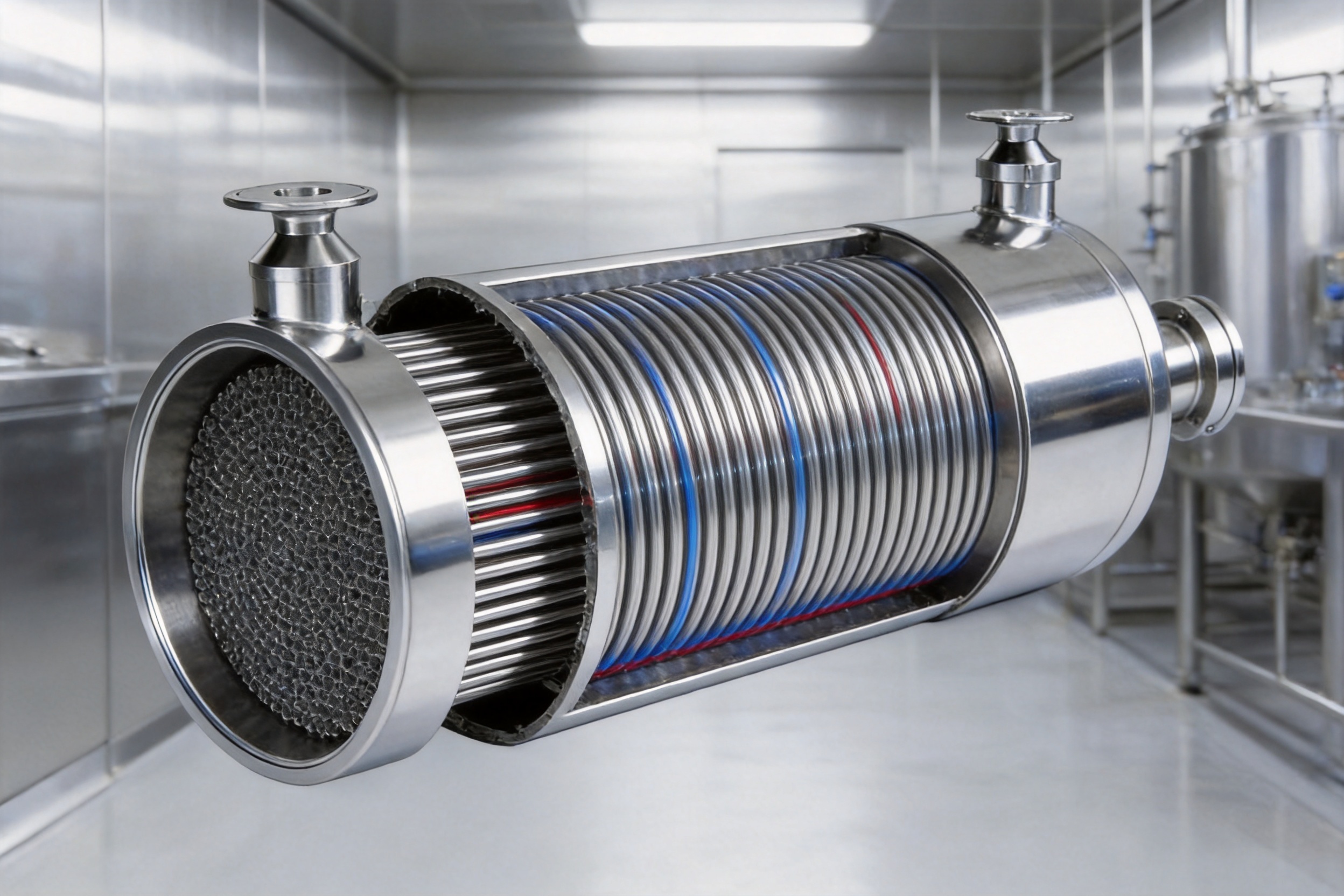
Unlike conventional heat exchangers that may contain larger internal channels, complex gasketed plate arrangements, or difficult-to-clean regions, a sanitary capillary heat exchanger uses a bundle of fine tubes within a shell-side structure. The capillary tube bundle creates a large heat transfer area in a relatively small body. At the same time, the sanitary construction, smooth internal surfaces, dead-leg-free flow paths, and quick-connect fittings help simplify cleaning, inspection, installation, and maintenance.
This combination makes the equipment particularly suitable for low-flow and high-precision applications, including injection water cooling, pharmaceutical liquid temperature control, process water preparation, laboratory-scale production, small-batch dairy processing, beverage pasteurization, and biological preparation temperature regulation.
Shiloc (Shanghai) Industrial Trading Co., Ltd. supplies sanitary process equipment and international trade services for customers in the food and beverage, biopharmaceutical, daily chemical, and fine chemical sectors. Its capabilities combine equipment sourcing, manufacturing coordination, engineering support, quality control, and import-export services. Through a Shanghai-based technical and production facility, the company supports customers requiring customized heat transfer equipment and integrated process solutions.
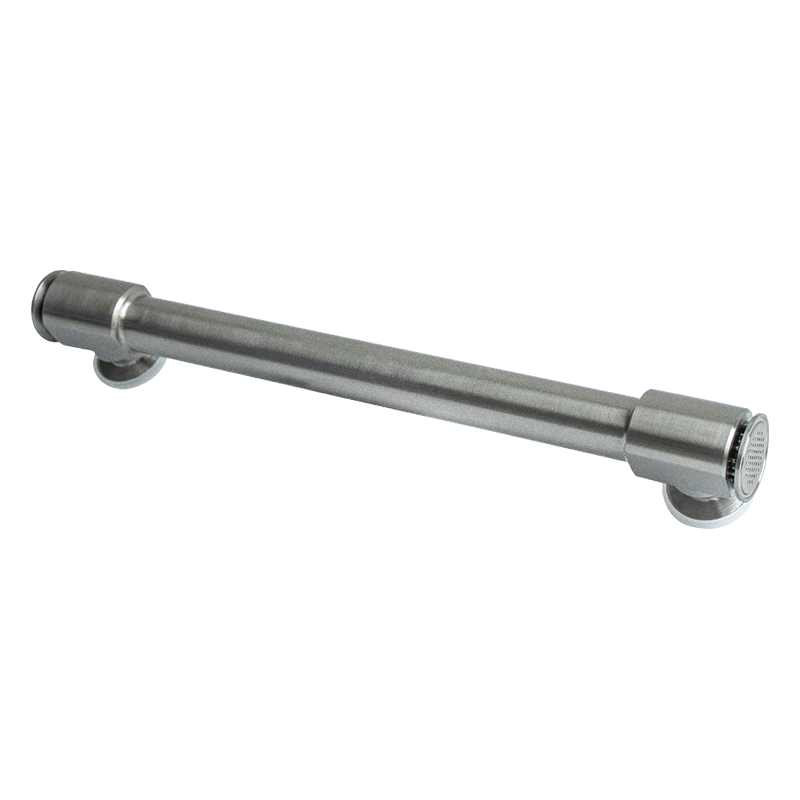
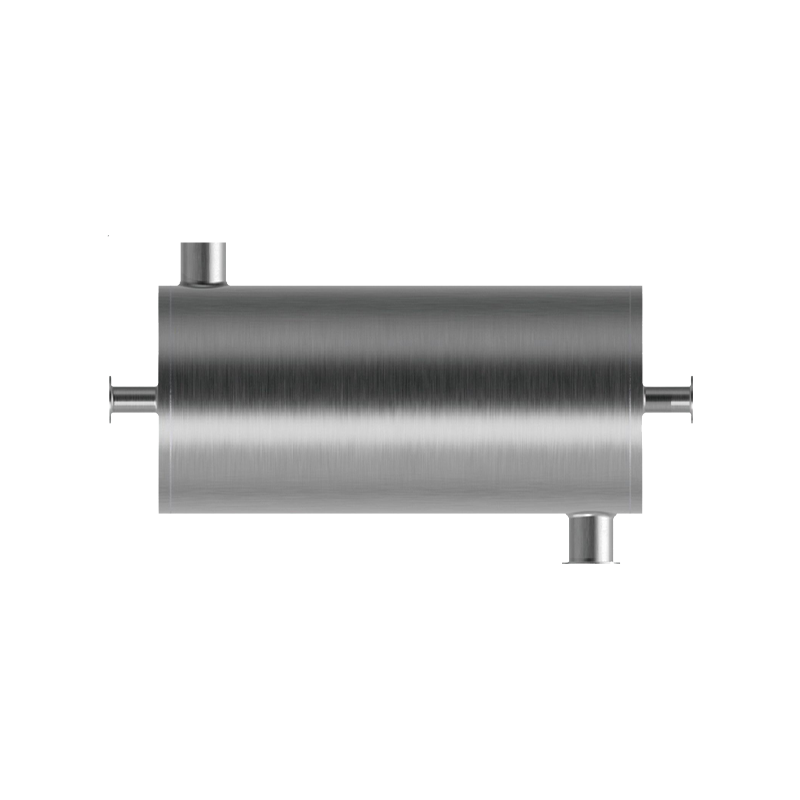
Sanitary Capillary Heat Exchanger
What Is a Sanitary Capillary Heat Exchanger?
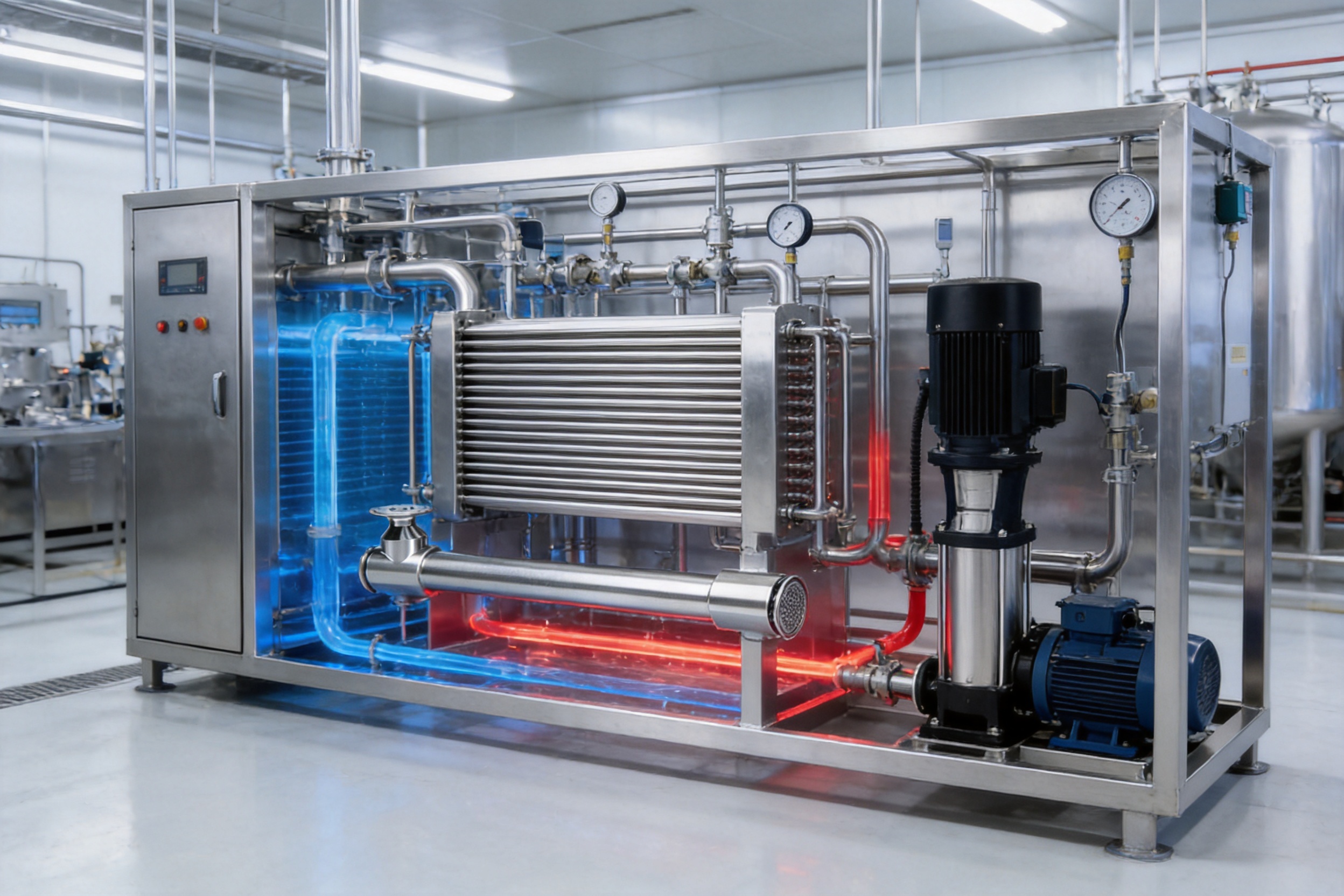
A sanitary capillary heat exchanger is a heat transfer device designed for production environments where hygiene, cleanability, and process control are essential. It transfers heat between two media without allowing them to mix. One medium flows through the capillary tube bundle while the other flows on the shell side, commonly in countercurrent flow to improve the temperature-driving force across the equipment.
The use of fine capillary tubes provides a high heat transfer area relative to the overall equipment volume. This allows the exchanger to achieve useful heating or cooling capacity while maintaining a slim, compact form. The design is especially valuable when a process has limited installation space or requires rapid temperature response at relatively low flow rates.
In hygienic processing, internal geometry is as important as heat transfer capacity. Product-contact surfaces must be smooth, accessible, and resistant to corrosion. Flow channels should avoid dead legs, stagnant pockets, and unnecessary recesses where product residue or microorganisms could accumulate. The sanitary capillary heat exchanger addresses these requirements through stainless steel construction, optimized flow paths, sanitary connections, and a structure that can support both clean-in-place and disassembly cleaning.
The equipment can be used with different combinations of process and utility media. Typical applications include cooling water, purified water, injection water, steam, hot water, low-viscosity food liquids, pharmaceutical liquids, and other compatible heat transfer fluids. Final material selection, pressure rating, surface finish, connection design, and operating parameters should always be confirmed against the specific process.
Why Capillary Construction Improves Heat Transfer Performance
Heat transfer performance depends on the available exchange area, the temperature difference between the two media, the flow regime, the thermal conductivity of the construction materials, and the residence time of the fluids. A capillary tube bundle increases the amount of heat transfer surface available within a compact shell.
Compared with a single large passage of equivalent external size, multiple fine tubes can create a substantially greater surface-area-to-volume ratio. This arrangement allows heat to travel across a relatively short wall thickness between the process medium and the utility medium. The result is a responsive exchanger that can help bring a fluid to its target temperature without requiring a large equipment footprint.
Fine tube channels are also useful for low-flow processes. In a conventional large-channel exchanger, a small flow may produce insufficient velocity and poor thermal performance. Capillary passages can maintain more effective fluid contact with the heat transfer wall under low-flow conditions. This is important for laboratory systems, pilot plants, dosing lines, process water loops, biological preparations, and small-batch production.
The capillary arrangement can also support more uniform temperature distribution. When the tube bundle is properly designed for the process flow rate and heat load, the media are distributed across many parallel passages. This helps reduce the risk of localized overheating or undercooling, which is important for products sensitive to temperature variation, including pharmaceutical solutions, biological preparations, dairy products, and beverages.
Thermal performance is not determined by tube size alone. A reliable design must consider fluid viscosity, flow rate, fouling tendency, pressure drop, inlet and outlet temperatures, utility conditions, allowable residence time, and cleaning requirements. Shiloc works with customers to match the exchanger structure to the actual process rather than selecting equipment only by nominal dimensions.
Sanitary Design for Food and Biopharmaceutical Processing
Food and biopharmaceutical production lines must control contamination throughout the product life cycle. A heat exchanger may be exposed to raw materials, purified water, active ingredients, cleaning chemicals, sterilization media, and utility fluids. Every product-contact surface and connection therefore influences process safety.
The sanitary capillary heat exchanger uses 316L stainless steel for product-contact construction. This material is widely used in hygienic processing because of its corrosion resistance, cleanability, and compatibility with many food, pharmaceutical, and bioprocess fluids. Other alloys, including Hastelloy and Inconel, can be considered for applications requiring additional resistance to corrosive or high-temperature conditions.
The internal flow channel is designed to reduce dead legs and stagnant areas. A dead leg is an area in a piping or equipment system where fluid movement is limited or absent. Such areas can retain product residue, cleaning chemicals, or microbial contamination. By reducing unnecessary recesses and optimizing the flow path, the equipment can improve cleaning coverage and reduce the risk of cross-contamination.
Surface quality is another important factor. The supplied reference specification identifies a surface roughness target of Ra ≤ 0.4 micrometers for applicable sanitary surfaces. Smooth, polished surfaces reduce adhesion and make it easier for cleaning solutions to remove process residues. Electropolishing or other surface finishing options can be evaluated according to the product, cleaning chemistry, and validation requirements.
Sanitary quick-clamp or quick-connect fittings at both ends support rapid installation and removal. These connections are compatible with standard hygienic piping arrangements and allow operators to disassemble the equipment for inspection or manual cleaning when necessary. Correct gasket selection and proper clamp engagement remain essential for leak-free operation.
For regulated industries, the equipment may be specified to support cGMP and FDA-related requirements. Compliance depends on the complete project, including materials, surface finish, welding, documentation, cleaning validation, pressure testing, and installation. Customers should confirm the required compliance package before ordering.
Key Advantages Over Conventional Heat Exchangers
Compact Equipment Footprint
One of the clearest advantages of the capillary structure is the amount of heat transfer surface contained within a small body. This is helpful in aseptic processing rooms, laboratory systems, skid-mounted equipment, and production areas where floor space is limited.
A compact exchanger can reduce the length of connecting pipework and simplify skid integration. It may also help lower structural support requirements and reduce the volume of fluid held inside the equipment. Smaller internal volume can be valuable in processes where product loss, residence time, or changeover efficiency is important.
Improved Low-Flow Performance
Many pharmaceutical and bioprocess applications do not operate with the high flow rates commonly found in large-scale utility systems. A capillary tube bundle can better accommodate low-flow operation by directing the medium through smaller passages and increasing the contact area available for heat transfer.
This makes the exchanger suitable for precise cooling or heating of process water, injection water, laboratory solutions, pharmaceutical liquids, and biological preparations. The actual flow capacity and pressure drop must be calculated for each application, but the design is inherently well suited to controlled low-flow duties.
Faster Temperature Response
The slim tube walls and high surface-area-to-volume ratio can support rapid heat transfer response. This allows the equipment to react quickly when the process requires a change in temperature or when the incoming fluid temperature varies.
Fast response can improve batch consistency and help operators maintain defined temperature windows. In beverage and dairy processing, this can support pasteurization or cooling control. In pharmaceutical production, it can help protect active ingredients and maintain solution quality. In laboratory systems, it can reduce waiting time between process stages.
Enhanced Cleanability
Conventional equipment may contain gasket grooves, corners, enlarged cavities, or poorly drained areas that complicate cleaning. The sanitary capillary heat exchanger is designed around smooth, low-retention flow channels and hygienic connections. It can support CIP procedures while also allowing disassembly for detailed inspection when the process requires it.
Cleanability depends on more than equipment geometry. Cleaning solution concentration, flow velocity, temperature, contact time, drainability, and coverage all influence the result. Shiloc can assist customers in matching equipment configuration with the intended CIP strategy.
Flexible Installation and Maintenance
Sanitary quick-connect fittings make the exchanger easier to connect, disconnect, replace, or inspect. This can reduce installation time and help maintenance teams access the equipment without extensive modification of the surrounding piping.
Quick-clamp connections also support modular skid construction. A heat exchanger can be incorporated into a compact water-treatment unit, liquid preparation skid, laboratory system, or small-scale aseptic process line. Proper alignment is essential because piping stress or misaligned clamps can damage seals and cause leakage.
Broad Material and Application Options
316L stainless steel is a standard choice for many hygienic applications, but customers may require alternative alloys because of high temperature, aggressive cleaning chemicals, chloride exposure, or unusual process media. Hastelloy, Inconel, and other alloys may be considered after reviewing the process chemistry and operating conditions.
The flexible material approach helps the equipment serve a wider market than a single-purpose heat exchanger. It can be adapted for food liquids, pharmaceutical solutions, high-purity water, steam, and selected chemical or biological fluids.
Manufacturing Quality and Engineering Strengths
The performance of a sanitary heat exchanger depends heavily on manufacturing quality. Capillary tubes require accurate forming, positioning, joining, and inspection. Small deviations can affect flow distribution, pressure drop, cleanability, or mechanical integrity. For this reason, engineering coordination and process control are critical throughout production.
Shiloc operates from Shanghai with a facility of approximately 3,000 square meters and a technical team of more than 20 specialists. Its stated capabilities include processing, welding, polishing, and quality control. These capabilities provide a foundation for manufacturing coordination and project-specific equipment development.
Material Traceability
For food and biopharmaceutical equipment, material traceability is an important part of quality assurance. Material certificates, heat numbers, component records, and inspection documents help customers verify that the specified stainless steel or alloy has been used in the relevant components.
Traceability is particularly important when equipment is installed in a validated process. It supports commissioning documentation, maintenance records, change control, and future replacement decisions. A well-organized documentation package should identify product-contact materials, gasket materials, surface finish, weld procedures, pressure tests, and final inspection results.
Controlled Welding and Fabrication
Welding quality influences both the mechanical safety and hygienic performance of the exchanger. Poorly formed welds can create crevices, rough areas, discoloration, or inclusions that are difficult to clean. Proper welding procedures, suitable filler materials, controlled heat input, and post-weld finishing are therefore essential.
Sanitary fabrication normally requires attention to weld penetration, internal bead profile, orbital or controlled manual welding methods, pickling or passivation where appropriate, and surface polishing. The correct procedure depends on the tube material, wall thickness, pressure rating, and customer specification.
Surface Finishing and Polishing
Polishing improves the condition of product-contact surfaces and supports hygienic operation. The objective is not simply a visually attractive finish. A properly controlled surface reduces roughness, limits product adhesion, and supports repeatable cleaning.
Electropolishing may be selected for specific applications where improved surface smoothness, corrosion resistance, and cleanability are required. The finished surface should be verified using appropriate inspection methods and documented against the project specification.
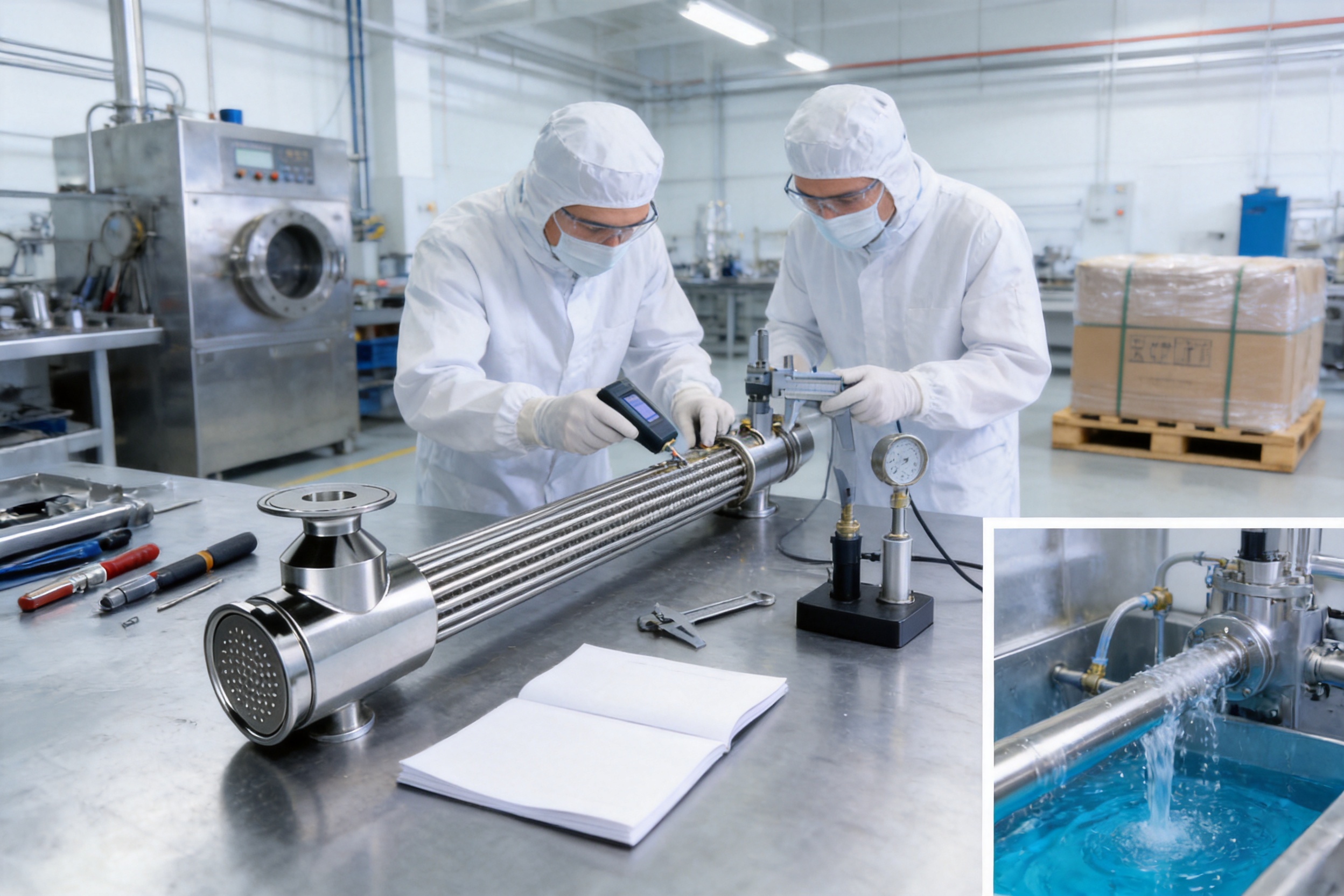
Dimensional and Pressure Inspection
Each exchanger should be checked for dimensional accuracy, connection alignment, tube integrity, and pressure resistance. Pressure testing helps identify leaks in the tube bundle, shell, welds, and fittings before the equipment reaches the customer.
The reference data for this product identifies a maximum working pressure of 83 bar on the tube side and 55 bar on the shell side, a maximum steam pressure of 8.6 bar, and a maximum working temperature of 425°C. These values are design references and must not be treated as universal operating targets. The allowable pressure and temperature for a particular unit depend on material, construction, testing, fluid properties, connection type, and applicable codes.
Engineering Communication
Many equipment problems originate before manufacturing begins, when process requirements are incomplete or misunderstood. Shiloc emphasizes technical communication during inquiry, design confirmation, manufacturing coordination, shipping, and after-sales support.
Before production, the customer and supplier should confirm process and utility media, flow rates, inlet and outlet temperatures, design pressure, operating pressure, cleaning chemicals, sterilization method, connection standards, installation orientation, material requirements, documentation, and inspection criteria. Clear technical communication reduces the risk of selecting an exchanger that is thermally adequate but unsuitable for cleaning or validation.
Reference Technical Data
| Specification | Reference value |
| Tube-side maximum working pressure | 83 bar |
| Shell-side maximum working pressure | 55 bar |
| Maximum steam pressure | 8.6 bar |
| Maximum working temperature | 425°C |
| Standard product-contact material | 316L stainless steel |
| Optional alloy materials | Hastelloy, Inconel, and other suitable alloys |
| Surface finish reference | Ra ≤ 0.4 micrometers |
| Cleaning compatibility | CIP and disassembly cleaning |
| Connection type | Sanitary quick-clamp or sanitary flange, according to configuration |
The values above provide a general reference for equipment selection. A formal quotation and technical drawing should identify the exact rated conditions for each model. Pressure, temperature, and material compatibility must be reviewed by qualified process and mechanical engineers before installation.
Dimensions and Model Selection
| Model | Pipe diameter | Electropolishing reference | Heat transfer area | Total length | Weight |
| HY-CE-0304 | 4 | 0.25 | 0.30 | 280 mm | 3.5 kg |
| HY-CE-0305 | 4 | 0.25 | 0.43 | 406 mm | 4.0 kg |
| HY-CE-0306 | 4 | 0.25 | 0.61 | 533 mm | 4.5 kg |
| HY-CE-0307 | 4 | 0.25 | 0.80 | 660 mm | 5.5 kg |
The dimensions table represents a reference range rather than a substitute for process sizing. A customer should provide the required heat load, operating conditions, media properties, and space limitations before selecting a model.
For example, a small laboratory cooling loop may prioritize short length, low hold-up volume, and rapid response. A process-water system may require more heat transfer area and a different connection arrangement. A pharmaceutical liquid application may require a specific surface finish, documentation package, drain orientation, or sterilization method. Model selection should therefore balance thermal performance, pressure drop, cleanability, maintenance access, and installation space.
Applications in Food and Beverage Manufacturing
Dairy Processing
Sanitary capillary heat exchangers can support inline heating and cooling of milk, dairy beverages, cream-based products, and small-batch formulations. Temperature stability is important for product consistency, microbial control, texture, and taste.
The compact construction is suitable for pilot plants and specialized production lines where a large heat exchanger would be impractical. The hygienic flow path and CIP compatibility can also help reduce product residue during changeovers.
Beverage Processing
Beverage manufacturers use heat exchange equipment for water conditioning, syrup preparation, pasteurization support, cooling, and heat recovery. The capillary design can be used where space is limited or where the flow rate is too low for a large conventional exchanger to operate efficiently.
Precise temperature control helps protect flavor, color, carbonation performance, and shelf-life requirements. The exchanger can be incorporated into a skid or inline process section with sanitary pumps, valves, sensors, and control systems.
Juice and Liquid Food Processing
Low-viscosity juices, sauces, liquid ingredients, and other food products may require controlled heating or cooling before filling, blending, storage, or further processing. The selected exchanger must be evaluated for solids content, viscosity, fouling potential, thermal sensitivity, and cleaning chemistry.
Where the process medium is sensitive to residence time or thermal shock, the compact internal volume and responsive heat transfer characteristics can provide an operational advantage.
Applications in Pharmaceutical and Bioprocessing
Pharmaceutical Liquid Temperature Control
Pharmaceutical liquids may require heating, cooling, or sterilization under carefully controlled conditions. Variations in temperature can affect solubility, stability, viscosity, reaction rate, and active ingredient performance.
A sanitary capillary heat exchanger can be integrated into liquid preparation systems, formulation skids, buffer preparation lines, and other high-purity process systems. The equipment should be specified with suitable surface finish, materials, seals, documentation, and cleaning or sterilization procedures.
Injection Water and High-Purity Process Water
Water used in pharmaceutical production requires strict control of contamination and microbial growth. A compact heat exchanger can provide temperature adjustment for injection water or process water used during solution preparation.
In these applications, the equipment design must be reviewed as part of the complete water system. Drainability, sterilization, sampling, instrumentation, piping slope, and validation are as important as heat transfer capacity. The exchanger should be selected and installed to support the required water quality and operating procedures.
Biological Preparations
Biological materials can be sensitive to heat, shear, residence time, and contamination. Low-flow temperature regulation is therefore a common requirement in bioprocessing and laboratory-scale production.
The capillary structure can support gradual and controlled heat transfer when correctly sized. Operators should define the acceptable temperature range, maximum rate of temperature change, flow rate, pressure drop, and cleaning or sterilization conditions before finalizing the equipment.
Laboratory and Pilot-Scale Systems
Research laboratories and pilot plants often need flexible equipment that can be installed quickly, moved between systems, and cleaned thoroughly. Sanitary quick-connect fittings and a compact body make the capillary exchanger suitable for these environments.
It can be used for process development, scale-up studies, formulation trials, small-batch production, and testing of heating or cooling strategies before the final manufacturing system is designed.
How to Select the Right Sanitary Capillary Heat Exchanger
1. Define the Process Media
The first step is to identify every fluid that will contact the equipment. This includes the product medium, heating medium, cooling medium, cleaning solution, and sterilization medium. Important properties include viscosity, density, specific heat, thermal conductivity, acidity, chloride concentration, solids content, and corrosiveness.
Media compatibility affects the choice of tube material, shell material, gasket, weld filler, surface treatment, and cleaning procedure. A fluid that is acceptable for 316L stainless steel under normal operation may require a different alloy under high-temperature cleaning or extended exposure.
2. Calculate the Heat Load
The required heat duty is generally determined from mass flow, specific heat, and the required temperature change. Phase change, such as steam condensation, must also be considered where applicable.
The design should include normal, minimum, and maximum operating conditions. Seasonal cooling-water variation, startup conditions, batch changes, and utility pressure fluctuations may affect the required heat transfer area. Selecting equipment only from average conditions can produce insufficient performance during peak demand.
3. Check Pressure Drop
Capillary passages can provide excellent heat transfer, but smaller channels may create higher pressure drop than larger channels at the same flow rate. Pump capacity, control valve authority, product sensitivity, and system pressure must therefore be evaluated together.
The tube-side and shell-side pressure drops should be calculated separately. The final system should remain within the exchanger rating and should provide sufficient flow for effective heat transfer and cleaning.
4. Confirm Cleaning and Sterilization Requirements
Customers should specify whether the exchanger will be cleaned by CIP, manually disassembled, steam sterilized, chemically sanitized, or treated by a combination of methods. The cleaning program should define solution concentration, temperature, flow velocity, contact time, rinse quality, and drainage requirements.
If steam-in-place or high-temperature sterilization is required, the material, seals, welds, venting, drainage, and pressure rating must be checked for the complete cycle. A design suitable for ordinary CIP may not automatically be suitable for repeated high-temperature sterilization.
5. Select Connections and Orientation
Sanitary quick-clamp connections are convenient for installation and maintenance, while sanitary flanges may be preferred for larger, more permanent systems. The connection standard should match the existing pipework, valves, pumps, and instrumentation.
Orientation influences drainability and cleanability. The installation should allow complete drainage of product, cleaning fluid, and condensate. Operators should also have sufficient clearance for clamp removal, seal inspection, and exchanger replacement.
6. Review Documentation Requirements
Food and pharmaceutical customers may require material certificates, surface roughness reports, weld records, pressure test reports, dimensional drawings, operating instructions, cleaning recommendations, packing lists, and certificates of conformity.
For regulated processes, documentation should be agreed before manufacture. Retrofitting documents after delivery can be difficult and may delay commissioning or validation.
Installation and Operating Recommendations
Before installation, inspect the exchanger, fittings, seals, tube ends, and shell for shipping damage. Confirm that all protective caps have been removed and that no foreign material has entered the flow channels.
Align the sanitary fittings and gaskets carefully. The clamp should engage fully and evenly. Do not use the clamp to force misaligned pipework into position. Piping stress can deform fittings, shorten gasket life, or create leaks during thermal cycling.
Install suitable supports so that the exchanger does not carry the weight of adjacent piping. Consider expansion caused by heating, especially when the system operates at high temperature or uses steam.
Before introducing product, flush the system with an appropriate fluid and verify that the flow path is open. Gradually increase pressure and temperature rather than applying a sudden thermal or hydraulic shock. Check all connections during startup.
During operation, monitor inlet and outlet temperatures, flow rates, pressure drop, utility conditions, and signs of leakage. A gradual reduction in heat transfer performance may indicate fouling, blockage, insufficient flow, utility problems, or incorrect temperature measurement.
When the equipment is shut down for an extended period, drain the internal media and follow the applicable cleaning and sterilization procedure. Leaving residual liquid inside the exchanger can encourage microbial growth, corrosion, or product degradation.
Cleaning, Inspection, and Maintenance
Regular cleaning is essential for maintaining both thermal performance and hygienic safety. A typical CIP sequence may include a pre-rinse, alkaline wash, intermediate rinse, acid wash where required, final rinse, and sanitization or sterilization step. The exact sequence must be based on the process residue and validated cleaning program.
Cleaning flow should reach all product-contact surfaces. Insufficient velocity, low temperature, incorrect chemical concentration, or inadequate contact time can leave residue inside the capillary channels. The cleaning system must also be able to drain fully after each stage.
Disassembly cleaning may be required when the process produces persistent fouling or when inspection results indicate a blockage. Operators should use appropriate tools and procedures to avoid damaging the fine tubes or sealing surfaces.
Seals and clamps should be inspected regularly. Gaskets may become brittle, swollen, cut, compressed, or chemically degraded. A new gasket should be installed when the existing seal no longer provides reliable compression or when the cleaning program requires routine replacement.
Tube-side blockage can reduce flow and cause non-compliant outlet temperature. Symptoms may include increased pressure drop, unstable flow, uneven temperature control, or a gradual decrease in heat transfer capacity. Operators should first confirm instrumentation accuracy and utility conditions before opening the equipment.
Maintenance records should include cleaning dates, gasket replacement, pressure observations, inspection findings, and any changes to operating conditions. These records support preventive maintenance and help identify long-term trends.
Troubleshooting Guide
Outlet Temperature Does Not Meet the Process Requirement
Check whether the inlet temperatures and flow rates are within the design range. Confirm that the utility medium is available at the correct pressure and temperature. If these conditions are normal, inspect for fouling or partial blockage inside the capillary tubes.
Also verify that temperature sensors are correctly installed and calibrated. A sensor positioned too close to a mixing point or exposed to external heat may provide an inaccurate reading.
Leakage at a Quick-Connect Fitting
Inspect the gasket for wear, cuts, deformation, chemical swelling, or incorrect size. Confirm that the gasket is seated correctly and that the clamp is fully engaged. Check whether connected pipework is applying side load to the fitting.
If leakage continues after seal replacement and alignment correction, depressurize the system and inspect the fitting face, ferrule, weld, and clamp for damage.
Product Residue Remains After CIP
Review the cleaning flow rate, temperature, chemical concentration, and contact time. Confirm that the cleaning solution reaches the exchanger in the correct direction and that the system is fully drained between stages.
Persistent residue may indicate unsuitable cleaning chemistry, insufficient velocity, product drying during shutdown, or a previously unidentified stagnant area. Disassembly inspection may be needed to determine the cause.
Unexpected Pressure Drop
Check for blocked tubes, closed valves, collapsed hoses, incorrect pump operation, or a change in product viscosity. A sudden pressure increase should be treated seriously because it may indicate obstruction or a developing mechanical problem.
Do not exceed the applicable pressure rating while attempting to clear a blockage. Isolate, depressurize, clean, and inspect the exchanger according to the approved maintenance procedure.
Why Work with Shiloc for Custom Equipment?
Shiloc (Shanghai) Industrial Trading Co., Ltd. was established in March 2026 in Fengxian District, Shanghai. The company specializes in the import and export of goods and technology, import-export agency services, equipment manufacturing, and engineering and technical services.
Its business supports customers that need equipment as well as international procurement coordination. This is important for overseas buyers, because a successful heat exchanger project involves more than selecting a product. It may require technical clarification, supplier coordination, inspection, packaging, shipping, customs documentation, import services, and installation support.
Shiloc provides equipment and process solutions for food and beverage, biopharmaceutical, daily chemical, and fine chemical applications. Its product scope includes heat exchangers, aseptic mixing equipment, and related fluid-processing systems.
The company describes its technical foundation as combining European know-how with Danish design principles. Its Shanghai facility provides approximately 3,000 square meters of working space and a team of more than 20 technical specialists. Capabilities covering processing, welding, polishing, and quality control support the development and coordination of hygienic equipment projects.
For customers with non-standard requirements, Shiloc can coordinate customized designs based on media properties, thermal duty, pressure and temperature, connection method, surface finish, cleaning strategy, and available installation space. This helps customers avoid the limitations of a one-size-fits-all product.
The company also emphasizes traceability, process optimization, safe and efficient equipment, reliable supply, and personalized service. These strengths are particularly relevant to customers purchasing equipment across national borders, where communication delays and incomplete technical information can increase project risk.
International Procurement Support
Overseas customers may receive support with technical communication, supply chain coordination, production follow-up, inspection arrangements, export documentation, transportation, and import-export agency services. A coordinated service model can simplify procurement for customers that do not have a local engineering or sourcing team in China.
International supply projects should still include clear responsibilities for installation, commissioning, validation, local code compliance, and final acceptance. Shiloc can help coordinate the technical and commercial process, while the customer and qualified local professionals remain responsible for site-specific implementation.
Customization for Specific Processes
Customization may include tube and shell materials, heat transfer area, length, connection style, surface finish, gasket material, mounting orientation, instrumentation interfaces, pressure rating, and cleaning compatibility.
For a pharmaceutical water application, the priority may be high-purity materials, drainability, surface finish, sterilization compatibility, and documentation. For a beverage line, the priority may be fast temperature response, CIP performance, sanitary connections, and compact installation. For a laboratory system, low hold-up volume and flexible connections may be more important.
The best equipment supplier should be able to understand these differences and translate them into an appropriate technical specification.
Project Information Required for a Technical Quotation
Customers requesting a sanitary capillary heat exchanger should prepare the following information:
• Process medium and utility medium.
• Flow rate or flow-rate range.
• Inlet and required outlet temperature for each medium.
• Normal and maximum operating pressure.
• Required heat duty or production capacity.
• Fluid viscosity, density, solids content, and corrosiveness.
• Heating or cooling utility conditions.
• CIP chemicals, cleaning temperature, flow rate, and cycle duration.
• Sterilization or steam-in-place requirements.
• Required material, surface finish, and compliance documentation.
• Connection standard and nominal pipe size.
• Available installation space and preferred orientation.
• Inspection, testing, packaging, and delivery requirements.
Providing complete information enables more accurate sizing and reduces the possibility of design changes after production begins.
Safety and Compliance Considerations
Heat exchangers can operate under high pressure and temperature, particularly when steam or hot process fluids are used. Installation and operation must be performed by qualified personnel in accordance with applicable local regulations, pressure equipment requirements, plant safety procedures, and manufacturer instructions.
Operators should confirm that relief protection, isolation valves, drains, vents, temperature sensors, pressure gauges, and emergency shutdown controls are suitable for the system. Product and utility sides should be isolated safely before maintenance.
Where the exchanger is used in a validated pharmaceutical or biopharmaceutical process, the equipment should be assessed as part of the complete system. Installation qualification, operational qualification, cleaning validation, material verification, and performance testing may be required.
Statements concerning FDA, GMP, or other sanitary compliance should be supported by the appropriate documentation for the specific unit. The final compliance status depends on the materials, manufacturing records, surface finish, seals, welding, testing, installation, and intended use.
Frequently Asked Questions
What industries use sanitary capillary heat exchangers?
They are used in food processing, beverage production, dairy manufacturing, pharmaceutical production, bioprocessing, laboratory systems, high-purity water systems, and selected fine chemical applications. They are most suitable where hygienic construction, low-flow heat transfer, compact dimensions, and precise temperature control are important.
What is the main difference between a sanitary capillary heat exchanger and a regular heat exchanger?
The main differences are the capillary tube bundle, compact heat transfer structure, hygienic flow path, dead-leg reduction, sanitary fittings, and emphasis on CIP and disassembly cleaning. A regular heat exchanger may be designed primarily for thermal duty, while a sanitary model must also address contamination control, product retention, surface finish, and cleaning validation.
Can the exchanger be used for injection water?
It can be designed for injection water or other high-purity process water applications when the materials, surface finish, drainage, sterilization, connections, and documentation meet the project requirements. The complete water system must be reviewed, and the application should be validated by the responsible engineering and quality teams.
Is 316L stainless steel always required?
316L stainless steel is a common sanitary material because of its corrosion resistance and cleanability, but it is not automatically suitable for every chemical or temperature condition. Hastelloy, Inconel, or another alloy may be considered when the process or cleaning environment is more aggressive.
Does a capillary design create high pressure drop?
Small channels can create higher pressure drop than larger channels at the same flow rate. However, they also provide a large heat transfer area and can perform effectively in low-flow applications. Proper sizing must balance heat duty, flow rate, pressure drop, pump capacity, and cleaning velocity.
Can the equipment be cleaned in place?
Yes. The sanitary capillary heat exchanger supports CIP when the cleaning system is correctly designed for the exchanger. Cleaning performance depends on flow velocity, temperature, chemical concentration, contact time, drainage, and coverage. Disassembly cleaning can also be used for inspection or difficult fouling conditions.
What should be checked if the outlet temperature is incorrect?
Check process and utility flow rates, inlet temperatures, pressure, sensor accuracy, valve position, and heat transfer conditions. If these are normal, inspect the capillary tubes for fouling or blockage. The temperature difference between the media should be compared with the design specification.
How can leakage at the quick-clamp connection be prevented?
Use the correct gasket, align the fittings accurately, ensure that the seal is properly seated, and fully engage the clamp. Avoid transmitting pipe stress to the exchanger connection. Inspect and replace aged or damaged seals as part of preventive maintenance.
Does Shiloc provide customized sanitary capillary heat exchangers?
Yes. Shiloc supports customized solutions based on process conditions, application environment, heat transfer requirements, materials, pressure and temperature ratings, connections, cleaning methods, and installation restrictions.
What support is available for overseas buyers?
Support may include technical communication, manufacturing coordination, quality follow-up, supply chain management, international transportation coordination, import-export agency services, and related documentation. Customers should define the required scope of service during the quotation stage.
Conclusion
The sanitary capillary heat exchanger combines compact construction, expanded heat transfer area, low-flow adaptability, precise temperature response, sanitary materials, and flexible maintenance options. Its dead-leg-free flow design and quick-connect fittings address important challenges in food, beverage, pharmaceutical, and bioprocessing environments.
Compared with conventional heat exchangers that may be larger, less adaptable to low-flow operation, or more difficult to clean, the capillary design offers a practical alternative for compact and high-purity systems. Its value is greatest when the equipment is correctly sized and integrated with an appropriate cleaning, sterilization, instrumentation, and maintenance strategy.
Shiloc supports these projects through equipment manufacturing coordination, technical engineering, stainless steel processing, welding, polishing, quality control, customization, and international trade services. By combining hygienic equipment with structured technical communication and supply-chain support, the company helps customers develop heat transfer solutions suited to their process requirements and operating environment.
For a successful project, customers should evaluate thermal performance and hygiene together. Media compatibility, heat duty, pressure drop, surface finish, connection design, CIP conditions, documentation, and installation requirements should all be confirmed before manufacture. With this complete approach, a sanitary capillary heat exchanger can become a reliable component of a safe, efficient, and space-conscious process system.
References
1. ASME Bioprocessing Equipment Standard, sanitary design and fabrication principles for bioprocessing equipment.
2. Current Good Manufacturing Practice guidance for pharmaceutical manufacturing systems and equipment.
3. Food and Drug Administration guidance concerning materials and equipment used in food and pharmaceutical production.
4. Hygienic Design Principles for Food Processing Equipment, including cleanability, drainability, and dead-leg reduction.
5. Stainless Steel Materials and Surface Finishing Practices for High-Purity Process Equipment.
6. Clean-in-Place System Design Principles for Food, Beverage, Pharmaceutical, and Bioprocess Applications.
7. Heat Exchanger Design Fundamentals, including countercurrent flow, heat transfer area, pressure drop, and thermal duty calculations.
8. Manufacturer-provided technical information for sanitary capillary heat exchanger construction, dimensions, materials, and operating references.
Product: Sanitary Capillary Heat Exchanger
PREV:Intelligent Industrial Heat Exchanger Units for Food and Biopharmaceutical Processing
NEXT:Hybrid and Direct Contact Heat Exchangers for Efficient Food, Beverage, and Biopharmaceutical Processing
NEXT:Hybrid and Direct Contact Heat Exchangers for Efficient Food, Beverage, and Biopharmaceutical Processing
Interested in cooperation or have questions?
Recommended LINS
✦
Food and Beverage Process System
Food Processing Skid System
Sanitary Process Skid
Process Skid System
CIP Skid System for Food Industry
automated process skid system for food processing
CIP process skid system for food industry
hygienic process skid for food industry
Skid Mounted Process System
food and beverage process skid system
Let'S Work Together Welcome Aboard!
-

haikexin@haikexin.com
+8613391278930
-
 +86-21-57560276
 -
 No. 2819, Sihu Road,Fengxian District, Shanghai, China
Join Our Mailing List
Copyright © Shiloc (Shanghai) Industrial Trading Co., Ltd. All Rights Reserved.
Process Systems & Equipment For Food & Biopharma Manufacturers
